
Reading a Recipe and Measuring 1 List the

- Slides: 12
Reading a Recipe and Measuring 1. List the FOUR parts of a recipe: 1. List and amounts of ingredients 2. Step-by-step instructions 3. Essential info about temperature and equipment 4. Number of servings
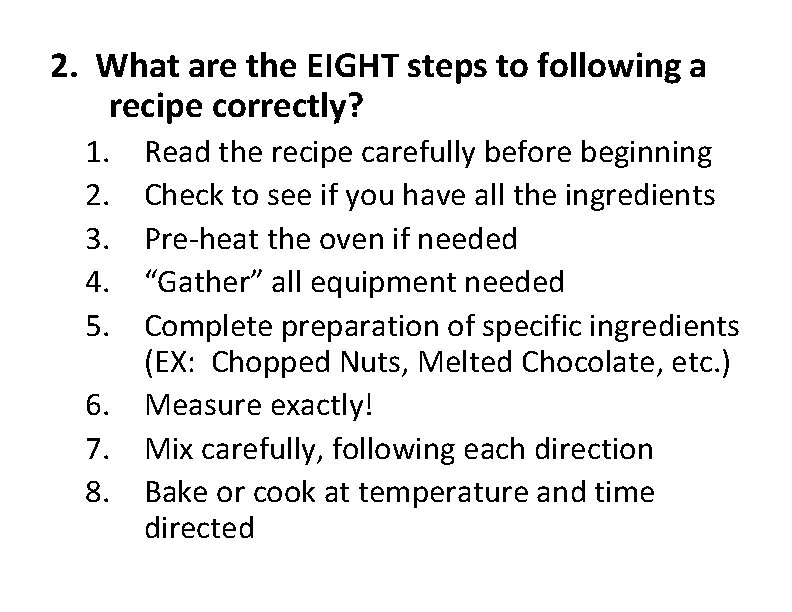
2. What are the EIGHT steps to following a recipe correctly? 1. 2. 3. 4. 5. 6. 7. 8. Read the recipe carefully before beginning Check to see if you have all the ingredients Pre-heat the oven if needed “Gather” all equipment needed Complete preparation of specific ingredients (EX: Chopped Nuts, Melted Chocolate, etc. ) Measure exactly! Mix carefully, following each direction Bake or cook at temperature and time directed
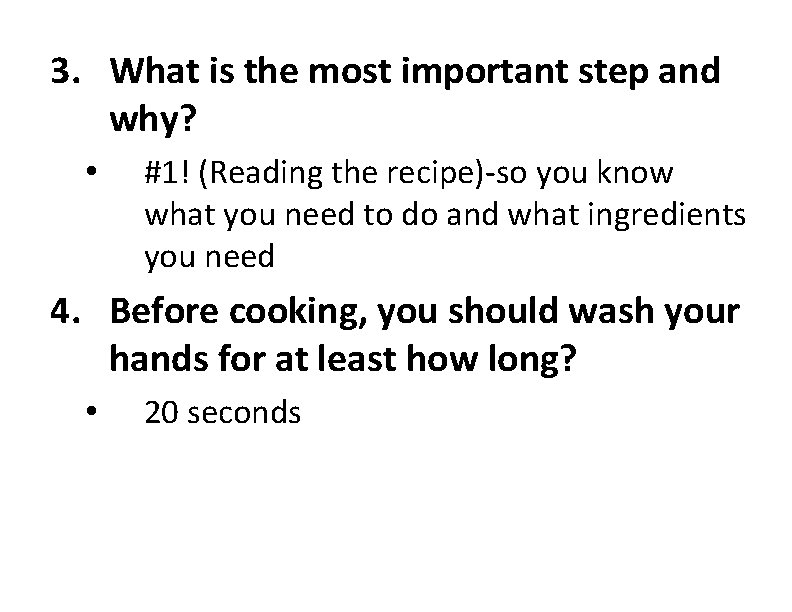
3. What is the most important step and why? • #1! (Reading the recipe)-so you know what you need to do and what ingredients you need 4. Before cooking, you should wash your hands for at least how long? • 20 seconds
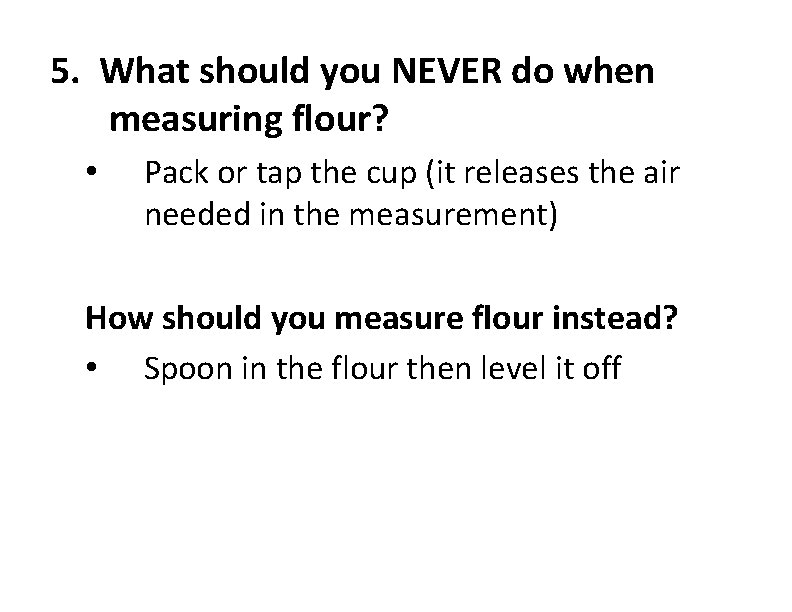
5. What should you NEVER do when measuring flour? • Pack or tap the cup (it releases the air needed in the measurement) How should you measure flour instead? • Spoon in the flour then level it off
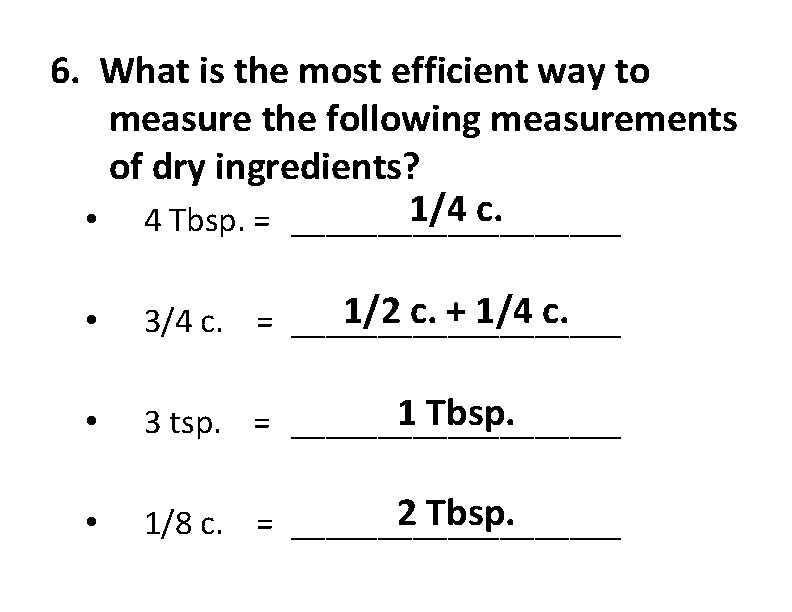
6. What is the most efficient way to measure the following measurements of dry ingredients? 1/4 c. • 4 Tbsp. = __________ • 1/2 c. + 1/4 c. 3/4 c. = __________ • 1 Tbsp. 3 tsp. = __________ • 2 Tbsp. 1/8 c. = __________
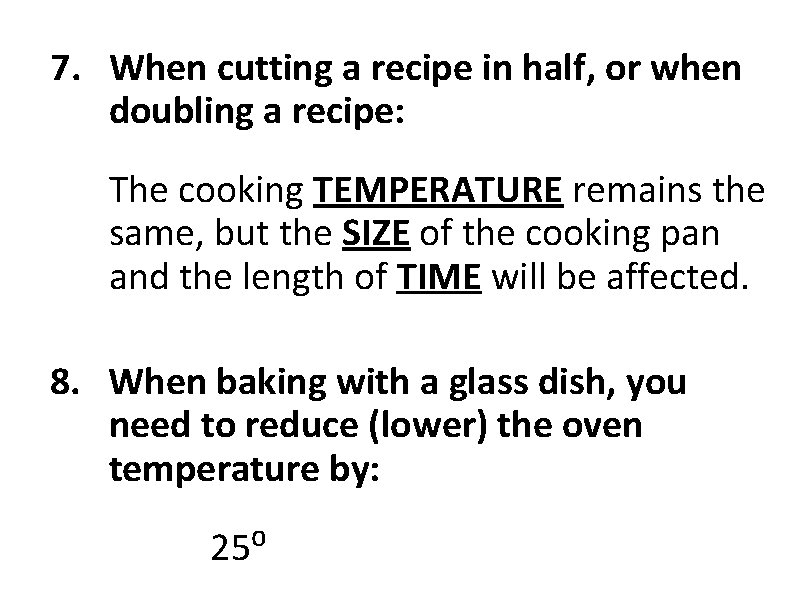
7. When cutting a recipe in half, or when doubling a recipe: The cooking TEMPERATURE remains the same, but the SIZE of the cooking pan and the length of TIME will be affected. 8. When baking with a glass dish, you need to reduce (lower) the oven temperature by: 25⁰
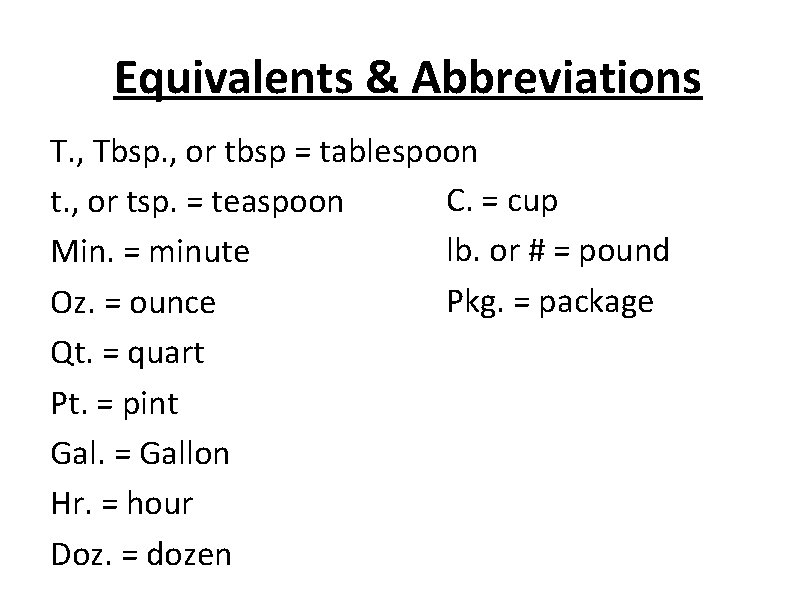
Equivalents & Abbreviations T. , Tbsp. , or tbsp = tablespoon C. = cup t. , or tsp. = teaspoon lb. or # = pound Min. = minute Pkg. = package Oz. = ounce Qt. = quart Pt. = pint Gal. = Gallon Hr. = hour Doz. = dozen
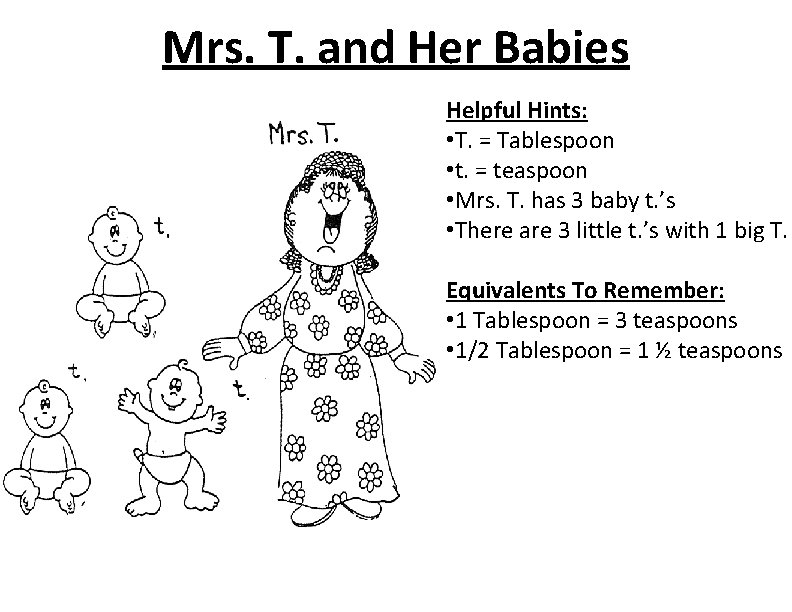
Mrs. T. and Her Babies Helpful Hints: • T. = Tablespoon • t. = teaspoon • Mrs. T. has 3 baby t. ’s • There are 3 little t. ’s with 1 big T. Equivalents To Remember: • 1 Tablespoon = 3 teaspoons • 1/2 Tablespoon = 1 ½ teaspoons
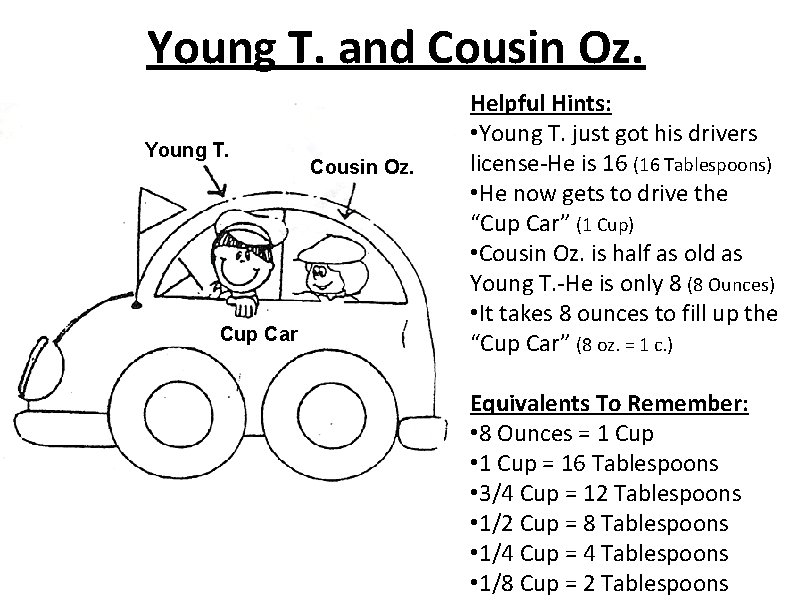
Young T. and Cousin Oz. Young T. Cup Car Cousin Oz. Helpful Hints: • Young T. just got his drivers license-He is 16 (16 Tablespoons) • He now gets to drive the “Cup Car” (1 Cup) • Cousin Oz. is half as old as Young T. -He is only 8 (8 Ounces) • It takes 8 ounces to fill up the “Cup Car” (8 oz. = 1 c. ) Equivalents To Remember: • 8 Ounces = 1 Cup • 1 Cup = 16 Tablespoons • 3/4 Cup = 12 Tablespoons • 1/2 Cup = 8 Tablespoons • 1/4 Cup = 4 Tablespoons • 1/8 Cup = 2 Tablespoons
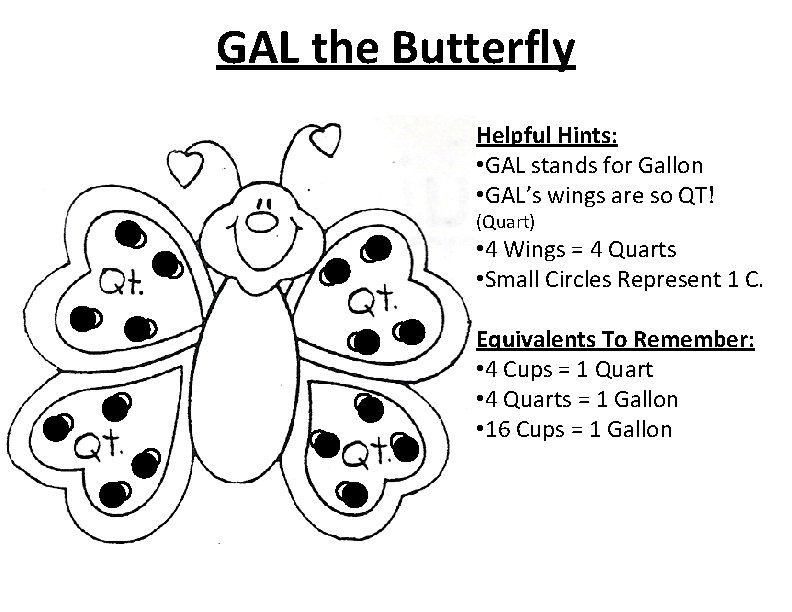
GAL the Butterfly Helpful Hints: • GAL stands for Gallon • GAL’s wings are so QT! (Quart) • 4 Wings = 4 Quarts • Small Circles Represent 1 C. Equivalents To Remember: • 4 Cups = 1 Quart • 4 Quarts = 1 Gallon • 16 Cups = 1 Gallon
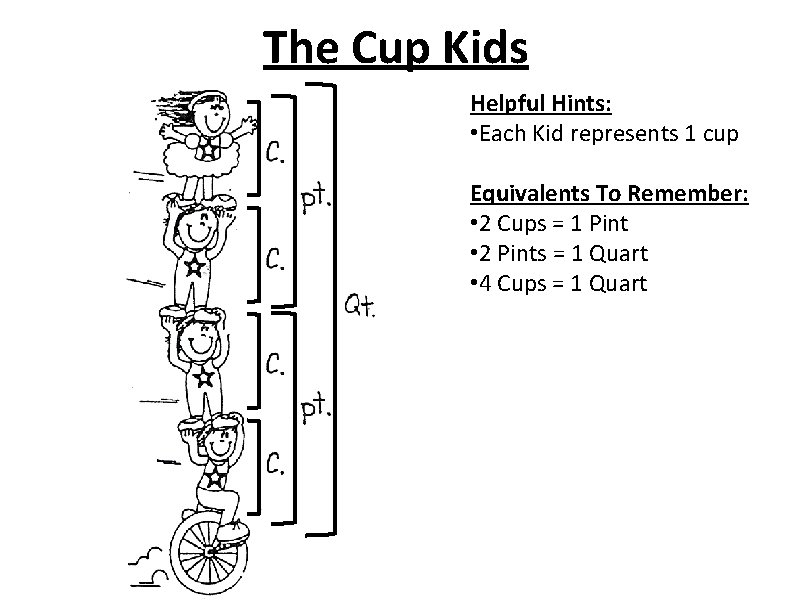
The Cup Kids Helpful Hints: • Each Kid represents 1 cup Equivalents To Remember: • 2 Cups = 1 Pint • 2 Pints = 1 Quart • 4 Cups = 1 Quart
Other Important Equivalents To Remember 1 stick of butter/margarine = 1/2 cup 5 Tbsp. + 1 tsp. = 1/3 cup 8 oz. = 1 c. 16 oz. = 1 lb.