
Read pg What is your circadian rhythm Fill














- Slides: 38
-Read pg. What is your circadian rhythm? Fill out circadian rhythm sheet
Biological Clocks/Circadian Rhythms • A physiological cycle with a frequency of about 24 hours is called a circadian rhythm • Even without external, environmental cues, circadian rhythms persist in humans and in all eukaryotes • Example: jet lag in humans
Photoperiodism • A physiological response to day length (differs in winter, summer, spring, and fall) is known as photoperiodism – Short-day plants • Require a shorter light period • Flower in later summer/fall/winter • Example: poinsettias – Long-day plants • Require a longer light period • Flower in late spring/early summer • Example: spinach – Day-neutral plants • Are unaffected by photoperiod • Example: tomatoes • But it’s actually the night that matters!!
Plant Responses to Internal & External Signals
Plant Hormones • Hormones are chemical signals that coordinate the various parts of an organism – A hormone is a compound produced in one part of the body which is then transported to other parts of the body, where it triggers responses in target cells and tissues – Examples of human hormones: • Adrenaline, testosterone, estrogen, epinephrine…
Plant Hormones • There are 5 major classes of plant hormones, each with specific functions: – Auxin – Cytokinins – Gibberellins – Abscisic acid – Ethylene
Auxin • Stimulates stem elongation • Stimulates development of fruit • Involved in phototropism and gravitropism
Cytokinins • Stimulate cell division and growth – Stimulate cytokinesis • Stimulate germination and flowering
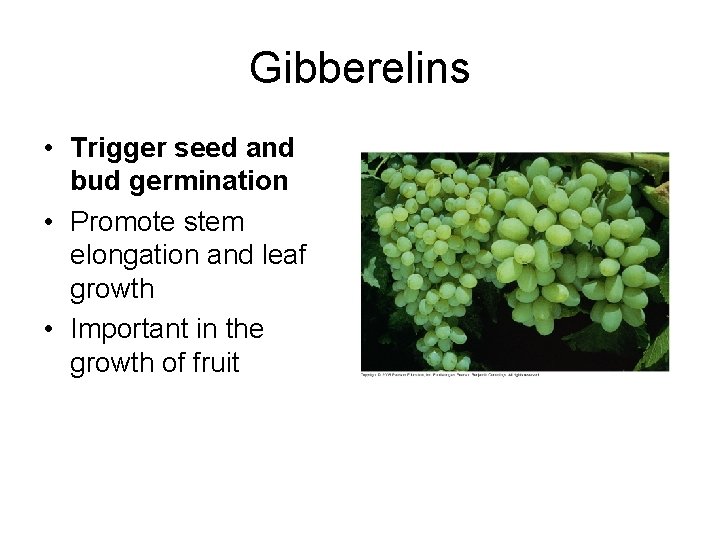
Gibberelins • Trigger seed and bud germination • Promote stem elongation and leaf growth • Important in the growth of fruit
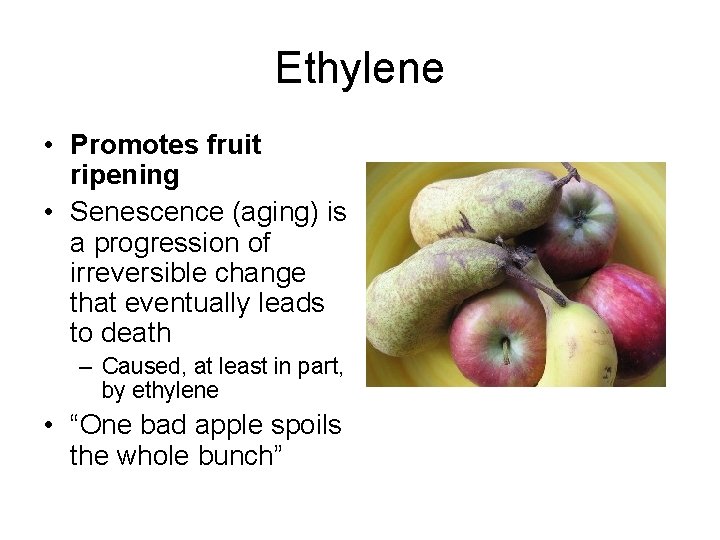
Ethylene • Promotes fruit ripening • Senescence (aging) is a progression of irreversible change that eventually leads to death – Caused, at least in part, by ethylene • “One bad apple spoils the whole bunch”
Abscisic Acid • Induces seed dormancy – Anti-gibberellin • Inhibits cell growth – Anti-cytokinin • Inhibits fruit ripening – Anti-ethylene • Closes stomata during water stress, allowing many plants to survive droughts
Tropisms • Tropisms are growth responses that result in curvatures of whole plant organs toward or away from a stimuli • There are three major stimuli that induce tropisms – Light (Phototropism) – Gravity (Gravitropism) – Touch (Thigmotropism)
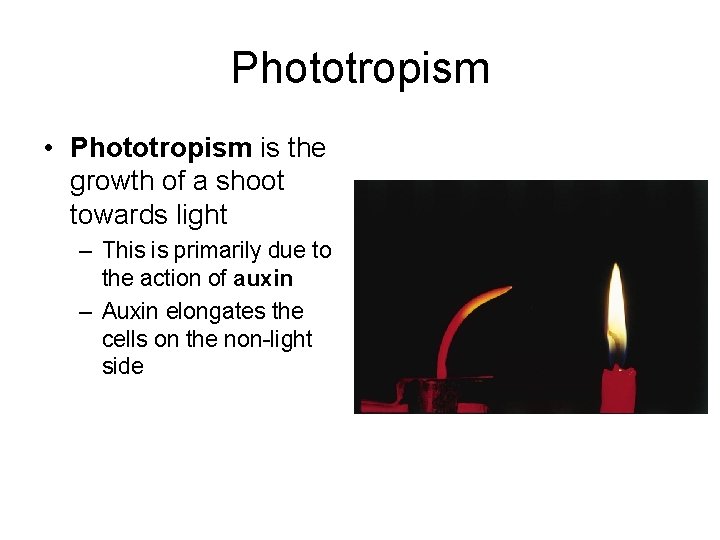
Phototropism • Phototropism is the growth of a shoot towards light – This is primarily due to the action of auxin – Auxin elongates the cells on the non-light side
Plant Defenses • Plants defend themselves against herbivores in several ways – Physical defenses, such as thorns – Chemical defenses, such as producing distasteful/toxic compounds
• interactions between root, stem, leaf, • flower color based on p. H
To do #1 -Make a list of plant hormones and their functions -Compare circadian rythm, phototropism, and photperiodism
Fungi and Plants http: //www. wisconline. com/objects/View. Object. as px? ID=BIO 304
Fungi
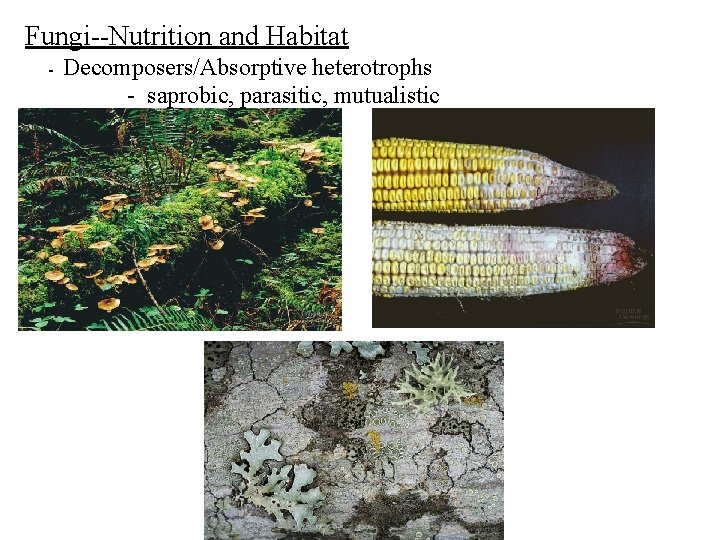
Fungi--Nutrition and Habitat - Decomposers/Absorptive heterotrophs - saprobic, parasitic, mutualistic
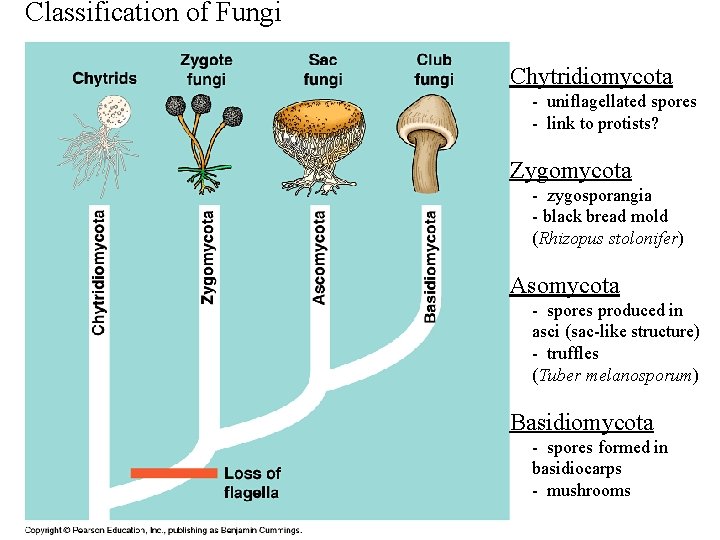
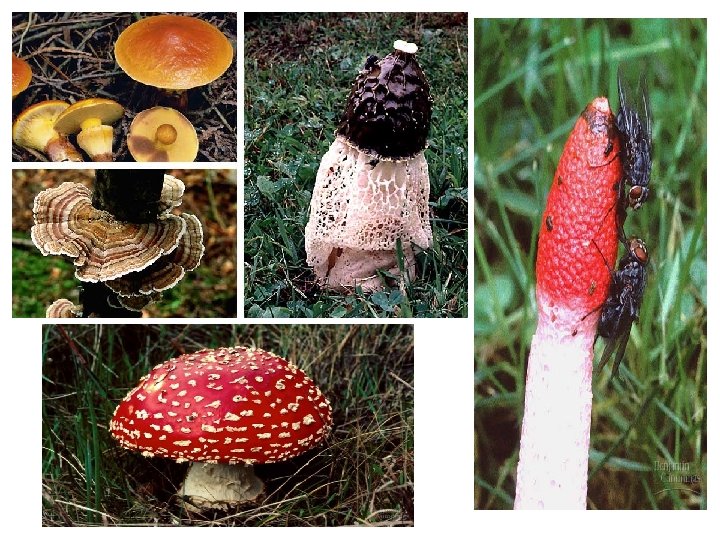
Classification of Fungi Chytridiomycota - uniflagellated spores - link to protists? Zygomycota - zygosporangia - black bread mold (Rhizopus stolonifer) Asomycota - spores produced in asci (sac-like structure) - truffles (Tuber melanosporum) Basidiomycota - spores formed in basidiocarps - mushrooms
Structure - hyphae form mycellium
Growth and Reproduction
Only fungi form fruiting bodies and spores
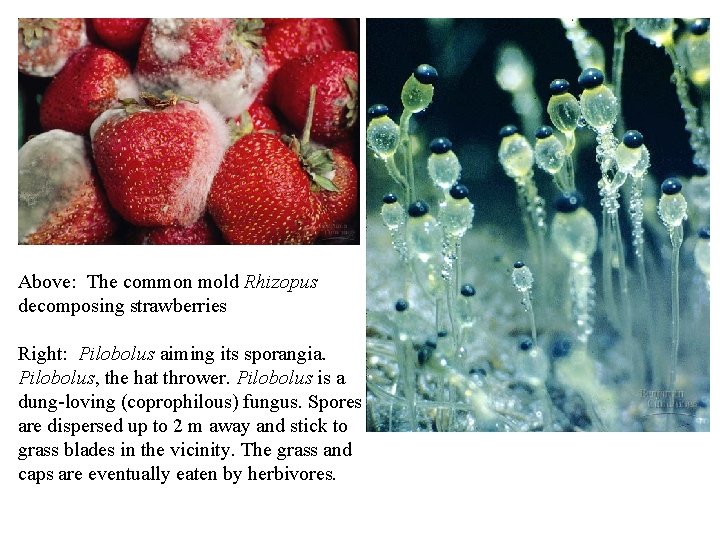
Above: The common mold Rhizopus decomposing strawberries Right: Pilobolus aiming its sporangia. Pilobolus, the hat thrower. Pilobolus is a dung-loving (coprophilous) fungus. Spores are dispersed up to 2 m away and stick to grass blades in the vicinity. The grass and caps are eventually eaten by herbivores.
Zygomycota
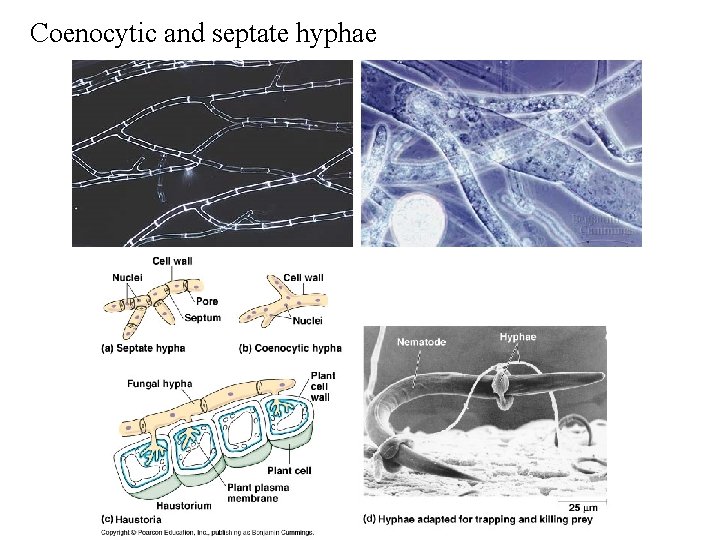
Coenocytic and septate hyphae
Life cycle of bread mold WATCH-http: //bcs. whfreeman. com/thelifewire/content/chp 31/31020. html Use these 10 terms to explain the life cycle of a bread mold 1. Hyphae 2. Sporangia 3. Spore 4. Asexual 5. Sexual 6. Pheromones 7. Zygosporangium 8. Nuclei 9. Haploid 10. Diploid
Asomycota
Clockwise: Scarlet cup; the Yellow morel; truffels
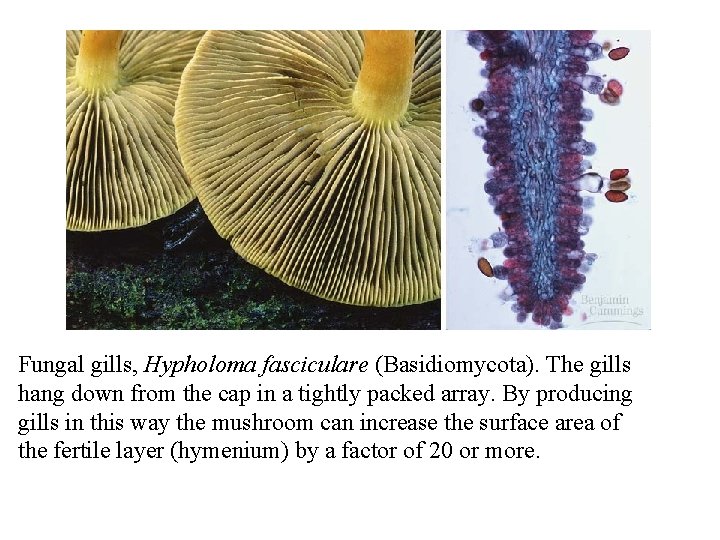
Fungal gills, Hypholoma fasciculare (Basidiomycota). The gills hang down from the cap in a tightly packed array. By producing gills in this way the mushroom can increase the surface area of the fertile layer (hymenium) by a factor of 20 or more.
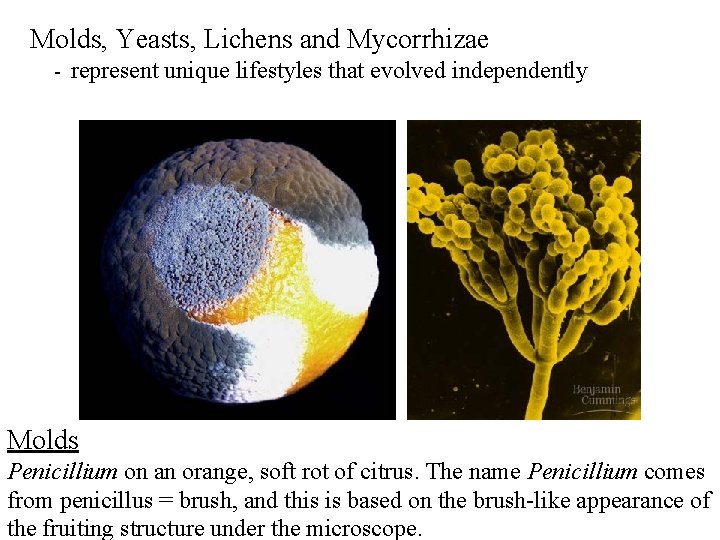
Molds, Yeasts, Lichens and Mycorrhizae - represent unique lifestyles that evolved independently Molds Penicillium on an orange, soft rot of citrus. The name Penicillium comes from penicillus = brush, and this is based on the brush-like appearance of the fruiting structure under the microscope.
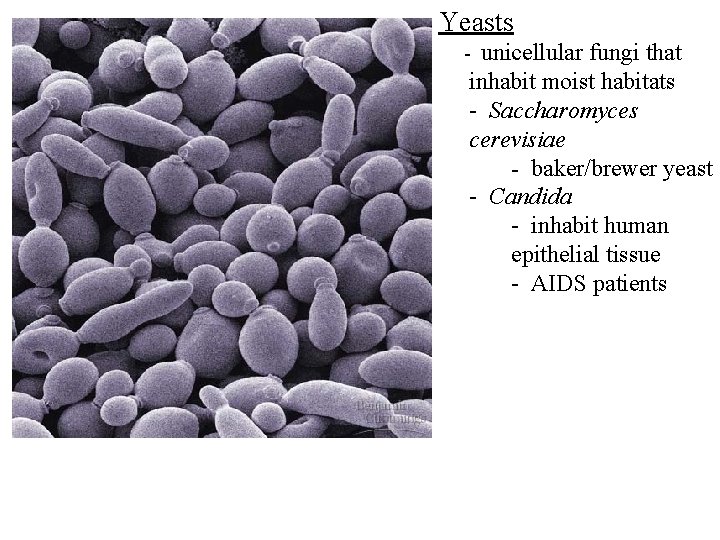
Yeasts unicellular fungi that inhabit moist habitats - Saccharomyces cerevisiae - baker/brewer yeast - Candida - inhabit human epithelial tissue - AIDS patients -
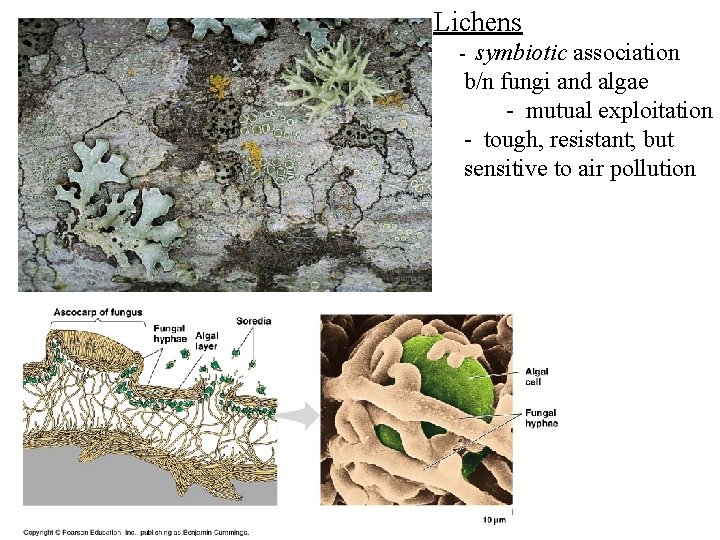
Lichens symbiotic association b/n fungi and algae - mutual exploitation - tough, resistant; but sensitive to air pollution -
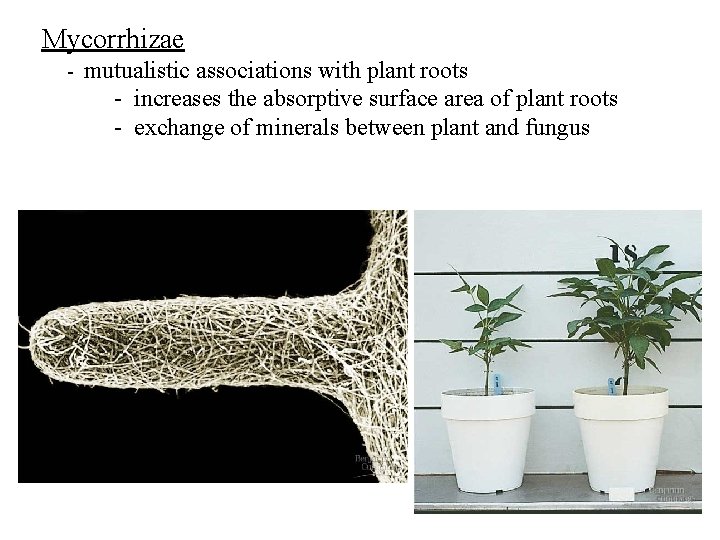
Mycorrhizae - mutualistic associations with plant roots - increases the absorptive surface area of plant roots - exchange of minerals between plant and fungus
To do #2 -Watch life cycle of a bread mold -Write a summary of the life cycle of bread mold