
Read me now Welcome back Homework Complete the
Read me now Welcome back. Homework: Complete the chart on STDs by Tuesday. What are we doing today: Learning about the consequences of STDS.

Read me first STD Chart (homework) is due Tuesday
STDs / STIs Infections that pass from person to person through 1. Sexual activity 2. Close body contact You can have an infection, but look and feel healthy. Young people are more likely to get STDs particularly girls 15 -19 and boys 20 -24.
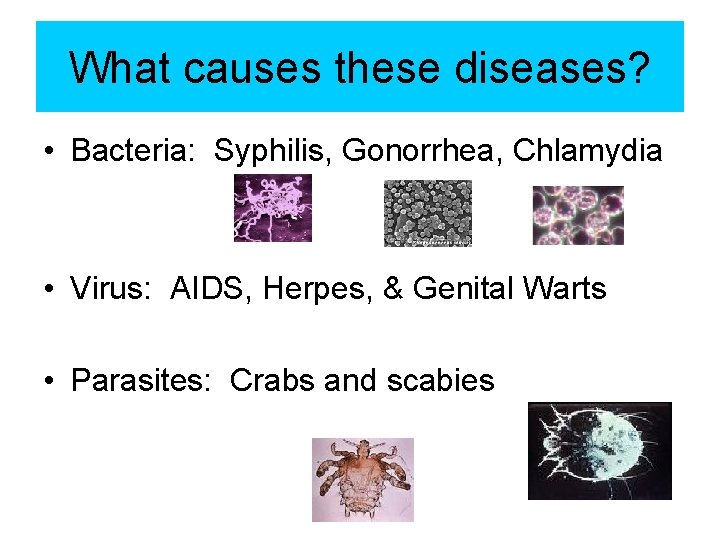
What causes these diseases? • Bacteria: Syphilis, Gonorrhea, Chlamydia • Virus: AIDS, Herpes, & Genital Warts • Parasites: Crabs and scabies
Although, there are more that 25 different STDs, will be talking about the more common ones. • • • Chlamydia Syphilis Gonorrhea Scabies Crabs Aids…. Herpes …. Genital Warts
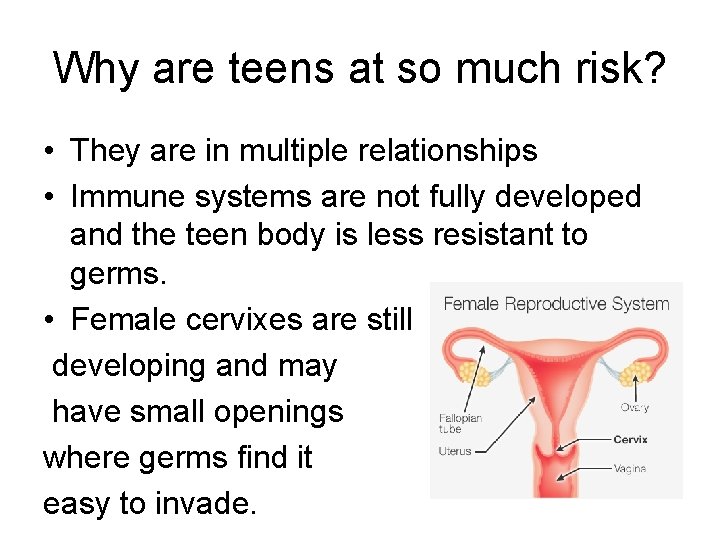
Why are teens at so much risk? • They are in multiple relationships • Immune systems are not fully developed and the teen body is less resistant to germs. • Female cervixes are still developing and may have small openings where germs find it easy to invade.
Why are teens at risk? • Teens like to experiment with drugs and alcohol and may take risks that might otherwise be avoided when sober. • Most teens don’t think they can get an STD.
However……. Do you know… 1 out of 4 sexually active teens will get an STD. & One out of every 5 Americans had an STD.
Lets do some Math • If there are 440 students in CCS’s High School 41% are sexually active…. . (according to the TAP survey 2011 of Oneida Co. ) Then, how many students are having sex? 440 x. 41 180 kids choosing to have sex Wow…now if ¼ are infected with an std…. . 180/4 = 45 will have/ had a std
How do people catch these germs? Through sexual activity (oral, vaginal and anal) The germs are carried in body fluids such as blood and vaginal secretions and semen. Some are shed from the skin. Mothers transmit them to babies. Sometime through personal items.
What are some symptoms you may notice? • Any abnormal discharge from the penis or vagina • Burning when urinating • Unusual sores or blisters in the genitals • Pain in the belly, testicles or lower abdomen • Itching *most people don’t have or can’t see the symptoms
Abnormal discharge • Females have a • Male should never discharge from the have a discharge from vagina that changes the penis except for through her menstrual urine and semen. cycle. • An abnormal discharge smells and is a yellow or greenish is green or yellow in color.
Pain when urinating • It should never hurt to pee. If it does, see your doctor. You may have a urinary track infection. (or an STD)
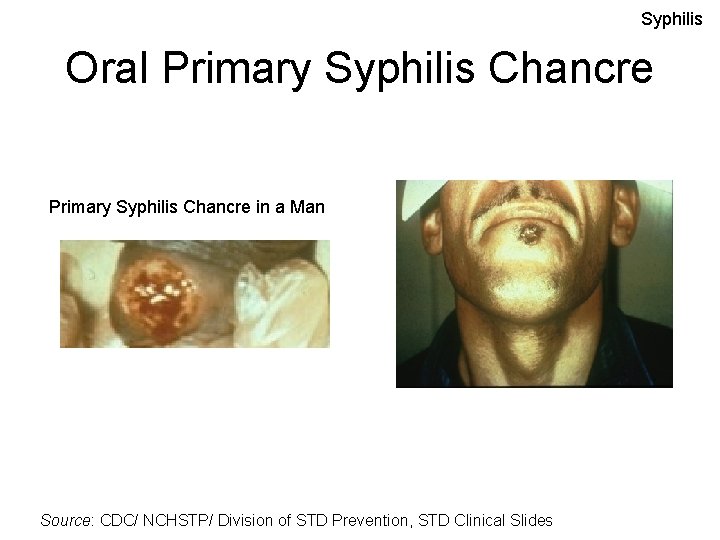
Syphilis Oral Primary Syphilis Chancre in a Man Source: CDC/ NCHSTP/ Division of STD Prevention, STD Clinical Slides
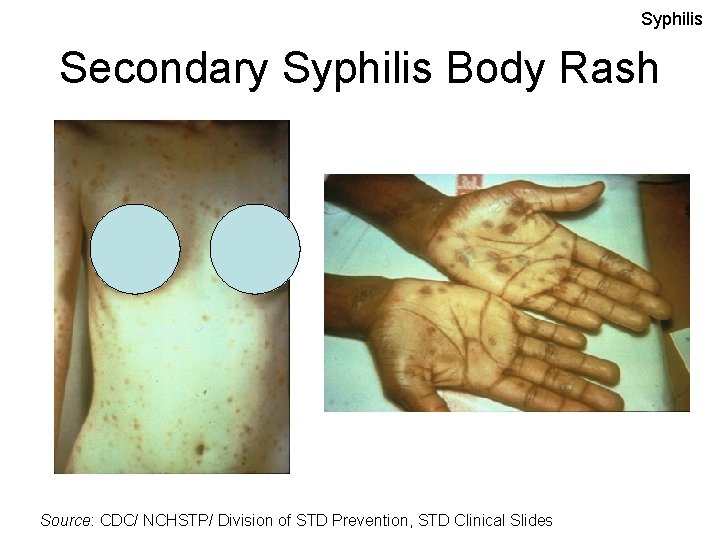
Syphilis Secondary Syphilis Body Rash Source: CDC/ NCHSTP/ Division of STD Prevention, STD Clinical Slides
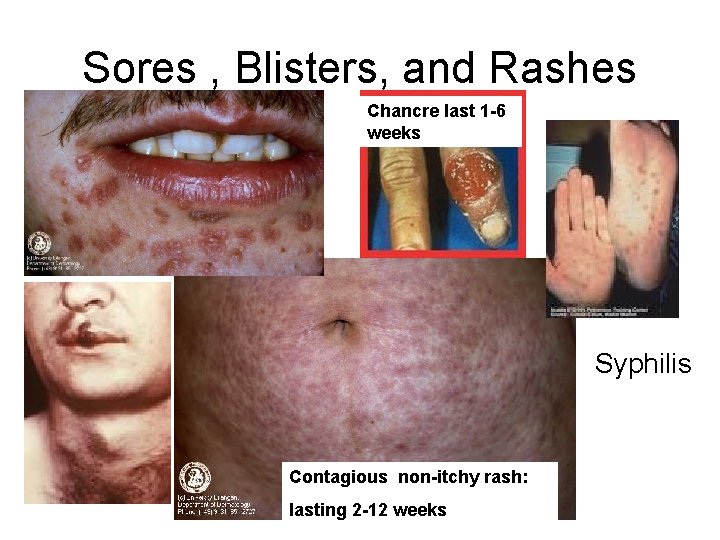
Sores , Blisters, and Rashes Chancre last 1 -6 weeks Syphilis Contagious non-itchy rash: lasting 2 -12 weeks
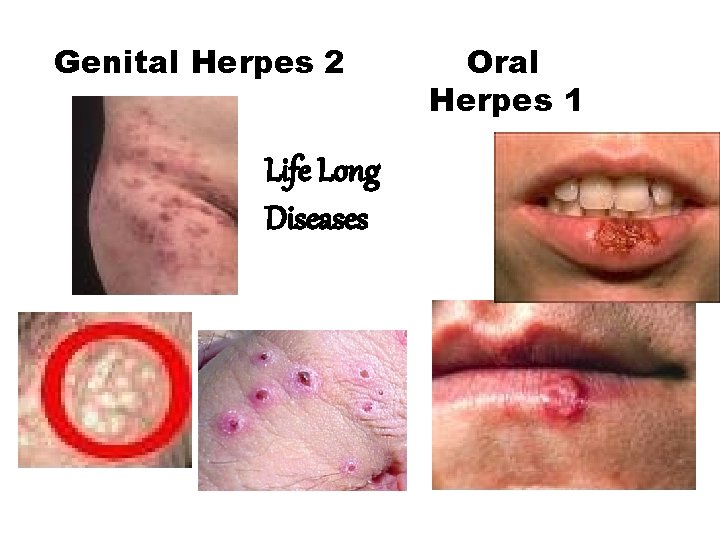
Genital Herpes 2 Life Long Diseases Oral Herpes 1
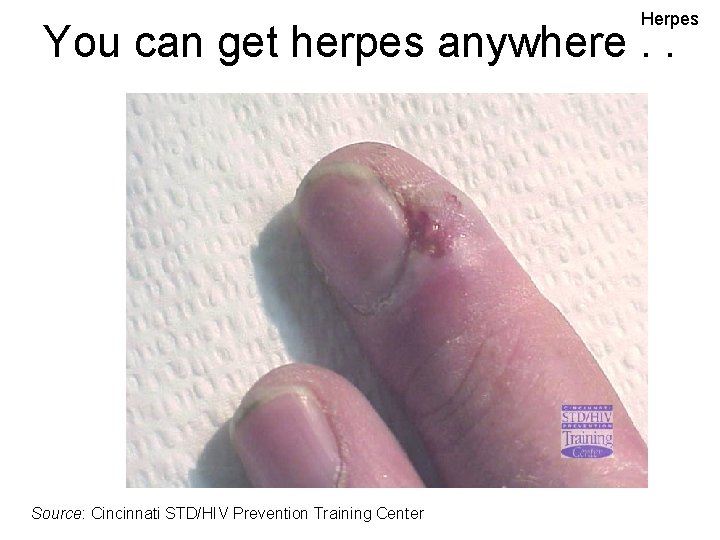
Herpes You can get herpes anywhere. . . Source: Cincinnati STD/HIV Prevention Training Center
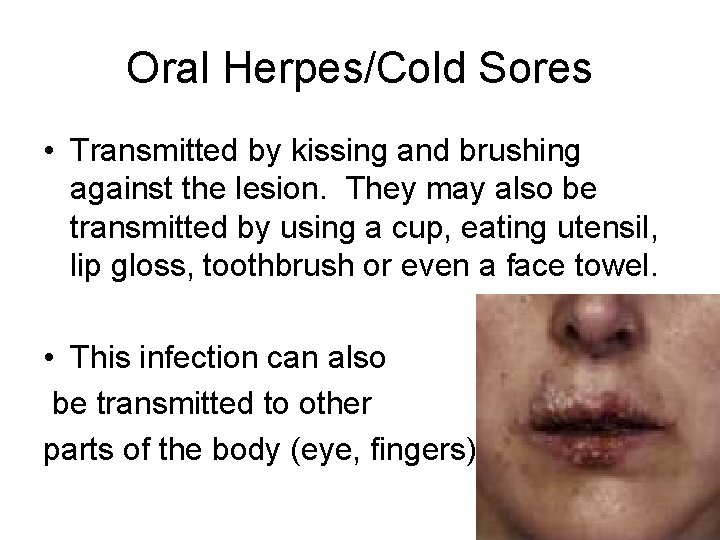
Oral Herpes/Cold Sores • Transmitted by kissing and brushing against the lesion. They may also be transmitted by using a cup, eating utensil, lip gloss, toothbrush or even a face towel. • This infection can also be transmitted to other parts of the body (eye, fingers).
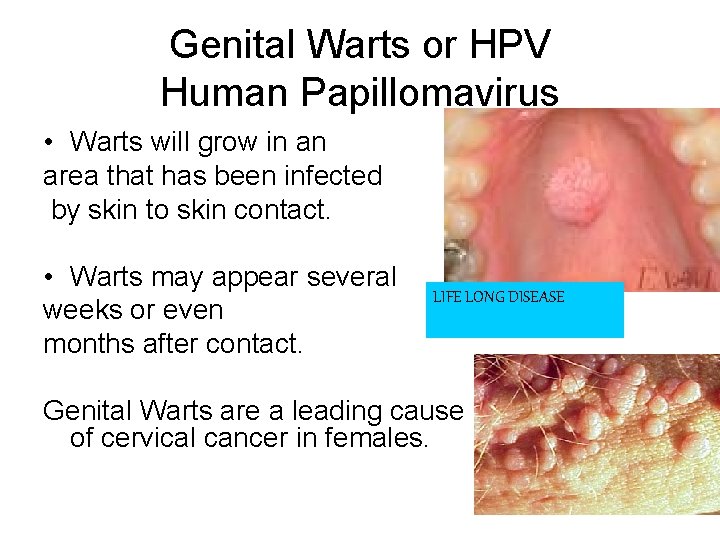
Genital Warts or HPV Human Papillomavirus • Warts will grow in an area that has been infected by skin to skin contact. • Warts may appear several weeks or even months after contact. LIFE LONG DISEASE Genital Warts are a leading cause of cervical cancer in females.
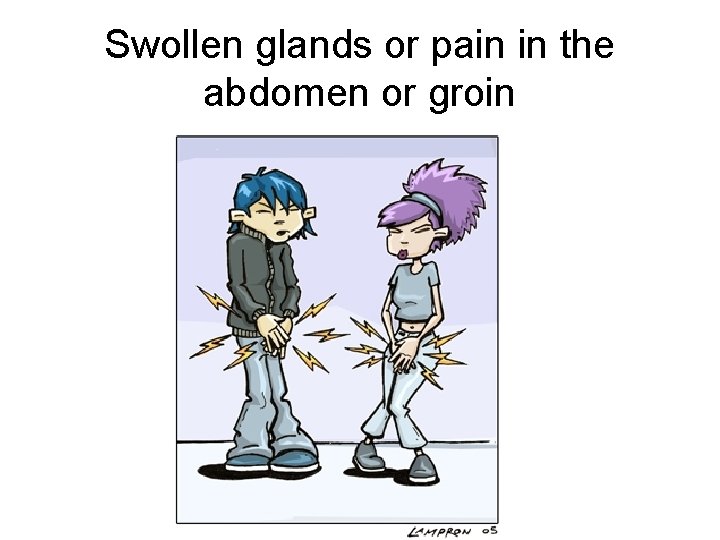
Swollen glands or pain in the abdomen or groin
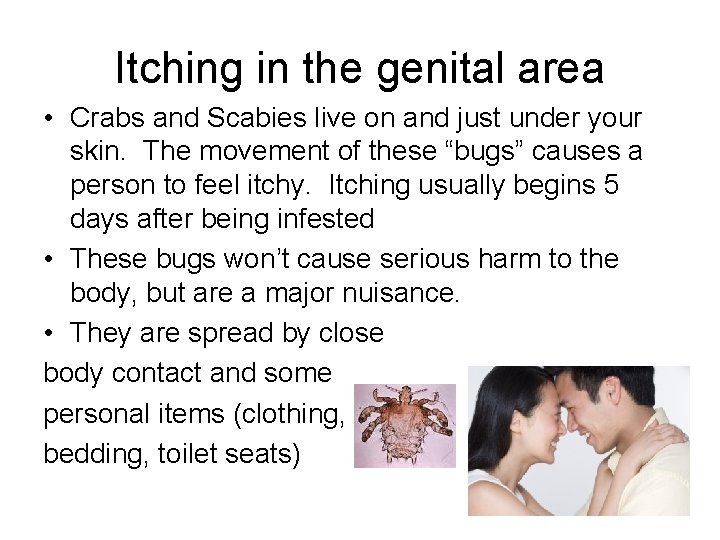
Itching in the genital area • Crabs and Scabies live on and just under your skin. The movement of these “bugs” causes a person to feel itchy. Itching usually begins 5 days after being infested • These bugs won’t cause serious harm to the body, but are a major nuisance. • They are spread by close body contact and some personal items (clothing, bedding, toilet seats)
Remember • Most people do not have these warning signs or symptoms. • Therefore if you are sexually active you must see a dr. every 6 months. (to be checked)
What can happen if my STD is not treated? 1. You can become infertile (not able to have children) gonorrhea & chlamydia 2. Girls can increase the risk of cervical cancer (warts) 3. Hair loss, blindness, deafness, heart disease, brain damage, paralysis and more.
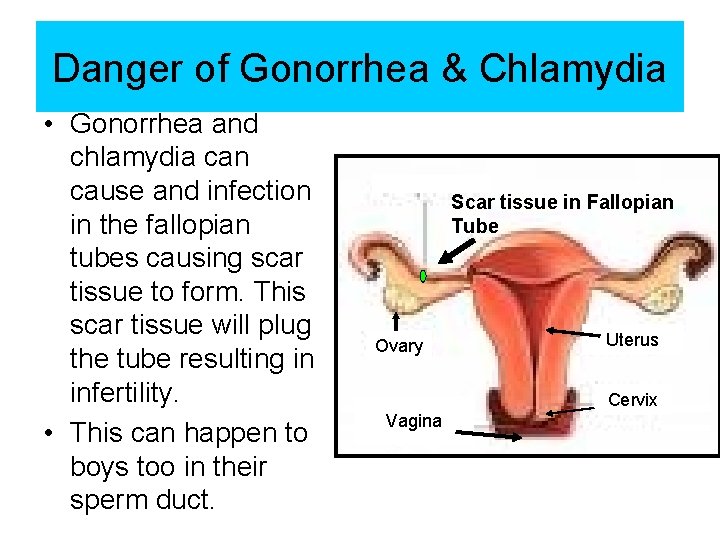
Danger of Gonorrhea & Chlamydia • Gonorrhea and chlamydia can cause and infection in the fallopian tubes causing scar tissue to form. This scar tissue will plug the tube resulting in infertility. • This can happen to boys too in their sperm duct. Scar tissue in Fallopian Tube Ovary Uterus Cervix Vagina
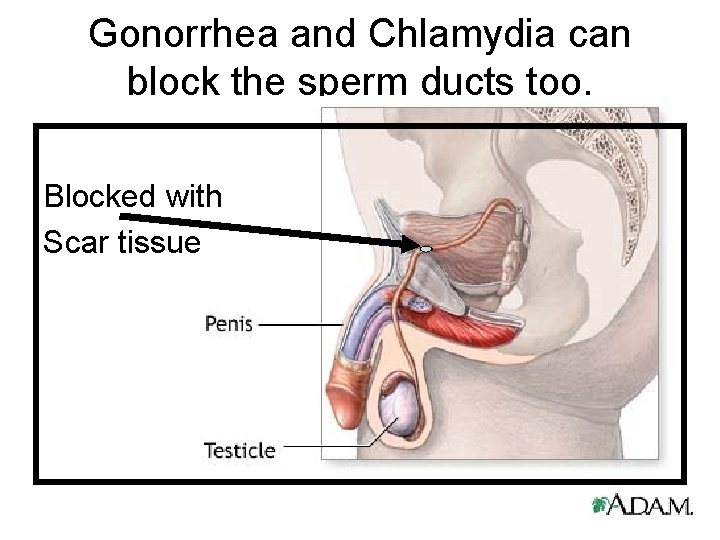
Gonorrhea and Chlamydia can block the sperm ducts too. Blocked with Scar tissue
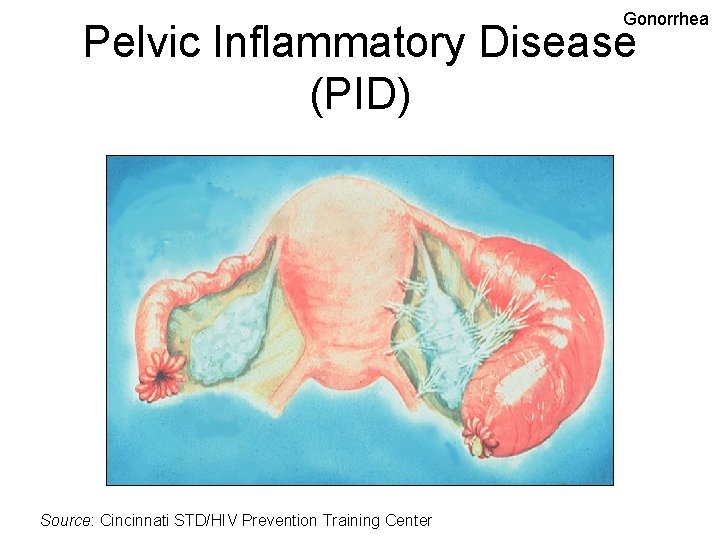
Gonorrhea Pelvic Inflammatory Disease (PID) Source: Cincinnati STD/HIV Prevention Training Center
STDS harm babies also • • • Still birth Low birth weight Eye infections & blindness Deafness Hepatitis & cirrhosis (Liver damage) Neonatal sepsis (infection in the baby’s blood)
How can I prevent getting a STD? • The only sure way to avoid STDS is to choose to be abstinent! Enjoy the relationship without having sex or skin to skin contact.

But if you are sexually active…… Visit a doctor or clinic every 6 months!
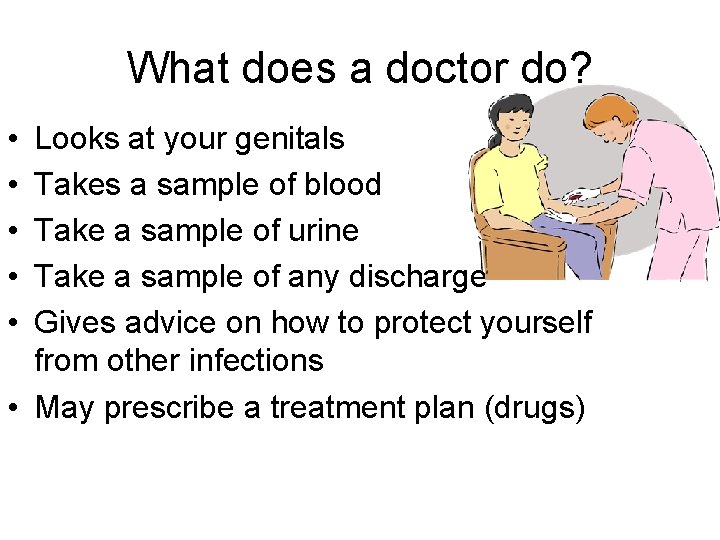
What does a doctor do? • • • Looks at your genitals Takes a sample of blood Take a sample of urine Take a sample of any discharge Gives advice on how to protect yourself from other infections • May prescribe a treatment plan (drugs)

What should a person do if they think they have a STD? • Tell a trusted adult • See their health care provider • Avoid all contact with others until you know for sure (you don’t want to spread it).

Why should a person tell their partner(s) if they are infected? • 1. so the partner can also be checked • 2. so people don’t spread the disease further
What is the easiest way to prevent STDs? • Abstinence
- Slides: 34