
Read and study the imperfect tense and translate




- Slides: 21
Read and study the imperfect tense and translate slide 18 Homework for Y 10 A/Fr
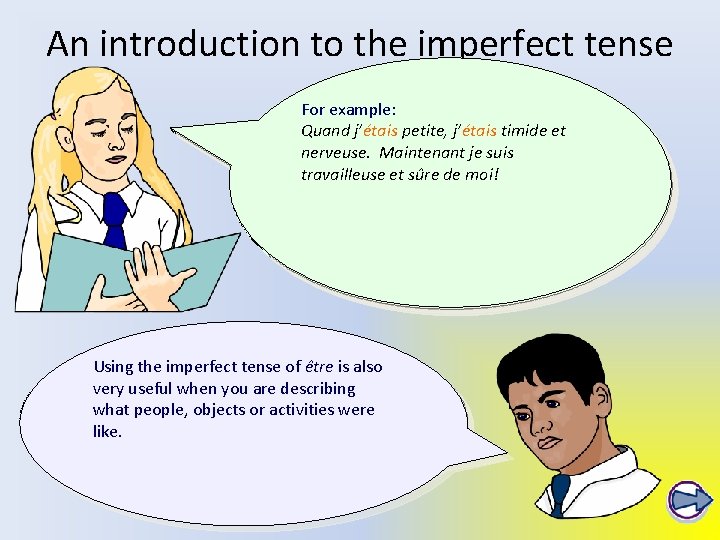
An introduction to the imperfect tense 2 For example: Many of the Boucle d’Or sentences use Quand j’étais petite, j’étais timide et J’ai visité la Tour Eiffel. C’était très the imperfect tense of the verb être, nerveuse. Maintenant intéressant. – or were. je suis meaning was travailleuse sûre. Tower. de moi!It was very I visited the et Eiffel interesting. Using the probably imperfectalready tense of être is also You have met this, very useful when you are describing perhaps when talking about things you what people, objects have done in the past. or activities were like.
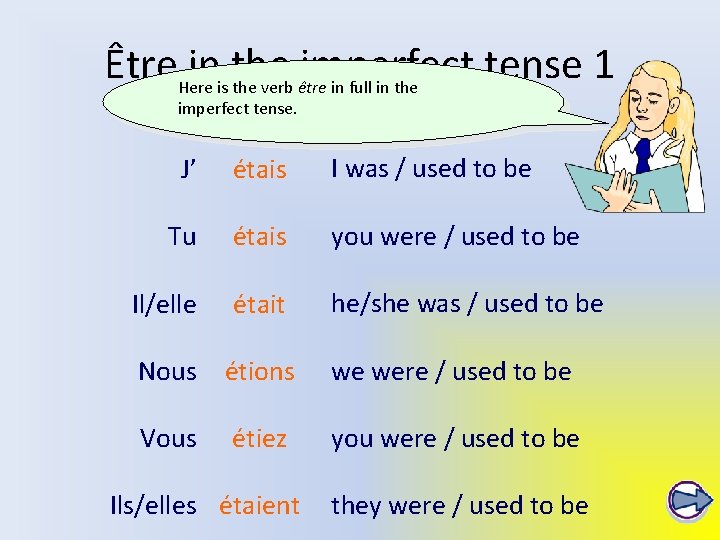
Être. Here inis the imperfect tense 1 the verb être in full in the imperfect tense. J’ étais I was / used to be Tu étais you were / used to be Il/elle était he/she was / used to be Nous étions we were / used to be Vous you were / used to be étiez Ils/elles étaient they were / used to be
Être in the imperfect tense 2
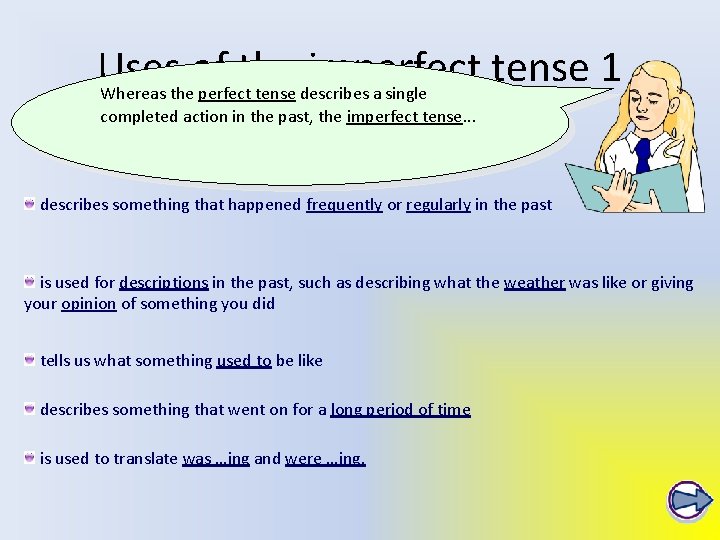
Uses of the imperfect tense 1 Whereas the perfect tense describes a single completed action in the past, the imperfect tense. . . describes something that happened frequently or regularly in the past is used for descriptions in the past, such as describing what the weather was like or giving your opinion of something you did tells us what something used to be like describes something that went on for a long period of time is used to translate was …ing and were …ing.
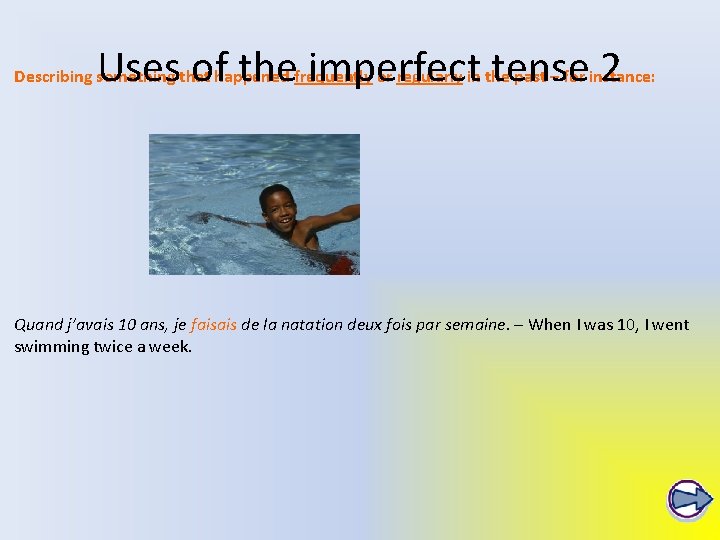
Uses of the imperfect tense 2 Describing something that happened frequently or regularly in the past – for instance: Quand j’avais 10 ans, je faisais de la natation deux fois par semaine. – When I was 10, I went swimming twice a week.
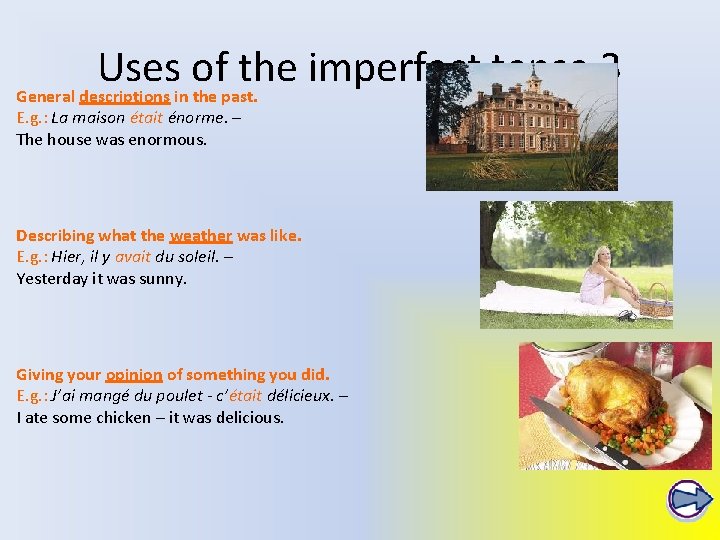
Uses of the imperfect tense 3 General descriptions in the past. E. g. : La maison était énorme. – The house was enormous. Describing what the weather was like. E. g. : Hier, il y avait du soleil. – Yesterday it was sunny. Giving your opinion of something you did. E. g. : J’ai mangé du poulet - c’était délicieux. – I ate some chicken – it was delicious.
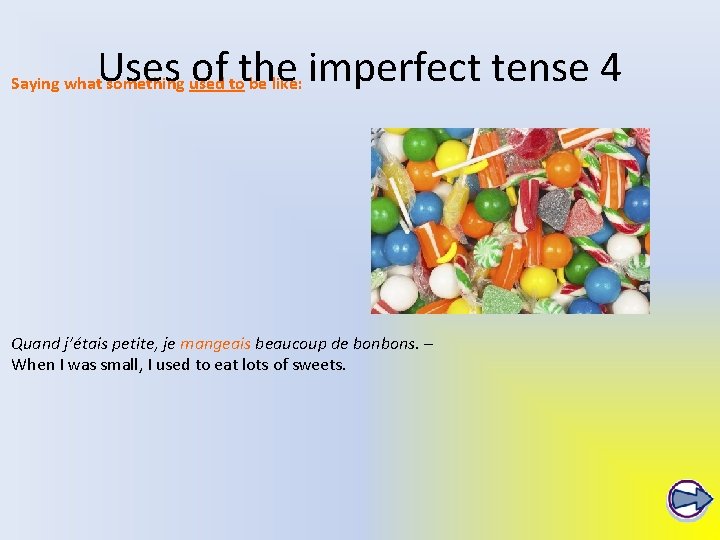
Uses of the imperfect tense 4 Saying what something used to be like: Quand j’étais petite, je mangeais beaucoup de bonbons. – When I was small, I used to eat lots of sweets.
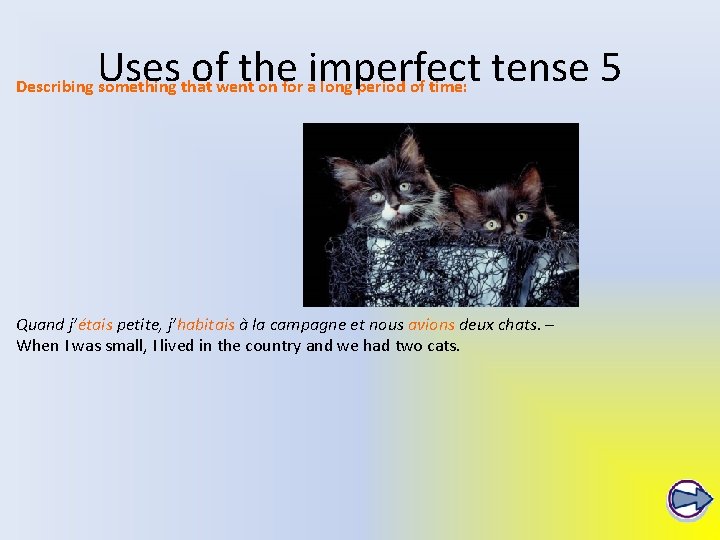
Uses of the imperfect tense 5 Describing something that went on for a long period of time: Quand j’étais petite, j’habitais à la campagne et nous avions deux chats. – When I was small, I lived in the country and we had two cats.
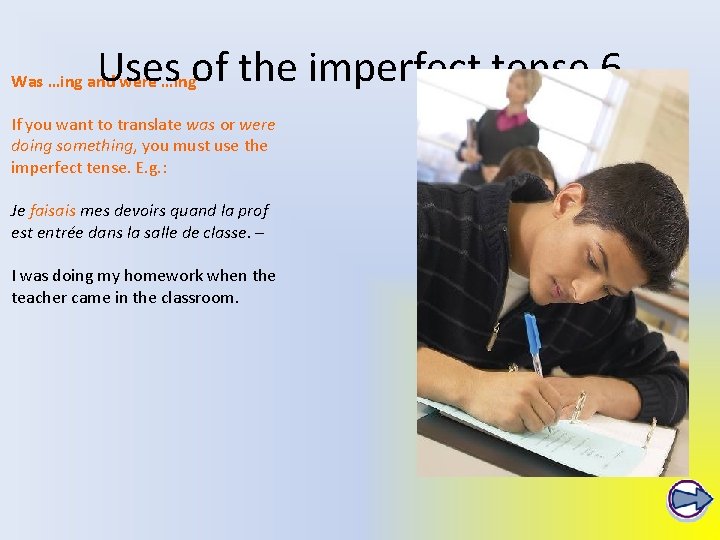
Uses of the imperfect tense 6 Was …ing and were …ing If you want to translate was or were doing something, you must use the imperfect tense. E. g. : Je faisais mes devoirs quand la prof est entrée dans la salle de classe. – I was doing my homework when the teacher came in the classroom.
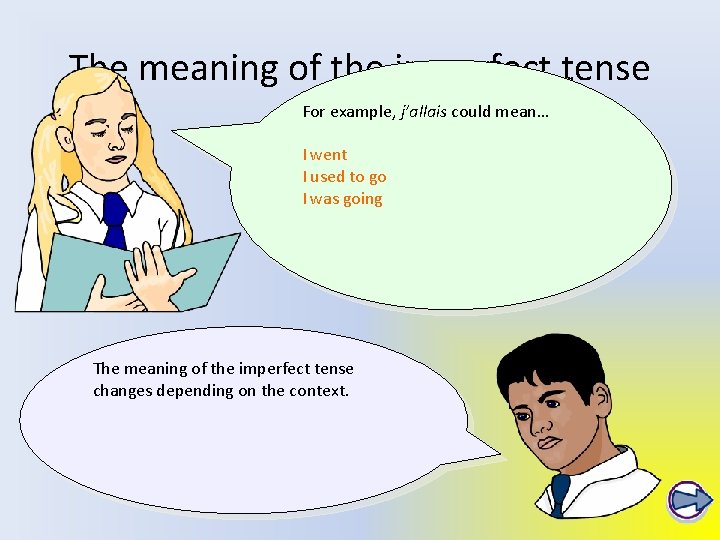
The meaning of the imperfect tense For example, j’allais could mean… I went I used to go I was going The meaning of the imperfect tense changes depending on the context.
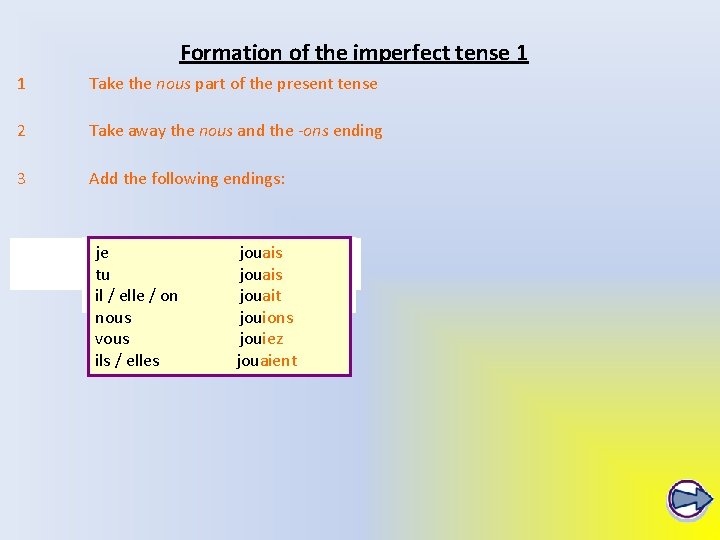
Formation of the imperfect tense 1 1 Take the nous part of the present tense 2 Take away the nous and the -ons ending 3 Add the following endings: je tu il / elle / on nous vous ils / elles jouais jouait jouions jouiez jouaient nous vous elle ils tu jeiljouons jouait jouiez jouaient jouions jouais
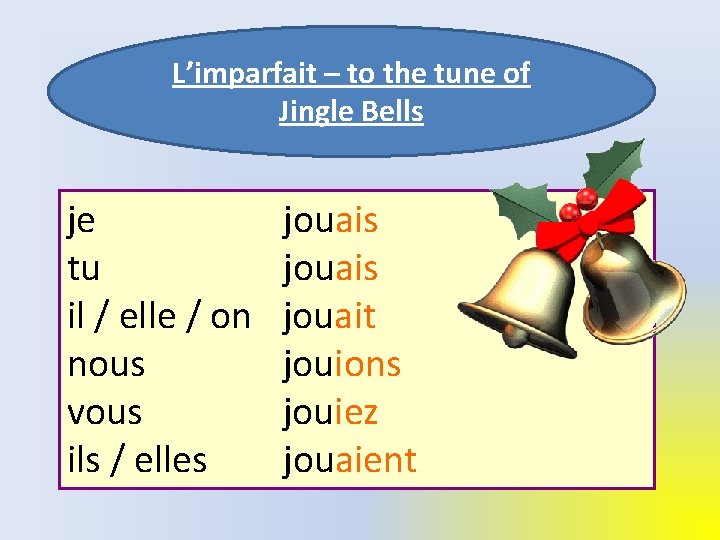
L’imparfait – to the tune of Jingle Bells je tu il / elle / on nous vous ils / elles jouais jouait jouions jouiez jouaient
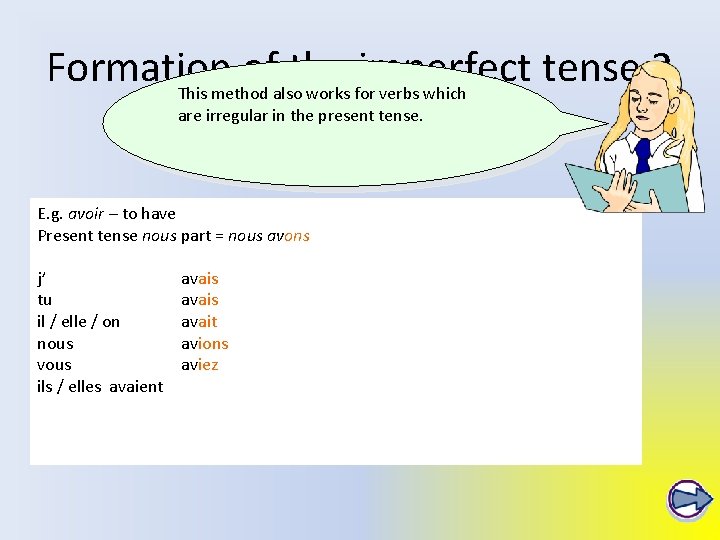
Formation of the imperfect tense 2 This method also works for verbs which are irregular in the present tense. E. g. avoir – to have Present tense nous part = nous avons j’ tu il / elle / on nous vous ils / elles avaient avais avait avions aviez
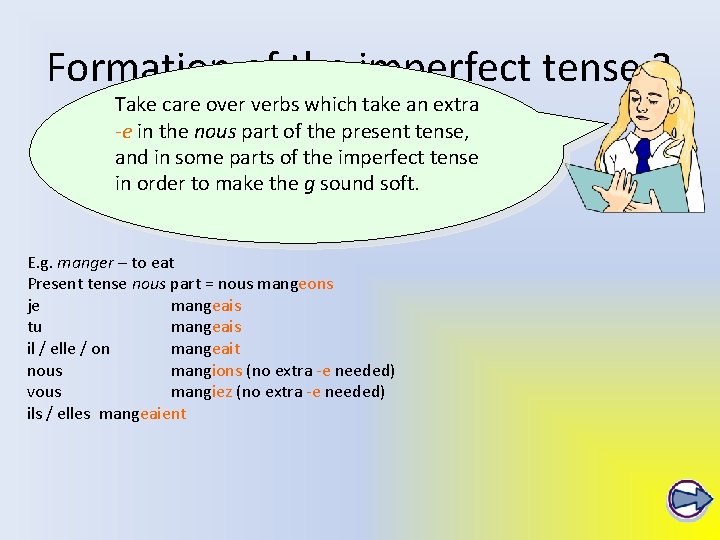
Formation of the imperfect tense 3 Take care over verbs which take an extra -e in the nous part of the present tense, and in some parts of the imperfect tense in order to make the g sound soft. E. g. manger – to eat Present tense nous part = nous mangeons je mangeais tu mangeais il / elle / on mangeait nous mangions (no extra -e needed) vous mangiez (no extra -e needed) ils / elles mangeaient
Formation of the imperfect tense 4 Similarly, with verbs like commencer, a -ç is needed rather than a c to make the sound soft in some parts of the imperfect tense. E. g. commencer – to start present tense nous part = nous commençons je commençais tu commençais il / elle / on commençait nous commencions (no -ç needed) vous commenciez (no -ç needed) ils / elles commençaient
The imperfect tense 1
The imperfect tense 2
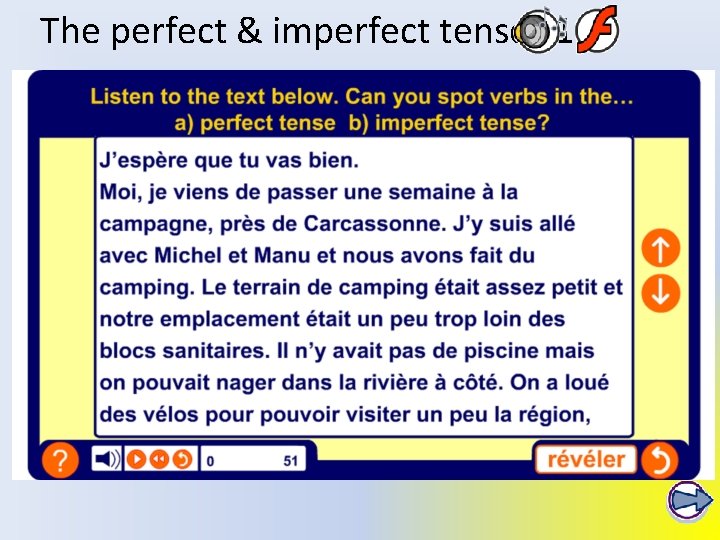
The perfect & imperfect tenses 1
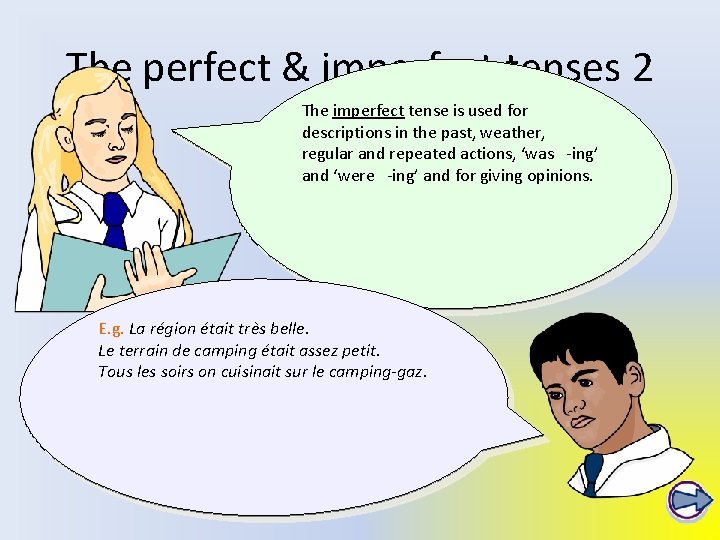
The perfect & imperfect tenses 2 The perfect imperfect is usedtenses for are andtense imperfect descriptions in the past, weather, often used together. regular and repeated actions, ‘was -ing’ The perfect tense is used for completed and ‘were -ing’ and for giving opinions. actions in the past. E. g. La région était très belle. Nous avons déjeuné dans une petite Le terrain de camping était assez petit. crêperie. Tous les soirs on cuisinait camping-gaz. Paul and his friends ate insur thelecrêperie on one particular day of their holiday - now both the meal and the holiday are over.
The perfect & imperfect tenses 3