
Reactors in Chem CAD Joshua Condon Richard Graver
- Slides: 21
Reactors in Chem. CAD Joshua Condon, Richard Graver, Joseph Saah, Shekhar Shah
Different Types of Reactor Models • Several options are given in Chem. CAD for reactor unit ops – Each type plays a specific role – Engineer’s prerogative/responsibility to choose the correct one for the job • Types – Stoichiometric, Equilibrium, Kinetic, and Gibbs
Stoichiometric Reactor • The simplest reactor model in Chem. CAD – Used only for single reactions – Great for a preliminary model of a process – Normally want a better reactor model for later process flow diagrams • Basics – Specify stoichiometry of reaction, thermal mode, key component, and fraction conversion
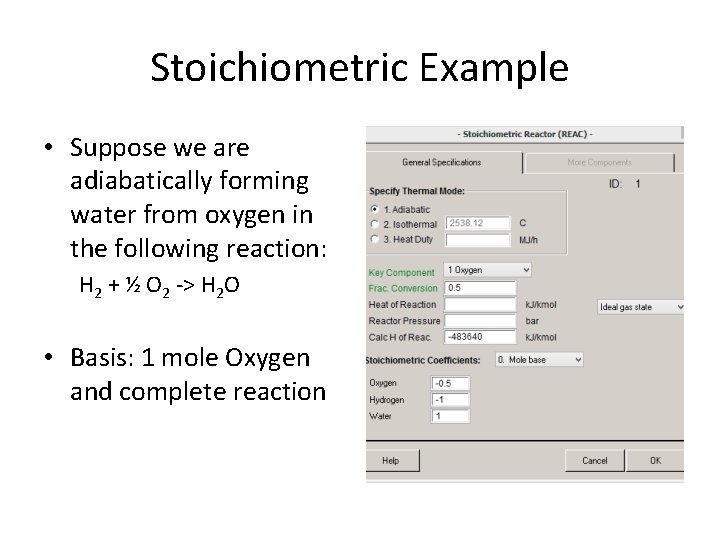
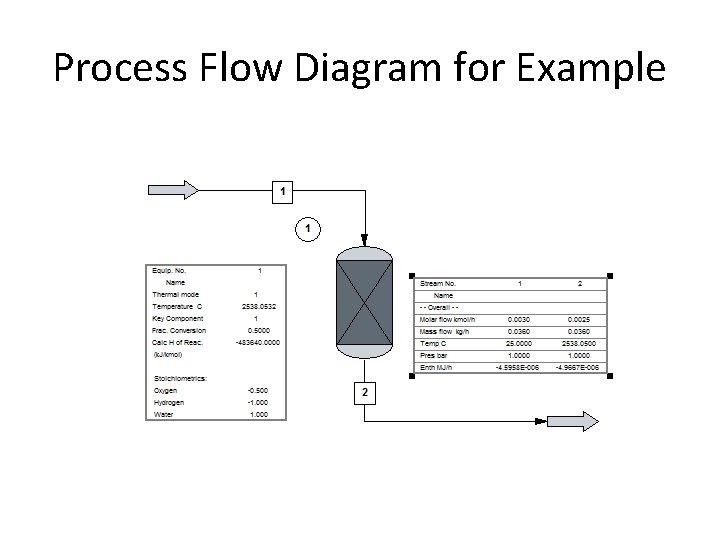
Stoichiometric Example • Suppose we are adiabatically forming water from oxygen in the following reaction: H 2 + ½ O 2 -> H 2 O • Basis: 1 mole Oxygen and complete reaction
Process Flow Diagram for Example
Stoichiometric Reactor • Great for initial observations and calculations • However, may not give physical results • Better to use one of the other reactors when accuracy is needed
Equilibrium Reactor • Simulates multiple reactions at once • Requires equilibrium data or conversion for each reaction • Uses Chem. CAD component thermodynamic data • More complex version of the stoichiometric reactor • Assumes reaction is run to close to equilibrium – Approximates a reactor with a high residence time • Estimates final conversion based on component equilibrium data and reaction stoichiometry
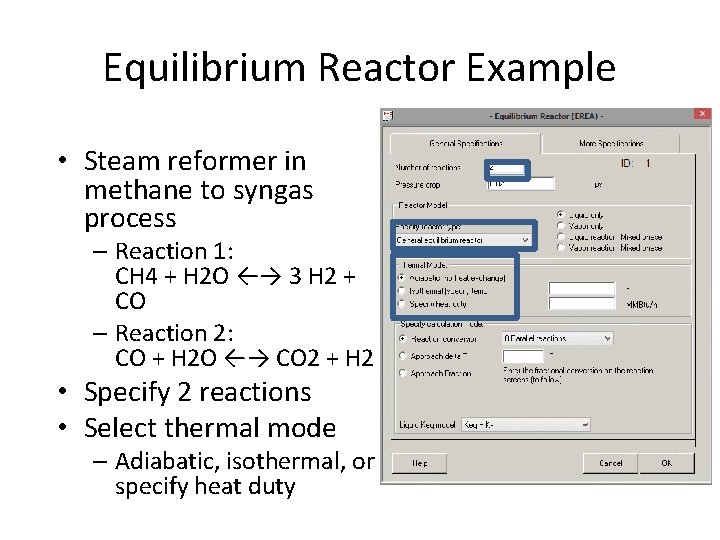
Equilibrium Reactor Example • Steam reformer in methane to syngas process – Reaction 1: CH 4 + H 2 O ←→ 3 H 2 + CO – Reaction 2: CO + H 2 O ←→ CO 2 + H 2 • Specify 2 reactions • Select thermal mode – Adiabatic, isothermal, or specify heat duty
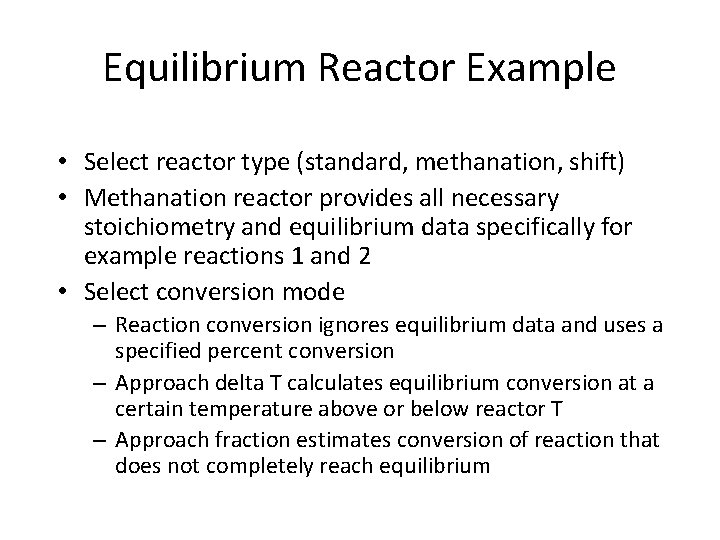
Equilibrium Reactor Example • Select reactor type (standard, methanation, shift) • Methanation reactor provides all necessary stoichiometry and equilibrium data specifically for example reactions 1 and 2 • Select conversion mode – Reaction conversion ignores equilibrium data and uses a specified percent conversion – Approach delta T calculates equilibrium conversion at a certain temperature above or below reactor T – Approach fraction estimates conversion of reaction that does not completely reach equilibrium
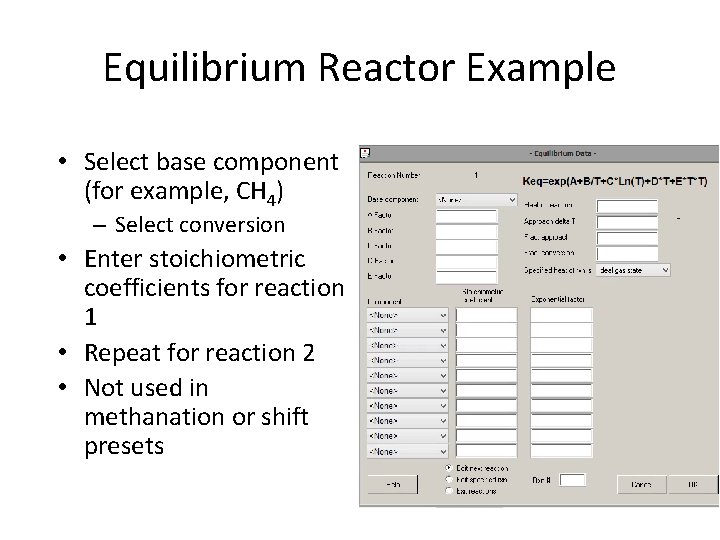
Equilibrium Reactor Example • Select base component (for example, CH 4) – Select conversion • Enter stoichiometric coefficients for reaction 1 • Repeat for reaction 2 • Not used in methanation or shift presets
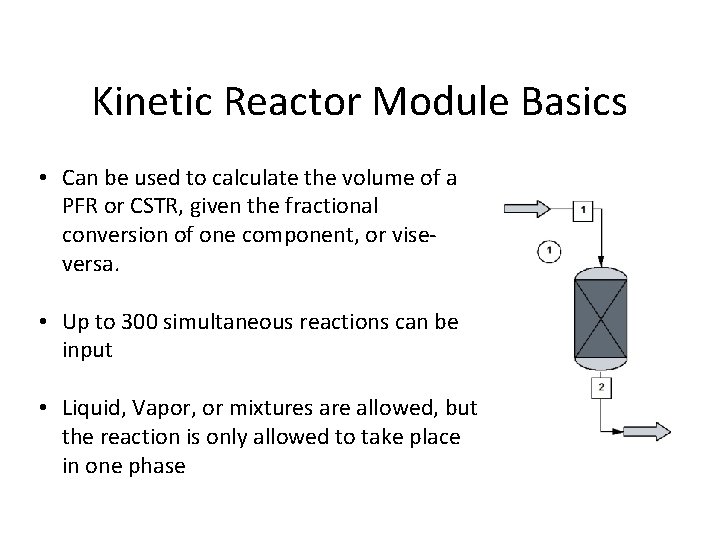
Kinetic Reactor Module Basics • Can be used to calculate the volume of a PFR or CSTR, given the fractional conversion of one component, or viseversa. • Up to 300 simultaneous reactions can be input • Liquid, Vapor, or mixtures are allowed, but the reaction is only allowed to take place in one phase
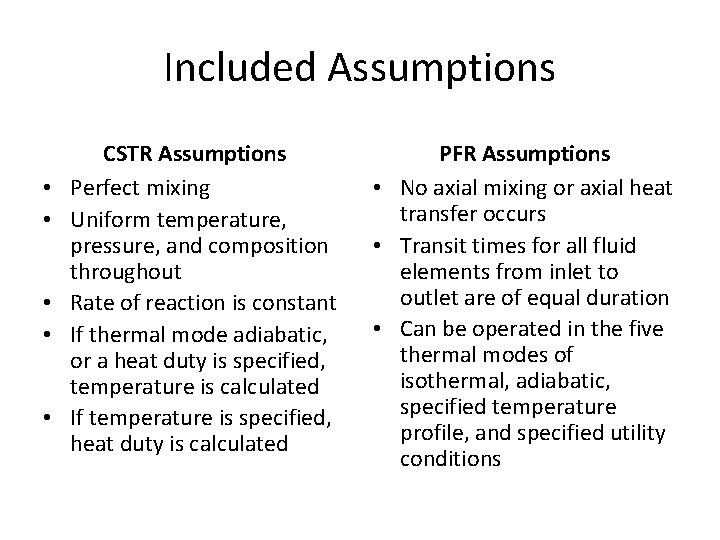
Included Assumptions • • • CSTR Assumptions Perfect mixing Uniform temperature, pressure, and composition throughout Rate of reaction is constant If thermal mode adiabatic, or a heat duty is specified, temperature is calculated If temperature is specified, heat duty is calculated PFR Assumptions • No axial mixing or axial heat transfer occurs • Transit times for all fluid elements from inlet to outlet are of equal duration • Can be operated in the five thermal modes of isothermal, adiabatic, specified temperature profile, and specified utility conditions
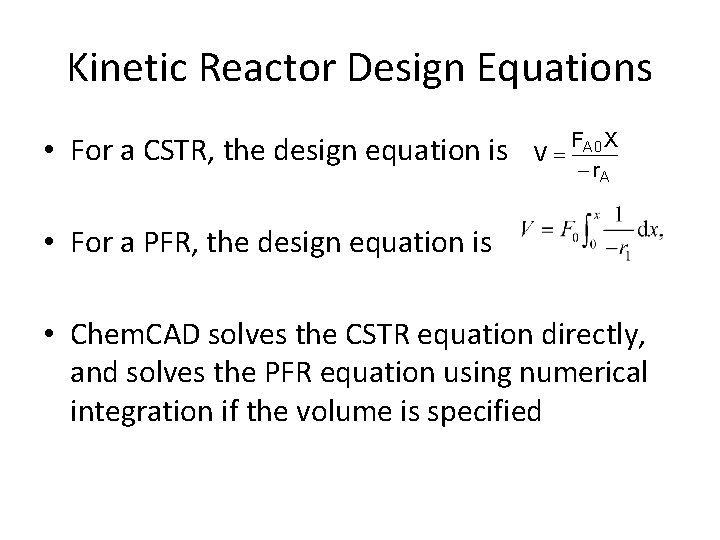
Kinetic Reactor Design Equations • For a CSTR, the design equation is • For a PFR, the design equation is • Chem. CAD solves the CSTR equation directly, and solves the PFR equation using numerical integration if the volume is specified
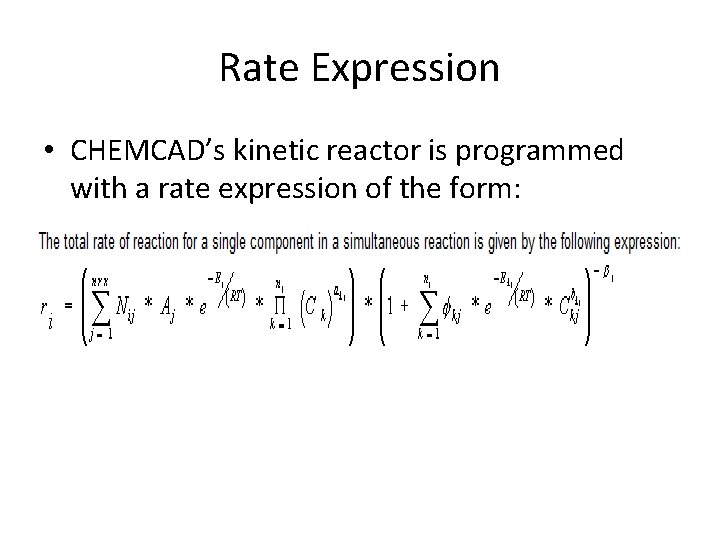
Rate Expression • CHEMCAD’s kinetic reactor is programmed with a rate expression of the form:
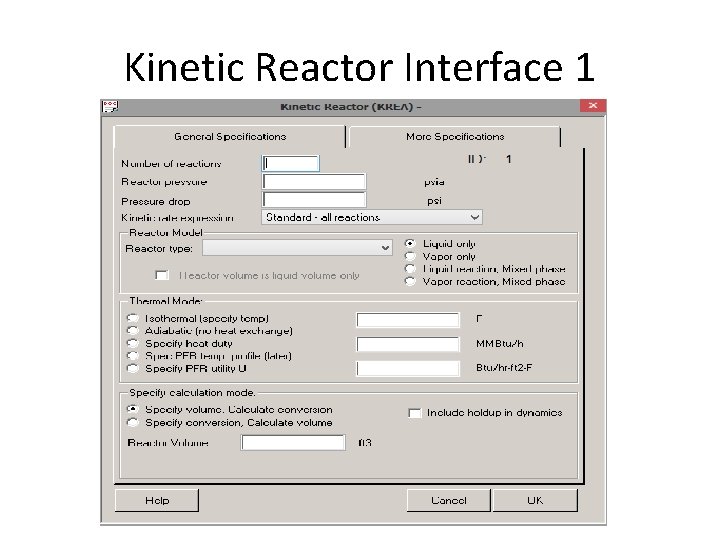
Kinetic Reactor Interface 1
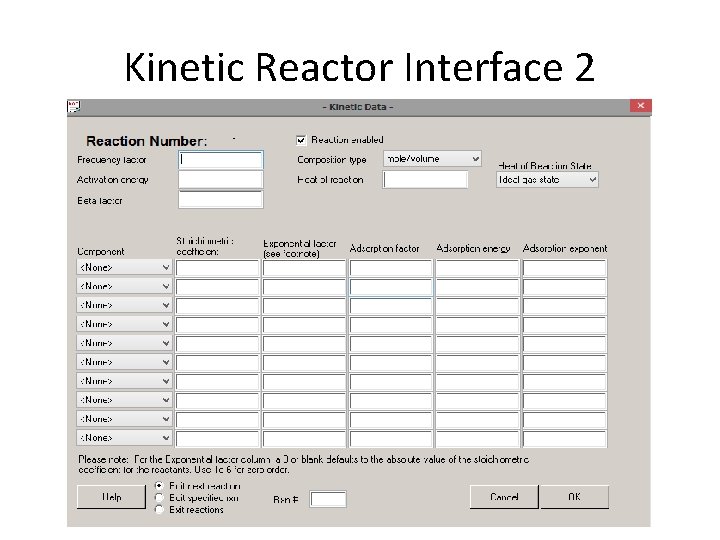
Kinetic Reactor Interface 2
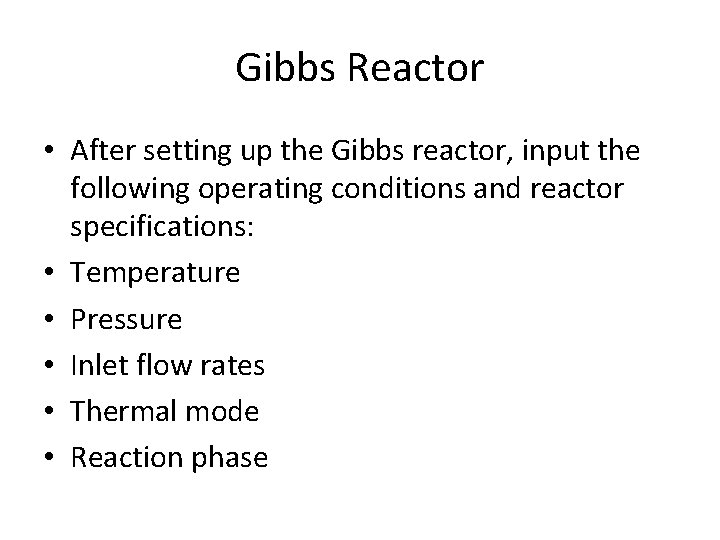
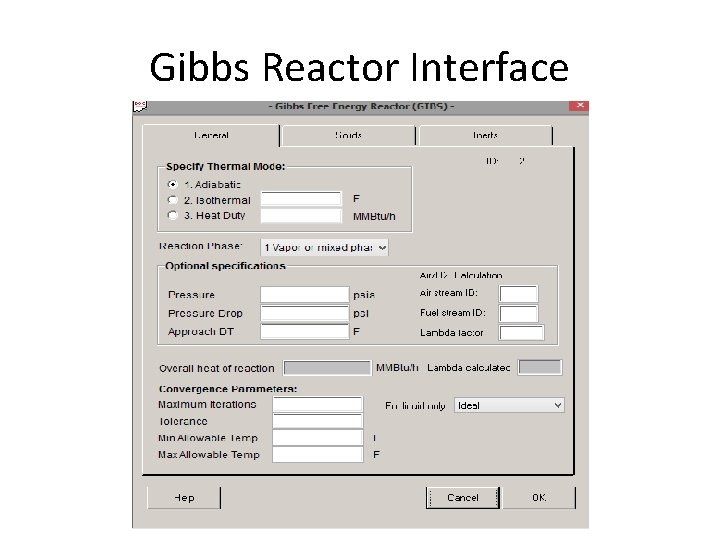
Gibbs Reactor • After setting up the Gibbs reactor, input the following operating conditions and reactor specifications: • Temperature • Pressure • Inlet flow rates • Thermal mode • Reaction phase
Gibbs Reactor Interface
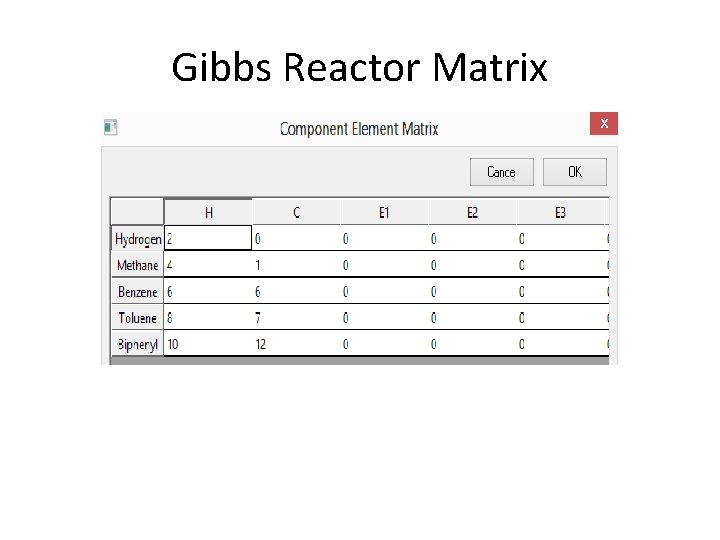
Gibbs Reactor Matrix
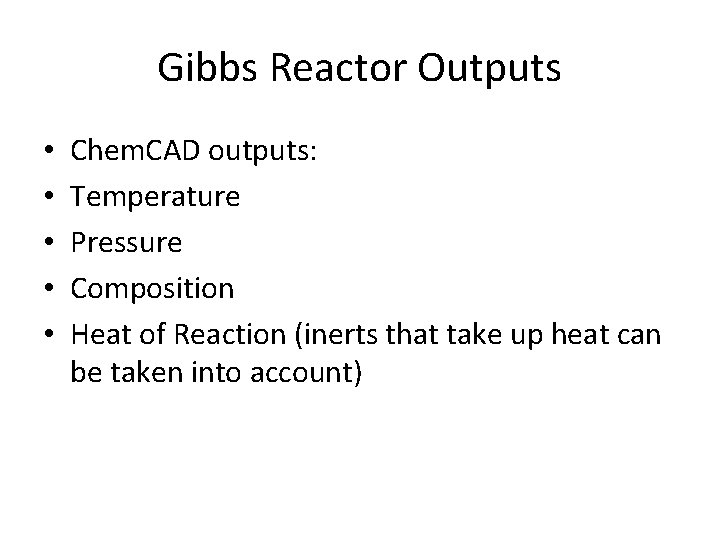
Gibbs Reactor Outputs • • • Chem. CAD outputs: Temperature Pressure Composition Heat of Reaction (inerts that take up heat can be taken into account)
Advantages vs. Disadvantages Advantages Disadvantages • Allows all potential reaction to happen by employing an element matrix (Chem. CAD generated) and then minimizes the Gibbs free energy of the products to obtain output compositions and conditions • Relies heavily on the specified thermal mode and thermodynamic model, but it is not clear how close the actual reaction comes to equilibrium