
Reactivity Lesson 6 Acids and Metal Oxides Chemistry
- Slides: 17
Reactivity Lesson 6 - Acids and Metal Oxides Chemistry - Key Stage 3 Miss Fenner 1
What state are metal oxides? Solid 2
Metal oxides are bases. What is a base? Bases can dissolve in water to produce an alkali with p. H 8 -14. 3
What element reacts with metal to form metal oxide? Oxygen 4
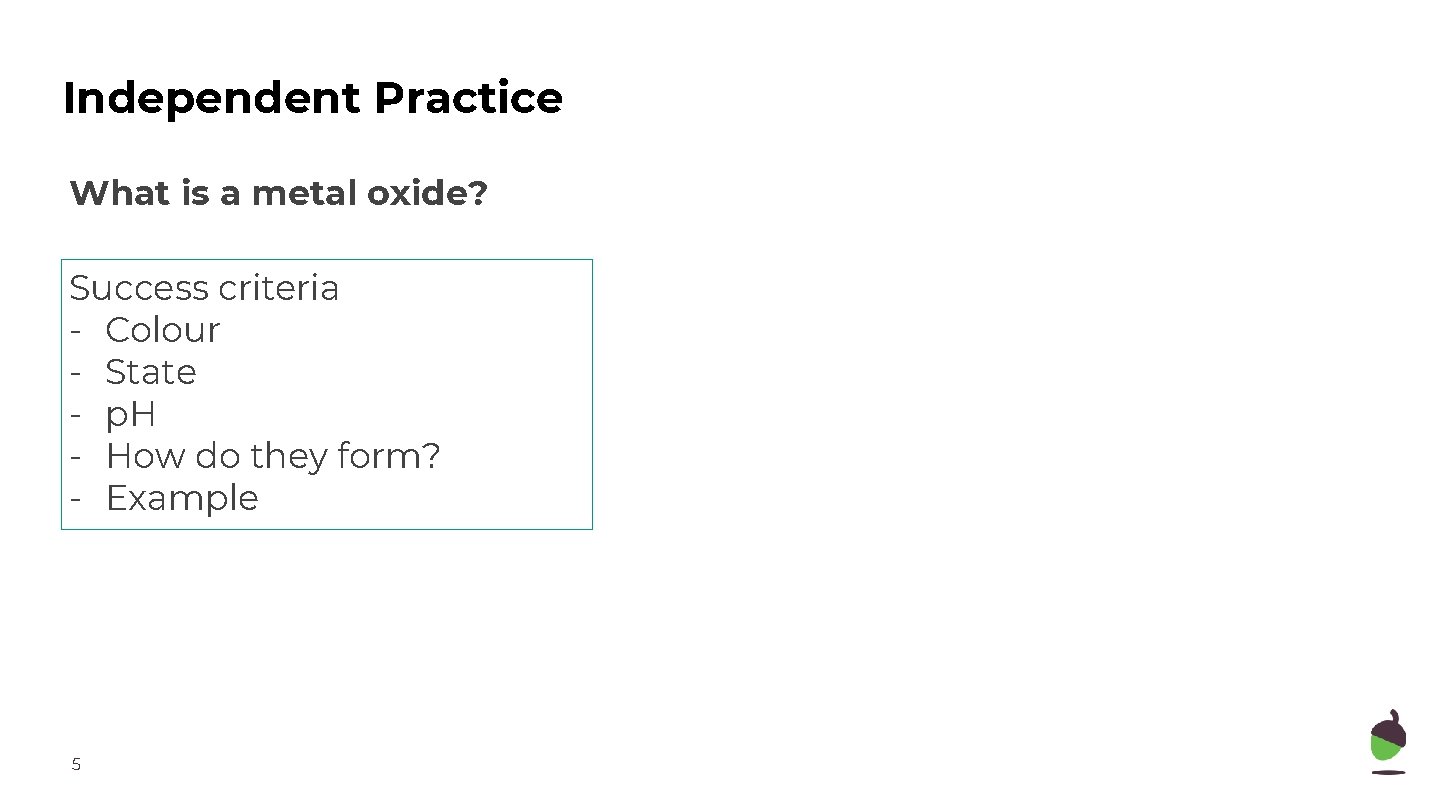
Independent Practice What is a metal oxide? Success criteria - Colour - State - p. H - How do they form? - Example 5
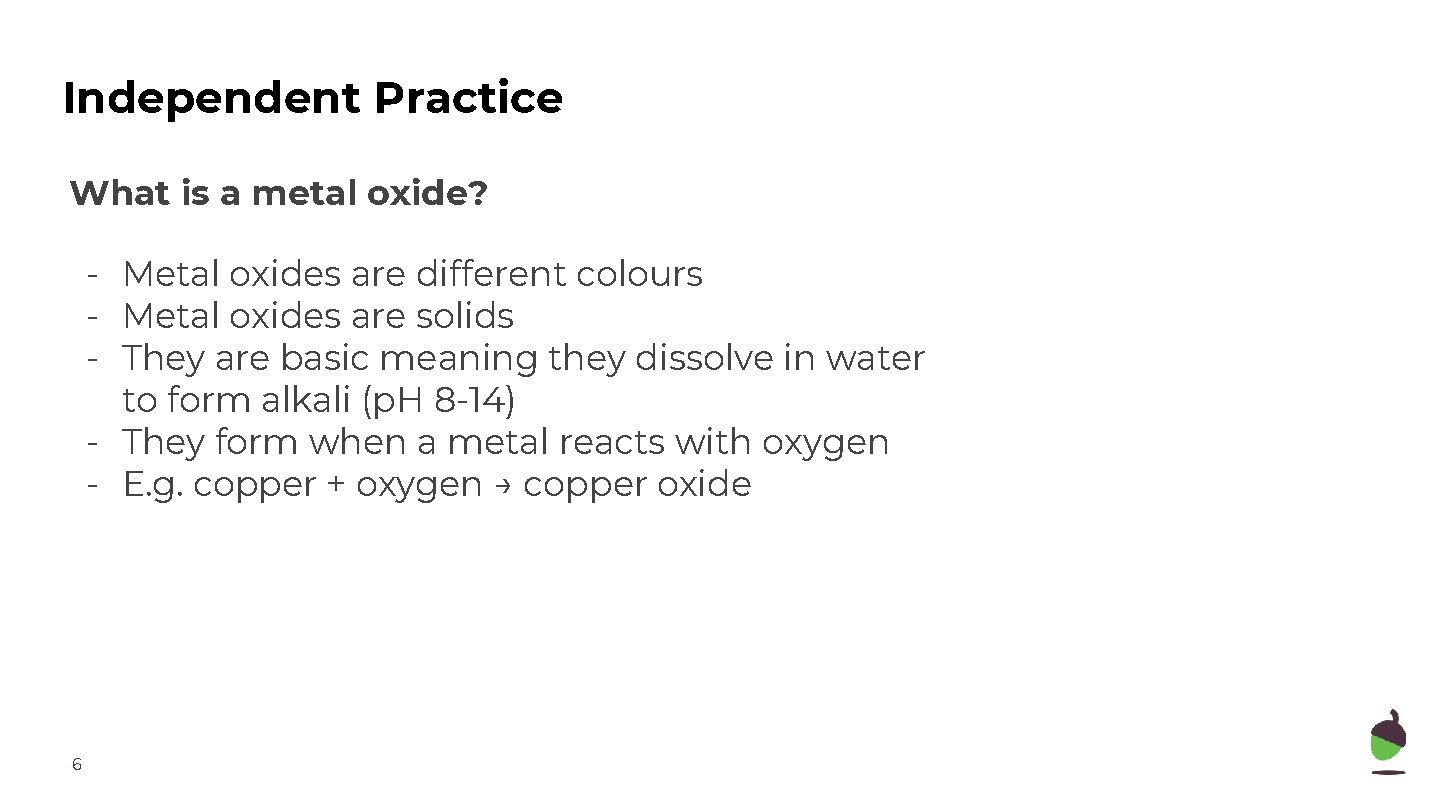
Independent Practice What is a metal oxide? - Metal oxides are different colours - Metal oxides are solids - They are basic meaning they dissolve in water to form alkali (p. H 8 -14) - They form when a metal reacts with oxygen - E. g. copper + oxygen → copper oxide 6
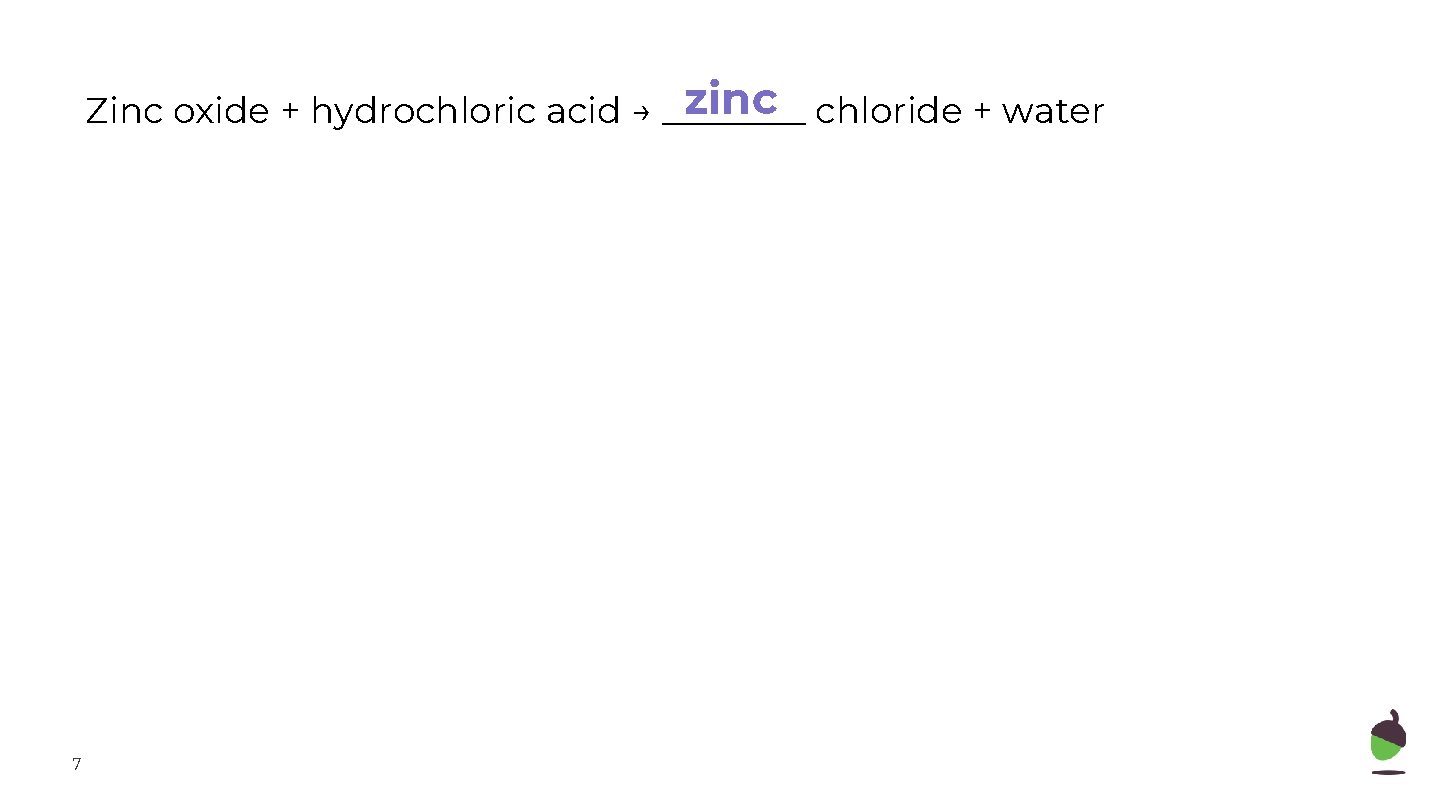
zinc chloride + water Zinc oxide + hydrochloric acid → ____ 7
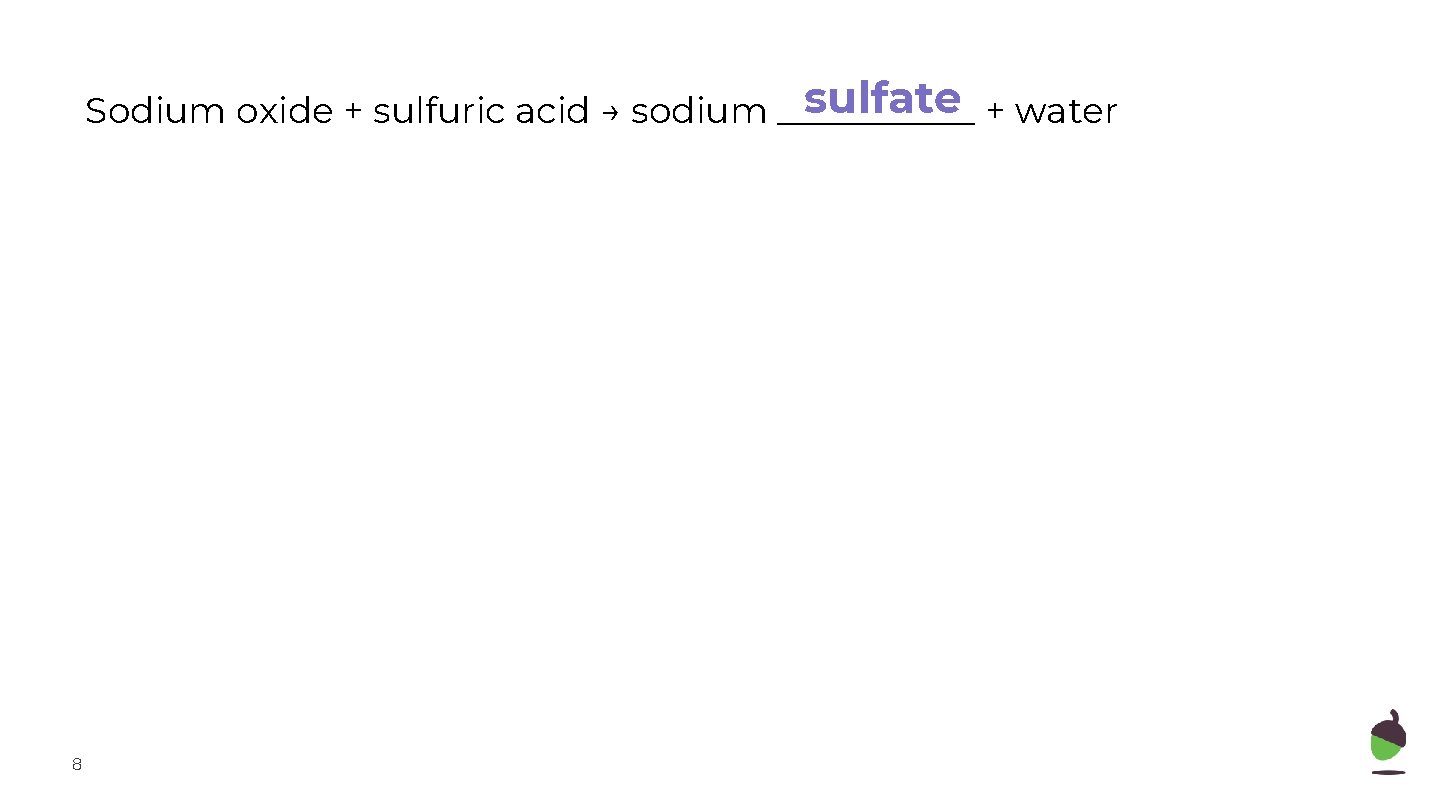
sulfate + water Sodium oxide + sulfuric acid → sodium ______ 8
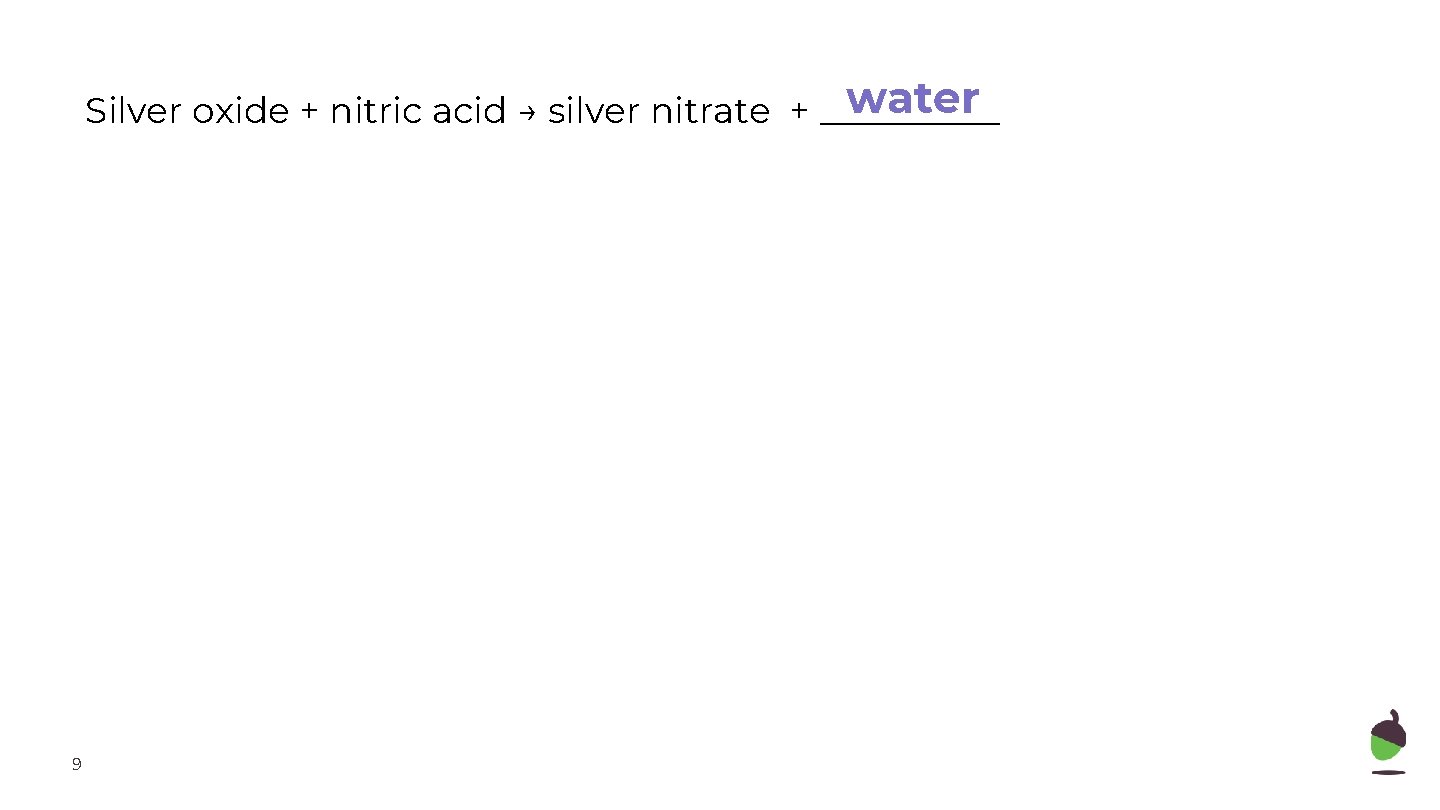
water Silver oxide + nitric acid → silver nitrate + _____ 9
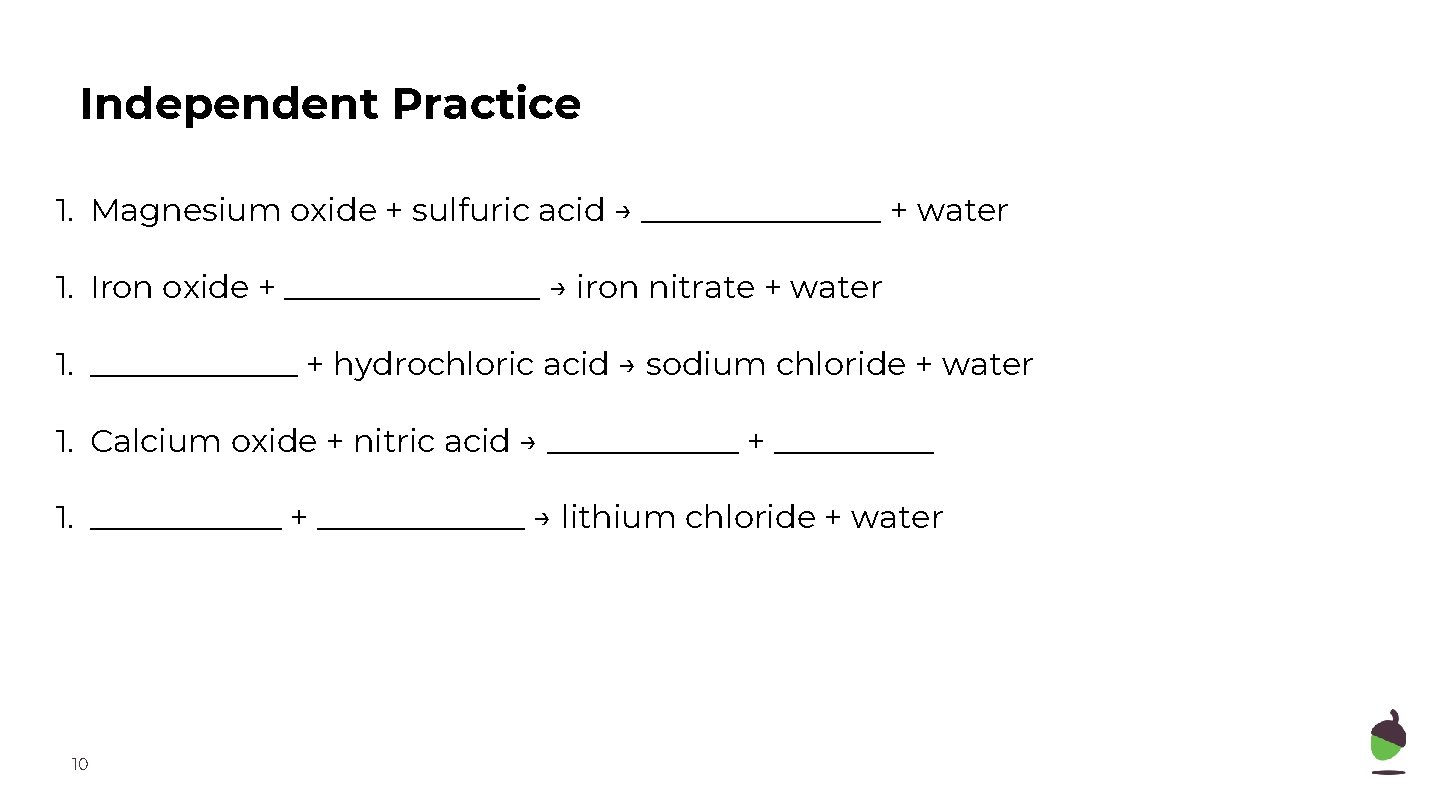
Independent Practice 1. Magnesium oxide + sulfuric acid → ________ + water 1. Iron oxide + ________ → iron nitrate + water 1. _______ + hydrochloric acid → sodium chloride + water 1. Calcium oxide + nitric acid → ______ + _____ 1. ______ + _______ → lithium chloride + water 10
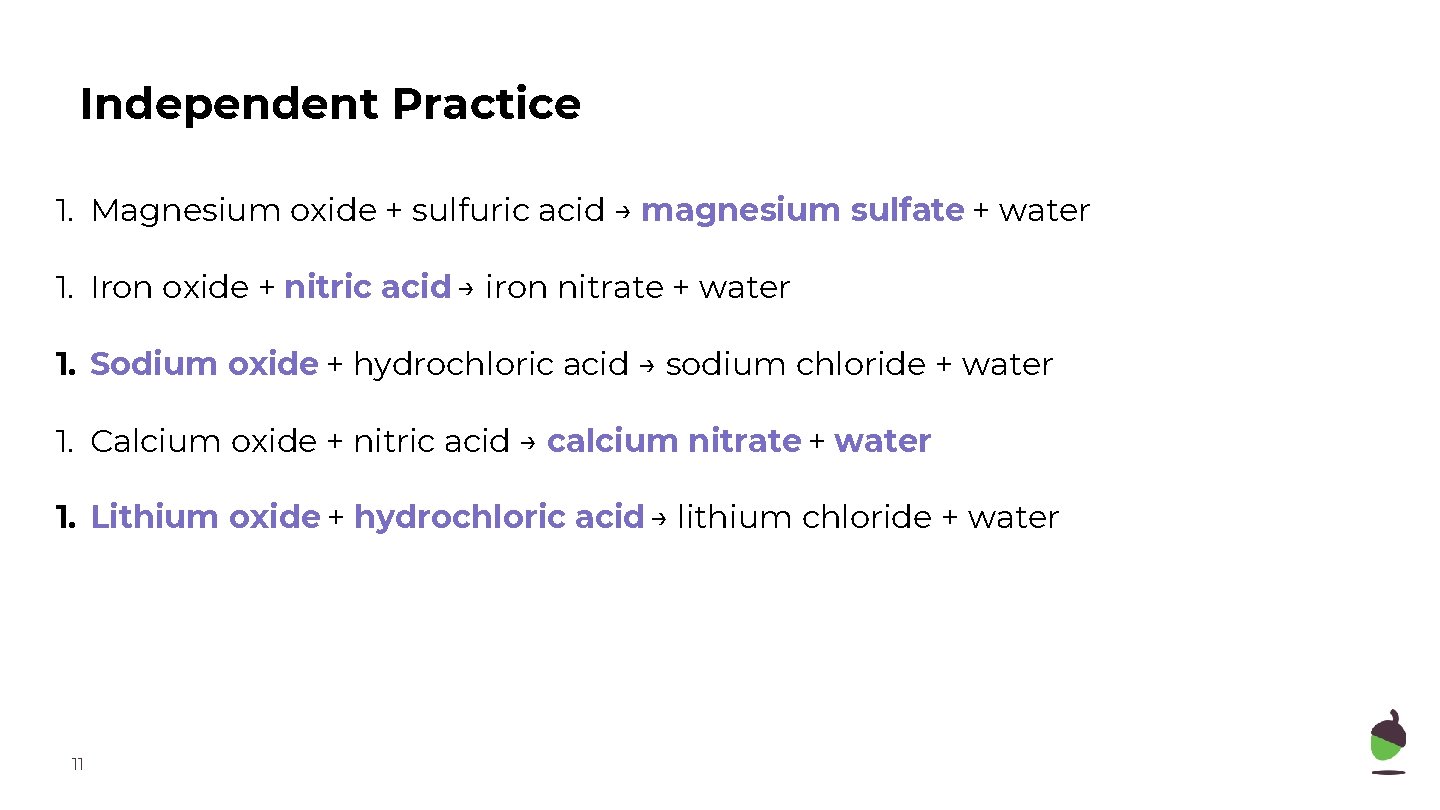
Independent Practice 1. Magnesium oxide + sulfuric acid → magnesium sulfate + water 1. Iron oxide + nitric acid → iron nitrate + water 1. Sodium oxide + hydrochloric acid → sodium chloride + water 1. Calcium oxide + nitric acid → calcium nitrate + water 1. Lithium oxide + hydrochloric acid → lithium chloride + water 11
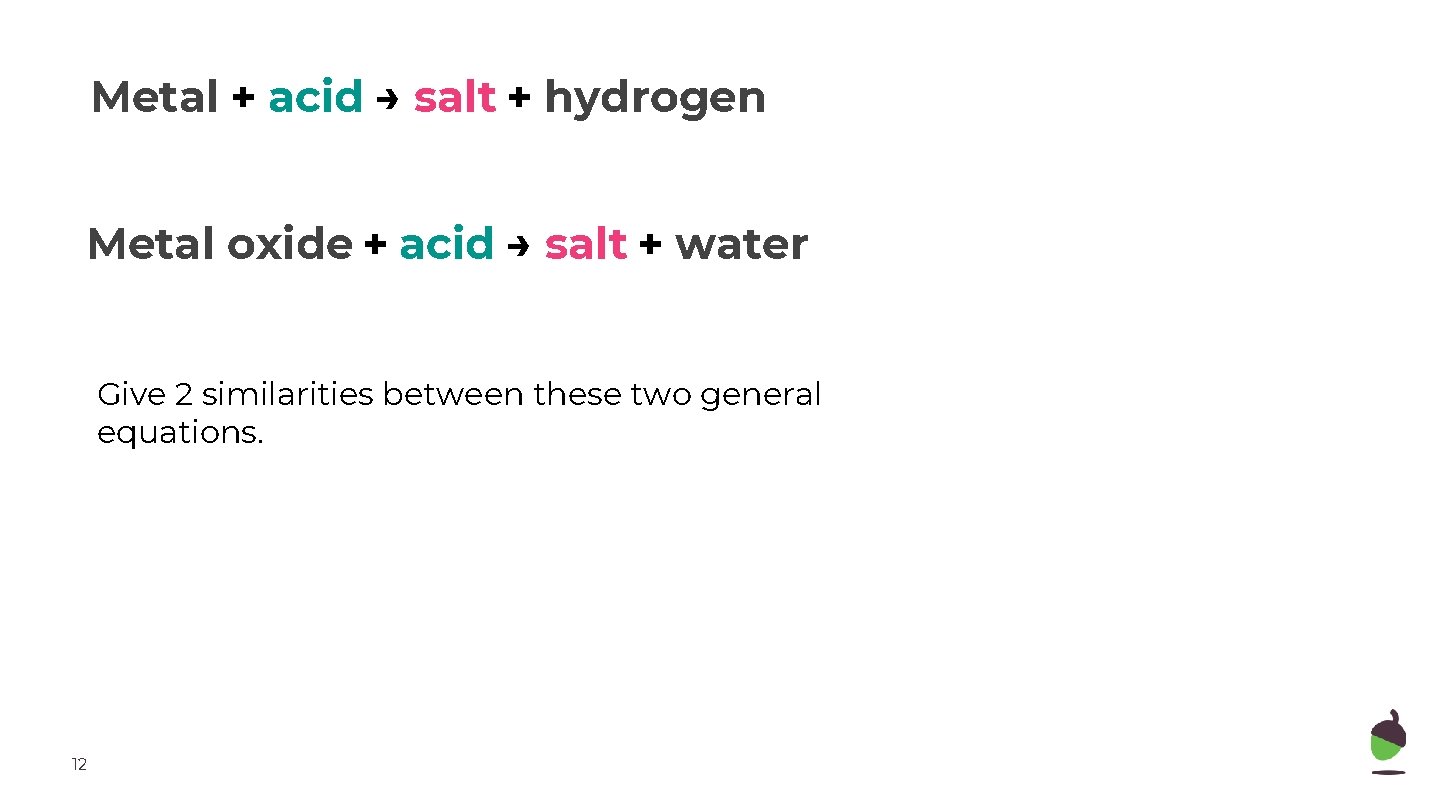
Metal + acid → salt + hydrogen Metal oxide + acid → salt + water Give 2 similarities between these two general equations. 12
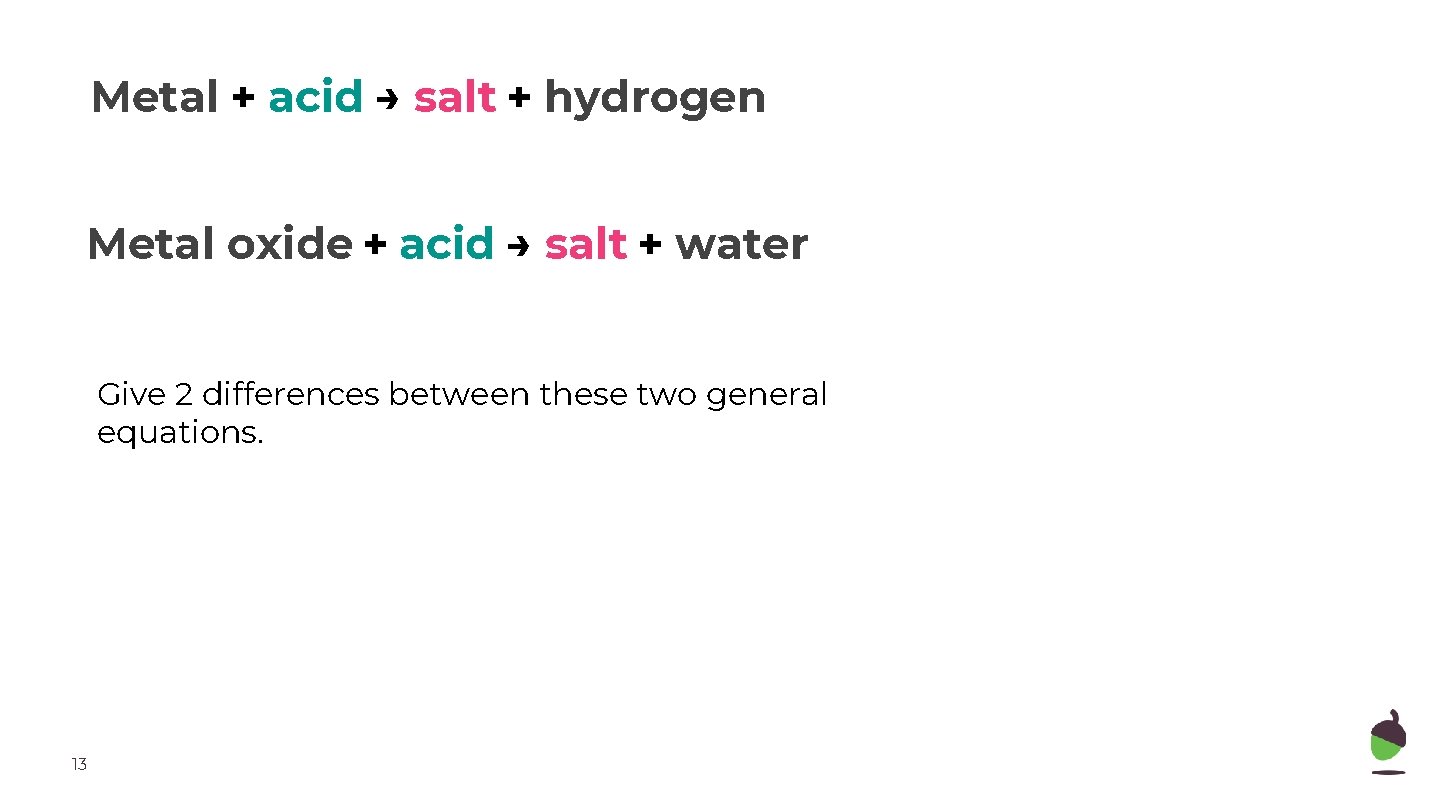
Metal + acid → salt + hydrogen Metal oxide + acid → salt + water Give 2 differences between these two general equations. 13
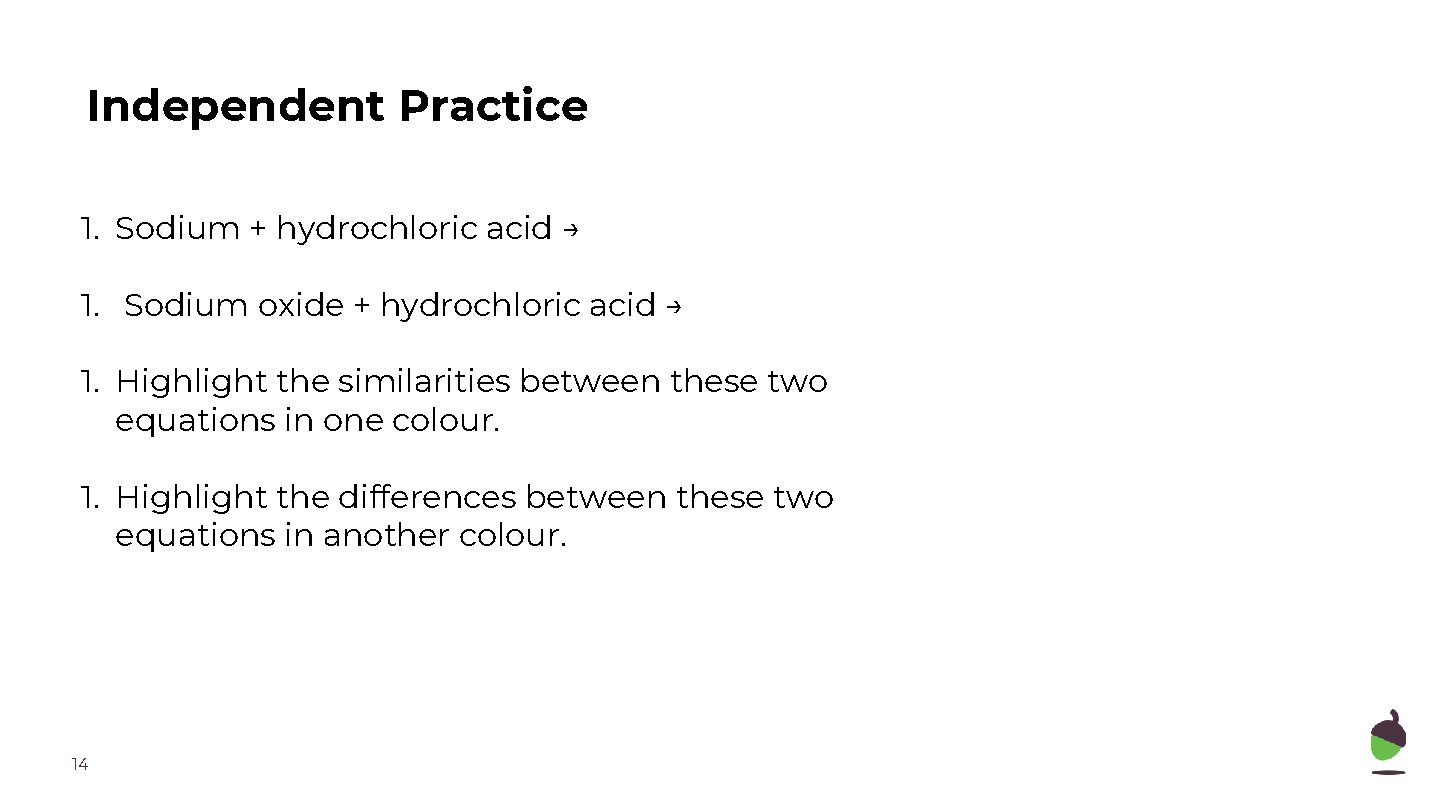
Independent Practice 1. Sodium + hydrochloric acid → 1. Sodium oxide + hydrochloric acid → 1. Highlight the similarities between these two equations in one colour. 1. Highlight the differences between these two equations in another colour. 14
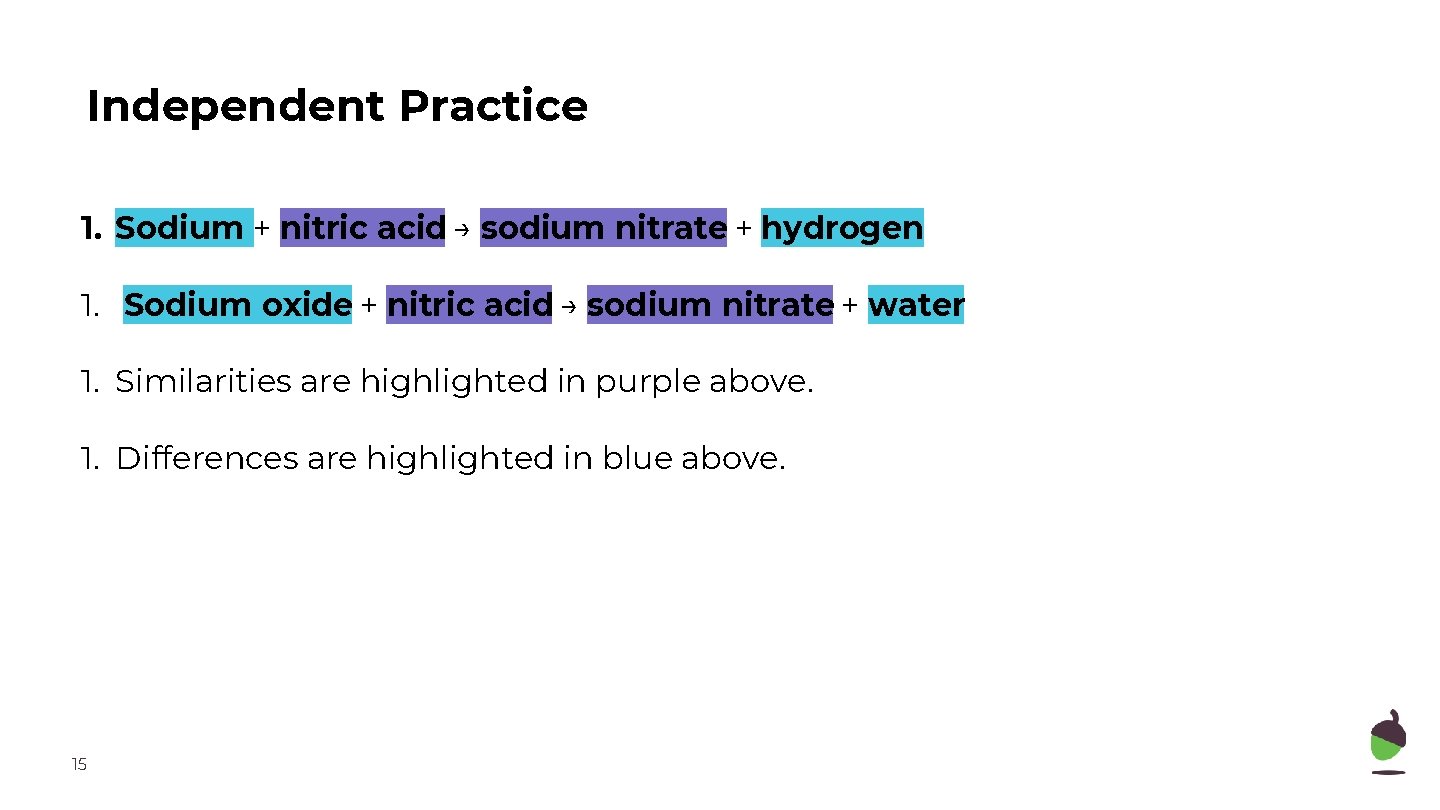
Independent Practice 1. Sodium + nitric acid → sodium nitrate + hydrogen 1. Sodium oxide + nitric acid → sodium nitrate + water 1. Similarities are highlighted in purple above. 1. Differences are highlighted in blue above. 15
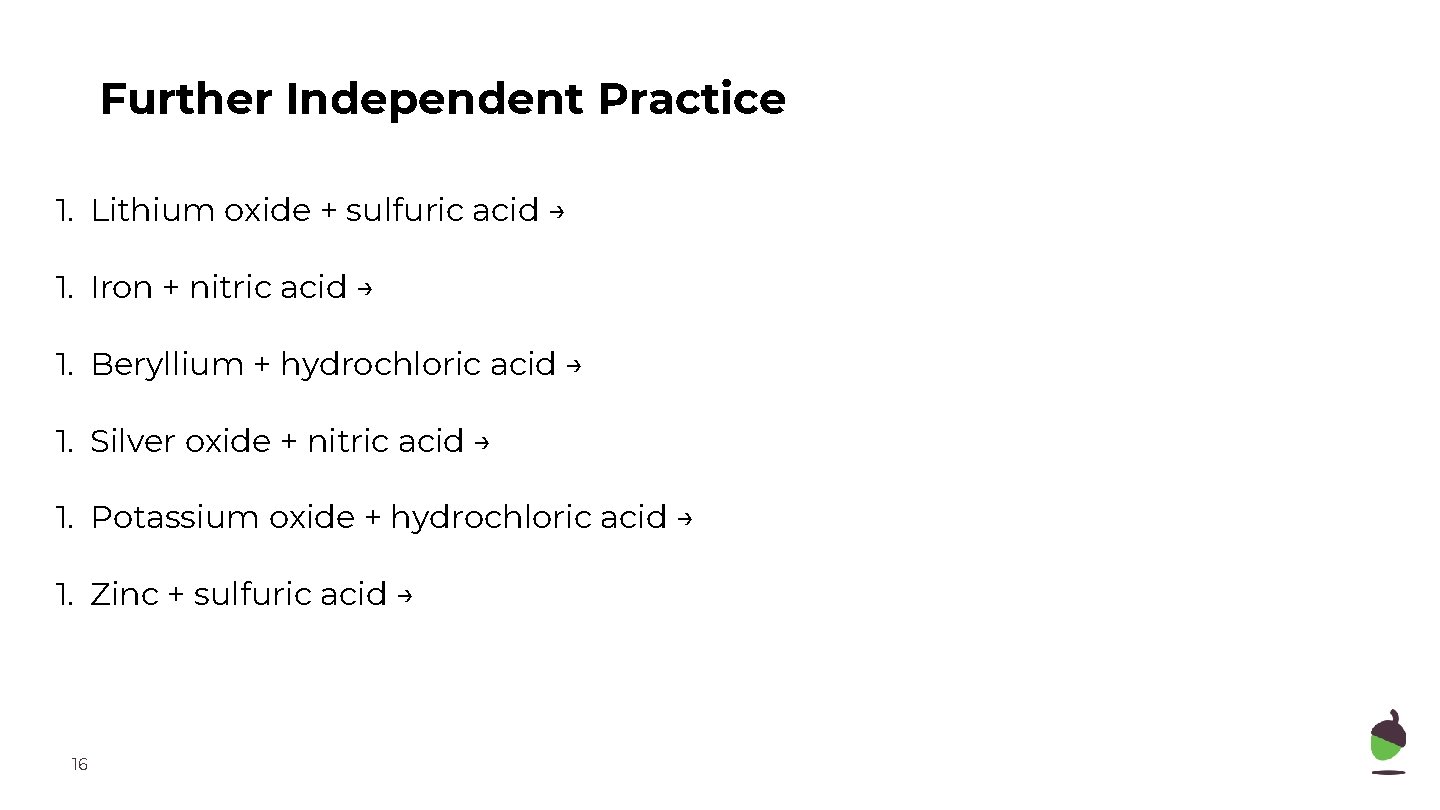
Further Independent Practice 1. Lithium oxide + sulfuric acid → 1. Iron + nitric acid → 1. Beryllium + hydrochloric acid → 1. Silver oxide + nitric acid → 1. Potassium oxide + hydrochloric acid → 1. Zinc + sulfuric acid → 16
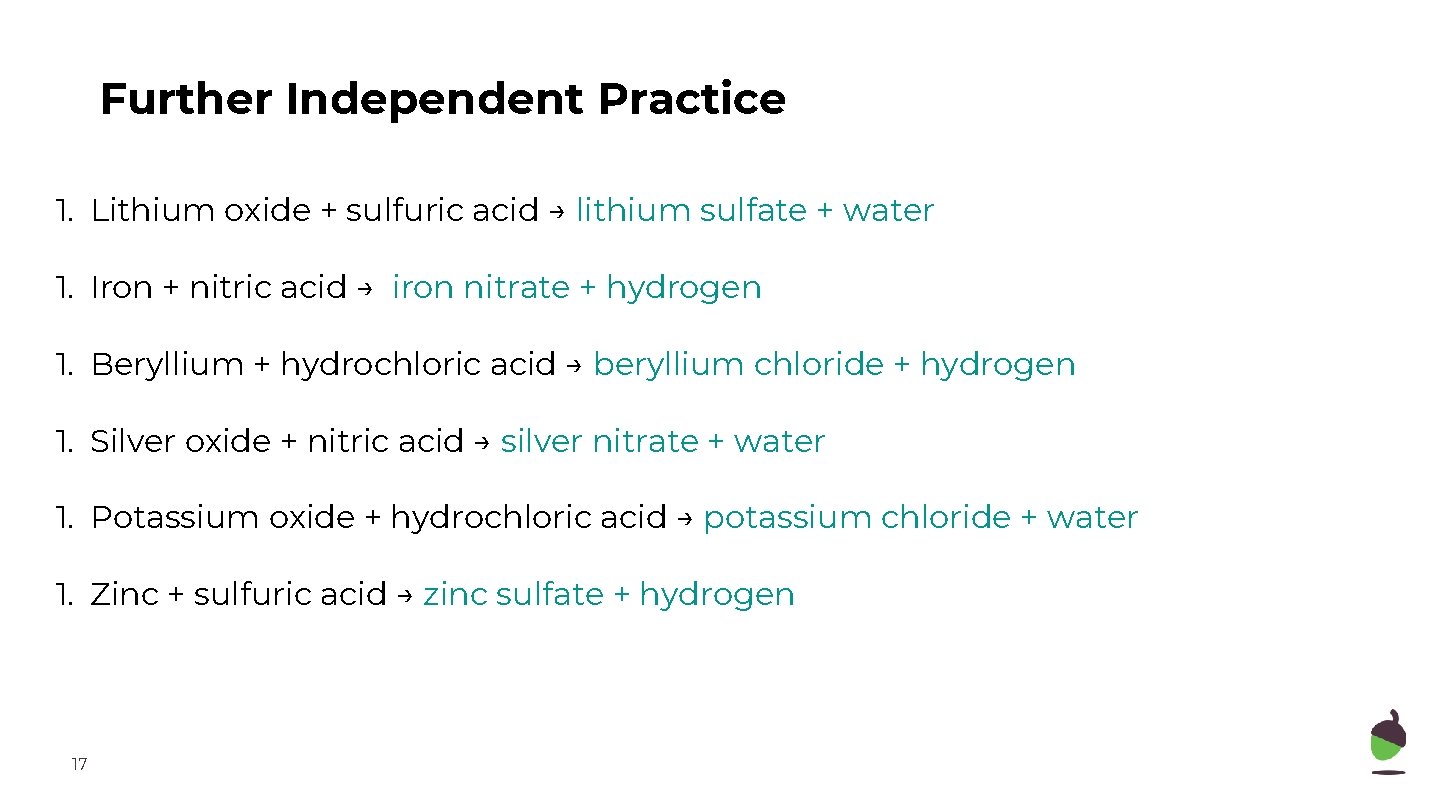
Further Independent Practice 1. Lithium oxide + sulfuric acid → lithium sulfate + water 1. Iron + nitric acid → iron nitrate + hydrogen 1. Beryllium + hydrochloric acid → beryllium chloride + hydrogen 1. Silver oxide + nitric acid → silver nitrate + water 1. Potassium oxide + hydrochloric acid → potassium chloride + water 1. Zinc + sulfuric acid → zinc sulfate + hydrogen 17