
Reactive Chemicals Session Objectives You will be able
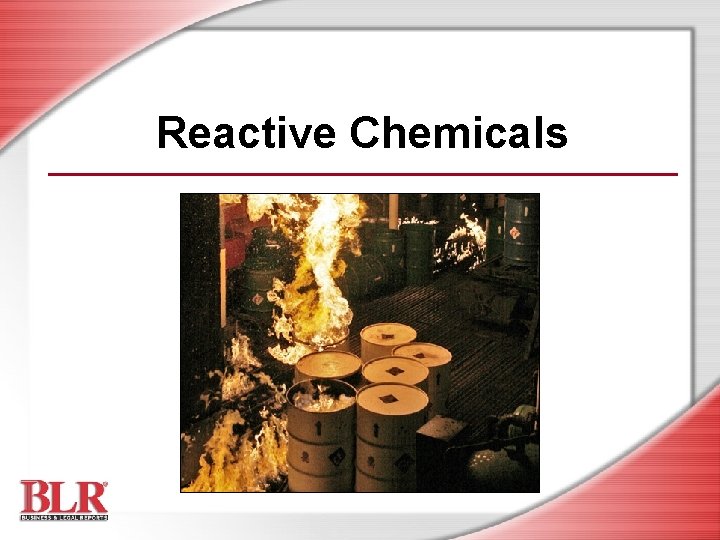
Reactive Chemicals

Session Objectives You will be able to: • Identify reactive chemical hazards • Understand the nature of chemical reactions • Detect and manage reactivity hazards • Respond safely to reactive chemical emergencies © Business & Legal Reports, Inc. 0706
What You Need to Know • What reactive chemicals are • How they can endanger health and safety • Potential for hazardous chemical reactions in the workplace • Hazard management program • Necessary precautions on the job • Emergency reporting and response © Business & Legal Reports, Inc. 0706
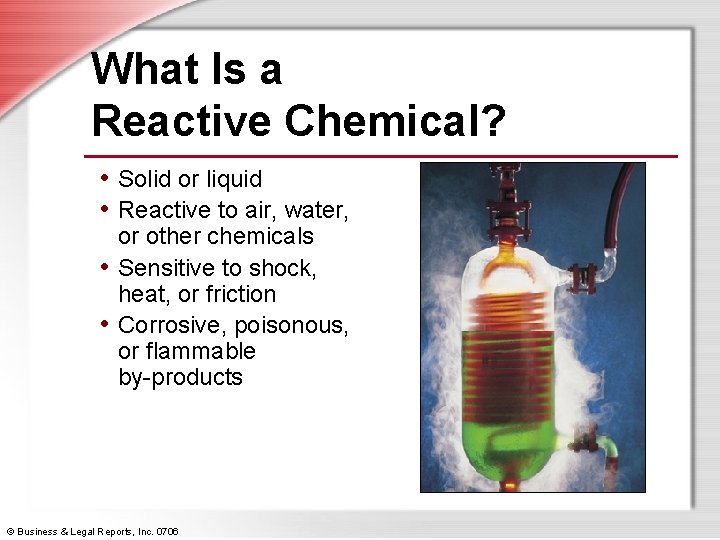
What Is a Reactive Chemical? • Solid or liquid • Reactive to air, water, or other chemicals • Sensitive to shock, heat, or friction • Corrosive, poisonous, or flammable by-products © Business & Legal Reports, Inc. 0706
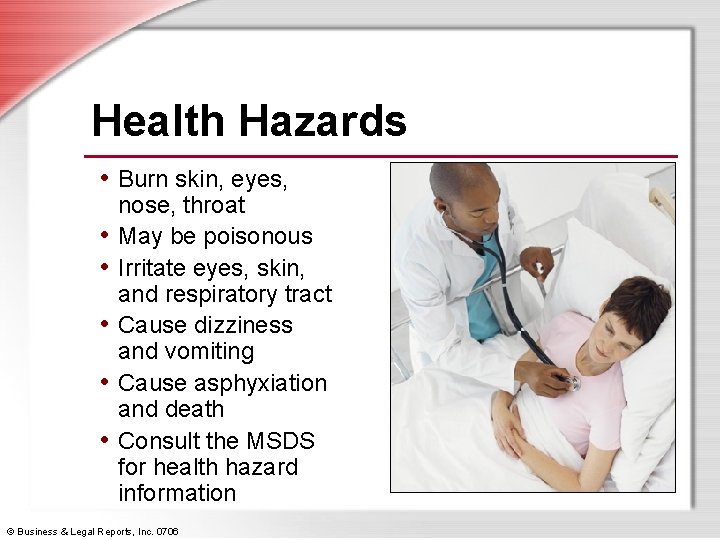
Health Hazards • Burn skin, eyes, • • • nose, throat May be poisonous Irritate eyes, skin, and respiratory tract Cause dizziness and vomiting Cause asphyxiation and death Consult the MSDS for health hazard information © Business & Legal Reports, Inc. 0706
Fire Hazard • Friction • Absorption of moisture • Spontaneous chemical changes • Retained heat • Readily ignited © Business & Legal Reports, Inc. 0706
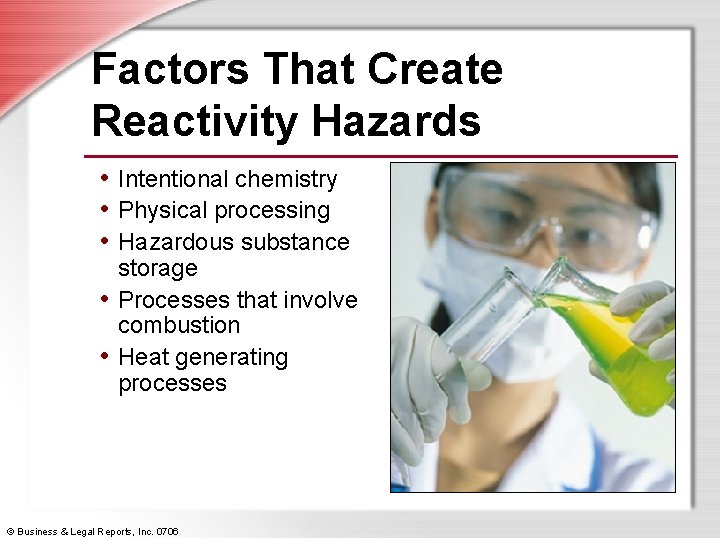
Factors That Create Reactivity Hazards • Intentional chemistry • Physical processing • Hazardous substance storage • Processes that involve combustion • Heat generating processes © Business & Legal Reports, Inc. 0706
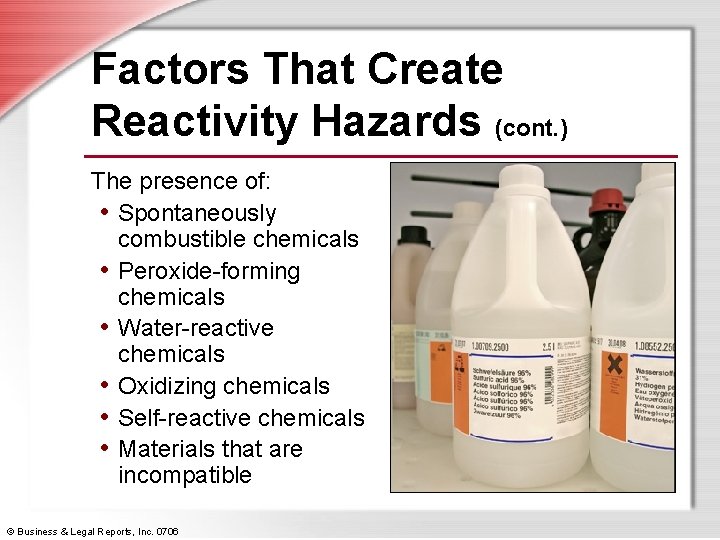
Factors That Create Reactivity Hazards (cont. ) The presence of: • Spontaneously combustible chemicals • Peroxide-forming chemicals • Water-reactive chemicals • Oxidizing chemicals • Self-reactive chemicals • Materials that are incompatible © Business & Legal Reports, Inc. 0706
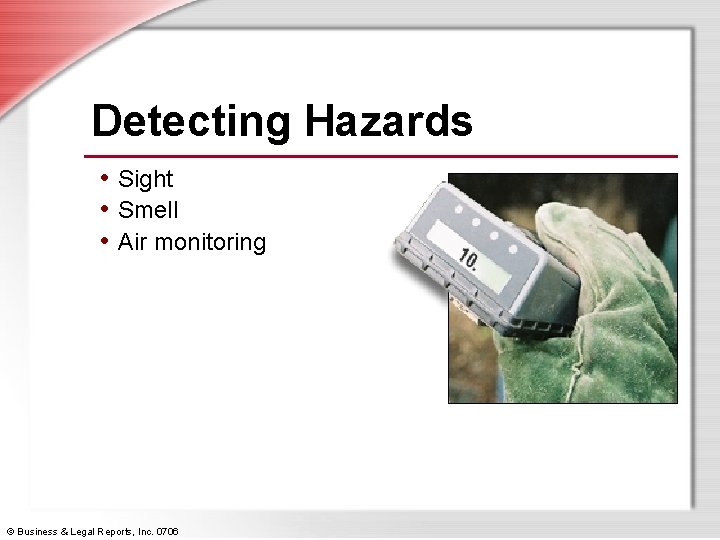
Detecting Hazards • Sight • Smell • Air monitoring © Business & Legal Reports, Inc. 0706
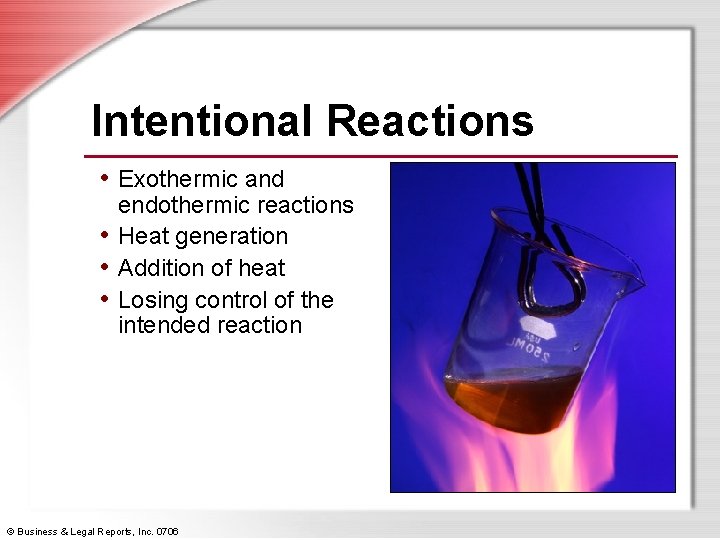
Intentional Reactions • Exothermic and endothermic reactions • Heat generation • Addition of heat • Losing control of the intended reaction © Business & Legal Reports, Inc. 0706
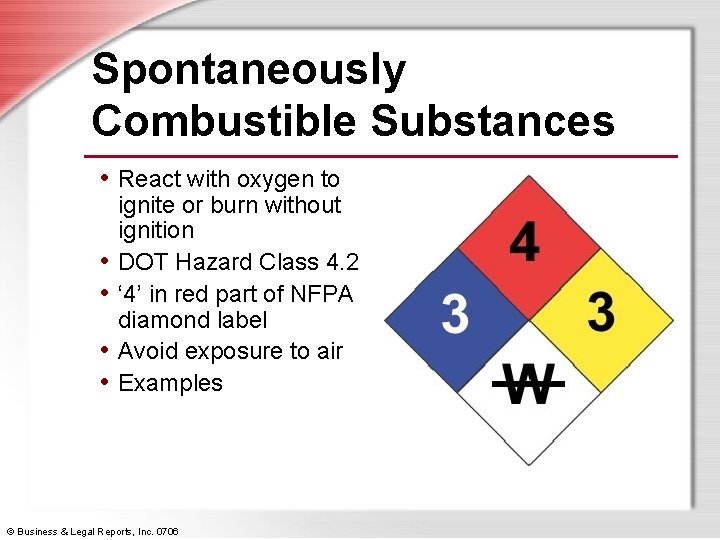
Spontaneously Combustible Substances • React with oxygen to • • ignite or burn without ignition DOT Hazard Class 4. 2 ‘ 4’ in red part of NFPA diamond label Avoid exposure to air Examples © Business & Legal Reports, Inc. 0706
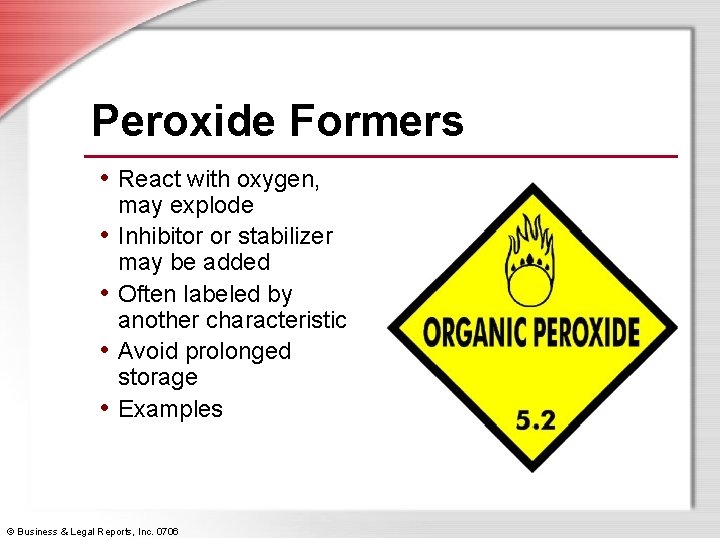
Peroxide Formers • React with oxygen, • • may explode Inhibitor or stabilizer may be added Often labeled by another characteristic Avoid prolonged storage Examples © Business & Legal Reports, Inc. 0706
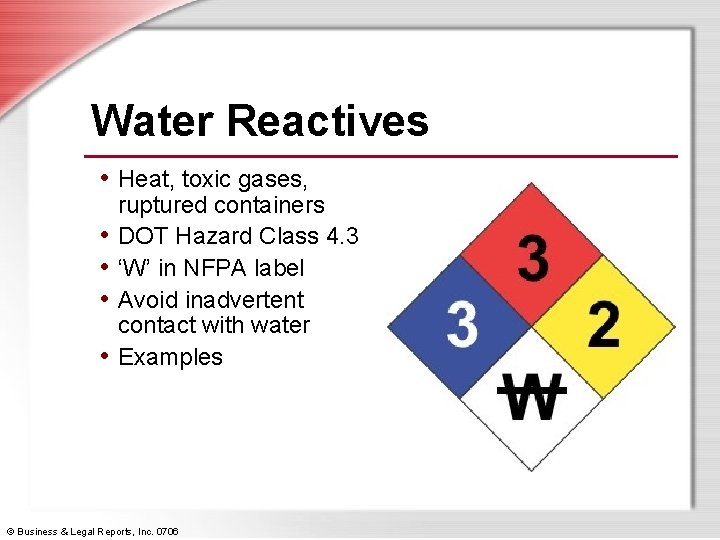
Water Reactives • Heat, toxic gases, • • ruptured containers DOT Hazard Class 4. 3 ‘W’ in NFPA label Avoid inadvertent contact with water Examples © Business & Legal Reports, Inc. 0706
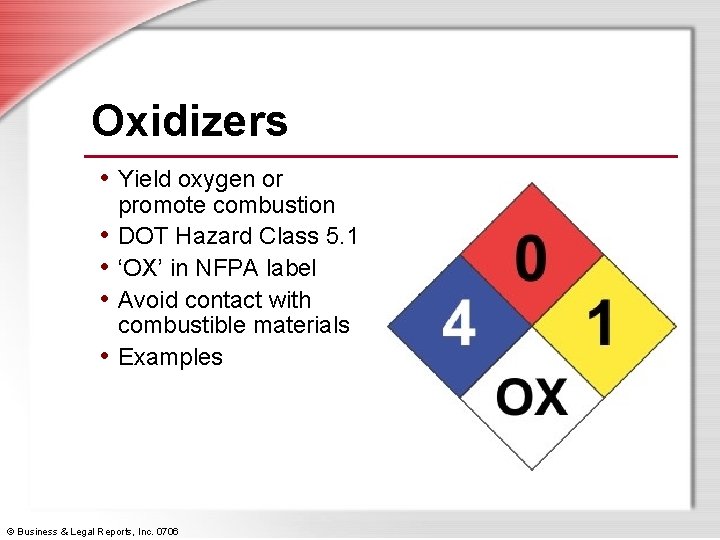
Oxidizers • Yield oxygen or • • promote combustion DOT Hazard Class 5. 1 ‘OX’ in NFPA label Avoid contact with combustible materials Examples © Business & Legal Reports, Inc. 0706
Self-Reactive Materials • Polymerizing, decomposing, rearranging • DOT Hazard Class 1 or 5. 2 • ‘ 1’ to ‘ 4’ in yellow part of NFPA label • Avoid shock, friction, heat © Business & Legal Reports, Inc. 0706
Incompatible Materials • Results of uncontrolled reactions • Potential mixing scenarios • Consult a chemical compatibility chart • Examples © Business & Legal Reports, Inc. 0706
Reactivity Hazards Do you understand: • What a reactive chemical is? • The health and fire hazards? • Factors that could cause chemical reactivity hazards in the workplace and the form those reactions could take? © Business & Legal Reports, Inc. 0706
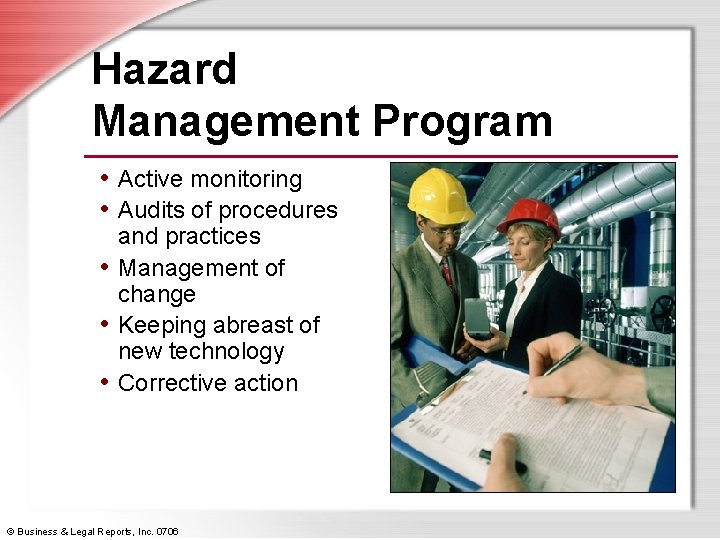
Hazard Management Program • Active monitoring • Audits of procedures and practices • Management of change • Keeping abreast of new technology • Corrective action © Business & Legal Reports, Inc. 0706
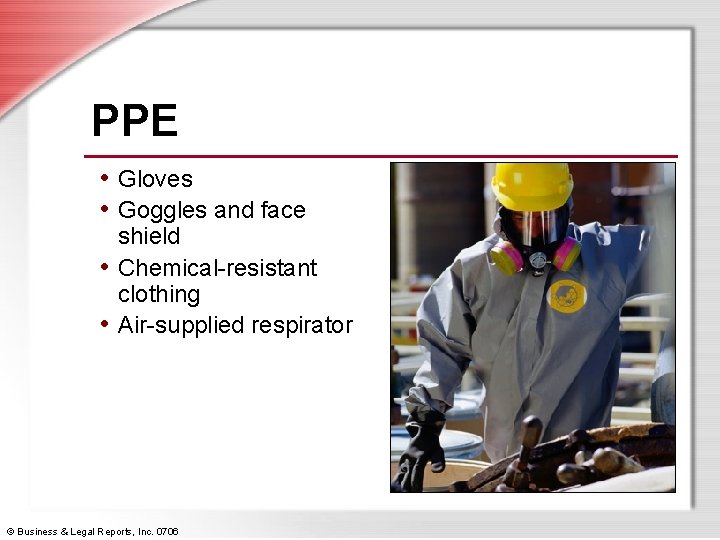
PPE • Gloves • Goggles and face shield • Chemical-resistant clothing • Air-supplied respirator © Business & Legal Reports, Inc. 0706
Investigating Incidents • Report all incidents and near misses • Investigate root causes • Identify unrecognized hazards • Identify measures to eliminate or reduce hazards • Communicate findings © Business & Legal Reports, Inc. 0706
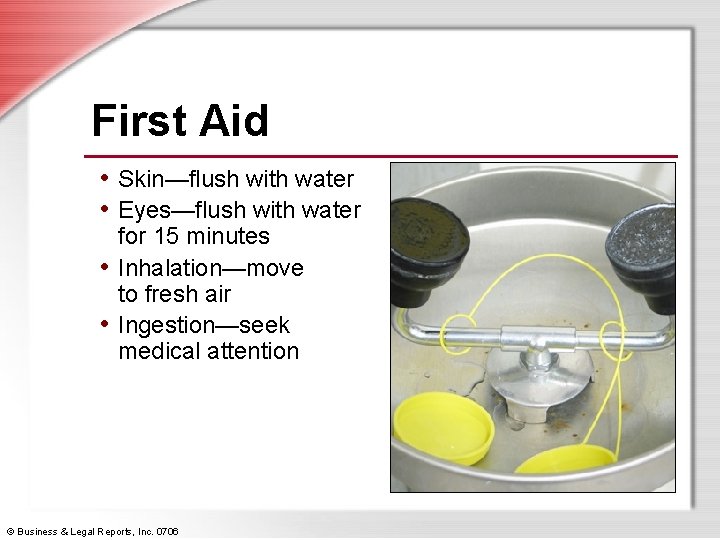
First Aid • Skin—flush with water • Eyes—flush with water for 15 minutes • Inhalation—move to fresh air • Ingestion—seek medical attention © Business & Legal Reports, Inc. 0706
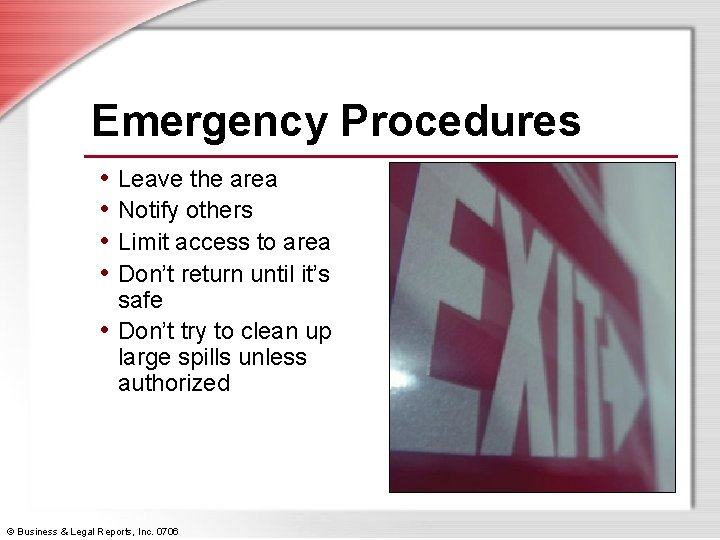
Emergency Procedures • Leave the area • Notify others • Limit access to area • Don’t return until it’s safe • Don’t try to clean up large spills unless authorized © Business & Legal Reports, Inc. 0706
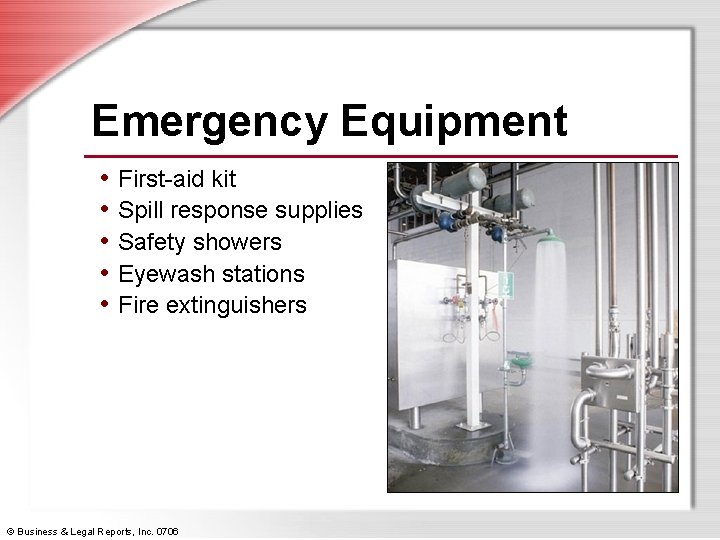
Emergency Equipment • First-aid kit • Spill response supplies • Safety showers • Eyewash stations • Fire extinguishers © Business & Legal Reports, Inc. 0706
Hazard Management Do you understand: • All information that has been presented in the previous slides? • All the precautions we must take to effectively manage chemical reactivity risks and prevent accidents? © Business & Legal Reports, Inc. 0706
Key Points to Remember • Know the hazards of reactive chemicals • Be able to identify different types of reactive chemicals in the workplace • Wear appropriate PPE • Follow safe handling and storage procedures • Learn emergency procedures © Business & Legal Reports, Inc. 0706
- Slides: 25