
Reactions of Functional Groups UNIT TWO Alkenes and

![Oxidation of Alcohols only to recognize** [O] = H 2 SO 4, O 2](https://slidetodoc.com/presentation_image_h2/b90d1cc988e80234d11818aadca46bad/image-10.jpg "Oxidation of Alcohols only to recognize** [O] = H 2 SO 4, O 2")
- Slides: 13
Reactions of Functional Groups UNIT TWO
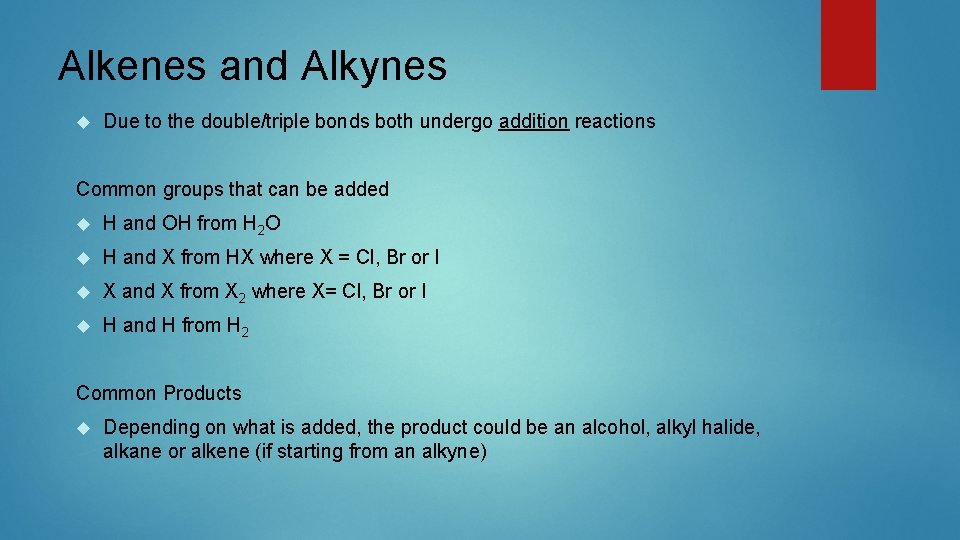
Alkenes and Alkynes Due to the double/triple bonds both undergo addition reactions Common groups that can be added H and OH from H 2 O H and X from HX where X = Cl, Br or I X and X from X 2 where X= Cl, Br or I H and H from H 2 Common Products Depending on what is added, the product could be an alcohol, alkyl halide, alkane or alkene (if starting from an alkyne)
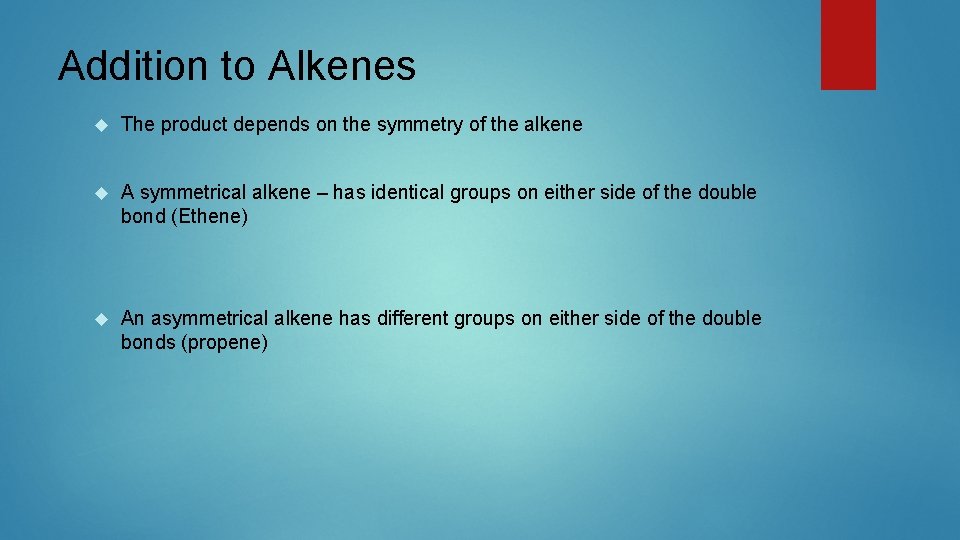
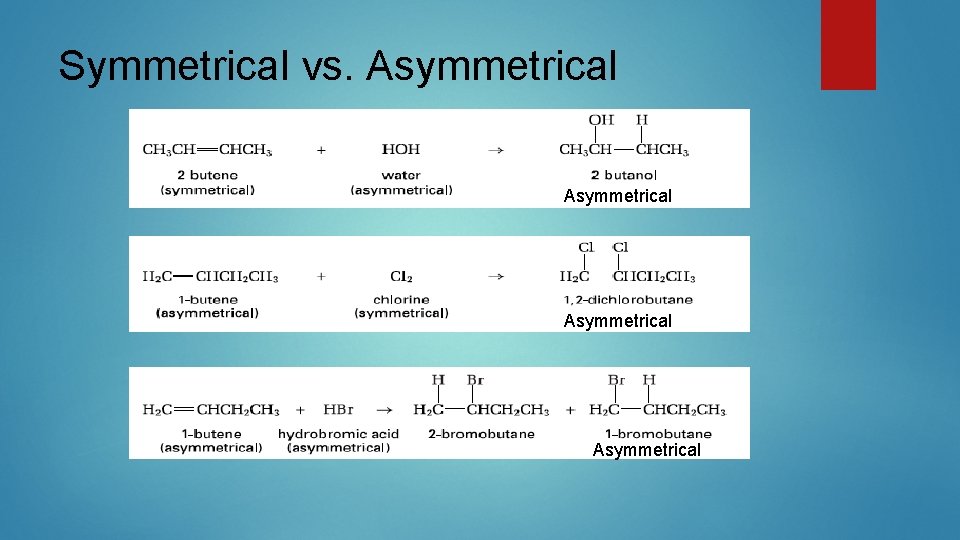
Addition to Alkenes The product depends on the symmetry of the alkene A symmetrical alkene – has identical groups on either side of the double bond (Ethene) An asymmetrical alkene has different groups on either side of the double bonds (propene)
Symmetrical vs. Asymmetrical
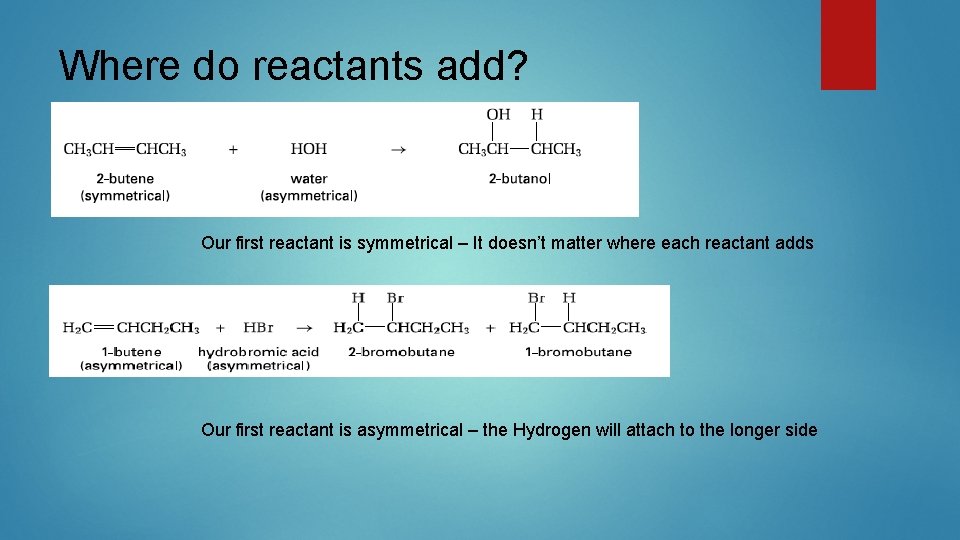
Where do reactants add? Our first reactant is symmetrical – It doesn’t matter where each reactant adds Our first reactant is asymmetrical – the Hydrogen will attach to the longer side
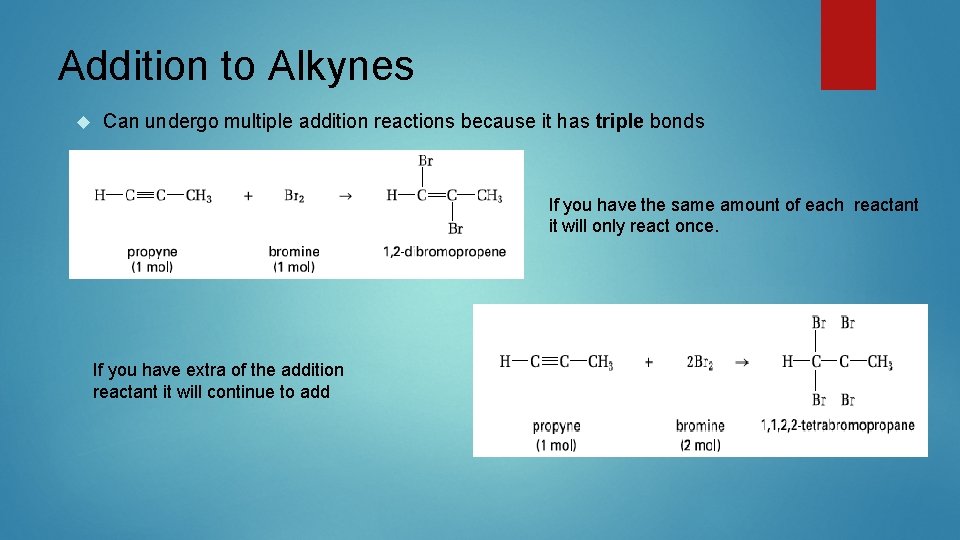
Addition to Alkynes Can undergo multiple addition reactions because it has triple bonds If you have the same amount of each reactant it will only react once. If you have extra of the addition reactant it will continue to add
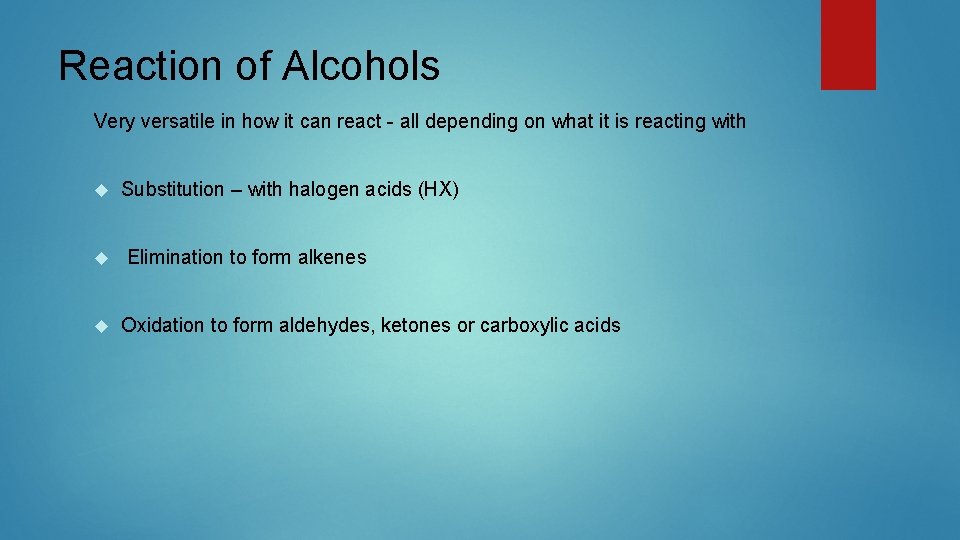
Reaction of Alcohols Very versatile in how it can react - all depending on what it is reacting with Substitution – with halogen acids (HX) Elimination to form alkenes Oxidation to form aldehydes, ketones or carboxylic acids
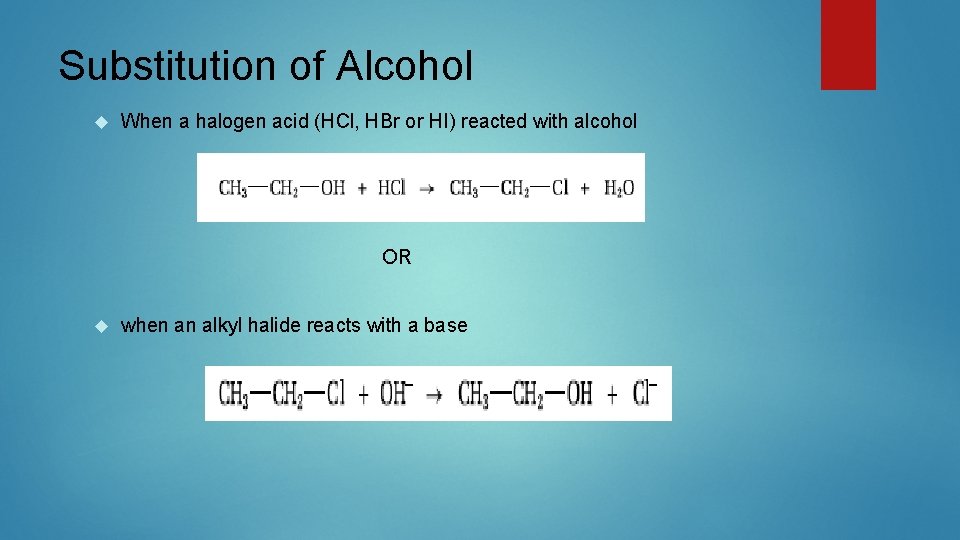
Substitution of Alcohol When a halogen acid (HCl, HBr or HI) reacted with alcohol OR when an alkyl halide reacts with a base
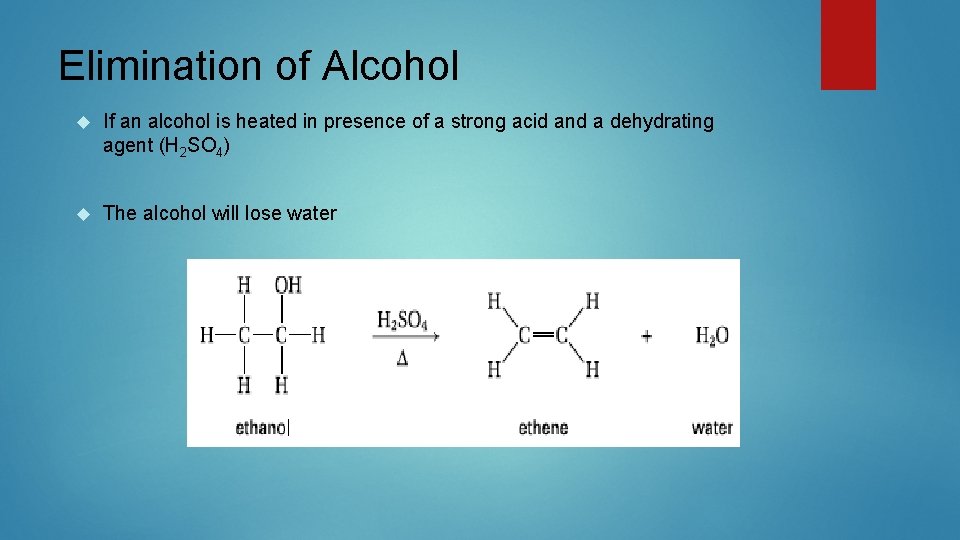
Elimination of Alcohol If an alcohol is heated in presence of a strong acid and a dehydrating agent (H 2 SO 4) The alcohol will lose water
Oxidation of Alcohols only to recognize** [O] = H 2 SO 4, O 2 or O 3
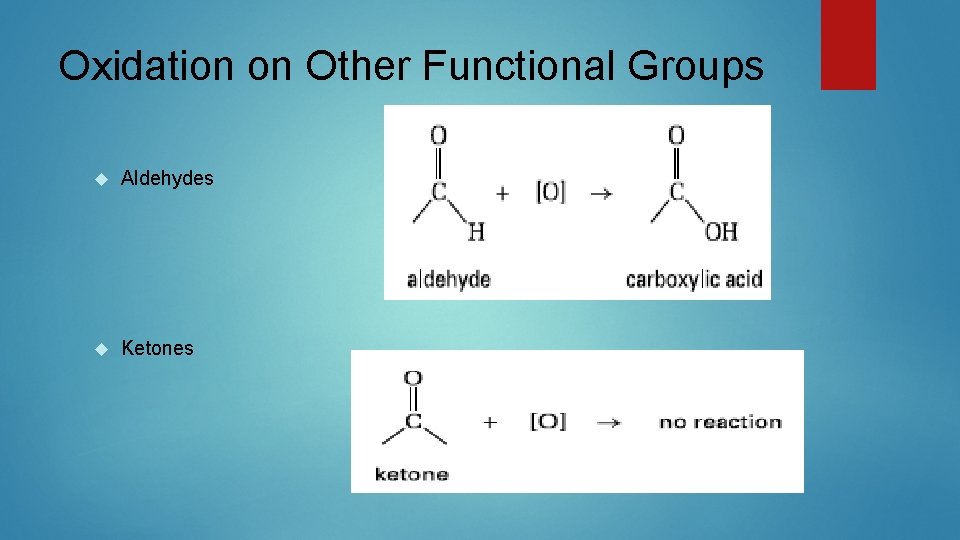
Oxidation on Other Functional Groups Aldehydes Ketones
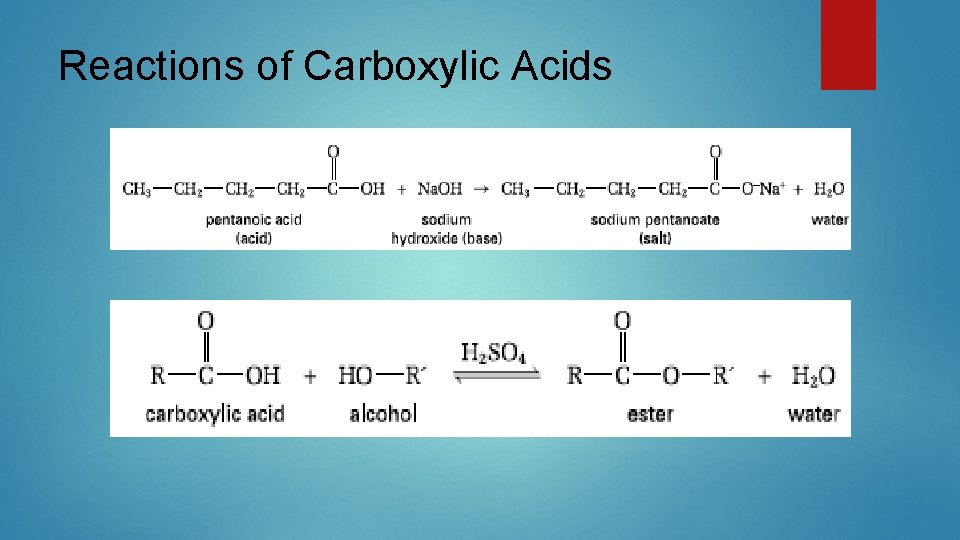
Reactions of Carboxylic Acids
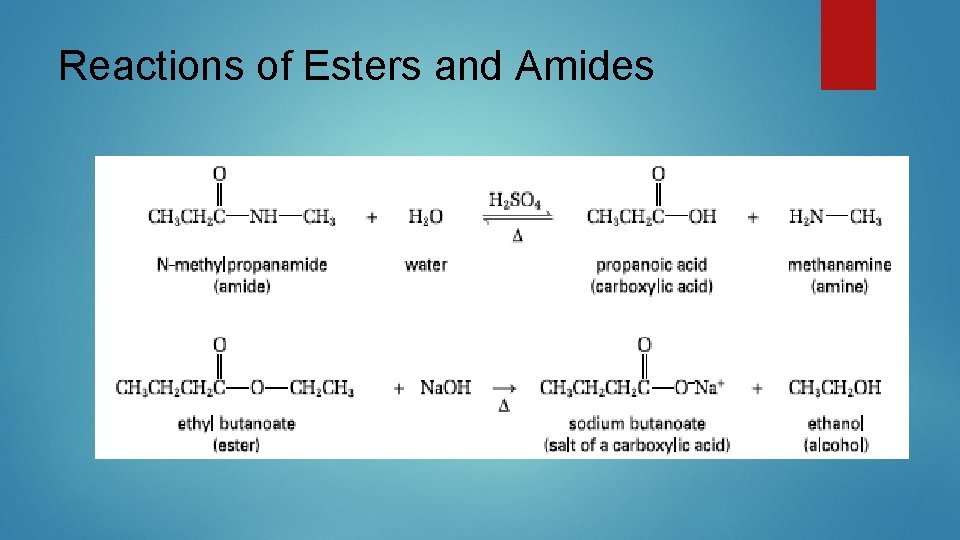
Reactions of Esters and Amides