
REACTIONS HOW CAN I SPEED THIS UP Factors
- Slides: 6
REACTIONS: HOW CAN I SPEED THIS UP? • Factors that speed up reactions: • Concentration of Reactants: Reactions are usually faster at higher concentrations of reactants. The more reactant molecules there are in a given space, the more likely they are to collide and react. • Temperature: Reactions are usually faster at higher temperatures. Reactant molecules at higher temperatures have more energy to move, collide and react. • p. H • Enzymes: Enzymes speed up chemical reaction by acting as catalysts.
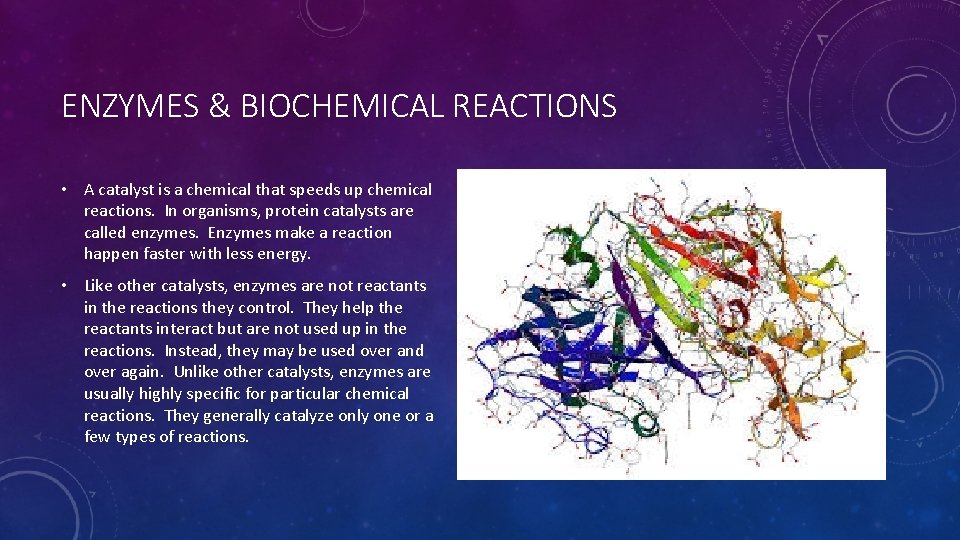
ENZYMES & BIOCHEMICAL REACTIONS • A catalyst is a chemical that speeds up chemical reactions. In organisms, protein catalysts are called enzymes. Enzymes make a reaction happen faster with less energy. • Like other catalysts, enzymes are not reactants in the reactions they control. They help the reactants interact but are not used up in the reactions. Instead, they may be used over and over again. Unlike other catalysts, enzymes are usually highly specific for particular chemical reactions. They generally catalyze only one or a few types of reactions.
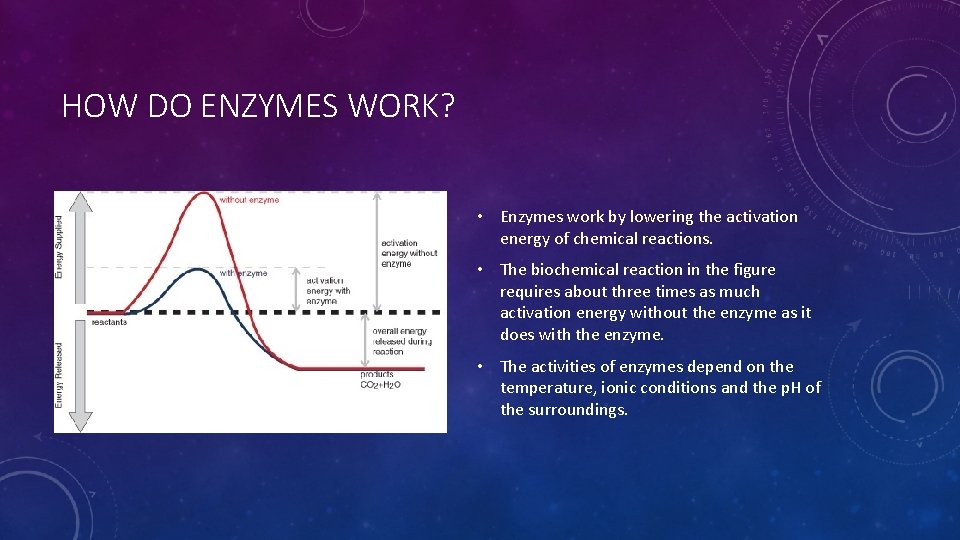
HOW DO ENZYMES WORK? • Enzymes work by lowering the activation energy of chemical reactions. • The biochemical reaction in the figure requires about three times as much activation energy without the enzyme as it does with the enzyme. • The activities of enzymes depend on the temperature, ionic conditions and the p. H of the surroundings.
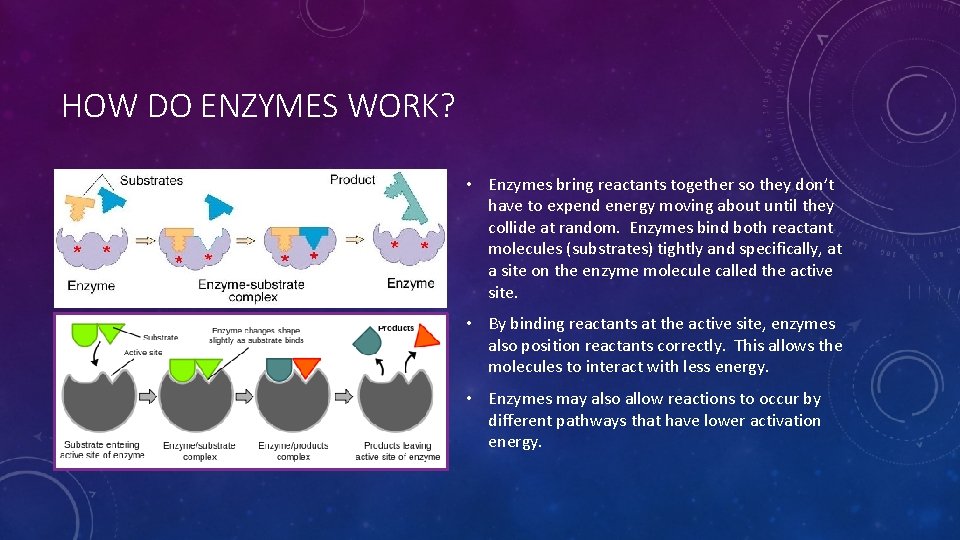
HOW DO ENZYMES WORK? • Enzymes bring reactants together so they don’t have to expend energy moving about until they collide at random. Enzymes bind both reactant molecules (substrates) tightly and specifically, at a site on the enzyme molecule called the active site. • By binding reactants at the active site, enzymes also position reactants correctly. This allows the molecules to interact with less energy. • Enzymes may also allow reactions to occur by different pathways that have lower activation energy.
IMPORTANCE OF ENZYMES • Enzymes are needed for reactions that regulate cells, enzymes allow movement, transport materials around the body, and move substances in and out of cells. • Enzymes help digest food by breaking down large molecules into smaller molecules that the body can use. • Enzymes can be recognized by their name, they always end in –ase.
ENZYME BOARD GAME • You will create board games and then play each others games. The games will address major concepts related to enzymes. • You will have 3 class periods to work on games. You may choose your own groups, but no more than 5 in a group.