
Reactions and Rates Activity 1 Introduction to reactions
- Slides: 13
Reactions and Rates Activity 1: Introduction to reactions Trish Loeblein Ph. ET
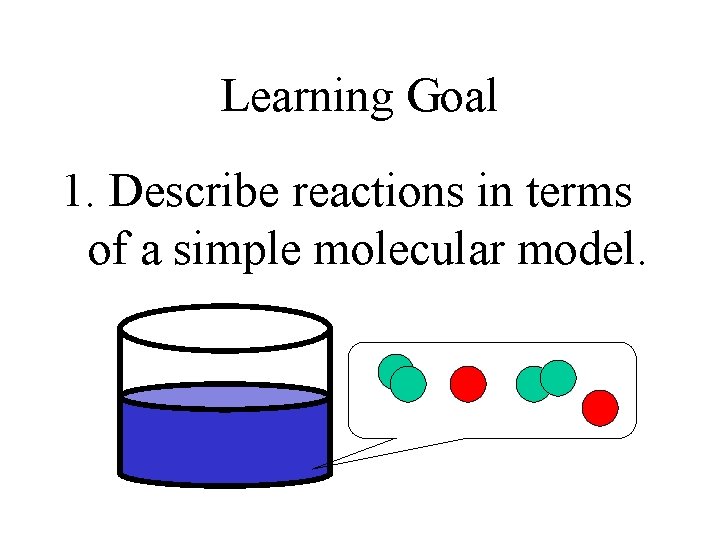
Learning Goal 1. Describe reactions in terms of a simple molecular model.
Observe this reaction What makes you think that there was a reaction? Draw what you think is happening on a molecular scale
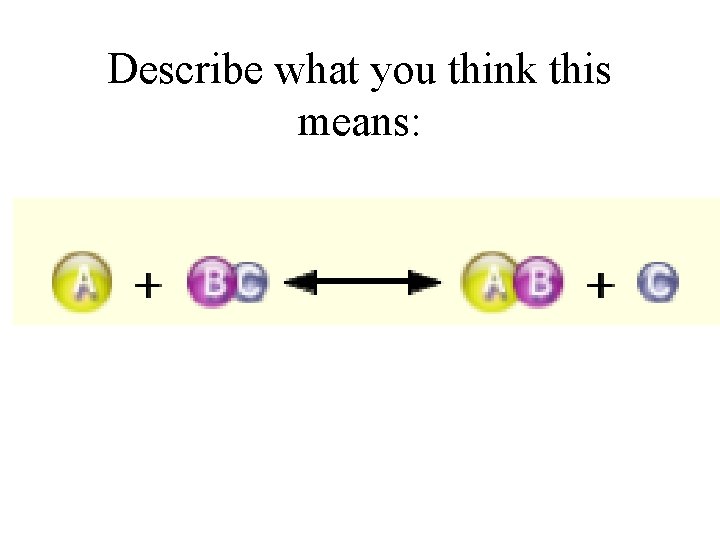
Describe what you think this means:
Observe the model: 1. How does your idea compare to the model? 2. What does “reaction” mean to you? 3. Does a “reaction” always occur?
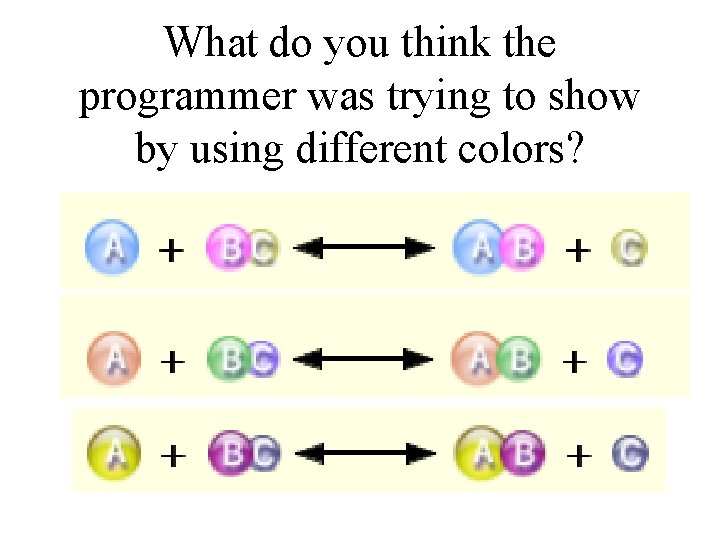
What do you think the programmer was trying to show by using different colors?
Students will be able to: 2. Describe reactions in terms of molecular models with illustrations. 3. Differentiate between dissolving and reacting 4. Use the molecular model to explain why reactions are not instantaneous. 5. Use the molecular model to explain why reactions have less than 100% yields. Use the Many Collisions tab of Reactions and Rates
Post lesson slides follow
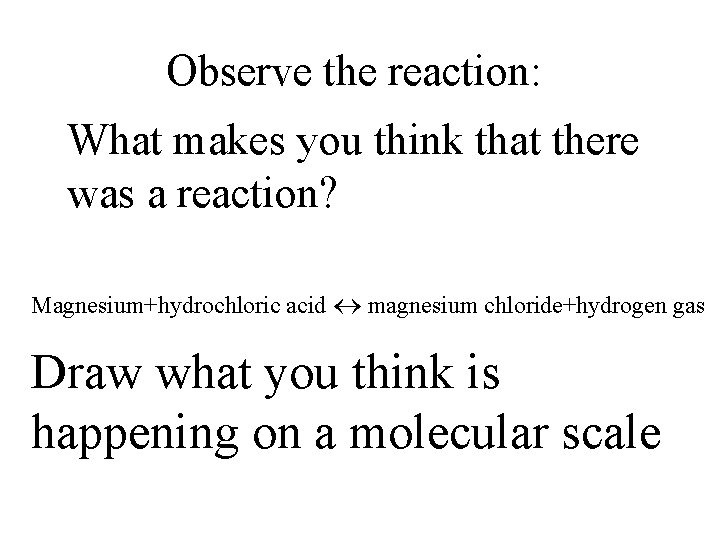
Observe the reaction: What makes you think that there was a reaction? Magnesium+hydrochloric acid magnesium chloride+hydrogen gas Draw what you think is happening on a molecular scale
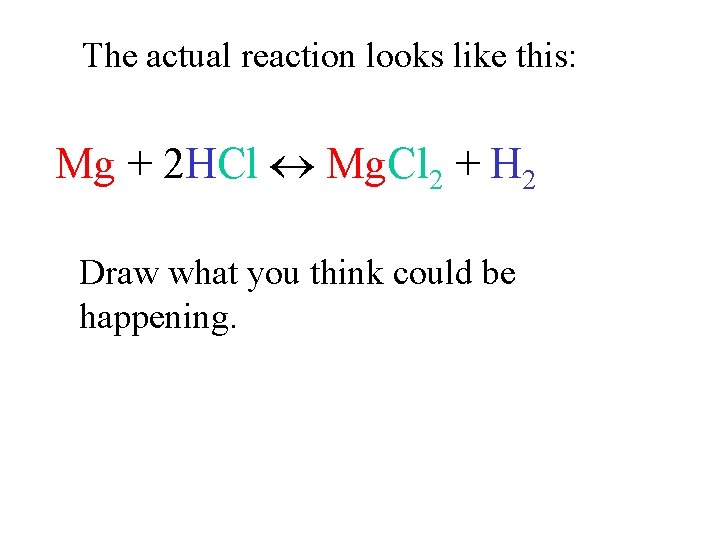
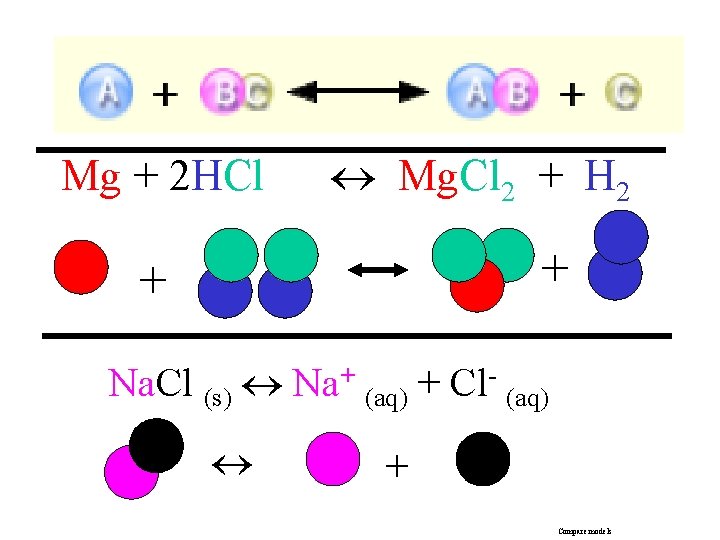
The actual reaction looks like this: Mg + 2 HCl Mg. Cl 2 + H 2 Draw what you think could be happening.
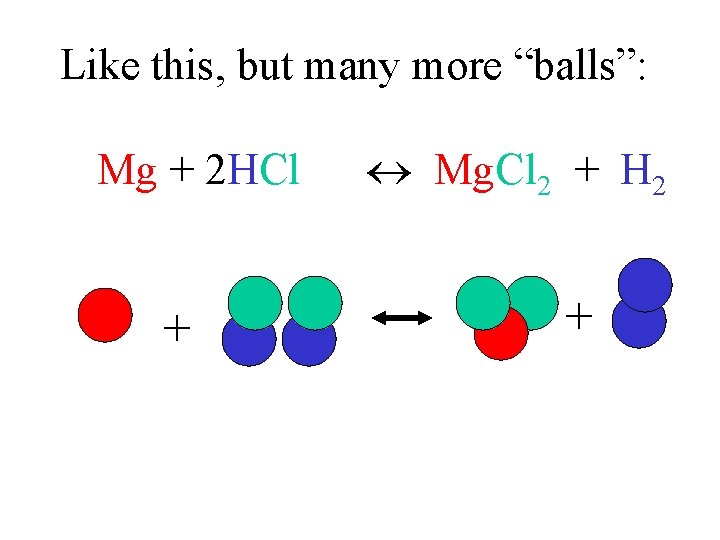
Like this, but many more “balls”: Mg + 2 HCl + Mg. Cl 2 + H 2 +
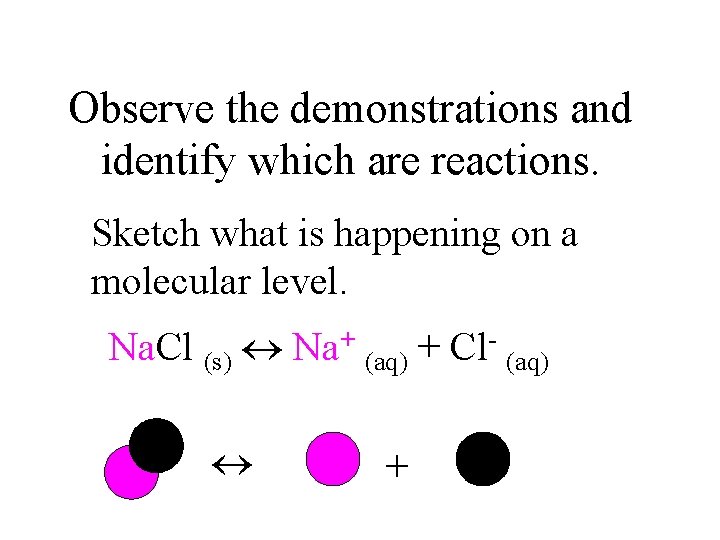
Observe the demonstrations and identify which are reactions. Sketch what is happening on a molecular level. Na. Cl (s) Na+ (aq) + Cl- (aq) +
Mg + 2 HCl Mg. Cl 2 + H 2 + + Na. Cl (s) Na+ (aq) + Cl- (aq) + Compare models