
Reaction Time Memory helps us identify a stimulus
- Slides: 23
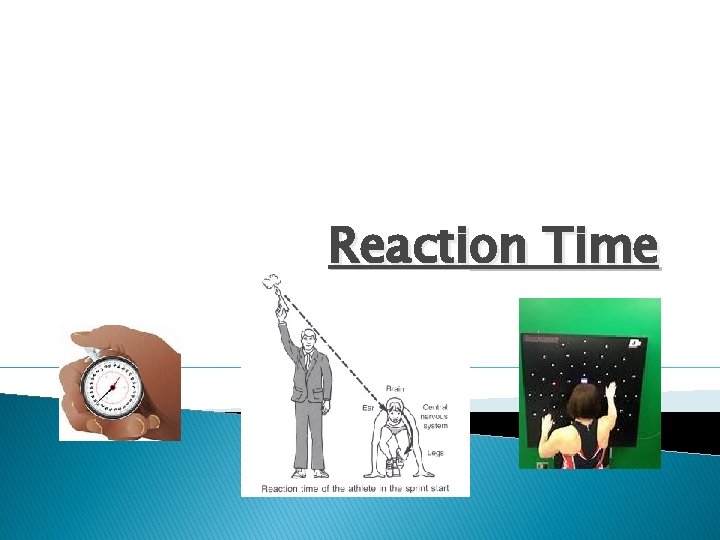
Reaction Time
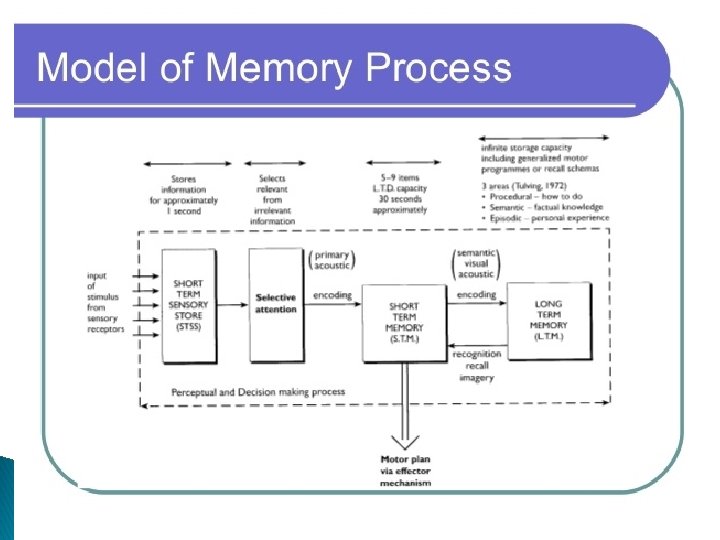
� Memory helps us identify a stimulus, we now need to know how to make a decision and respond to the information that has been received. Response Selection Stage � Need to decide what movement to make � Ball coming towards me…should I catch it? if so how?
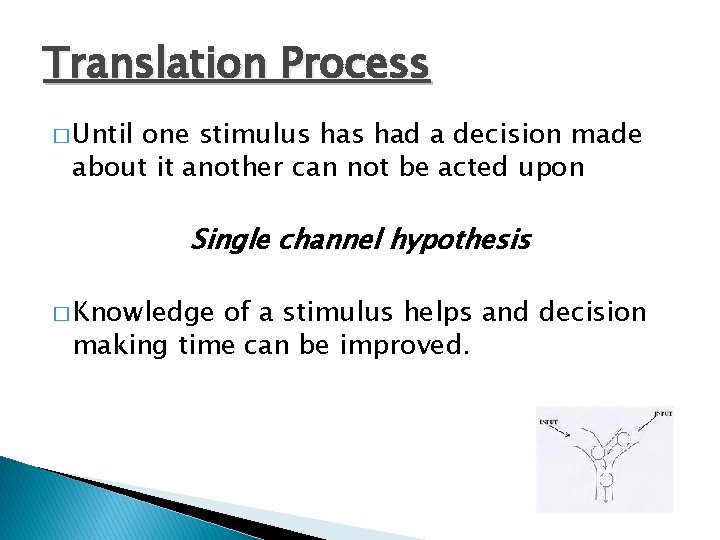
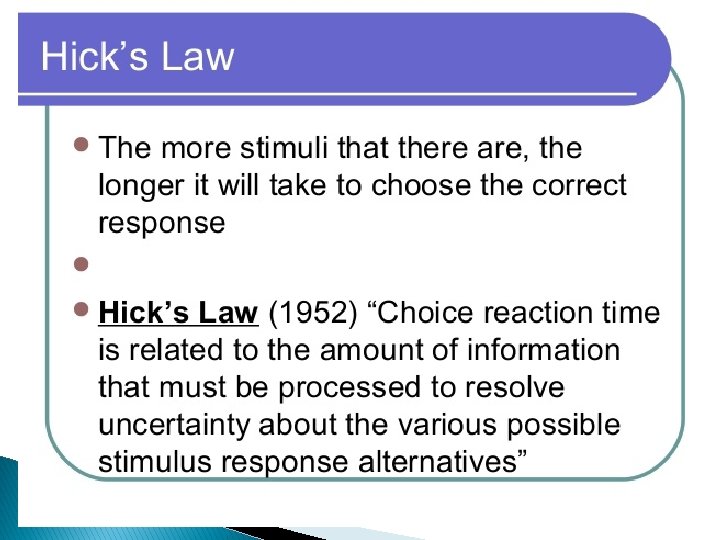
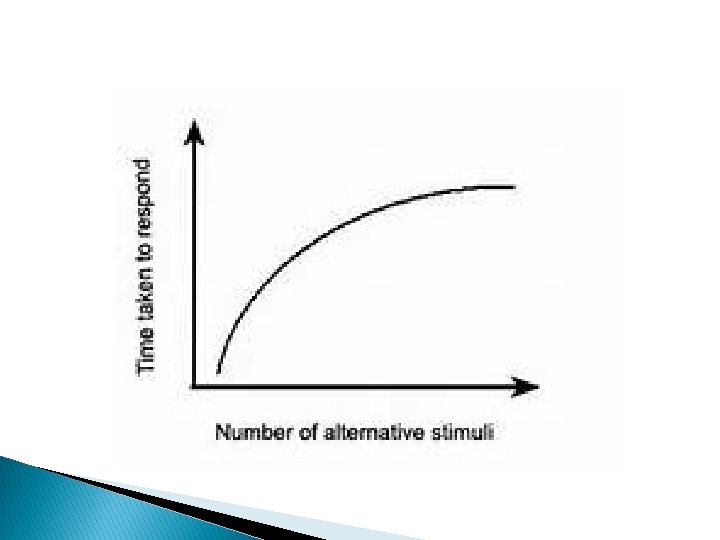
Translation Process � Until one stimulus had a decision made about it another can not be acted upon Single channel hypothesis � Knowledge of a stimulus helps and decision making time can be improved.
Reaction Time � Genetically determined � Influenced by the uncertainty of the stimulus to the performer i. e. knowledge � Are you familiar with the stimulus?
� Reaction Time- Time take to make a decision � Movement Time – Time from when movement is initiated to the point when the movement is complete Determined by muscle fibre type, level of learning of motor programme involved. � Response Time- Time from stimulus being given to the end of the result
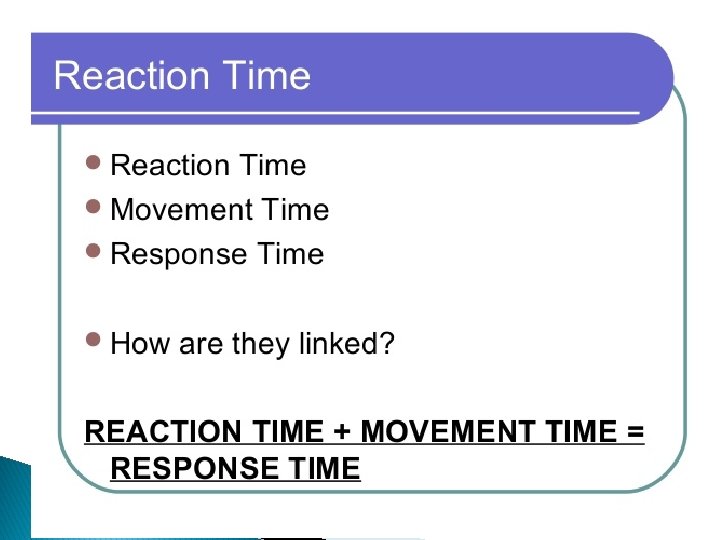
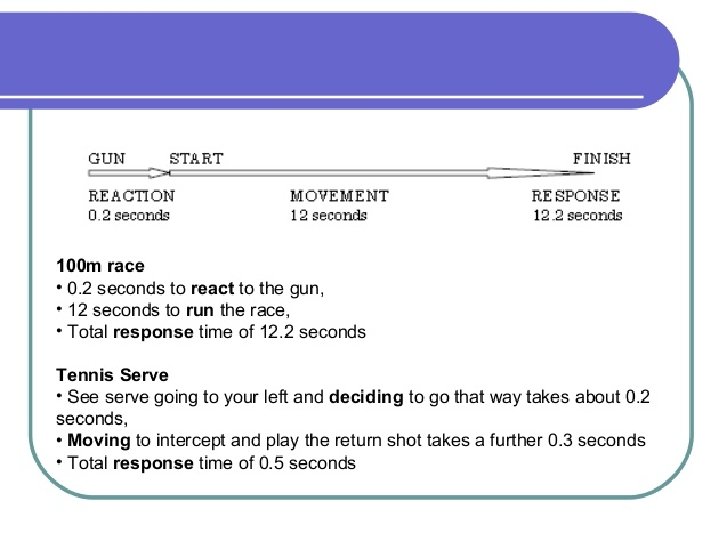
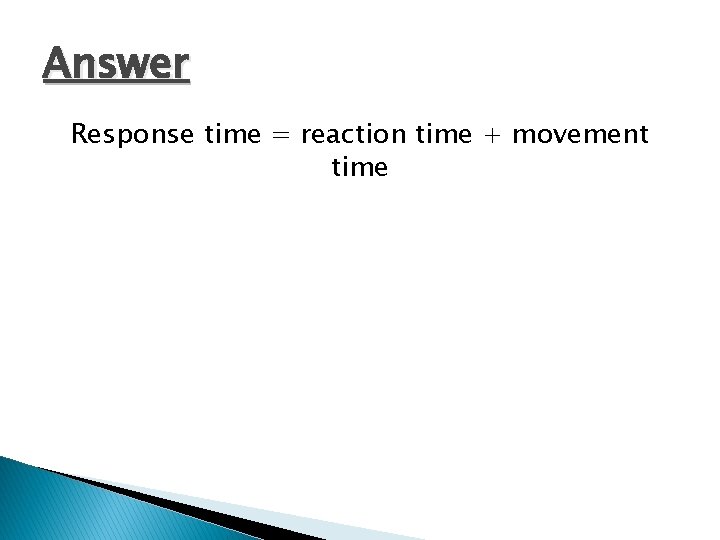
Response Time= Reaction time + movement time
What affects Reaction Time? ?
What affects Reaction Time? � Age � Gender � Fatigue � Intensity of stimulus � Probability of stimulus occurring- if expected reduced element of doubt i. e. same shot � Presence of a warning signal- call or gesture
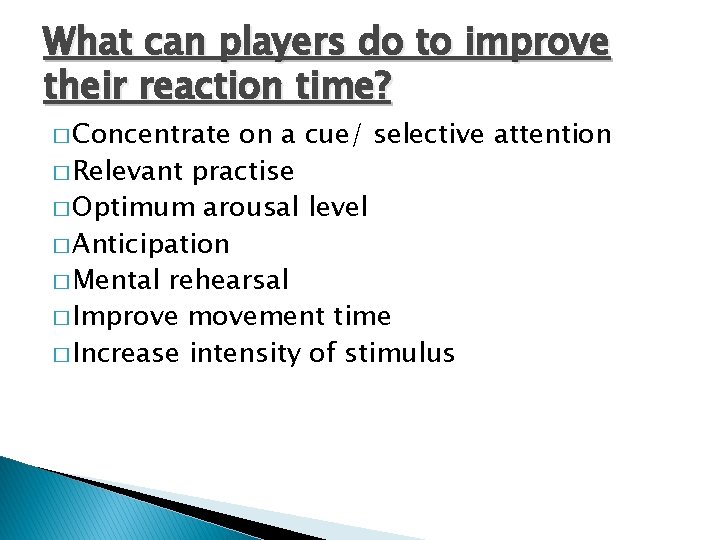
What can players do to improve their reaction time? ?
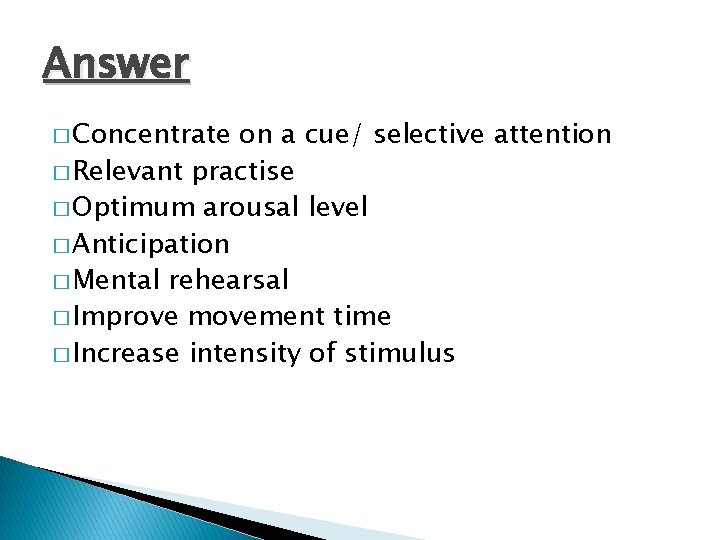
What can players do to improve their reaction time? � Concentrate on a cue/ selective attention � Relevant practise � Optimum arousal level � Anticipation � Mental rehearsal � Improve movement time � Increase intensity of stimulus
Question Reaction time is far more common in team games than simple reaction time. Explain this statement. (2 marks)
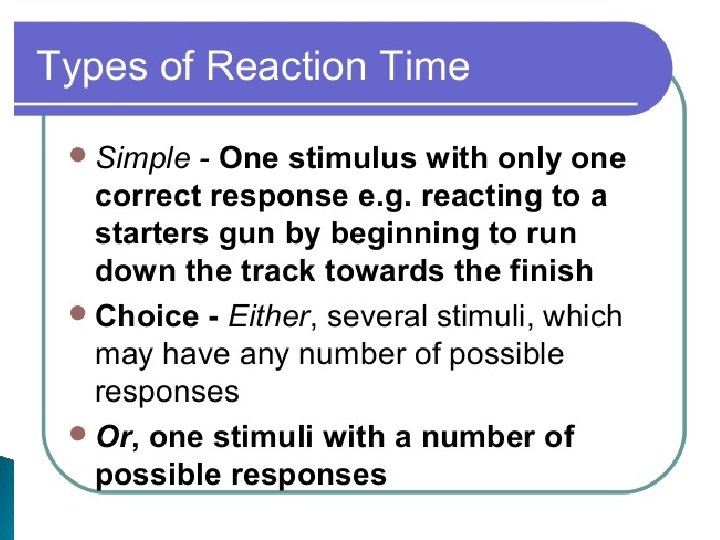
Answer � A. Choice Reaction Time – numerous stimuli and/or responses and Simple Reaction Time – one stimulus and one possible response � B. Games – open skills need CRT mainly/predominate/many choices/ decisions/few SRT skills/moments �
Question Performing a skill involves ‘movement time’, ‘response time’ and ‘reaction time’. What is the relationship between these three time phases? (1 mark)
Answer Response time = reaction time + movement time
Question What can games players do to improve their response time? (3 marks)
Answer � Concentrate on a cue/ selective attention � Relevant practise � Optimum arousal level � Anticipation � Mental rehearsal � Improve movement time � Increase intensity of stimulus