
Reaction Stoichiometry Mole to Mole Conversions Todays Phenomenon
- Slides: 9
Reaction Stoichiometry Mole to Mole Conversions
Today’s Phenomenon: “A balanced equation is just like a recipe!”
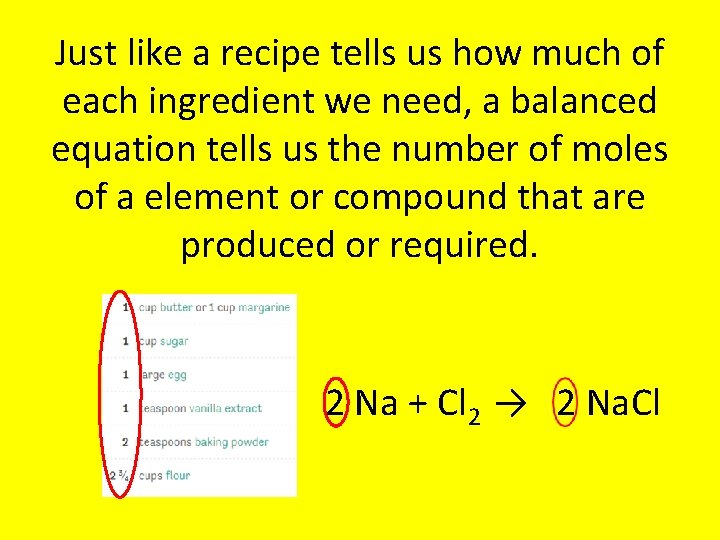
Just like a recipe tells us how much of each ingredient we need, a balanced equation tells us the number of moles of a element or compound that are produced or required. 2 Na + Cl 2 → 2 Na. Cl
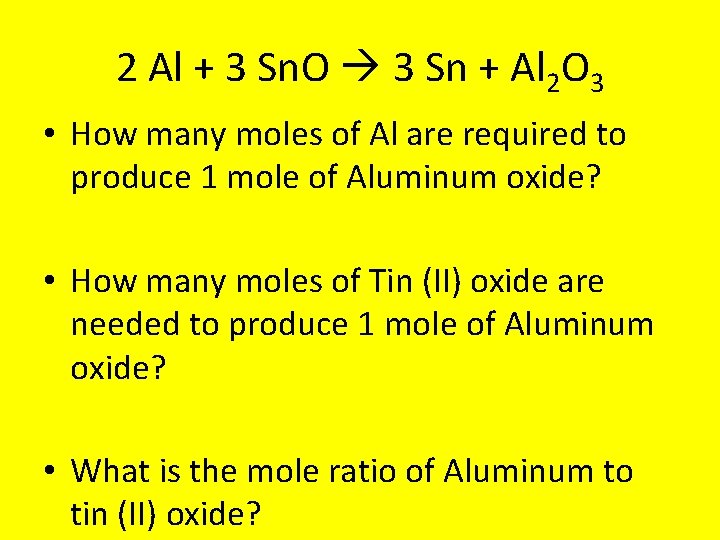
2 Al + 3 Sn. O 3 Sn + Al 2 O 3 • How many moles of Al are required to produce 1 mole of Aluminum oxide? • How many moles of Tin (II) oxide are needed to produce 1 mole of Aluminum oxide? • What is the mole ratio of Aluminum to tin (II) oxide?
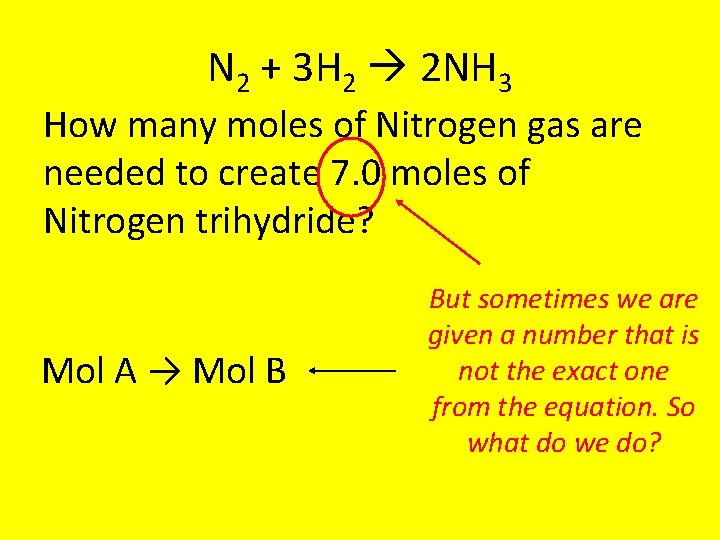
N 2 + 3 H 2 2 NH 3 How many moles of Nitrogen gas are needed to create 7. 0 moles of Nitrogen trihydride? Mol A → Mol B But sometimes we are given a number that is not the exact one from the equation. So what do we do?
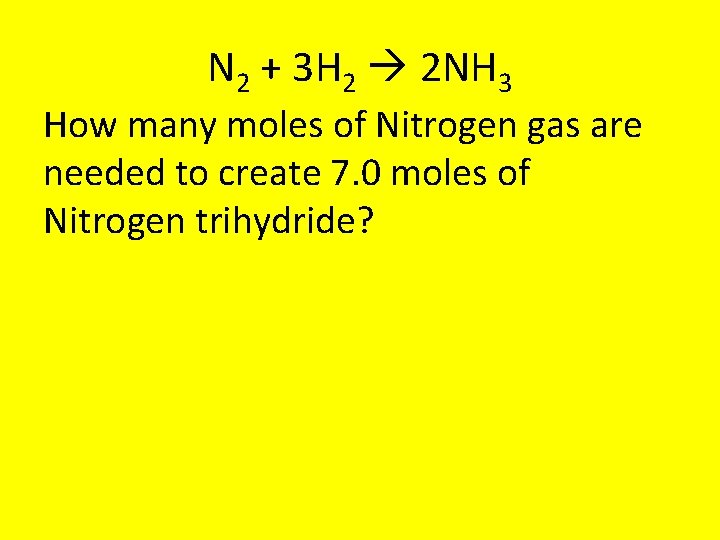
N 2 + 3 H 2 2 NH 3 How many moles of Nitrogen gas are needed to create 7. 0 moles of Nitrogen trihydride?
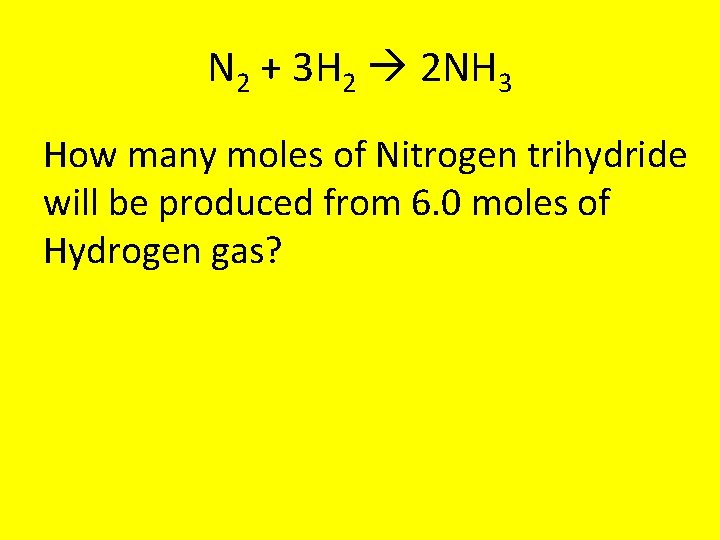
N 2 + 3 H 2 2 NH 3 How many moles of Nitrogen trihydride will be produced from 6. 0 moles of Hydrogen gas?
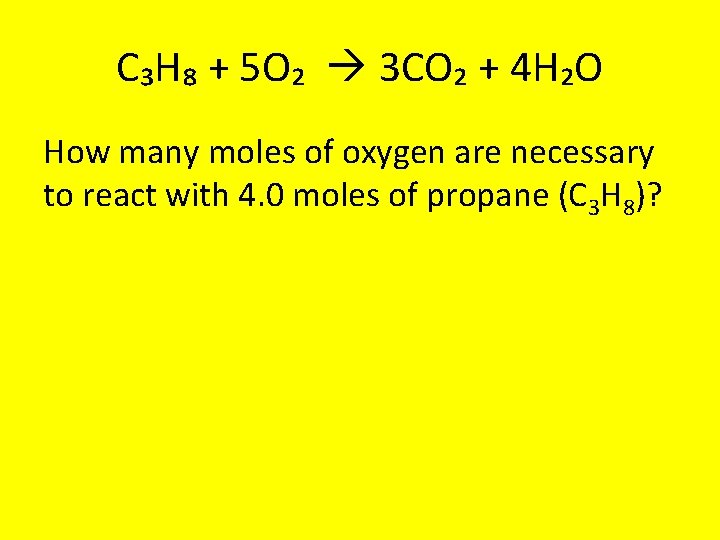
C₃H₈ + 5 O₂ 3 CO₂ + 4 H₂O How many moles of oxygen are necessary to react with 4. 0 moles of propane (C 3 H 8)?
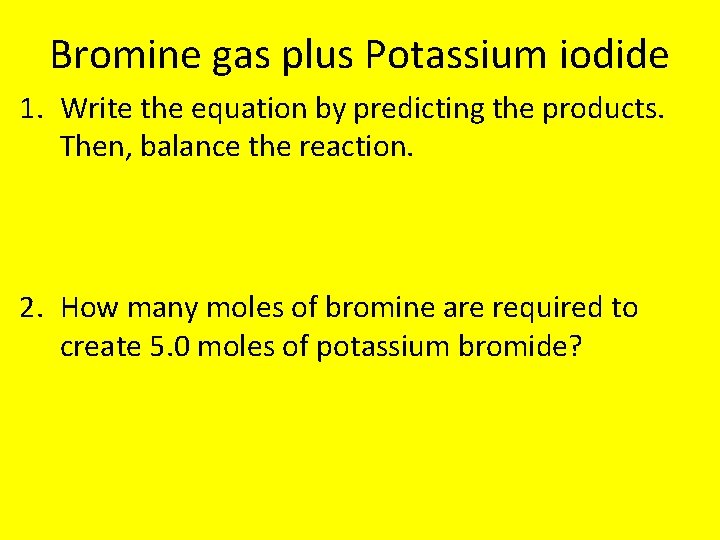
Bromine gas plus Potassium iodide 1. Write the equation by predicting the products. Then, balance the reaction. 2. How many moles of bromine are required to create 5. 0 moles of potassium bromide?