
Reaching the Unreachable Early Results from Index Testing

Reaching the Unreachable: Early Results from Index Testing in Zambia in the CIRKUITS Project Linah K. Mwango RN, HNP, BSc. Nrs Deputy Chief of Party Share your thoughts on this presentation with #IAS 2019
Conflicts of Interest • No conflicts of interest to declare
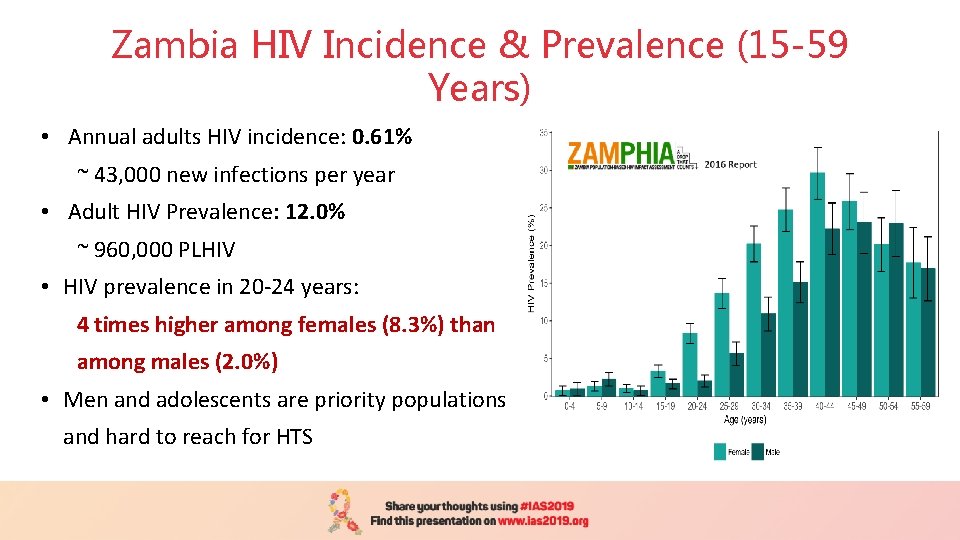
Zambia HIV Incidence & Prevalence (15 -59 Years) • Annual adults HIV incidence: 0. 61% ~ 43, 000 new infections per year • Adult HIV Prevalence: 12. 0% ~ 960, 000 PLHIV • HIV prevalence in 20 -24 years: 4 times higher among females (8. 3%) than among males (2. 0%) • Men and adolescents are priority populations and hard to reach for HTS
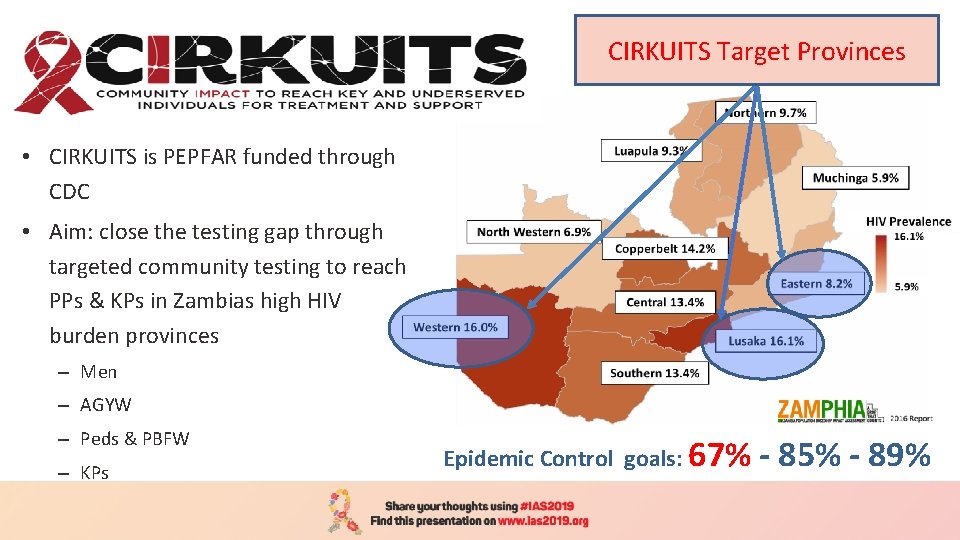
CIRKUITS Target Provinces • CIRKUITS is PEPFAR funded through CDC • Aim: close the testing gap through targeted community testing to reach PPs & KPs in Zambias high HIV burden provinces – Men – AGYW – Peds & PBFW – KPs Epidemic Control goals: 67% - 85% - 89%

Background of Index Testing and Partner Notification Services (IT & PNS) in Zambia • Following the PHIA results, IT & PNS were introduced in 2017 to improve HIV case identification – Initially IT & PNS were focused on testing children & spouses (index family tree testing) – Targeted testing of other sexual contacts was then included in the 2018 National Guidelines – Mentorship and data collecting tools were developed ZCG-Jan 2018
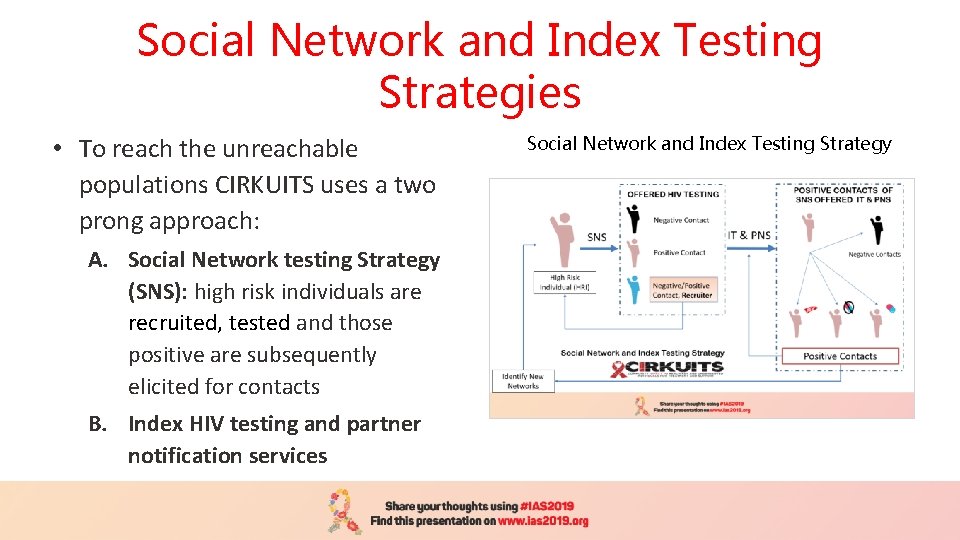
Social Network and Index Testing Strategies • To reach the unreachable populations CIRKUITS uses a two prong approach: A. Social Network testing Strategy (SNS): high risk individuals are recruited, tested and those positive are subsequently elicited for contacts B. Index HIV testing and partner notification services Social Network and Index Testing Strategy
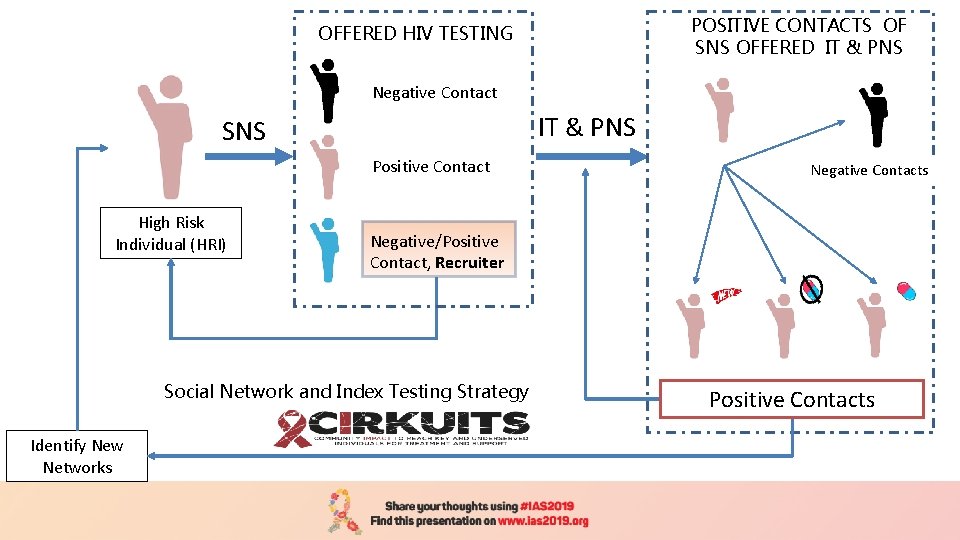
POSITIVE CONTACTS OF SNS OFFERED IT & PNS OFFERED HIV TESTING Negative Contact IT & PNS SNS Positive Contact High Risk Individual (HRI) Negative/Positive Contact, Recruiter Social Network and Index Testing Strategy Identify New Networks Negative Contacts Positive Contacts
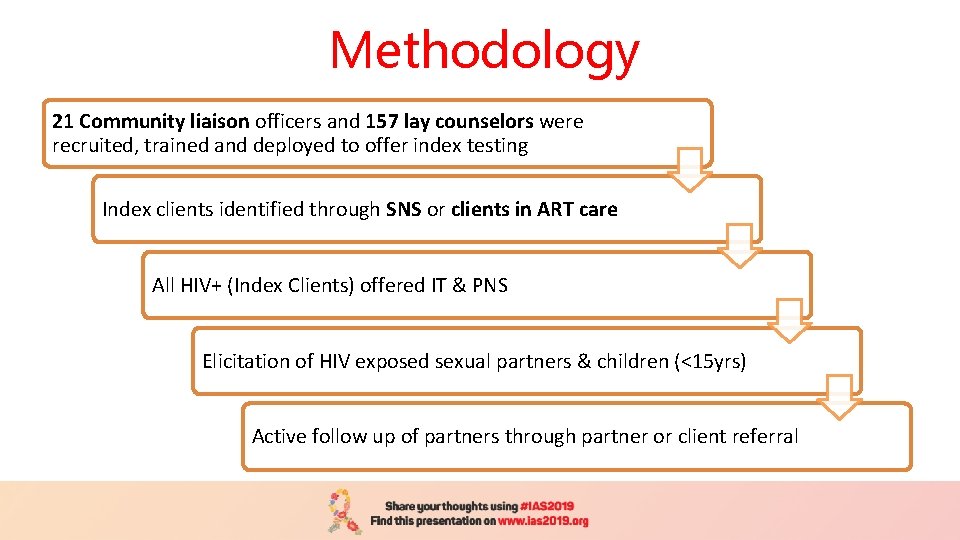
Methodology 21 Community liaison officers and 157 lay counselors were recruited, trained and deployed to offer index testing Index clients identified through SNS or clients in ART care All HIV+ (Index Clients) offered IT & PNS Elicitation of HIV exposed sexual partners & children (<15 yrs) Active follow up of partners through partner or client referral
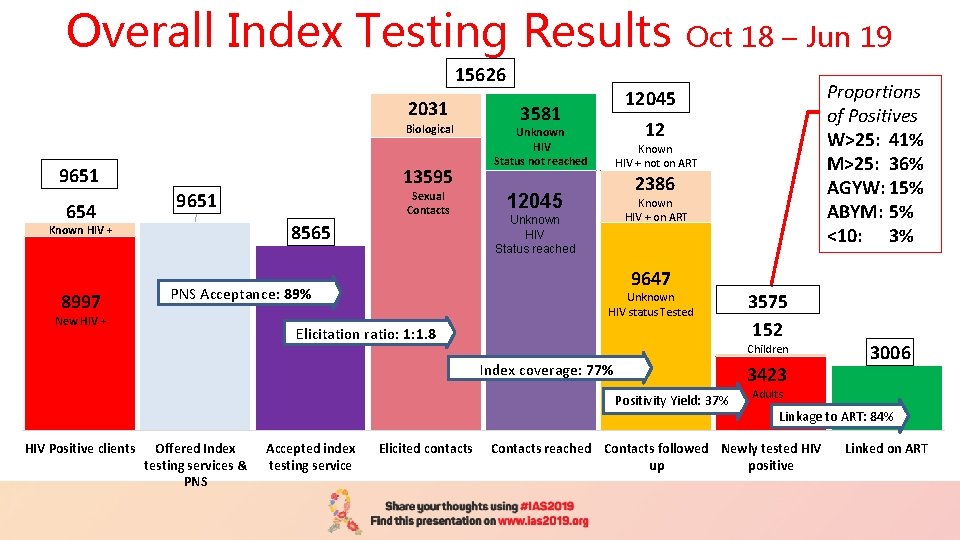
Overall Index Testing Results 15626 2031 Biological 9651 654 9651 Sexual Contacts 8565 Known HIV + 8997 13595 3581 12 Unknown HIV Status not reached Known HIV + not on ART 2386 12045 Known HIV + on ART Unknown HIV Status reached Unknown HIV status Tested Elicitation ratio: 1: 1. 8 3423 Positivity Yield: 37% Offered Index testing services & PNS Accepted index testing service Elicited contacts 3575 152 Children Index coverage: 77% HIV Positive clients Proportions of Positives W>25: 41% M>25: 36% AGYW: 15% ABYM: 5% <10: 3% 12045 9647 PNS Acceptance: 89%% New HIV + Oct 18 – Jun 19 3006 Adults Linkage to ART: 84% Contacts reached Contacts followed Newly tested HIV up positive Linked on ART
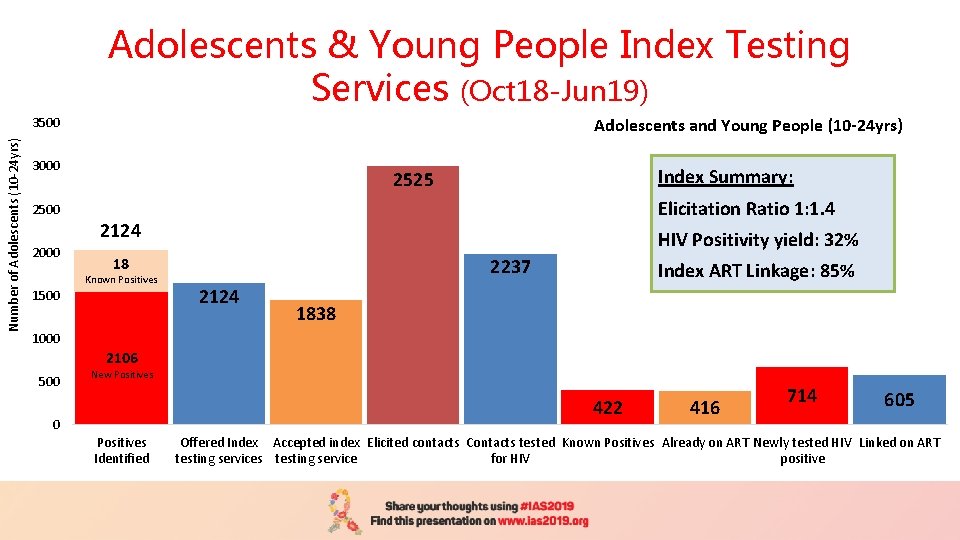
Adolescents & Young People Index Testing Services (Oct 18 -Jun 19) Number of Adolescents (10 -24 yrs) 3500 Adolescents and Young People (10 -24 yrs) 3000 Index Summary: 2525 Elicitation Ratio 1: 1. 4 2500 2124 2000 HIV Positivity yield: 32% 18 Known Positives 1500 2237 2124 Index ART Linkage: 85% 1838 1000 2106 500 New Positives 422 0 Positives Identified 416 714 605 Offered Index Accepted index Elicited contacts Contacts tested Known Positives Already on ART Newly tested HIV Linked on ART testing services testing service for HIV positive
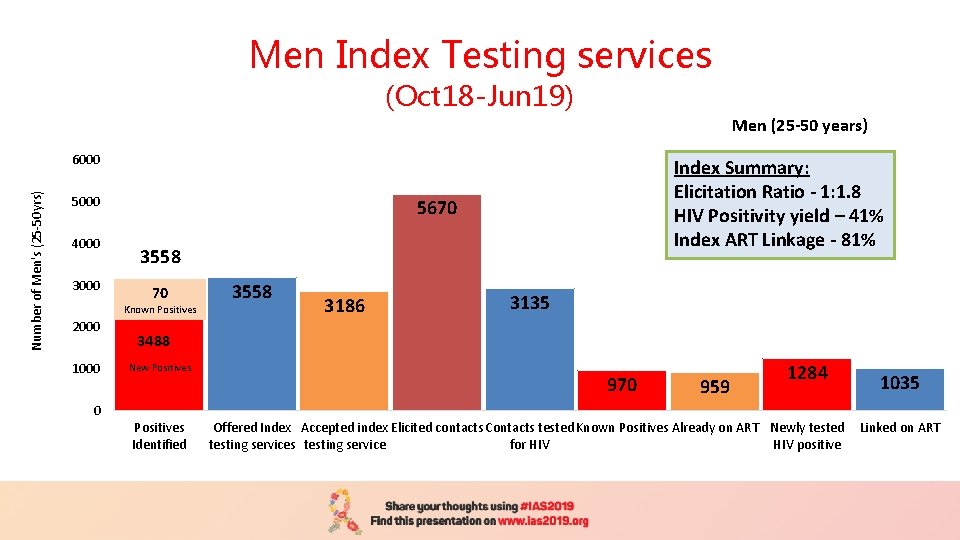
Men Index Testing services (Oct 18 -Jun 19) Men (25 -50 years) Number of Men's (25 -50 yrs) 6000 5000 4000 3000 5670 3558 70 Known Positives 2000 1000 Index Summary: Elicitation Ratio - 1: 1. 8 HIV Positivity yield – 41% Index ART Linkage - 81% 3558 3186 3135 3488 New Positives 970 959 1284 1035 0 Positives Identified Offered Index Accepted index Elicited contacts Contacts tested Known Positives Already on ART Newly tested testing services testing service for HIV positive Linked on ART
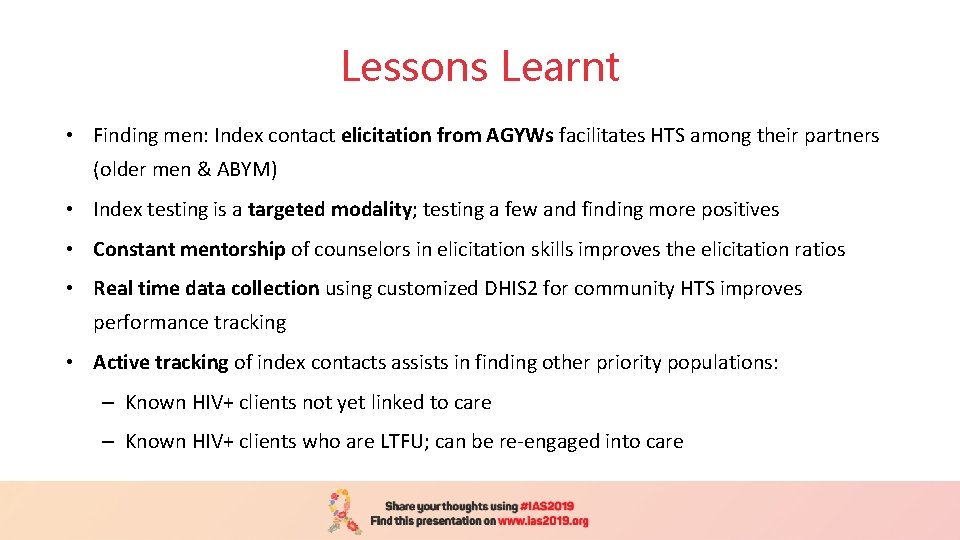
Lessons Learnt • Finding men: Index contact elicitation from AGYWs facilitates HTS among their partners (older men & ABYM) • Index testing is a targeted modality; testing a few and finding more positives • Constant mentorship of counselors in elicitation skills improves the elicitation ratios • Real time data collection using customized DHIS 2 for community HTS improves performance tracking • Active tracking of index contacts assists in finding other priority populations: – Known HIV+ clients not yet linked to care – Known HIV+ clients who are LTFU; can be re-engaged into care
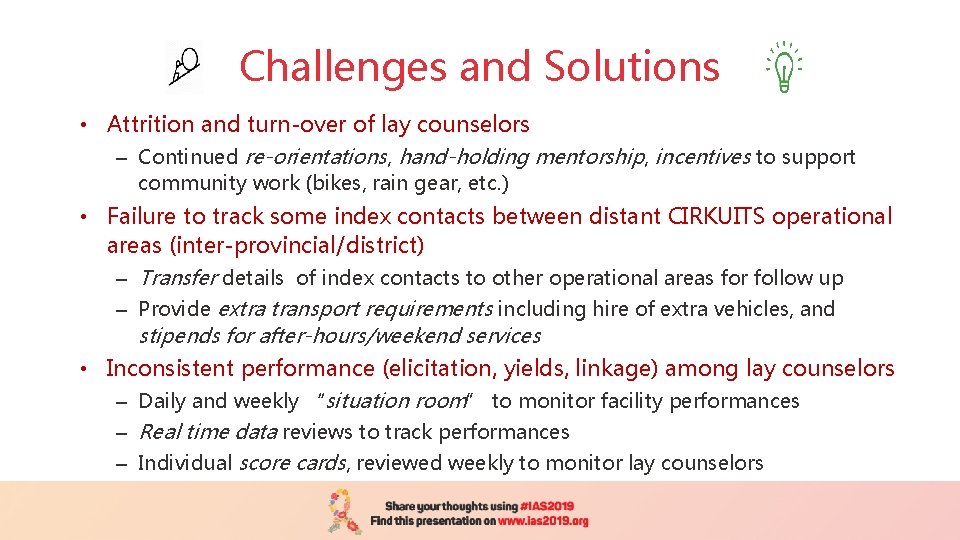
Challenges and Solutions • Attrition and turn-over of lay counselors – Continued re-orientations, hand-holding mentorship, incentives to support community work (bikes, rain gear, etc. ) • Failure to track some index contacts between distant CIRKUITS operational areas (inter-provincial/district) – Transfer details of index contacts to other operational areas for follow up – Provide extra transport requirements including hire of extra vehicles, and stipends for after-hours/weekend services • Inconsistent performance (elicitation, yields, linkage) among lay counselors – Daily and weekly “situation room” to monitor facility performances – Real time data reviews to track performances – Individual score cards, reviewed weekly to monitor lay counselors
Limitations • Lack of follow-up of index contacts that are outside the CIRKUITS operational catchment areas contributes to 23% of index contacts not being reachable for HTS
Conclusions • Co-implementing index testing and social networking strategy leads to high yields of positives among hard-to-reach populations o Men – 41%, adolescents – 32%, and children – 8% • Index testing is a strategy that improves HIV case identification among the previously unreached populations • Index and social networking strategies need to be scaled up to achieve epidemic control • IT & PNS facilitate known positives not on treatment being linked to ART
Acknowledgments
- Slides: 17