
Reaching New Heights in Understanding CVC Complications Heighten



- Slides: 50
Reaching New Heights in Understanding CVC Complications Heighten Your DVT Awareness Michael Brazunas, RN, BSN, VA-BC
Disclosures �Angio. Dynamics, Inc. �Association for Vascular Access – Director-at- Large
Objective �Identify 3 central venous catheter (CVC) complications �Recognize the prevalence and clinical relevance of 3 CVC complications �Examine in-depth details of CVC-related thrombosis �Distinguish varying methods of managing catheter-related thrombosis
Complications of Central Venous Catheters (CVCs)
Catheter-Related Infections There are three types of catheter-related infections 1: �Blood stream infections �Catheter colonization �Exit-site infection
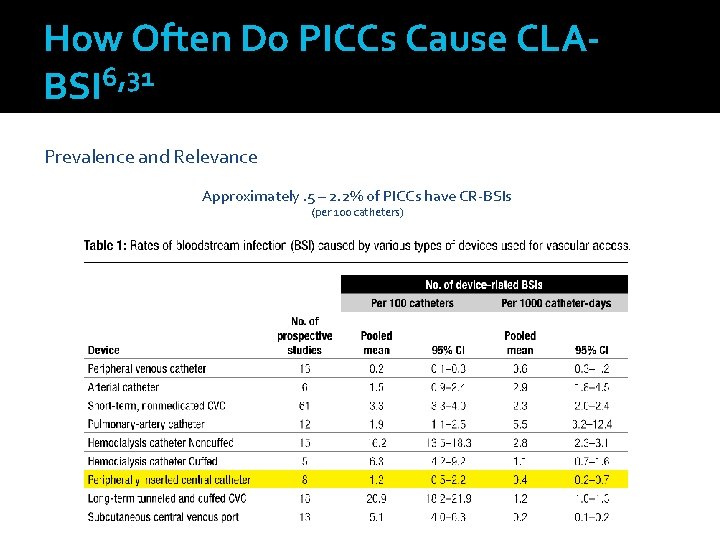
How Often Do PICCs Cause CLABSI 6, 31 Prevalence and Relevance Approximately. 5 – 2. 2% of PICCs have CR-BSIs (per 100 catheters)
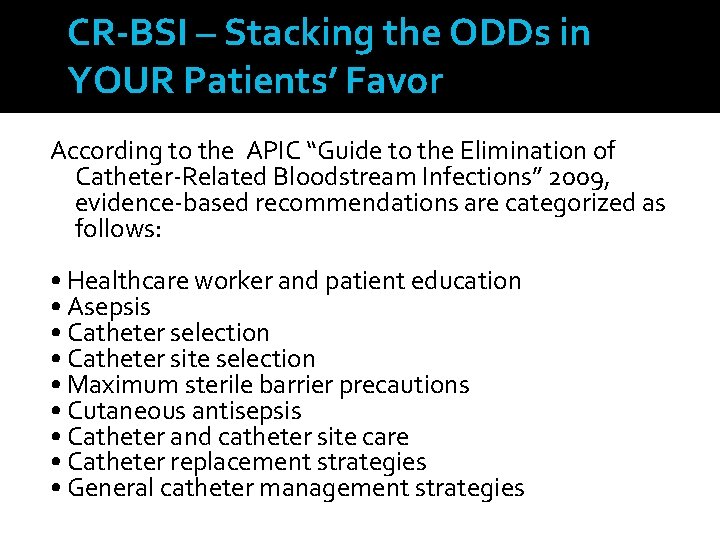
CR-BSI – Stacking the ODDs in YOUR Patients’ Favor According to the APIC “Guide to the Elimination of Catheter-Related Bloodstream Infections” 2009, evidence-based recommendations are categorized as follows: • Healthcare worker and patient education • Asepsis • Catheter selection • Catheter site selection • Maximum sterile barrier precautions • Cutaneous antisepsis • Catheter and catheter site care • Catheter replacement strategies • General catheter management strategies
CR-BSI – Stacking the ODDs in YOUR Patients’ Favor From APIC “Guide to the Elimination of Catheter-Related Bloodstream Infections” 2009: “Raad and colleagues caution that a multi-pronged approach to CRBSI prevention is still required and should include a combination of novel preventative measures such as: • Antiseptic techniques • Novel technologies • Prudent catheter insertion and timely removal”
THE LINK BETWEEN THROMBUS & INFECTION What comes first; the thrombus or the infection? Thrombus and fibrin sheaths are the food that bacteria live and thrive on The correlation between the two is widely accepted Preventing thrombus reduces infection
THE LINK BETWEEN THROMBUS & INFECTION Show me the data � Raad, The Relationship Between the Thrombotic and Infectious Complications of Central Venous Catheters, JAMA 1194 Post-mortem evaluation of 72 cancer patients with CVCs showed a strong correlation between CR-sepsis and CVC thrombosis ▪ Fibrin layer present on ALL catheters ▪ CR-Thrombosis present in 38% of cases ▪ 23% of these had sepsis All patients with sepsis had thrombosis--
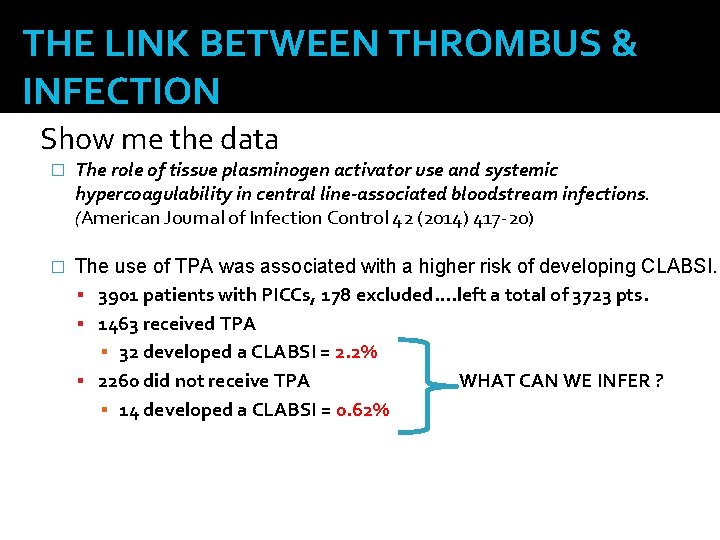
THE LINK BETWEEN THROMBUS & INFECTION Show me the data � The role of tissue plasminogen activator use and systemic hypercoagulability in central line-associated bloodstream infections. (American Journal of Infection Control 42 (2014) 417 -20) � The use of TPA was associated with a higher risk of developing CLABSI. 3901 patients with PICCs, 178 excluded…. left a total of 3723 pts. 1463 received TPA ▪ 32 developed a CLABSI = 2. 2% 2260 did not receive TPA WHAT CAN WE INFER ? ▪ 14 developed a CLABSI = 0. 62%
THE LINK BETWEEN THROMBUS & INFECTION Show me more data: � Management of occlusion and thrombosis associated with long-term indwelling central venous catheters Lancet 2009 “Catheter Related Thrombosis can lead to further complications such as increased risk of subsequent catheter infections…” “Microbiological studies have shown that proteins within a clot, such as fibrinogen and fibronectin, attract staphylococcal species… thereby increasing the risk of catheter infection” � Infections increase the risk of central venous catheter-related thrombosis in adult acute myeloid leukemia. Thrombosis Research 2013 “…both CVC-exit site infections and sepsis were confirmed to be independent risk factors for CRT development. ”
THE LINK BETWEEN THROMBUS & INFECTION Show me more data: From APIC “Guide to the Elimination of Catheter-Related Bloodstream Infections” 2009: “…infected thrombus of the great vessels secondary to vascular catheter use, continues to pose a risk to patients. ” “Future technologies may also include agents or materials that prevent thrombus formation. ”
THE LINK BETWEEN THROMBUS & INFECTION Show me more data: � Ryder et. al. The Effect of Chlorhexidine Catheter Coating Compared to Biomimetic Catheter on the reduction of Fibrin Sheath Formation in the of Staphylococcus aureus colonization in an in vivo Clinically Simulated Ovine Model “The correlation of catheter-related infection and thrombosis has been observed Clinically”
THE LINK BETWEEN THROMBUS & INFECTION Show me more data: � Catheter-Related Infection and Thrombosis: A Proven Relationship. A Review of Innovative PICC Technology to Reduce Catheter-Related Infection and Thrombosis – Nancy Mareau “The relationship between thrombosis and infection has been established with significant colonization in areas of clot, and higher rates of catheterrelated sepsis and catheter-related septicemia when thrombosis is present. ” � “ In animal studies, fibrin sheath formation around central venous catheters significantly promoted colonization, catheter-related infection and persistent bacteremia. ” �
Catheter-Related Thrombotic Occlusions
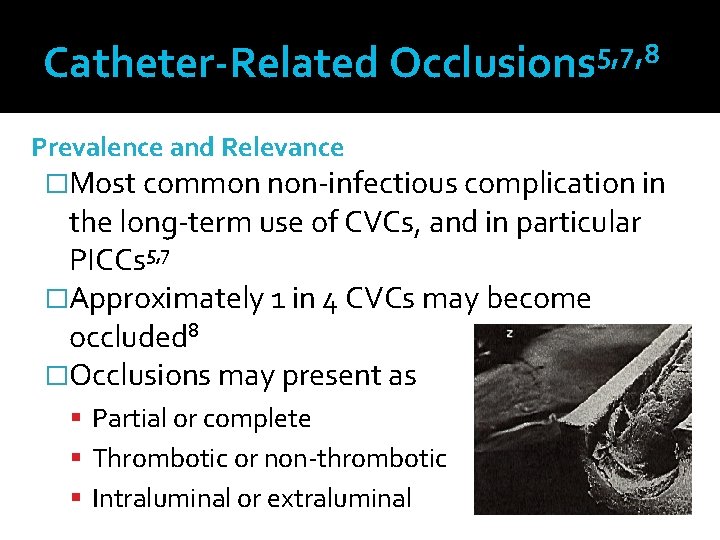
Catheter-Related 5, 7, 8 Occlusions Prevalence and Relevance �Most common non-infectious complication in the long-term use of CVCs, and in particular PICCs 5, 7 �Approximately 1 in 4 CVCs may become occluded 8 �Occlusions may present as Partial or complete Thrombotic or non-thrombotic Intraluminal or extraluminal
How do YOU Determine Occlusions? Prevalence and Relevance �Potential indicators of catheter occlusion 7 Inability to infuse fluids Lack of free-flowing blood return Increased resistance when flushing Sluggish flow Frequent infusion pump alarms Learn what YOUR prevalence and relevance are!
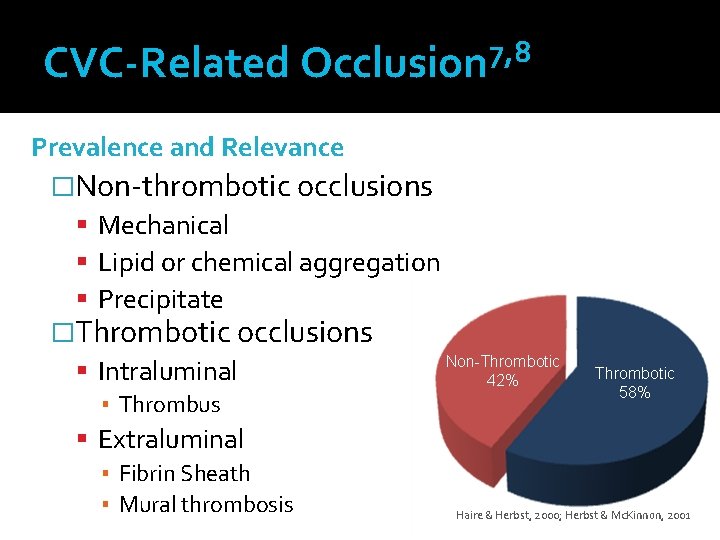
7, 8 CVC-Related Occlusion Prevalence and Relevance �Non-thrombotic occlusions Mechanical Lipid or chemical aggregation Precipitate �Thrombotic occlusions Non-Thrombotic Intraluminal 42% ▪ Thrombus Extraluminal ▪ Fibrin Sheath ▪ Mural thrombosis Thrombotic 58% Haire & Herbst, 2000; Herbst & Mc. Kinnon, 2001.
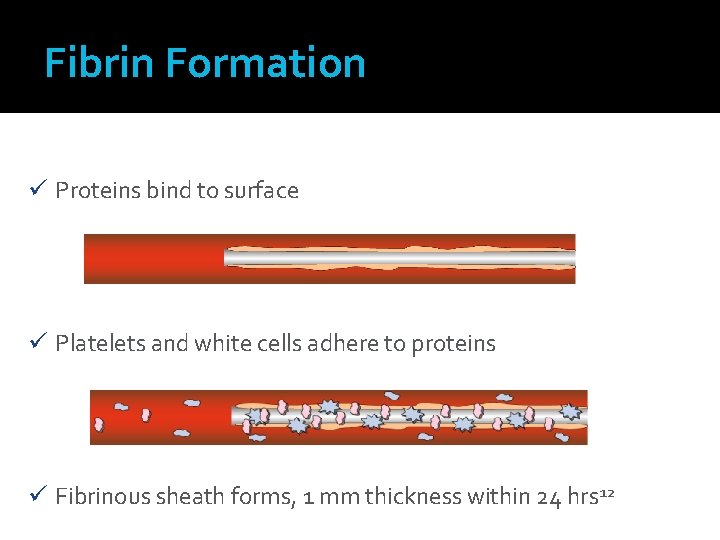
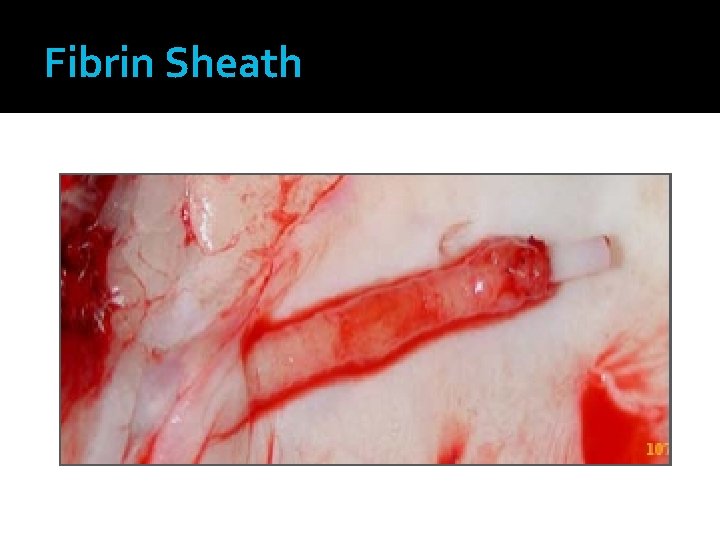
Fibrin Formation ü Proteins bind to surface ü Platelets and white cells adhere to proteins ü Fibrinous sheath forms, 1 mm thickness within 24 hrs 12
Fibrin Sheath
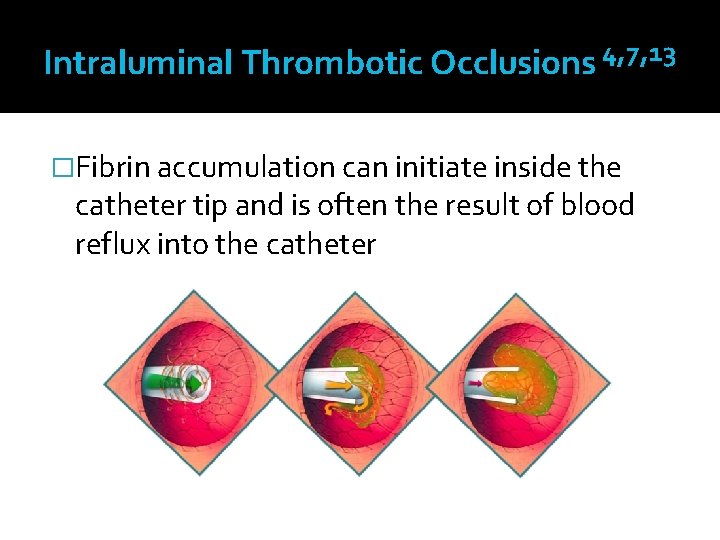
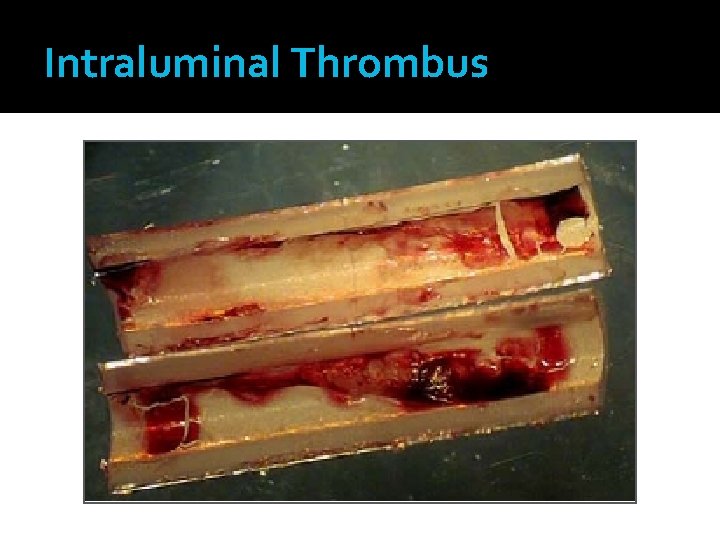
Intraluminal Thrombotic Occlusions 4, 7, 13 �Fibrin accumulation can initiate inside the catheter tip and is often the result of blood reflux into the catheter
Intraluminal Thrombus
Catheter-Related Deep Vein Thrombosis
Deep Vein Thrombosis Awareness 10, 11 Prevalence and Relevance � Each year 200, 000 -600, 000 Americans suffer from Venous Thromboembolism (VTE) which includes Deep Vein Thrombosis (DVT) and Pulmonary Embolism (PE) 11 � At least 100, 000 deaths per year are directly related to VTE 10 � VTE is the leading cause of preventable, in-hospital deaths affecting more people annually than highway fatalities and breast cancer combined 10 � 74% of people surveyed have little or not awareness of DVT symptoms 11
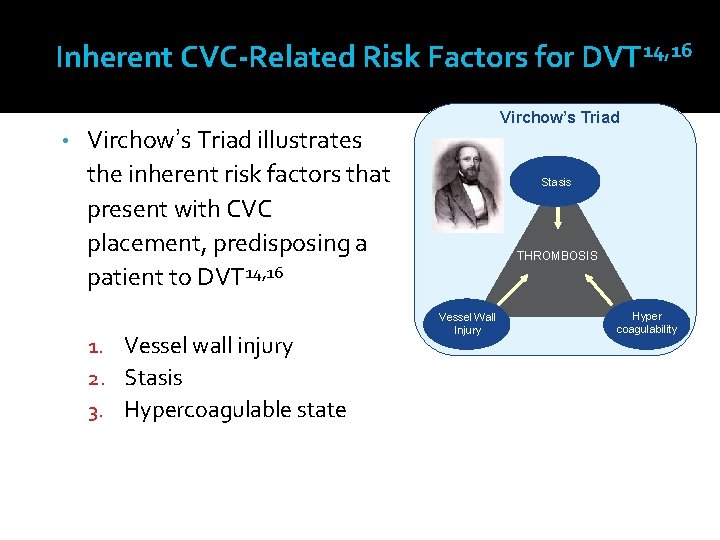
Inherent CVC-Related Risk Factors for DVT 14, 16 • Virchow’s Triad illustrates the inherent risk factors that present with CVC placement, predisposing a patient to DVT 14, 16 1. Vessel wall injury 2. Stasis 3. Hypercoagulable state Stasis THROMBOSIS Vessel Wall Injury Hyper coagulability
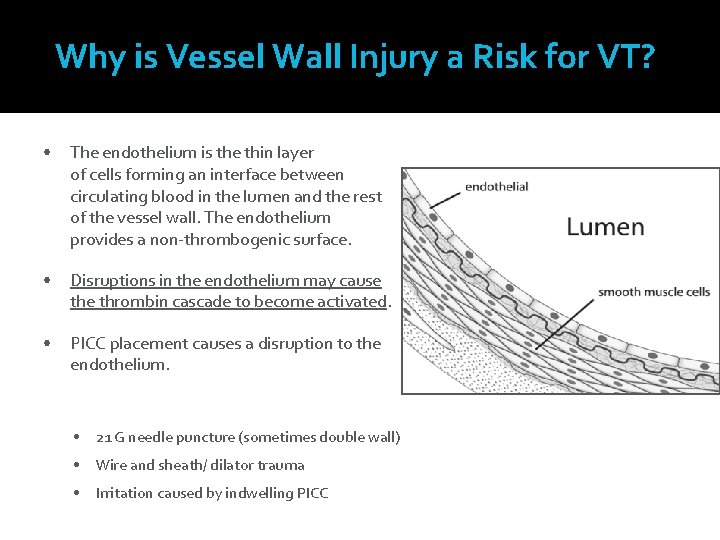
Why is Vessel Wall Injury a Risk for VT? • The endothelium is the thin layer of cells forming an interface between circulating blood in the lumen and the rest of the vessel wall. The endothelium provides a non-thrombogenic surface. • Disruptions in the endothelium may cause thrombin cascade to become activated. • PICC placement causes a disruption to the endothelium. • 21 G needle puncture (sometimes double wall) • Wire and sheath/ dilator trauma • Irritation caused by indwelling PICC
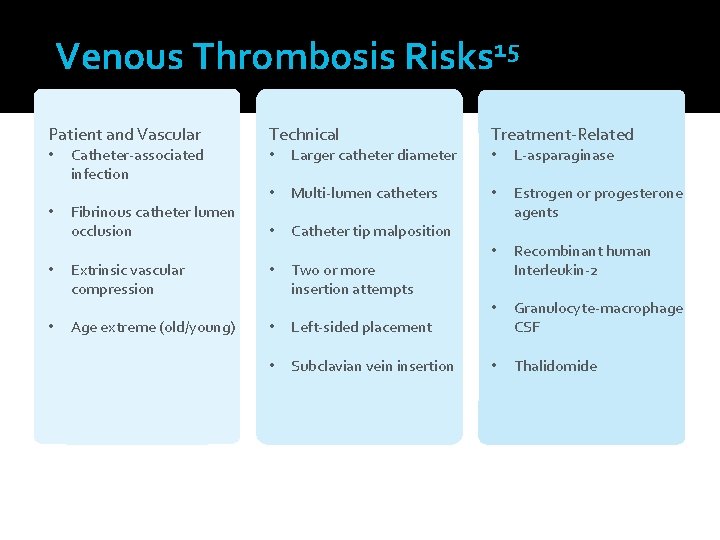
Venous Thrombosis Risks 15 Patient and Vascular • • Catheter-associated infection Fibrinous catheter lumen occlusion Technical • Larger catheter diameter • Multi-lumen catheters • Catheter tip malposition Extrinsic vascular compression • Two or more insertion attempts Age extreme (old/young) • Left-sided placement • Subclavian vein insertion Treatment-Related • L-asparaginase • Estrogen or progesterone agents • Recombinant human Interleukin-2 • Granulocyte-macrophage CSF • Thalidomide
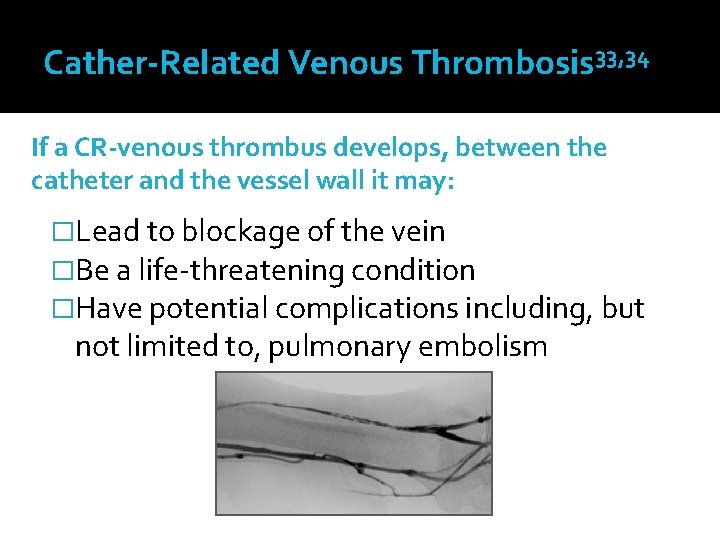
Cather-Related Venous Thrombosis 33, 34 If a CR-venous thrombus develops, between the catheter and the vessel wall it may: �Lead to blockage of the vein �Be a life-threatening condition �Have potential complications including, but not limited to, pulmonary embolism
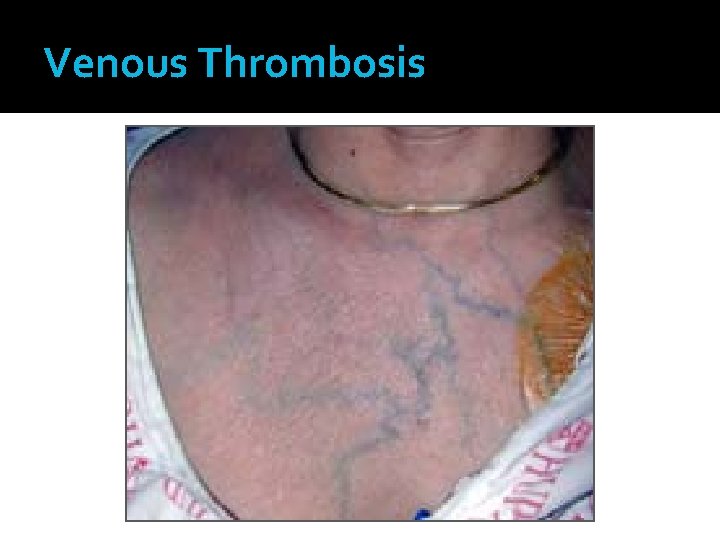
Venous Thrombosis
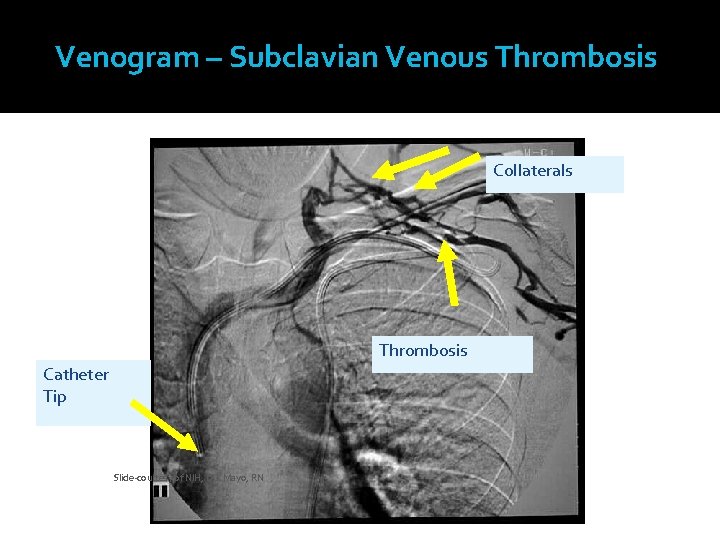
Venogram – Subclavian Venous Thrombosis Collaterals Thrombosis Catheter Tip Slide-courtesy of NIH, D. J. Mayo, RN
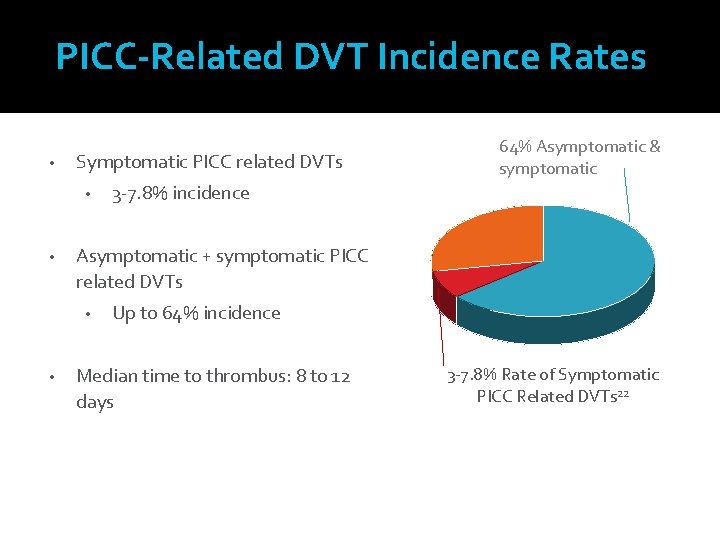
PICC-Related DVT Incidence Rates and Relevance • Prevalence Symptomatic PICC related DVTs • • 3 -7. 8% incidence Asymptomatic + symptomatic PICC related DVTs • • 64% Asymptomatic & symptomatic Up to 64% incidence Median time to thrombus: 8 to 12 days 3 -7. 8% Rate of Symptomatic PICC Related DVTs 22
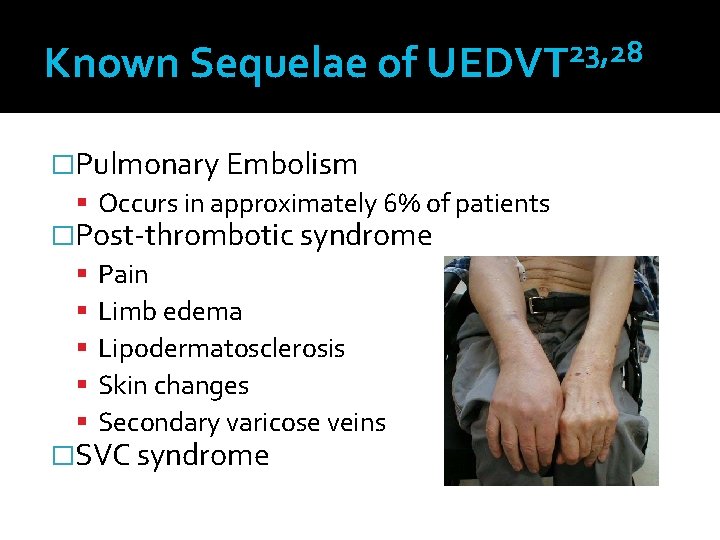
23, 28 Known Sequelae of UEDVT �Pulmonary Embolism Occurs in approximately 6% of patients �Post-thrombotic syndrome Pain Limb edema Lipodermatosclerosis Skin changes Secondary varicose veins �SVC syndrome
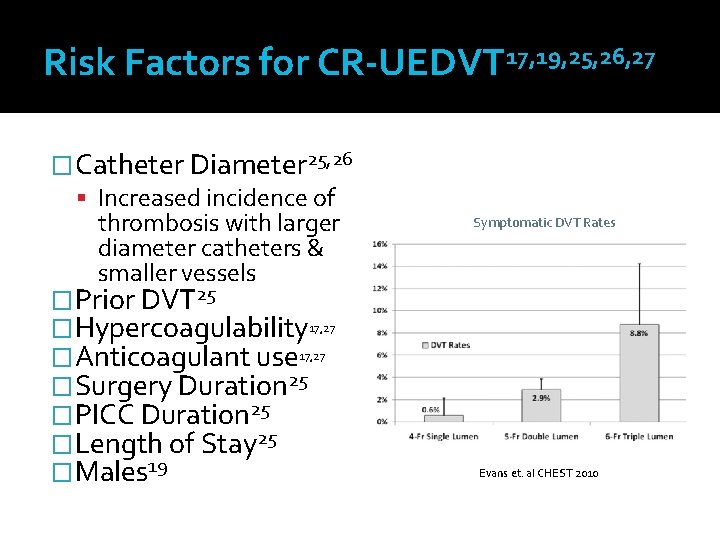
Risk Factors for CR-UEDVT 17, 19, 25, 26, 27 �Catheter Diameter 25, 26 Increased incidence of thrombosis with larger diameter catheters & smaller vessels �Prior DVT 25 �Hypercoagulability 17, 27 �Anticoagulant use 17, 27 �Surgery Duration 25 �PICC Duration 25 �Length of Stay 25 �Males 19 Symptomatic DVT Rates Evans et. al CHEST 2010
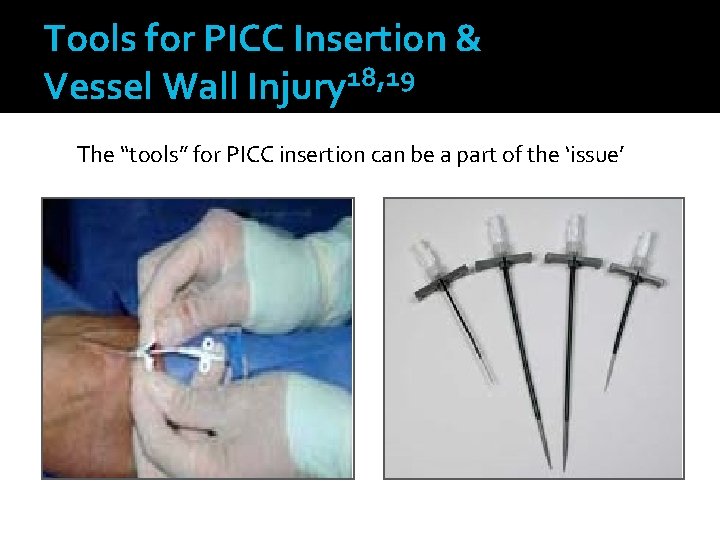
Tools for PICC Insertion & Vessel Wall Injury 18, 19 The “tools” for PICC insertion can be a part of the ‘issue’
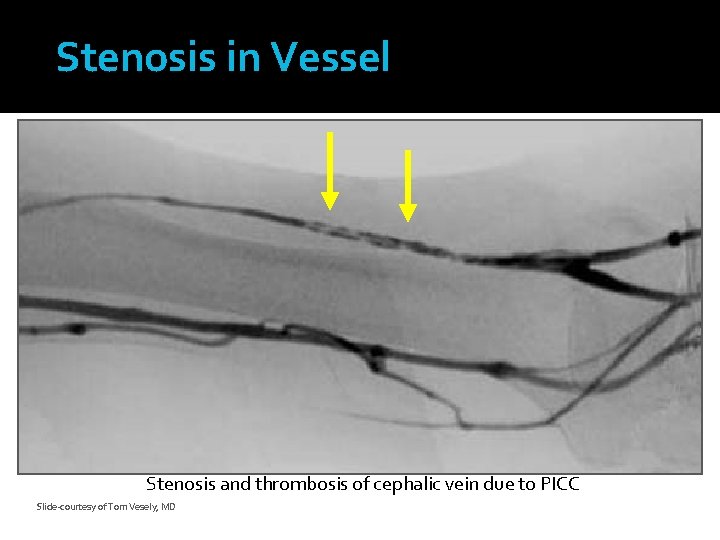
Stenosis in Vessel Stenosis and thrombosis of cephalic vein due to PICC Slide-courtesy of Tom Vesely, MD
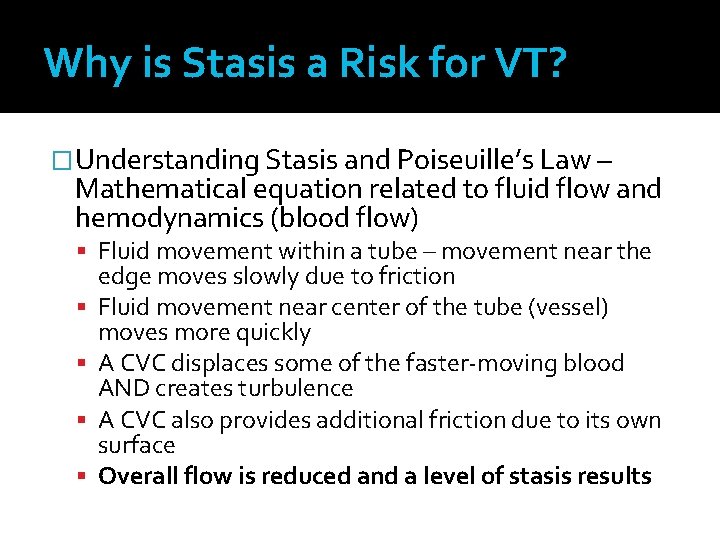
Why is Stasis a Risk for VT? �Understanding Stasis and Poiseuille’s Law – Mathematical equation related to fluid flow and hemodynamics (blood flow) Fluid movement within a tube – movement near the edge moves slowly due to friction Fluid movement near center of the tube (vessel) moves more quickly A CVC displaces some of the faster-moving blood AND creates turbulence A CVC also provides additional friction due to its own surface Overall flow is reduced and a level of stasis results
Similar to how a river flows
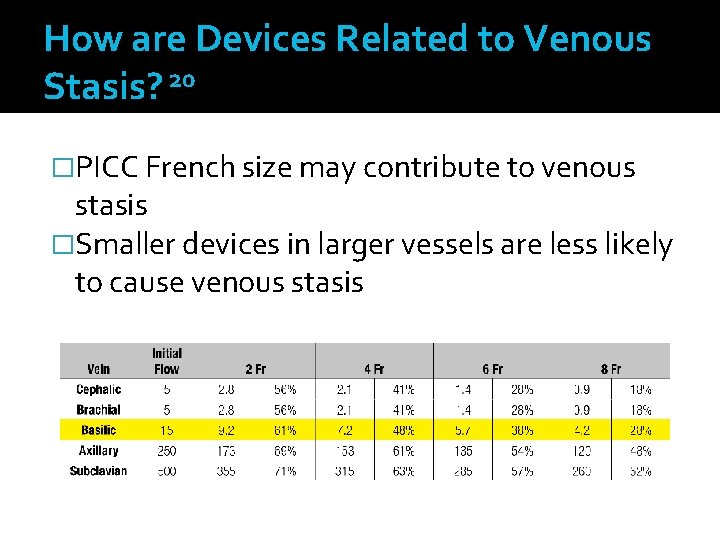
How are Devices Related to Venous Stasis? 20 �PICC French size may contribute to venous stasis �Smaller devices in larger vessels are less likely to cause venous stasis
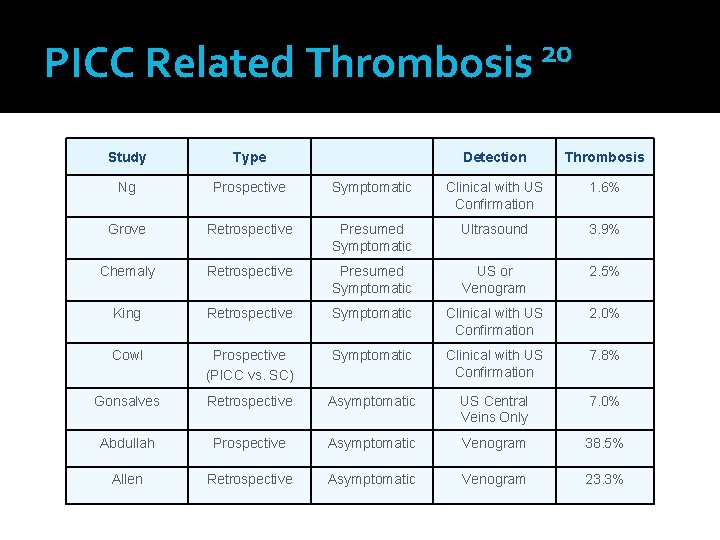
20 PICC Related Thrombosis Study Type Detection Thrombosis Ng Prospective Symptomatic Clinical with US Confirmation 1. 6% Grove Retrospective Presumed Symptomatic Ultrasound 3. 9% Chemaly Retrospective Presumed Symptomatic US or Venogram 2. 5% King Retrospective Symptomatic Clinical with US Confirmation 2. 0% Cowl Prospective (PICC vs. SC) Symptomatic Clinical with US Confirmation 7. 8% Gonsalves Retrospective Asymptomatic US Central Veins Only 7. 0% Abdullah Prospective Asymptomatic Venogram 38. 5% Allen Retrospective Asymptomatic Venogram 23. 3%
Clinical Significance of PICC-Related DVT 19 � Fletcher, J. , et al. , Neurocritical Care, 2011 � Study aims to determine the clinical significance of PICC-Related DVT in critically ill patients � Retrospective study 479 had PICCs placed over course of 2 -year review 39 patients developed symptomatic PICC-related DVT (8. 1%) Size and location of device was not associated with thrombosis development � Pulmonary embolus attributed to PICC-related DVT (1. 3%) � Authors recommend prospective studies comparing PICCs and CVCs in critically ill patients
Managing Catheter-Related Thrombosis – Clinical Review 30 1. 1. 3. For patients with acute DVT, we recommend initial treatment with low molecular weight heparin, unfractionated heparin, or fondaparinux for at least 5 days and until the INR is > 2. 0 for 24 h. 1. 1. 4. In patients with acute DVT, we recommend initiation of Coumadin together with LMWH, UFH, or fondaparinux on the first treatment day.
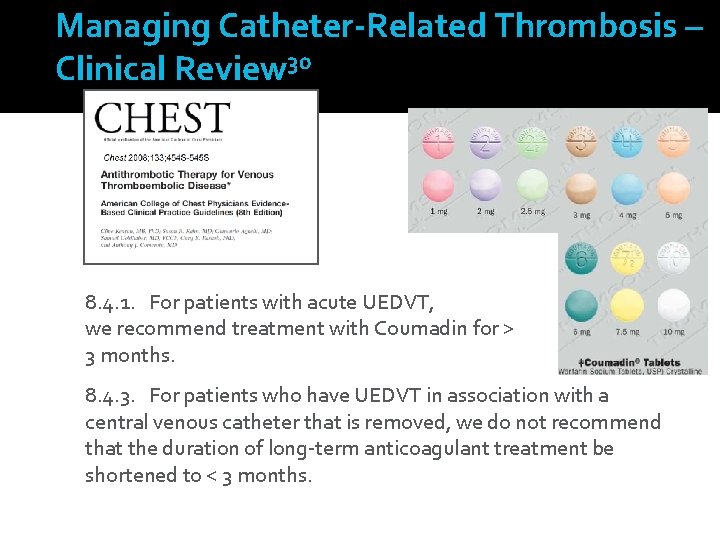
Managing Catheter-Related Thrombosis – Clinical Review 30 8. 4. 1. For patients with acute UEDVT, we recommend treatment with Coumadin for > 3 months. 8. 4. 3. For patients who have UEDVT in association with a central venous catheter that is removed, we do not recommend that the duration of long-term anticoagulant treatment be shortened to < 3 months.
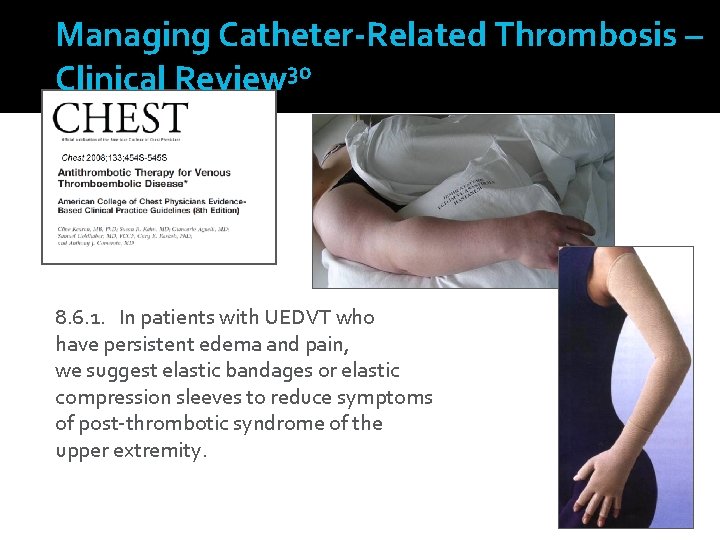
Managing Catheter-Related Thrombosis – Clinical Review 30 8. 6. 1. In patients with UEDVT who have persistent edema and pain, we suggest elastic bandages or elastic compression sleeves to reduce symptoms of post-thrombotic syndrome of the upper extremity.
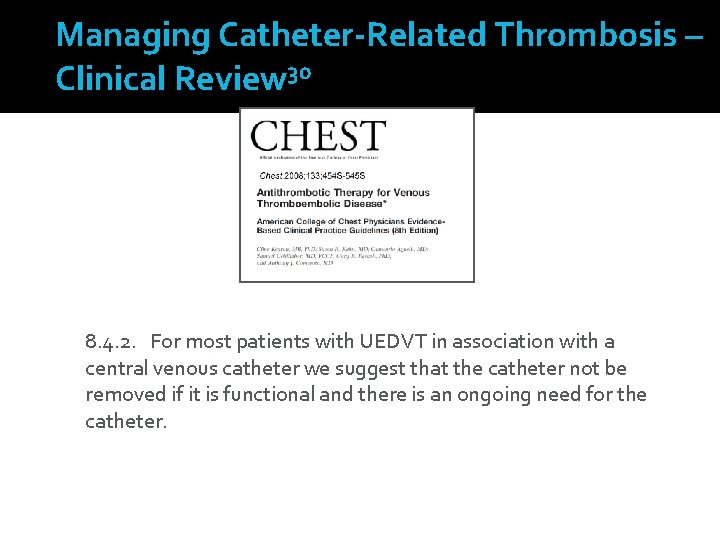
Managing Catheter-Related Thrombosis – Clinical Review 30 8. 4. 2. For most patients with UEDVT in association with a central venous catheter we suggest that the catheter not be removed if it is functional and there is an ongoing need for the catheter.
Use evidenced-based practice to make the best decisions for your PATIENTS You Can Make A Difference!
Citations 1. Mc. Gee, D. C. , Gould, M. K. , “Preventing Complications of Central Venous Catheterization”, The New England Journal of Medicine, 2003, 348(12): 11231133. 2. O'Grady, N. P. , et al. , “Guidelines for the Prevention of Intravascular Catheter-related Infections”, MMWR, 2002; 51: 1 -26. 3. Miller, D. , O’Grady, N. P. , “Guidelines for the Prevention of Intravascular Catheter-related Infections: Recommendations Relevant to Interventional Radiology”, Journal of Vascular and Interventional Radiology, 2003, 14: 355 -358. 4. Cathflo® Brochure. 5. Bartock, Linda, “Evidence-based Systematic Review of Literature for the Reduction of PICC Line Occlusions”, Journal of the Association for Vascular Access, July 2010, accessed 5/12/11. http: //www. faqs. org/periodicals/201007/2095040541. html 6. Crnich, C. J. , Maki, D. J. , “The Promise of Novel Technology for the Prevention of Intravascular Device-related Bloodstream Infection. II-Long-term devices”, Clinical Infectious Diseases, Vol 34, No. 10, May 15, 2002, pp. 1362 -1368. 7. Andris, D. , “Central Venous Catheter Occlusion: Successful Management Strategies”, Med. Surg Nursing, August 1999, Vol. 8/No. 4, pp. 229 -238. Stephens, L. C. , et al. , “Are clinical signs accurate indicators of the cause of central catheter occlusion? ”, Journal of Parenteral Nutrition, 1995, 9: 75 -79. Hadaway, L. , R. N. , “Reopen the Pipeline”, Nursing, August 2005, pp. 54 -61. 10. Thrombosis Adviser, http: //www. thrombosisadviser. com/en/resources/thrombosis-facts. php (Accessed 10/10/11). 11. Goldhaber, S. Z. , “Deep-Vein Thrombosis: Advancing Awareness to Protect Patient Lives”, American Public Health Association, Public Health Leadership Conference on Deep-Vein Thrombosis, Washington, D. C. , February 26, 2003. 12. Ryder, M. , “The Role of Biofilm in Vascular Catheter-related Infections”, Topics in Advanced Practice Nursing Journal, ” Medscape, 2005, 5(3), accessed 5/12/10. http: //www. medscape. com/viewarticle/508109 13. Schilling, S. , et al. , “The Impact of Needleless Connector Device Design on Central Venous Catheter Occlusion in Children: A Prospective, Controlled Trial”, Journal of Parenteral Nutrition, 2006, 30(2): 85 -90. 14. Yacopetti, N. , “Central Venous Catheter-Related Thrombosis, A Systematic Review”, The Art and Science of Infusion Nursing, July/August 2008, 31: 4: 241 -248. 15. JNCCN 2006; 4: 889 -901. 16. Seeley, M. , et al. , “Prediction Tool for Thrombi Associated with Peripherally Inserted Central Catheters”, Journal of Infusion Nursing, 2007, 30(5): 280286. 17. King, M. et al. , “Peripherally Inserted Central Venous Catheter Associated Thrombosis: Retrospective Analysis of Clinical Risk Factors in Adult Patients”, Southern Medical Journal, 2006, 99(10): 1073 -1077.
Citations 18. Bonizzoli, M. , et al. , “Peripherally Inserted Central Venous Catheters and Central Venous Catheter Related Thrombosis in Post-Critical Patients”, Intensive Care Medicine, 2011, 37: 284 -289. 19. Fletcher, Jeffrey J. , et al. , “The Clinical Significance of Peripherally Inserted Central Venous Catheter-related Deep Vein Thrombosis”, Neurocrit Care, 2011, DOI 10. 1007/s 12028 -011 -9554 -3. 20. Nifong, T. , “Infection or clot – which comes first? ”, 22 nd Annual Scientific Meeting of the Association for Vascular Access, Point/Counter Point Presentation, 9/11/08. 21. Abramson, N. , Abramson S. , “Hypercoagulability: Clinical Assessment and Treatment: Causes of Hypercoagulability”, Southern Medical Journal, 94: 10. 22. Allen, A. , “Venous Thrombosis Associated with the Placement of Peripherally Inserted Central Catheters”, Journal of Vascular and Interventional Radiology, 2000, 11: 1309– 1314. 23. Kutcher, N. , “Deep Vein Thrombosis of the Upper Extremities”, The New England Journal of Medicine, 2011, 364(9): 861 -869. 24. Nifong, T. , Mc. Devitt, T. , “The Effect of Catheter to Vein Ratio on Blood Flow Rates in a Simulated Model of Peripherally Inserted Central Venous Catheters”, CHEST, 140; 48 -53 pre-published 2/24/11, DOI 10. 1378/10. chest. 10 -2637. 25. Evans, R. , et al. , “Risk of Symptomatic DVT Associated with Peripherally Inserted Central Catheters”, CHEST, 2010: 138: 4: 803 -810. 26. Grove, J. , Pevec, W, “Venous Thrombosis Related to Peripherally Inserted Central Catheters”, Journal of Vascular and Interventional Radiology, July 2000, 11(7): 837 -840. 27. Dubois, J. , et al. , “Incidence of Deep Vein Thrombosis Related to Peripherally Inserted Central Catheters in Children and Adolescents”, Canadian Medical Association Journal, November 6, 2007, 177(10): 1185 -1190. 28. Prandoni, P. , Kahn, R. S. , “Post-thrombotic Syndrome: Prevalence, Prognostication and Need for Progress”, British Journal of Haematology, 2009, 145: 286 -295. 29. Debourdeau, P. , et al. , 2008 SOR Guidelines for the Prevention and Treatment of Thrombosis Associated with Central Venous Catheters in Patients with Cancer: Report from the Working Group, ” Annals of Oncology, 2009, 20: 1459– 1471. 30. Kearon, C. , et al. , “Antithrombotic Therapy for Venous Thromboembolic Disease”, CHEST, 2008, 133: 454– 545. 31. Cummings-Winfield, Cynthia, “Restoring Patency to Central Venous Access Devices”, Clinical Journal of Oncology Nursing, 2008, 12 (6): 925 -934.