
RE Revision Why do we learn Religious Education
- Slides: 27
RE Revision Why do we learn Religious Education? Give your feedback in the lesson.
Why do we learn Religious Education? v. We learn religious education in order to know values of life. v. To be able to choose good attitudes from bad ones. v. Religious education contributes dynamically to children and young people’s education by: -provoking challenging questions about meaning and purpose of life, beliefs about God, ultimate reality, issues of right and wrong and what it means to be human. v. To learn about and from religions and worldviews in local, national and global contexts. v. To discover, explore and consider different answers to these questions. v. To learn to weigh up the value of wisdom from different sources, to develop and express insights in response.
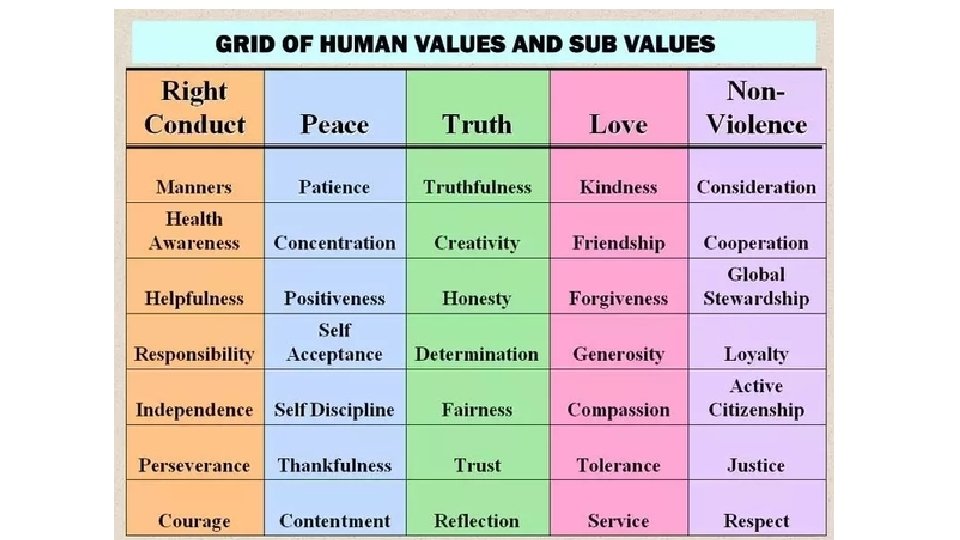
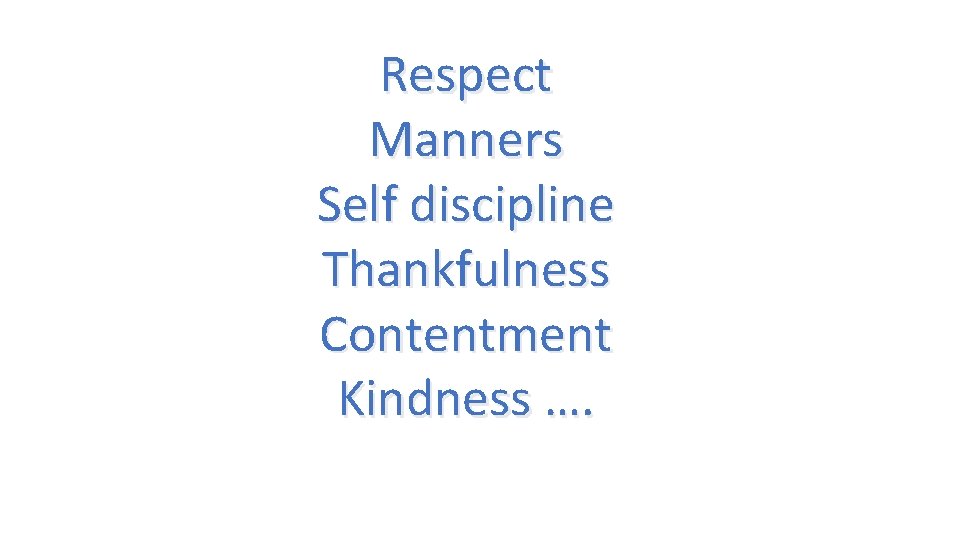
Respect Manners Self discipline Thankfulness Contentment Kindness ….
How do we carry out these values in our everyday life. v. Respect every person as we are all created in the image and likeness of God. v. Good manners shape one’s good behavior or character. v. The way l respond to others, walk, sit, dress, eat, says a lot about oneself. v. Responding positively to any given situation does not cost anything in life. It builds your character.
Dress code v Respect of self and of others, manners, self discipline character can be shown from the way you dress or present yourself in the public. In 1 Corinthians 6: 19 -20 “Or do you not know that your body is a temple of the Holy Spirit within you, whom you have from God? You are not your own, for you were bought with a price. So, glorify God in your body. ” v The context of this astounding assertion pertains to the avoidance of sexual immorality. v Let’s respect and protect ourselves through our dressing let’s make our bodies the temples of the Holy Spirit. v Remember Adam and Eve they went looking for leaves to cover themselves. v What do we, cut our nice dresses up until we walk half necked. It is so sad. v Allow us to respect to give reverence to the temple of the Holy Spirit, which is you.
v Thankfulness Be grateful always, it takes nothing to say thank you. v Contentment Be satisfied with who you are what you have, what your parents or guardienne provide for your wellbeing. v Kindness Again, it takes nothing to great somebody, to say l am sorry, to care, to love. v Please build on your character than to weigh yourself so light because of unnecessary manners of behaviors.
v After all we are humans and we do commit mistakes. v Learn from the mistakes and try to maintain these above listed values at least up to a certain acceptable levels, which in turn maintain the values of human life.
3 What is a Psalm? Psalms v. Within the Hebrew scriptures of the Bible we find a collection of prayers that people used in worship. v This collection is known as the book of Psalms. v. They are poetry written for God, by King David in the book of Psalms. v. They are either sung or recited.
4 v Are a sacred song or hymn, contained in the bible. v It is a book of the Bible comprising a collection of religious verses, sung or recited in both Jewish and Christian worship.
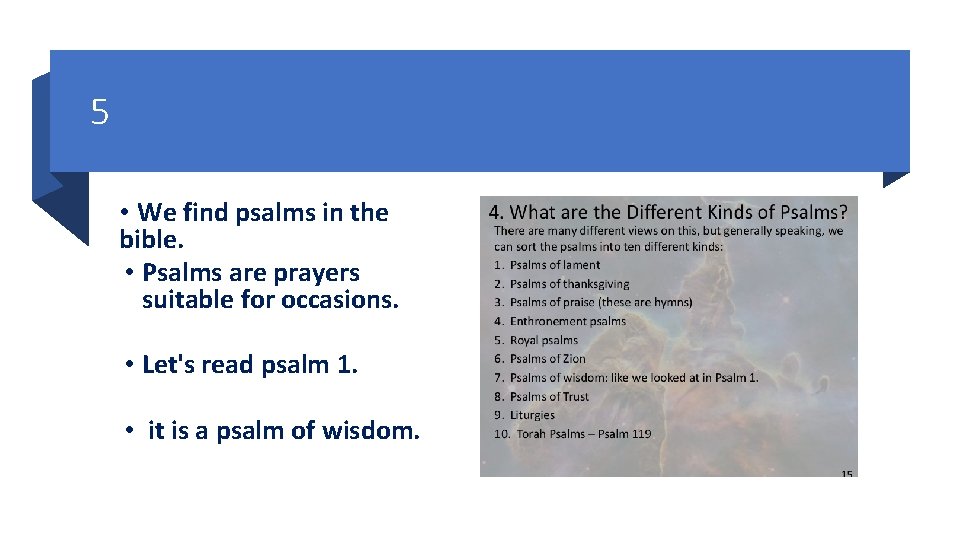
5 • We find psalms in the bible. • Psalms are prayers suitable for occasions. • Let's read psalm 1. • it is a psalm of wisdom.
10 Canticles. v Canticles are songs or hymns found throughout the bible. v They are also prayers, that are used in worship, like the psalms. v Chapter 3 of Daniel gives us a well-known canticle, “ The song of Azariah in the furnace and the song of the three young man.
Lent 13 v It is a season, which begins with Ash Wednesday and ends on Holy Thursday. v The Lenten fast excludes Sundays and continues through Good Friday and Holy Saturday , totaling 40 days.
12 Overview of the Psalms. Let's use our bibles v. What is the total number of psalms? v. Groups/kinds of psalms are…… v. Which one is the longest psalm? v. The shortest psalm is…. .
The book of Psalms consists of 150 poems Psalm 119 is the longest psalm in the bible, it has 176 verses. Psalm 117 is the shortest psalm, and the shortest chapter in the whole Bible, consisting of only two verses. .
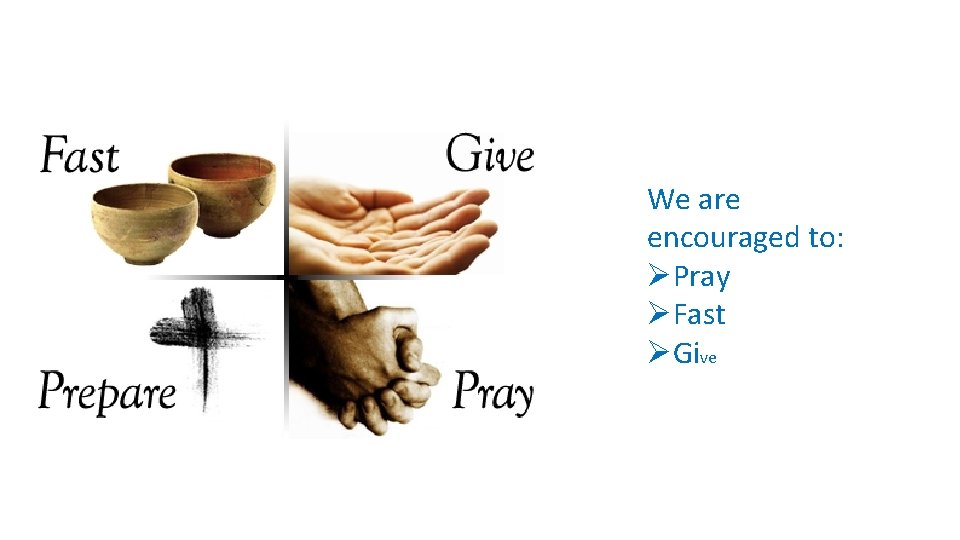
We are encouraged to: ØPray ØFast ØGive
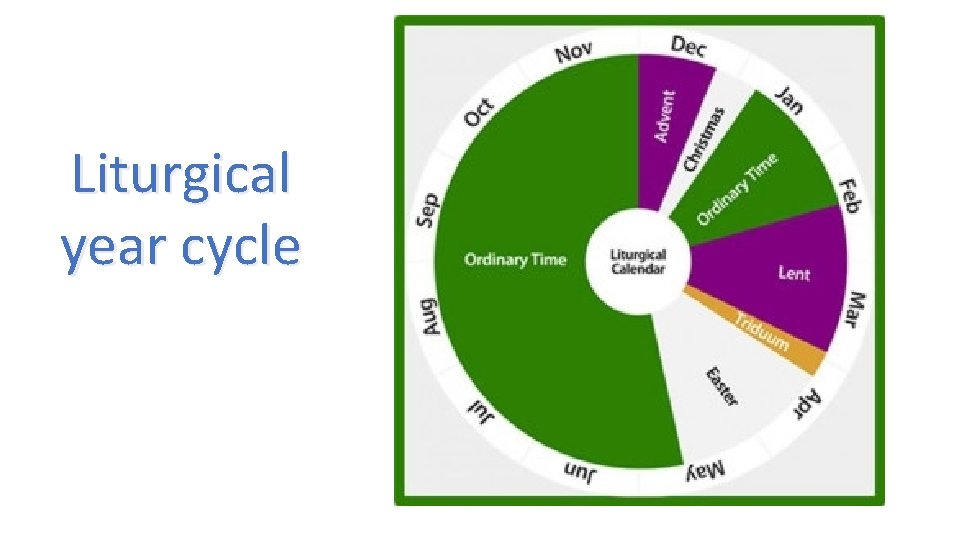
Liturgical year cycle is composed of five seasons: v Advent, v Christmas, v Ordinary time, v Lent. v Easter.
Liturgical year calendar cycle. Starts with: v Advent Liturgical color Purple. -Advent its time for preparation, this time we prepare ourselves for the celebration of the birth of Jesus Christ at Christmas. -Christmas is the first coming of Jesus Christ. -Advent is also a reminder to us always to be prepared for the second coming of Jesus Christ at the end of time. v Let’s read Mark 13: 32 -37
Lent: -Liturgical color is Purple. This is another time of preparation. v We prepare for the celebration of the greatest feast of Easter. v Our preparation has three practices during this season ie Ø Prayer -be more fervent in prayer. Ø FastingØ Alms giving -acts of mercy, goodness and charity.
Liturgical year cycle
The presentation of the Lord It is a Feast Day. A feast day is a day set aside on which a celebration, is held annually. A day set as a commemoration festival, when we remember something special which happened on that day.
On the 2 nd of February every year, the Church celebrates the feast of the Presentation of the Lord. Which occurs forty days after the birth of Jesus. It is also known as Candlemas day, since the blessing and procession of candles is included in today's liturgy.
What is Prayer ▪ Is a communication to God. ▪ A communication between God and human being. ▪ It is done by those who trust the power of word and thought. Prayer can be spoken, silent (no talking), or in a song. ▪ It can be used to praise God or to ask for something including help and forgiveness
Prayer postures v One can sit, v Kneel, v Stand, v Bow and many other ways, one could feel comfortable when talking to God in Prayer. So, you find your way.
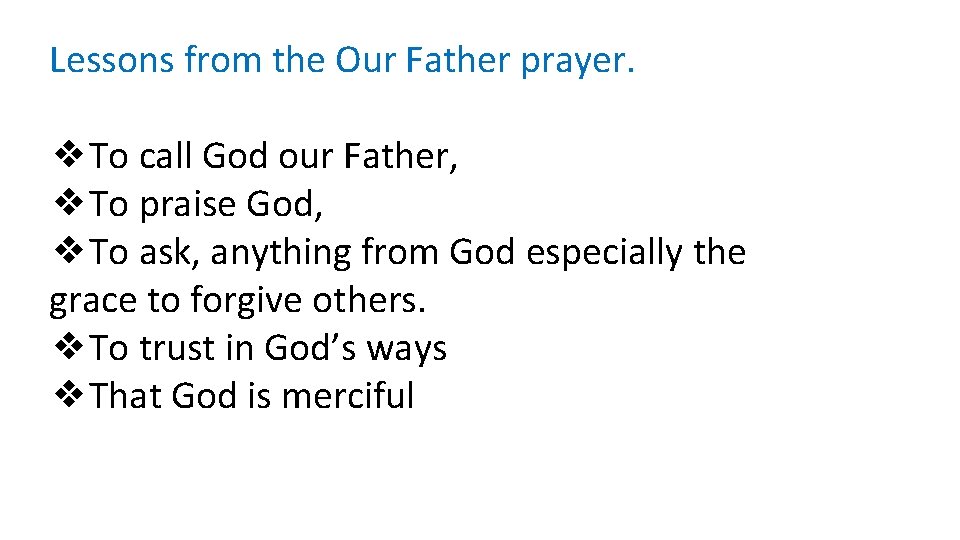
Lessons from the Our Father prayer. ❖To call God our Father, ❖To praise God, ❖To ask, anything from God especially the grace to forgive others. ❖To trust in God’s ways ❖That God is merciful
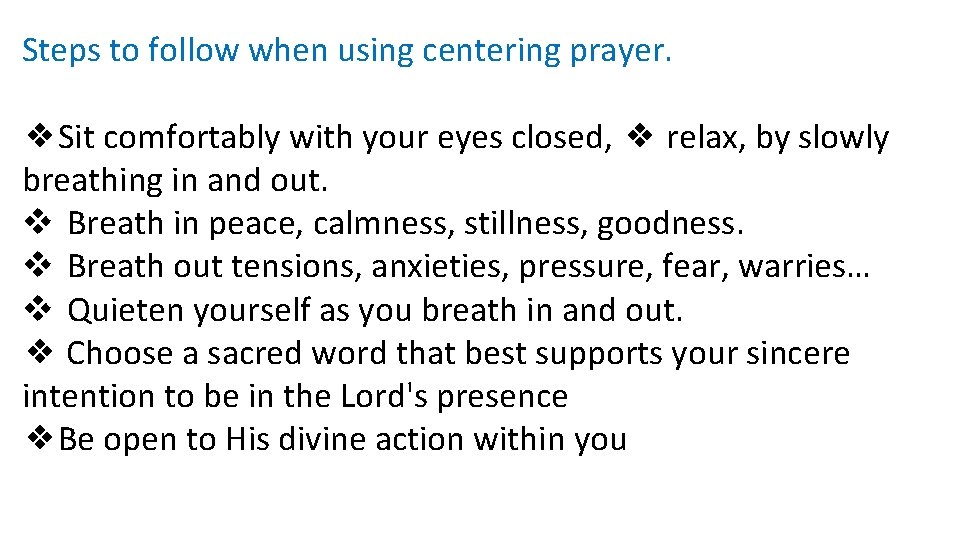
Steps to follow when using centering prayer. ❖Sit comfortably with your eyes closed, ❖ relax, by slowly breathing in and out. v Breath in peace, calmness, stillness, goodness. v Breath out tensions, anxieties, pressure, fear, warries… v Quieten yourself as you breath in and out. ❖ Choose a sacred word that best supports your sincere intention to be in the Lord's presence ❖Be open to His divine action within you
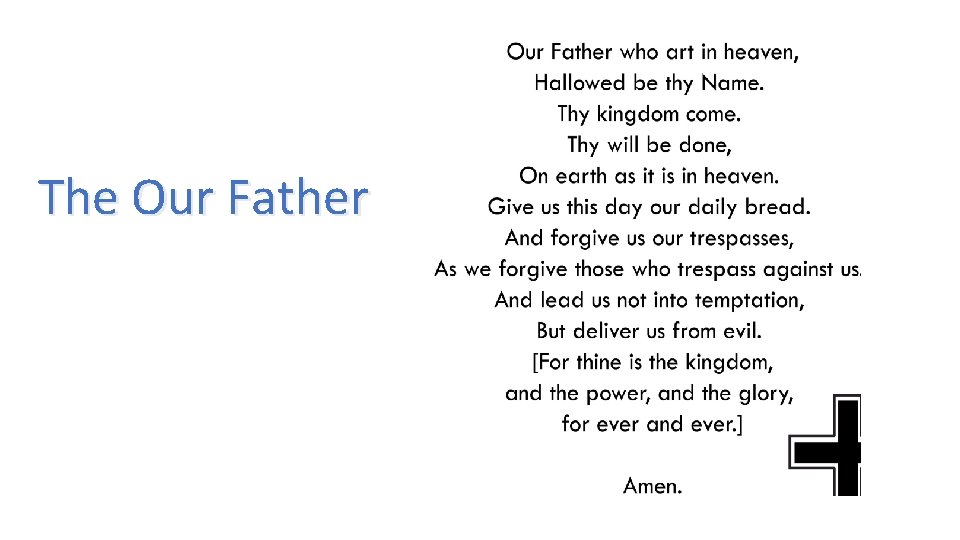
The Our Father