
RCN Clinical Leadership Programme Bro Morgannwg NHS Trust

RCN Clinical Leadership Programme Bro Morgannwg NHS Trust Leadership - theories and concepts Ian Govier (Facilitator)

opportunitynowhere
Getting to know each other (a little better)
• When I was a child I wanted to…. • I came into the health service because: • If I wasn’t working in my current position, I’d like to: • When I retire, I plan to:
What do I want to achieve or change as a result of today’s workshop?
What are some of your current challenges?
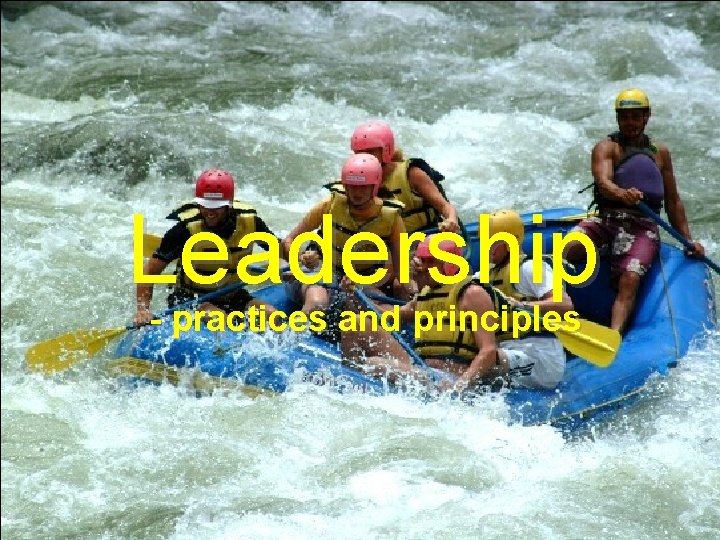
Leadership - practices and principles
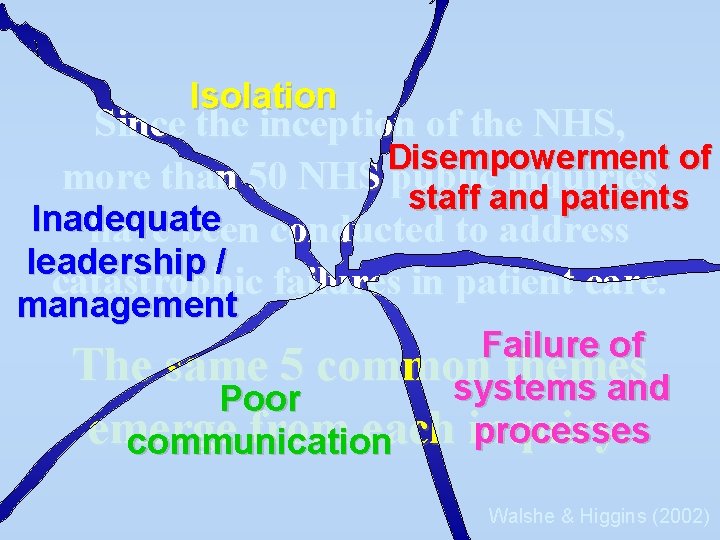
Isolation Since the inception of the NHS, Disempowerment of more than 50 NHS public inquiries staff and patients Inadequate have been conducted to address leadership / catastrophic failures in patient care. management Failure of The same 5 common themes systems and Poor emerge from each inquiry. processes communication Walshe & Higgins (2002)
Let’s look at Leadership
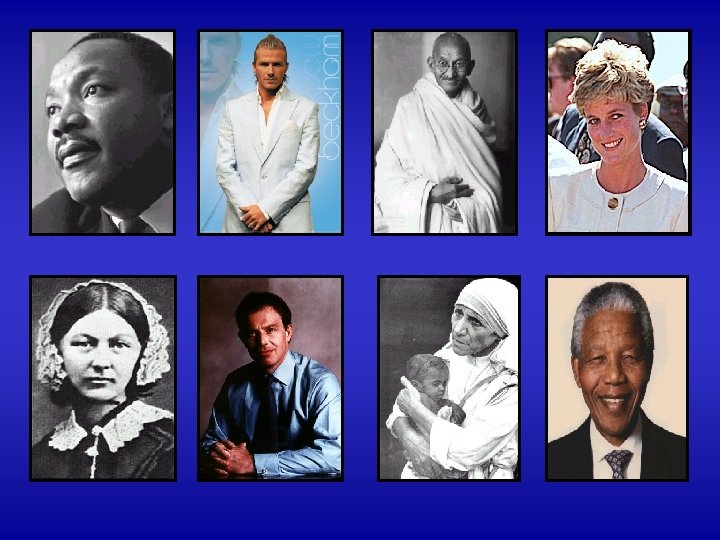
Let’s consider some leaders!
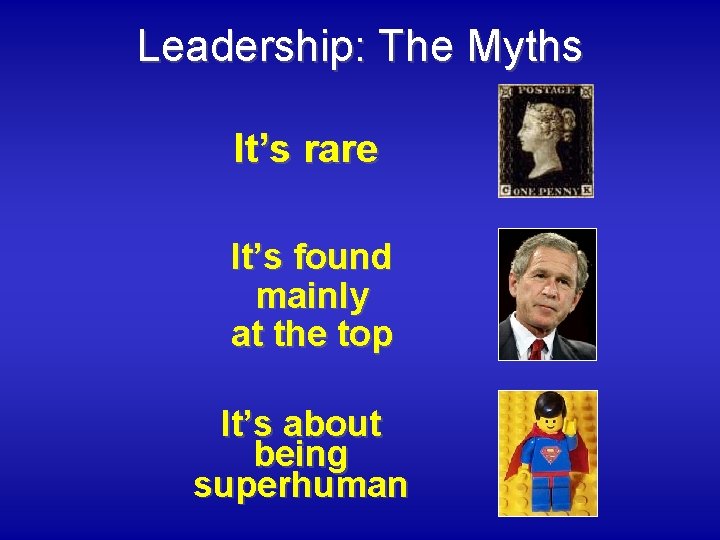
Leadership: The Myths It’s rare It’s found mainly at the top It’s about being superhuman
Who are the leaders? “Lots of ordinary nurses are leaders – it is in the very nature of the job. Good care involves winning your patient’s confidence, convincing them to keep to their treatment regimes and inspiring them to battle their way back to health” (Crouch, 2002)
“Best Boss Worst Boss” GW
Time for a Break
Leadership & Management Principles
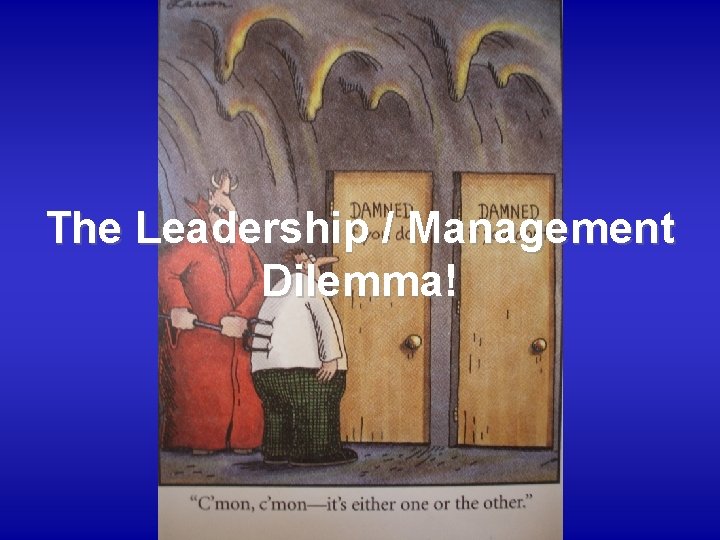
The Leadership / Management Dilemma!
Leadership & Management …essential yet different!
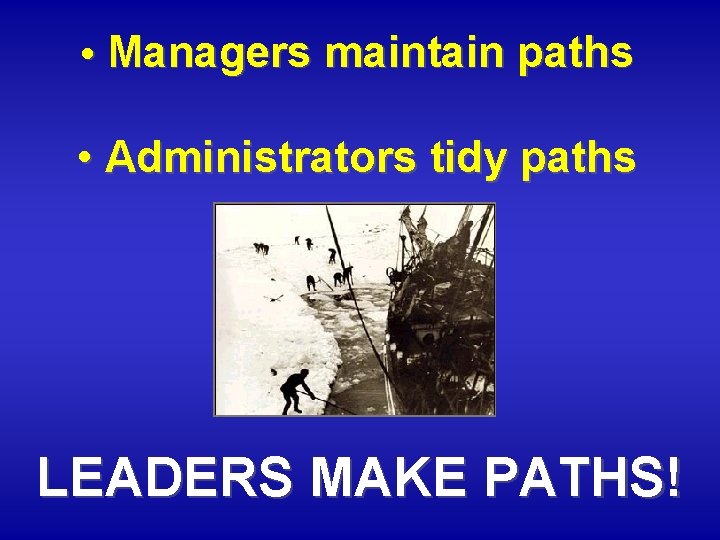
• Managers maintain paths • Administrators tidy paths LEADERS MAKE PATHS!
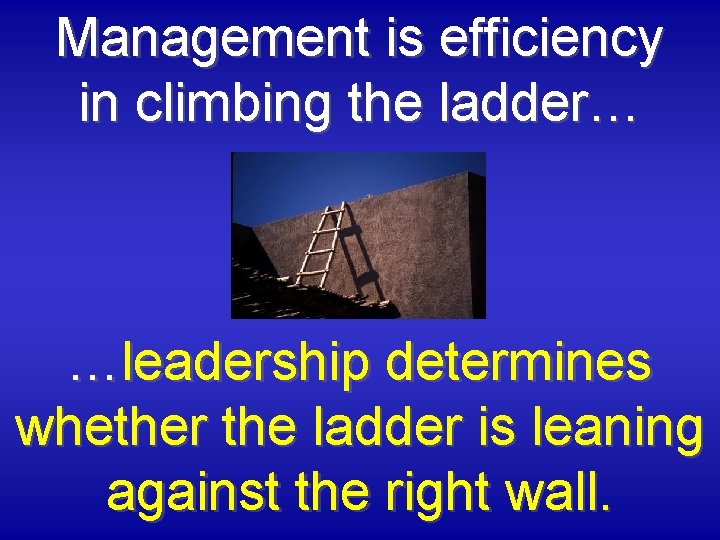
Management is efficiency in climbing the ladder… …leadership determines whether the ladder is leaning against the right wall.
Management (transactional leadership) is essential!
Managers and Leaders Management (Order & Consistency) Leadership (Change & Movement) (Kotter, 1990)
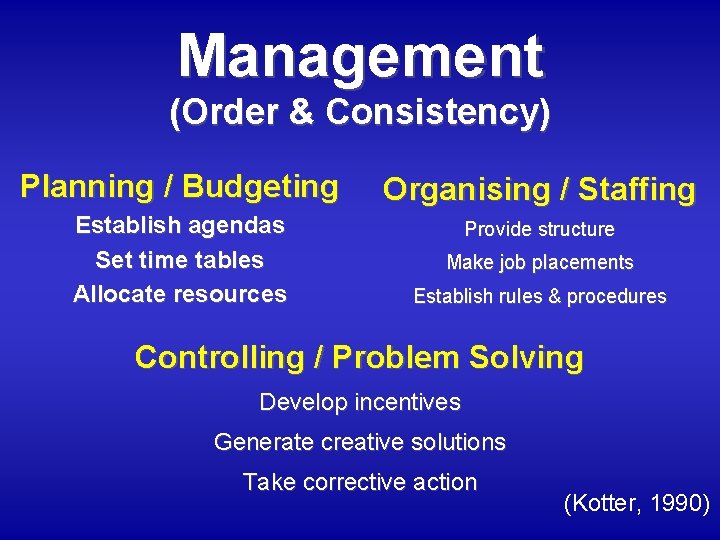
Management (Order & Consistency) Planning / Budgeting Organising / Staffing Establish agendas Set time tables Allocate resources Provide structure Make job placements Establish rules & procedures Controlling / Problem Solving Develop incentives Generate creative solutions Take corrective action (Kotter, 1990)
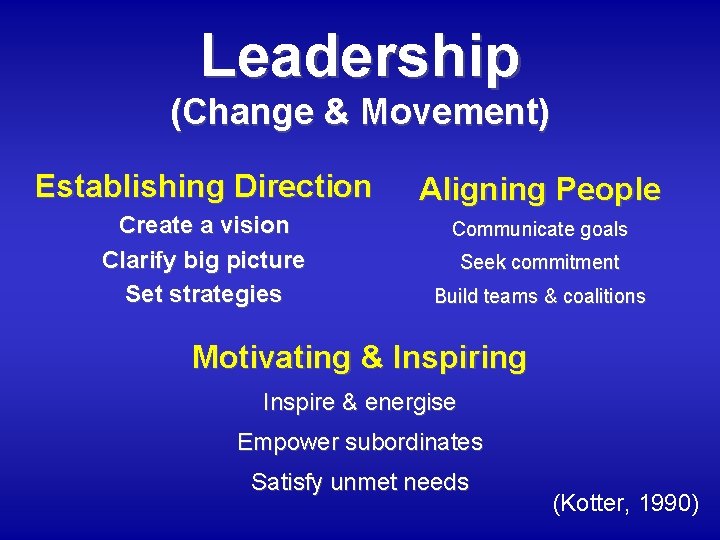
Leadership (Change & Movement) Establishing Direction Aligning People Create a vision Clarify big picture Set strategies Communicate goals Seek commitment Build teams & coalitions Motivating & Inspiring Inspire & energise Empower subordinates Satisfy unmet needs (Kotter, 1990)
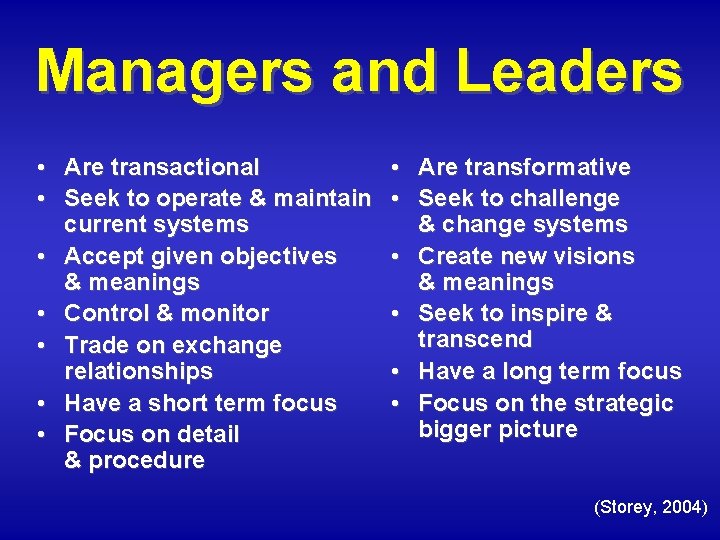
Managers and Leaders • Are transactional • Seek to operate & maintain current systems • Accept given objectives & meanings • Control & monitor • Trade on exchange relationships • Have a short term focus • Focus on detail & procedure • Are transformative • Seek to challenge & change systems • Create new visions & meanings • Seek to inspire & transcend • Have a long term focus • Focus on the strategic bigger picture (Storey, 2004)
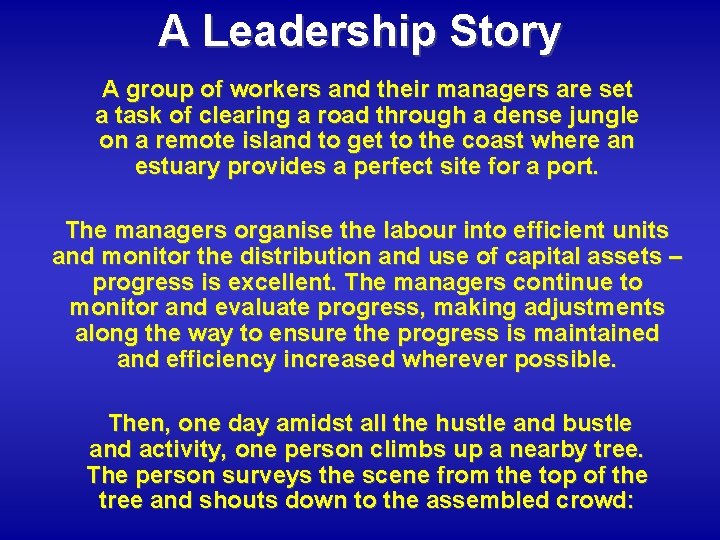
A Leadership Story A group of workers and their managers are set a task of clearing a road through a dense jungle on a remote island to get to the coast where an estuary provides a perfect site for a port. The managers organise the labour into efficient units and monitor the distribution and use of capital assets – progress is excellent. The managers continue to monitor and evaluate progress, making adjustments along the way to ensure the progress is maintained and efficiency increased wherever possible. Then, one day amidst all the hustle and bustle and activity, one person climbs up a nearby tree. The person surveys the scene from the top of the tree and shouts down to the assembled crowd:
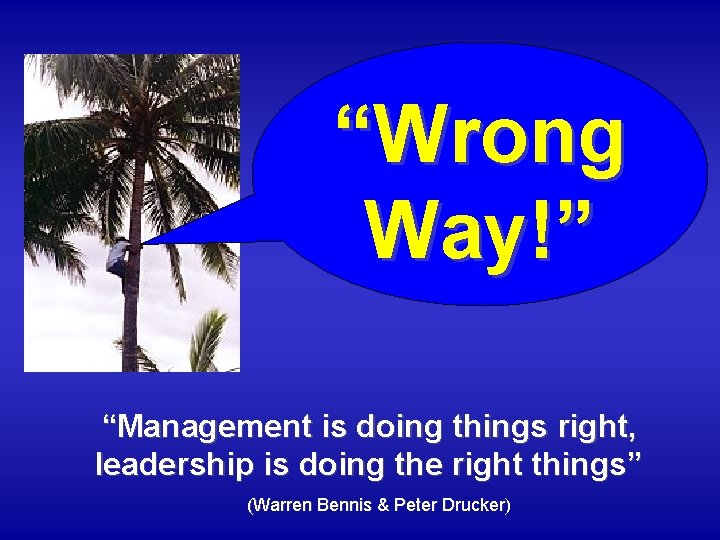
“Wrong Way!” “Management is doing things right, leadership is doing the right things” (Warren Bennis & Peter Drucker)

Seeing the bigger picture


Seeing the bigger picture Z
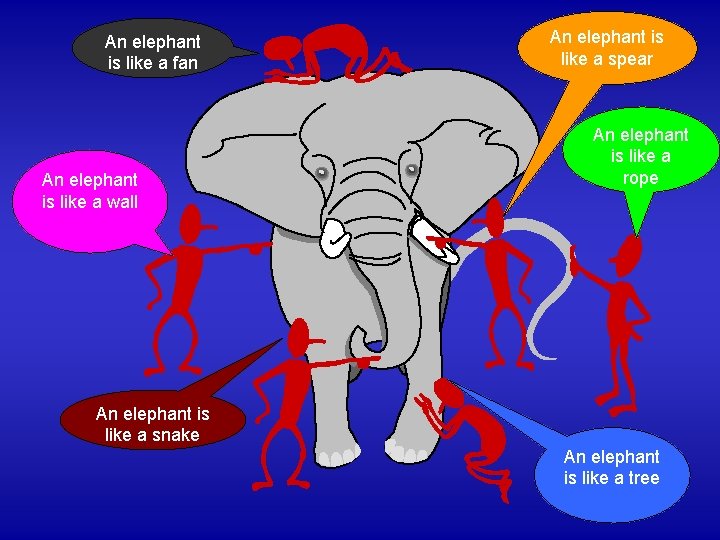
An elephant is like a fan An elephant is like a wall An elephant is like a spear An elephant is like a rope An elephant is like a snake An elephant is like a tree
Lunch Time
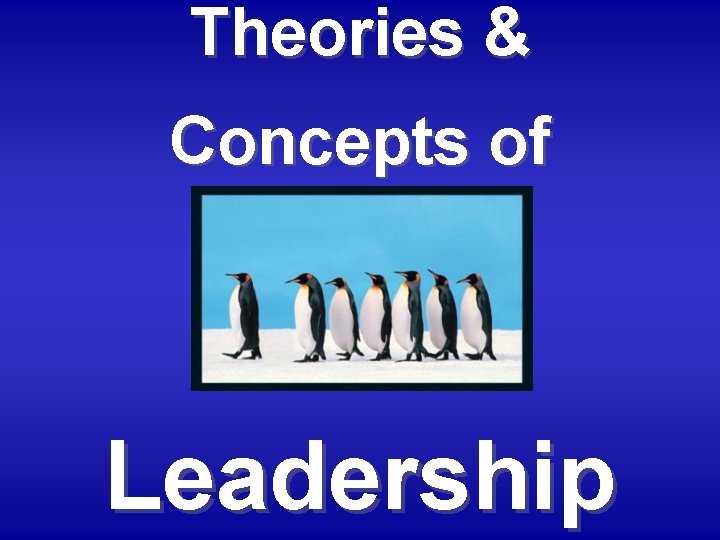
Theories & Concepts of Leadership
Concepts of Leadership • Leadership is the ability to direct a group of people in realising a common goal • This is done by people applying their leadership attributes • Leaders create commitment and enthusiasm amongst followers to achieve goals • Leadership is achieved through interaction between leader, follower and environment
Leadership Research • 1930 s – 1950 s focus on Personality • 1960 s: focus on Behaviour • 1970 s: focus on Situational variables • 1980 s: emergence of the ‘New Paradigm’
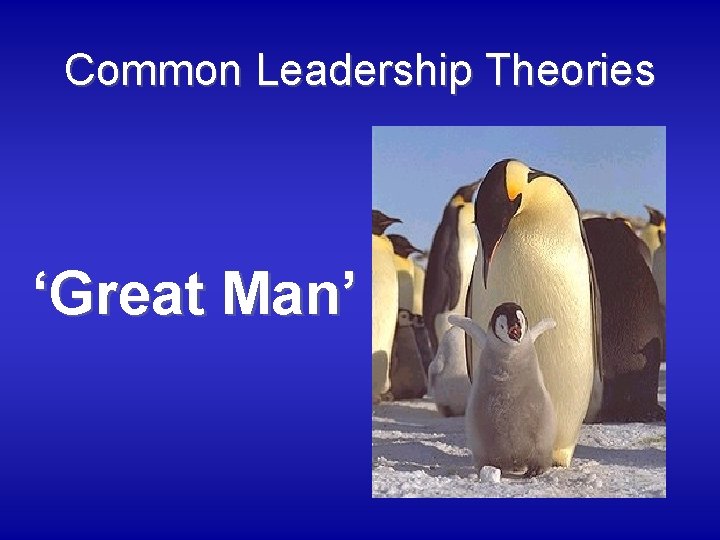
Common Leadership Theories ‘Great Man’
Wanted! A born leader. Must have superior intellect, be outgoing and under 40. Ability to walk on water a distinct advantage!
Common Leadership Theories Trait
Characteristics of effective leadership? Q’aire
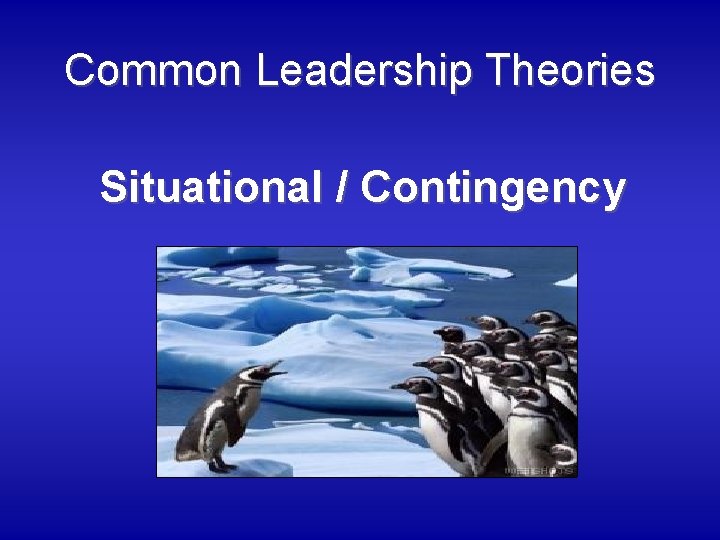
Common Leadership Theories Situational / Contingency

Let’s Nail It!
The ‘New Paradigm’ Models of Leadership Visionary Charismatic Transformational
Common Leadership Theories Interactional: Transactional Transformational
Transformational Leadership An approach to leadership which seeks to bring about success and sustainable growth within groups through a change within the consciousness of participants
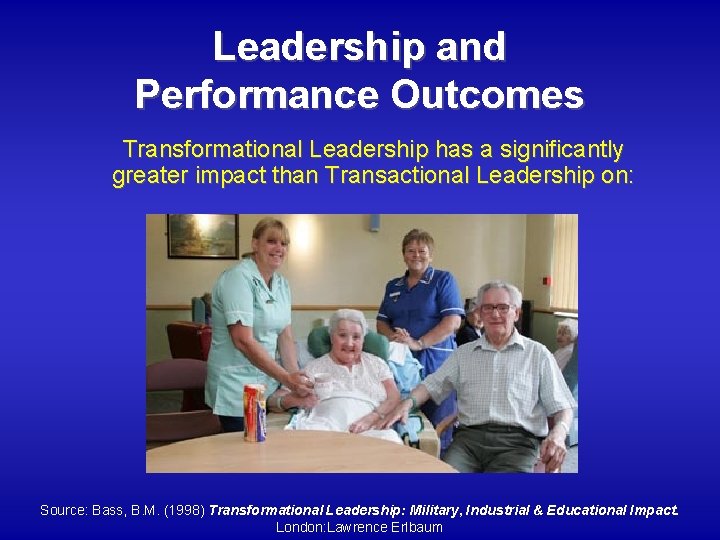
Leadership and Performance Outcomes Transformational Leadership has a significantly greater impact than Transactional Leadership on: Staff Teams Organisations Source: Bass, B. M. (1998) Transformational Leadership: Military, Industrial & Educational Impact. London: Lawrence Erlbaum
Transformational Leaders have: Staff who: • have higher levels of satisfaction, motivation, and performance • have lower levels of stress & burnout Teams that…. • are more innovative, collaborative and effective Organisations which… • • • respond more quickly and productively to change are more effective have healthier, more humane cultures (Bass, 1998)
Qualities of Leaders desired by NHS Staff • • • Genuine concern for others Inspirational communicator, networker and achiever Empowering others to lead Transparency Accessibility, approachability and flexibility Decisiveness, determination, readiness to take risks Ability to draw people together with shared vision Charisma Encouraging challenges to the status quo Supporting a development culture Ability to analyse and think creatively Manage change sensitively and skilfully (Alimo-Metcalfe, 2000)
Time for a Break
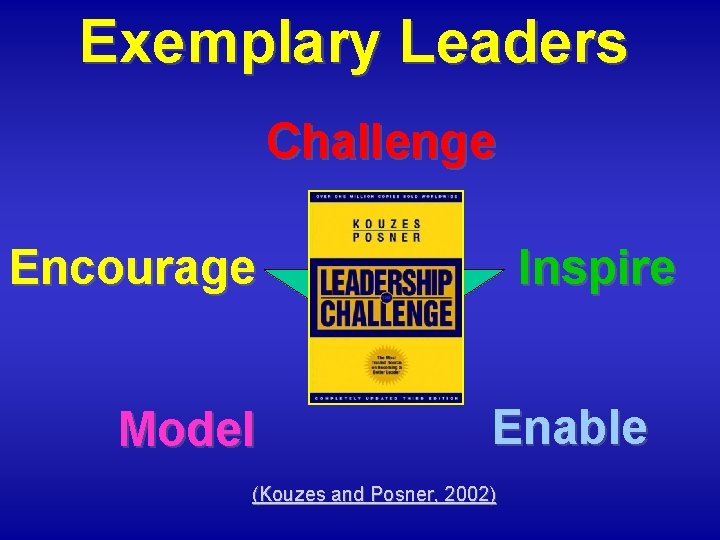
Exemplary Leaders Challenge Encourage Model Inspire Enable (Kouzes and Posner, 2002)
Final Thoughts
The Constants ü Change ü Principles ü Choice (Covey, 2006)
What am I doing to become a transformational leader?
What am I (are we) going to do differently after today?
If we do nothing about it in 24 hours… we’ll probably do nothing about it!
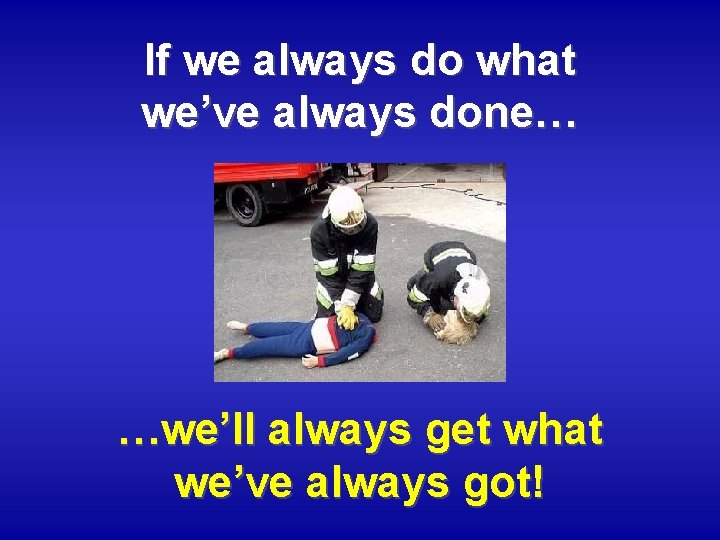
If we always do what we’ve always done… …we’ll always get what we’ve always got!
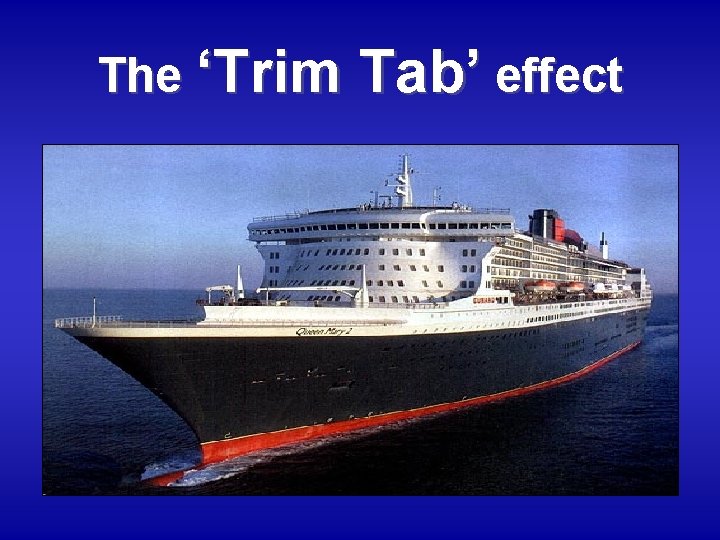
The ‘Trim Tab’ effect
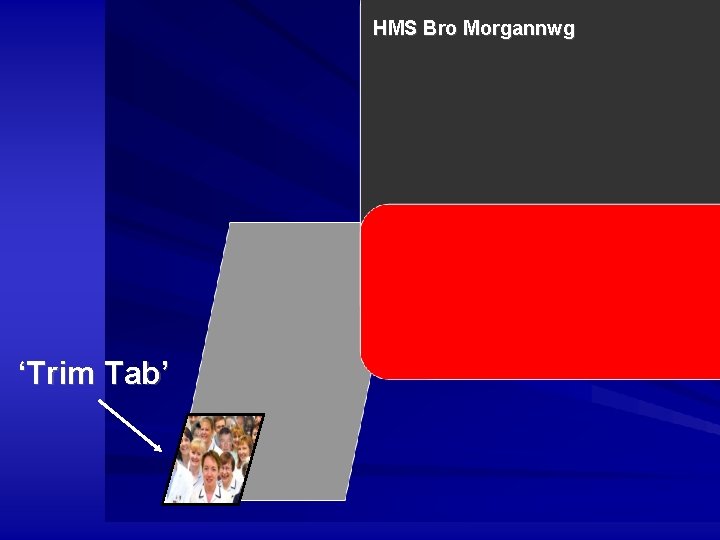
HMS Bro Morgannwg ‘Trim Tab’
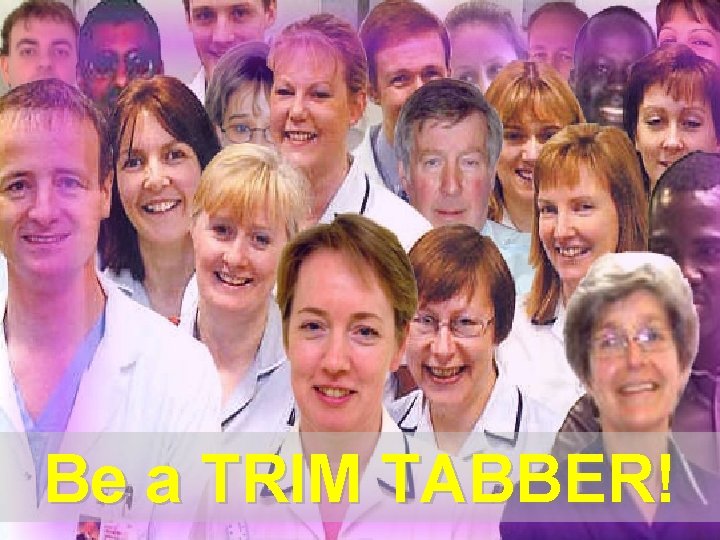
Be a TRIM TABBER!
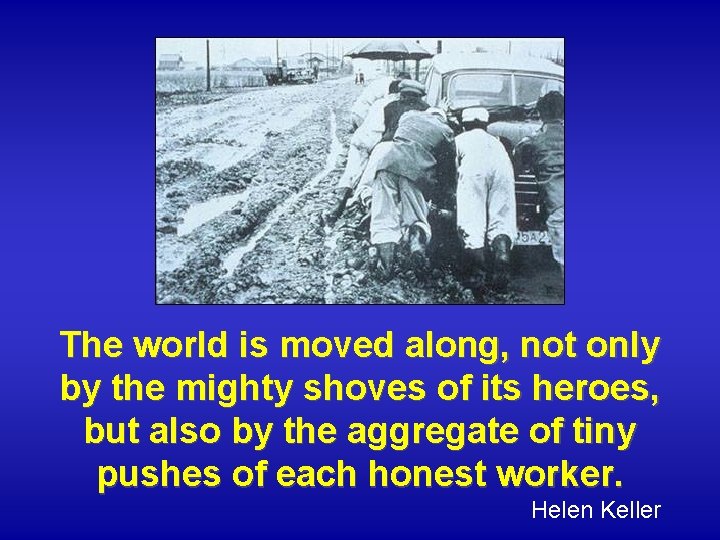
The world is moved along, not only by the mighty shoves of its heroes, but also by the aggregate of tiny pushes of each honest worker. Helen Keller
and finally…
Great leaders … are people with enormous self-knowledge. They have self-insight and self-respect balanced by scepticism … sceptics who understand their own masks as well as the masks of life, and this understanding makes them humble. They see the humanity in others and deal with them in compassionate yet realistic ways. This duality makes for a wonderful leader. (Mc. Kee, 2003)
We do not lead by being corporate, professional or institutional… …we lead by being human
Diolch Website: www. ctrtraining. co. uk http: //www. ctrtraining. co. uk/resources. php Thank You
- Slides: 64