
RCE8836206 Radio Signal Processing Lecture 9 Impedance Matching
- Slides: 20
RCE-8836206 Radio Signal Processing Lecture 9: Impedance Matching 9. 1 Reflection Coefficient 9. 2 Smith Chart 9. 3 Impedance Matching 1
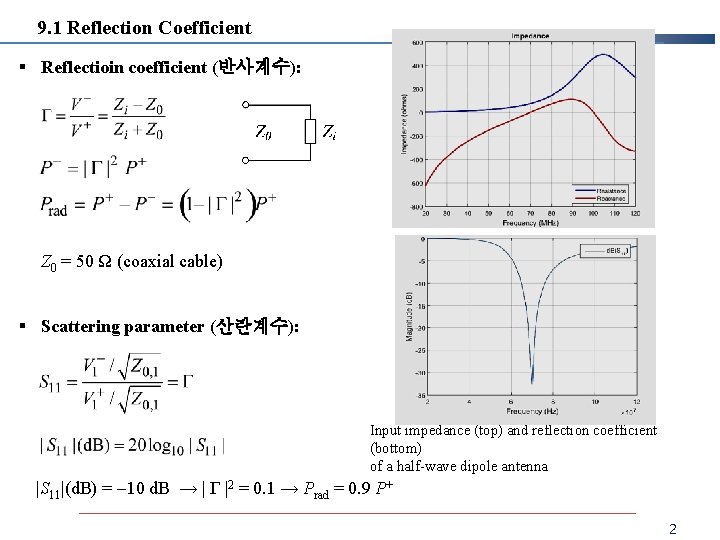
9. 1 Reflection Coefficient § Reflectioin coefficient (반사계수): Z 0 = 50 Ω (coaxial cable) § Scattering parameter (산란계수): Input impedance (top) and reflection coefficient (bottom) of a half-wave dipole antenna |S 11|(d. B) = 10 d. B → | Г |2 = 0. 1 → Prad = 0. 9 P+ 2
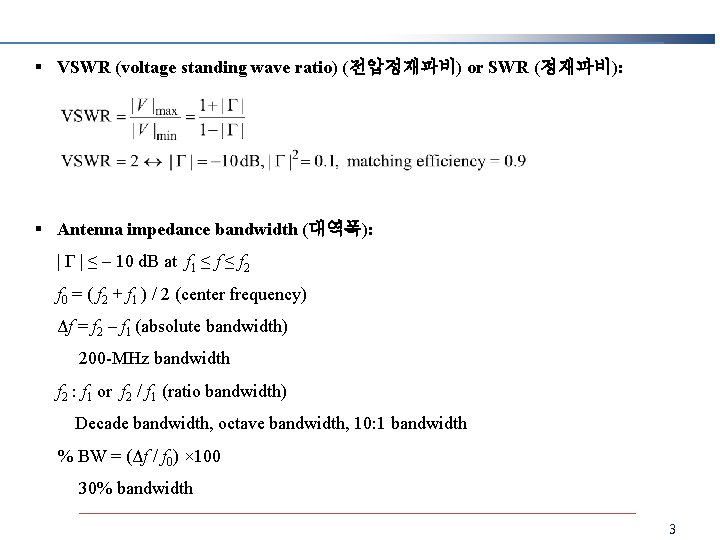
§ VSWR (voltage standing wave ratio) (전압정재파비) or SWR (정재파비): § Antenna impedance bandwidth (대역폭): | Γ | ≤ ‒ 10 d. B at f 1 ≤ f 2 f 0 = ( f 2 + f 1 ) / 2 (center frequency) Δf = f 2 ‒ f 1 (absolute bandwidth) 200 -MHz bandwidth f 2 : f 1 or f 2 / f 1 (ratio bandwidth) Decade bandwidth, octave bandwidth, 10: 1 bandwidth % BW = (Δf / f 0) × 100 30% bandwidth 3
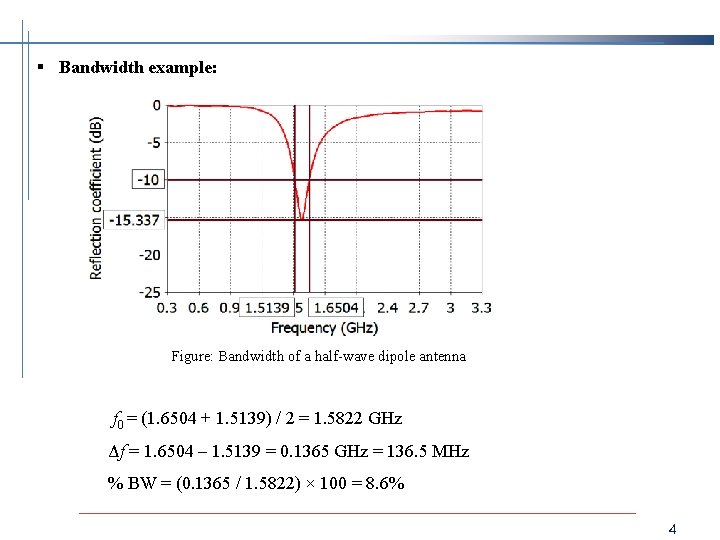
§ Bandwidth example: Figure: Bandwidth of a half-wave dipole antenna f 0 = (1. 6504 + 1. 5139) / 2 = 1. 5822 GHz Δf = 1. 6504 ‒ 1. 5139 = 0. 1365 GHz = 136. 5 MHz % BW = (0. 1365 / 1. 5822) × 100 = 8. 6% 4
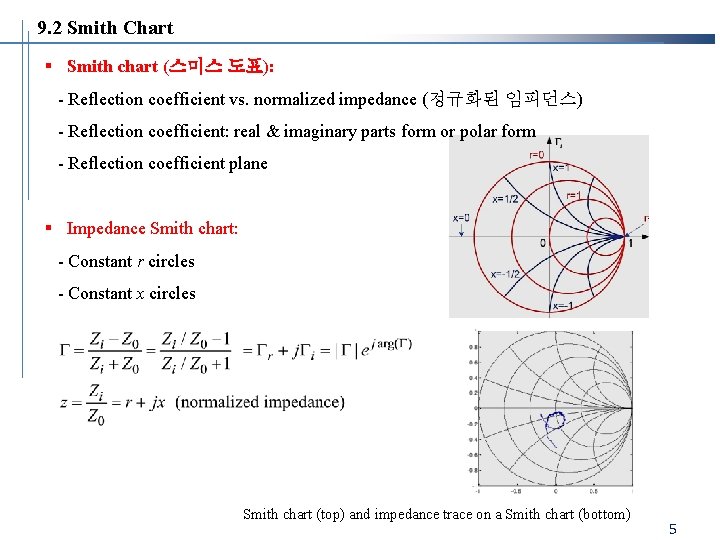
9. 2 Smith Chart § Smith chart (스미스 도표): - Reflection coefficient vs. normalized impedance (정규화된 임피던스) - Reflection coefficient: real & imaginary parts form or polar form - Reflection coefficient plane § Impedance Smith chart: - Constant r circles - Constant x circles Smith chart (top) and impedance trace on a Smith chart (bottom) 5
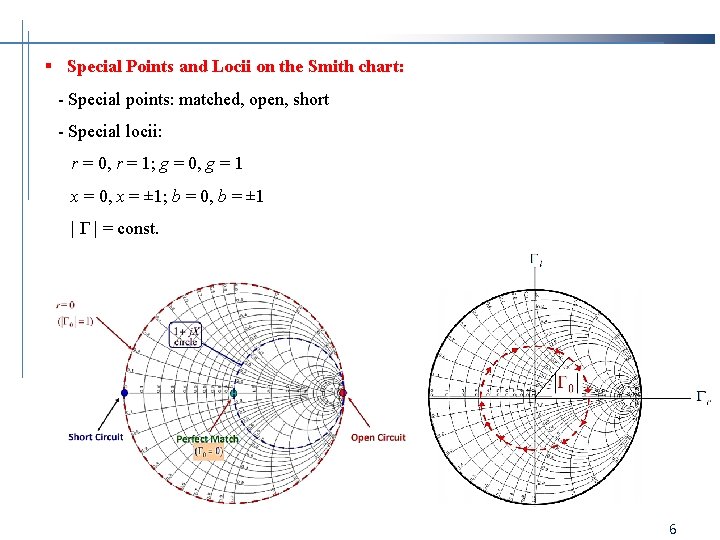
§ Special Points and Locii on the Smith chart: - Special points: matched, open, short - Special locii: r = 0, r = 1; g = 0, g = 1 x = 0, x = ± 1; b = 0, b = ± 1 | Γ | = const. 6
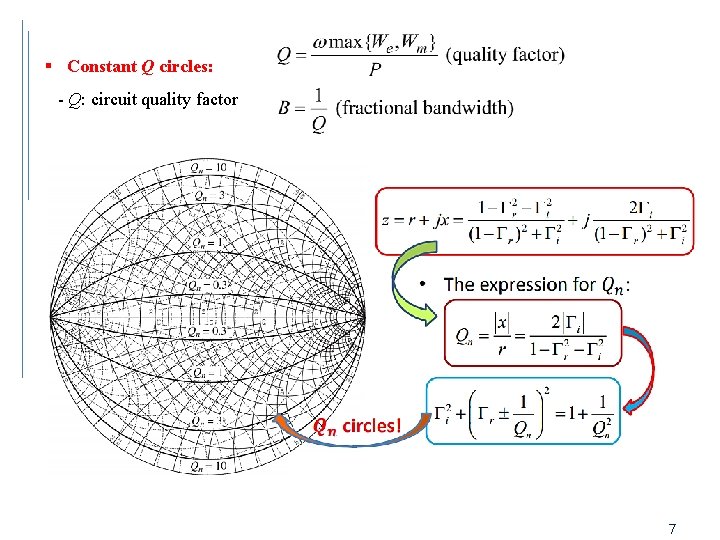
§ Constant Q circles: - Q: circuit quality factor 7
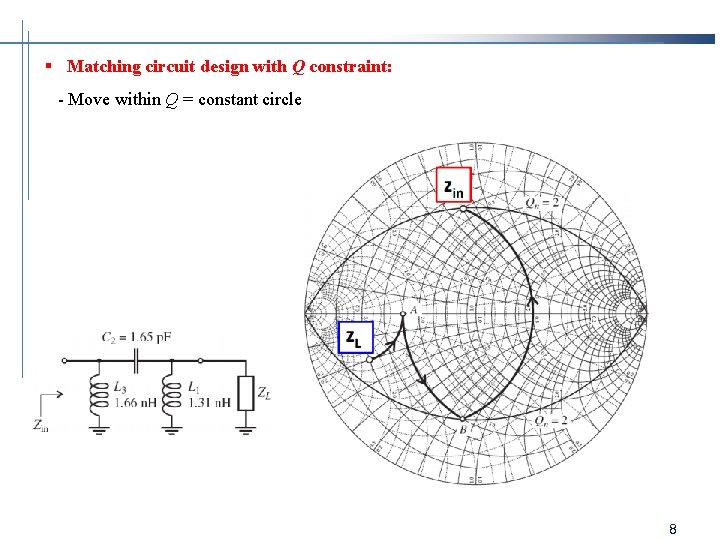
§ Matching circuit design with Q constraint: - Move within Q = constant circle 8
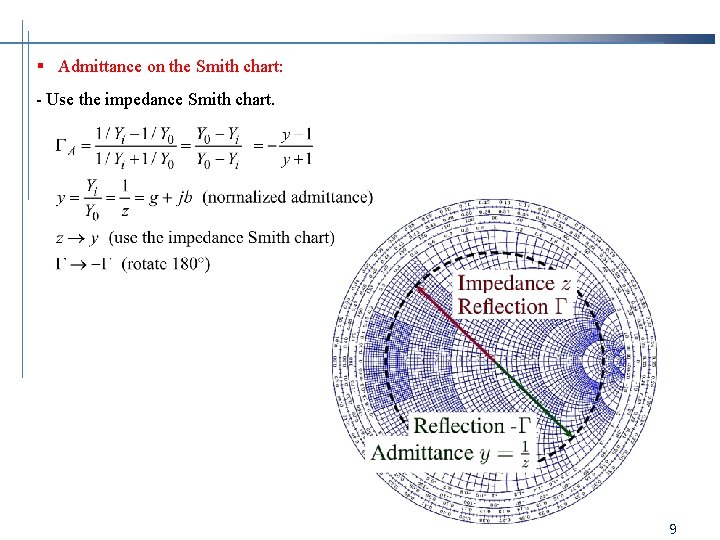
§ Admittance on the Smith chart: - Use the impedance Smith chart. 9
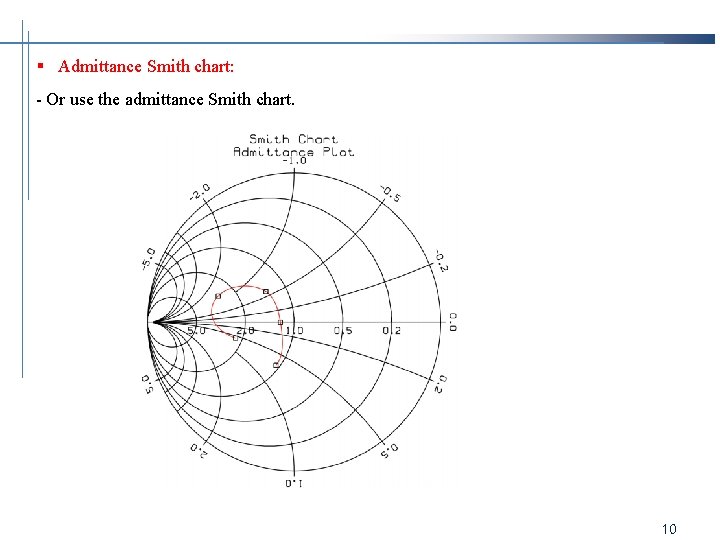
§ Admittance Smith chart: - Or use the admittance Smith chart. 10
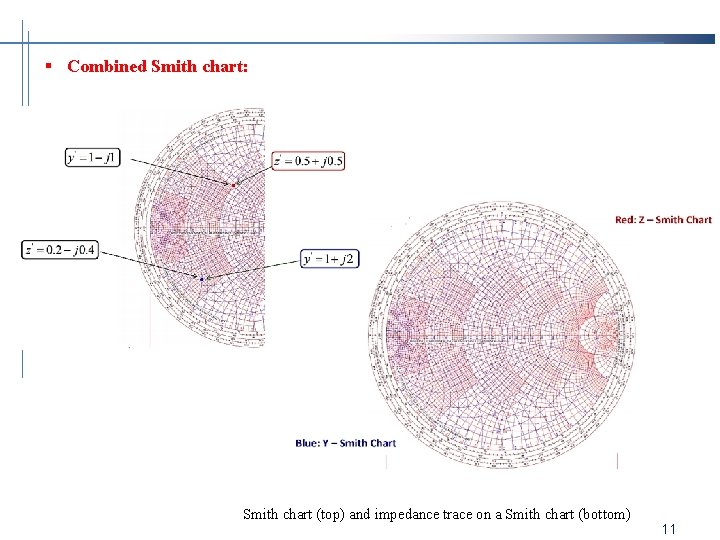
§ Combined Smith chart: Smith chart (top) and impedance trace on a Smith chart (bottom) 11
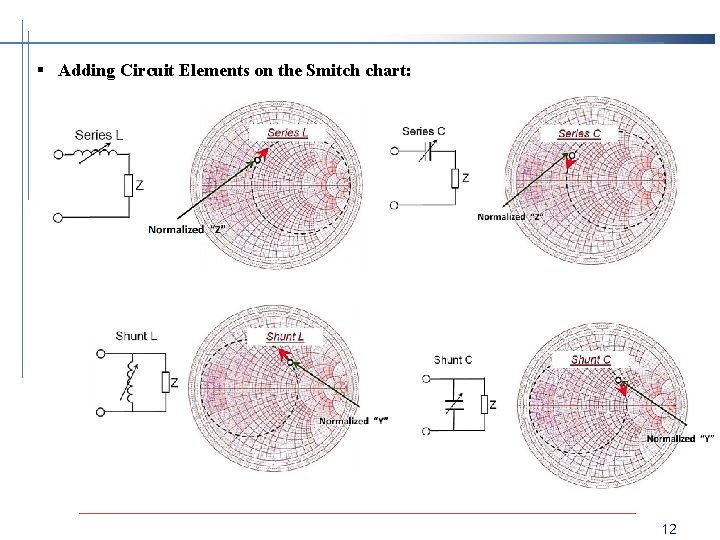
§ Adding Circuit Elements on the Smitch chart: 12
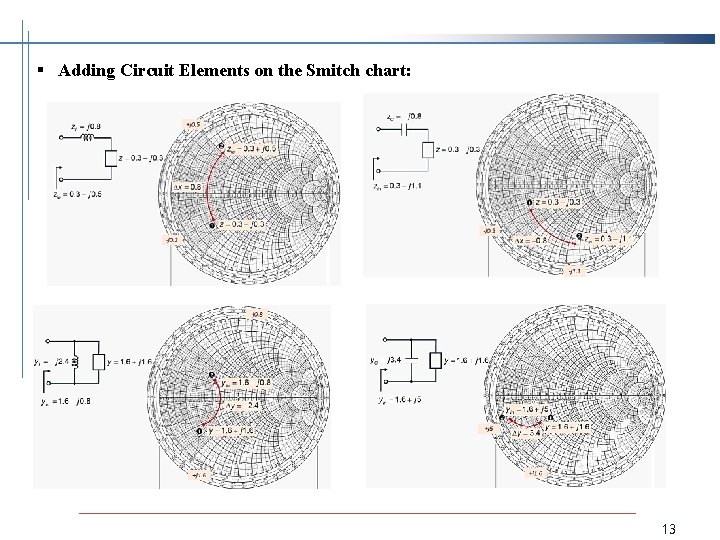
§ Adding Circuit Elements on the Smitch chart: 13
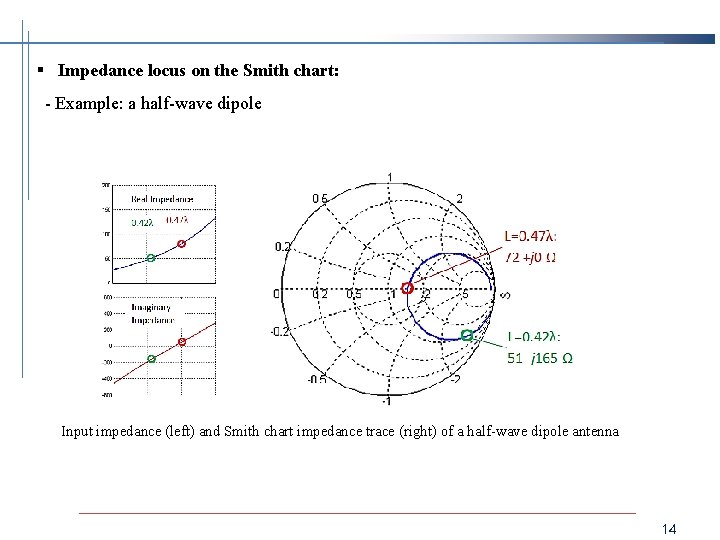
§ Impedance locus on the Smith chart: - Example: a half-wave dipole Input impedance (left) and Smith chart impedance trace (right) of a half-wave dipole antenna 14
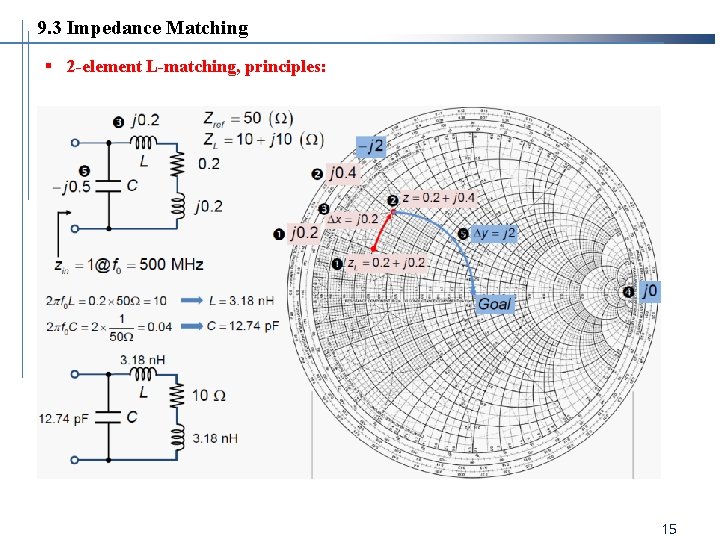
9. 3 Impedance Matching § 2 -element L-matching, principles: 15
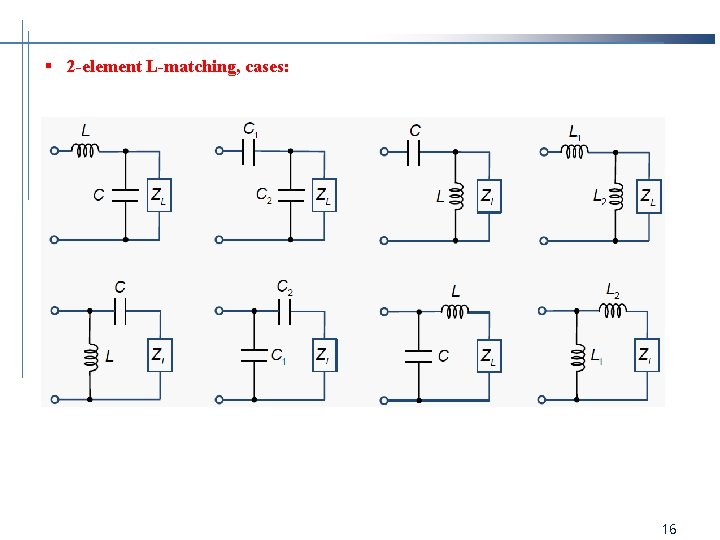
§ 2 -element L-matching, cases: 16
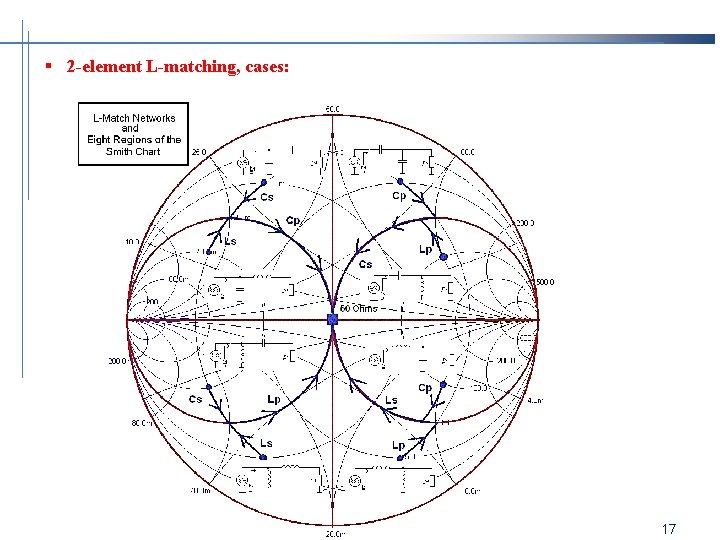
§ 2 -element L-matching, cases: 17
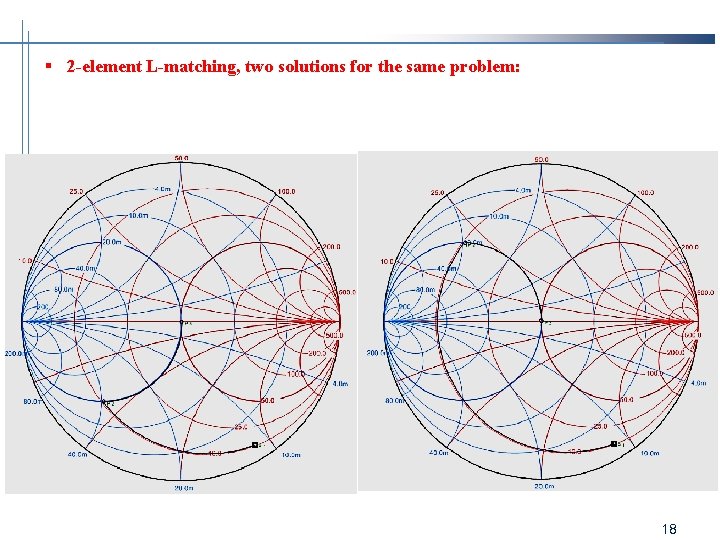
§ 2 -element L-matching, two solutions for the same problem: 18
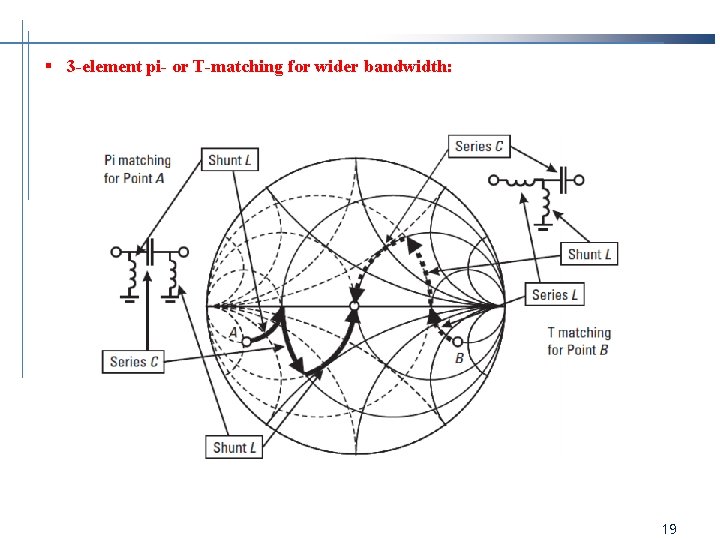
§ 3 -element pi- or T-matching for wider bandwidth: 19
RCE-8836206 Radio Signal Processing Lecture 9: Impedance Matching 20