
RBFT Redundant Byzantine Fault Tolerance PierreLouis Aublin Sonia
RBFT: Redundant Byzantine Fault Tolerance Pierre-Louis Aublin, Sonia Ben Mokhtar, Vivien Quema Grenoble University, CNRS – LIRIS, Grenoble INP Presenters: Rohan Sogani, Utkarsh Opalkar ECS 265 Fall 2019 Paper Presentation 1
Agenda • Motivation • RBFT Overview • Detailed Protocol Steps • Implementation • Performance Evaluation • Conclusion 2
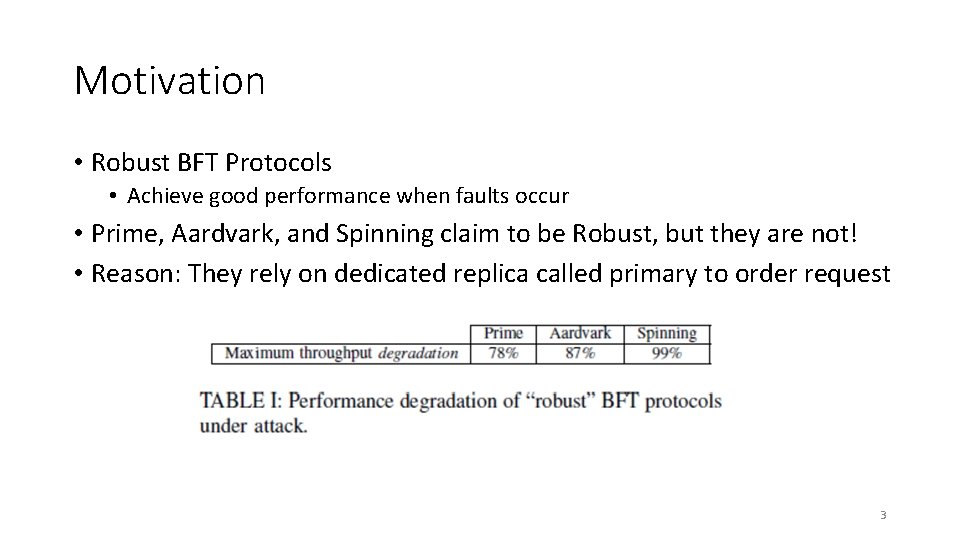
Motivation • Robust BFT Protocols • Achieve good performance when faults occur • Prime, Aardvark, and Spinning claim to be Robust, but they are not! • Reason: They rely on dedicated replica called primary to order request 3
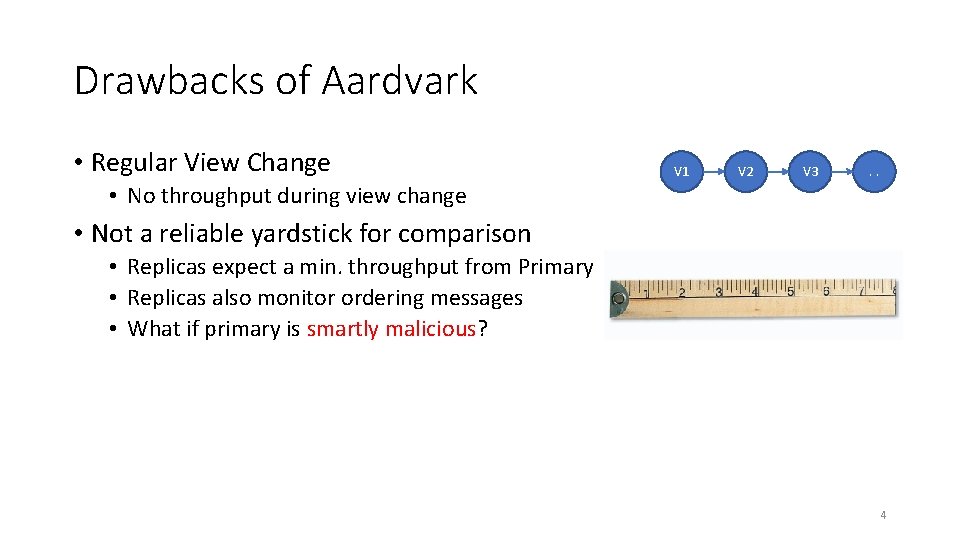
Drawbacks of Aardvark • Regular View Change • No throughput during view change V 1 V 2 V 3 . . • Not a reliable yardstick for comparison • Replicas expect a min. throughput from Primary • Replicas also monitor ordering messages • What if primary is smartly malicious? 4
RBFT Protocol 5
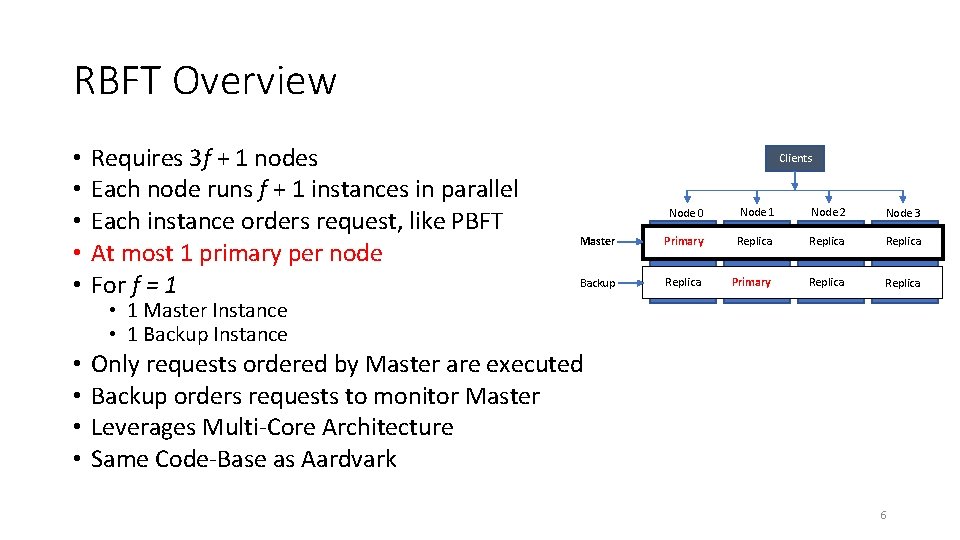
RBFT Overview • • • Requires 3 f + 1 nodes Each node runs f + 1 instances in parallel Each instance orders request, like PBFT At most 1 primary per node For f = 1 • • Only requests ordered by Master are executed Backup orders requests to monitor Master Leverages Multi-Core Architecture Same Code-Base as Aardvark Clients Node 0 Node 1 Node 2 Node 3 Master Primary Replica Backup Replica Primary Replica • 1 Master Instance • 1 Backup Instance 6
Detailed Protocol Steps • 6 Step process • • • REQUEST PROPOGATE PRE-PREPARE COMMIT REPLY 7
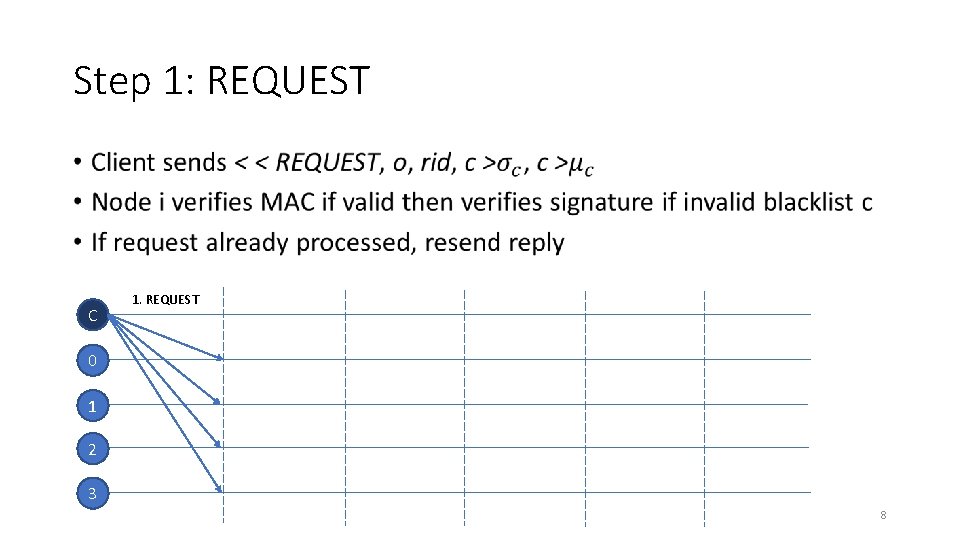
Step 1: REQUEST • C 1. REQUEST 0 1 2 3 8
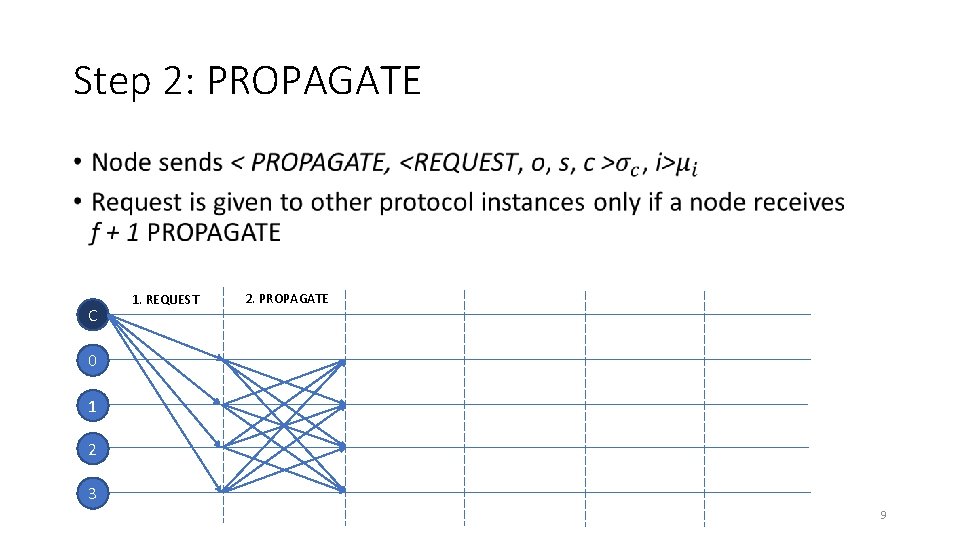
Step 2: PROPAGATE • C 1. REQUEST 2. PROPAGATE 0 1 2 3 9
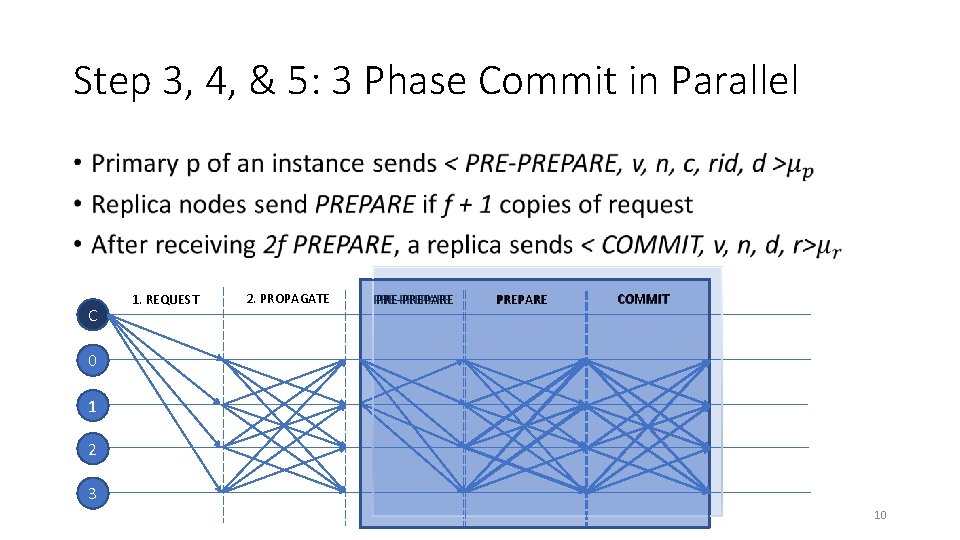
Step 3, 4, & 5: 3 Phase Commit in Parallel • C 1. REQUEST 2. PROPAGATE PRE-PREPARE COMMIT 0 1 2 3 10
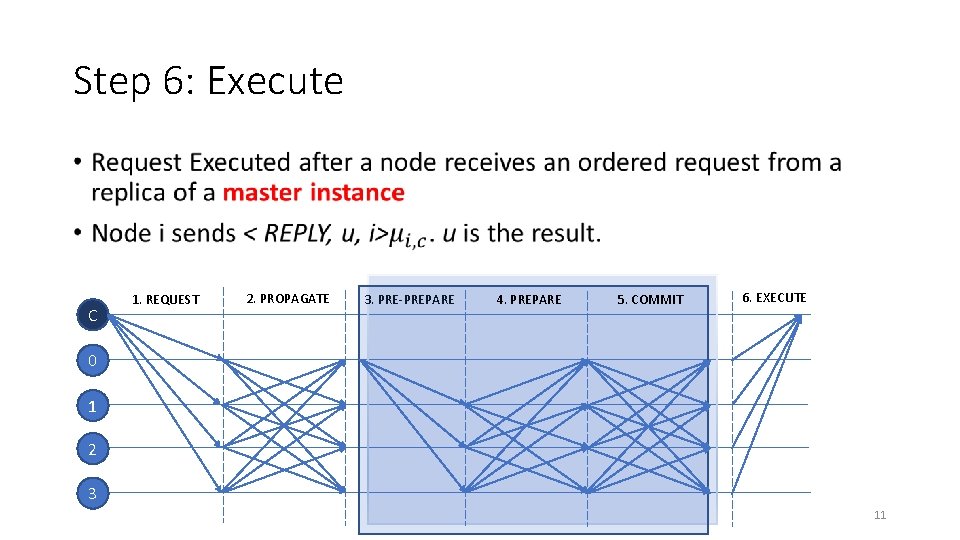
Step 6: Execute • C 1. REQUEST 2. PROPAGATE 3. PRE-PREPARE 4. PREPARE 5. COMMIT 6. EXECUTE 0 1 2 3 11
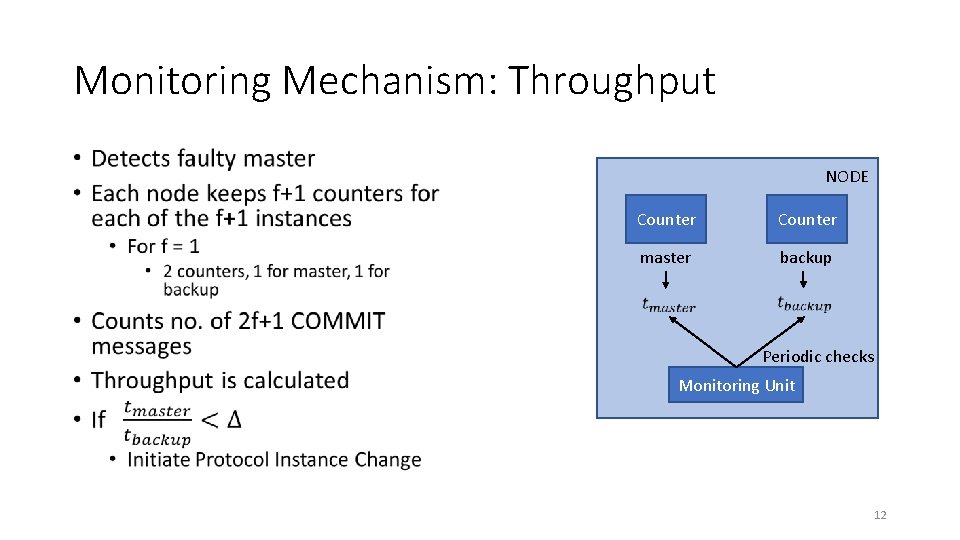
Monitoring Mechanism: Throughput • NODE Counter master backup Periodic checks Monitoring Unit 12
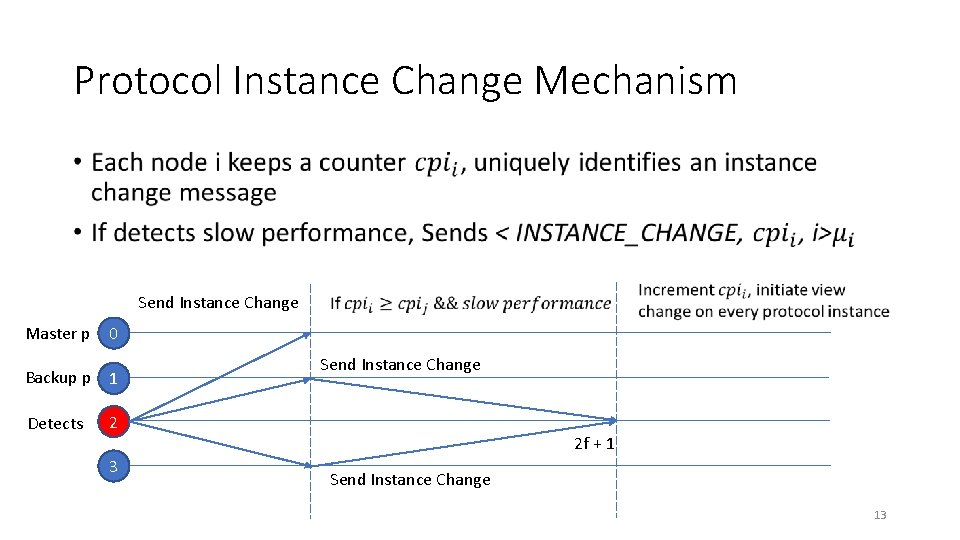
Protocol Instance Change Mechanism • Send Instance Change Master p 0 Backup p 1 Detects 2 3 Send Instance Change 2 f + 1 Send Instance Change 13
Implementation 14
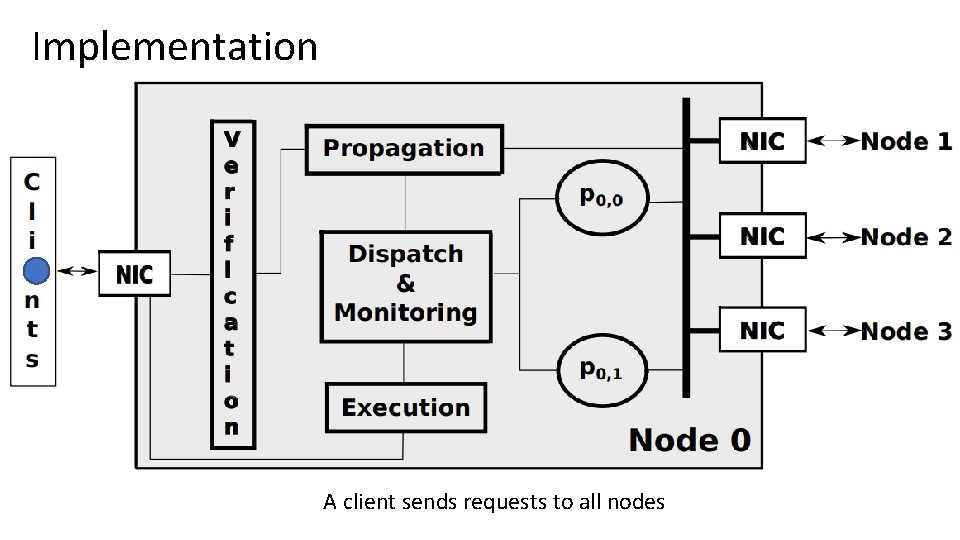
Implementation A client sends requests to all nodes
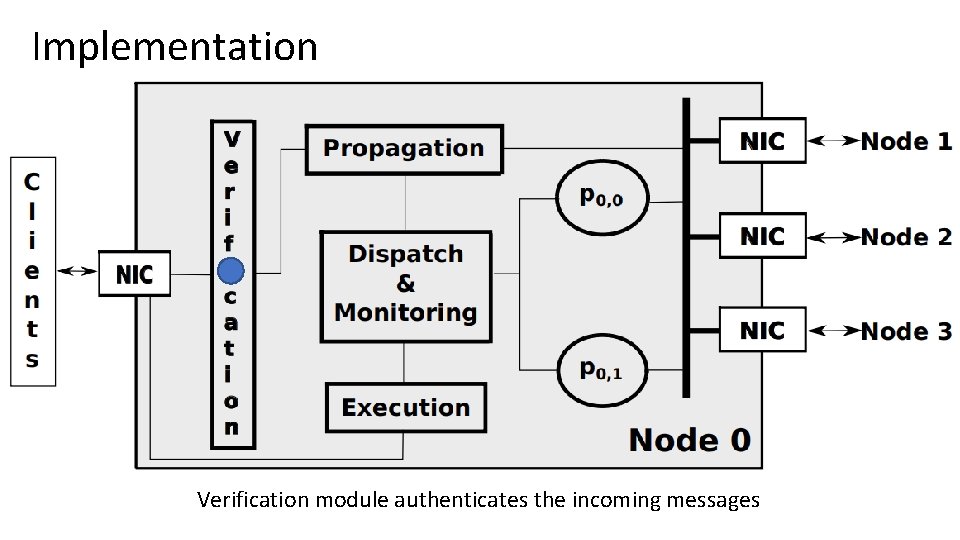
Implementation Verification module authenticates the incoming messages
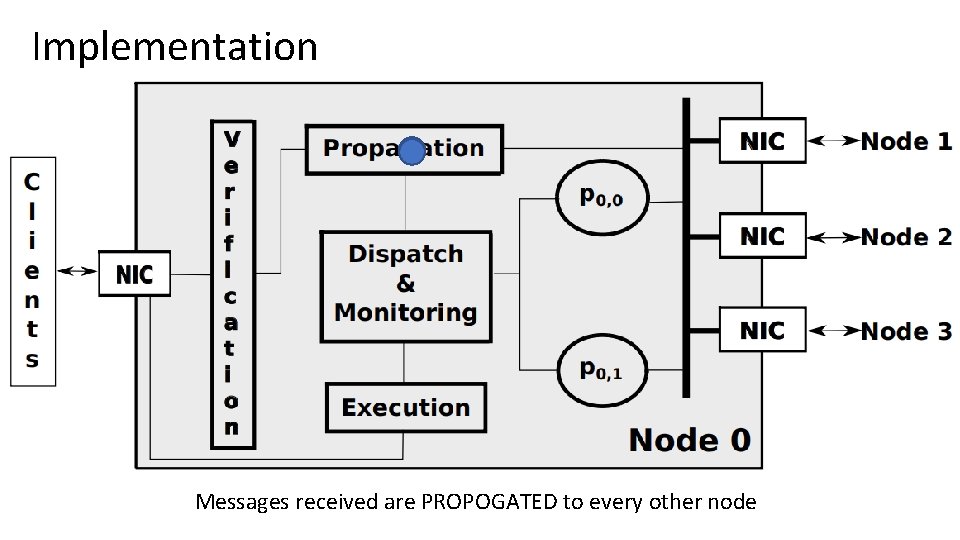
Implementation Messages received are PROPOGATED to every other node
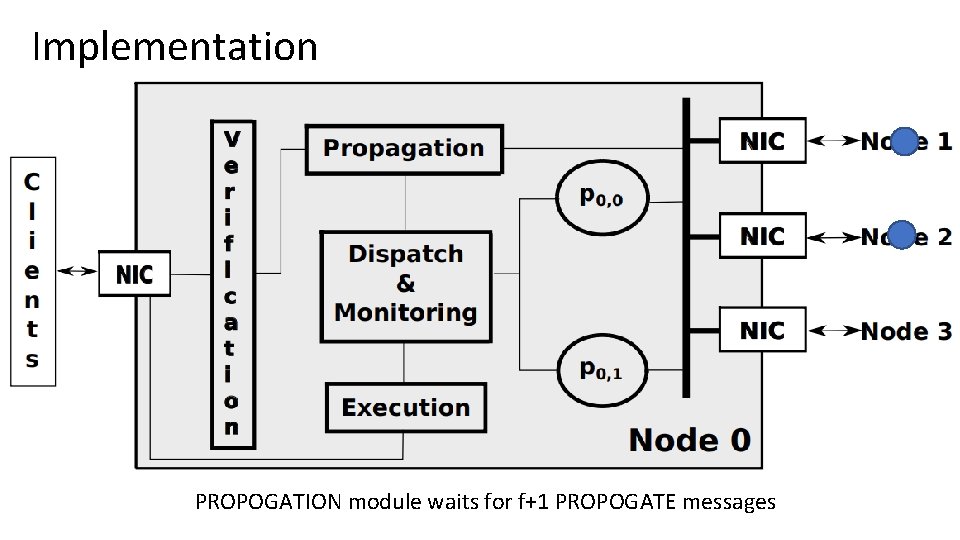
Implementation PROPOGATION module waits for f+1 PROPOGATE messages
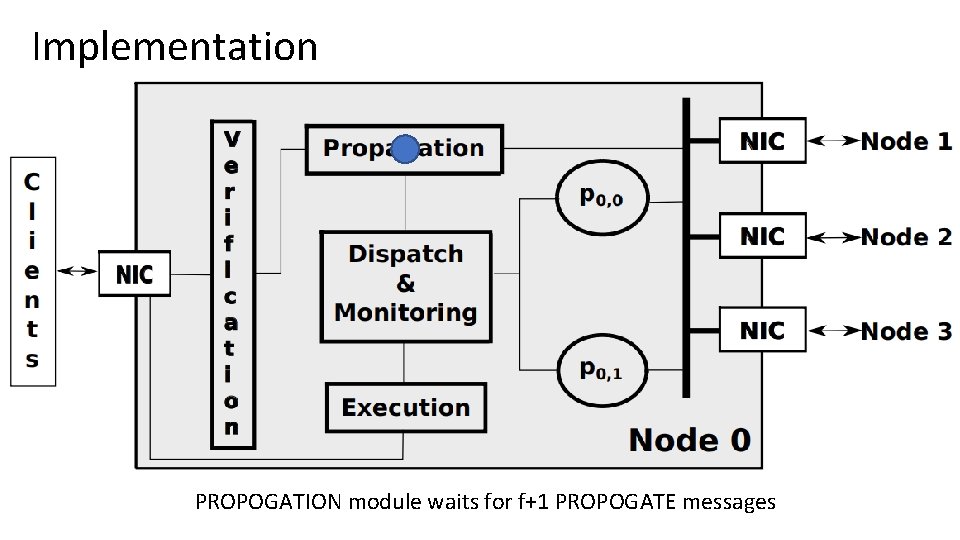
Implementation PROPOGATION module waits for f+1 PROPOGATE messages
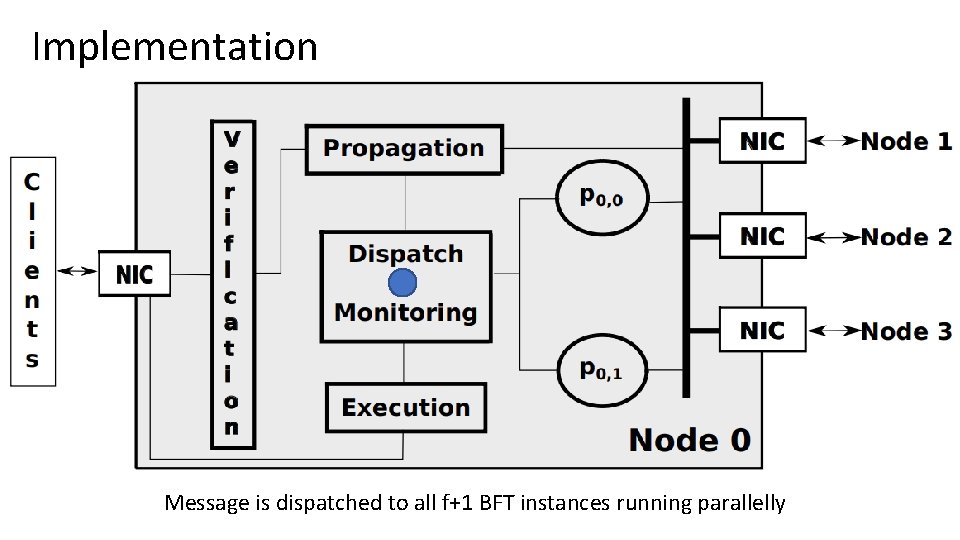
Implementation Message is dispatched to all f+1 BFT instances running parallelly
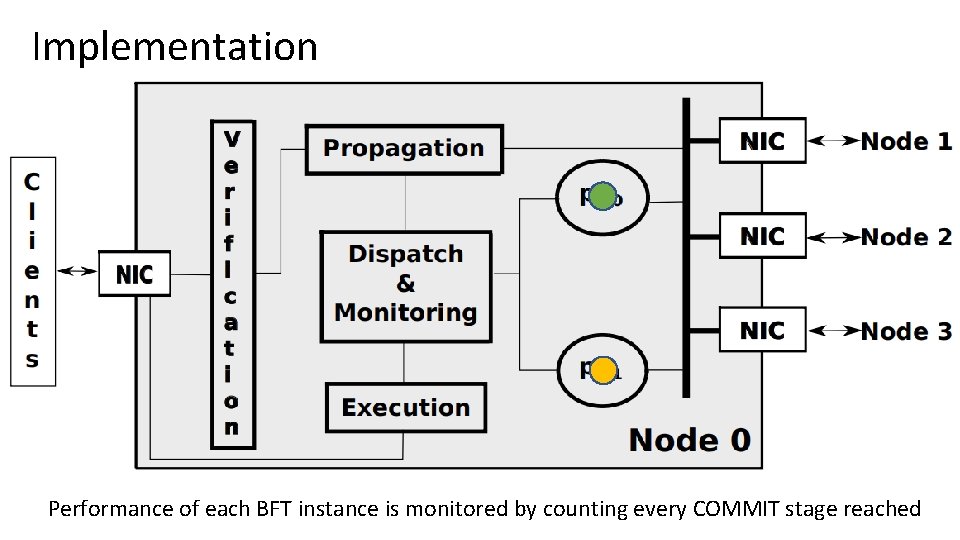
Implementation Performance of each BFT instance is monitored by counting every COMMIT stage reached
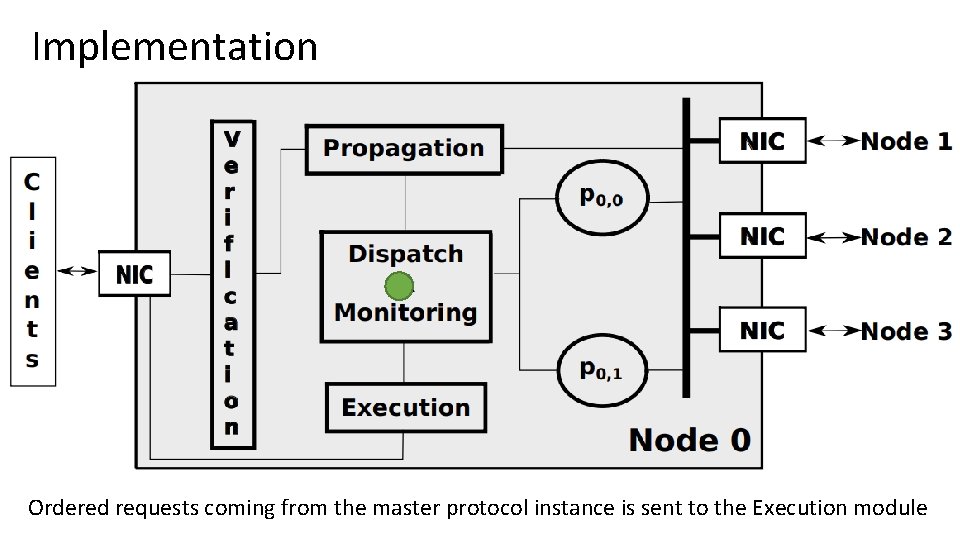
Implementation Ordered requests coming from the master protocol instance is sent to the Execution module
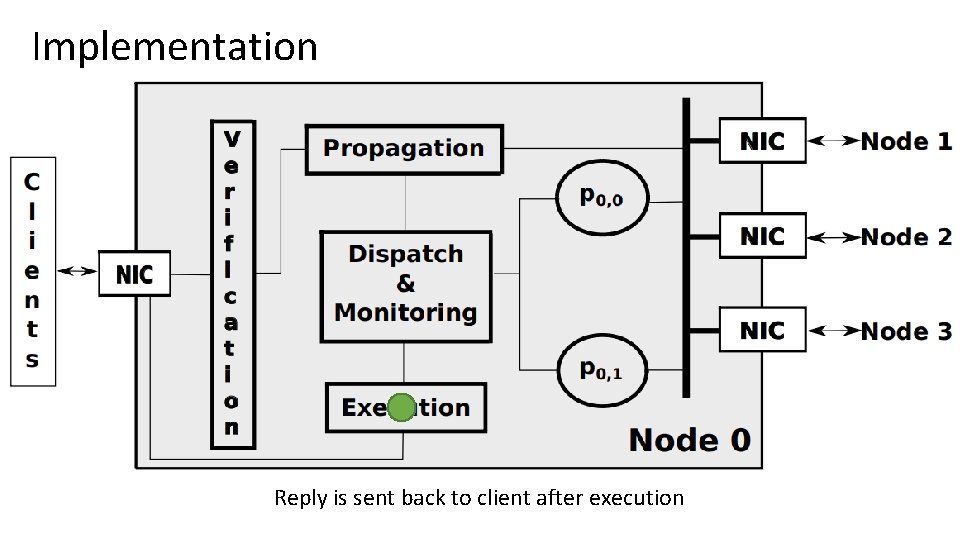
Implementation Reply is sent back to client after execution
Performance Evaluation 24
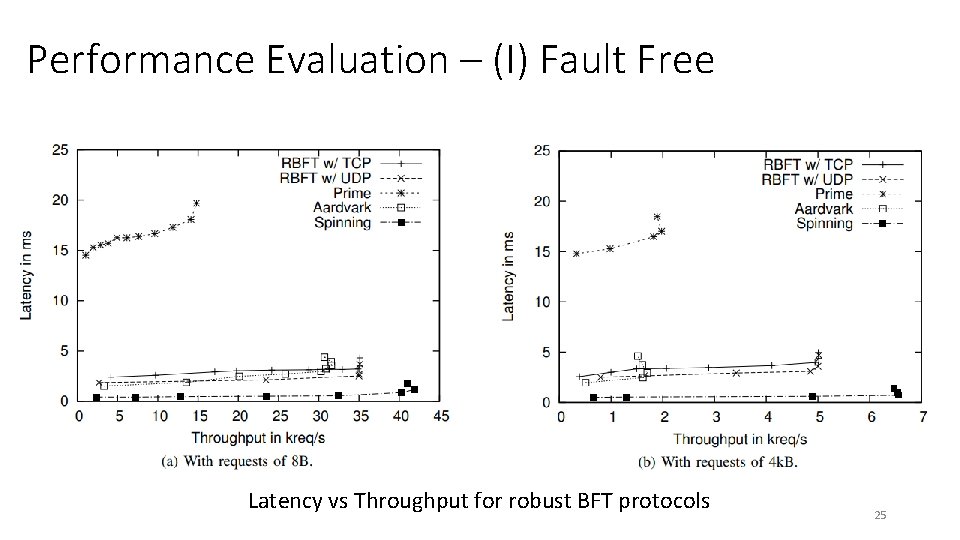
Performance Evaluation – (I) Fault Free Latency vs Throughput for robust BFT protocols 25
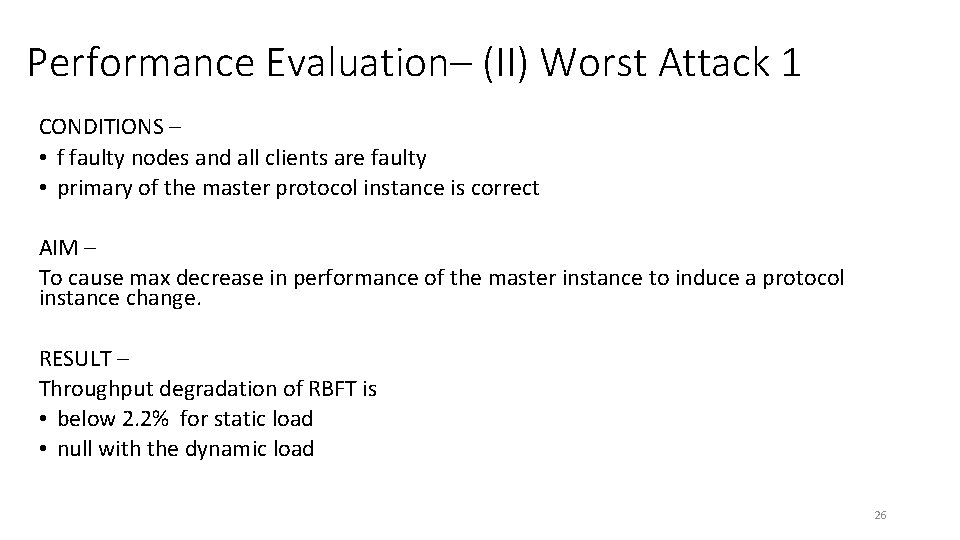
Performance Evaluation– (II) Worst Attack 1 CONDITIONS – • f faulty nodes and all clients are faulty • primary of the master protocol instance is correct AIM – To cause max decrease in performance of the master instance to induce a protocol instance change. RESULT – Throughput degradation of RBFT is • below 2. 2% for static load • null with the dynamic load 26
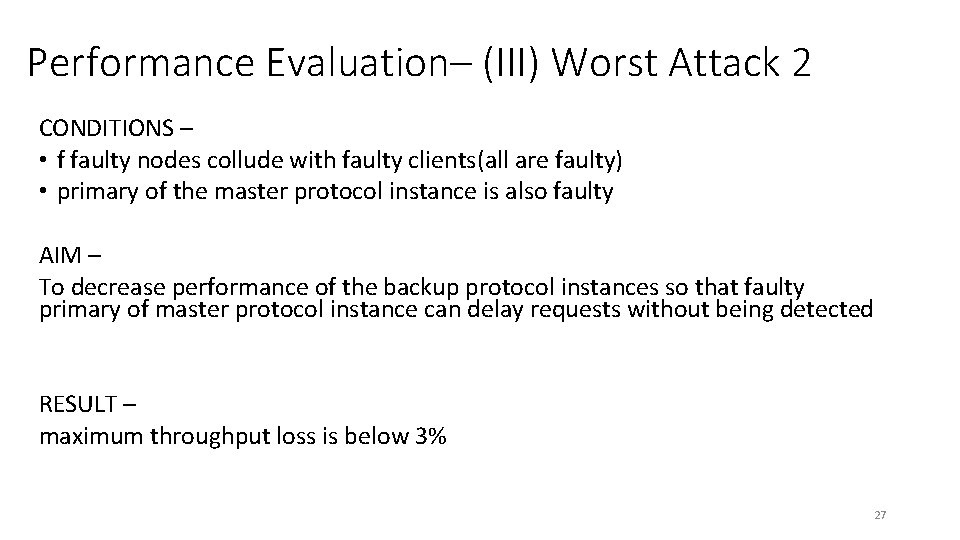
Performance Evaluation– (III) Worst Attack 2 CONDITIONS – • f faulty nodes collude with faulty clients(all are faulty) • primary of the master protocol instance is also faulty AIM – To decrease performance of the backup protocol instances so that faulty primary of master protocol instance can delay requests without being detected RESULT – maximum throughput loss is below 3% 27
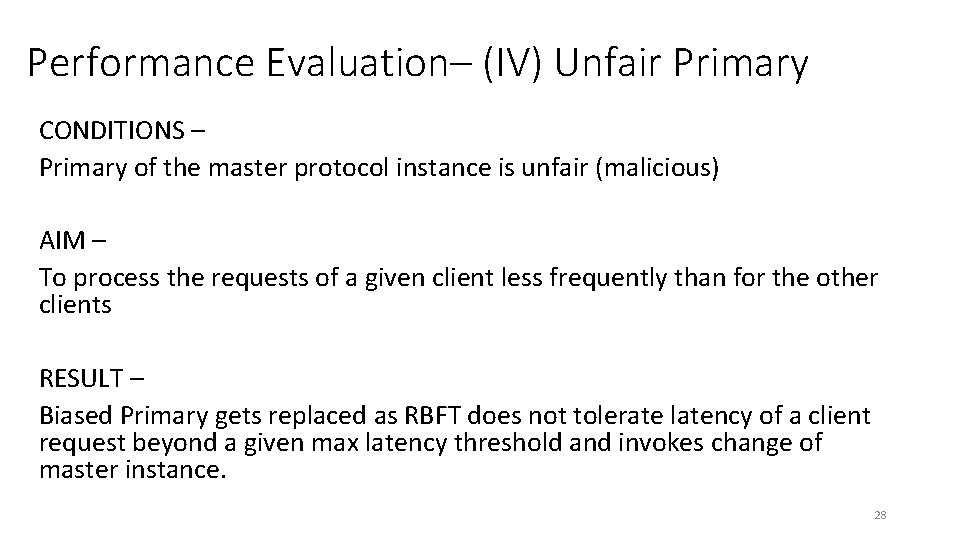
Performance Evaluation– (IV) Unfair Primary CONDITIONS – Primary of the master protocol instance is unfair (malicious) AIM – To process the requests of a given client less frequently than for the other clients RESULT – Biased Primary gets replaced as RBFT does not tolerate latency of a client request beyond a given max latency threshold and invokes change of master instance. 28
Conclusion • State of art “Robust BFT” protocols are not Robust. • RBFT leverages multicore architecture. • Runs several instances of a BFT protocol in parallel. • Monitors and compares performance of primary. • Maximum throughput degradation during attacks is 3%. 29

QUESTIONS? 30

THANK YOU! 31
- Slides: 31