
RAYAT SHIKSHAN SANSTHA SATARA RAIGAD REGION KAMOTHE PANVEL
![A] Life Process • Process that are common to all living beings are called](https://slidetodoc.com/presentation_image_h2/4d4d81dedef33cc36da7e23a81643f77/image-3.jpg "A] Life Process • Process that are common to all living beings are called")
![B] NUTRITION • Autotrophic Nutrition The nutrition in which organism synthesize their own food](https://slidetodoc.com/presentation_image_h2/4d4d81dedef33cc36da7e23a81643f77/image-5.jpg "B] NUTRITION • Autotrophic Nutrition The nutrition in which organism synthesize their own food")
![1] MOUTH • The alimentary canal begins with mouth. We eat a variety of](https://slidetodoc.com/presentation_image_h2/4d4d81dedef33cc36da7e23a81643f77/image-10.jpg "1] MOUTH • The alimentary canal begins with mouth. We eat a variety of")
![2] STOMACH](https://slidetodoc.com/presentation_image_h2/4d4d81dedef33cc36da7e23a81643f77/image-11.jpg "2] STOMACH")
![3] SMALL INTESTINE § The small intestine is the longest part (5 to 6](https://slidetodoc.com/presentation_image_h2/4d4d81dedef33cc36da7e23a81643f77/image-14.jpg "3] SMALL INTESTINE § The small intestine is the longest part (5 to 6")
![C] Respiration v. The process of release energy from the assimilated food is called.](https://slidetodoc.com/presentation_image_h2/4d4d81dedef33cc36da7e23a81643f77/image-27.jpg "C] Respiration v. The process of release energy from the assimilated food is called.")
![1] Exchange Of Gases In AQUATIC animal • Animal living in water use oxygen](https://slidetodoc.com/presentation_image_h2/4d4d81dedef33cc36da7e23a81643f77/image-30.jpg "1] Exchange Of Gases In AQUATIC animal • Animal living in water use oxygen")
![2] exchange of gases in terrestrial animal § The respiratory organs in different animals](https://slidetodoc.com/presentation_image_h2/4d4d81dedef33cc36da7e23a81643f77/image-31.jpg "2] exchange of gases in terrestrial animal § The respiratory organs in different animals")
![D] transportation Ø The substance synthesized or absorbed in one part of body is](https://slidetodoc.com/presentation_image_h2/4d4d81dedef33cc36da7e23a81643f77/image-41.jpg "D] transportation Ø The substance synthesized or absorbed in one part of body is")
![E] excretion § Biochemical reaction constantly occuring the cells of a living organism. §](https://slidetodoc.com/presentation_image_h2/4d4d81dedef33cc36da7e23a81643f77/image-54.jpg "E] excretion § Biochemical reaction constantly occuring the cells of a living organism. §")
- Slides: 63
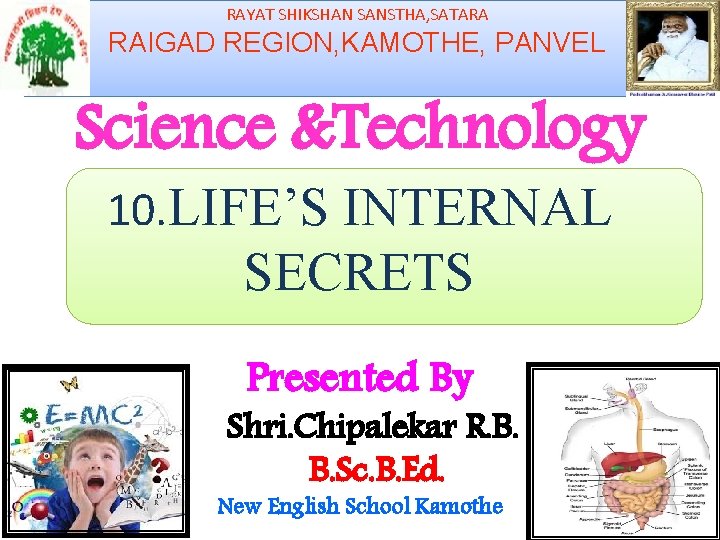
RAYAT SHIKSHAN SANSTHA, SATARA RAIGAD REGION, KAMOTHE, PANVEL Science &Technology 10. LIFE’S INTERNAL SECRETS Presented By Shri. Chipalekar R. B. B. Sc. B. Ed. New English School Kamothe
Topic’s A. B. C. D. E. Life process Nutrition Respiration Transportation Excretion
A] Life Process • Process that are common to all living beings are called life process. • Ex. Nutrition , respiration , excretion , • Transportation , reproduction , sensitivity and growth are some process of living being to sustain.
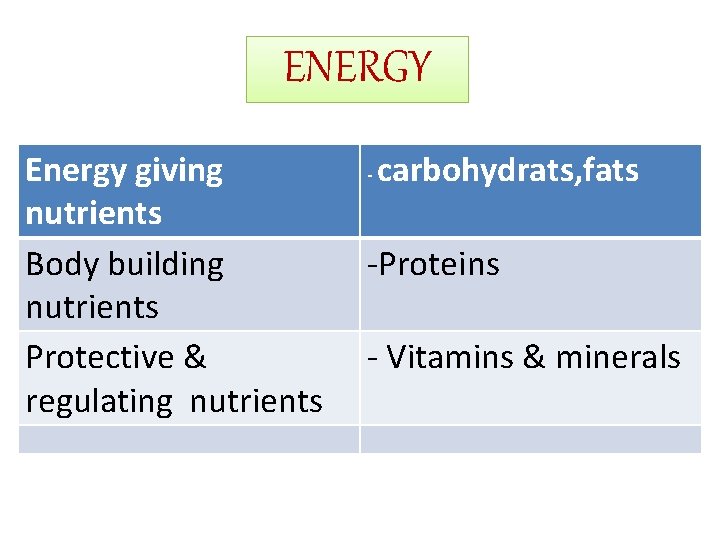
ENERGY Energy giving nutrients Body building nutrients Protective & regulating nutrients - carbohydrats, fats -Proteins - Vitamins & minerals
B] NUTRITION • Autotrophic Nutrition The nutrition in which organism synthesize their own food is called autotrophic. AUTOTROPHS The organism which carried out autotrophic nutrition is autotrophs.
HETROTROPHIC NUTRITION • The nutrition in which organism depend on other organism is heterotophic nutrition. • Organism that depend on other organisms for their food are heterotrophic organisms. • All animals and fungi are heterotrophs.
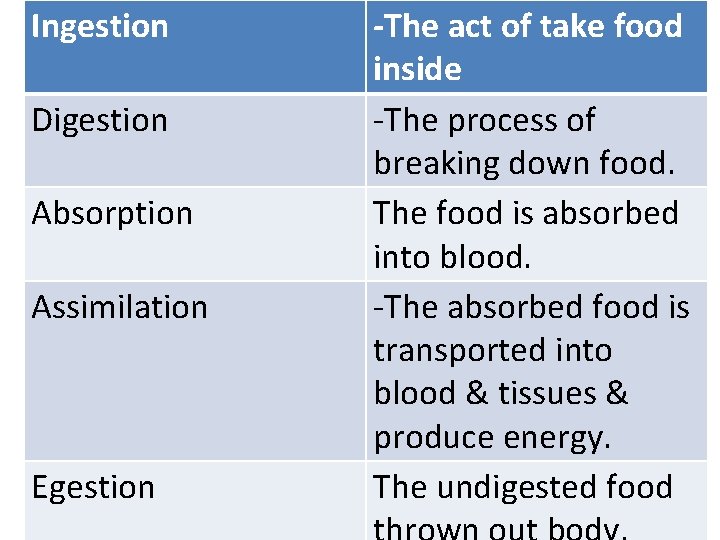
Ingestion Digestion Absorption Assimilation Egestion -The act of take food inside -The process of breaking down food. The food is absorbed into blood. -The absorbed food is transported into blood & tissues & produce energy. The undigested food
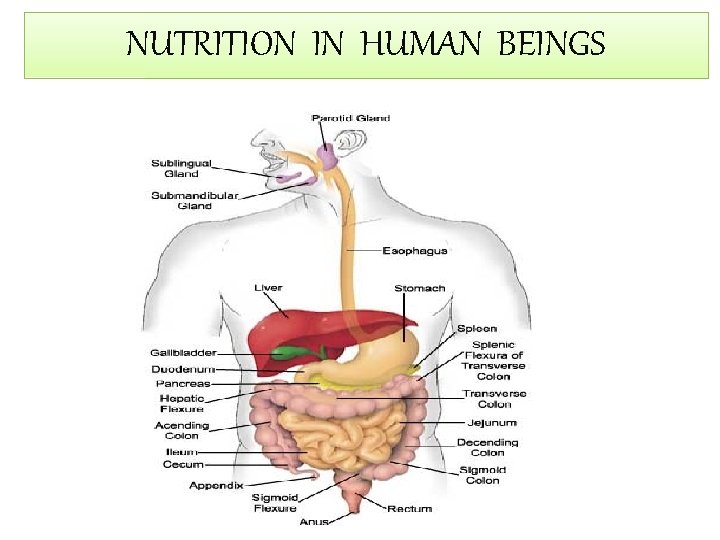
NUTRITION IN HUMAN BEINGS
• All the process involved in nutrition in human being take place by association of digestive organs is called Digestive system. • Alimentary canal is muscular tube of varying diameter which extend from mouth to anus. • The salivary glands, liver, pancrease &gastric glands are the digestive glands associated with the alimentry canal.
1] MOUTH • The alimentary canal begins with mouth. We eat a variety of food items which passed through the same digestive tract. • Naturally the food has to be generate particles with small size. • Can you tell which organs of the body are involved the breaking large food particles into smaller ones?
2] STOMACH
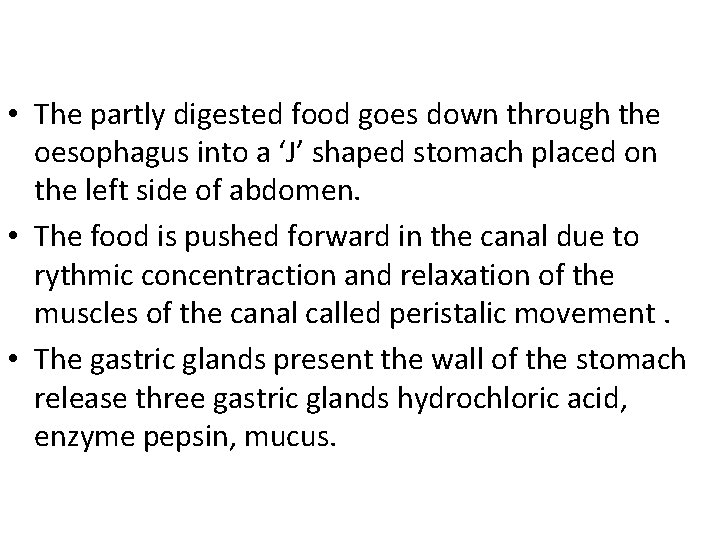
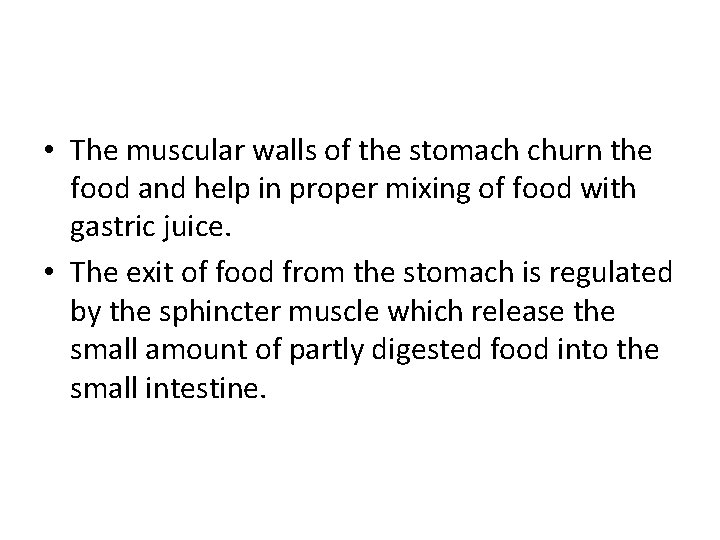
• The partly digested food goes down through the oesophagus into a ‘J’ shaped stomach placed on the left side of abdomen. • The food is pushed forward in the canal due to rythmic concentraction and relaxation of the muscles of the canal called peristalic movement. • The gastric glands present the wall of the stomach release three gastric glands hydrochloric acid, enzyme pepsin, mucus.
• The muscular walls of the stomach churn the food and help in proper mixing of food with gastric juice. • The exit of food from the stomach is regulated by the sphincter muscle which release the small amount of partly digested food into the small intestine.
3] SMALL INTESTINE § The small intestine is the longest part (5 to 6 m) of the alimentary canal fitted into a compact space in the belly by extensive coiling. Although it is much longer than the large intestine , it gets its name from its comparatively small diameter. § Carbohydrats, fats & proteins are fully digested in the small intestine.
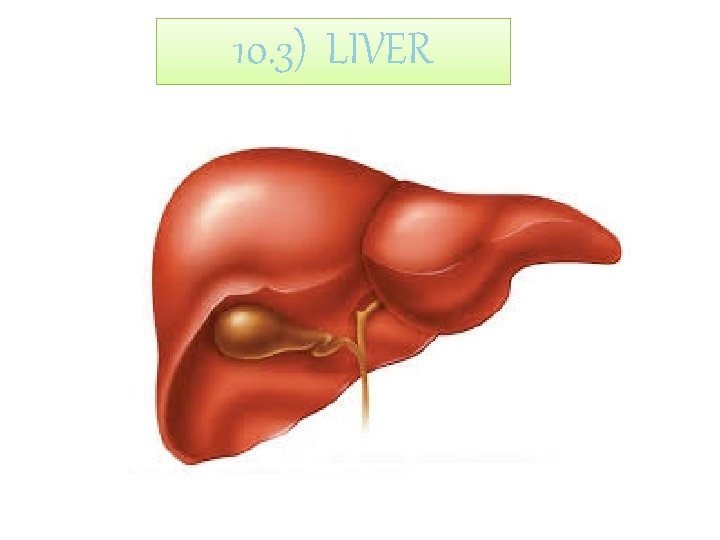
10. 3) LIVER
A) The largest glands in the body secrets bile juice which is stored in the gall bladder. • Bile makes food alkaline & breaks the large fat globules into smaller ones, this increase the enzyme action. • Whenever food enters in the small intestine , the gall bladder release the bile into it through duct.
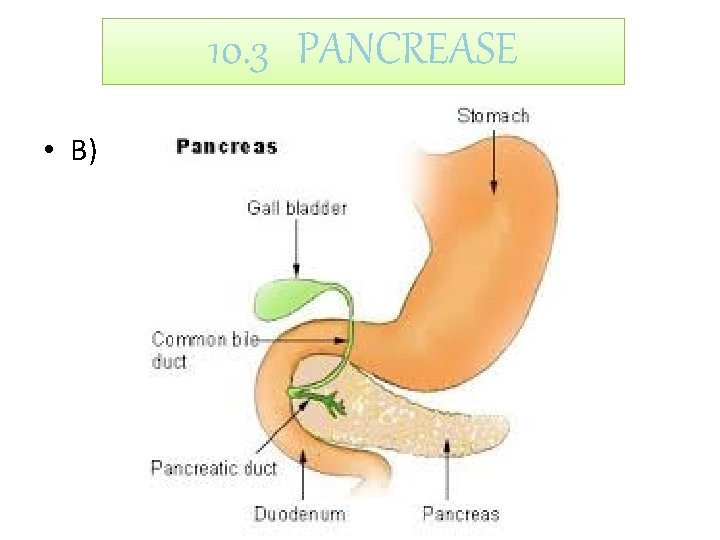
10. 3 PANCREASE • B)
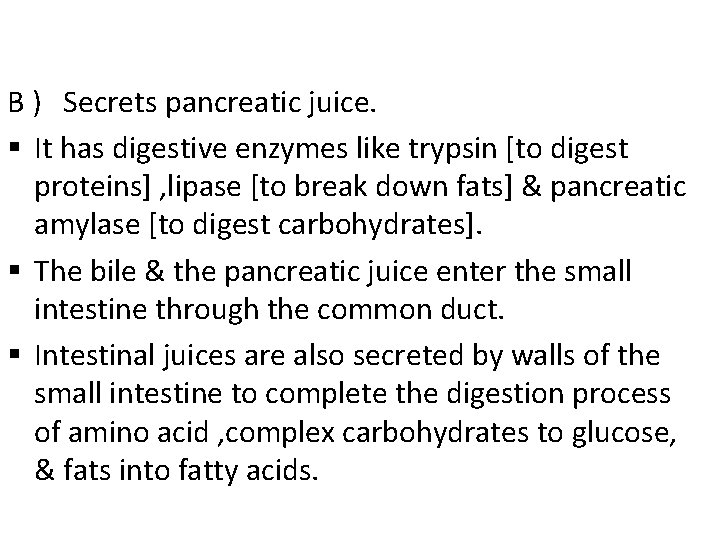
B ) Secrets pancreatic juice. § It has digestive enzymes like trypsin [to digest proteins] , lipase [to break down fats] & pancreatic amylase [to digest carbohydrates]. § The bile & the pancreatic juice enter the small intestine through the common duct. § Intestinal juices are also secreted by walls of the small intestine to complete the digestion process of amino acid , complex carbohydrates to glucose, & fats into fatty acids.
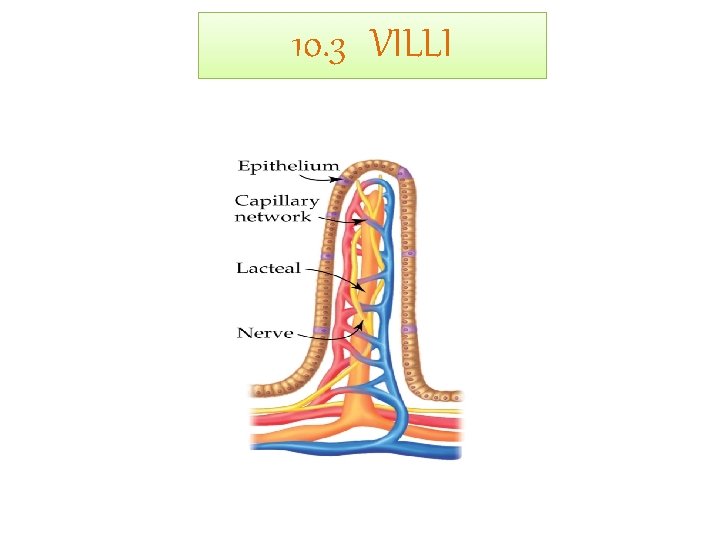
10. 3 VILLI
v. The digested food is absorbed by the walls of the small intestine having numerous finger like projection called villi. v. Villi , which absorbed the food richly supplied with blood vessel. v. Unused glucose stored in the liver in form of glycogen. v. The unabsorbed food is sent to the large intestine.
4. LARGE INTESTINE • The undigested food and the residue of the digested food pass into the large intestine[ 1. 5 m long]. • This part of the intestine does not have any digestive function as the digestion is already completed. • The rest of material is removed from the body through the anus. Here is too exit regulated by muscles are called spincter.
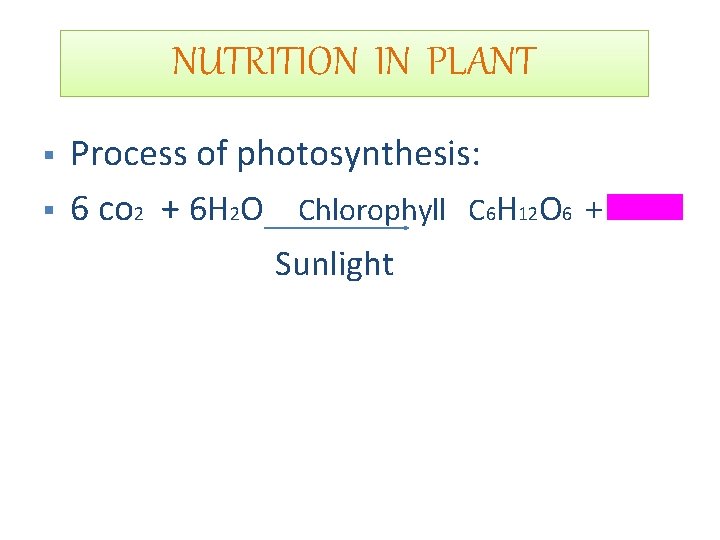
NUTRITION IN PLANT § § Process of photosynthesis: 6 co 2 + 6 H 2 O Chlorophyll C 6 H 12 O 6 + Sunlight
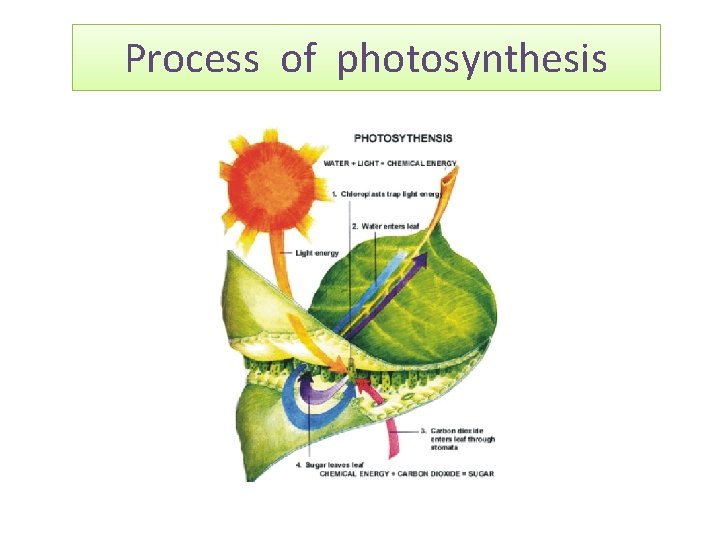
Process of photosynthesis
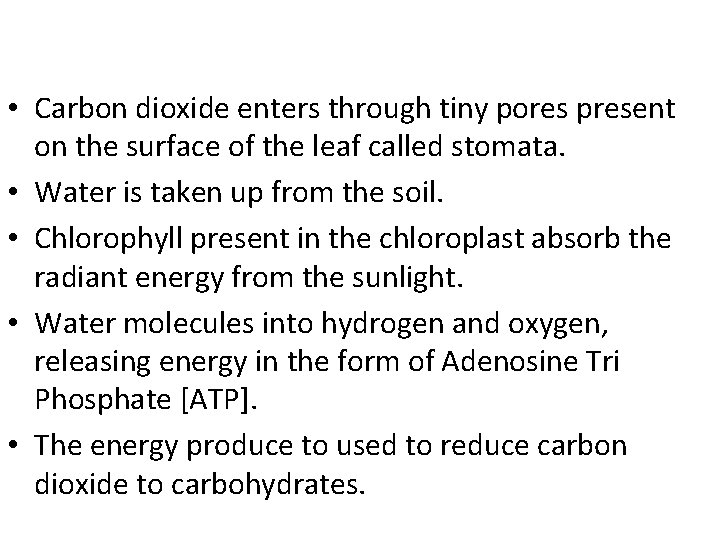
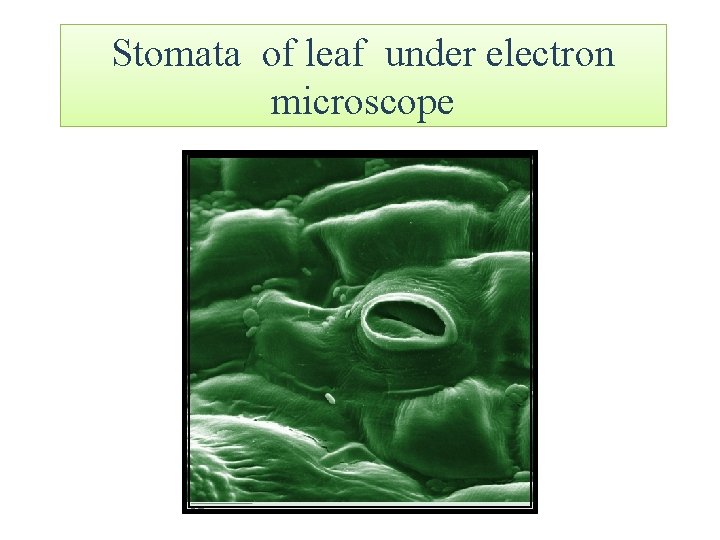
• Carbon dioxide enters through tiny pores present on the surface of the leaf called stomata. • Water is taken up from the soil. • Chlorophyll present in the chloroplast absorb the radiant energy from the sunlight. • Water molecules into hydrogen and oxygen, releasing energy in the form of Adenosine Tri Phosphate [ATP]. • The energy produce to used to reduce carbon dioxide to carbohydrates.
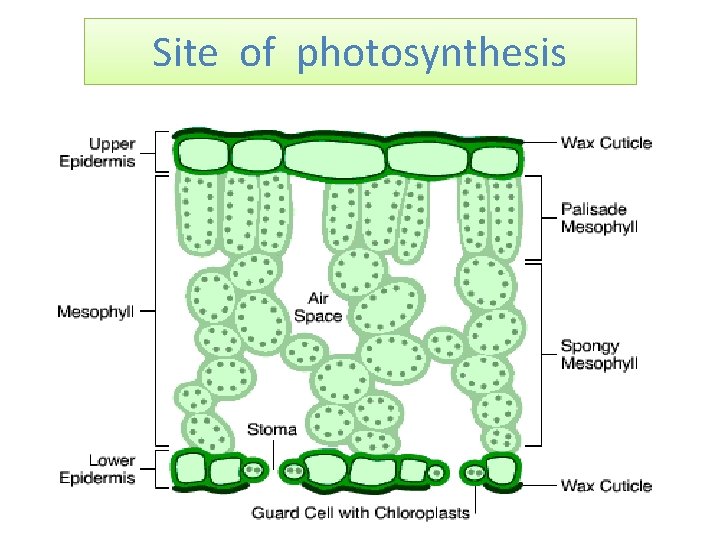
Site of photosynthesis
• The process of photosynthesis takes place only in green plants, mostly in the leaves and to a lesser extent in green stems and floral parts.
C] Respiration v. The process of release energy from the assimilated food is called. v. Respiration is two types: Aerobic & Anaerobic respiration. v. Aerobic respiration: Occurs in presence of oxygen. v. Anaerobic respiration: Occurs in absence of oxygen. v. Respiration is a to complex process which involves two distinct phases; breathing & cellular respiration.
Breathing or external respiration Breathing involves movement which brings th: e air into the lungs and expels the air cotaining more of carbon dioxide from the lungs to the outer environment. Exchange of gases in and out of the blood also takes place simultaneously. § Cellular or internal respiration: Takes place in the mitochondria of the cells to release energy in the from of ATP. §
Breathing or external respiration • External respiration is a physical process. It involves taking in oxygen rich air, absorption of oxygen from it and giving out air containing more carbon dioxide with the help of respiratory organs. q A] Exchange of gases in animal: A great animals variety is seen in with respect to their organs of respiration e. g gills
1] Exchange Of Gases In AQUATIC animal • Animal living in water use oxygen dissolved in water. The solubility of oxygen in water is much lower. So the amount of oxygen available is much lower than air , hence the rate of breathing is faster in aquatic animal. Fish take in water through the mouth and release it over the gills. Gills are the site for uptake of the dissolved oxygen into the blood by diffusion.
2] exchange of gases in terrestrial animal § The respiratory organs in different animals are different but process of diffusion is common. These organs have special structure which increase the surface area that is in contact with the oxygen in rich atmosphere. But these structure are delicate, so they are placed within the body. The special passage takes the air to these structures.
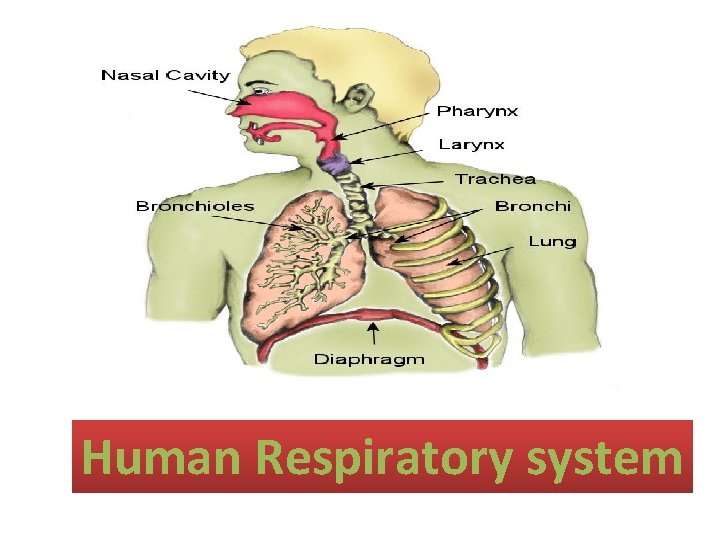
Human Respiratory system
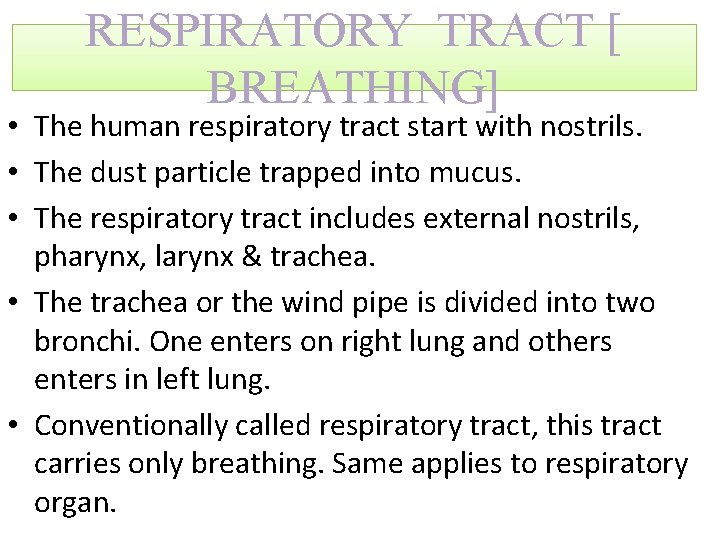
RESPIRATORY TRACT [ BREATHING] • The human respiratory tract start with nostrils. • The dust particle trapped into mucus. • The respiratory tract includes external nostrils, pharynx, larynx & trachea. • The trachea or the wind pipe is divided into two bronchi. One enters on right lung and others enters in left lung. • Conventionally called respiratory tract, this tract carries only breathing. Same applies to respiratory organ.
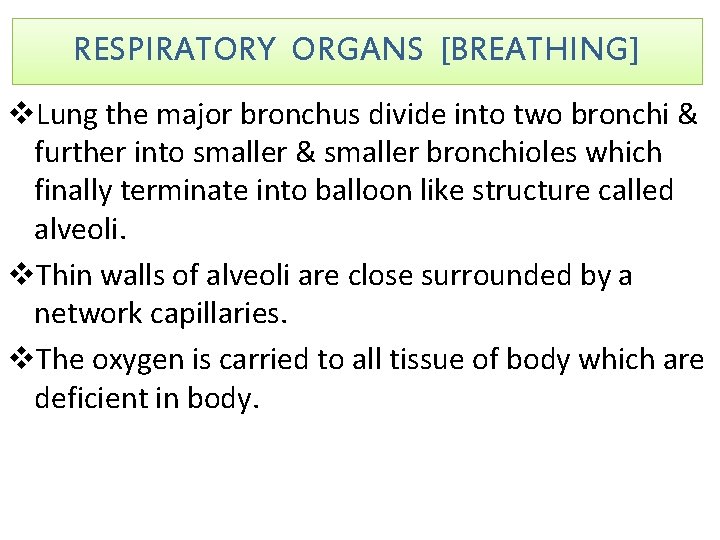
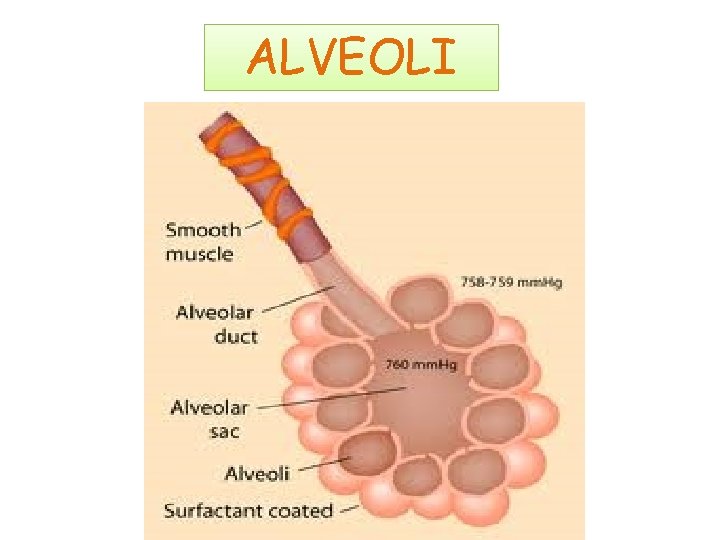
RESPIRATORY ORGANS [BREATHING] v. Lung the major bronchus divide into two bronchi & further into smaller & smaller bronchioles which finally terminate into balloon like structure called alveoli. v. Thin walls of alveoli are close surrounded by a network capillaries. v. The oxygen is carried to all tissue of body which are deficient in body.
ALVEOLI
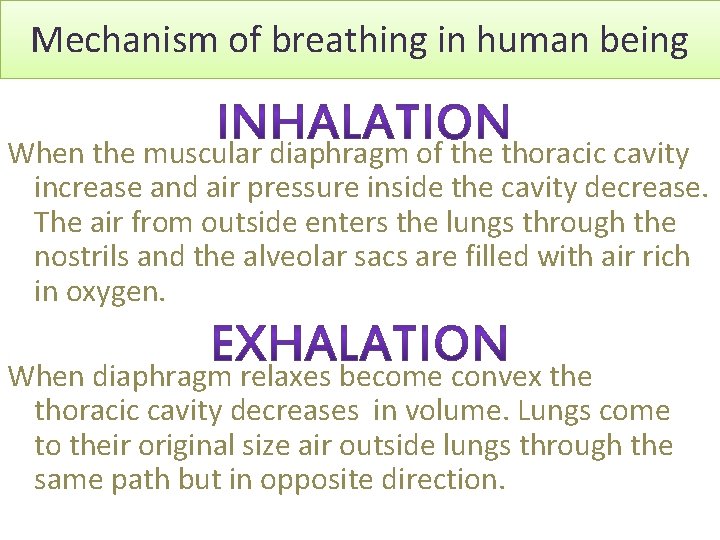
Mechanism of breathing in human being When the muscular diaphragm of the thoracic cavity increase and air pressure inside the cavity decrease. The air from outside enters the lungs through the nostrils and the alveolar sacs are filled with air rich in oxygen. When diaphragm relaxes become convex the thoracic cavity decreases in volume. Lungs come to their original size air outside lungs through the same path but in opposite direction.
Stomata of leaf under electron microscope
§ The process involves exchange of carbon dioxide and oxygen. § Plants do not have special respiratory organ and there is very little transport of gases from one part of the plant to another. § All parts of plants like root, stem and leaf perform respiration. § The gases are exchange by process of diffusion. § CO 2 released respiration utilized photosynthesis and more oxygen is release. § At night when there is no photosynthesis only respiration goes on and more co 2 is eliminated.
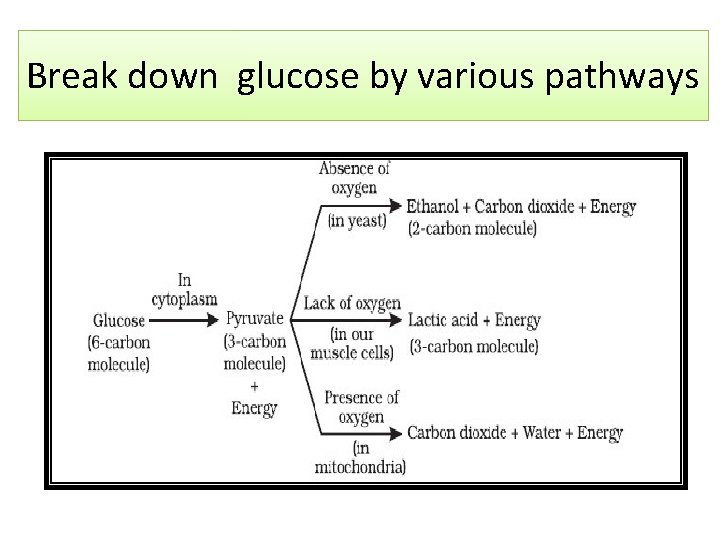
Cellular or internal respiration v. Cellular respiration is a biochemically process in which the simple nutrients like glucose like oxidized within cells to release energy. v. The process of cellular respiration greatly diffn organism yet to first step common in all. v. This carbon molecule[C 6 H 12 O 6] is broken down in the cytoplasm into three carbon molecule called pyruvate. v. The energy release aerobic respiration is more than energy release during anaerobic respiration.
Break down glucose by various pathways
D] transportation Ø The substance synthesized or absorbed in one part of body is moved to the other part of the body by the process of transportation Ø E. g. carbohydrates , oxygen , etc.
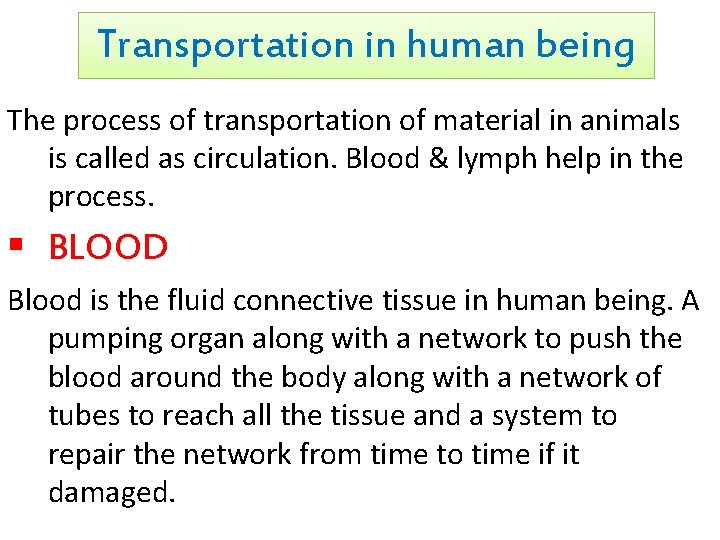
Transportation in human being The process of transportation of material in animals is called as circulation. Blood & lymph help in the process. § BLOOD Blood is the fluid connective tissue in human being. A pumping organ along with a network to push the blood around the body along with a network of tubes to reach all the tissue and a system to repair the network from time to time if it damaged.
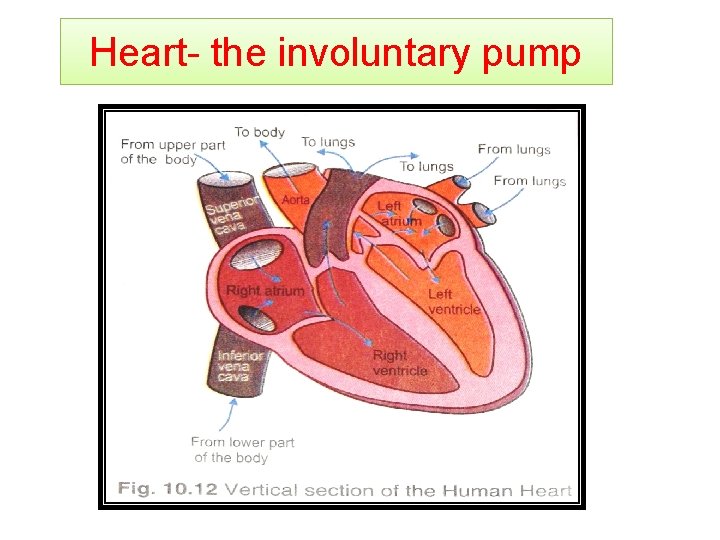
Heart- the involuntary pump
• The human heart is a muscular organ which pumps blood. • The heart is covered by the pericardial membrane. • It is of size a human first & weights of 360 gm. • As oxygen and carbon dioxide both have transported by the blood, the heart has different chambers, the left & right to prevent oxygen rich blood from mixing with the blood containing carbon dioxide. • Half is divided into two chambers. The upper one is called atrium and the lower one is termed as the vertical therefore human heart has four chambered.
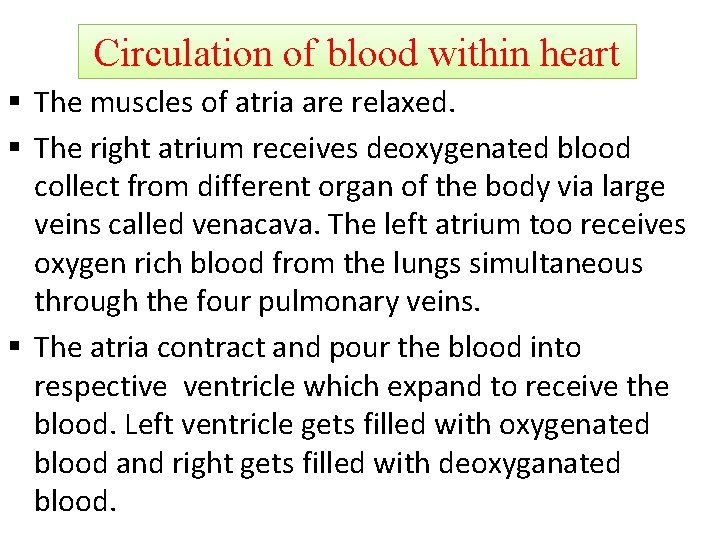
Circulation of blood within heart § The muscles of atria are relaxed. § The right atrium receives deoxygenated blood collect from different organ of the body via large veins called venacava. The left atrium too receives oxygen rich blood from the lungs simultaneous through the four pulmonary veins. § The atria contract and pour the blood into respective ventricle which expand to receive the blood. Left ventricle gets filled with oxygenated blood and right gets filled with deoxyganated blood.
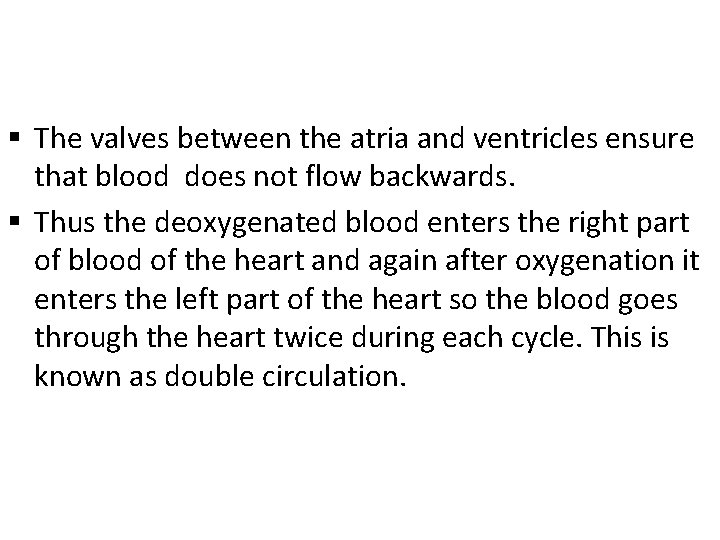
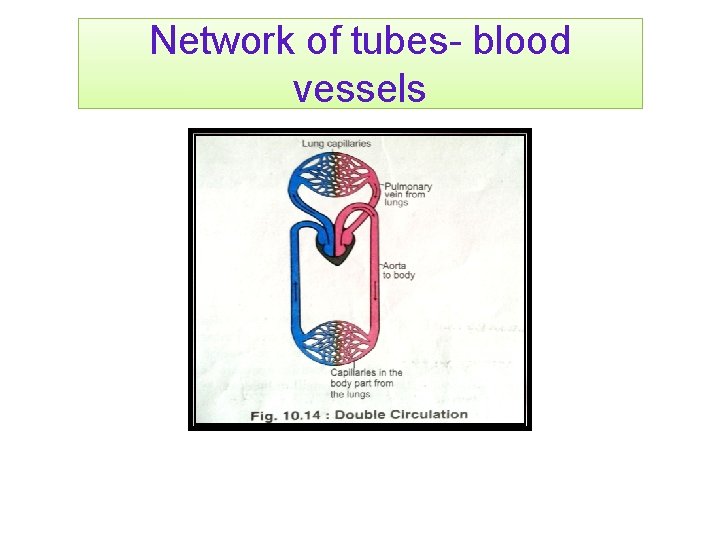
§ The valves between the atria and ventricles ensure that blood does not flow backwards. § Thus the deoxygenated blood enters the right part of blood of the heart and again after oxygenation it enters the left part of the heart so the blood goes through the heart twice during each cycle. This is known as double circulation.
Network of tubes- blood vessels
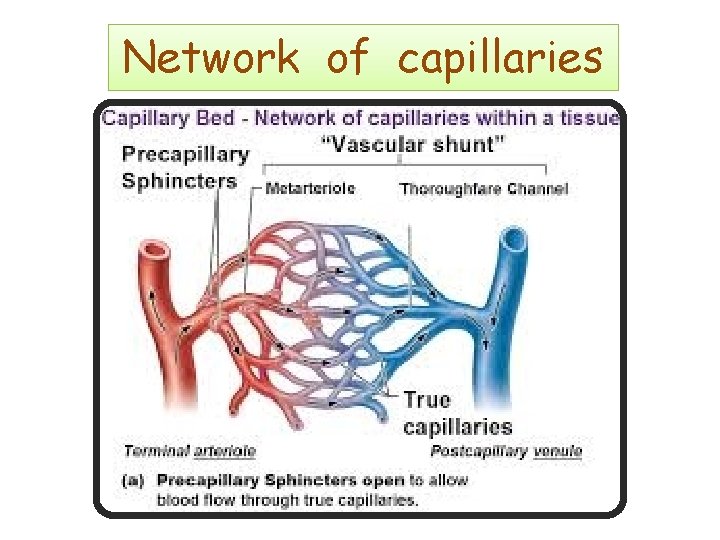
Double circulation A. Arteries carry blood away from the heart & tolerate the force exerted by the blood which is under high pressure exerted by heart. B. They do not need thick walls as blood is no longer under high pressure instead have valves to prevent back word flow of blood. C. On reaching the tissue arteries divided & redivide into smaller vessel called capillaries
Network of capillaries
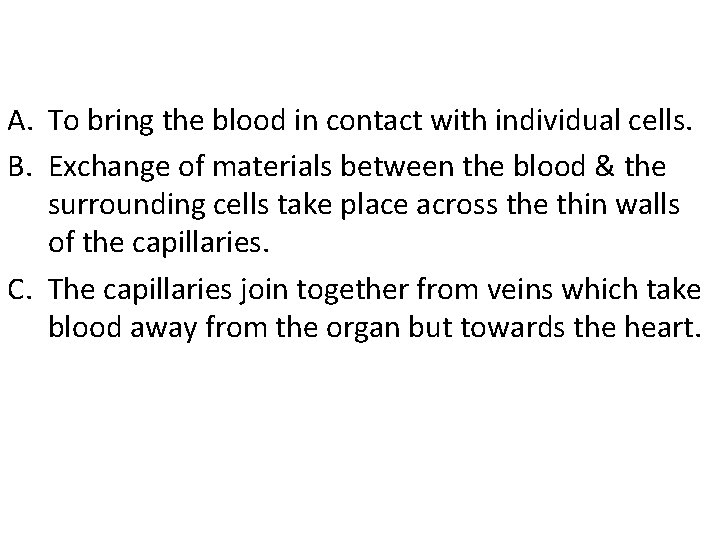
A. To bring the blood in contact with individual cells. B. Exchange of materials between the blood & the surrounding cells take place across the thin walls of the capillaries. C. The capillaries join together from veins which take blood away from the organ but towards the heart.
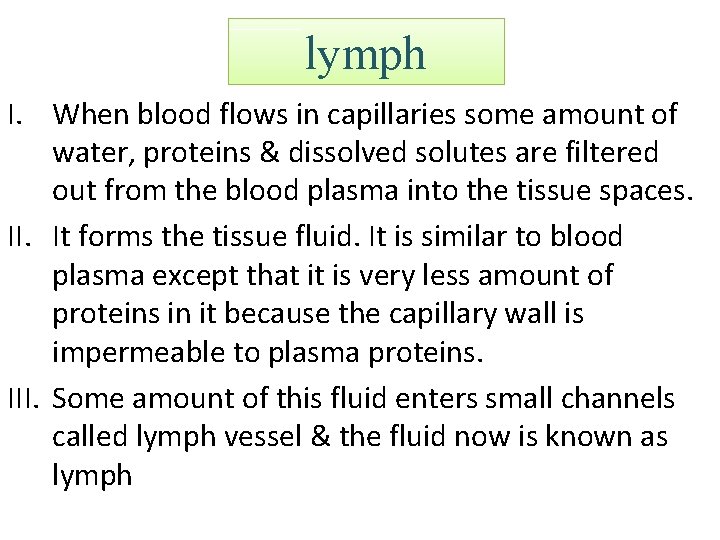
lymph I. When blood flows in capillaries some amount of water, proteins & dissolved solutes are filtered out from the blood plasma into the tissue spaces. II. It forms the tissue fluid. It is similar to blood plasma except that it is very less amount of proteins in it because the capillary wall is impermeable to plasma proteins. III. Some amount of this fluid enters small channels called lymph vessel & the fluid now is known as lymph
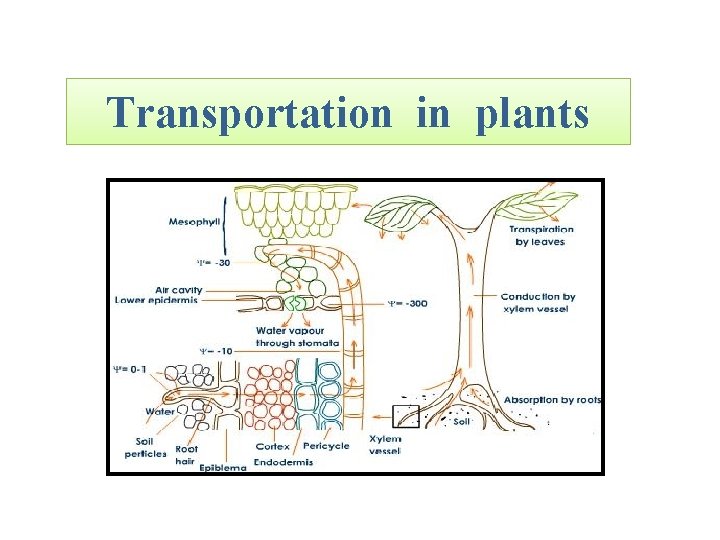
Transportation in plants
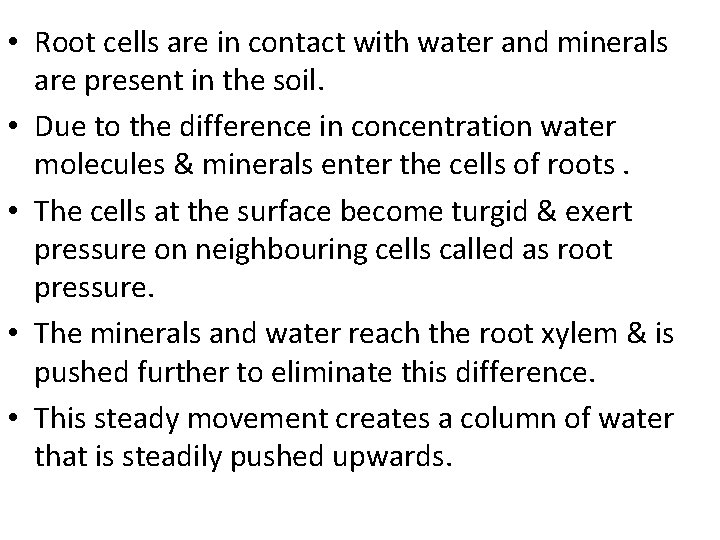
• Root cells are in contact with water and minerals are present in the soil. • Due to the difference in concentration water molecules & minerals enter the cells of roots. • The cells at the surface become turgid & exert pressure on neighbouring cells called as root pressure. • The minerals and water reach the root xylem & is pushed further to eliminate this difference. • This steady movement creates a column of water that is steadily pushed upwards.
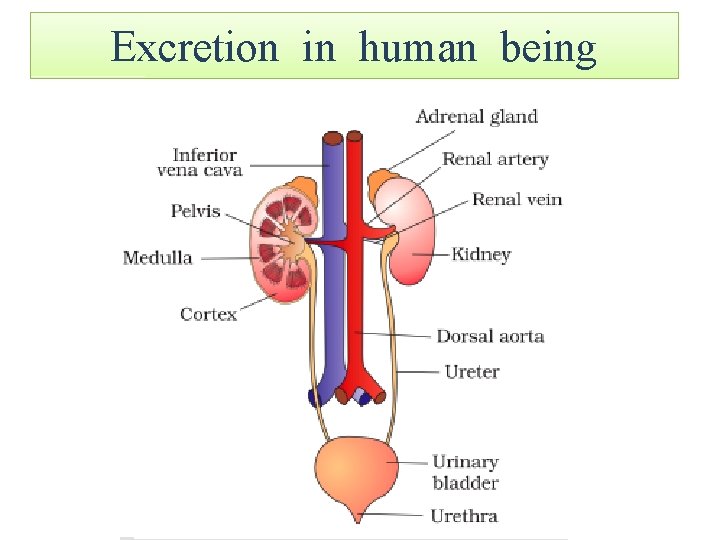
E] excretion § Biochemical reaction constantly occuring the cells of a living organism. § These reaction produce not only the required substance but also produce several unwanted harmful products like urea, uric acid, ammonia etc. § These harmful allowed accumulate or remain in the body for longer period to death. § These unwanted & harmful waste products used to be eliminated from the body.
Excretion in human being
Excretory system § In human being includes a pair of kidney , a pairs of ureters, urinary bladder and urethra. § Kidneys remove the waste products from the blood and urine
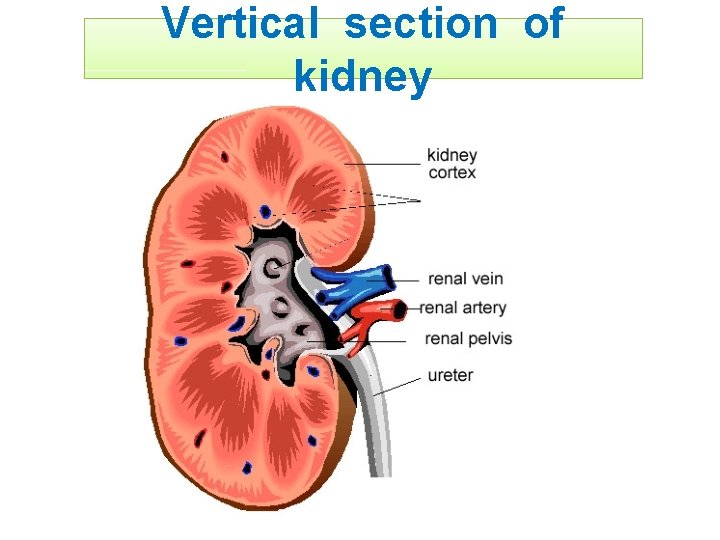
Vertical section of kidney
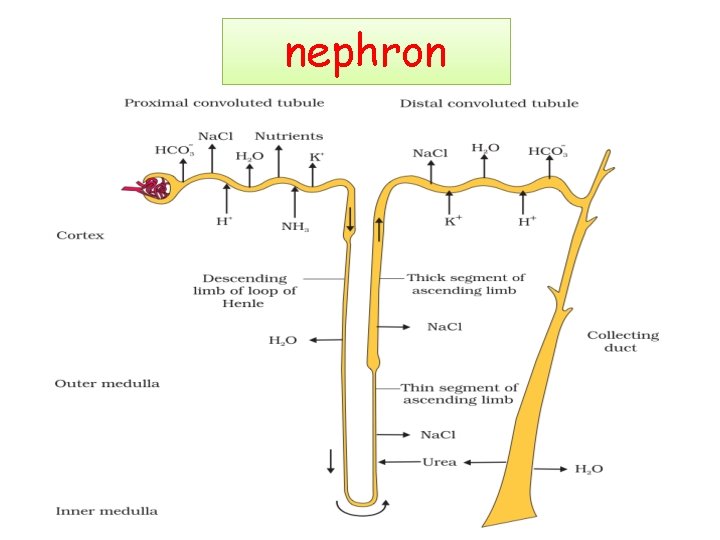
1. Kidneys are two bean shaped structure located at the back of the abdomen one on either side of vertebral column. 2. The basic filtration unit in the kidney is a cluster of thin walled blood capillaries called as nephron
nephron
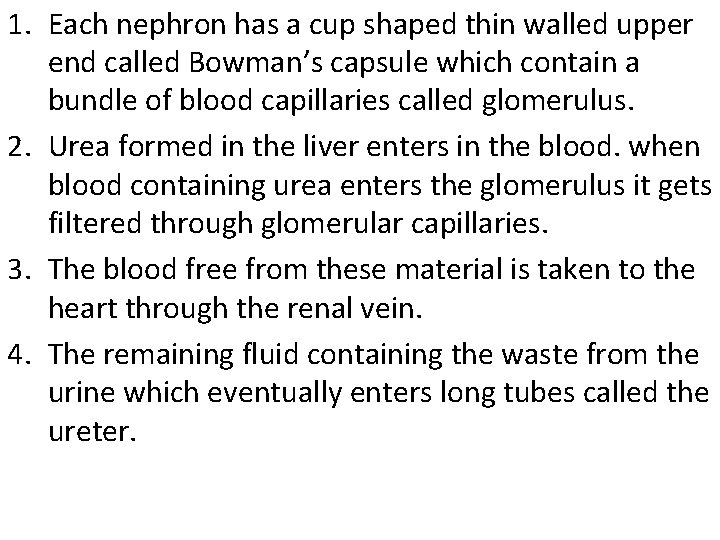
1. Each nephron has a cup shaped thin walled upper end called Bowman’s capsule which contain a bundle of blood capillaries called glomerulus. 2. Urea formed in the liver enters in the blood. when blood containing urea enters the glomerulus it gets filtered through glomerular capillaries. 3. The blood free from these material is taken to the heart through the renal vein. 4. The remaining fluid containing the waste from the urine which eventually enters long tubes called the ureter.
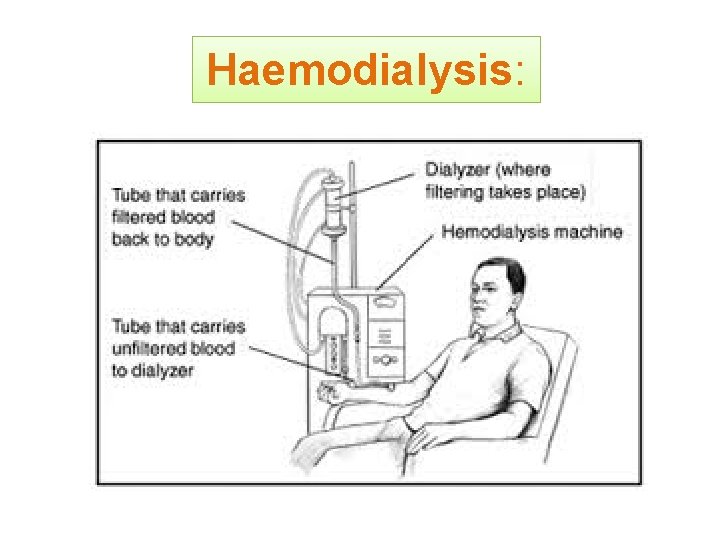
Haemodialysis:
a. Many factors like injury, infection or restricted blood flow to kidney reduce the activity of kidneys. b. This leads to accumulation of poisonous waste in the body which may lead to death. c. In case of kidney failure an artificial device used to remove the nitrogenous waste product from the blood this process called dialysis. d. At one time 500 ml blood is passed through the dialyzing machine. e. The purified blood is pumped back into the body of the patient.
RAYAT SHIKSHAN SANSTHA, SATARA RAIGAD REGION, KAMOTHE, PANVEL Thank You ÑÑÑ