
Rayat Shikshan Sanstha K k Ghule Vidyalaya Manjari

- Slides: 12
Rayat Shikshan Sanstha K. k. Ghule Vidyalaya, Manjari
Presentation BY Wagh P. N. M. Sc. B. Ed.
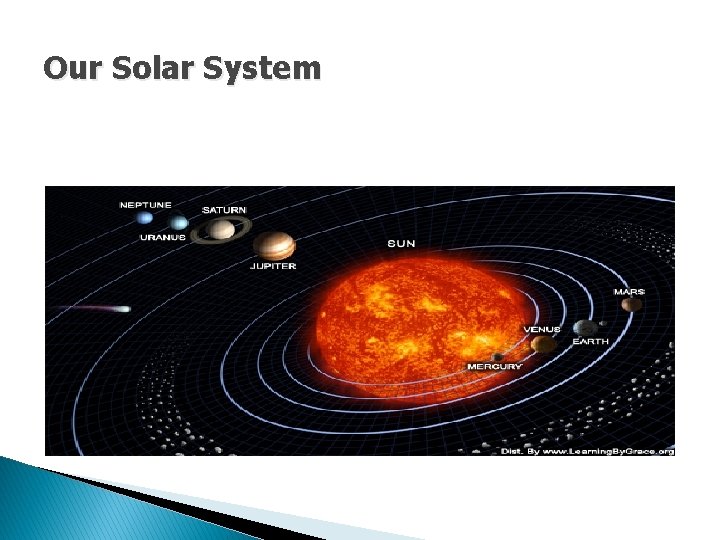
Our Solar System
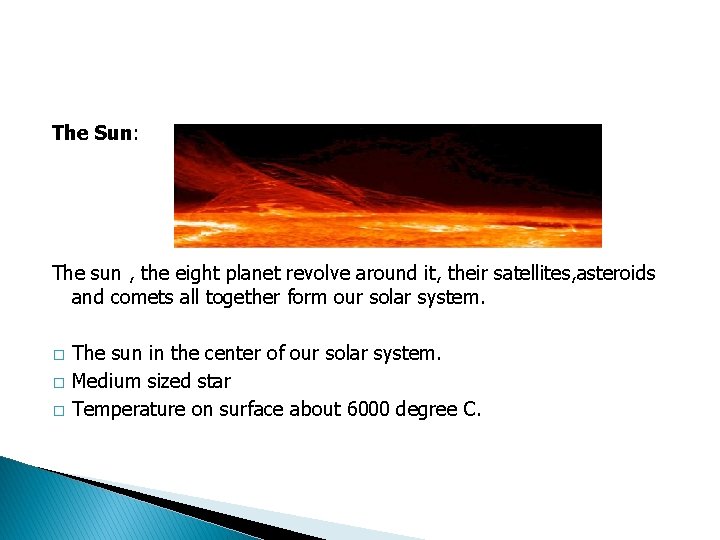
The Sun: The sun , the eight planet revolve around it, their satellites, asteroids and comets all together form our solar system. � � � The sun in the center of our solar system. Medium sized star Temperature on surface about 6000 degree C.
The Planets: � Mercury , Venus , Earth, Mars, Jupiter, Saturn, Uranus, Neptune are eight planets revolve around the sun. � Time taken by planet to go once around the sun is called its period of revolution.
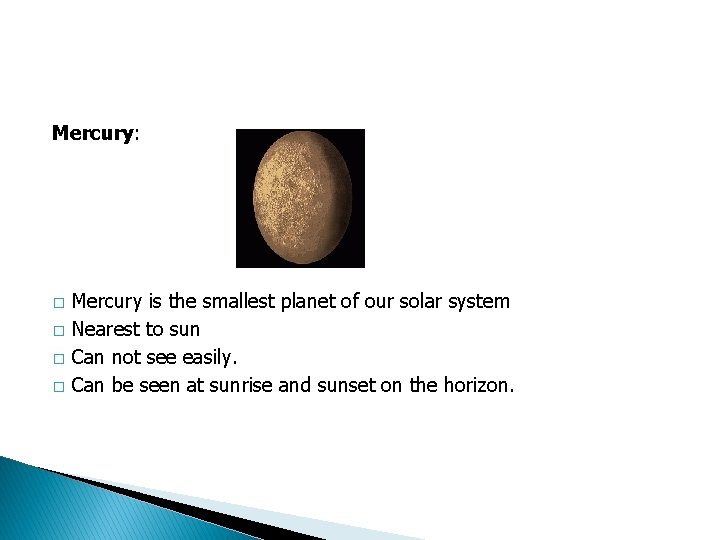
Mercury: � � Mercury is the smallest planet of our solar system Nearest to sun Can not see easily. Can be seen at sunrise and sunset on the horizon.
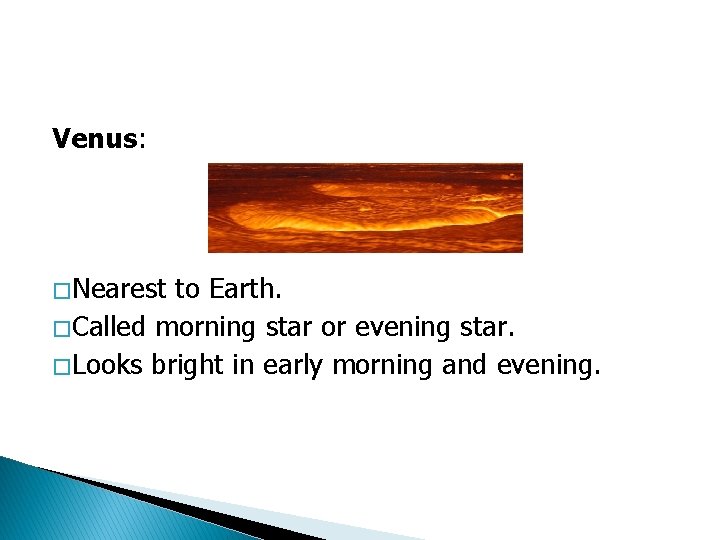
Venus: � Nearest to Earth. � Called morning star or evening star. � Looks bright in early morning and evening.
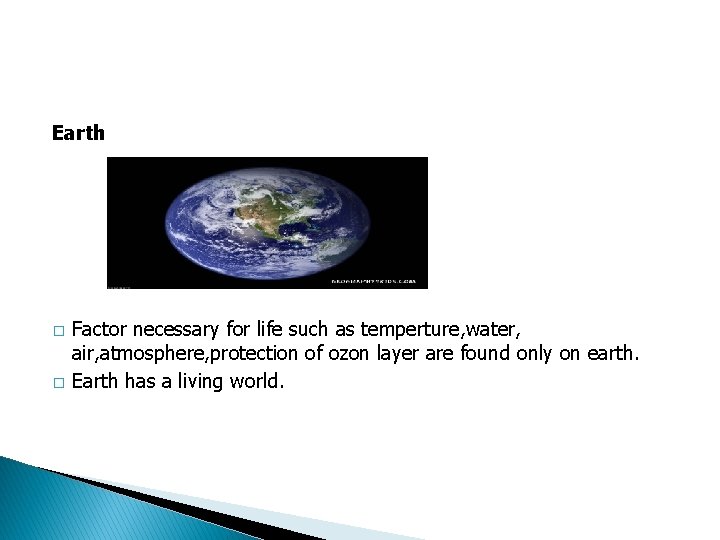
Earth � � Factor necessary for life such as temperture, water, air, atmosphere, protection of ozon layer are found only on earth. Earth has a living world.
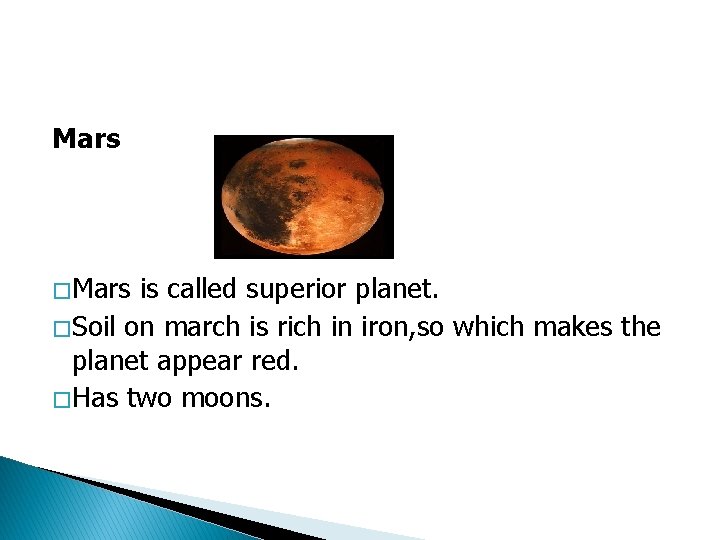
Mars � Mars is called superior planet. � Soil on march is rich in iron, so which makes the planet appear red. � Has two moons.
Jupiter � � � Larget planet Rotates very fast. Complete one turn around itself in just 10 hours. Saturn � � � Has rings around it. Density less than water. Can not seen by unaided eyes.
� � � Uranus and neptune Outer most planet of solar system. Can not see without telescope. Rotates east to west. Axis of rotation inclined at very large angle.
Thank you.