
Ray Peeples MD Neuroradiology Neuropathology UNC Monthly Conference

- Slides: 24
Ray Peeples, MD Neuroradiology. Neuropathology UNC Monthly Conference
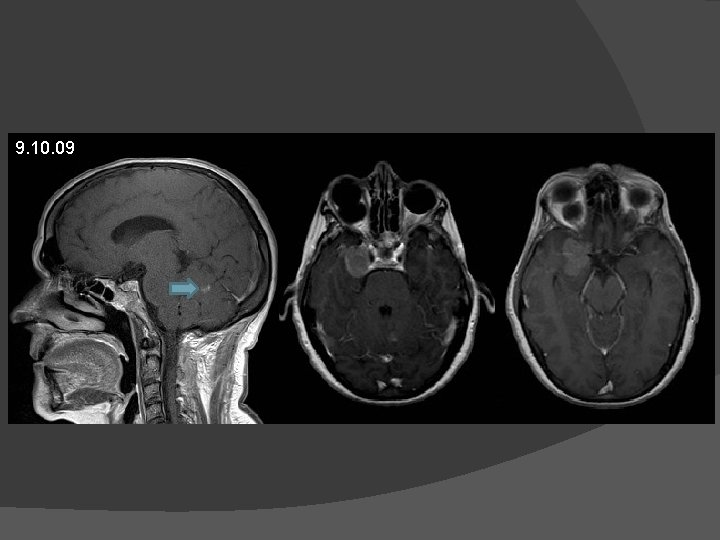
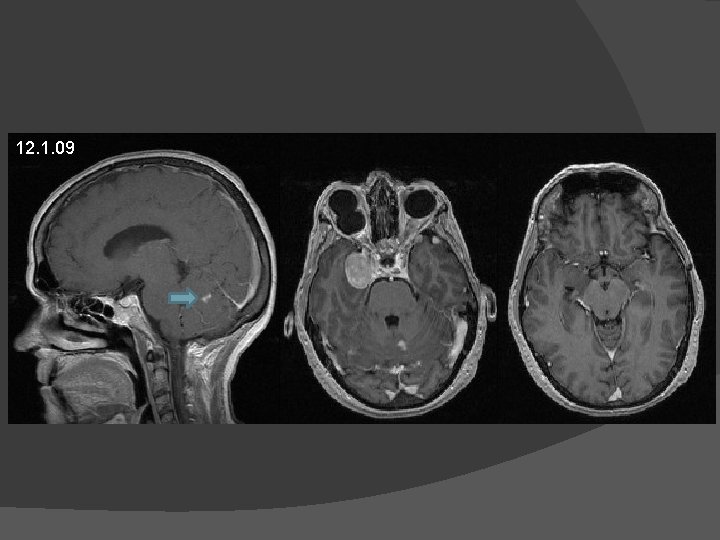
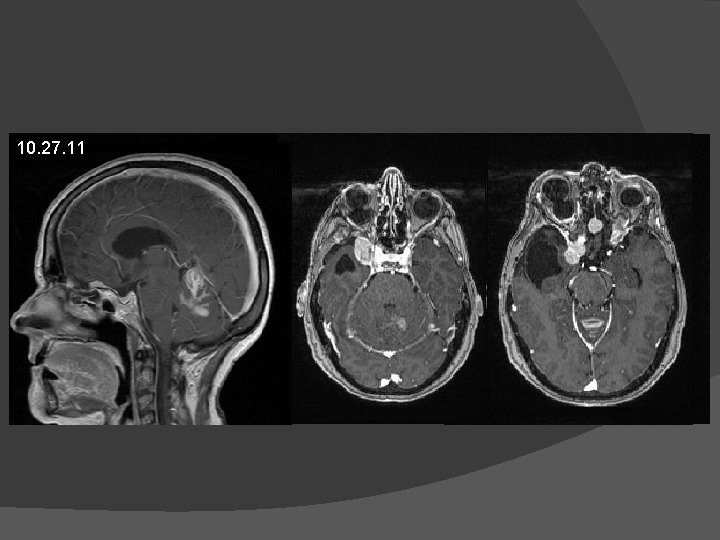
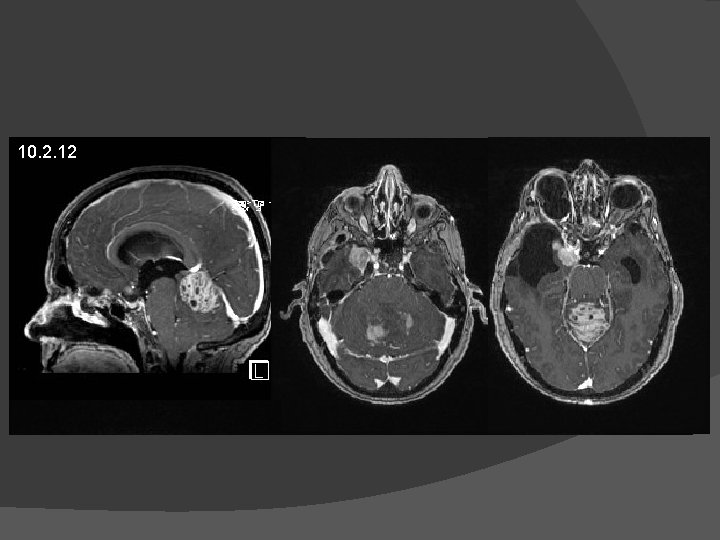
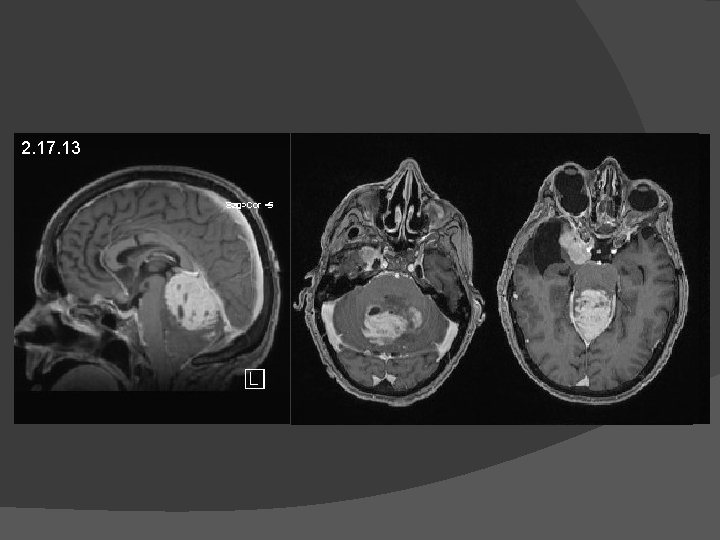
Case 1 � 50 y/o F with NF 1 � hx of meningioma debulking (2/10) and cervical neurofibroma removal (7/09) � MRI studies showed an enhancing superior cerebellar lesion growing over time and eventually causing obstructive hydrocephalus, the lesion was biopsied
9. 10. 09
9. 10. 09 12. 1. 09
10. 27. 11
10. 2. 12
2. 17. 13
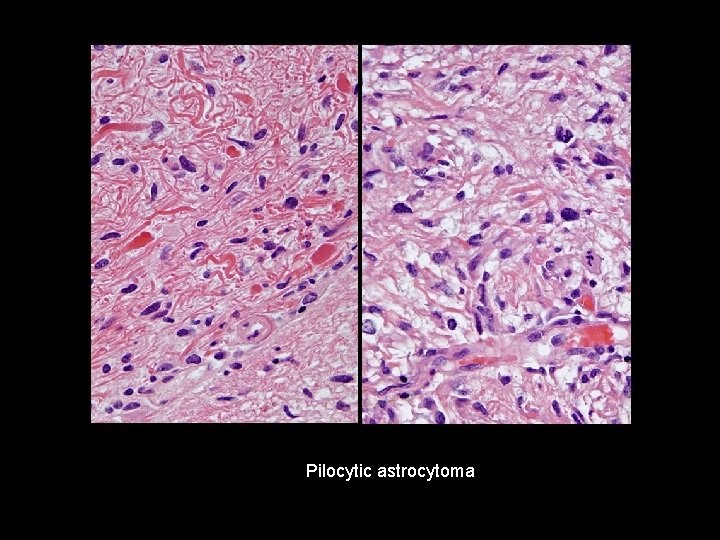
Pilocytic astrocytoma
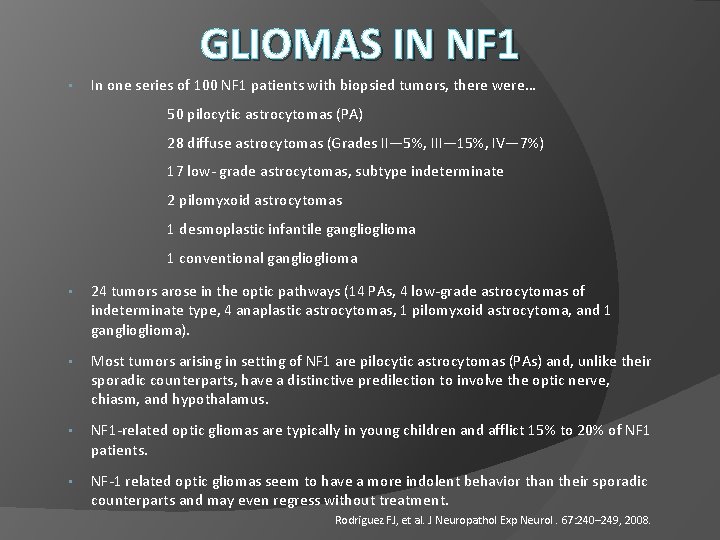
GLIOMAS IN NF 1 • In one series of 100 NF 1 patients with biopsied tumors, there were… 50 pilocytic astrocytomas (PA) 28 diffuse astrocytomas (Grades II— 5%, III— 15%, IV— 7%) 17 low- grade astrocytomas, subtype indeterminate 2 pilomyxoid astrocytomas 1 desmoplastic infantile ganglioma 1 conventional ganglioma • 24 tumors arose in the optic pathways (14 PAs, 4 low-grade astrocytomas of indeterminate type, 4 anaplastic astrocytomas, 1 pilomyxoid astrocytoma, and 1 ganglioma). • Most tumors arising in setting of NF 1 are pilocytic astrocytomas (PAs) and, unlike their sporadic counterparts, have a distinctive predilection to involve the optic nerve, chiasm, and hypothalamus. • NF 1 -related optic gliomas are typically in young children and afflict 15% to 20% of NF 1 patients. • NF-1 related optic gliomas seem to have a more indolent behavior than their sporadic counterparts and may even regress without treatment. Rodriguez FJ, et al. J Neuropathol Exp Neurol. 67: 240– 249, 2008.
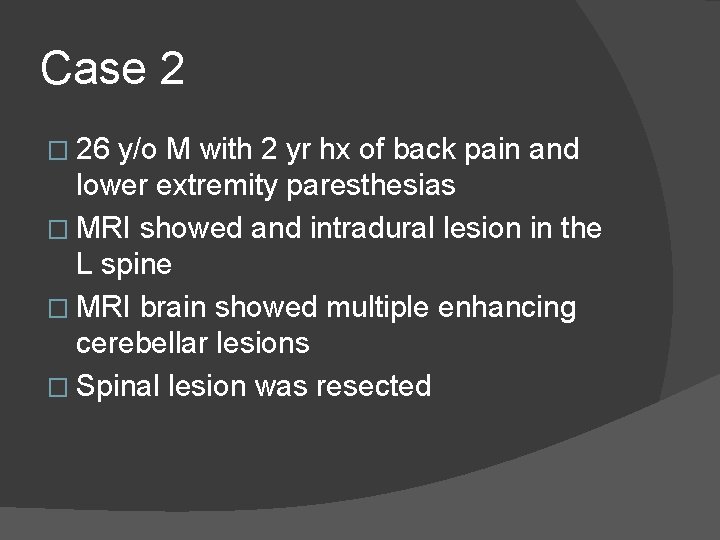
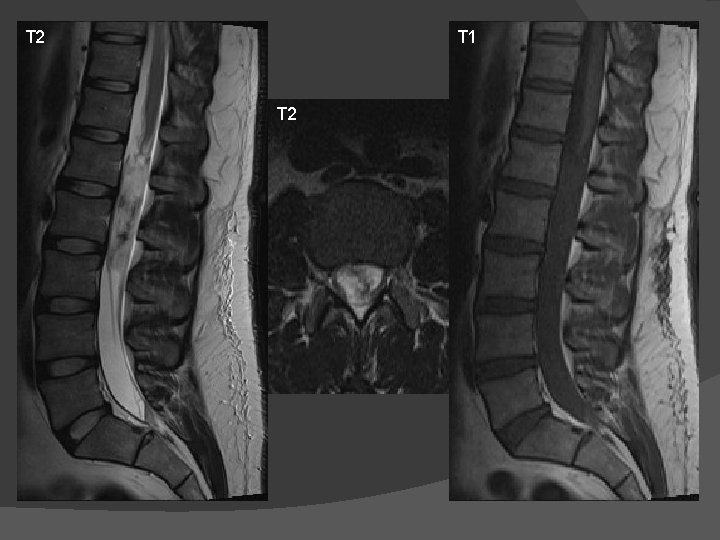
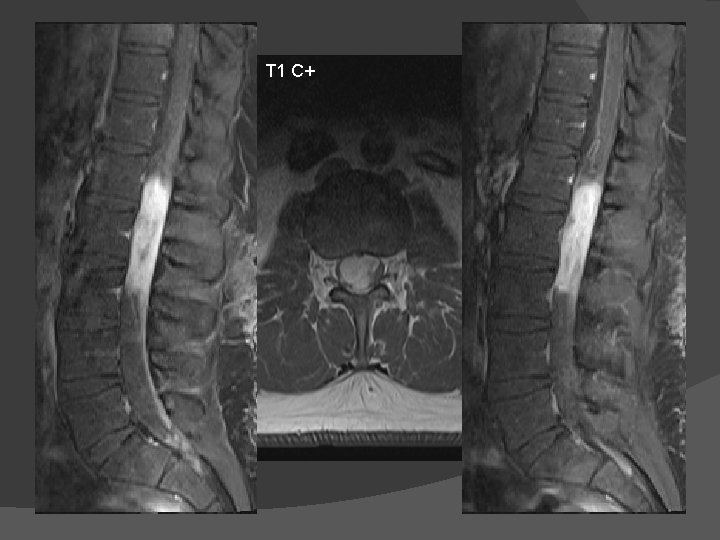
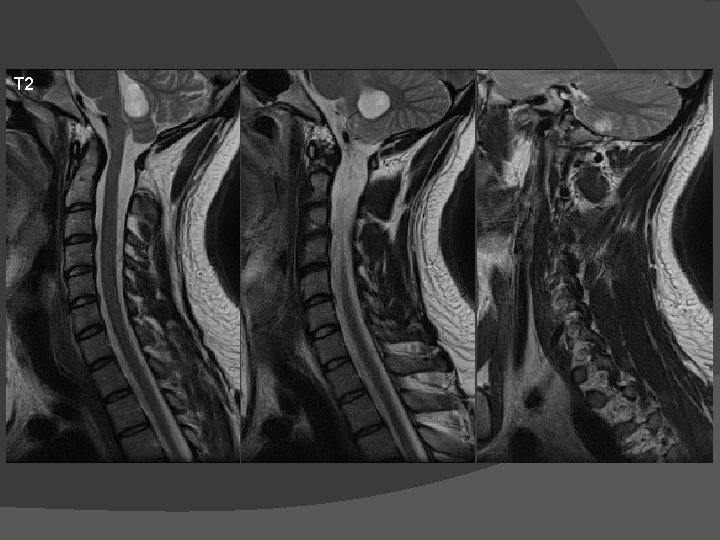
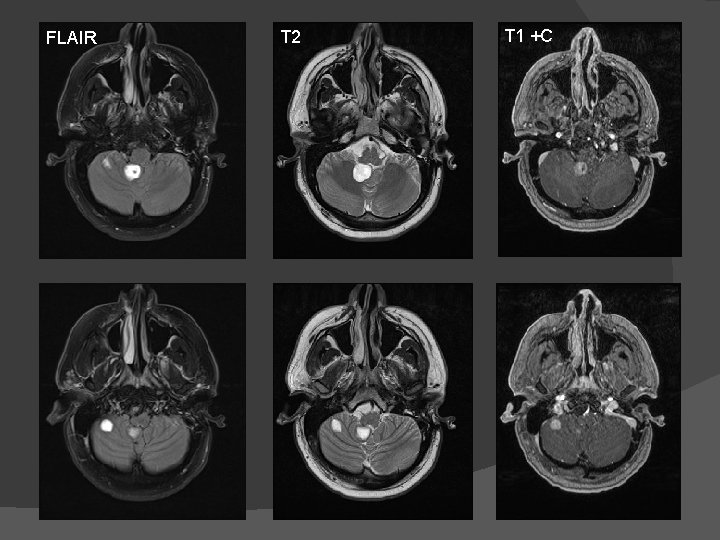
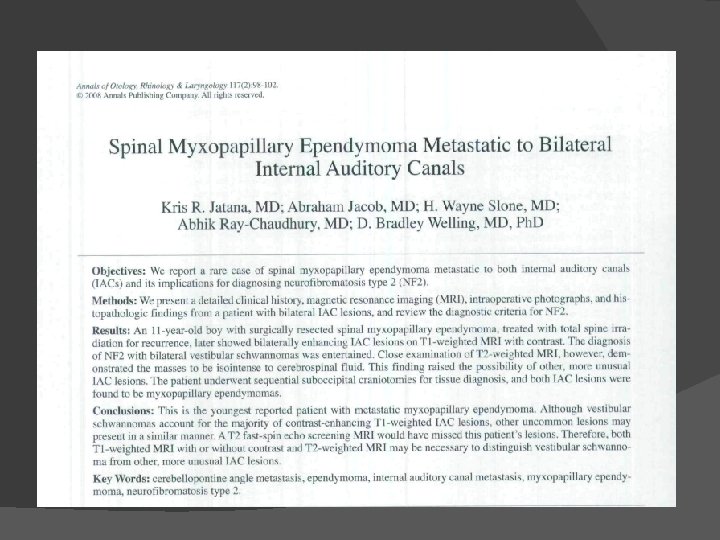
Case 2 � 26 y/o M with 2 yr hx of back pain and lower extremity paresthesias � MRI showed and intradural lesion in the L spine � MRI brain showed multiple enhancing cerebellar lesions � Spinal lesion was resected
T 2 T 1 T 2
T 1 C+
T 2
FLAIR T 2 T 1 +C
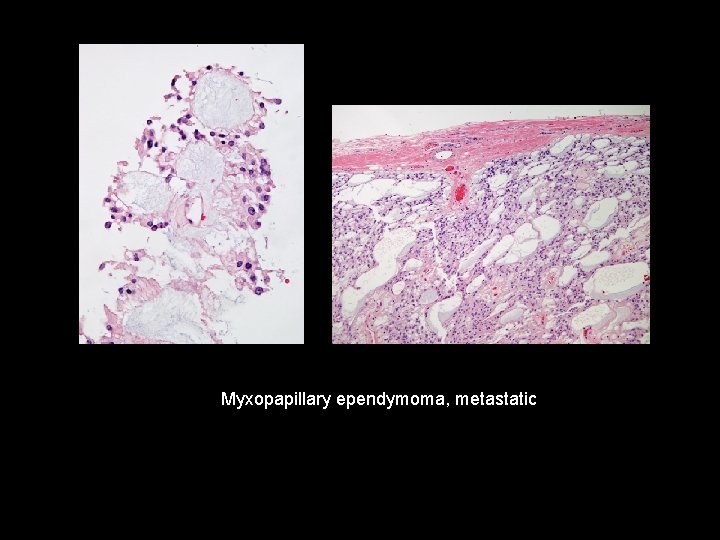
Myxopapillary ependymoma, metastatic
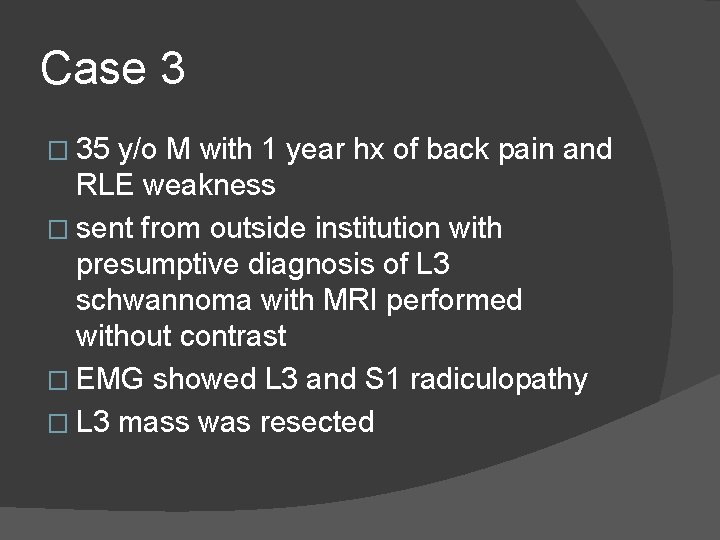
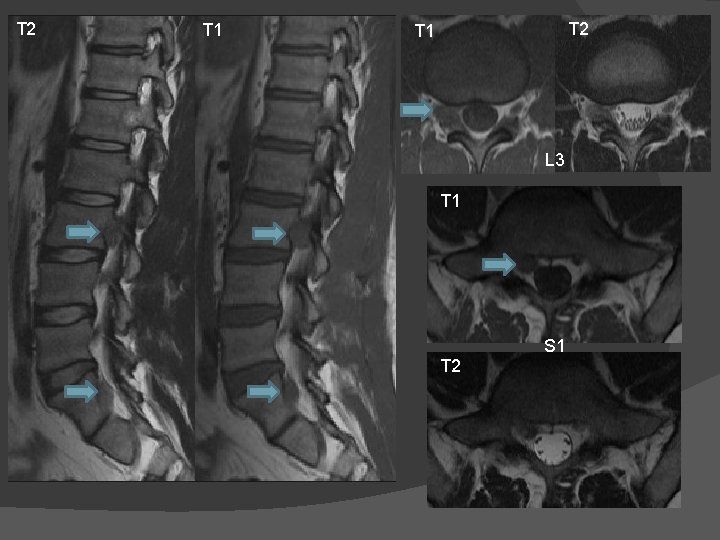
Case 3 � 35 y/o M with 1 year hx of back pain and RLE weakness � sent from outside institution with presumptive diagnosis of L 3 schwannoma with MRI performed without contrast � EMG showed L 3 and S 1 radiculopathy � L 3 mass was resected
T 2 T 1 L 3 T 1 T 2 S 1
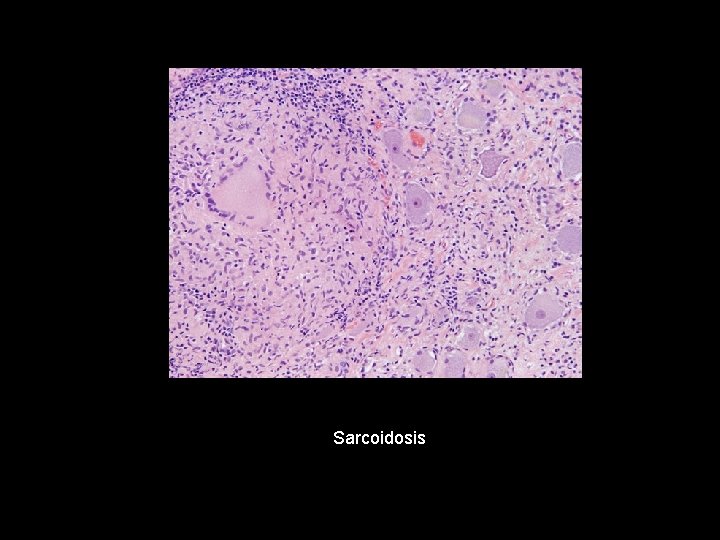
Sarcoidosis
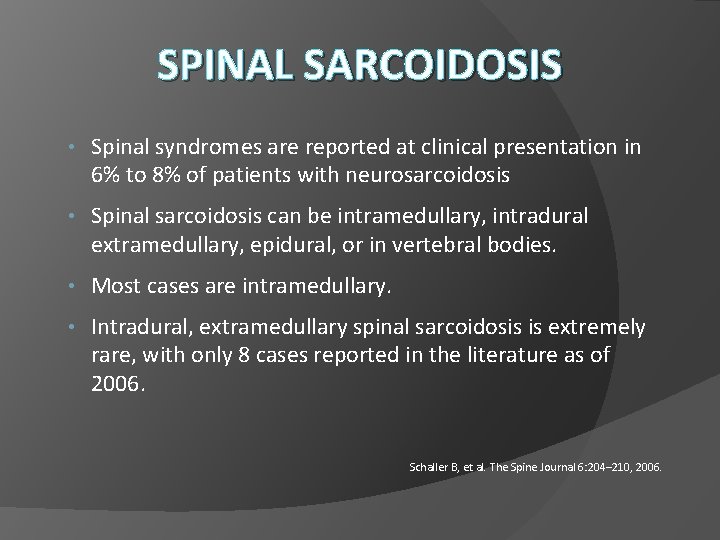
SPINAL SARCOIDOSIS • Spinal syndromes are reported at clinical presentation in 6% to 8% of patients with neurosarcoidosis • Spinal sarcoidosis can be intramedullary, intradural extramedullary, epidural, or in vertebral bodies. • Most cases are intramedullary. • Intradural, extramedullary spinal sarcoidosis is extremely rare, with only 8 cases reported in the literature as of 2006. Schaller B, et al. The Spine Journal 6: 204– 210, 2006.
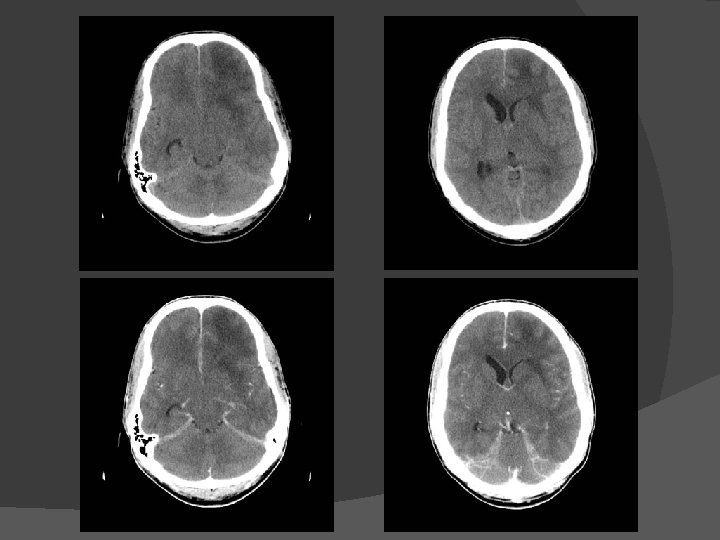
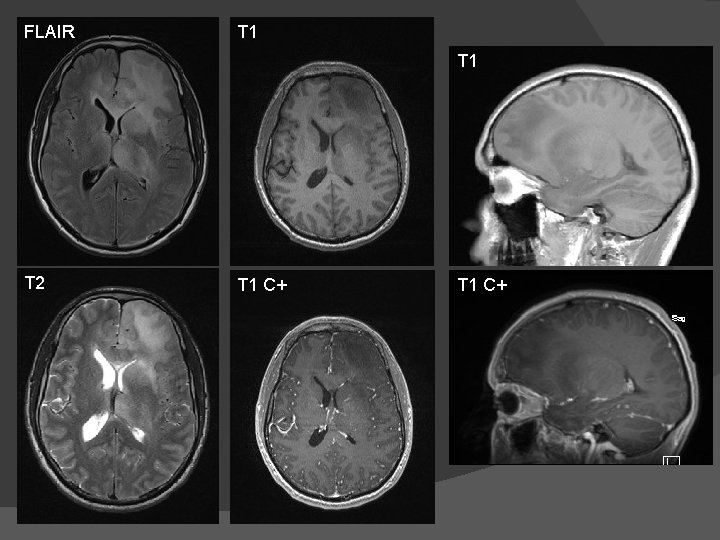
Case 4 � 26 y/o M who presented in 10/2012 with seizure � CT/MRI showed L frontal low density lesion in white matter with no enhancement, this lesion was biopsied
FLAIR T 1 T 2 T 1 C+
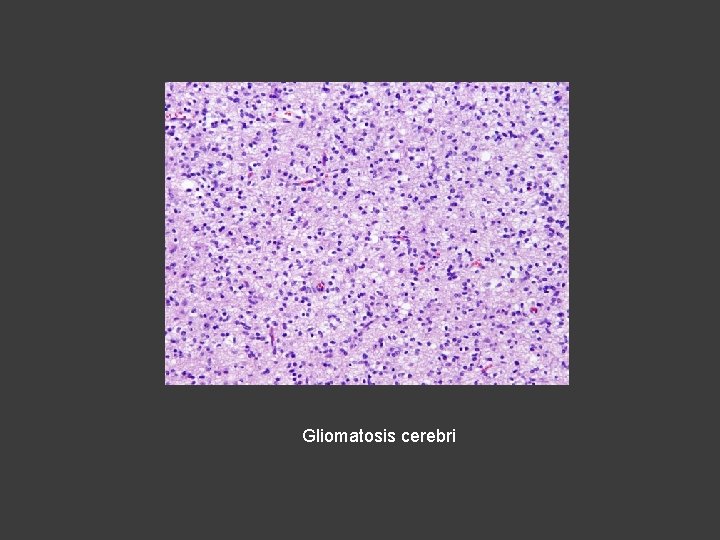
Gliomatosis cerebri