
RAY OPTICS P 47 Optics Unit 3 UNIT
- Slides: 29
RAY OPTICS P 47 – Optics: Unit 3
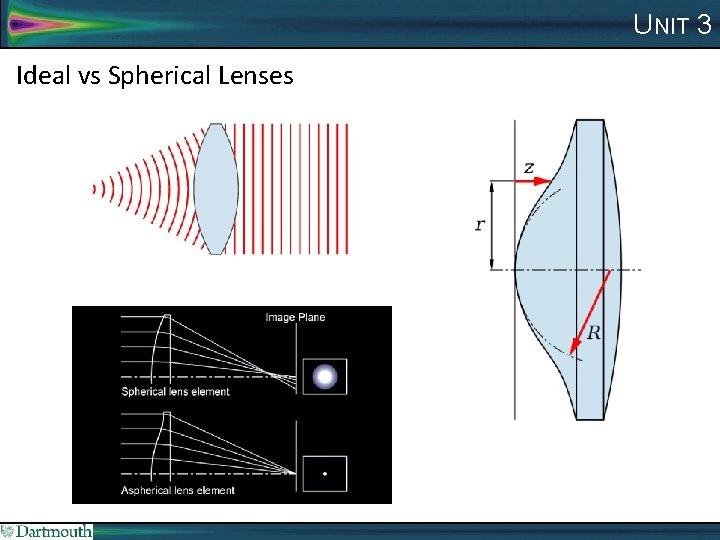
UNIT 3 Ideal vs Spherical Lenses
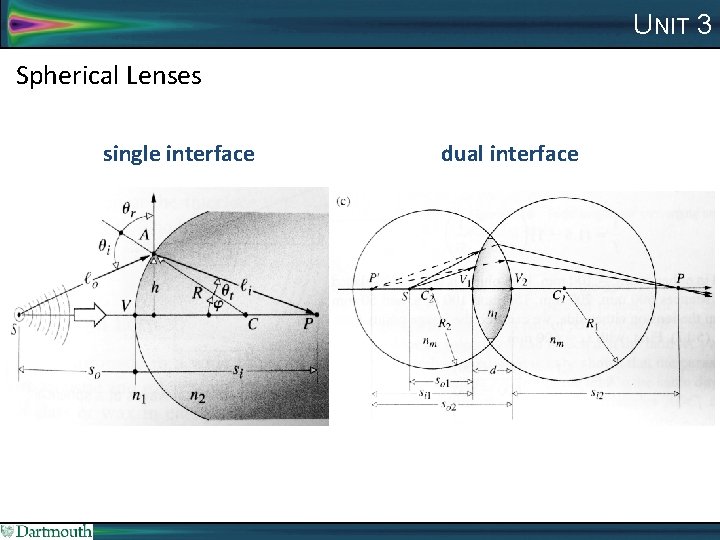
UNIT 3 Spherical Lenses single interface dual interface
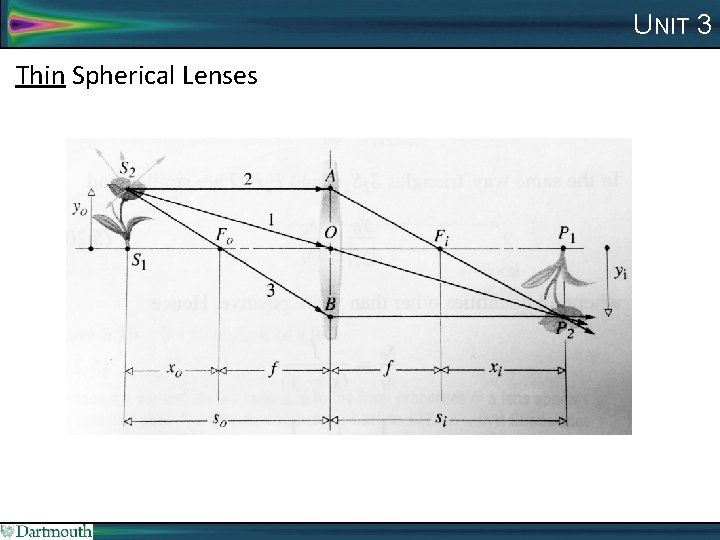
UNIT 3 Thin Spherical Lenses
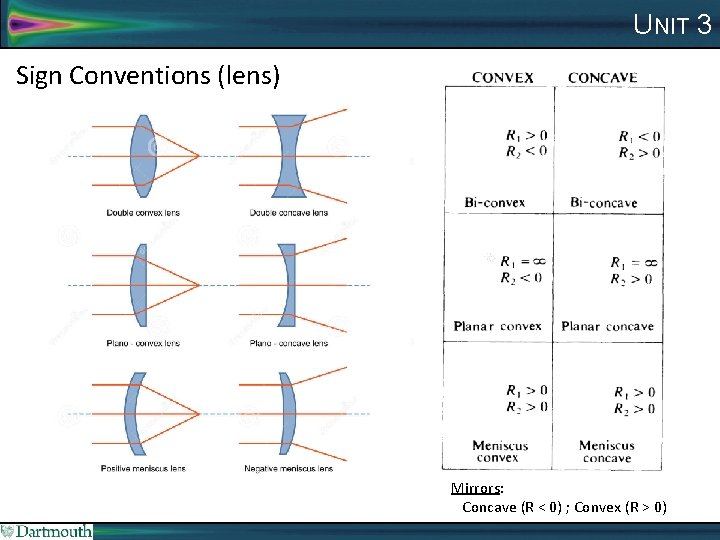
UNIT 3 Sign Conventions (lens) Mirrors: Concave (R < 0) ; Convex (R > 0)
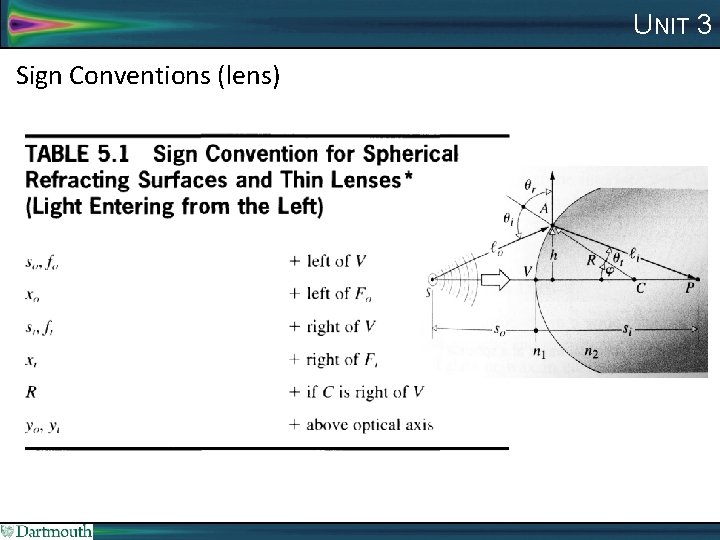
UNIT 3 Sign Conventions (lens)
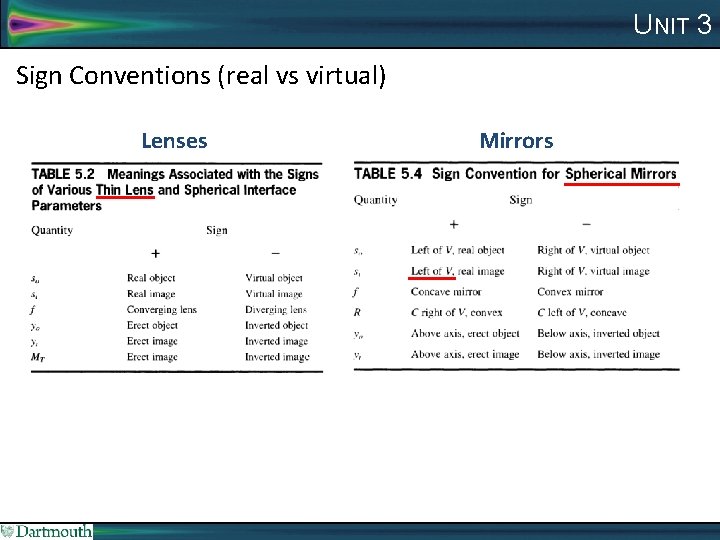
UNIT 3 Sign Conventions (real vs virtual) Lenses Mirrors
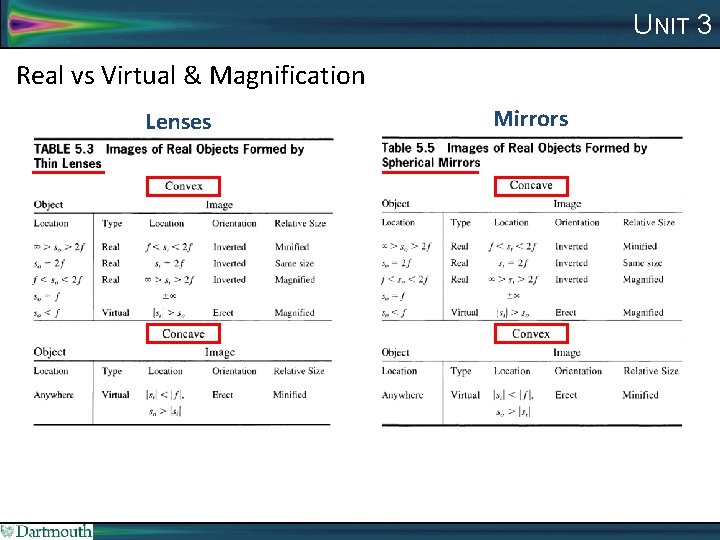
UNIT 3 Real vs Virtual & Magnification Lenses Mirrors
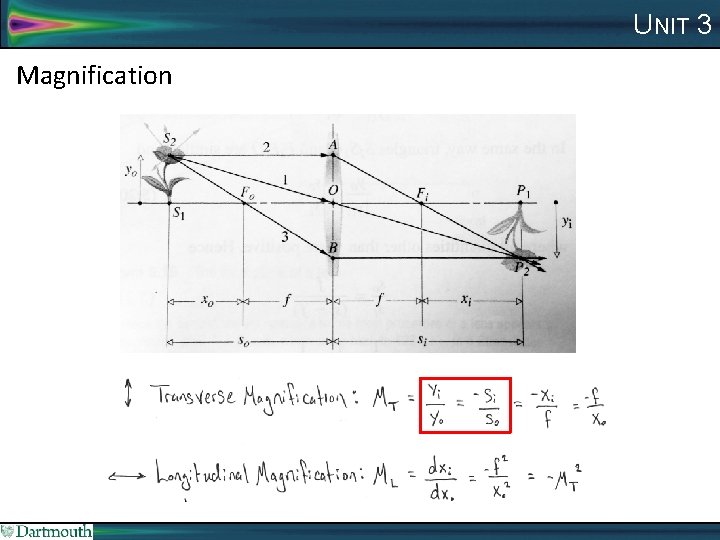
UNIT 3 Magnification
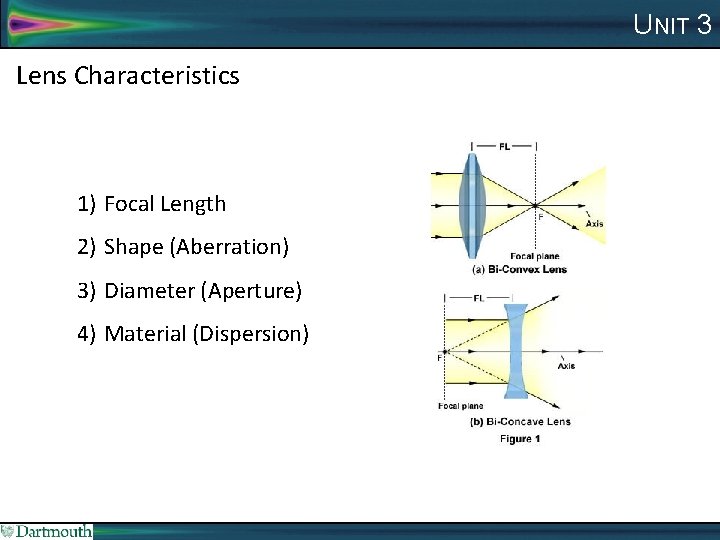
UNIT 3 Lens Characteristics 1) Focal Length 2) Shape (Aberration) 3) Diameter (Aperture) 4) Material (Dispersion)
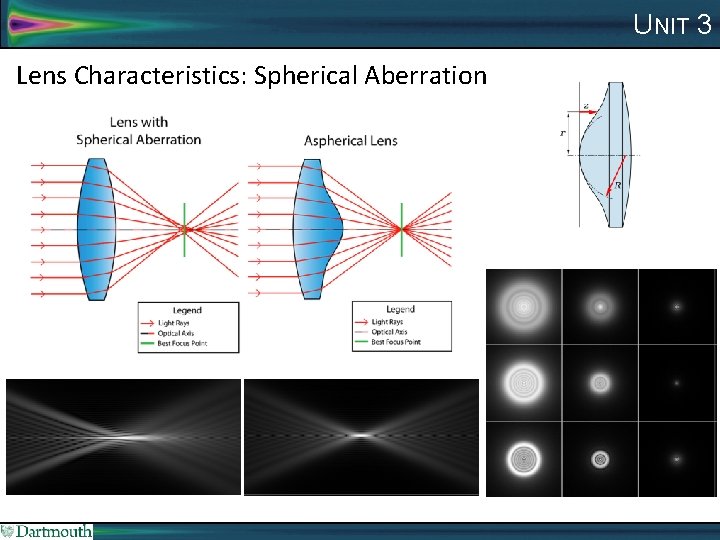
UNIT 3 Lens Characteristics: Spherical Aberration
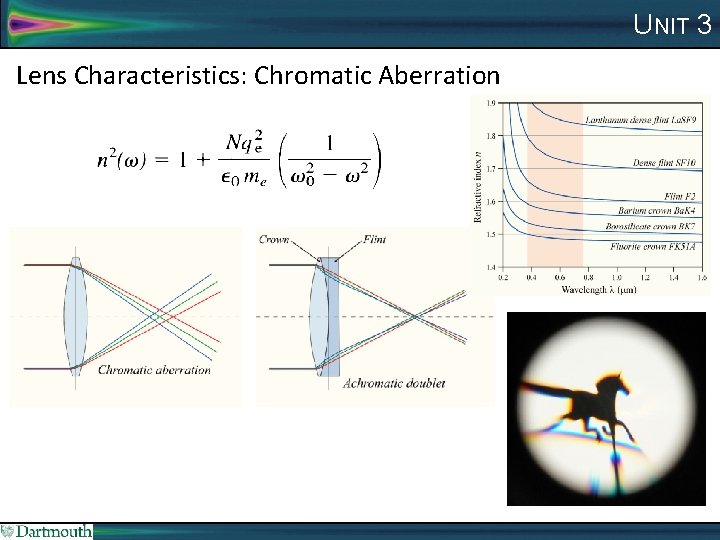
UNIT 3 Lens Characteristics: Chromatic Aberration
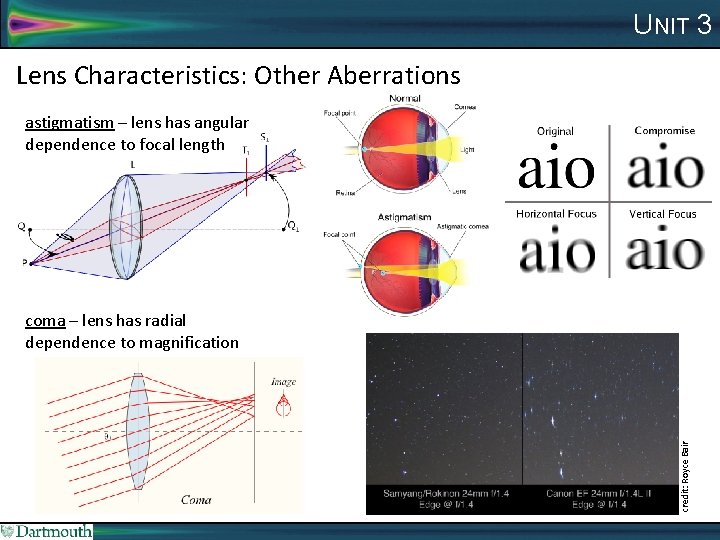
UNIT 3 Lens Characteristics: Other Aberrations astigmatism – lens has angular dependence to focal length credit: Royce Bair coma – lens has radial dependence to magnification
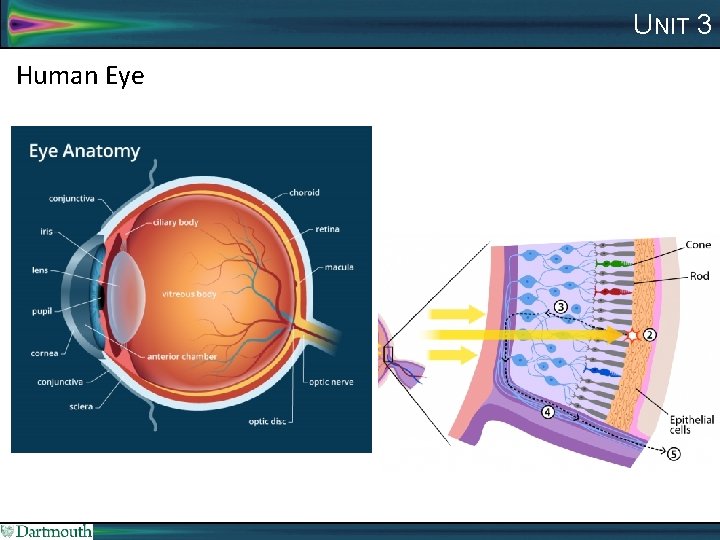
UNIT 3 Human Eye
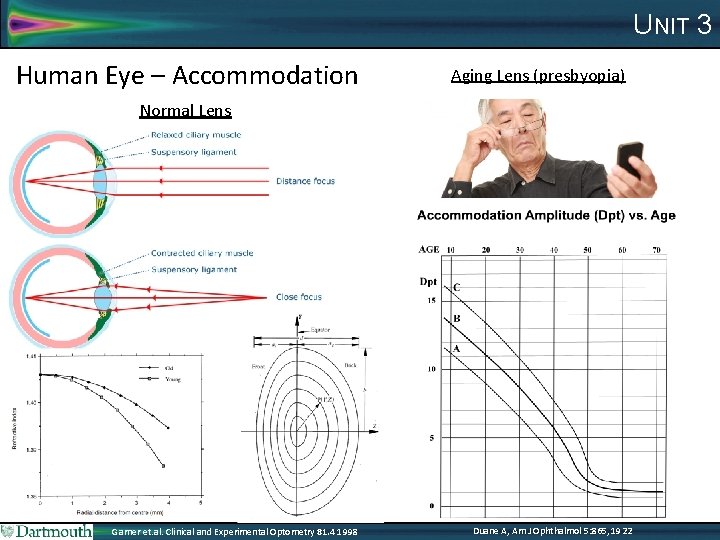
UNIT 3 Human Eye – Accommodation Aging Lens (presbyopia) Normal Lens Garner et. al. Clinical and Experimental Optometry 81. 4 1998 Duane A, Am J Ophthalmol 5: 865, 1922
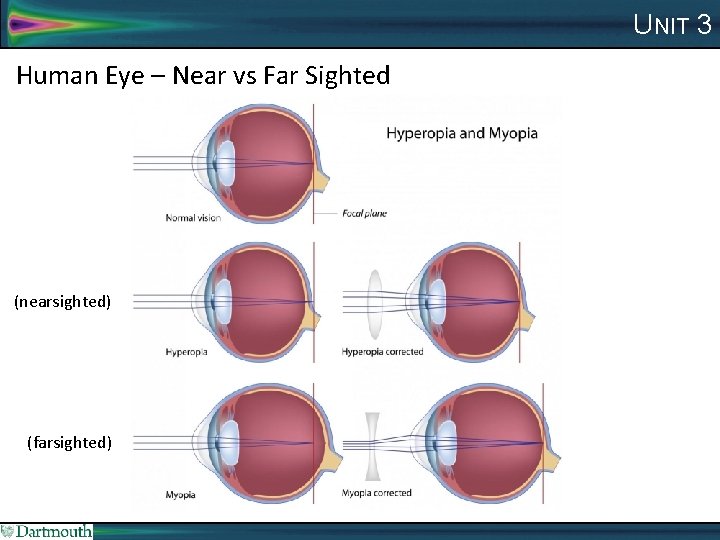
UNIT 3 Human Eye – Near vs Far Sighted (nearsighted) (farsighted)
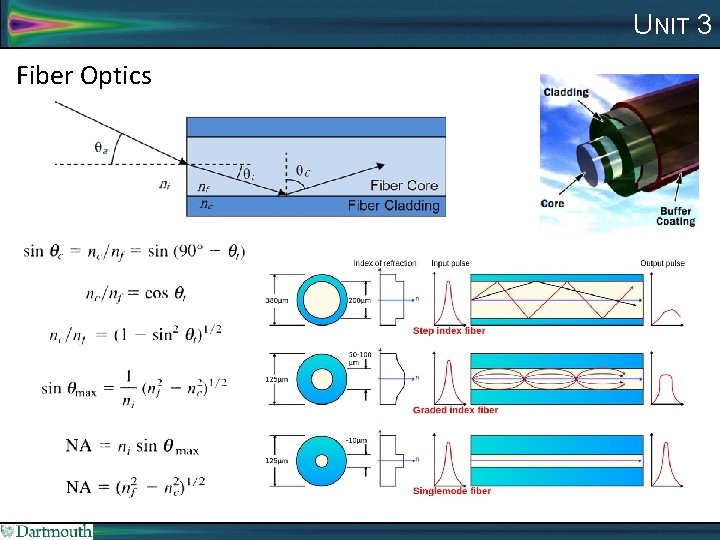
UNIT 3 Fiber Optics
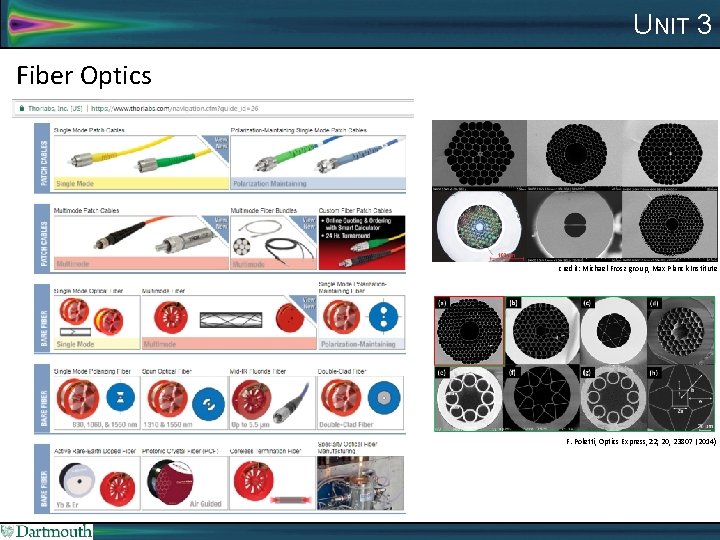
UNIT 3 Fiber Optics credit: Michael Frosz group, Max Planck Institute F. Poletti, Optics Express, 22, 20, 23807 (2014)
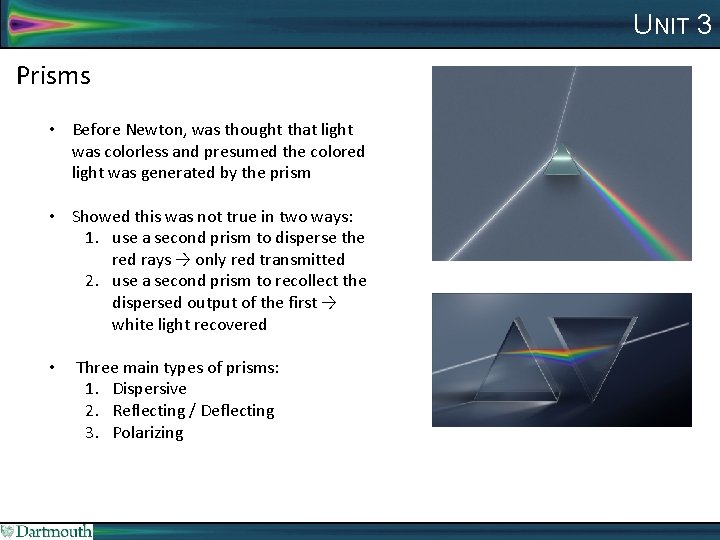
UNIT 3 Prisms • Before Newton, was thought that light was colorless and presumed the colored light was generated by the prism • Showed this was not true in two ways: 1. use a second prism to disperse the red rays → only red transmitted 2. use a second prism to recollect the dispersed output of the first → white light recovered • Three main types of prisms: 1. Dispersive 2. Reflecting / Deflecting 3. Polarizing
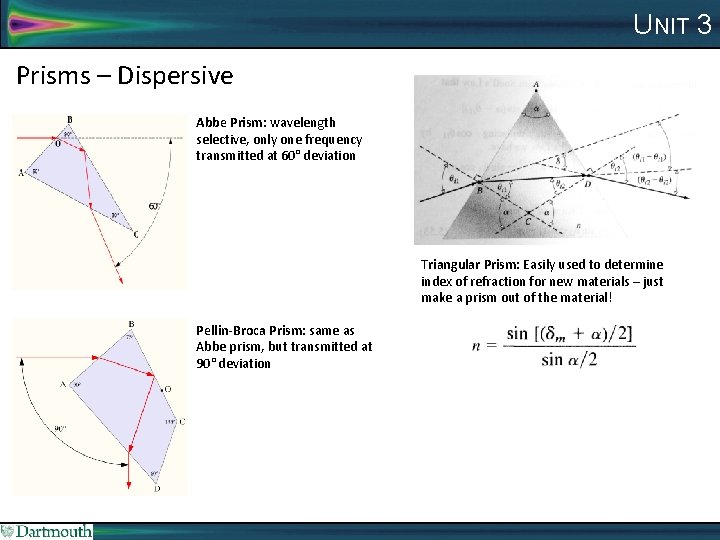
UNIT 3 Prisms – Dispersive Abbe Prism: wavelength selective, only one frequency transmitted at 60° deviation Triangular Prism: Easily used to determine index of refraction for new materials – just make a prism out of the material! Pellin-Broca Prism: same as Abbe prism, but transmitted at 90° deviation
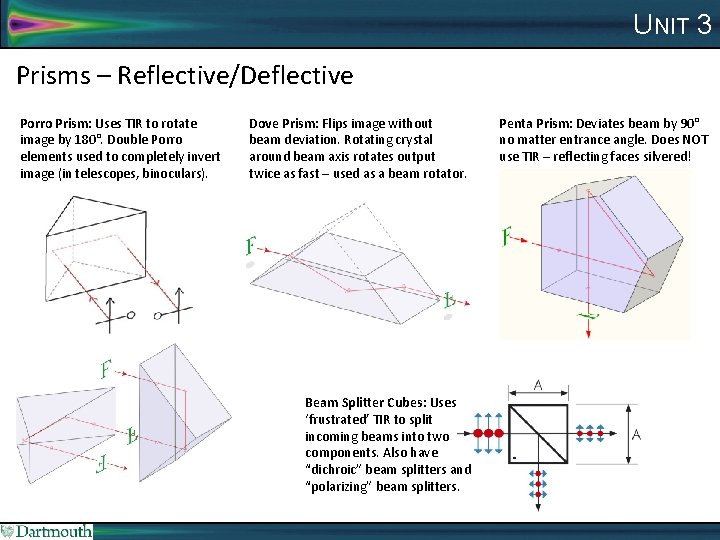
UNIT 3 Prisms – Reflective/Deflective Porro Prism: Uses TIR to rotate image by 180°. Double Porro elements used to completely invert image (in telescopes, binoculars). Dove Prism: Flips image without beam deviation. Rotating crystal around beam axis rotates output twice as fast – used as a beam rotator. Beam Splitter Cubes: Uses ‘frustrated’ TIR to split incoming beams into two components. Also have “dichroic” beam splitters and “polarizing” beam splitters. Penta Prism: Deviates beam by 90° no matter entrance angle. Does NOT use TIR – reflecting faces silvered!
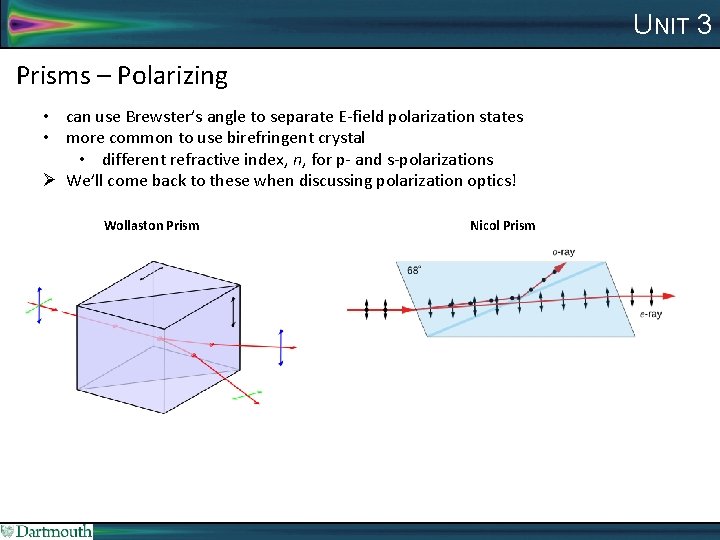
UNIT 3 Prisms – Polarizing • can use Brewster’s angle to separate E-field polarization states • more common to use birefringent crystal • different refractive index, n, for p- and s-polarizations Ø We’ll come back to these when discussing polarization optics! Wollaston Prism Nicol Prism
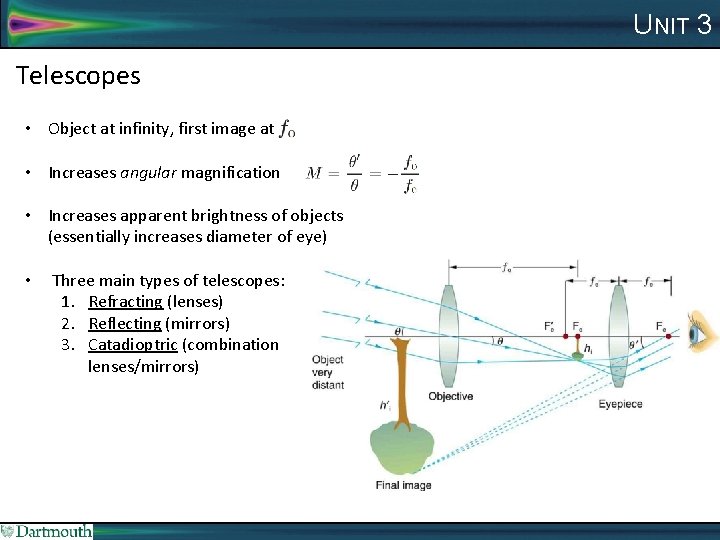
UNIT 3 Telescopes • Object at infinity, first image at • Increases angular magnification • Increases apparent brightness of objects (essentially increases diameter of eye) • Three main types of telescopes: 1. Refracting (lenses) 2. Reflecting (mirrors) 3. Catadioptric (combination lenses/mirrors)
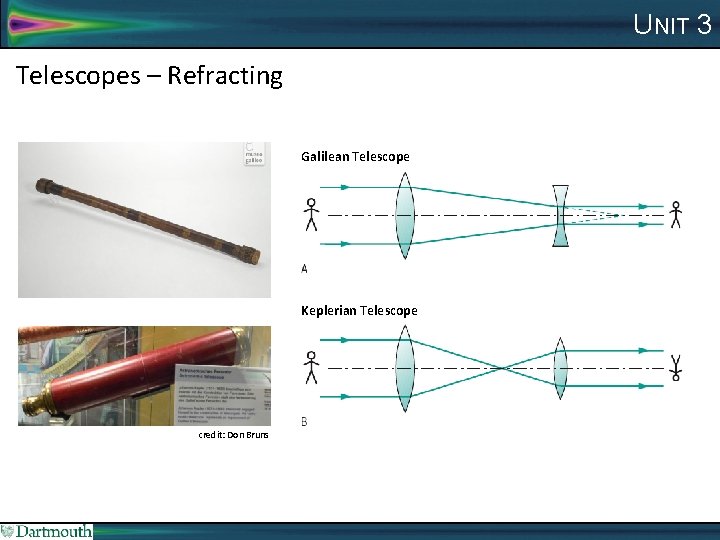
UNIT 3 Telescopes – Refracting Galilean Telescope Keplerian Telescope credit: Don Bruns
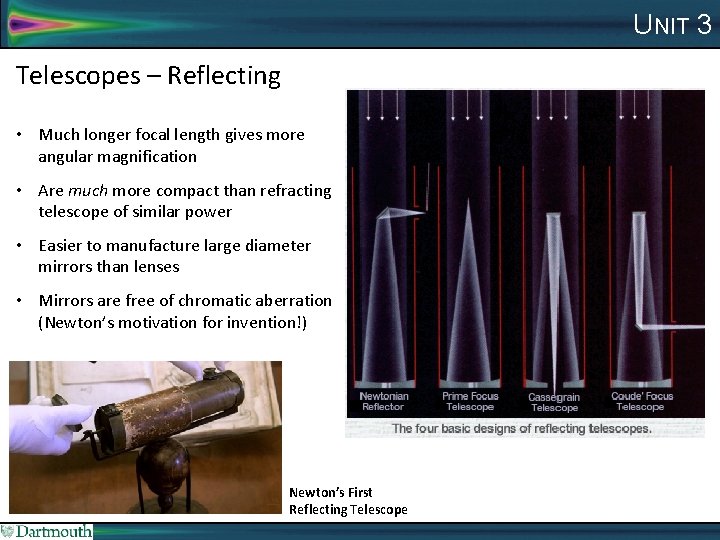
UNIT 3 Telescopes – Reflecting • Much longer focal length gives more angular magnification • Are much more compact than refracting telescope of similar power • Easier to manufacture large diameter mirrors than lenses • Mirrors are free of chromatic aberration (Newton’s motivation for invention!) Newton’s First Reflecting Telescope
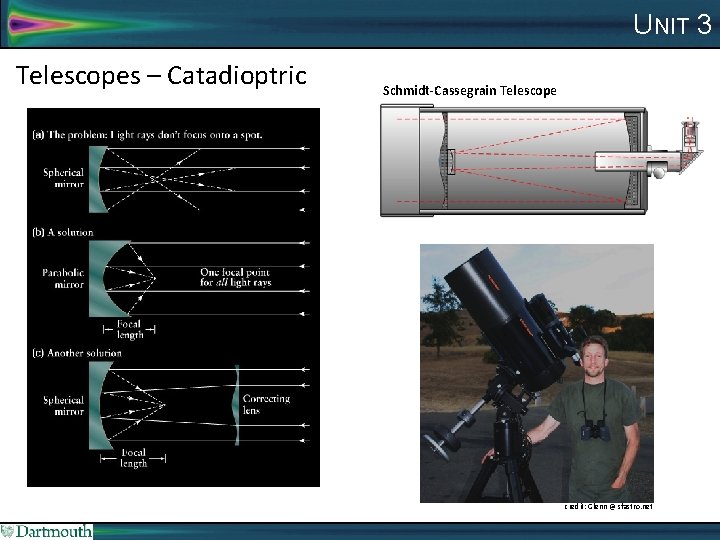
UNIT 3 Telescopes – Catadioptric Schmidt-Cassegrain Telescope credit: Glenn @ sfastro. net
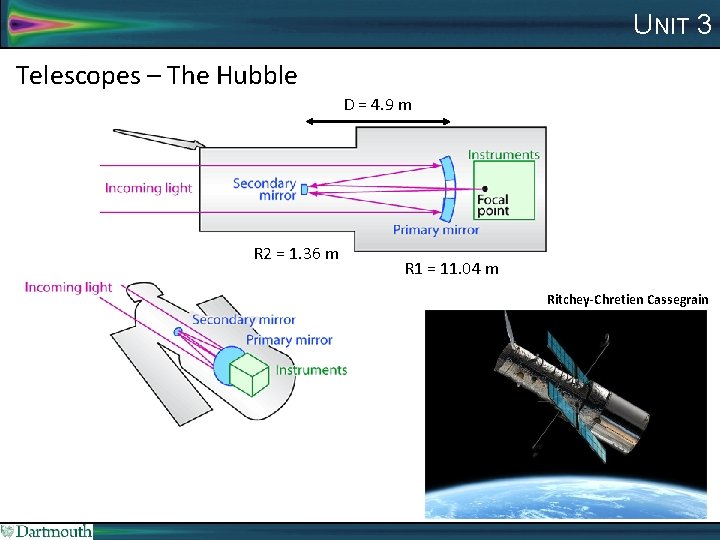
UNIT 3 Telescopes – The Hubble D = 4. 9 m R 2 = 1. 36 m R 1 = 11. 04 m Ritchey-Chretien Cassegrain
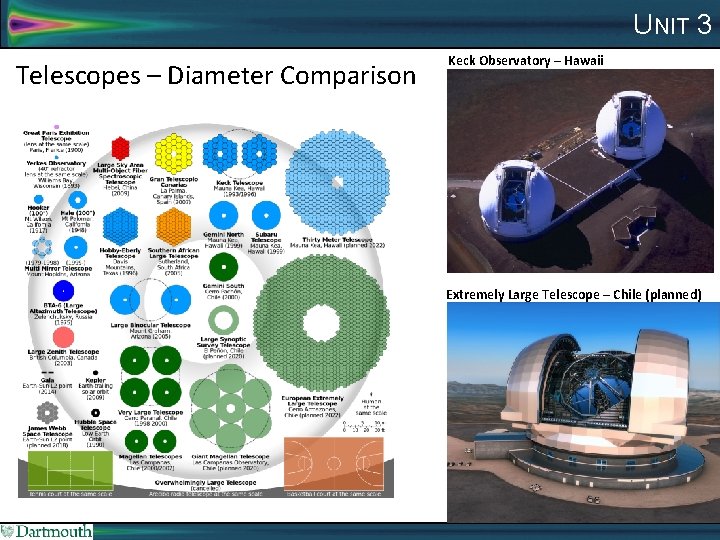
UNIT 3 Telescopes – Diameter Comparison Keck Observatory – Hawaii Extremely Large Telescope – Chile (planned)
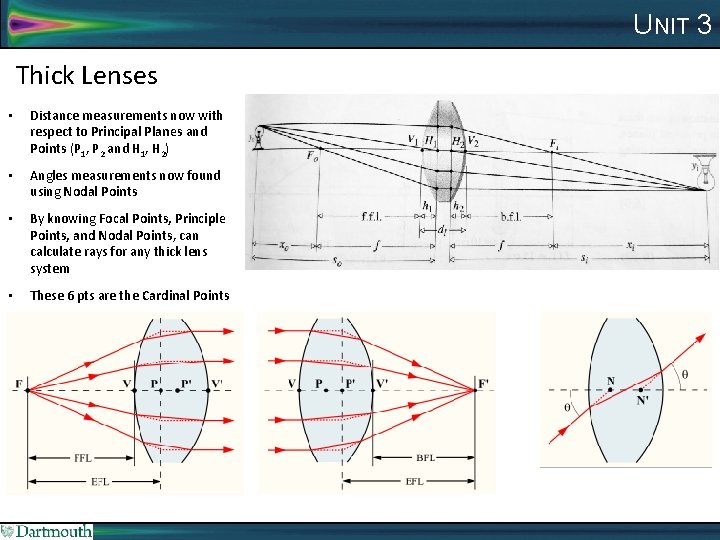
UNIT 3 Thick Lenses • Distance measurements now with respect to Principal Planes and Points (P 1, P 2 and H 1, H 2) • Angles measurements now found using Nodal Points • By knowing Focal Points, Principle Points, and Nodal Points, can calculate rays for any thick lens system • These 6 pts are the Cardinal Points