
Rational Use of Blood and Blood Components Best
Rational Use of Blood and Blood Components

Best Transfusion is “No Transfusion”
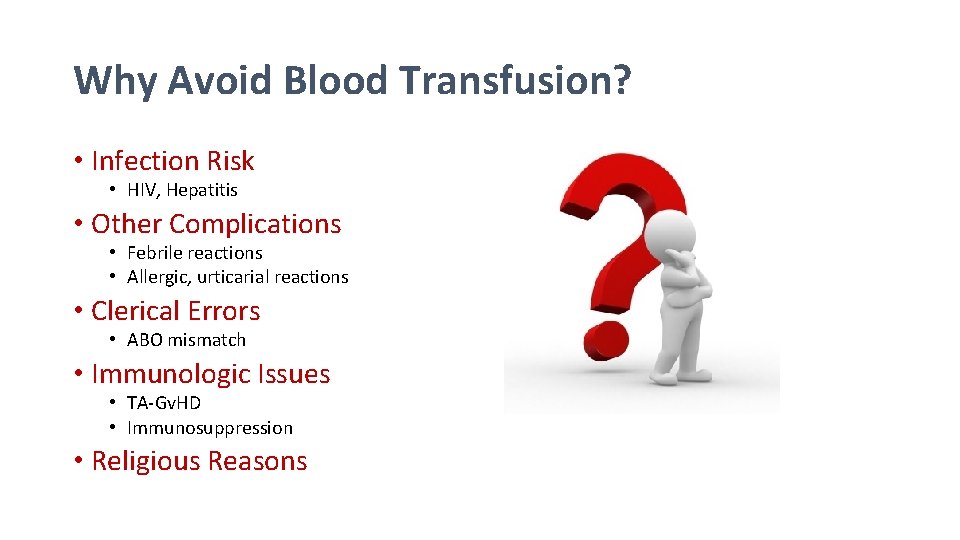
Why Avoid Blood Transfusion? • Infection Risk • HIV, Hepatitis • Other Complications • Febrile reactions • Allergic, urticarial reactions • Clerical Errors • ABO mismatch • Immunologic Issues • TA-Gv. HD • Immunosuppression • Religious Reasons
Misconceptions and Myths • Whole blood • “Fresh” Blood • Empirical Transfusion • Nutritional Anemia • Pre Surgical • Wound Healing • Enhancement of well being
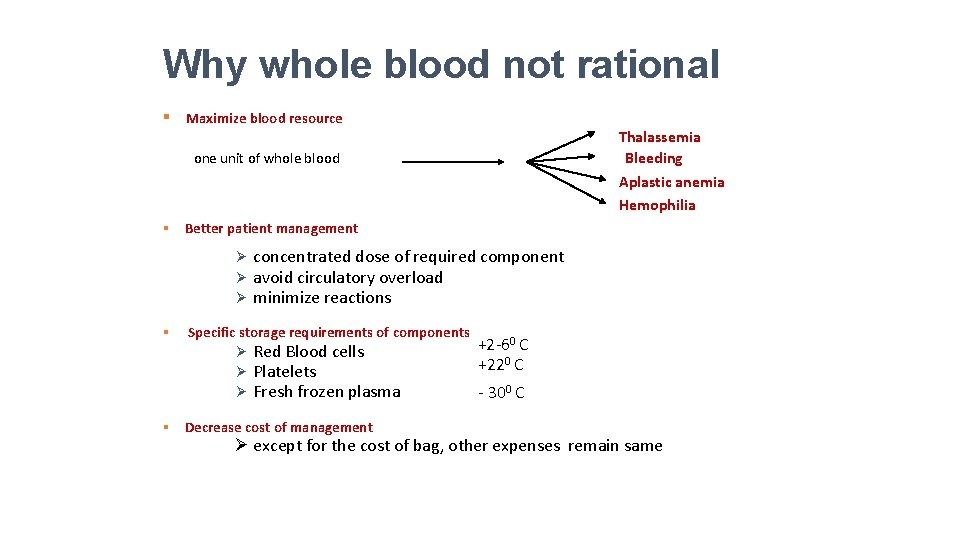
Why whole blood not rational § Maximize blood resource Thalassemia Bleeding one unit of whole blood Aplastic anemia Hemophilia § Better patient management Ø Ø Ø § concentrated dose of required component avoid circulatory overload minimize reactions Specific storage requirements of components Ø Red Blood cells Ø Platelets Ø Fresh frozen plasma § Decrease cost of management +2 -60 C +220 C - 300 C Ø except for the cost of bag, other expenses remain same
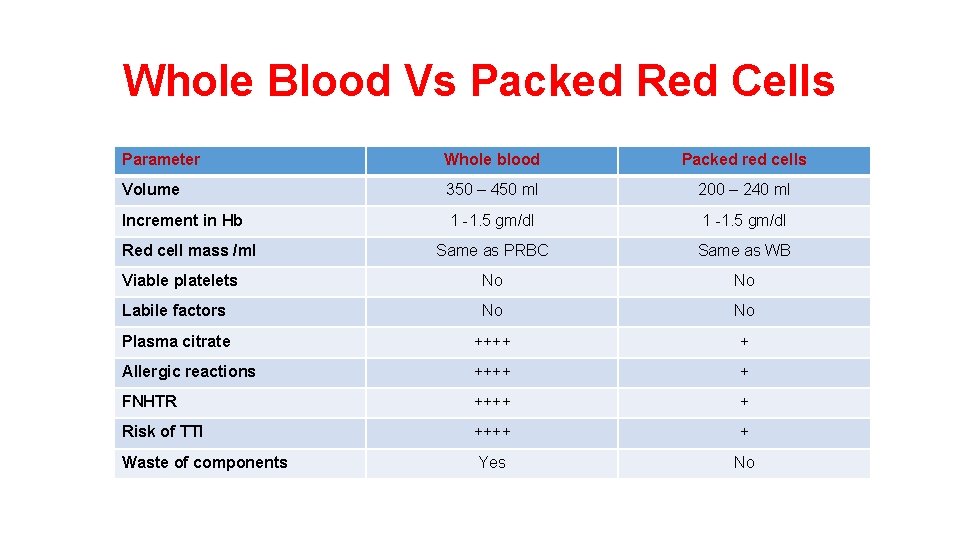
Whole Blood Vs Packed Red Cells Parameter Whole blood Packed red cells Volume 350 – 450 ml 200 – 240 ml Increment in Hb 1 -1. 5 gm/dl Same as PRBC Same as WB Viable platelets No No Labile factors No No Plasma citrate ++++ + Allergic reactions ++++ + FNHTR ++++ + Risk of TTI ++++ + Yes No Red cell mass /ml Waste of components
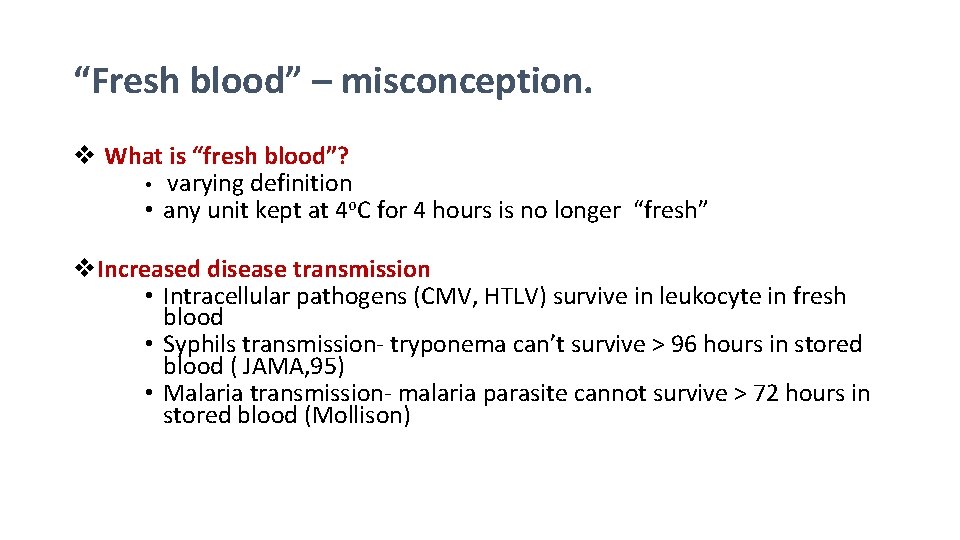
“Fresh blood” – misconception. v What is “fresh blood”? • varying definition • any unit kept at 4 o. C for 4 hours is no longer “fresh” v. Increased disease transmission • Intracellular pathogens (CMV, HTLV) survive in leukocyte in fresh blood • Syphils transmission- tryponema can’t survive > 96 hours in stored blood ( JAMA, 95) • Malaria transmission- malaria parasite cannot survive > 72 hours in stored blood (Mollison)
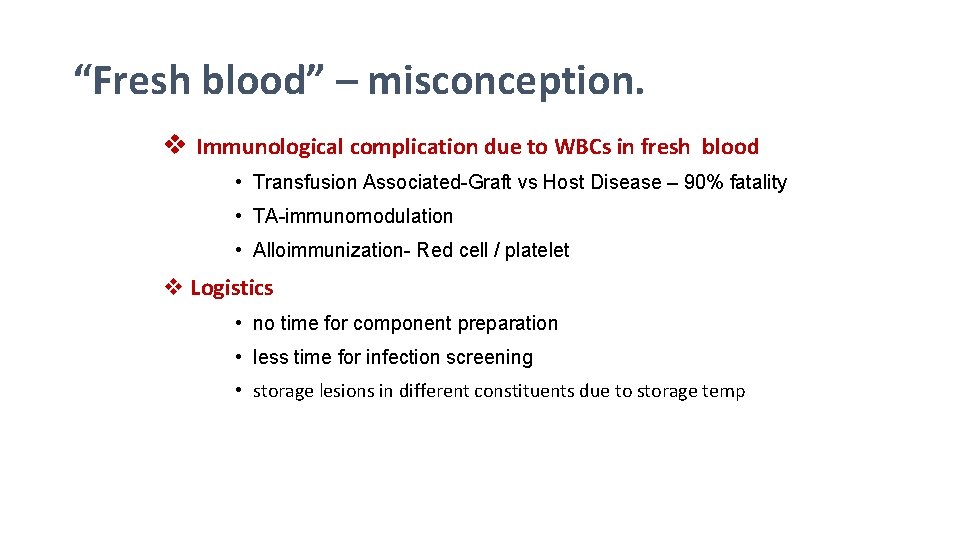
“Fresh blood” – misconception. v Immunological complication due to WBCs in fresh blood • Transfusion Associated-Graft vs Host Disease – 90% fatality • TA-immunomodulation • Alloimmunization- Red cell / platelet v Logistics • no time for component preparation • less time for infection screening • storage lesions in different constituents due to storage temp
Rational Use of Blood • Right product • Right dose • Right time • Right reasons
Answer 4 Qs before transfusion • Why to transfuse ? benefit > risk patients symptoms Vs lab levels prophylactic Vs therapeutic • What to transfuse ? whole blood NO components / fractions • How much to transfuse ? Single unit • How to transfuse ? NO use of filter rate of transfusion warming
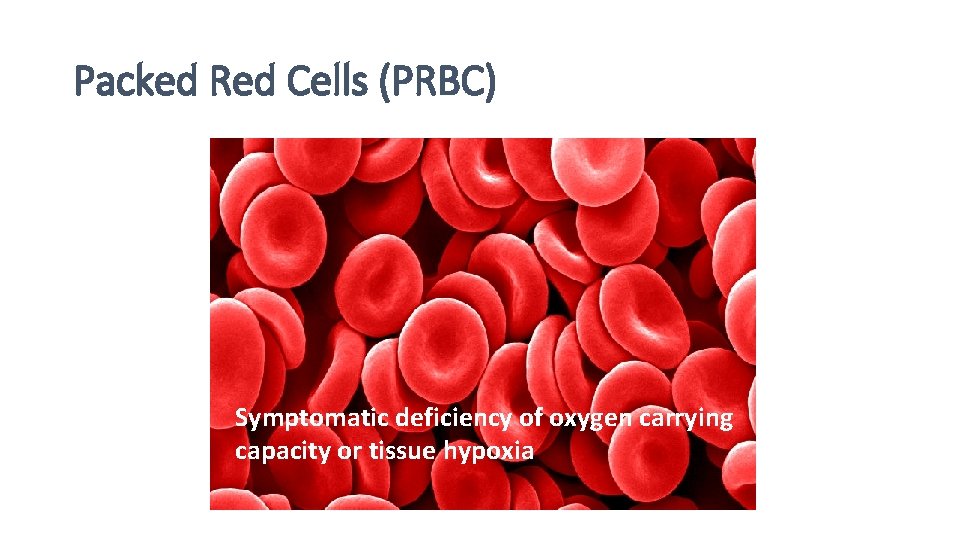
Packed Red Cells (PRBC) Symptomatic deficiency of oxygen carrying capacity or tissue hypoxia
Appropriate use of Packed red cells • Should be ABO and Rh compatible • Clinical judgment- a vital role • Co-existing conditions – age, general health, cause of anemia, its severity and chronicity • Not for conditions like Iron/ B 12/ Folate deficiency
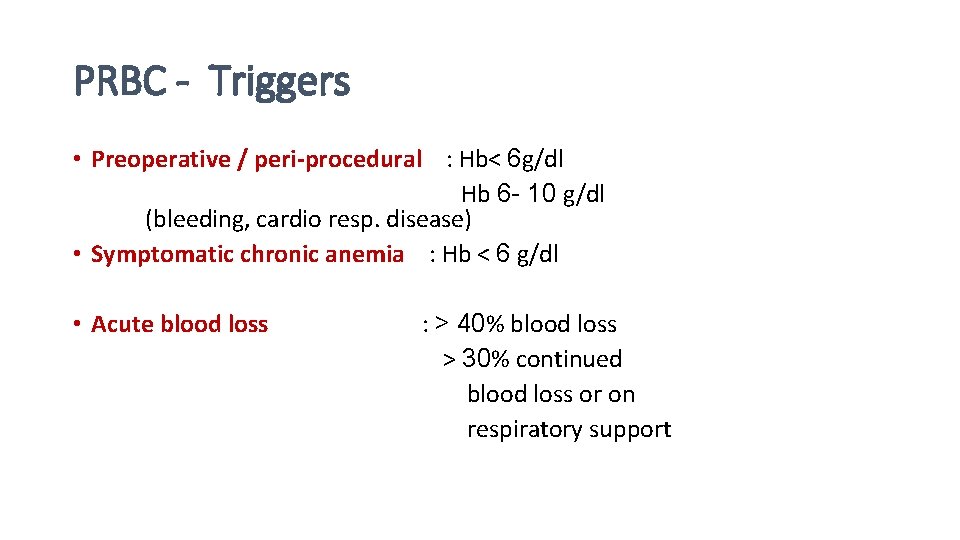
PRBC - Triggers • Preoperative / peri-procedural : Hb< 6 g/dl Hb 6 - 10 g/dl (bleeding, cardio resp. disease) • Symptomatic chronic anemia : Hb < 6 g/dl • Acute blood loss : > 40% blood loss > 30% continued blood loss or on respiratory support
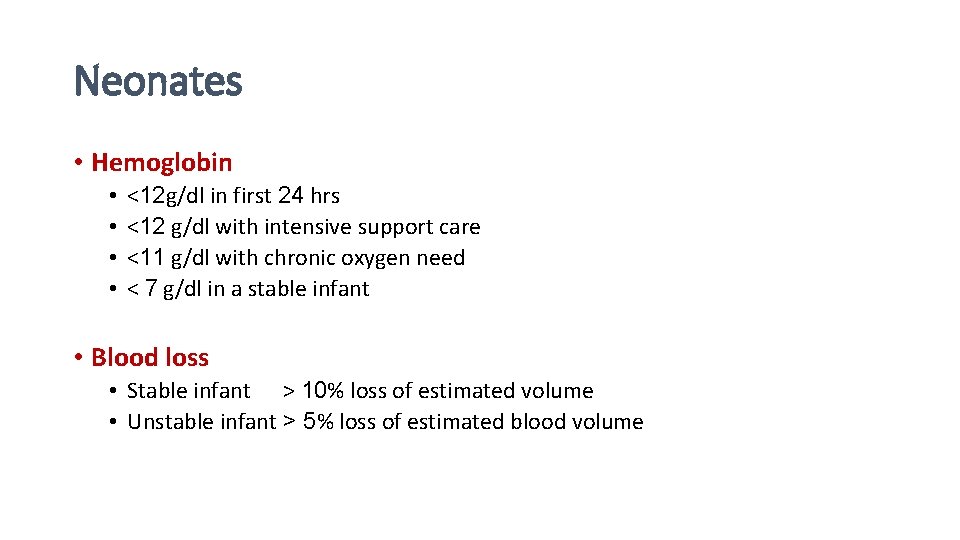
Neonates • Hemoglobin • • <12 g/dl in first 24 hrs <12 g/dl with intensive support care <11 g/dl with chronic oxygen need < 7 g/dl in a stable infant • Blood loss • Stable infant > 10% loss of estimated volume • Unstable infant > 5% loss of estimated blood volume
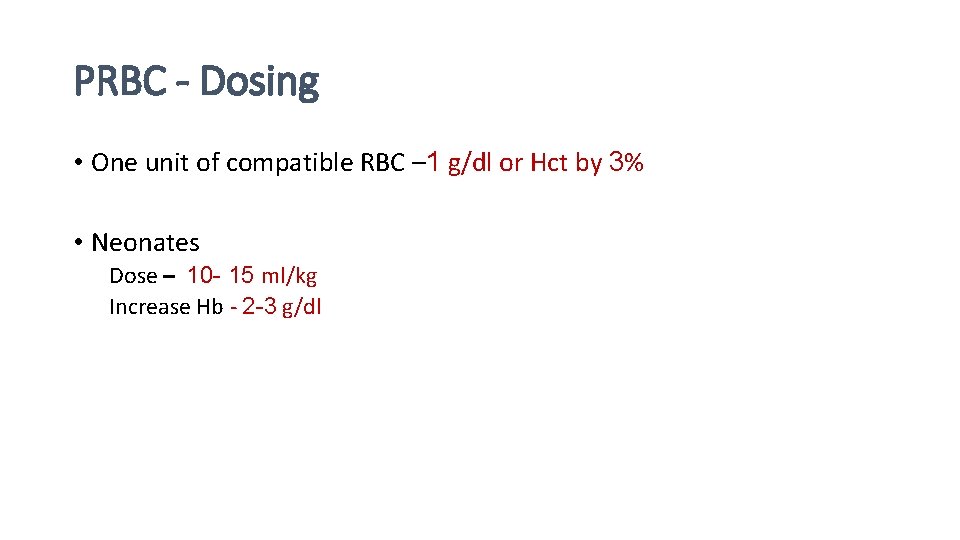
PRBC - Dosing • One unit of compatible RBC – 1 g/dl or Hct by 3% • Neonates Dose – 10 - 15 ml/kg Increase Hb - 2 -3 g/dl
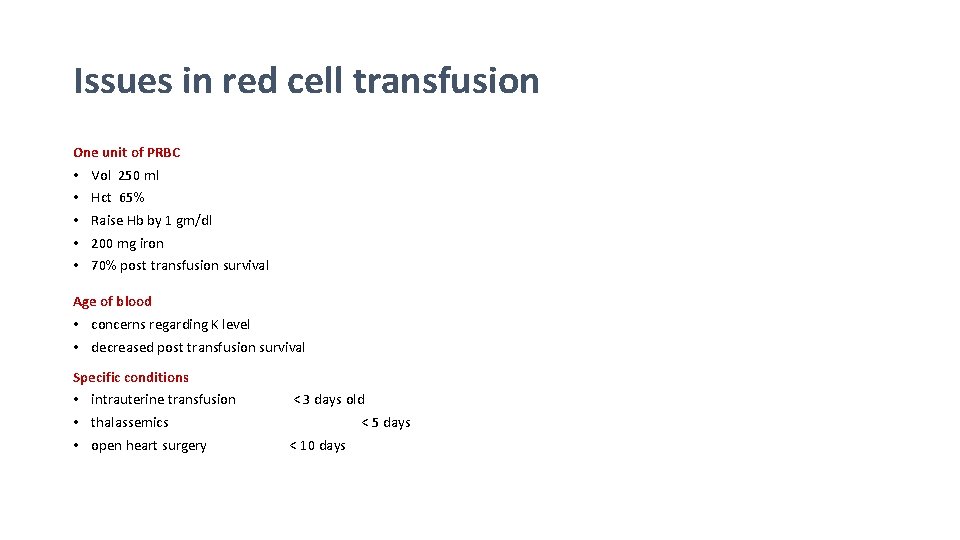
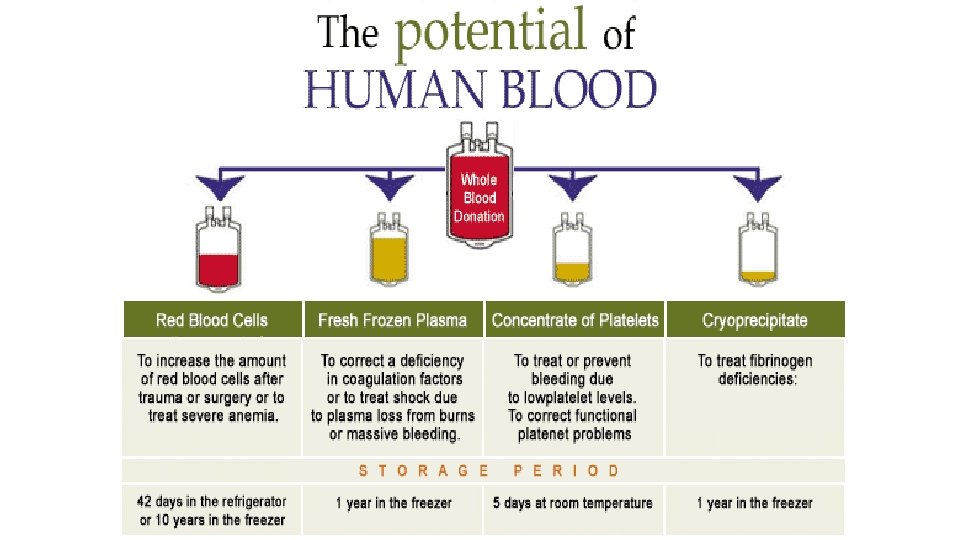
Issues in red cell transfusion One unit of PRBC • • • Vol 250 ml Hct 65% Raise Hb by 1 gm/dl 200 mg iron 70% post transfusion survival Age of blood • concerns regarding K level • decreased post transfusion survival Specific conditions • intrauterine transfusion • thalassemics • open heart surgery < 3 days old < 5 days < 10 days
Cardinal principles in red cell transfusion in chronic anemia • Evaluate etiology of anemia - AIHA, IDA • Do not transfuse just on the basis of given Hb level • Try to establish whether Signs / Symptoms are due to anemia • Determine if Signs / Symptoms of anemia are alleviated by transfusion • Determine that temporary relief of symptoms warrants continued transfusion
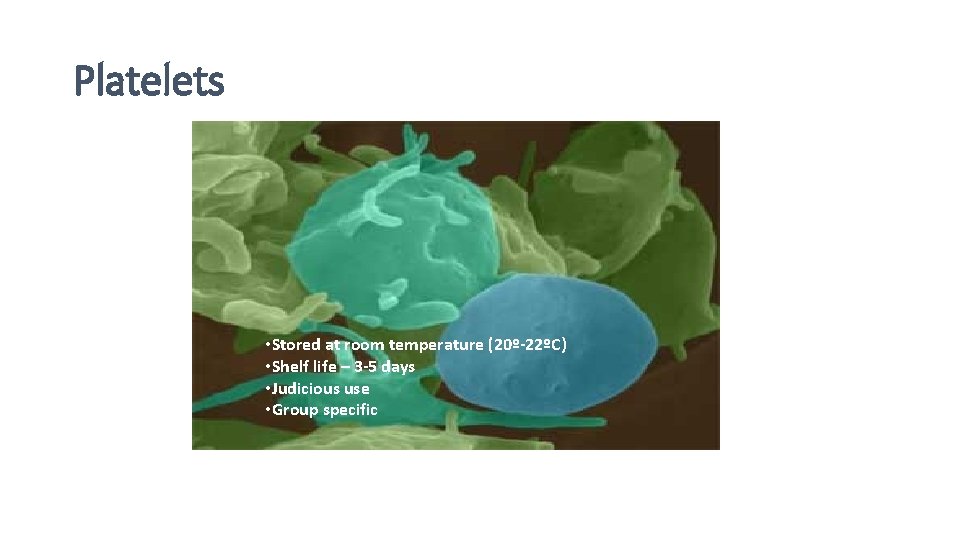
Platelets • Stored at room temperature (20º-22ºC) • Shelf life – 3 -5 days • Judicious use • Group specific
Appropriate Transfusion of Platelets • Symptomatic platelet problems Ø Number related – eg. Aplastic anemia Ø Function related – eg. Glanzmann’s thrombasthenia • Do not treat the number in isolation – eg Chronic ITP with no bleeds • Prophylactic in specific situations Ø CNS, eye surgery, other major surgeries, acute leukemia, patients on chemoradiotherapy Dose: 1 RDP/10 Kg
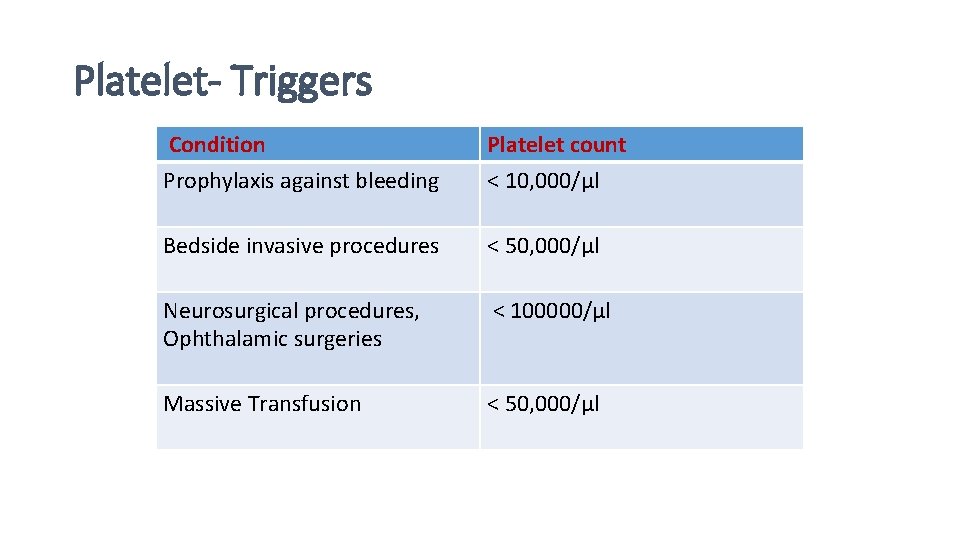
Platelet- Triggers Condition Prophylaxis against bleeding Platelet count < 10, 000/µl Bedside invasive procedures < 50, 000/µl Neurosurgical procedures, Ophthalamic surgeries < 100000/µl Massive Transfusion < 50, 000/µl
Neonates – Prophylactic Platelet Triggers Term Neonates • Clinically stable - 20, 000/µl • Clinically sick - 30, 000/µl Preterm Neonates • Clinically stable - 30, 000/µl • Clinically sick - 50, 000/µl
Contraindications • Thrombotic Thrombocytopenic purpura • Heparin induced thrombocytopenia • Immune Thrombocytopenic purpura

Fresh Frozen Plasma
Appropriate Transfusion of FFP • Replacement of multiple factors: DIC, liver disease, warfarin reversal, snake bite • PT/ INR should be determined • Dose: 10 -15 ml/kg • Not for volume expansion • Not for nutritional support/ hypoproteinemia
Cryoprecipitate • Out of group can be transfused but preferably ABO compatible • Rh. D type need not be considered • Thawed Cryoprecipitate transfused within 6 hours • Indicated for bleeding associated with fibrinogen deficiency and factor XIII deficiency
• Hemophilia A or von Willebrand disease when appropriate substitute not available • Bleeding with fibrinogen levels< 100 mg/dl • Dose - one unit/10 kg body weight • Raises fibrinogen concentration by 50 mg/dl
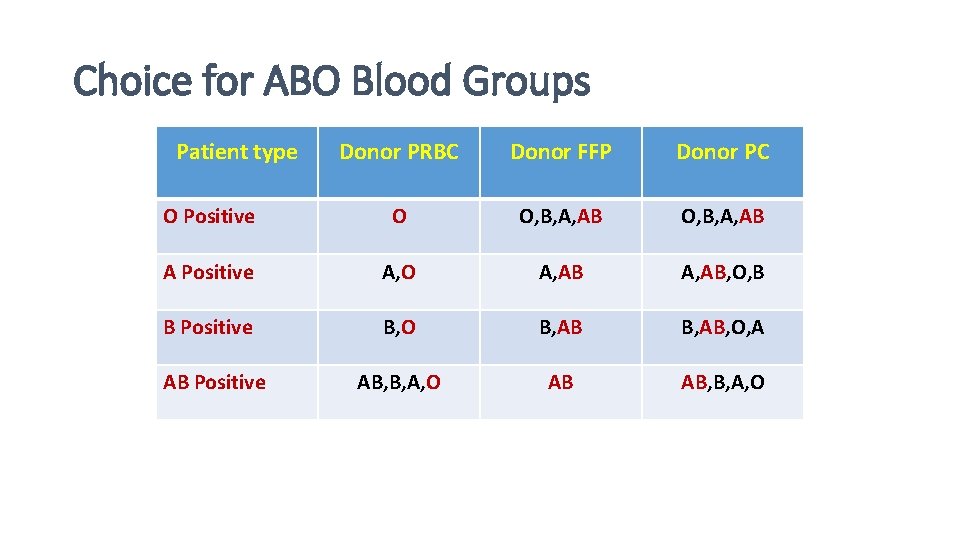
Choice for ABO Blood Groups Patient type Donor PRBC Donor FFP Donor PC O Positive O O, B, A, AB A Positive A, O A, AB, O, B B Positive B, O B, AB, O, A AB, B, A, O AB Positive
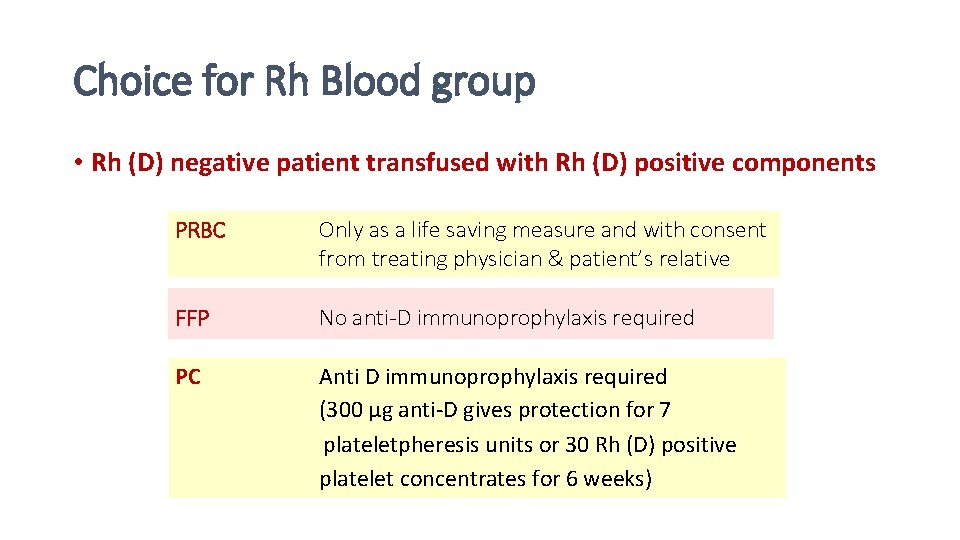
Choice for Rh Blood group • Rh (D) negative patient transfused with Rh (D) positive components PRBC Only as a life saving measure and with consent from treating physician & patient’s relative FFP No anti-D immunoprophylaxis required PC Anti D immunoprophylaxis required (300 µg anti-D gives protection for 7 plateletpheresis units or 30 Rh (D) positive platelet concentrates for 6 weeks)
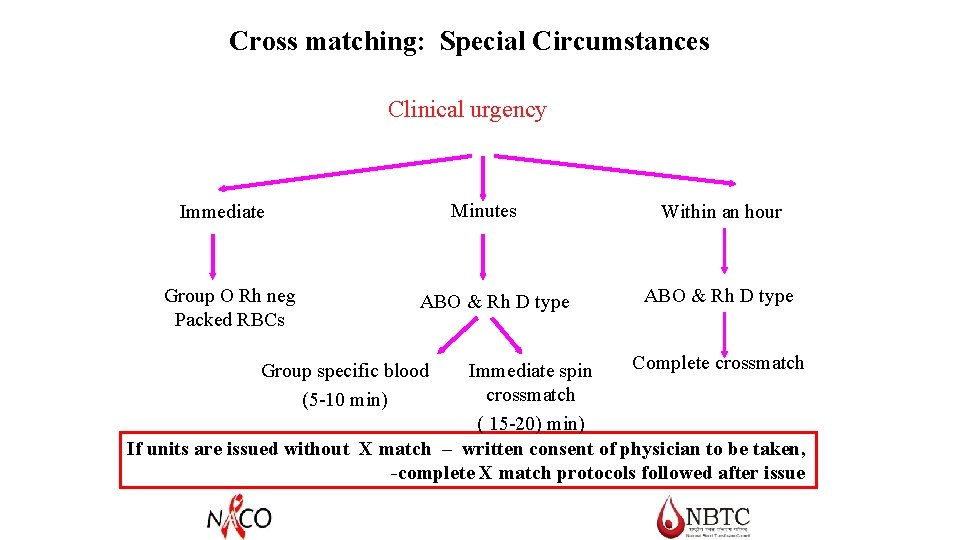
Cross matching: Special Circumstances Clinical urgency Minutes Immediate Group O Rh neg Packed RBCs ABO & Rh D type Within an hour ABO & Rh D type Complete crossmatch Immediate spin crossmatch ( 15 -20) min) If units are issued without X match – written consent of physician to be taken, -complete X match protocols followed after issue Group specific blood (5 -10 min)
Take Home Messages • No place for Whole Blood in clinical medicine • Component preparation and use is the demand of time • Best Transfusion is “No Transfusion” • Promotion of judicious use of blood / components 4 Audit of transfusion practices 4 CME on use of components 4 Promote autologous use of blood 4 Discourage single unit / fresh blood

Thank You
- Slides: 32