
Rational Functions Part 2 MYP Algebra II Clarady

Rational Functions Part 2 MYP Algebra II Clarady Spring 2020
Adding and Subtracting Rational Expressions Adding and subtracting rational expressions is similar in process to adding and subtracting fractions. Just like when adding and subtracting fractions, we must find a common denominator to combine rational expressions.
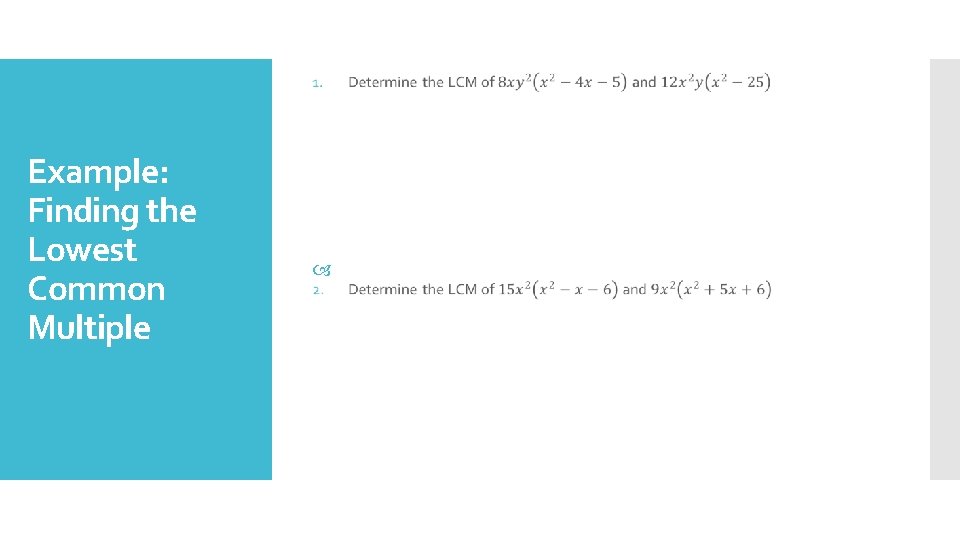
Example: Finding the Lowest Common Multiple
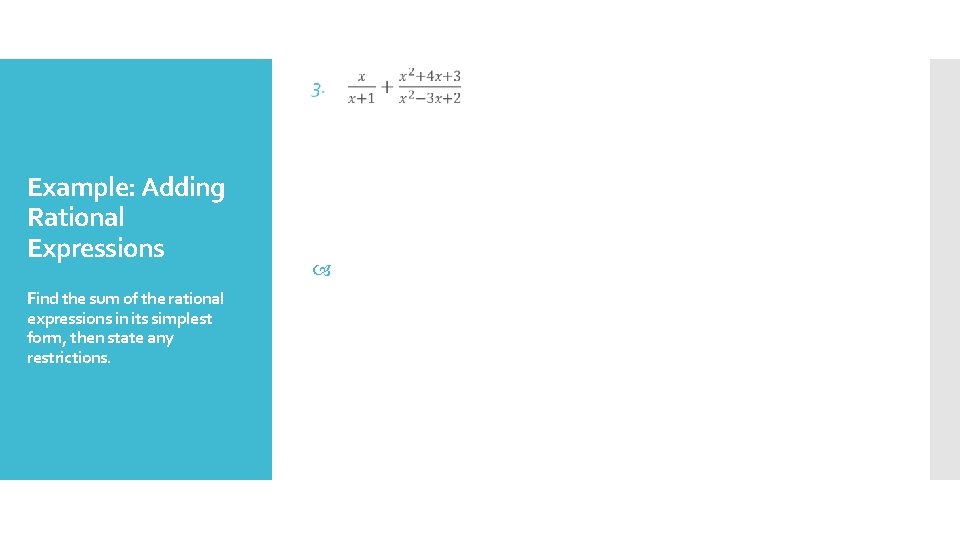
Example: Adding Rational Expressions Find the sum of the rational expressions in its simplest form, then state any restrictions.

Example: Adding Rational Expressions Find the sum of the rational expressions in its simplest form, then state any restrictions.

Example: Subtracting Rational Expressions Find the difference of the rational expressions in its simplest form, then state any restrictions.
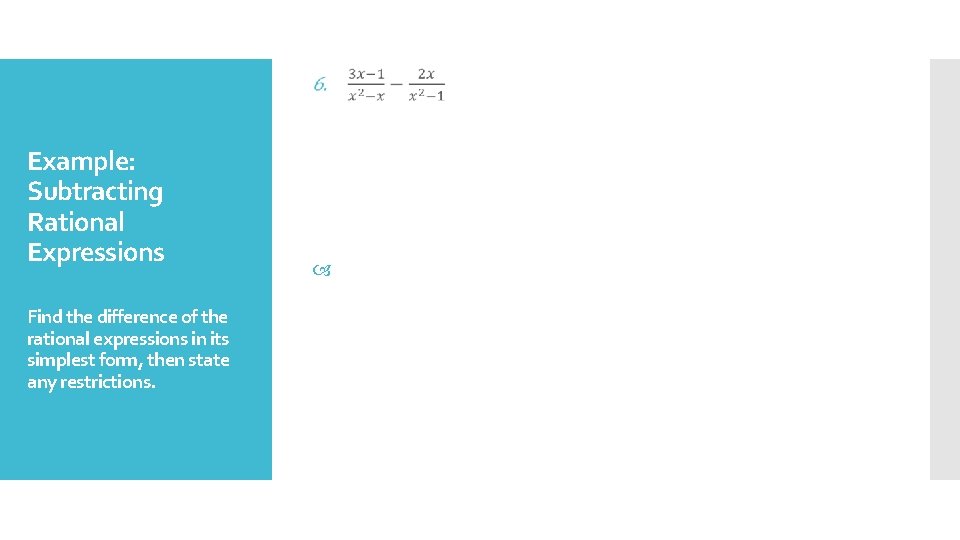
Example: Subtracting Rational Expressions Find the difference of the rational expressions in its simplest form, then state any restrictions.
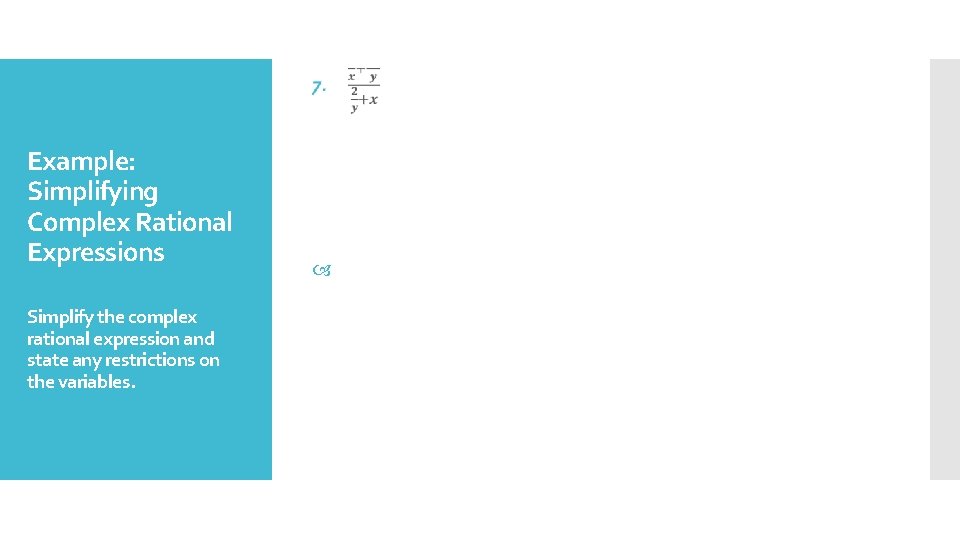
Example: Simplifying Complex Rational Expressions Simplify the complex rational expression and state any restrictions on the variables.
8. Example: Using Rational Expressions to Solve a Problem A family uses an SUV that gets 12 mi/gal (mpg), but also have a hybrid that gets 60 mpg. Every week, they travel the same number of miles. They want to improve their combined mpg. They have two options on how they can improve it. Option 1: They can tune the SUV and increase its mileage by 3 mpg and keep the hybrid as it is. Option 2: They can buy a new hybrid that gets 80 mpg and keep the SUV as it is. Which option will give them a better combined mpg?
Solving Rational Equations To properly solve a rational equation, we must first find a common denominator for rational functions by multiplying by the lowest common denominator. Doing this, however, can introduce extraneous solutions that we must check for.
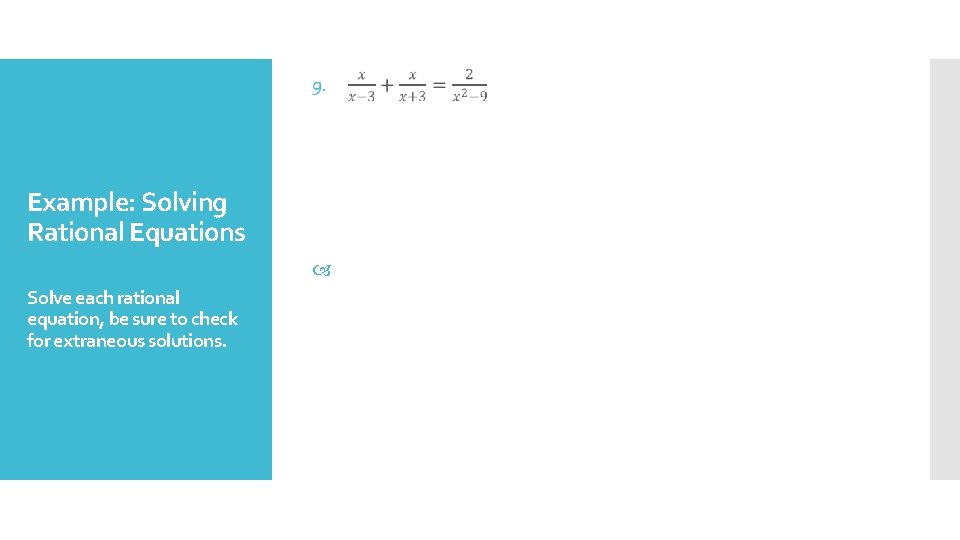
Example: Solving Rational Equations Solve each rational equation, be sure to check for extraneous solutions.
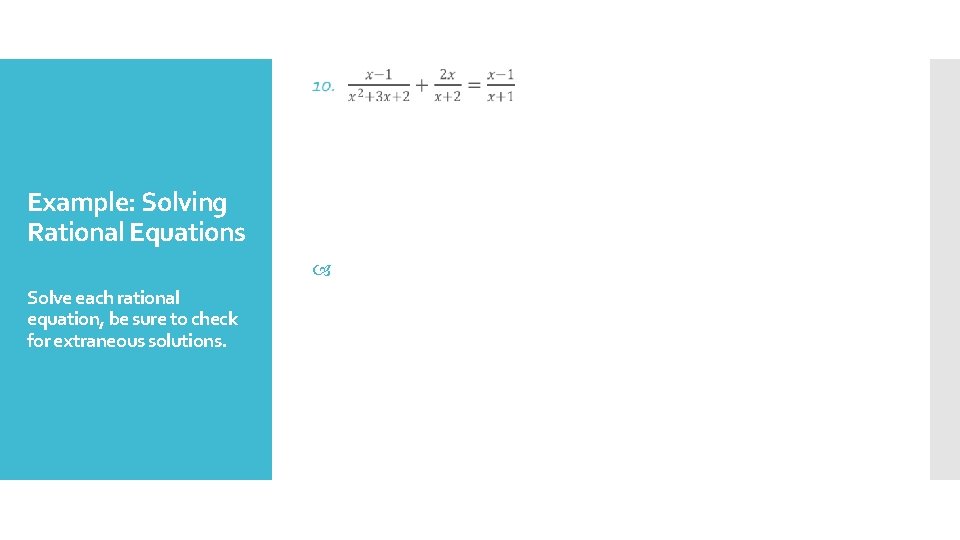
Example: Solving Rational Equations Solve each rational equation, be sure to check for extraneous solutions.
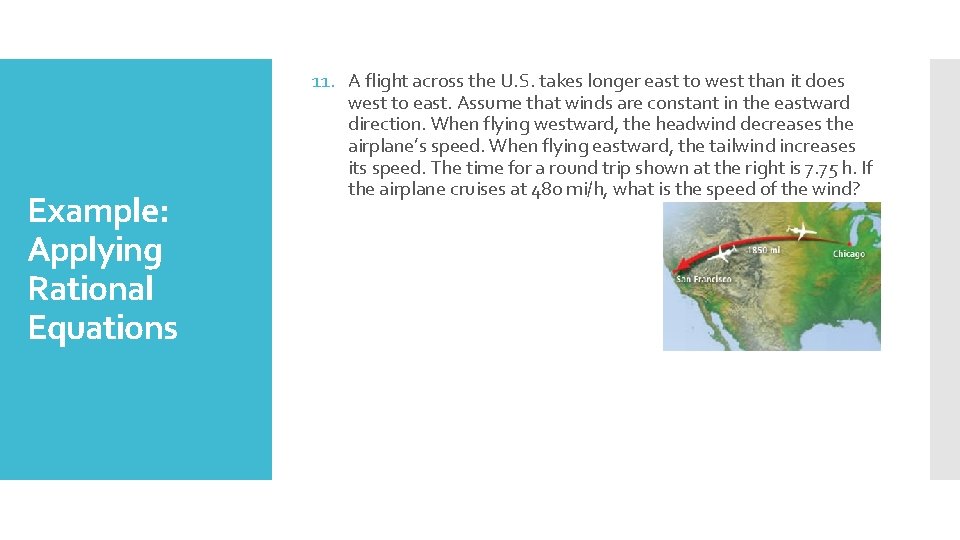
Example: Applying Rational Equations 11. A flight across the U. S. takes longer east to west than it does west to east. Assume that winds are constant in the eastward direction. When flying westward, the headwind decreases the airplane’s speed. When flying eastward, the tailwind increases its speed. The time for a round trip shown at the right is 7. 75 h. If the airplane cruises at 480 mi/h, what is the speed of the wind?

Independent Practice
- Slides: 14