
Rate of Reaction Required Practical 2 Worksheet Combined
Rate of Reaction Required Practical 2 Worksheet Combined Science - Chemistry - Key Stage 4 The Rate and Extent of Chemical Change Dr Deng
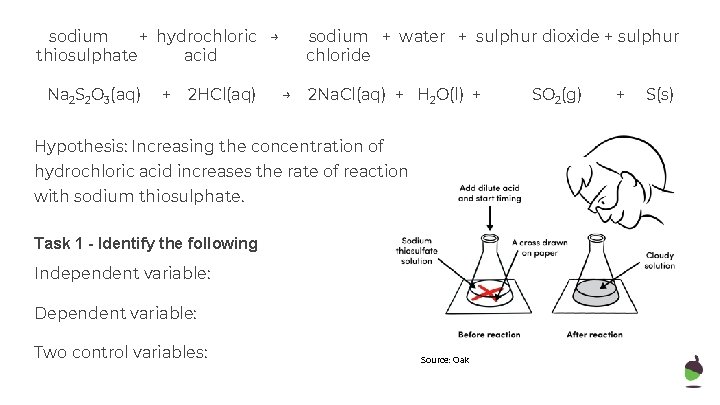
sodium + hydrochloric → thiosulphate acid Na 2 S 2 O 3(aq) + 2 HCl(aq) sodium + water + sulphur dioxide + sulphur chloride → 2 Na. Cl(aq) + H 2 O(l) + Hypothesis: Increasing the concentration of hydrochloric acid increases the rate of reaction with sodium thiosulphate. Task 1 - Identify the following Independent variable: Dependent variable: Two control variables: Source: Oak SO 2(g) + S(s)
Hypothesis: Increasing the concentration of hydrochloric acid increases the rate of reaction with sodium thiosulphate. Task 2 - Write a method for an investigation to show the concentration of hydrochloric acid affects the rate of the reaction with sodium thiosulphate using the disappearing cross method
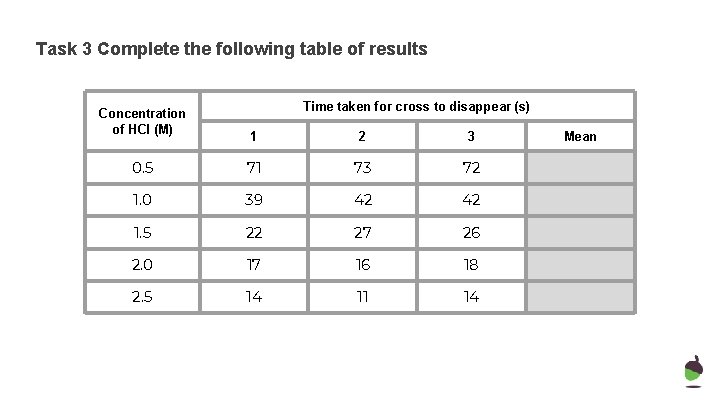
Task 3 Complete the following table of results Concentration of HCl (M) Time taken for cross to disappear (s) 1 2 3 0. 5 71 73 72 1. 0 39 42 42 1. 5 22 27 26 2. 0 17 16 18 2. 5 14 11 14 Mean
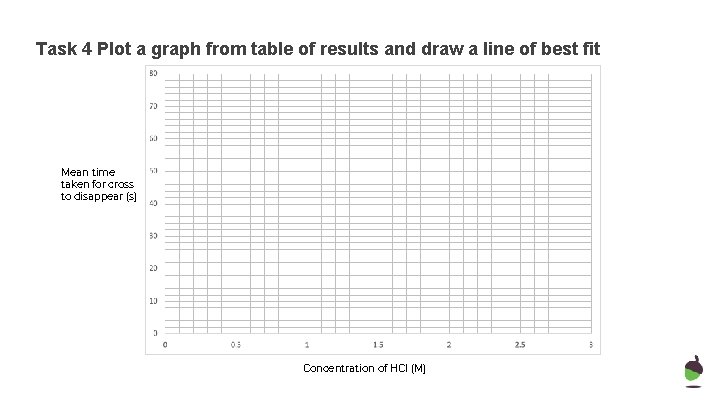
Task 4 Plot a graph from table of results and draw a line of best fit Mean time taken for cross to disappear (s) Concentration of HCl (M)
Task 5 Explain why the solution goes cloudy. In terms of collision theory, explain why increasing the concentration of hydrochloric acid increases the rate of reaction.
Task 1 answer Investigate the effect of changing the concentration of hydrochloric acid on the rate of reaction with sodium thiosulphate. Independent variable: Concentration of hydrochloric acid (M) Dependent variable: Time taken for cross to disappear (s) Control variables: Concentration of sodium thiosulphate Volume of hydrochloric acid Volume of sodium thiosulphate Temperature
Task 2 answer 1. Measure out 25 cm 3 of sodium thiosulphate (Na 2 S 2 O 3) into conical flask. 2. Draw a cross on a piece of paper, then place conical flask on cross. 3. Measure 20 cm 3 of 0. 5 M hydrochloric acid (HCl) in a measuring cylinder. 4. Add HCl to conical flask and start the timer. 5. Swirl the conical flask over the cross and stop the timer when precipitate has formed and you can no longer see the cross from the top of the flask. 6. Record the time taken in results table and repeat procedure using 1. 0 M and 1. 5 M of HCl. 7. Repeat 3 times and find a mean.
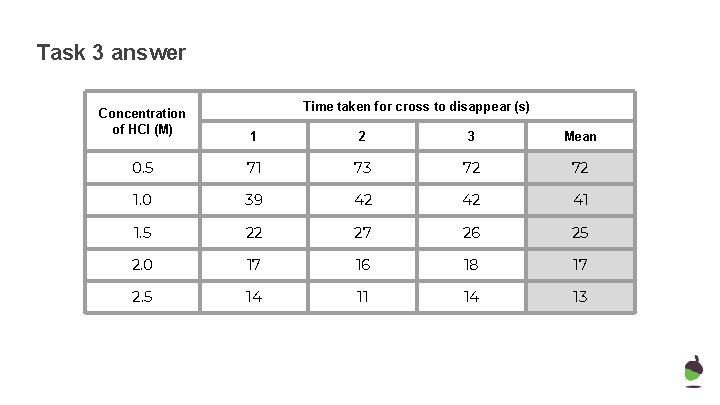
Task 3 answer Concentration of HCl (M) Time taken for cross to disappear (s) 1 2 3 Mean 0. 5 71 73 72 72 1. 0 39 42 42 41 1. 5 22 27 26 25 2. 0 17 16 18 17 2. 5 14 11 14 13
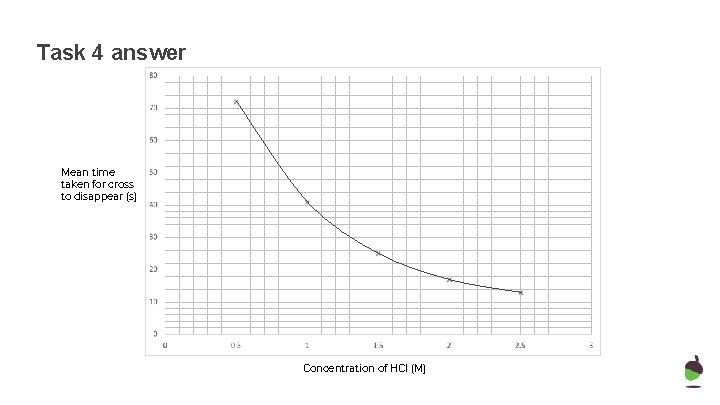
Task 4 answer Mean time taken for cross to disappear (s) Concentration of HCl (M)
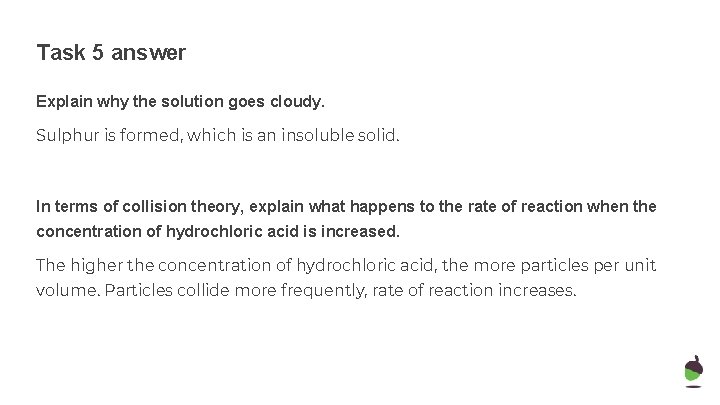
Task 5 answer Explain why the solution goes cloudy. Sulphur is formed, which is an insoluble solid. In terms of collision theory, explain what happens to the rate of reaction when the concentration of hydrochloric acid is increased. The higher the concentration of hydrochloric acid, the more particles per unit volume. Particles collide more frequently, rate of reaction increases.
- Slides: 11