
Rate of Reaction Required Practical 1 Worksheet Combined
Rate of Reaction Required Practical 1 Worksheet Combined Science - Chemistry - Key Stage 4 The Rate and Extent of Chemical Change Dr Deng 1

Independent practice 2
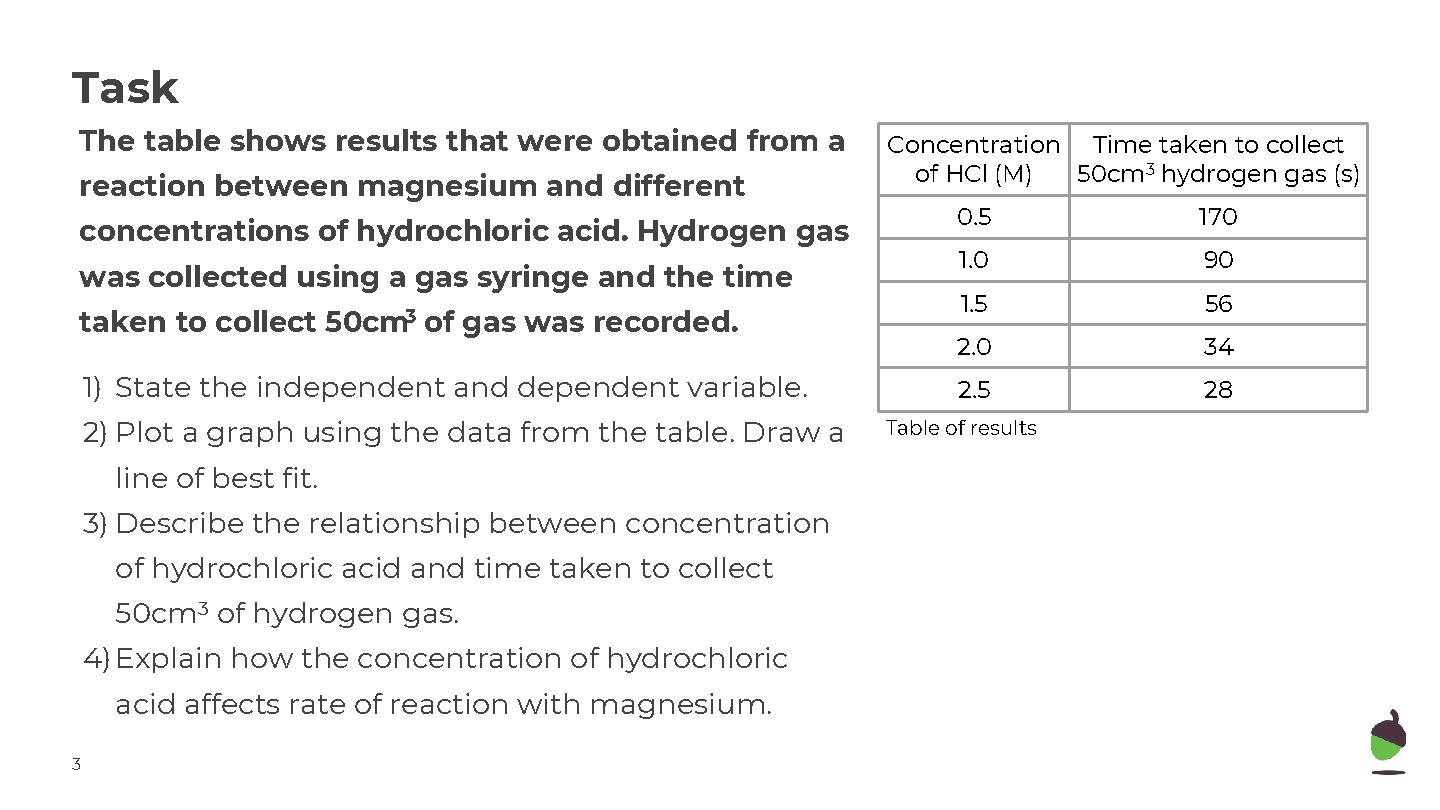
Task The table shows results that were obtained from a reaction between magnesium and different concentrations of hydrochloric acid. Hydrogen gas was collected using a gas syringe and the time taken to collect 50 cm 3 of gas was recorded. 1) State the independent and dependent variable. 2) Plot a graph using the data from the table. Draw a line of best fit. 3) Describe the relationship between concentration of hydrochloric acid and time taken to collect 50 cm 3 of hydrogen gas. 4) Explain how the concentration of hydrochloric acid affects rate of reaction with magnesium. 3 Concentration Time taken to collect of HCl (M) 50 cm 3 hydrogen gas (s) 0. 5 170 1. 0 90 1. 5 56 2. 0 34 2. 5 28 Table of results

Graph paper 4

5
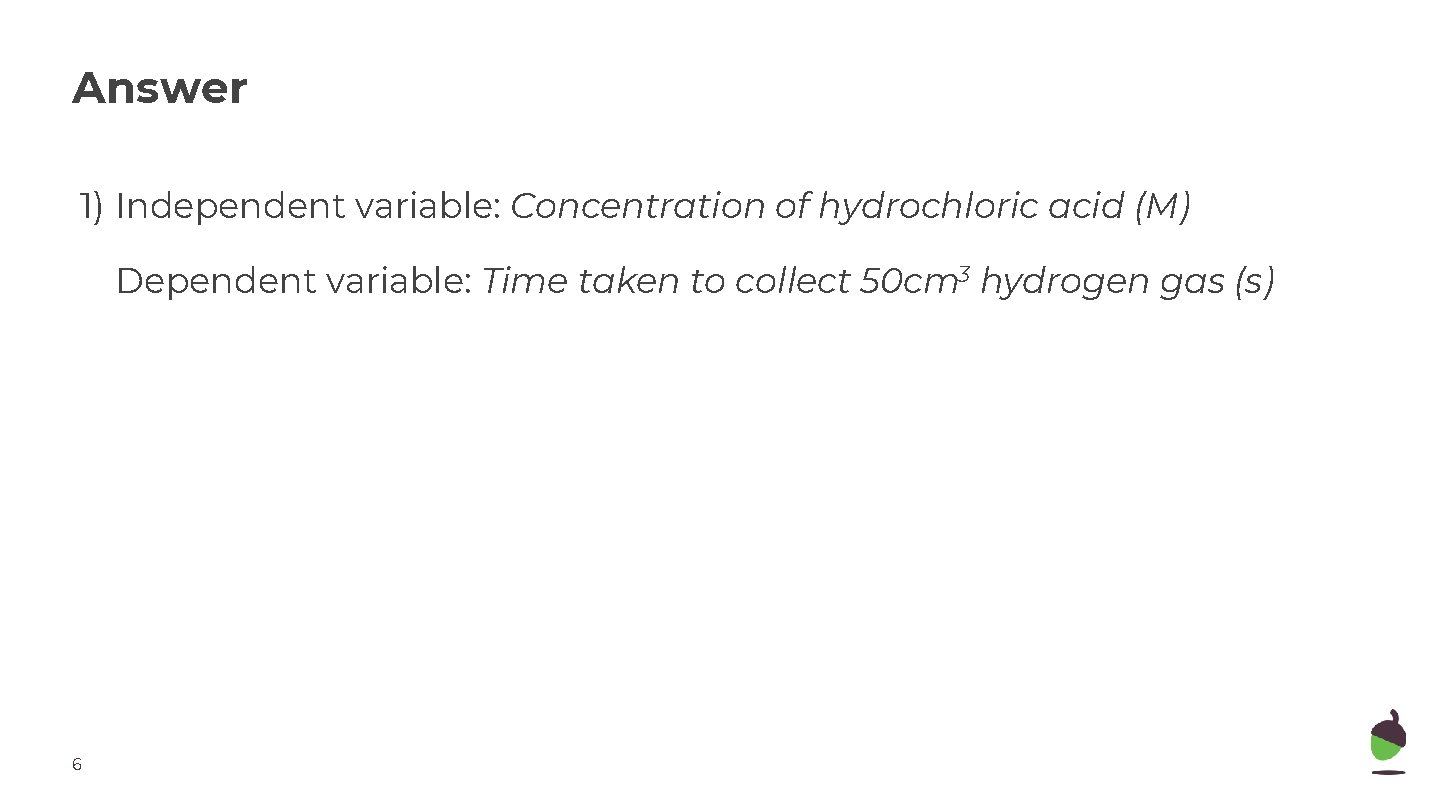
Answer 1) Independent variable: Concentration of hydrochloric acid (M) Dependent variable: Time taken to collect 50 cm 3 hydrogen gas (s) 6
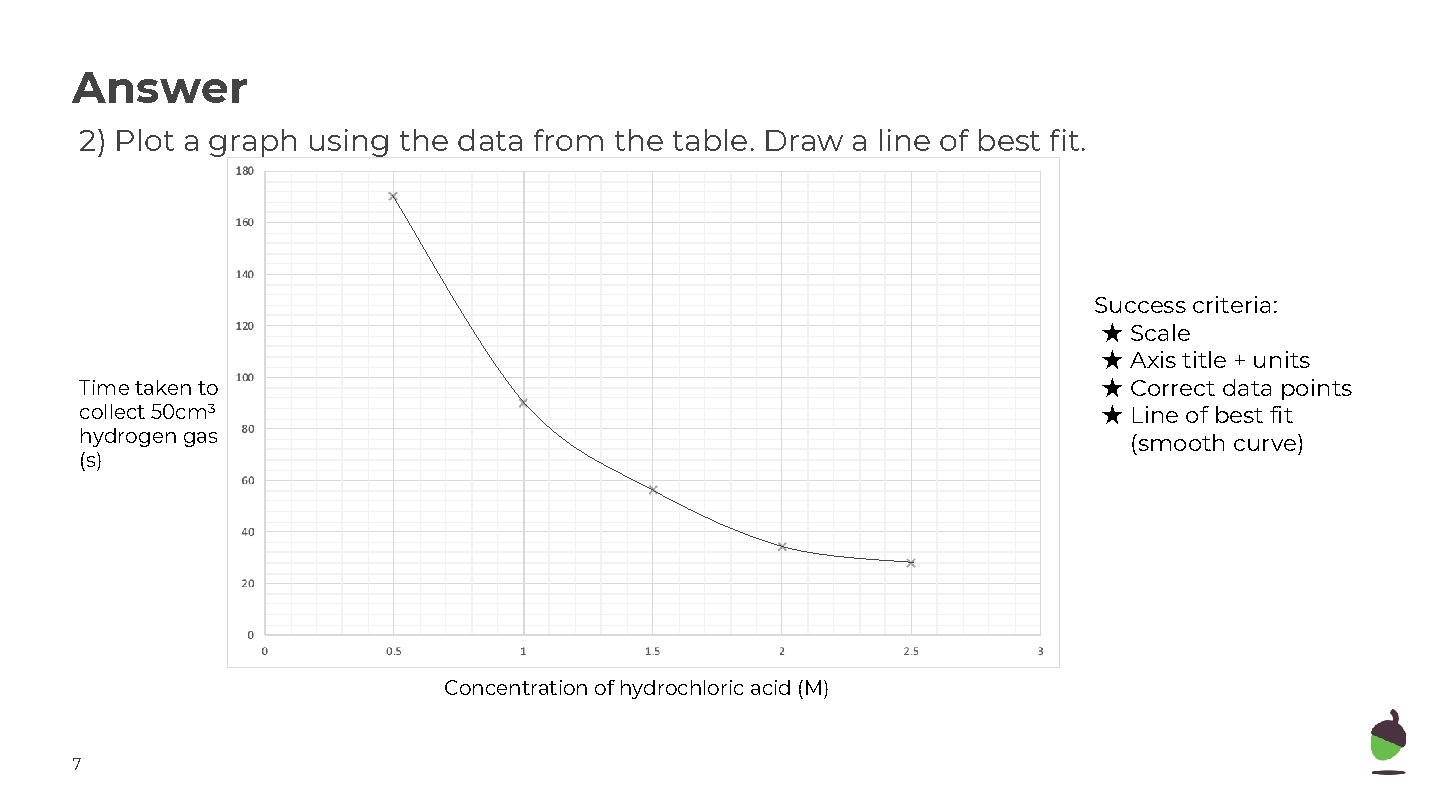
Answer 2) Plot a graph using the data from the table. Draw a line of best fit. Success criteria: ★ Scale ★ Axis title + units ★ Correct data points ★ Line of best fit (smooth curve) Time taken to collect 50 cm 3 hydrogen gas (s) Concentration of hydrochloric acid (M) 7
Answer 3) Describe the relationship between concentration of hydrochloric acid and time taken to collect 50 cm 3 of hydrogen gas. As the concentration of hydrochloric acid increases, the time taken to collect 50 cm 3 of hydrogen gas decreases. 4) Explain how the concentration of hydrochloric acid affects rate of reaction with magnesium. Increasing the concentration of hydrochloric acid increases the rate of reaction. There are more number of reacting particles per unit volume, therefore particles collide more frequently. 8
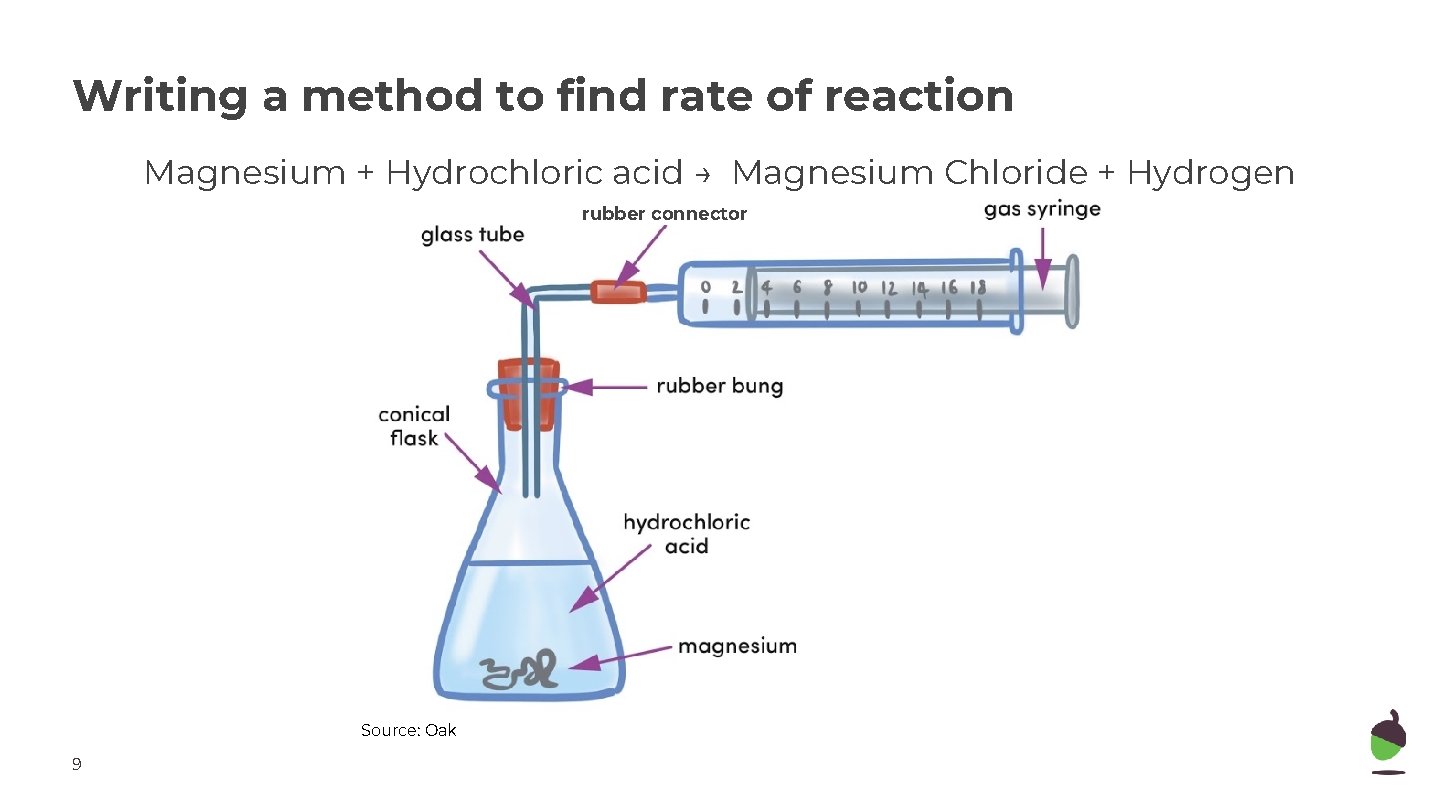
Writing a method to find rate of reaction Magnesium + Hydrochloric acid → Magnesium Chloride + Hydrogen rubber connector Source: Oak 9
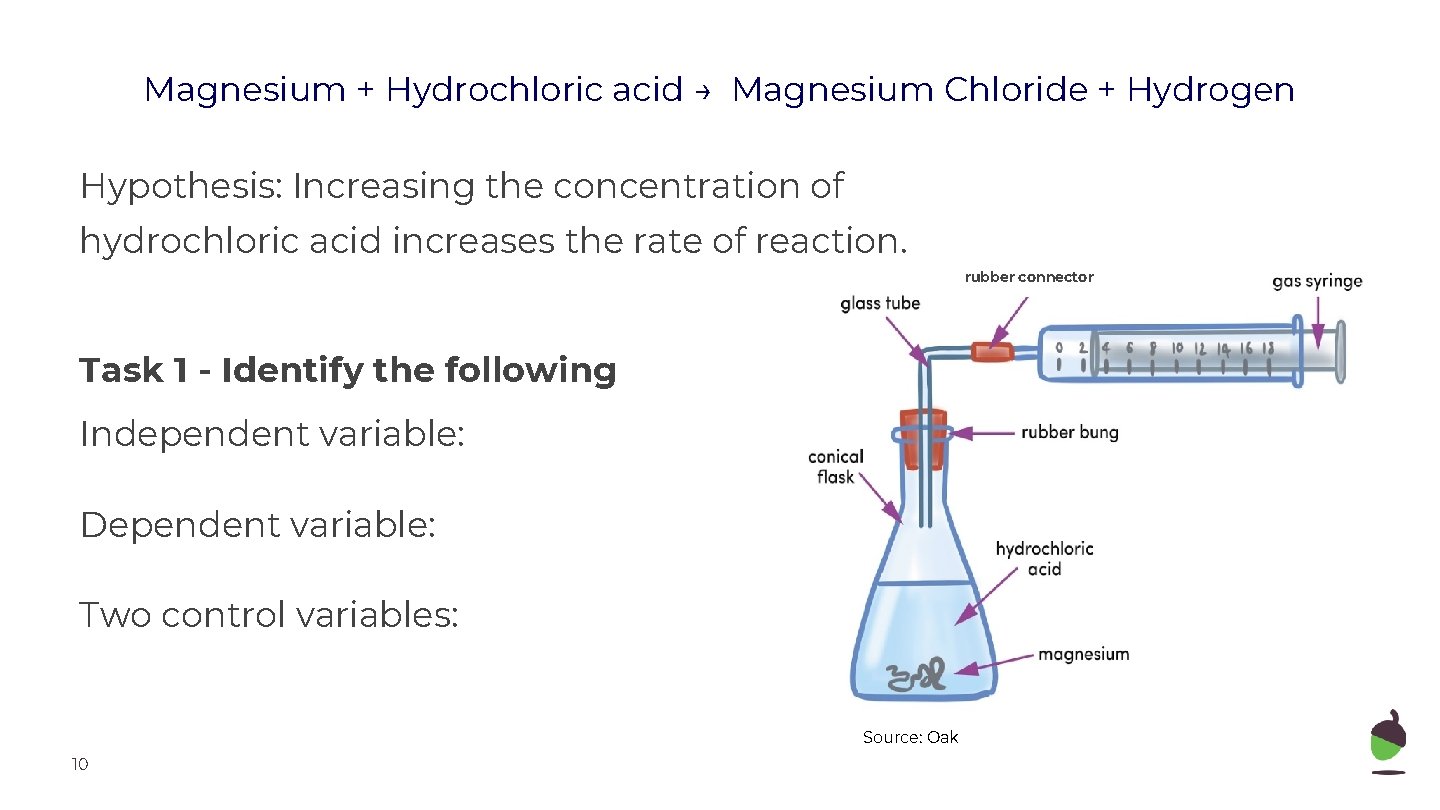
Magnesium + Hydrochloric acid → Magnesium Chloride + Hydrogen Hypothesis: Increasing the concentration of hydrochloric acid increases the rate of reaction. rubber connector Task 1 - Identify the following Independent variable: Dependent variable: Two control variables: Source: Oak 10
Hypothesis: Increasing the concentration of hydrochloric acid increases the rate of reaction. Task 2 - Write a method for an investigationto show the concentration of hydrochloric acid affects the rate of the reaction with magnesium 11
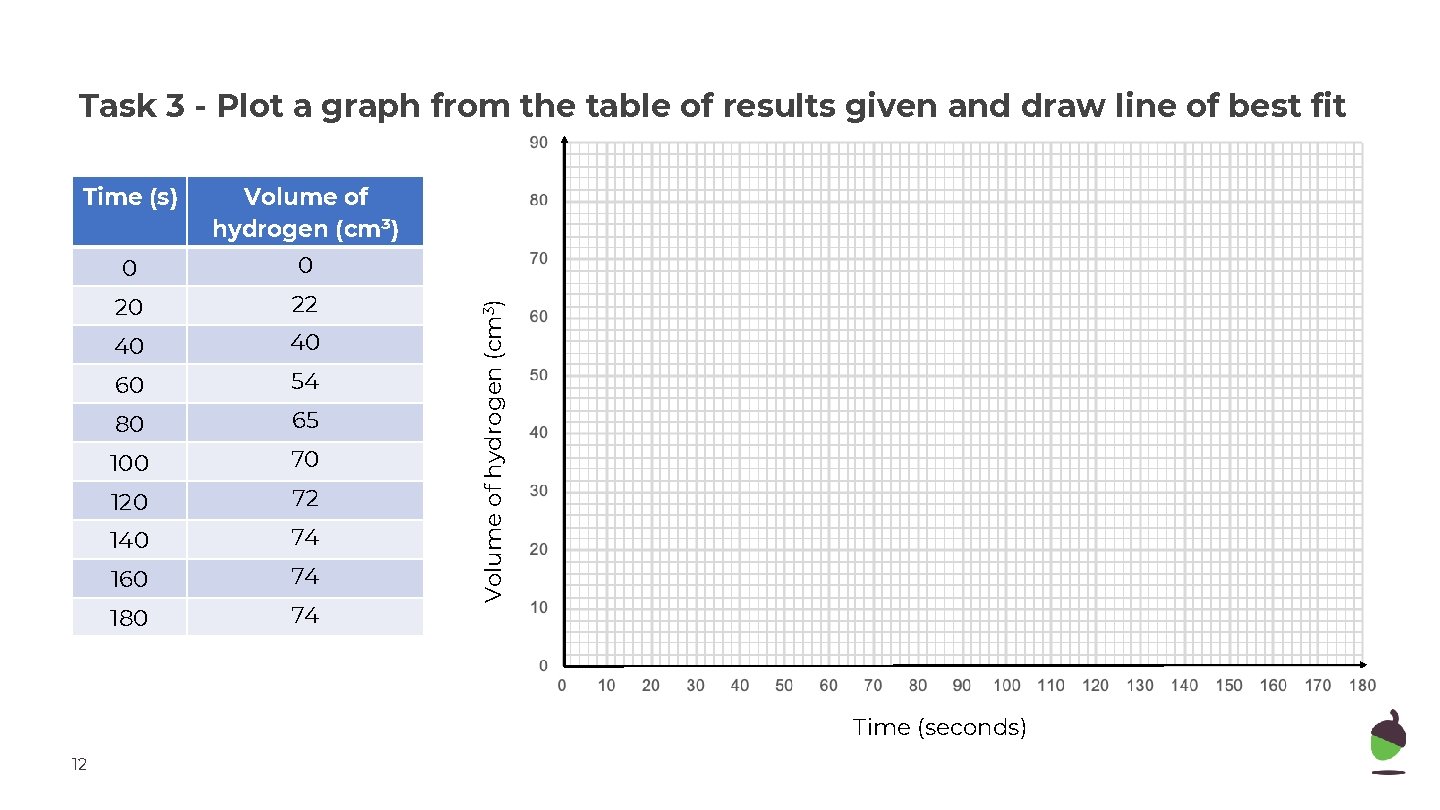
Time (s) Volume of hydrogen (cm³) 0 0 20 22 40 40 60 54 80 65 100 70 120 72 140 74 160 74 180 74 Volume of hydrogen (cm 3) Task 3 - Plot a graph from the table of results given and draw line of best fit Time (seconds) 12
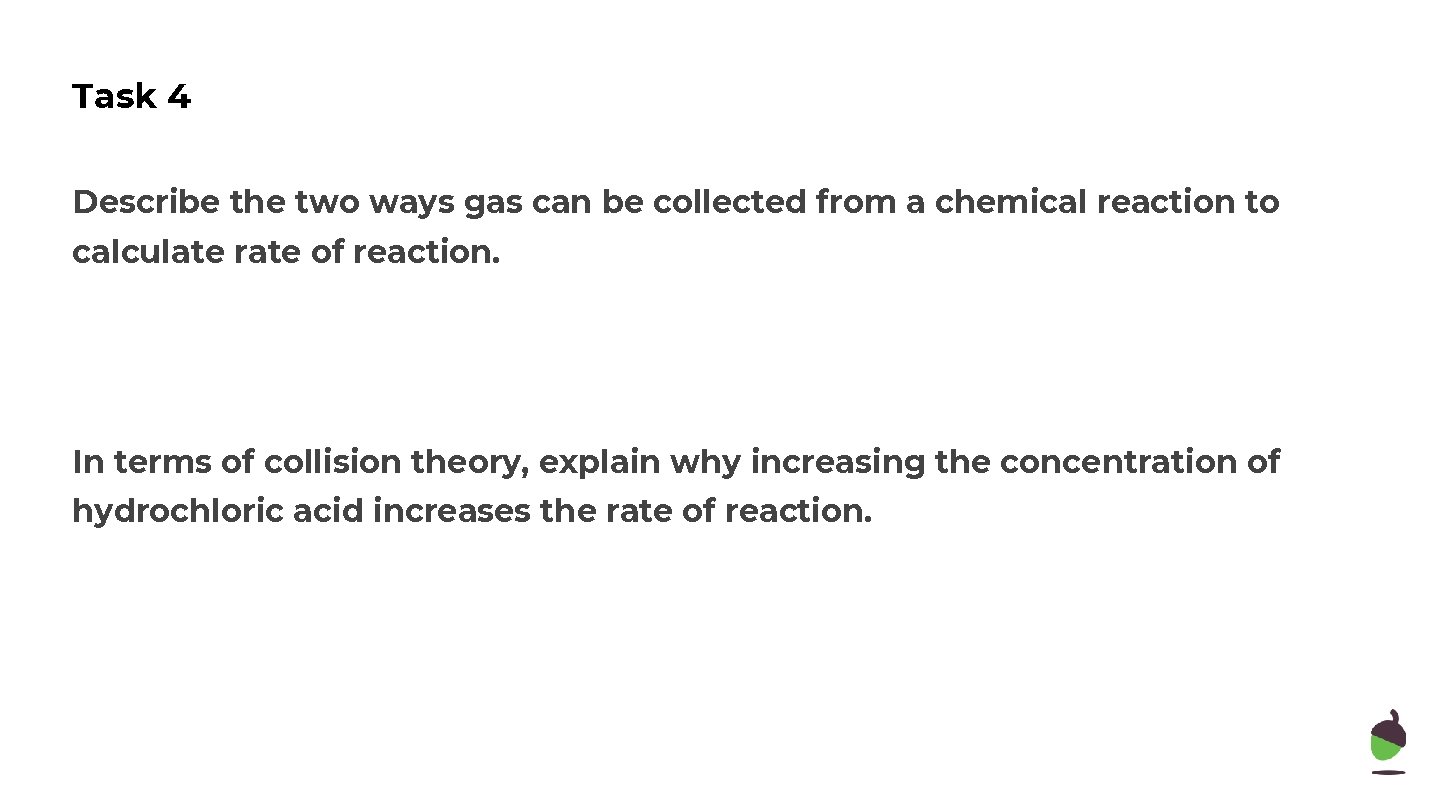
Task 4 Describe the two ways gas can be collected from a chemical reaction to calculate rate of reaction. In terms of collision theory, explain why increasing the concentration of hydrochloric acid increases the rate of reaction.
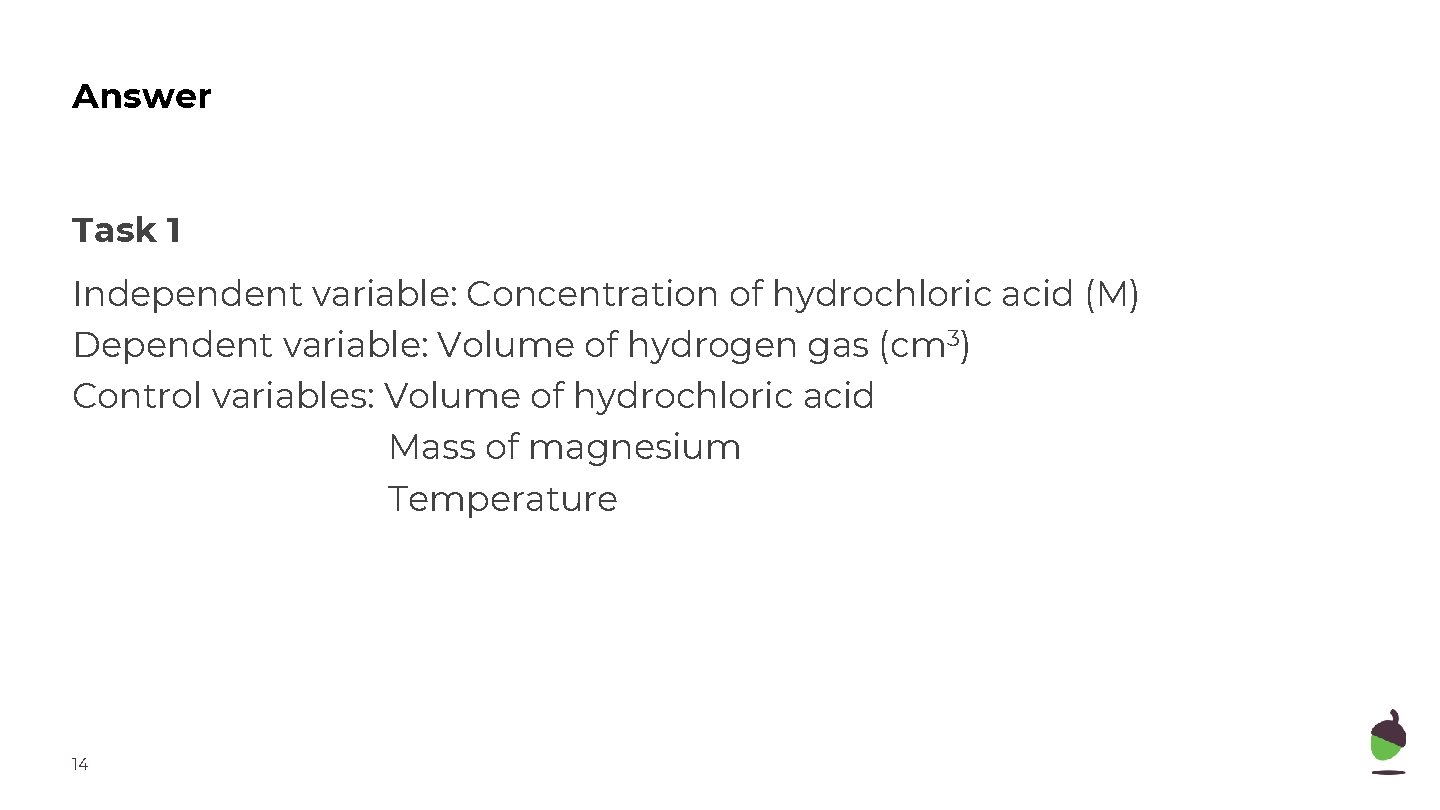
Answer Task 1 Independent variable: Concentration of hydrochloric acid (M) Dependent variable: Volume of hydrogen gas (cm 3) Control variables: Volume of hydrochloric acid Mass of magnesium Temperature 14
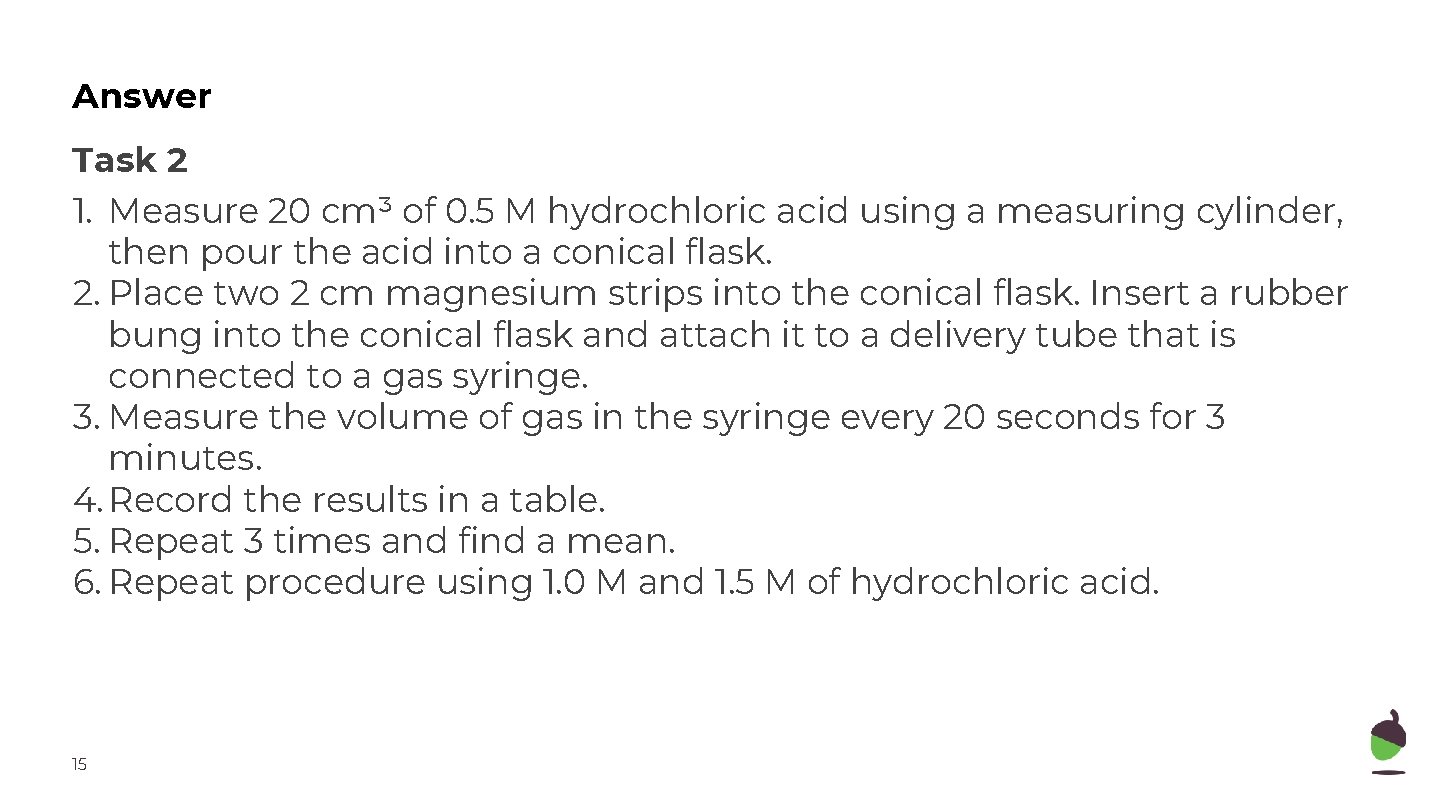
Answer Task 2 1. Measure 20 cm³ of 0. 5 M hydrochloric acid using a measuring cylinder, then pour the acid into a conical flask. 2. Place two 2 cm magnesium strips into the conical flask. Insert a rubber bung into the conical flask and attach it to a delivery tube that is connected to a gas syringe. 3. Measure the volume of gas in the syringe every 20 seconds for 3 minutes. 4. Record the results in a table. 5. Repeat 3 times and find a mean. 6. Repeat procedure using 1. 0 M and 1. 5 M of hydrochloric acid. 15
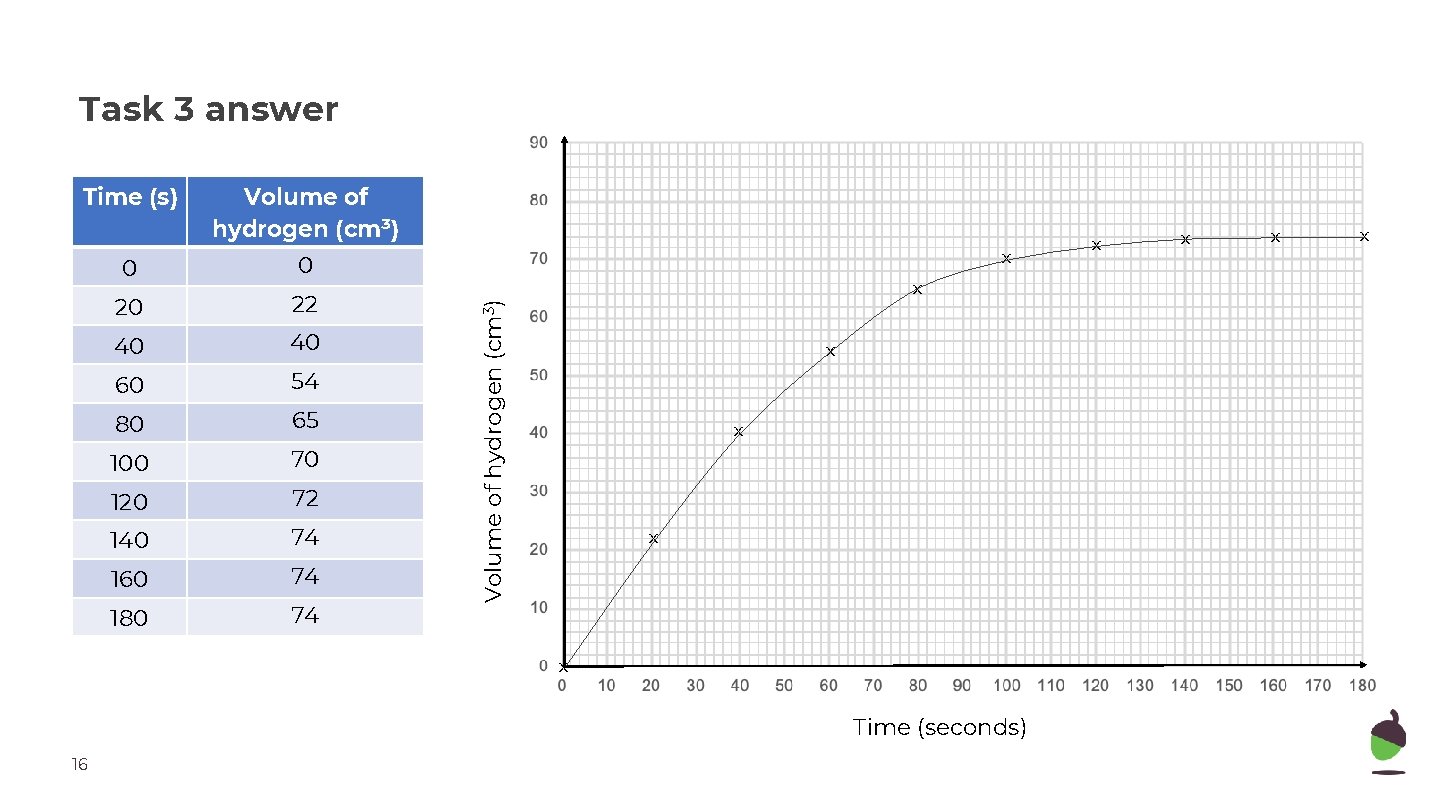
Task 3 answer Volume of hydrogen (cm³) 0 0 20 22 40 40 60 54 80 65 100 70 120 72 140 74 160 74 180 74 x x Volume of hydrogen (cm 3) Time (s) x x Time (seconds) 16 x x
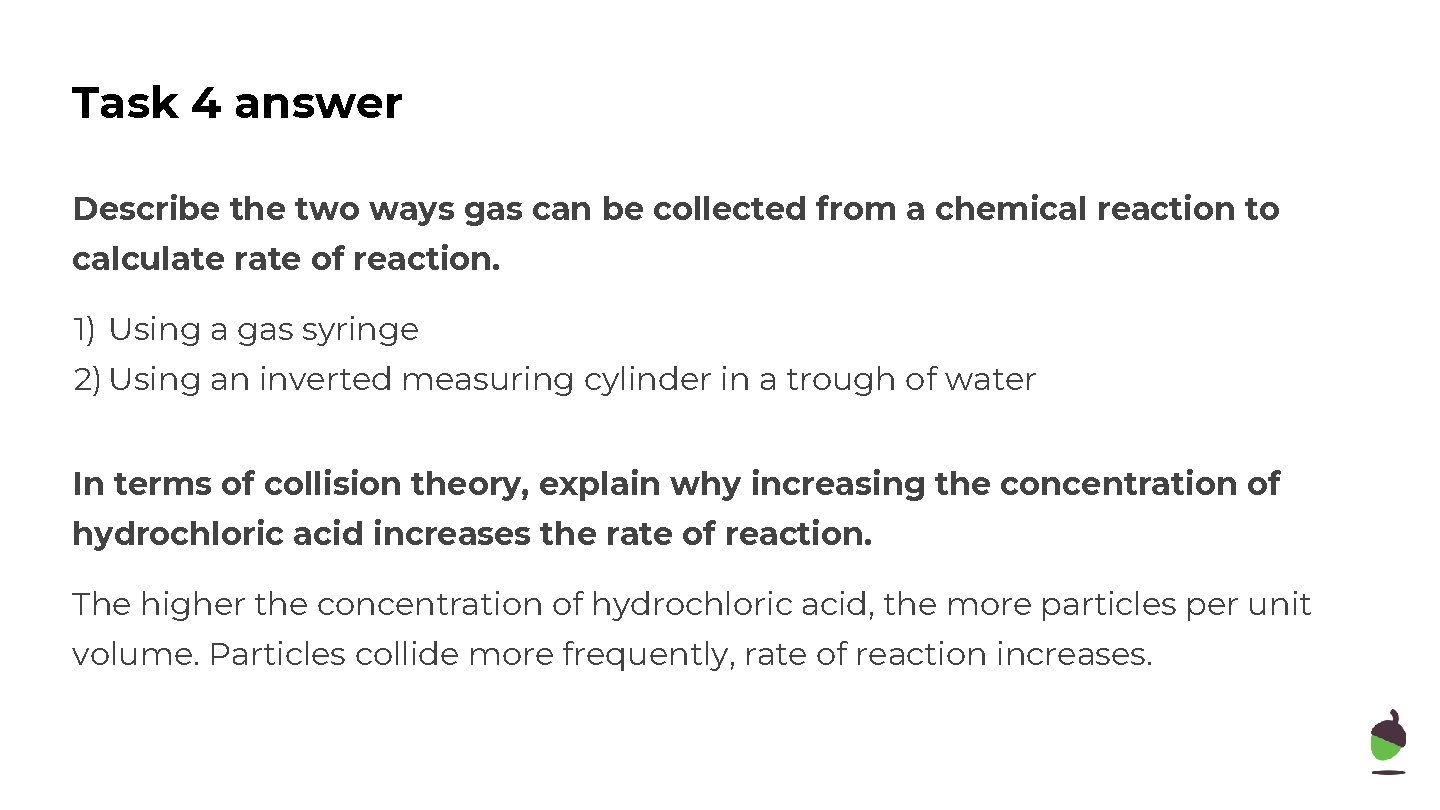
Task 4 answer Describe the two ways gas can be collected from a chemical reaction to calculate rate of reaction. 1) Using a gas syringe 2) Using an inverted measuring cylinder in a trough of water In terms of collision theory, explain why increasing the concentration of hydrochloric acid increases the rate of reaction. The higher the concentration of hydrochloric acid, the more particles per unit volume. Particles collide more frequently, rate of reaction increases.
- Slides: 17