
Rate of Change and Tangent Lines B 1
Rate of Change and Tangent Lines B. 1
Average Rate of Change Average rate of change of a quantity over a period of time is the amount of change divided by the time it takes. In general, the average rate of change of a function over an interval is the amount of change divided by the length of that interval.
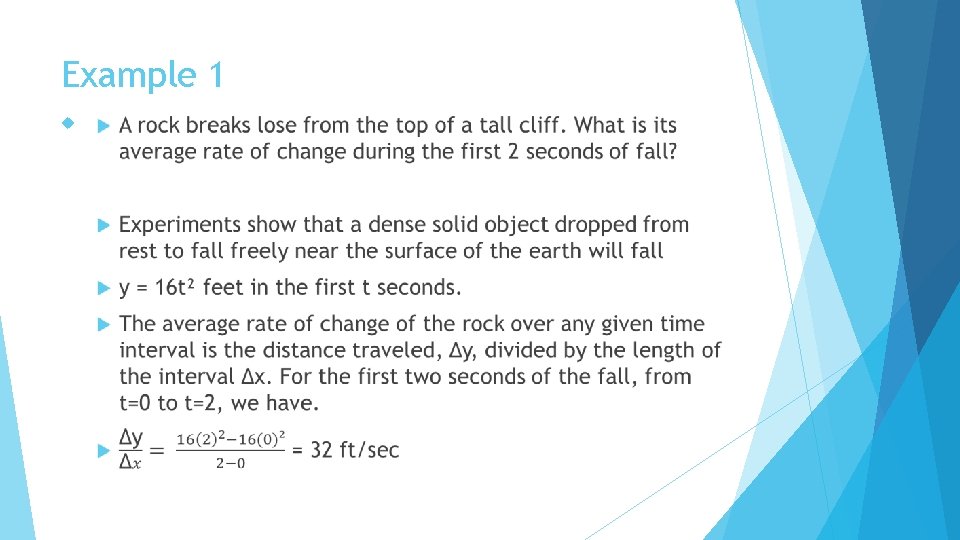
Example 1
Secant Line A secant line of a curve is a line that (locally) intersects two points on the curve. A secant line is a straight line joining two points on a function. It is also equivalent to the average rate of change, or simply the slope between two points. The average rate of change of a function between two points and the slope between two points are the same thing. Secant line = Average Rate of Change = Slope
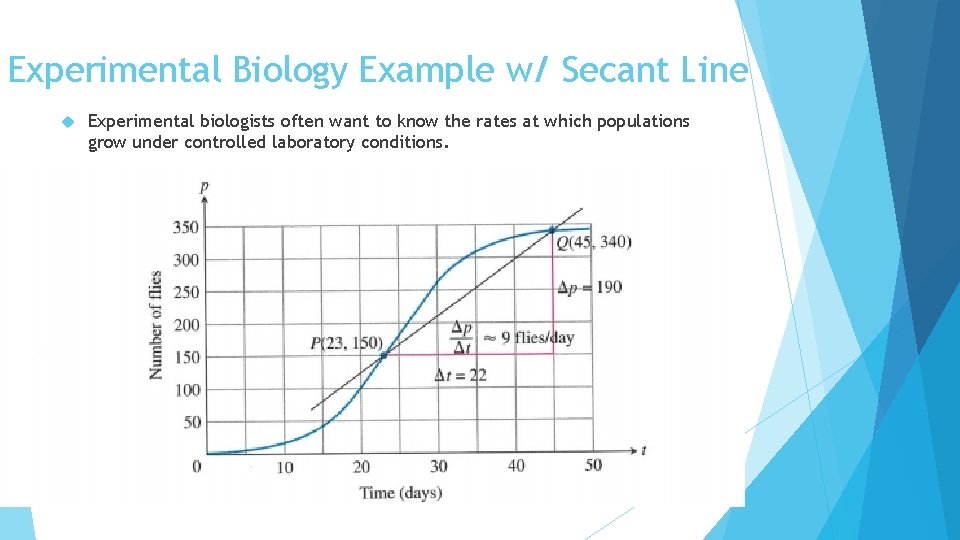
Experimental Biology Example w/ Secant Line Experimental biologists often want to know the rates at which populations grow under controlled laboratory conditions.
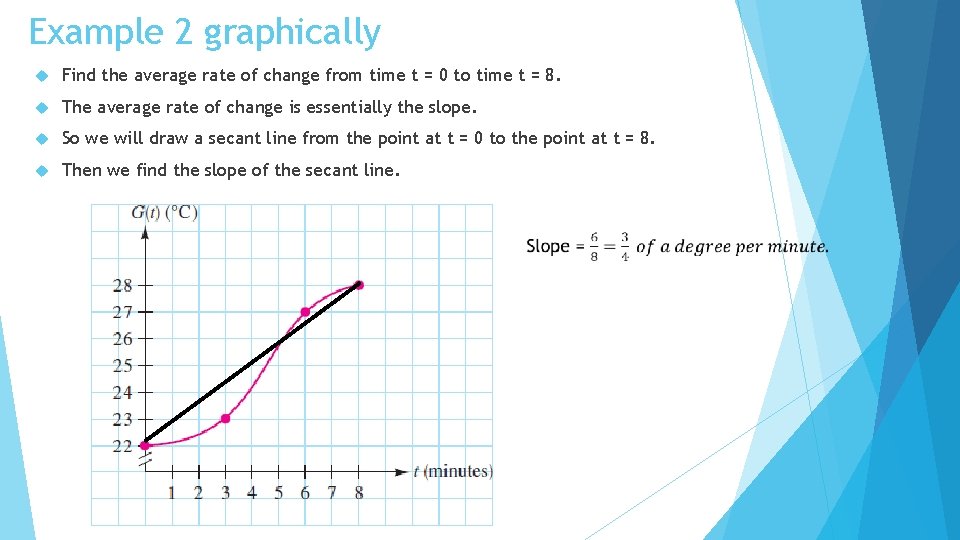
Example 2 graphically Find the average rate of change from time t = 0 to time t = 8. The average rate of change is essentially the slope. So we will draw a secant line from the point at t = 0 to the point at t = 8. Then we find the slope of the secant line.
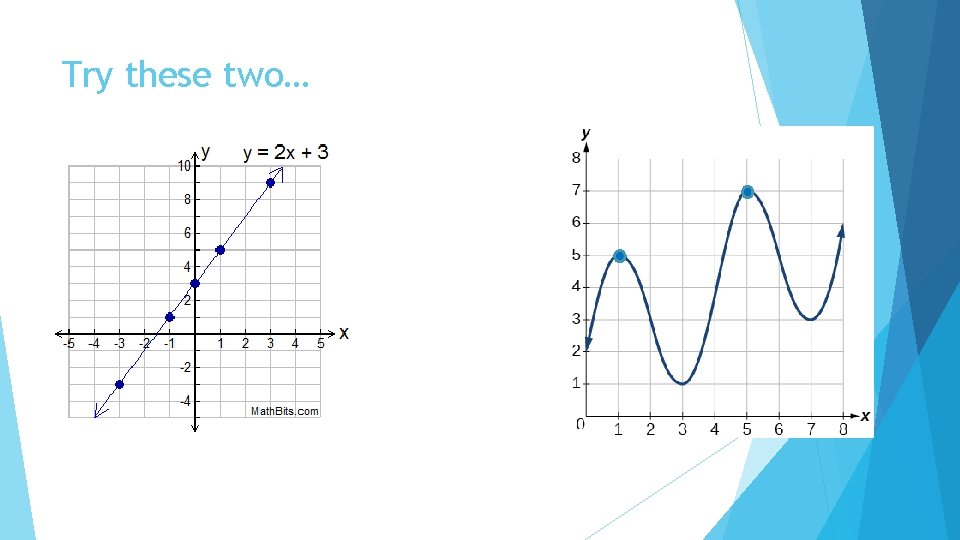
Try these two…

B. 1 Day 1 HW AROC worksheet
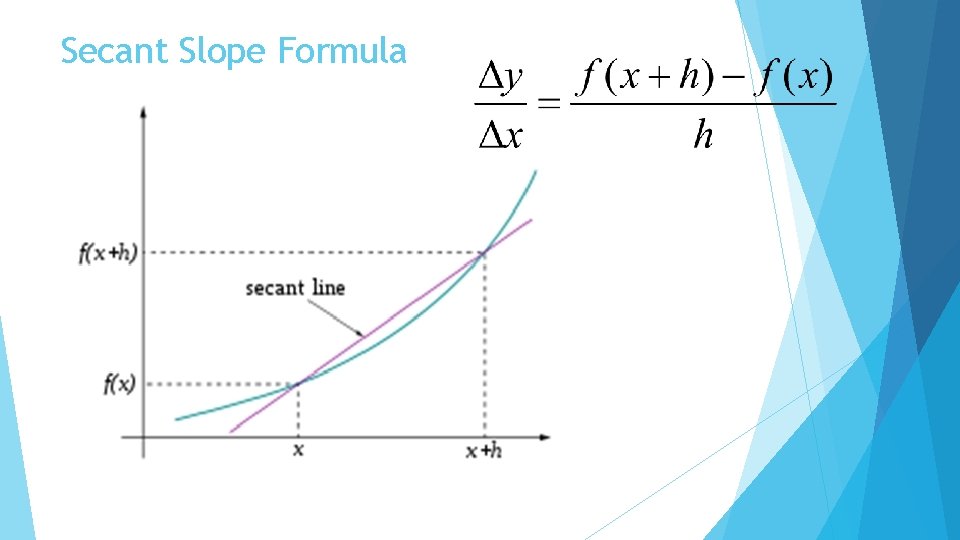
Secant Slope Formula
Instantaneous rate of change A moving objects instantaneous rate of change is the rate of change of the moving object at a given instant of time. The major issue is how to compute this. Since the elapsed time would be zero.
Tangent Line The tangent line (or simply the tangent) to a curve at a given point is the straight line that "just touches" the curve at that point. As it passes through the point where the tangent line and the curve meet, or the point of tangency, the tangent line is "going in the same direction" as the curve, and in this sense it is the best straightline approximation to the curve at that point.
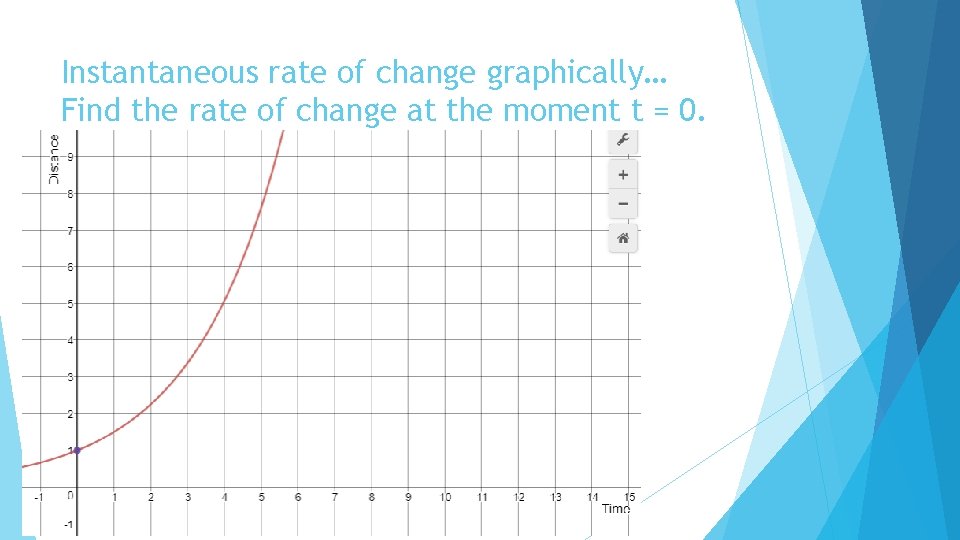
Instantaneous rate of change graphically… Find the rate of change at the moment t = 0.
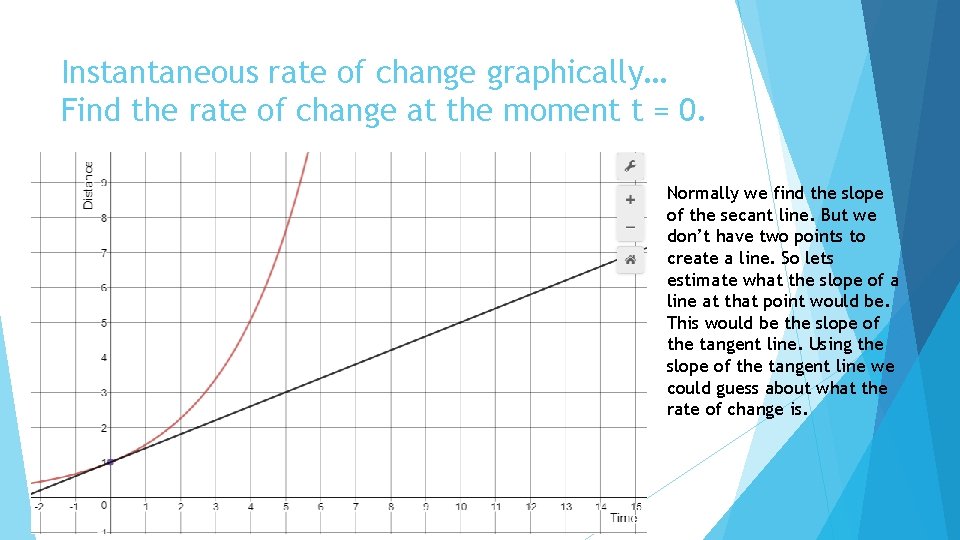
Instantaneous rate of change graphically… Find the rate of change at the moment t = 0. Normally we find the slope of the secant line. But we don’t have two points to create a line. So lets estimate what the slope of a line at that point would be. This would be the slope of the tangent line. Using the slope of the tangent line we could guess about what the rate of change is.
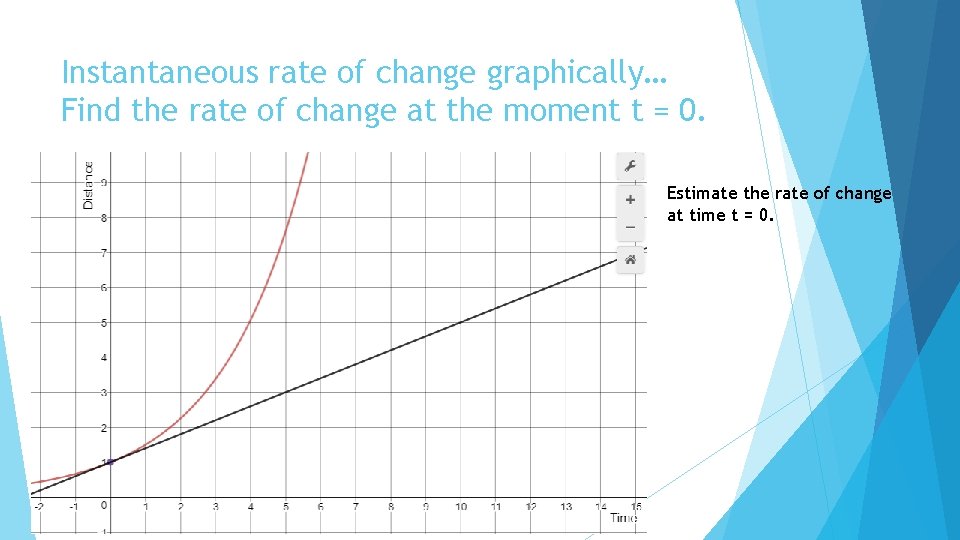
Instantaneous rate of change graphically… Find the rate of change at the moment t = 0. Estimate the rate of change at time t = 0.
B. 1 HW Day 2 Worksheet (Secant slope and Tangent line slope estimates)
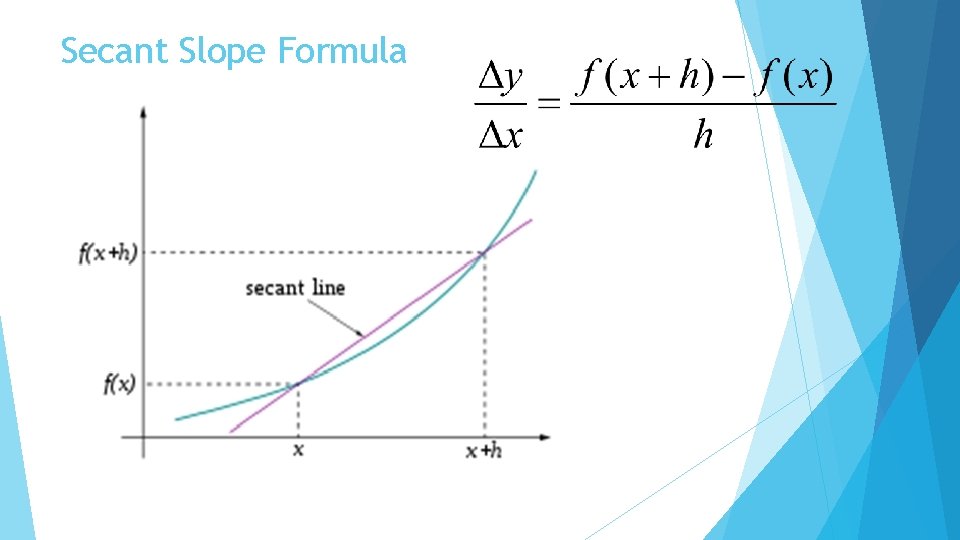
Secant Slope Formula
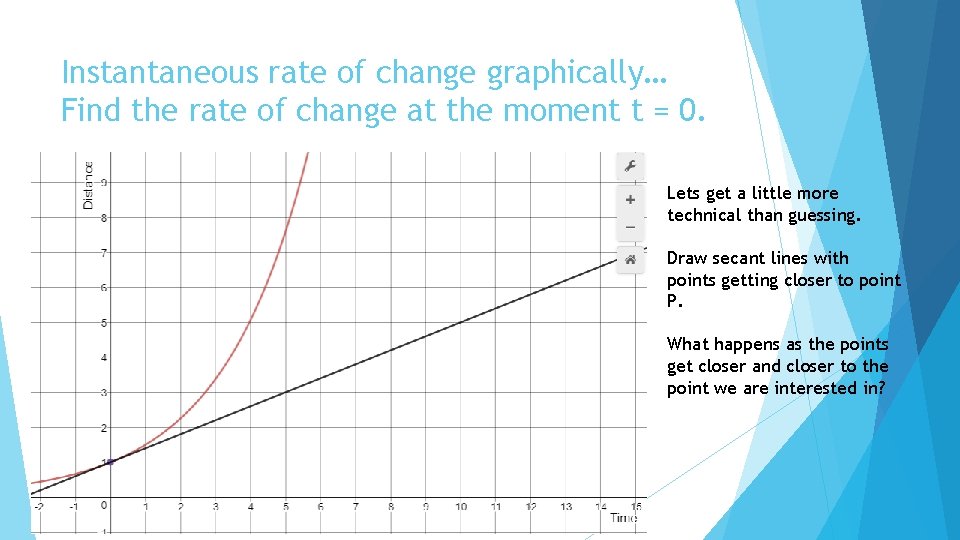
Instantaneous rate of change graphically… Find the rate of change at the moment t = 0. Lets get a little more technical than guessing. Draw secant lines with points getting closer to point P. What happens as the points get closer and closer to the point we are interested in?
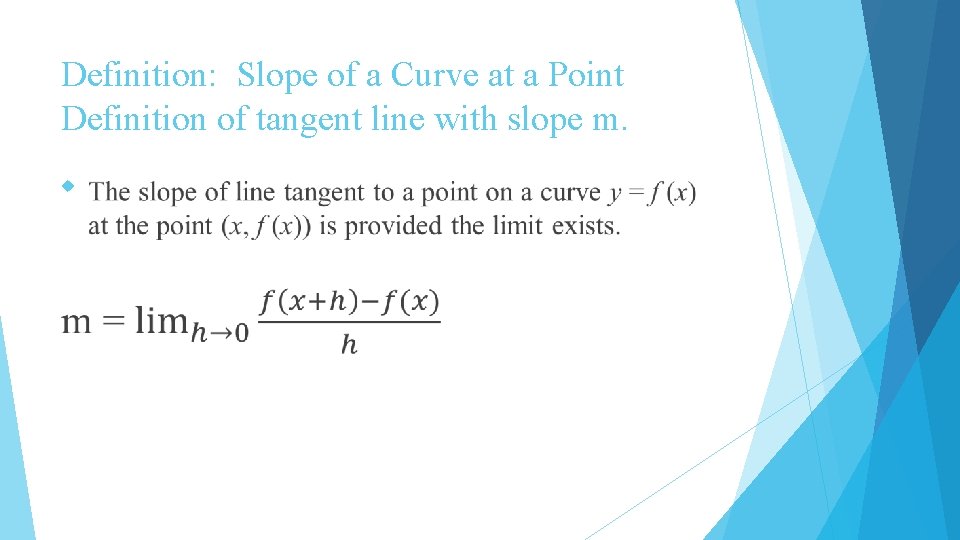
Definition: Slope of a Curve at a Point Definition of tangent line with slope m.
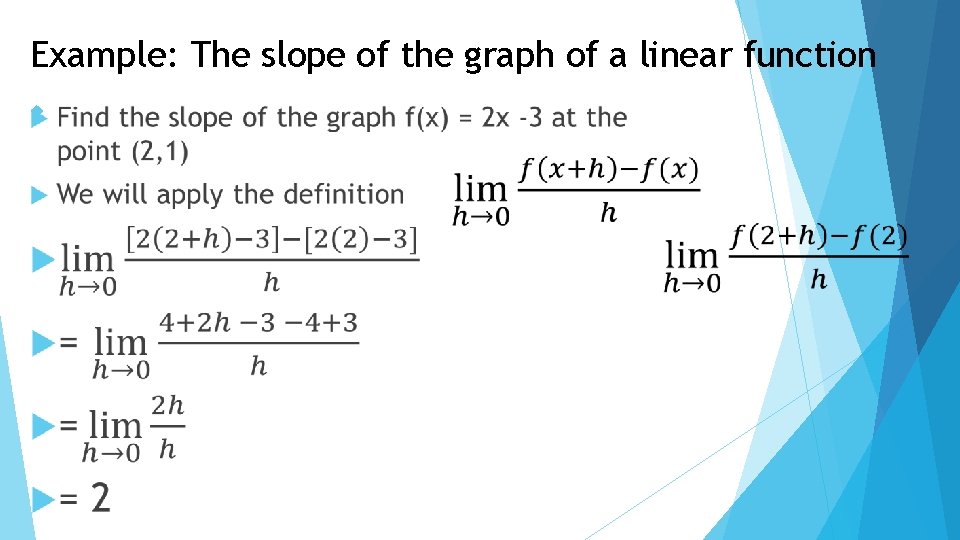
Example: The slope of the graph of a linear function
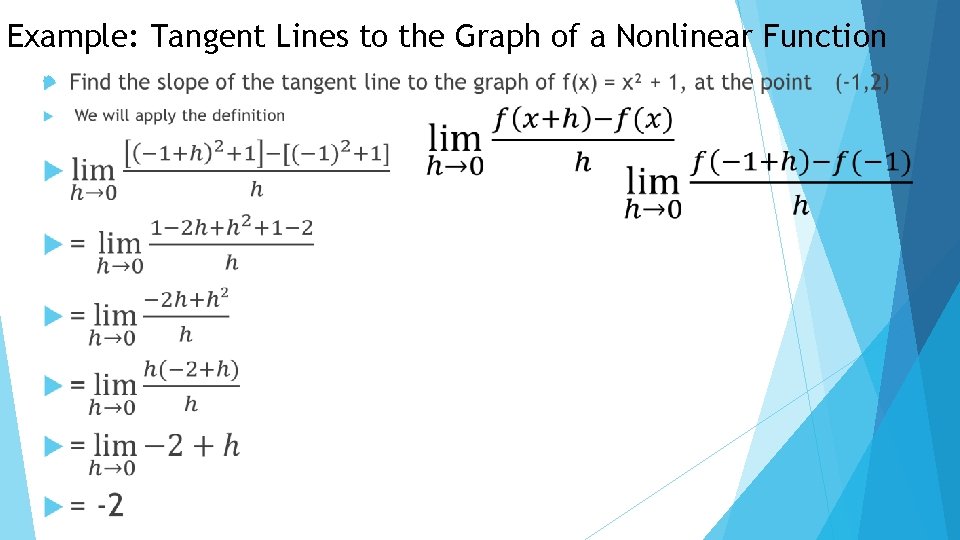
Example: Tangent Lines to the Graph of a Nonlinear Function
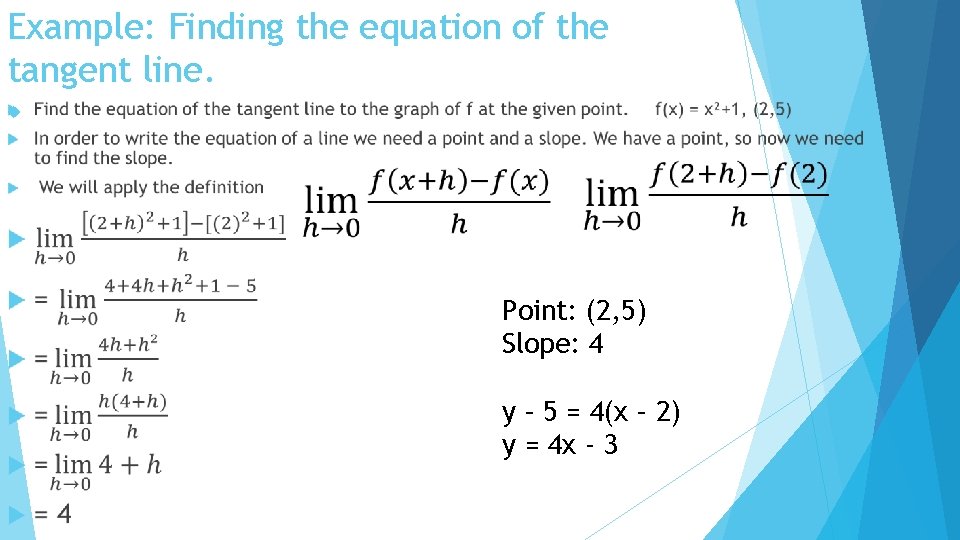
Example: Finding the equation of the tangent line. Point: (2, 5) Slope: 4 y – 5 = 4(x – 2) y = 4 x - 3

B. 1 HW Day 3 Pg. # 104 5, 7, 9, 26, 27
- Slides: 22