
Rare Event Simulations Theory 16 1 Transition state

- Slides: 19
Rare Event Simulations Theory 16. 1 Transition state theory 16. 1 -16. 2 Bennett-Chandler Approach 16. 2 Diffusive Barrier crossings 16. 3 Transition path ensemble 16. 4
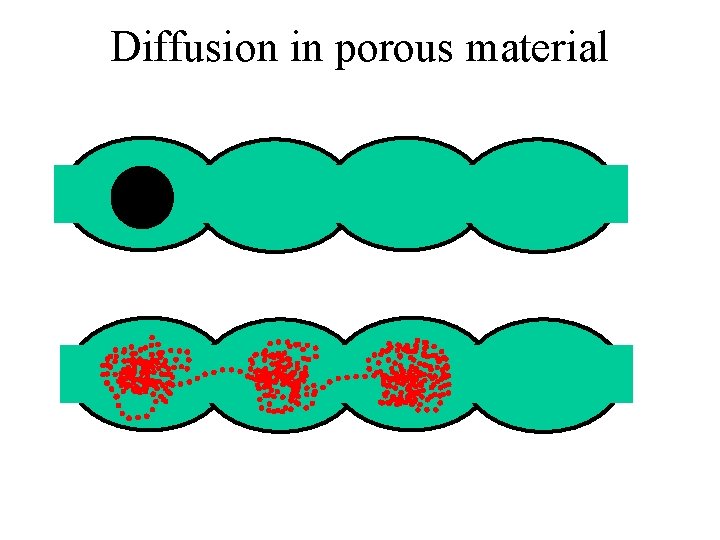
Diffusion in porous material
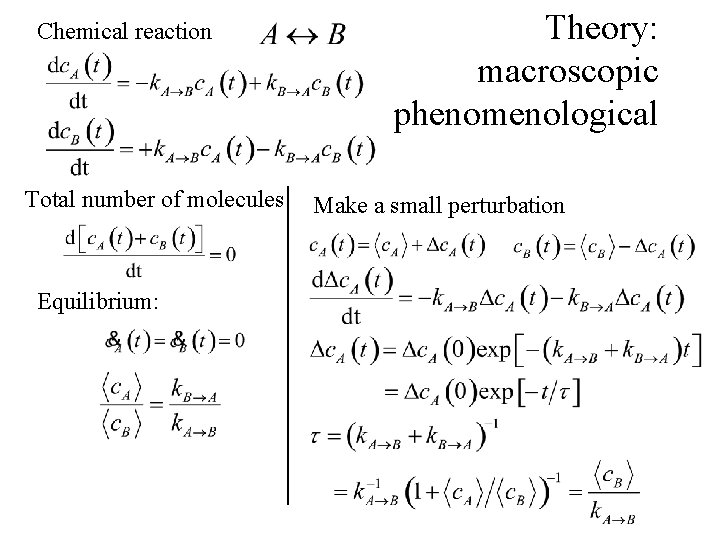
Chemical reaction Total number of molecules Equilibrium: Theory: macroscopic phenomenological Make a small perturbation
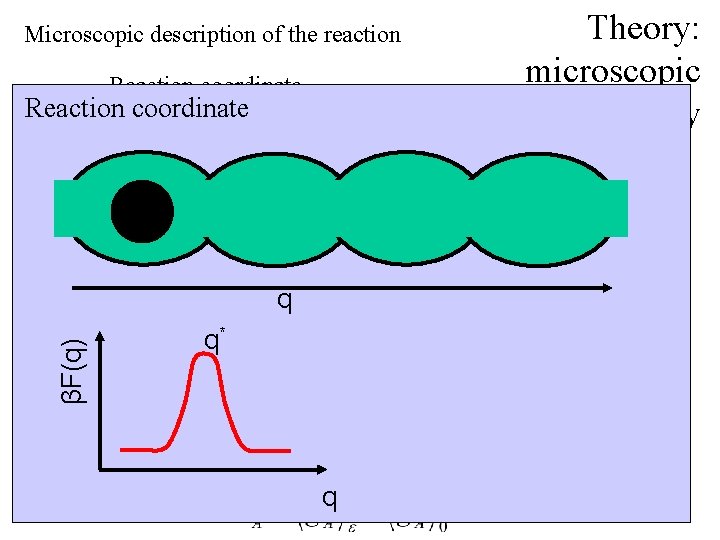
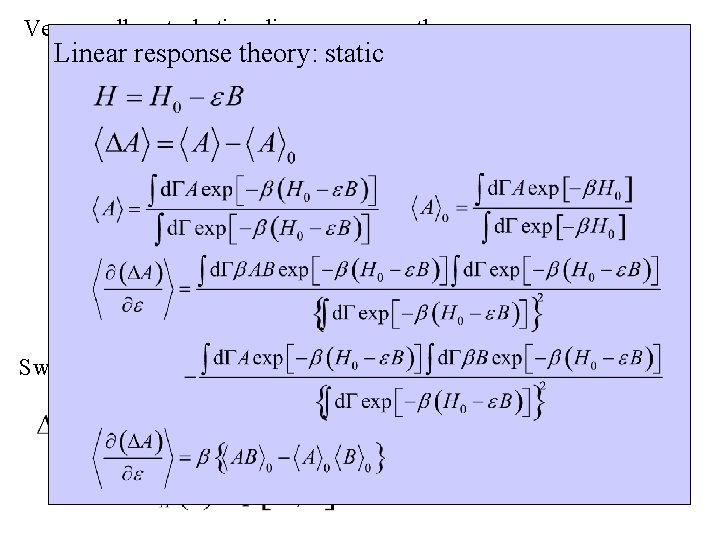
Theory: microscopic linear response theory Microscopic description of the reaction Reaction coordinate Reactant A: Heaviside θ-function Product B: Lowers the potential Increases the concentration of A energy in A q βF(q) * q Perturbation: Probability to be in state A q
Very small perturbation: linear response theory Linear response theory: static Outside the barrier g. A =0 or 1: g. A (x) =g. A (x) Switch of the perturbation: dynamic linear response Holds for sufficiently long times!
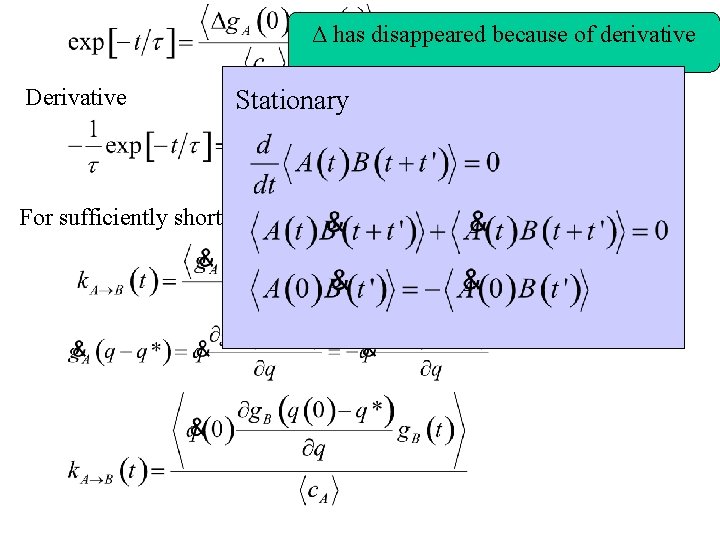
Δ has disappeared because of derivative Derivative For sufficiently short t Stationary
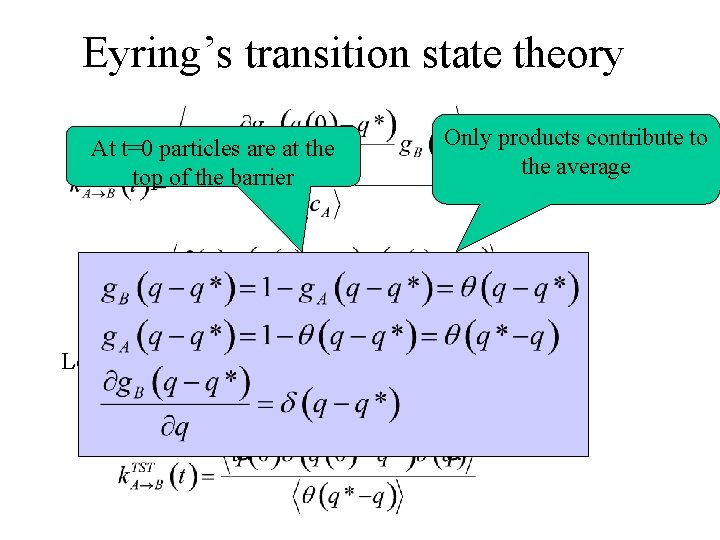
Eyring’s transition state theory At t=0 particles are at the top of the barrier Let us consider the limit: t → 0+ Only products contribute to the average
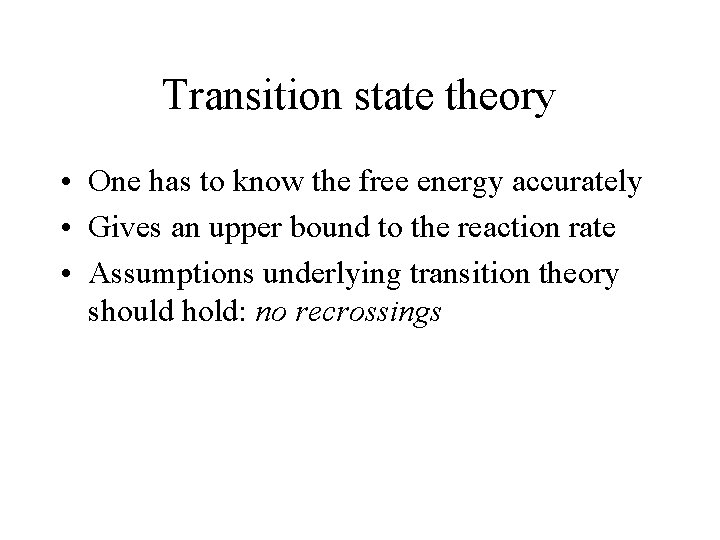
Transition state theory • One has to know the free energy accurately • Gives an upper bound to the reaction rate • Assumptions underlying transition theory should hold: no recrossings
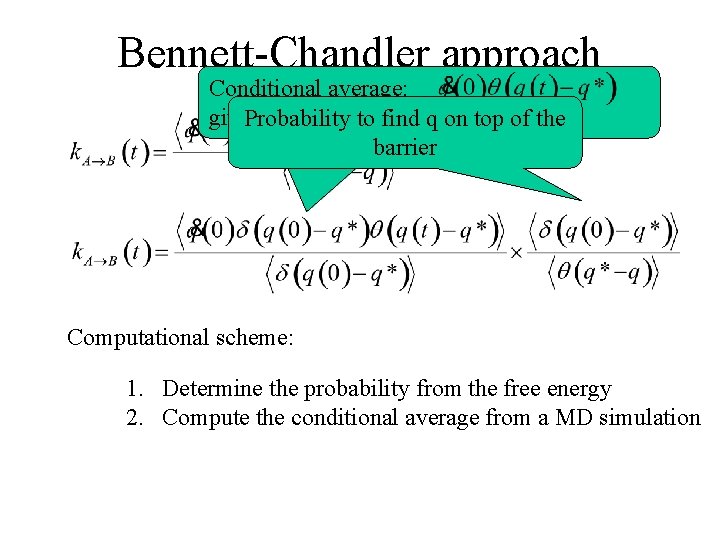
Bennett-Chandler approach Conditional average: given that we start on top theofbarrier Probability to find q onoftop the barrier Computational scheme: 1. Determine the probability from the free energy 2. Compute the conditional average from a MD simulation
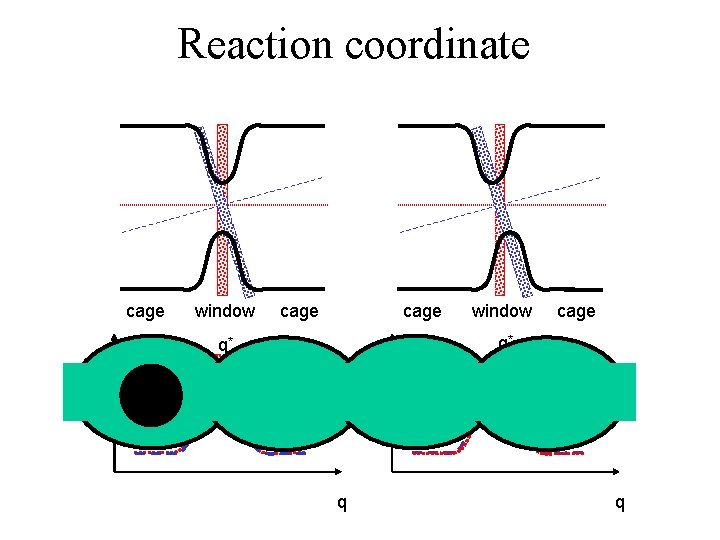
Reaction coordinate cage window cage q* βF(q) q* q q
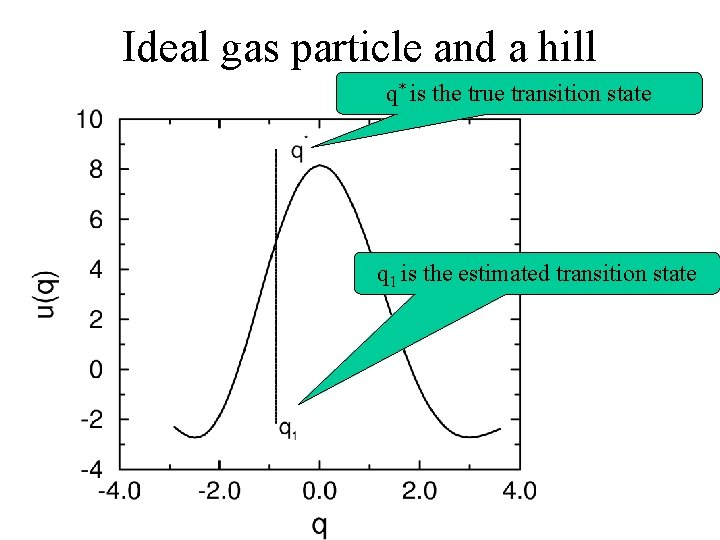
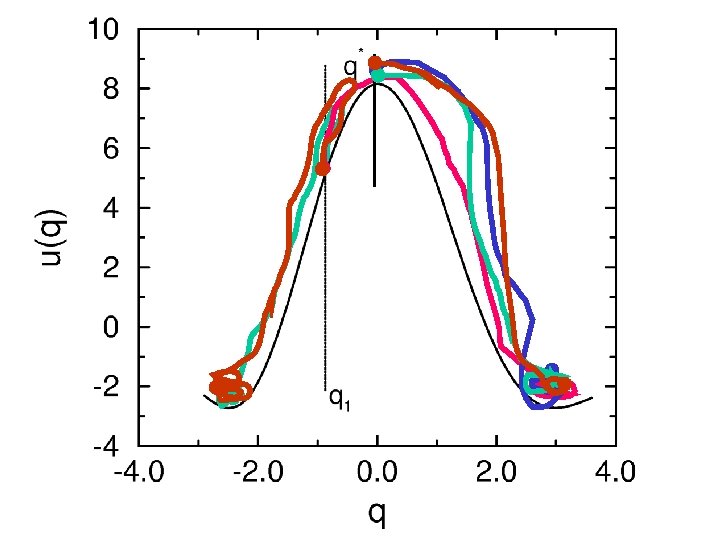
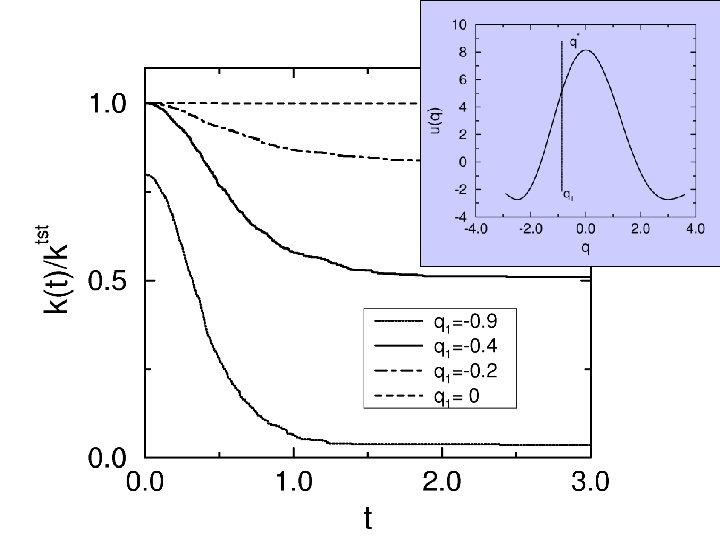
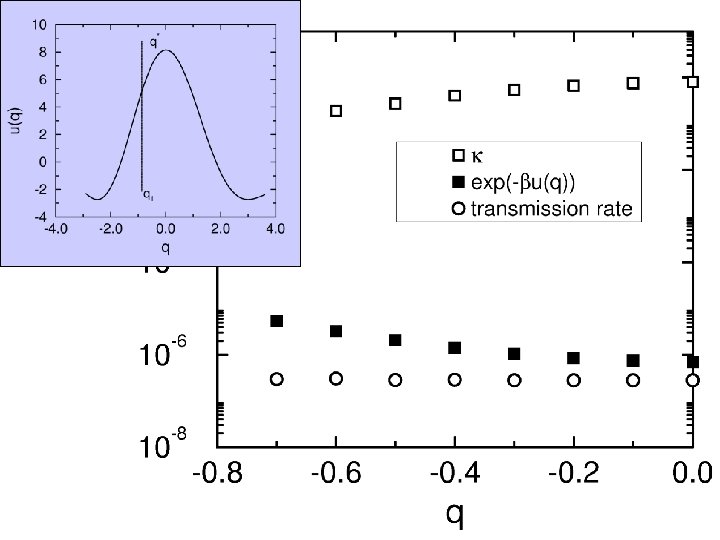
Ideal gas particle and a hill q* is the true transition state q 1 is the estimated transition state
Bennett-Chandler approach • Results are independent of the precise location of the estimate of the transition state, but the accuracy does. • If the transmission coefficient is very low – Poor estimate of the reaction coordinate – Diffuse barrier crossing
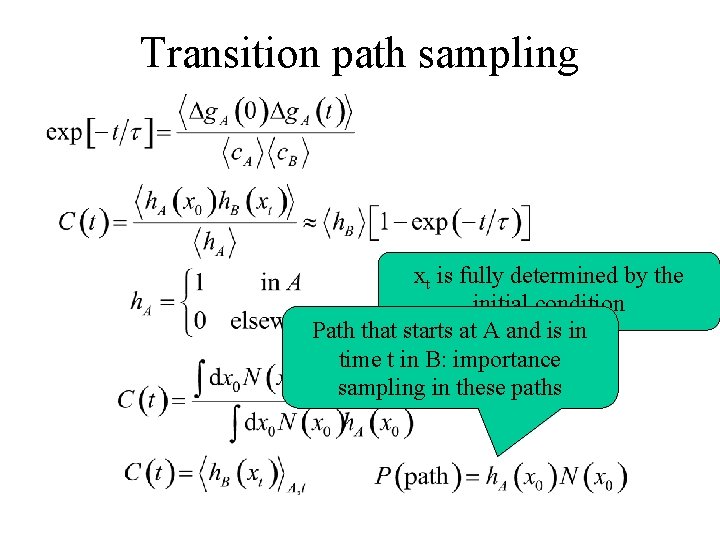
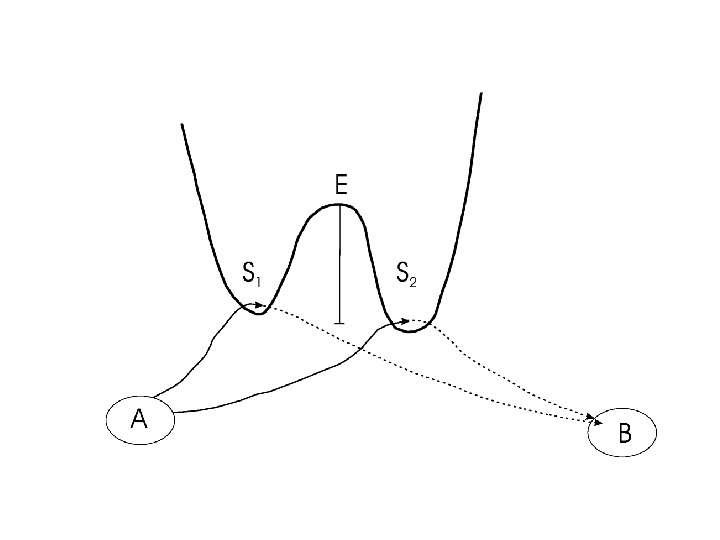
Transition path sampling xt is fully determined by the initial condition Path that starts at A and is in time t in B: importance sampling in these paths
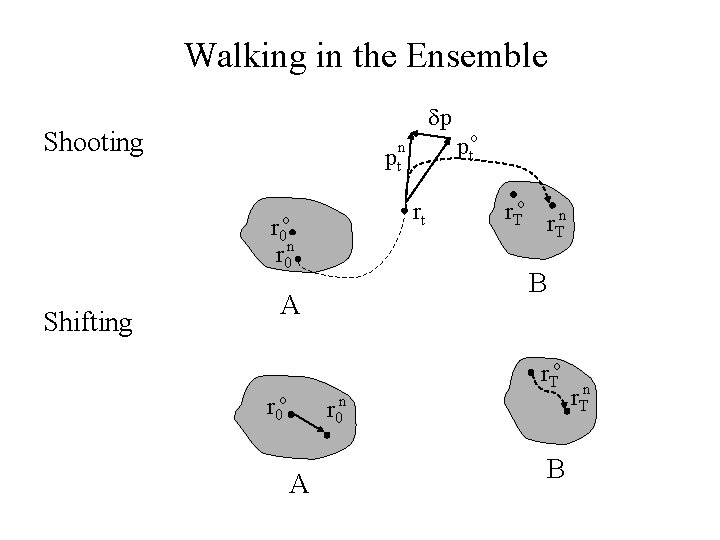
Walking in the Ensemble dp Shooting n pt rt r 0 o r 0 n Shifting pto r. Tn B A r. To r 0 n A B r. Tn