
Rapid Accountability Review CARE Response to Ethiopia El
Rapid Accountability Review CARE Response to Ethiopia El. Nino Drought 6/15 – 3/17 Uwe Korus CARE Emergency Group March 2017
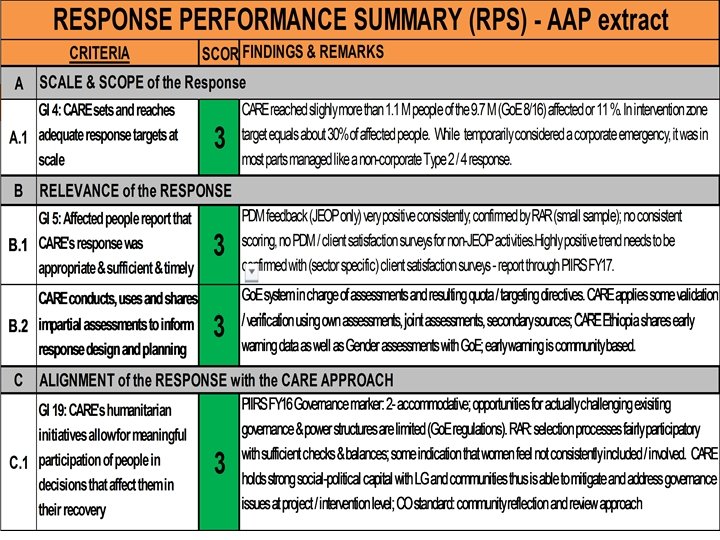
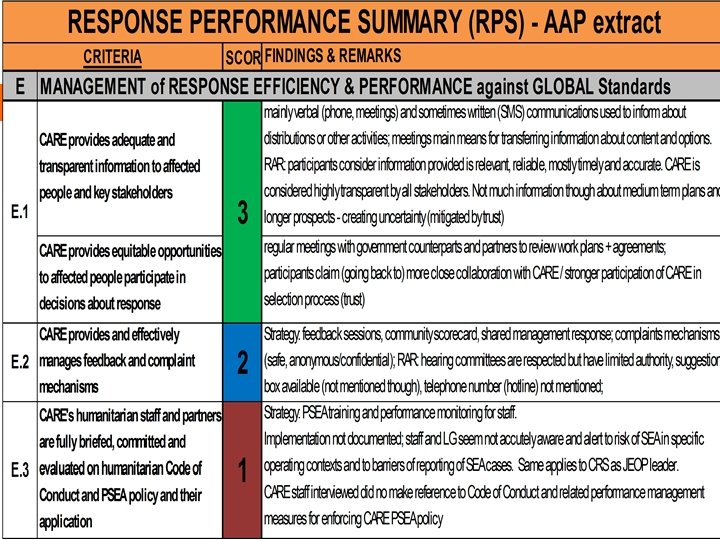
Basis for Rapid Accountability Review CARE’s Humanitarian Accountability Framework (HAF) – especially: CHS commitments 4, 5, 8 CARE Global indicators: GI 4: Scale & Scope of CARE’s quality & life saving humanitarian assistance GI 5: Satisfaction of affected people with relevance, timeliness and sufficient GI 19: meaningful participation of people in decisions that affect them in their recovery
Methodology of RAR Focus Group Discussions (6 in 3 Woreda in Oromia) Key informant interviews: LG (3 Woreda) & CARE staff Document review: PDM reports Guidelines for targeting process, feedback and complaints mechanisms and PDM Other reports / reviews
RAR – FGD Methodology Reflect on participants’ interactions and relations with CARE Discuss key Principles of Accountability: Information Sharing Participation Feedback & Complaints Scorecard
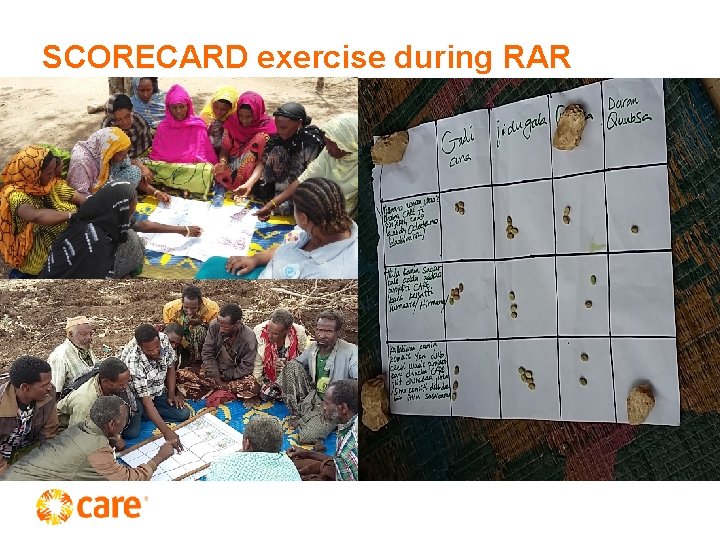
SCORECARD exercise during RAR
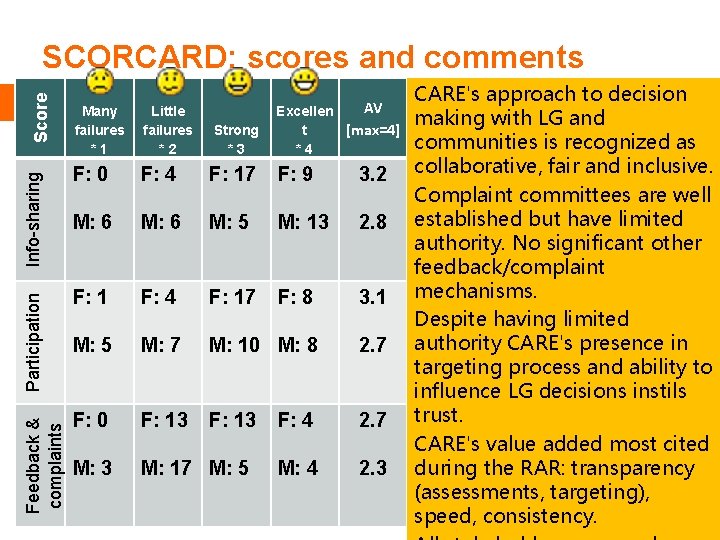
F: 0 F: 4 F: 17 F: 9 3. 2 M: 6 M: 5 M: 13 2. 8 F: 1 F: 4 F: 17 F: 8 3. 1 M: 5 M: 7 M: 10 M: 8 2. 7 F: 0 F: 13 F: 4 2. 7 M: 3 M: 17 M: 5 M: 4 2. 3 Info-sharing Little failures *2 Participation AV Excellen t [max=4] *4 Many failures *1 Feedback & complaints Score SCORCARD: scores and comments Strong *3 CARE's approach to decision making with LG and communities is recognized as collaborative, fair and inclusive. Complaint committees are well established but have limited authority. No significant other feedback/complaint mechanisms. Despite having limited authority CARE's presence in targeting process and ability to influence LG decisions instils trust. CARE's value added most cited during the RAR: transparency (assessments, targeting), speed, consistency.
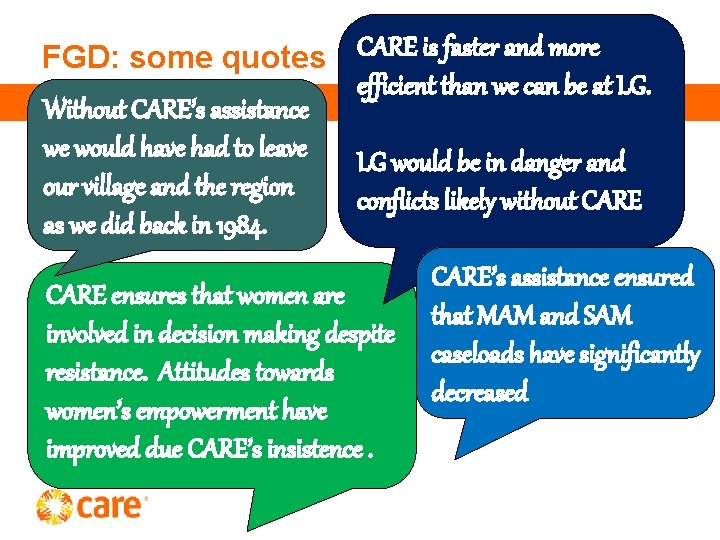
CARE is faster and more FGD: some quotes efficient than we can be at LG. Without CARE’s assistance we would have had to leave LG would be in danger and our village and the region conflicts likely without CARE as we did back in 1984. CARE ensures that women are involved in decision making despite resistance. Attitudes towards women’s empowerment have improved due CARE’s insistence. CARE’s assistance ensured that MAM and SAM caseloads have significantly decreased
- Slides: 9