
RANGELANDS OF THE GREAT PLAINS University of Idaho
- Slides: 20
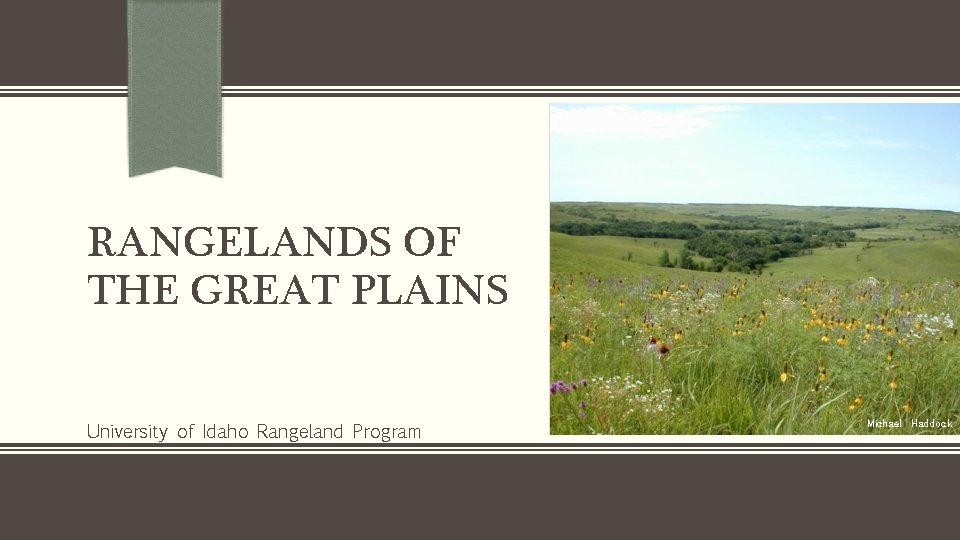
RANGELANDS OF THE GREAT PLAINS University of Idaho Rangeland Program Michael Haddock
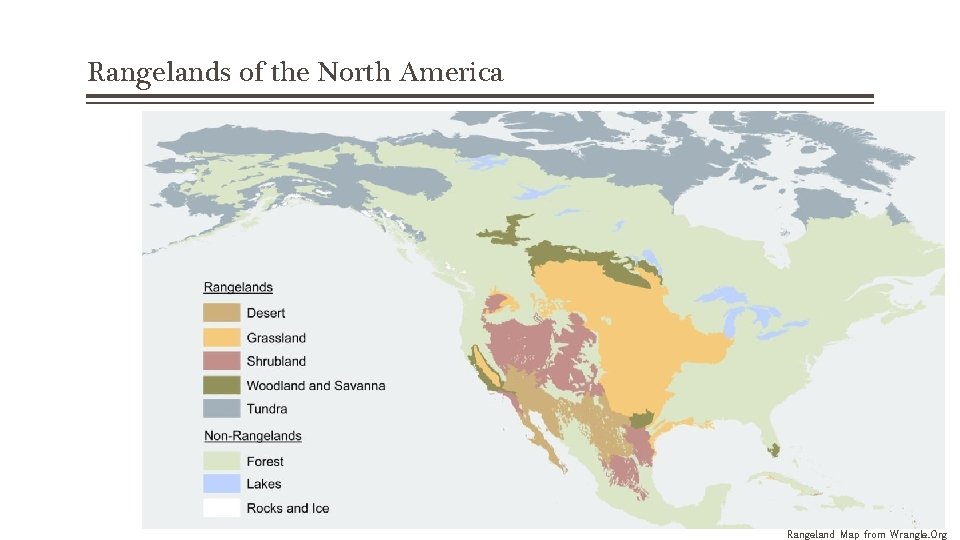
Rangelands of the North America Rangeland Map from Wrangle. Org
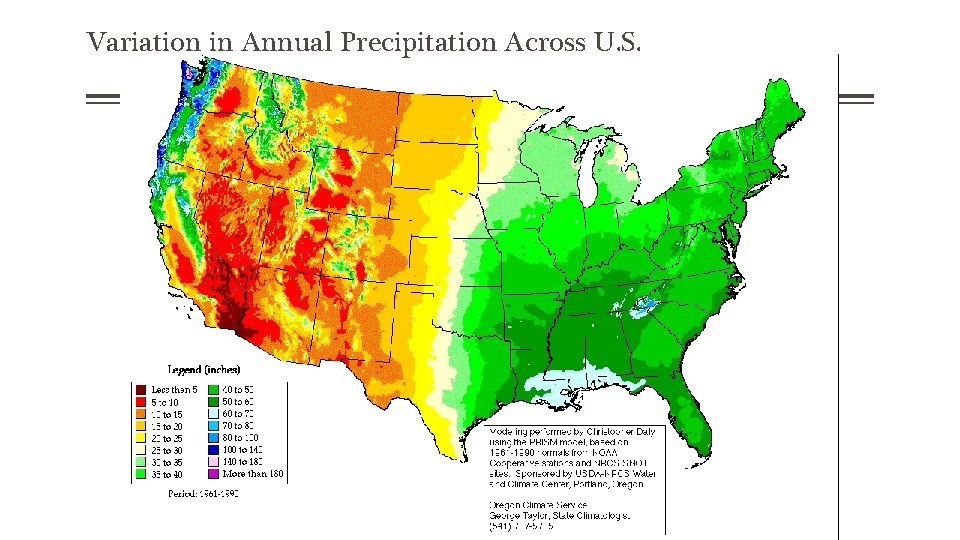
Variation in Annual Precipitation Across U. S.
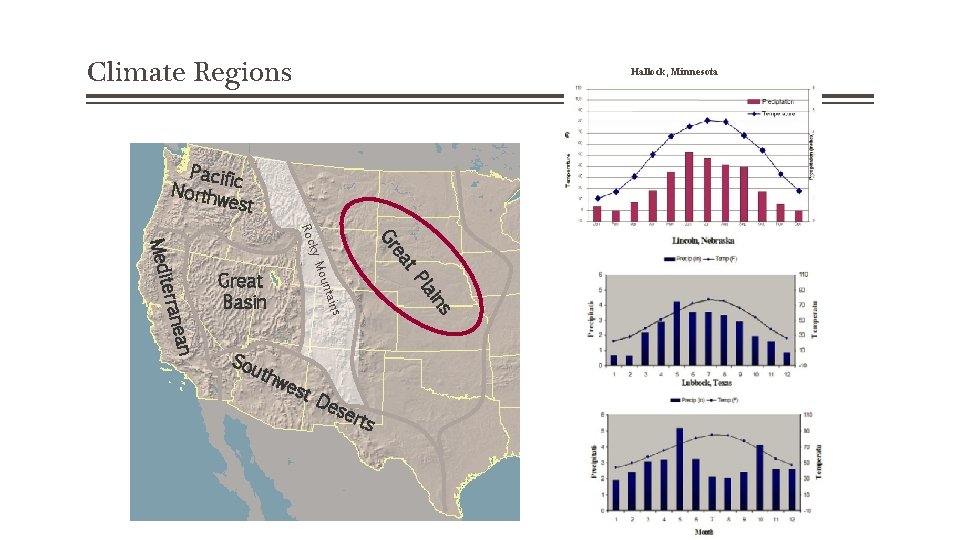
Climate Regions Hallock, Minnesota Pacifi North c west ea ser t ns ai De Pl est t s tain oun y M So uth w Gr k Roc nean terra Medi Great Basin s
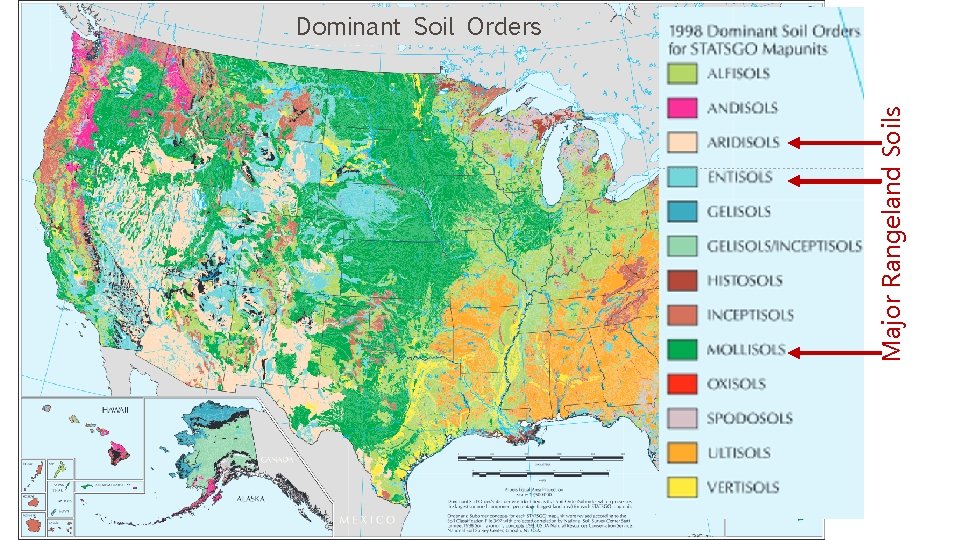
Major Rangeland Soils Dominant Soil Orders
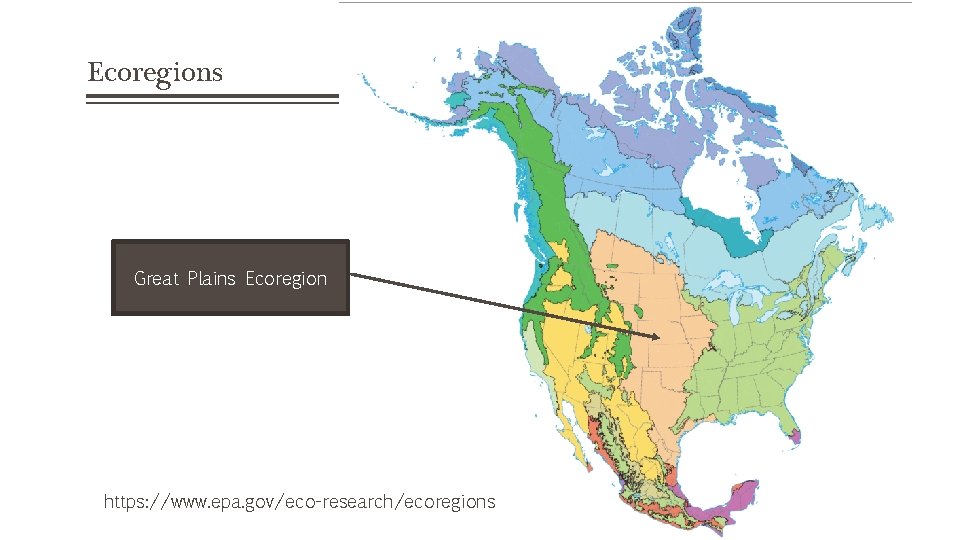
Ecoregions Great Plains Ecoregion https: //www. epa. gov/eco-research/ecoregions
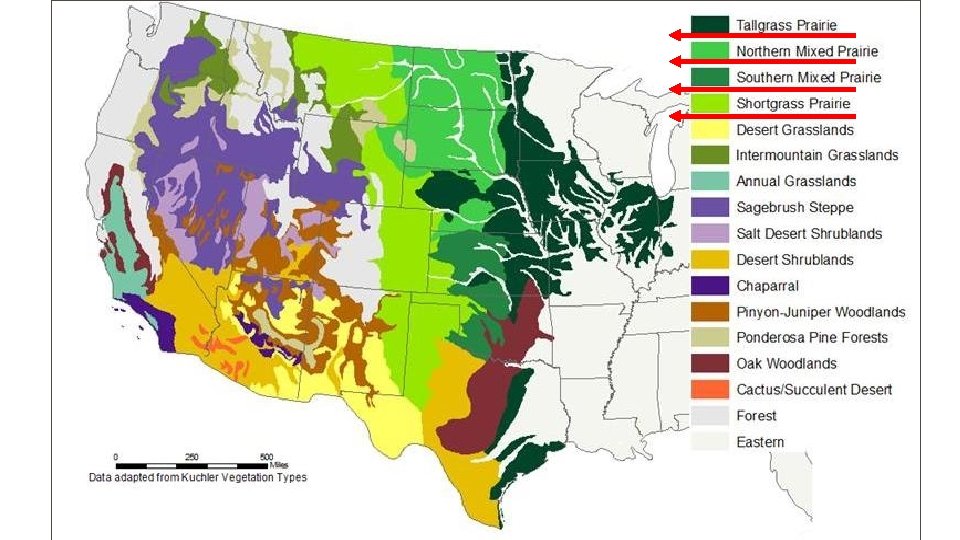
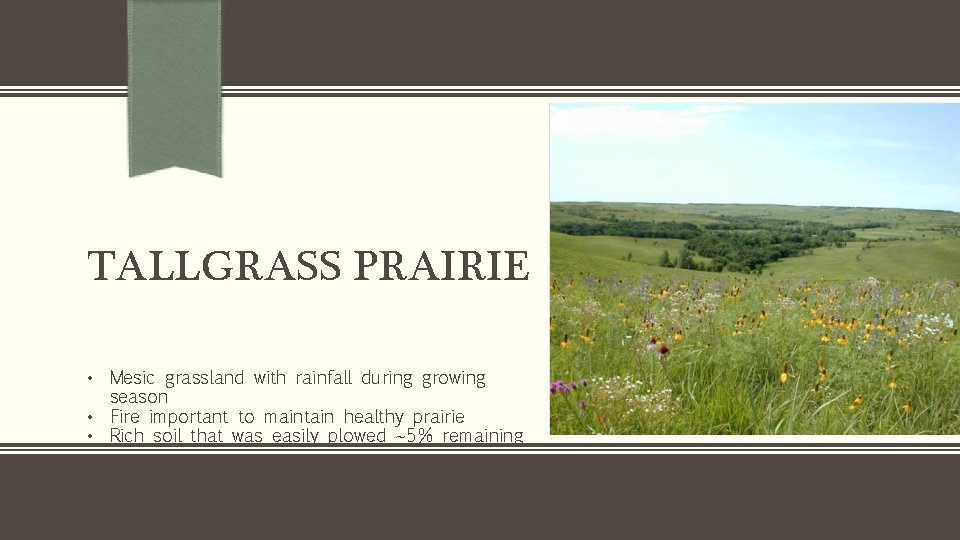
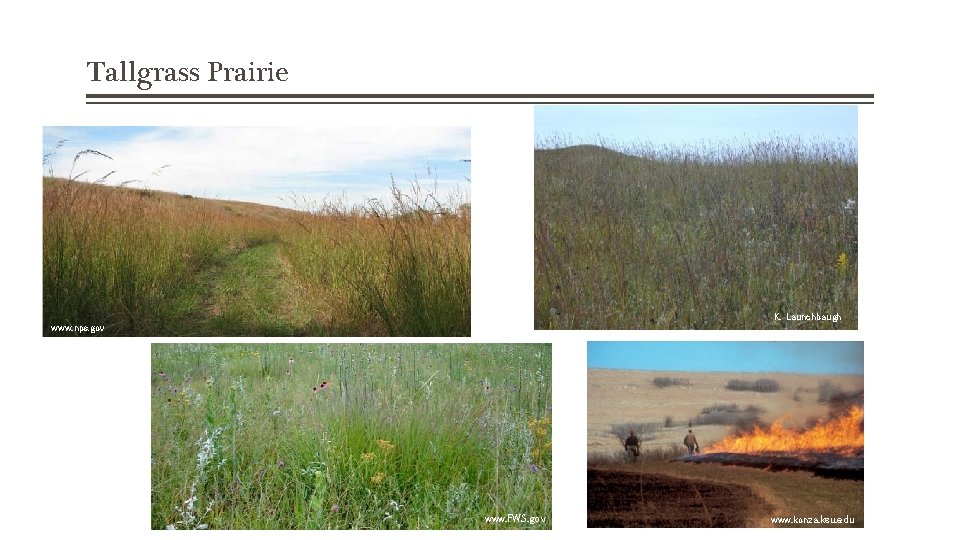
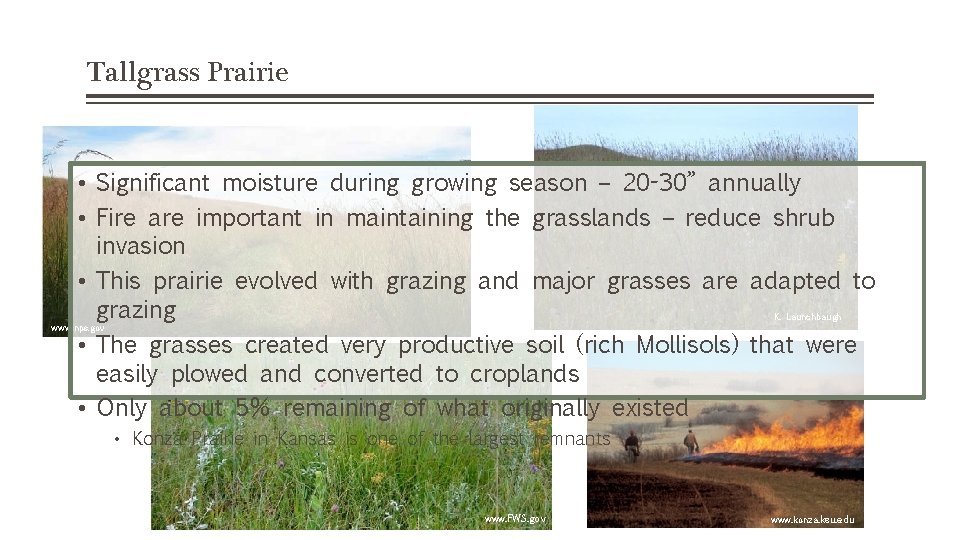
TALLGRASS PRAIRIE • Mesic grassland with rainfall during growing season • Fire important to maintain healthy prairie • Rich soil that was easily plowed ~5% remaining Gearhart K. Amanda Launchbaugh
Tallgrass Prairie K. Launchbaugh www. nps. gov www. FWS. gov www. konza. ksu. edu
Tallgrass Prairie • Significant moisture during growing season – 20 -30” annually • Fire are important in maintaining the grasslands – reduce shrub invasion • This prairie evolved with grazing and major grasses are adapted to grazing www. • The grasses created very productive soil (rich Mollisols) that were easily plowed and converted to croplands • Only about 5% remaining of what originally existed K. Launchbaugh nps. gov • Konza Prairie in Kansas is one of the largest remnants www. FWS. gov www. konza. ksu. edu
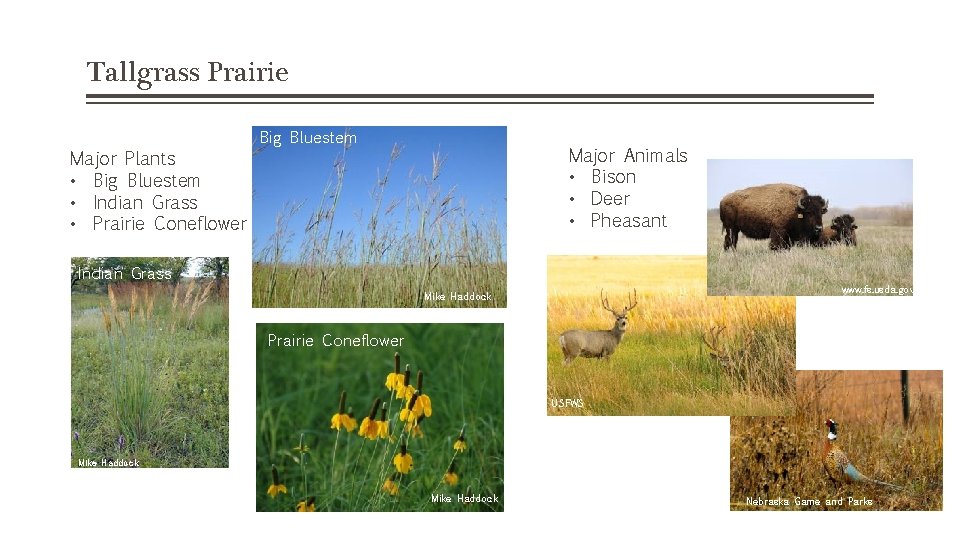
Tallgrass Prairie Major Plants • Big Bluestem • Indian Grass • Prairie Coneflower Big Bluestem Major Animals • Bison • Deer • Pheasant Indian Grass www. fs. usda. gov Mike. Haddock Mike www. fs. usda. go v Prairie Coneflower USFWS Mike Haddock Nebraska Game and Parks
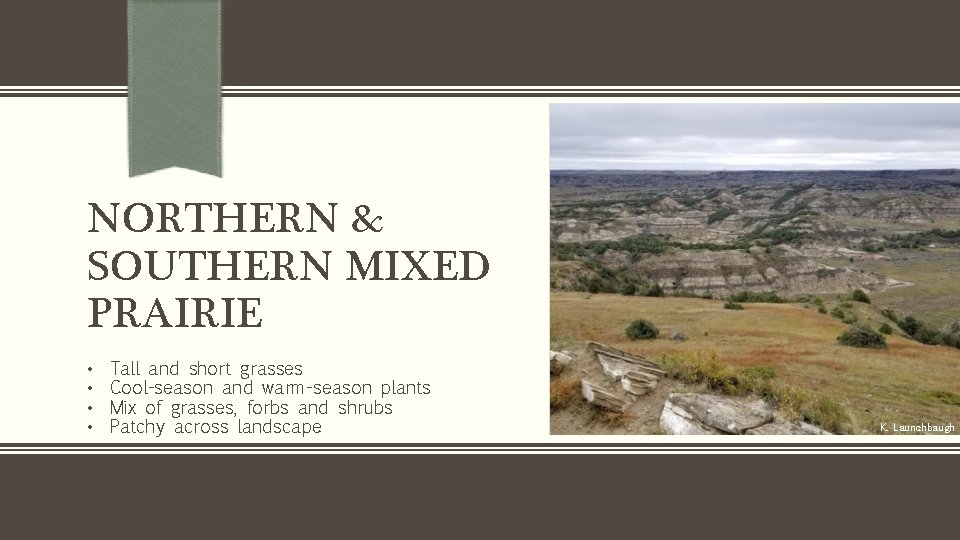
NORTHERN & SOUTHERN MIXED PRAIRIE • • Tall and short grasses Cool-season and warm-season plants Mix of grasses, forbs and shrubs Patchy across landscape Gearhart K. Amanda Launchbaugh
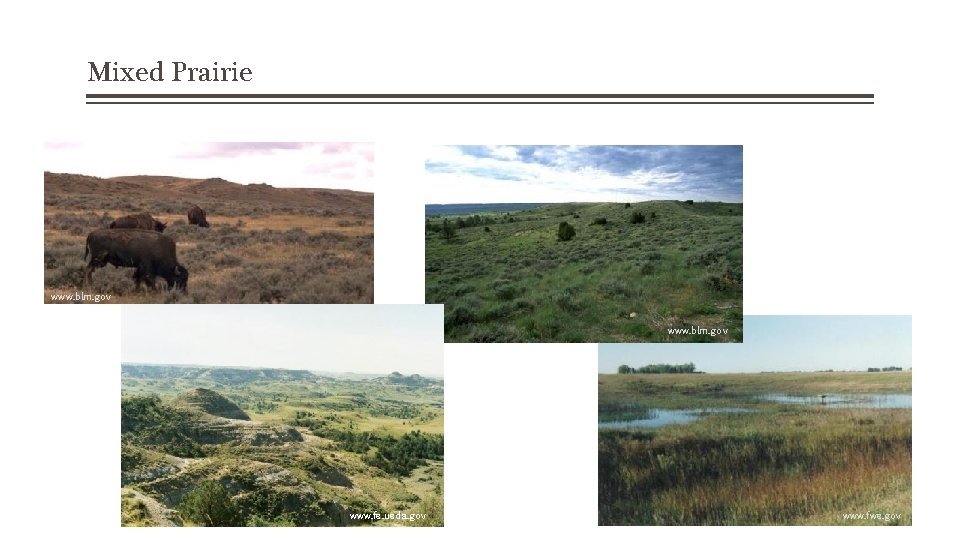
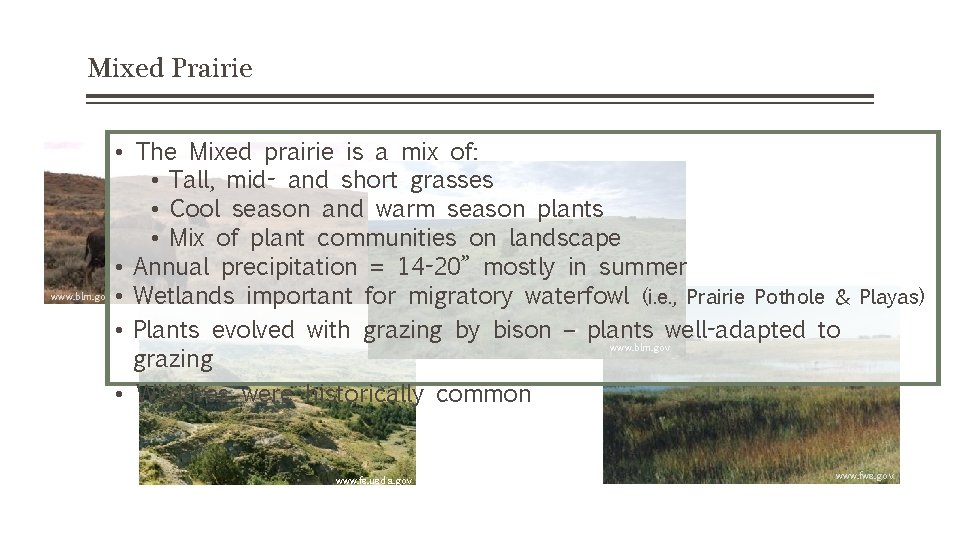
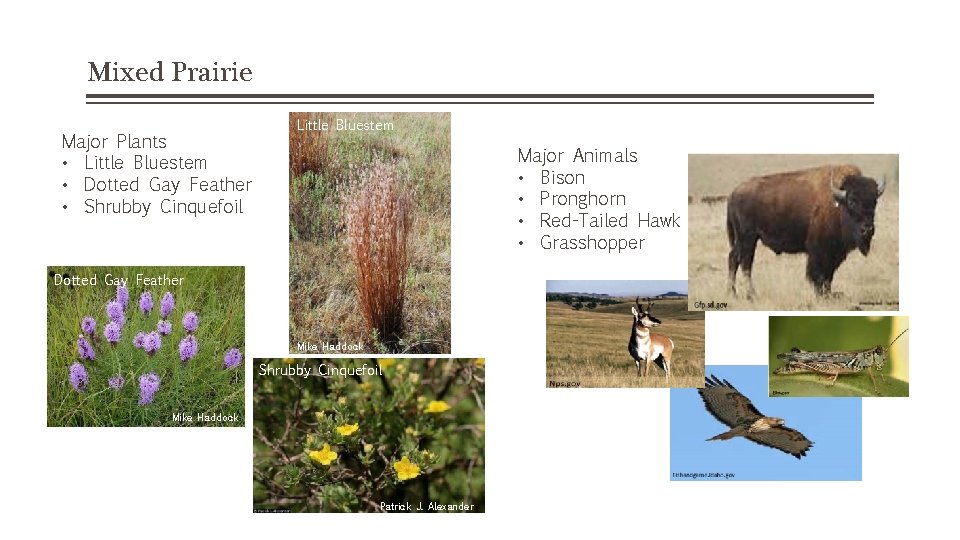
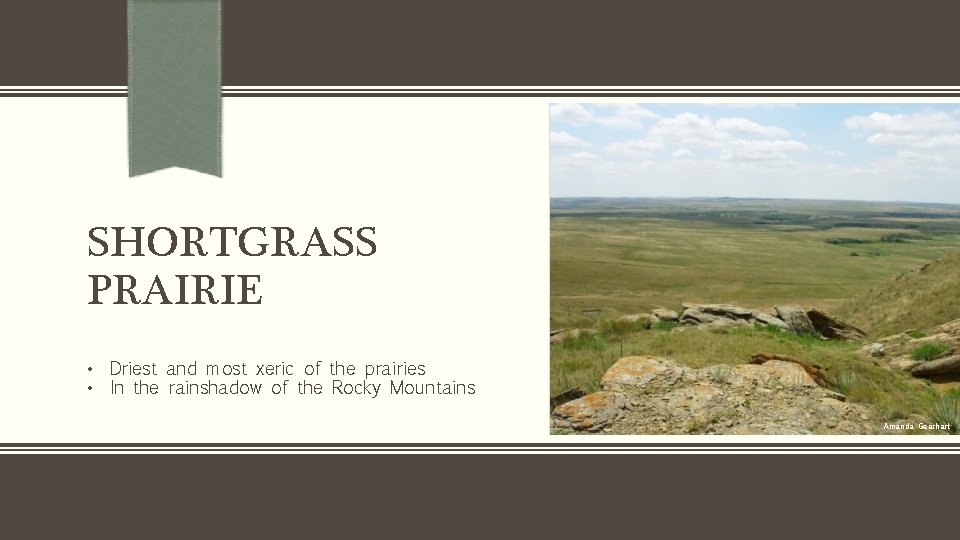
Mixed Prairie www. blm. gov www. fs. usda. gov www. fws. gov
Mixed Prairie • The Mixed prairie is a mix of: • Tall, mid- and short grasses • Cool season and warm season plants • Mix of plant communities on landscape • Annual precipitation = 14 -20” mostly in summer www. blm. gov • Wetlands important for migratory waterfowl (i. e. , Prairie Pothole & Playas) • Plants evolved with grazing by bison – plants well-adapted to www. blm. gov grazing • Wildfires were historically common www. fs. usda. gov www. fws. gov
Mixed Prairie Major Plants • Little Bluestem • Dotted Gay Feather • Shrubby Cinquefoil Little Bluestem Major Animals • Bison • Pronghorn • Red-Tailed Hawk • Grasshopper Dotted Gay Feather Mike Haddock Shrubby Cinquefoil Mike Haddock Patrick J. Alexander
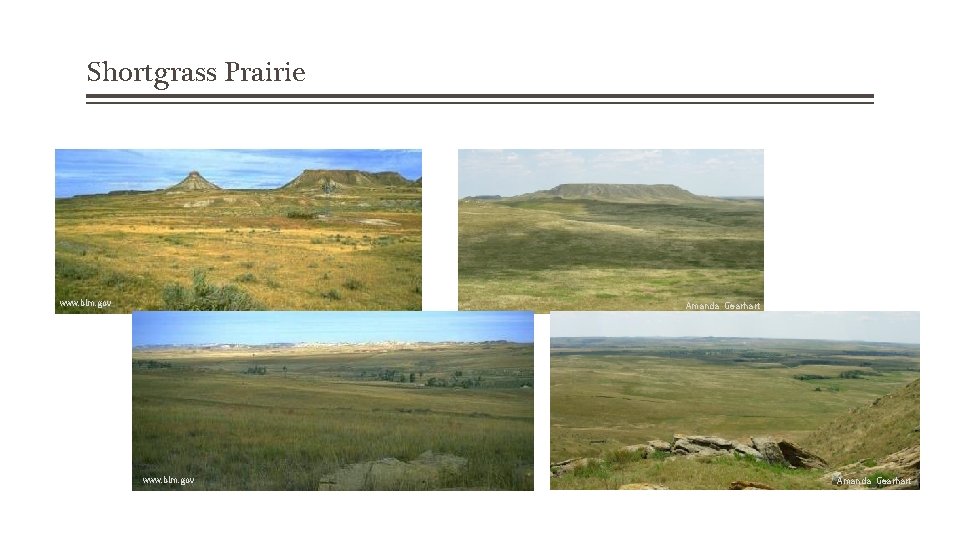
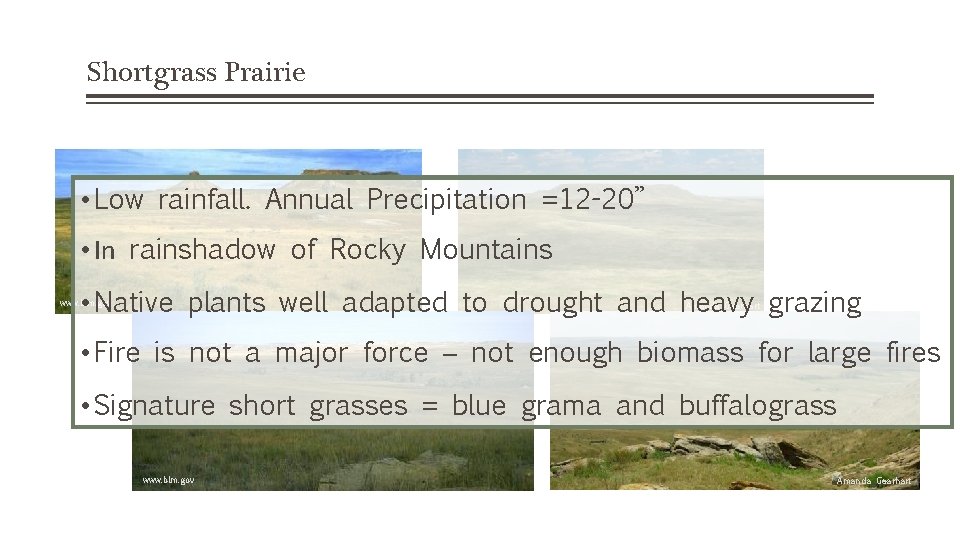
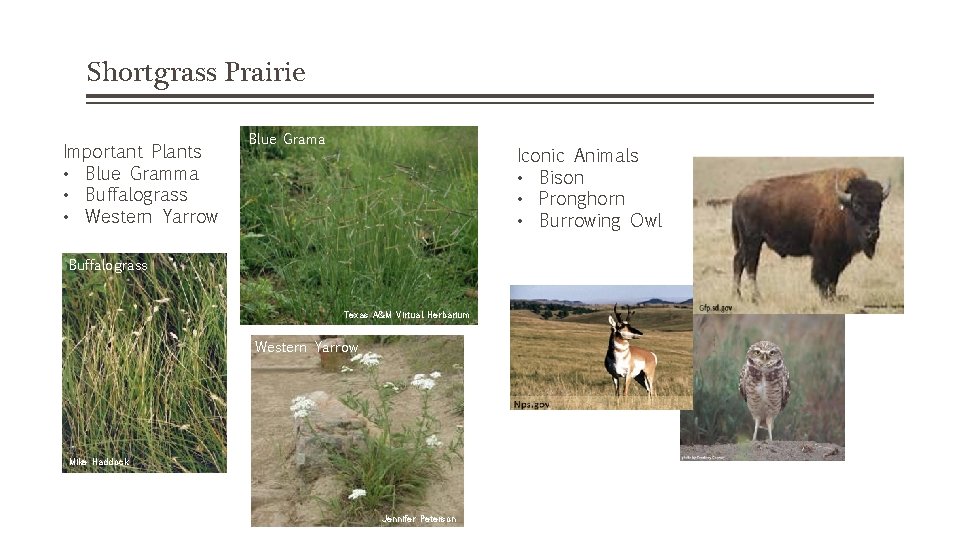
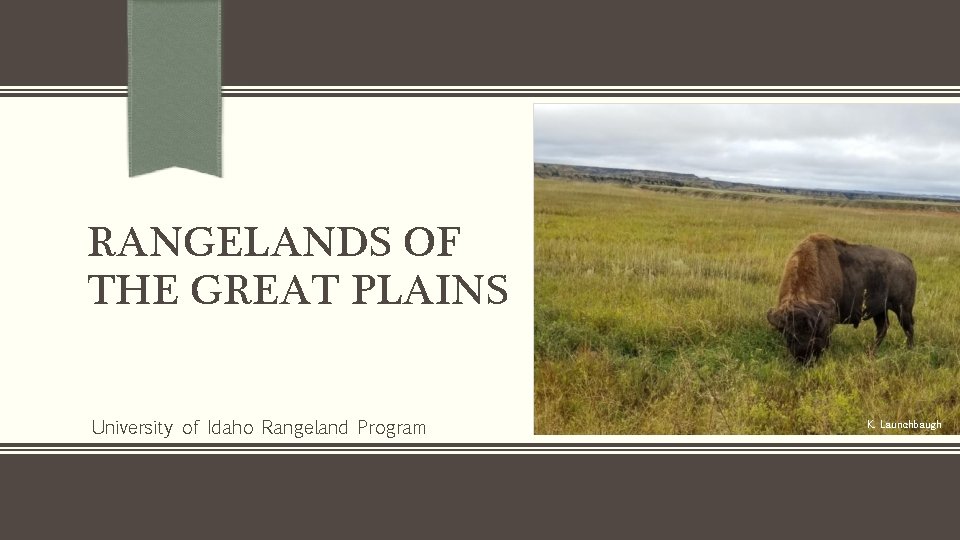
SHORTGRASS PRAIRIE • Driest and most xeric of the prairies • In the rainshadow of the Rocky Mountains Amanda Gearhart
Shortgrass Prairie www. blm. gov Amanda Gearhart
Shortgrass Prairie • Low rainfall. Annual Precipitation =12 -20” • In rainshadow of Rocky Mountains • Native plants well adapted to drought and heavy grazing www. blm. gov Amanda Gearhart • Fire is not a major force ─ not enough biomass for large fires • Signature short grasses = blue grama and buffalograss www. blm. gov Amanda Gearhart
Shortgrass Prairie Important Plants • Blue Gramma • Buffalograss • Western Yarrow Blue Grama Iconic Animals • Bison • Pronghorn • Burrowing Owl Buffalograss Texas A&M Virtual Herbarium Western Yarrow Mike Haddock Jennifer Peterson
RANGELANDS OF THE GREAT PLAINS University of Idaho Rangeland Program Michael Haddock K. Launchbaugh