
Rangeland Plants RANGELAND PRINCIPLES REM 151 Growth Forms


- Slides: 32
Rangeland Plants RANGELAND PRINCIPLES (REM 151)
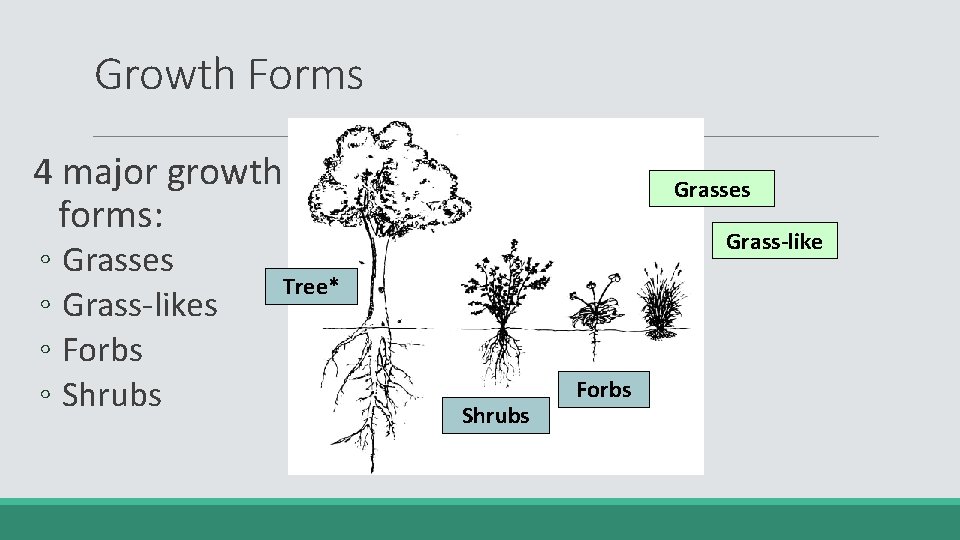
Growth Forms 4 major growth forms: ◦ Grasses ◦ Grass-likes ◦ Forbs ◦ Shrubs Grasses Grass-like Tree* Shrubs Forbs
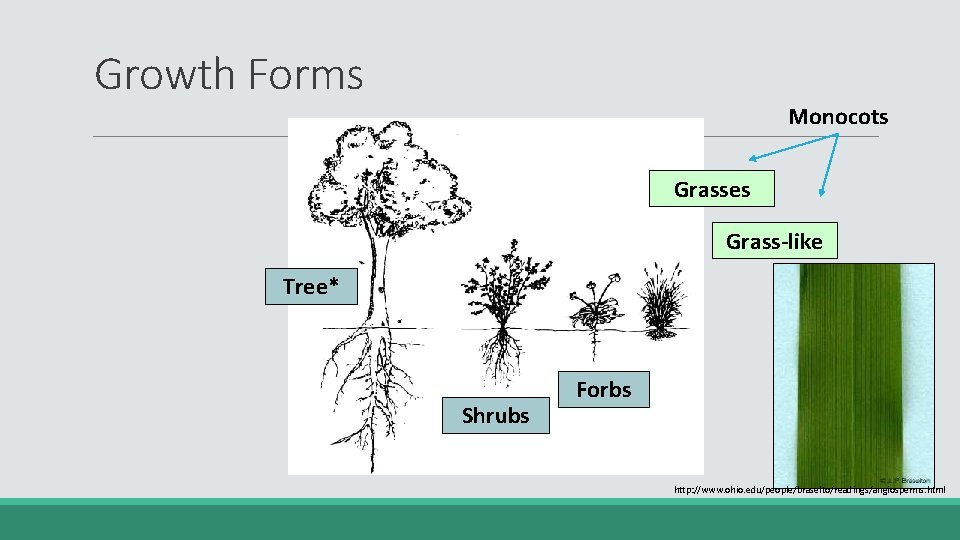
Growth Forms Monocots Grasses Grass-like Tree* Shrubs Forbs http: //www. ohio. edu/people/braselto/readings/angiosperms. html
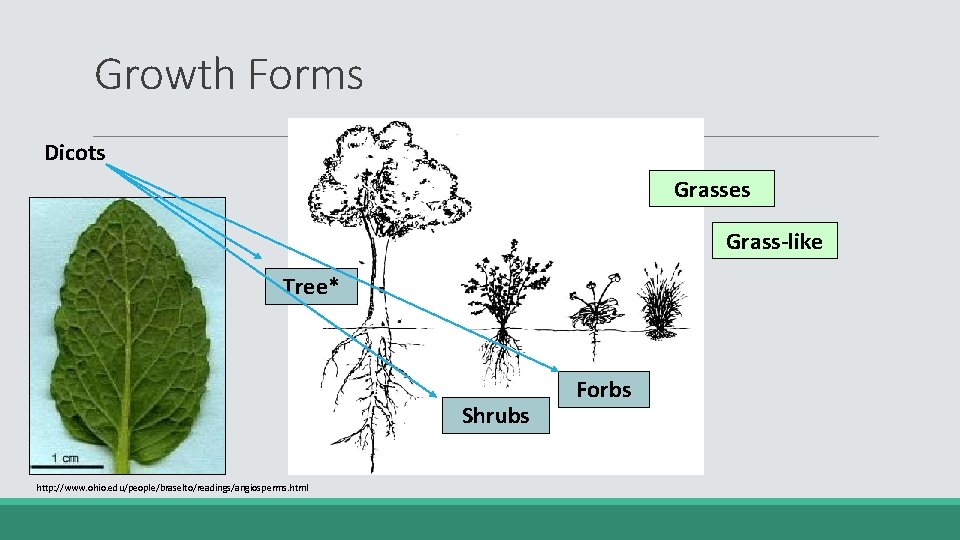
Growth Forms Dicots Grasses Grass-like Tree* Shrubs http: //www. ohio. edu/people/braselto/readings/angiosperms. html Forbs
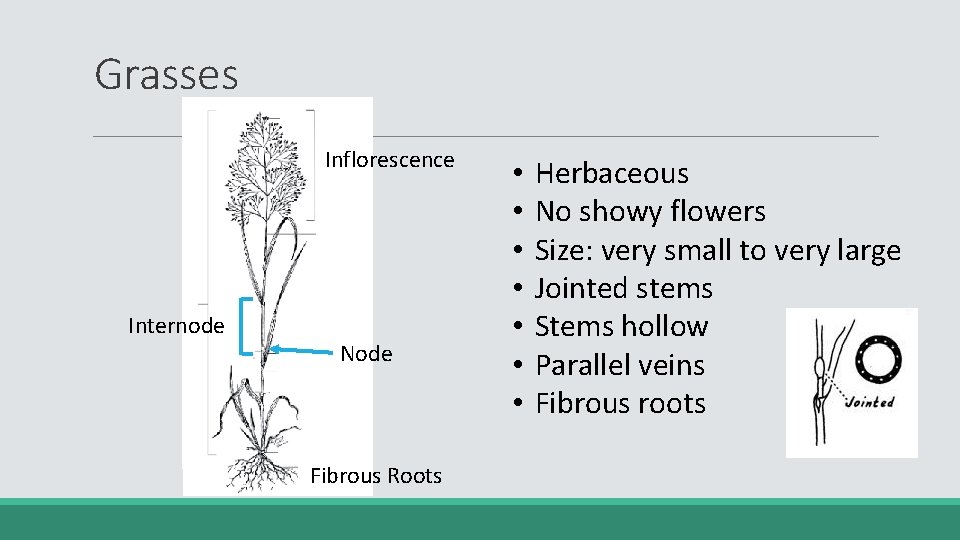
Grasses Inflorescence Internode Node Fibrous Roots • • Herbaceous No showy flowers Size: very small to very large Jointed stems Stems hollow Parallel veins Fibrous roots
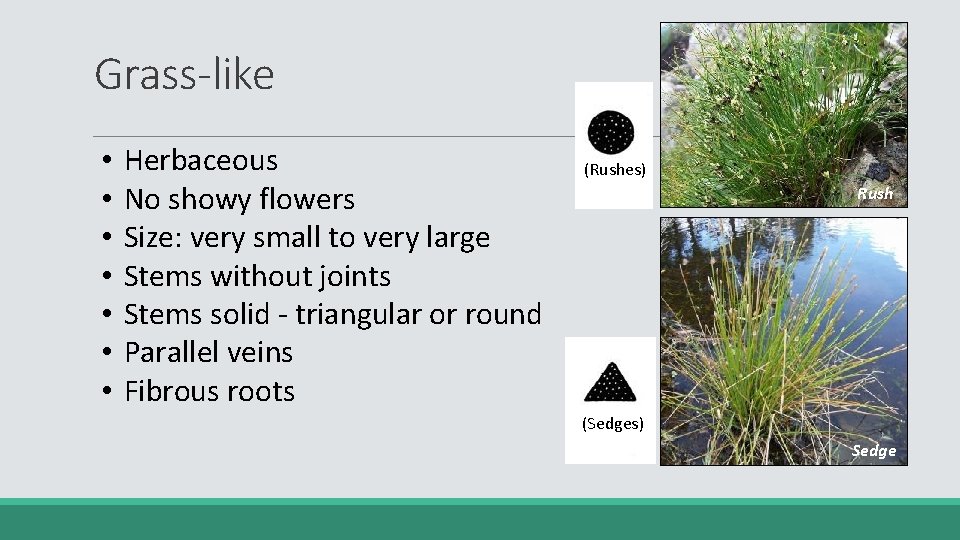
Grass-like • • Herbaceous No showy flowers Size: very small to very large Stems without joints Stems solid - triangular or round Parallel veins Fibrous roots (Rushes) Rush (Sedges) Sedge
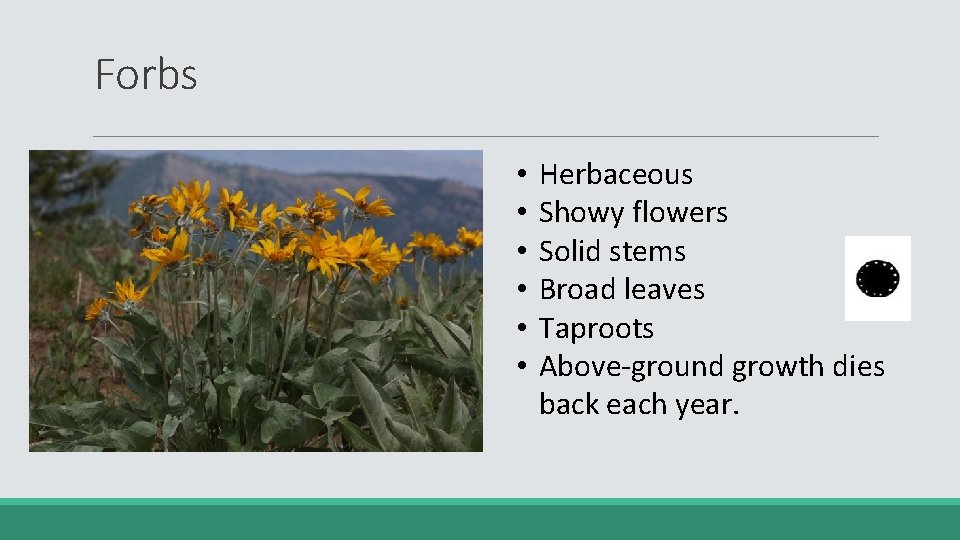
Forbs • • • Herbaceous Showy flowers Solid stems Broad leaves Taproots Above-ground growth dies back each year.
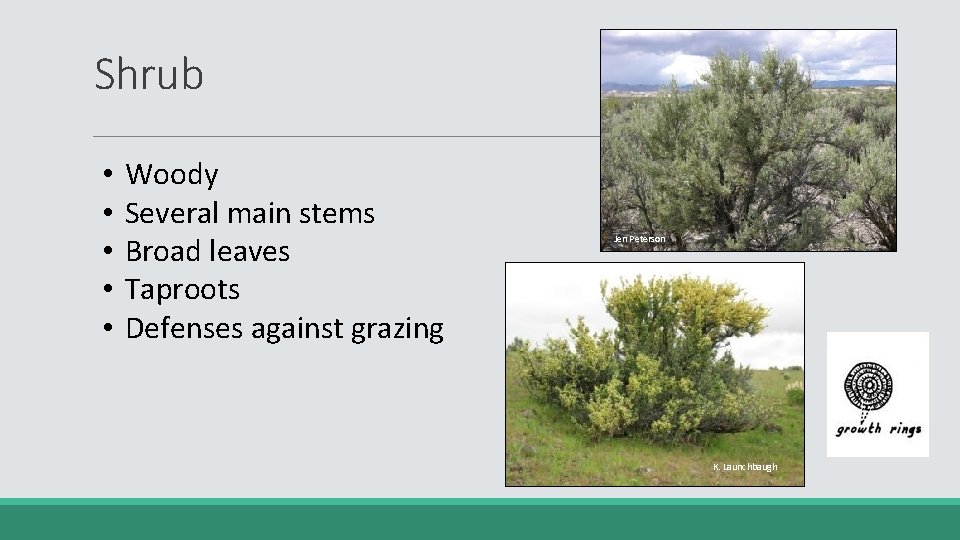
Shrub • • • Woody Several main stems Broad leaves Taproots Defenses against grazing Jen Peterson K. Launchbaugh
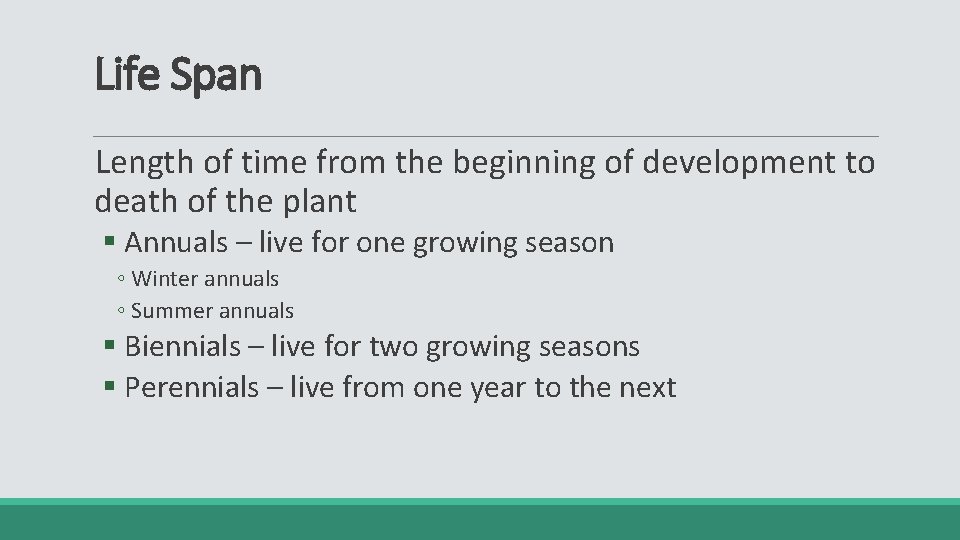
Life Span Length of time from the beginning of development to death of the plant § Annuals – live for one growing season ◦ Winter annuals ◦ Summer annuals § Biennials – live for two growing seasons § Perennials – live from one year to the next
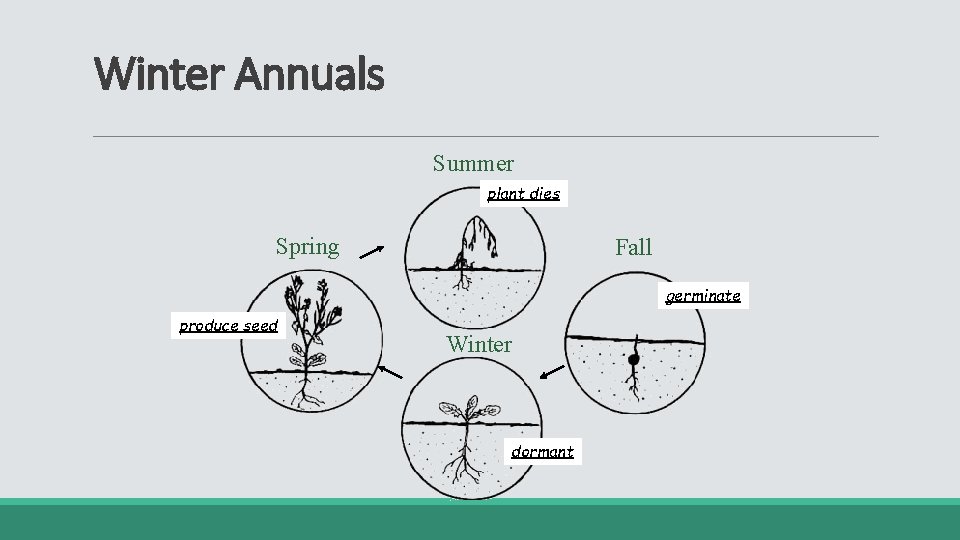
Winter Annuals Summer plant dies Spring Fall germinate produce seed Winter dormant
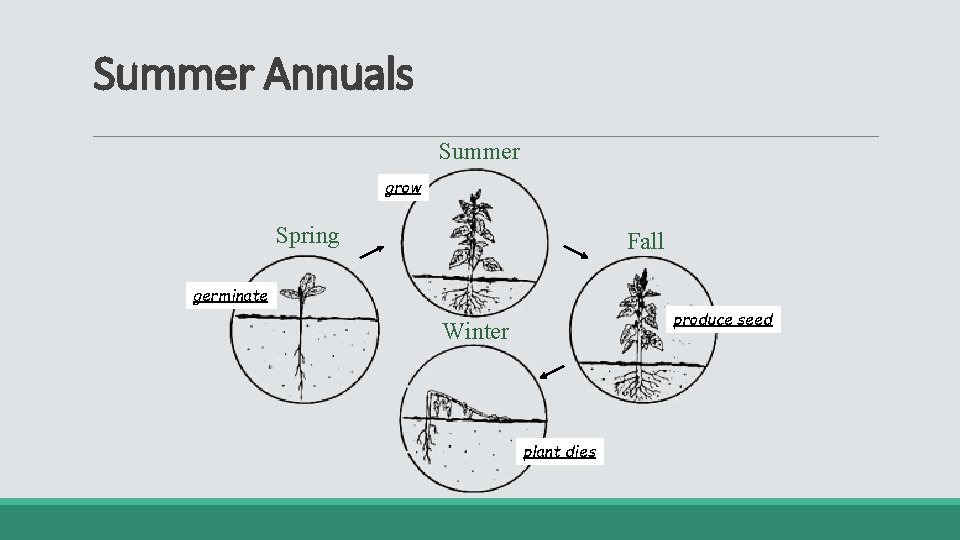
Summer Annuals Summer grow Spring Fall germinate produce seed Winter plant dies
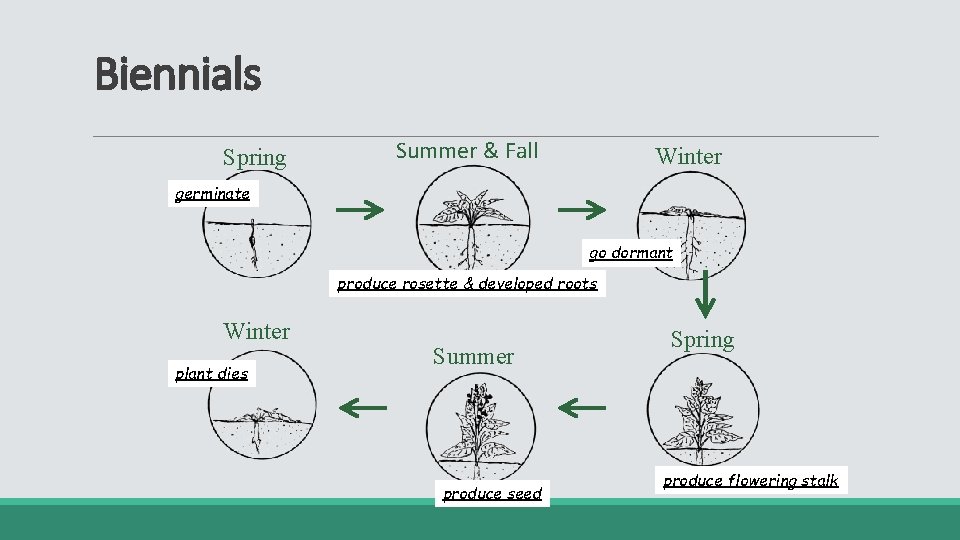
Biennials Spring Summer & Fall Winter germinate go dormant produce rosette & developed roots Winter plant dies Summer produce seed Spring produce flowering stalk
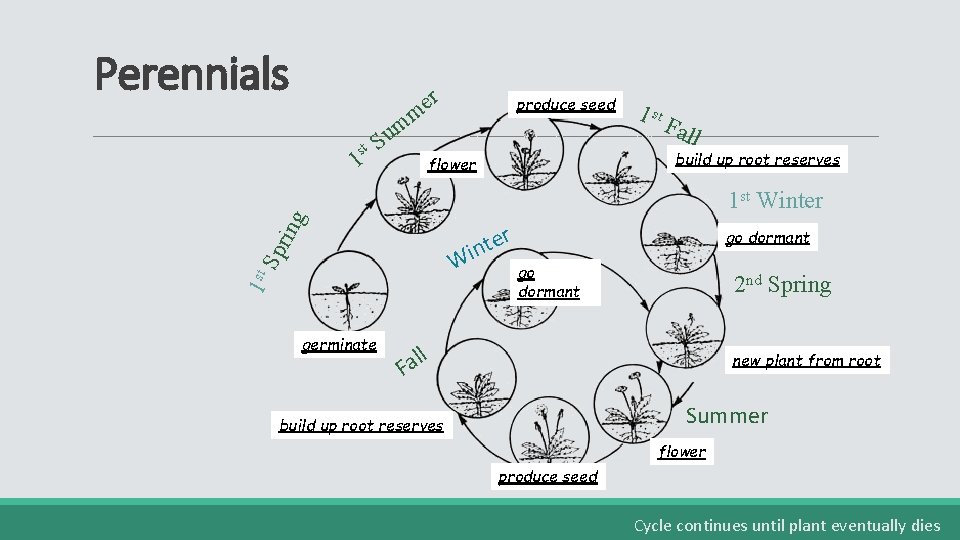
Perennials r e m st 1 m u S produce seed 1 st Fal l build up root reserves flower g 1 st Winter 1 st Sp rin r e t n Wi germinate go dormant 2 nd Spring ll a F new plant from root Summer build up root reserves flower produce seed Cycle continues until plant eventually dies
Morphology of Range Plants The physical form and/or external structures of a plant. * • Leaves • Stems • Roots • Flowers * Plant Identification Terminology, An Illustrated Glossary by James G. Harris and Melinda Woolf Harris
Leaves – photosynthetic organs of the plant • • • Types Arrangements Shapes Margins Venations
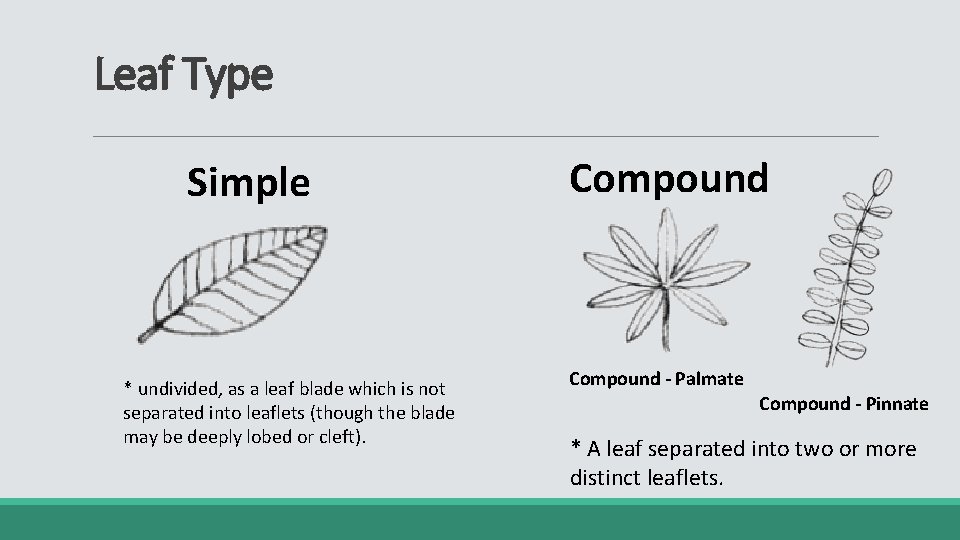
Leaf Type Simple * undivided, as a leaf blade which is not separated into leaflets (though the blade may be deeply lobed or cleft). Compound - Palmate Compound - Pinnate * A leaf separated into two or more distinct leaflets.
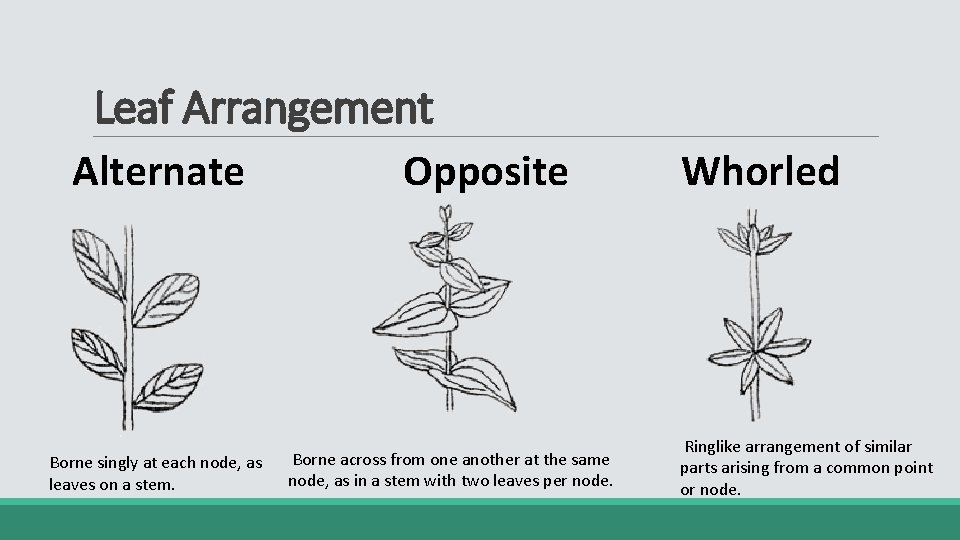
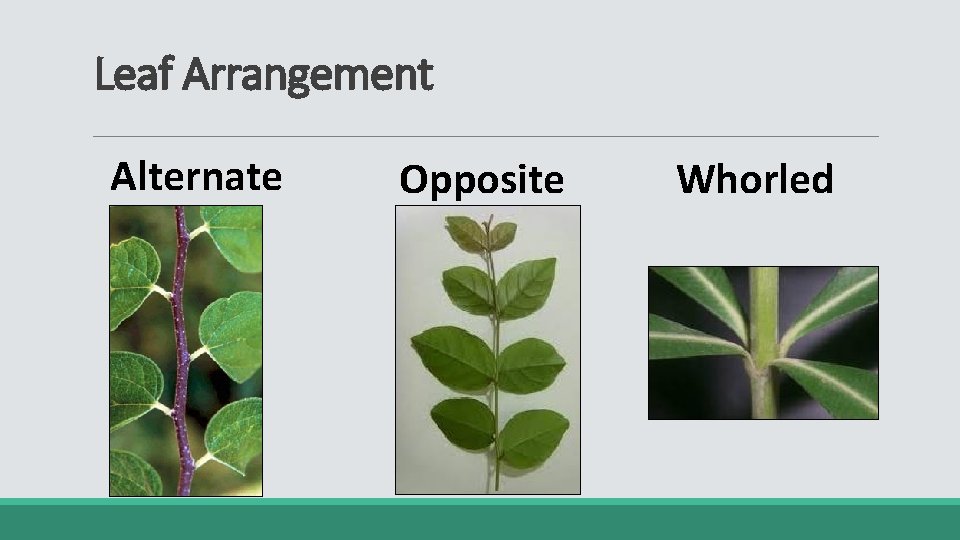
Leaf Arrangement Alternate Borne singly at each node, as leaves on a stem. Opposite Borne across from one another at the same node, as in a stem with two leaves per node. Whorled Ringlike arrangement of similar parts arising from a common point or node.
Leaf Arrangement Alternate Opposite Whorled
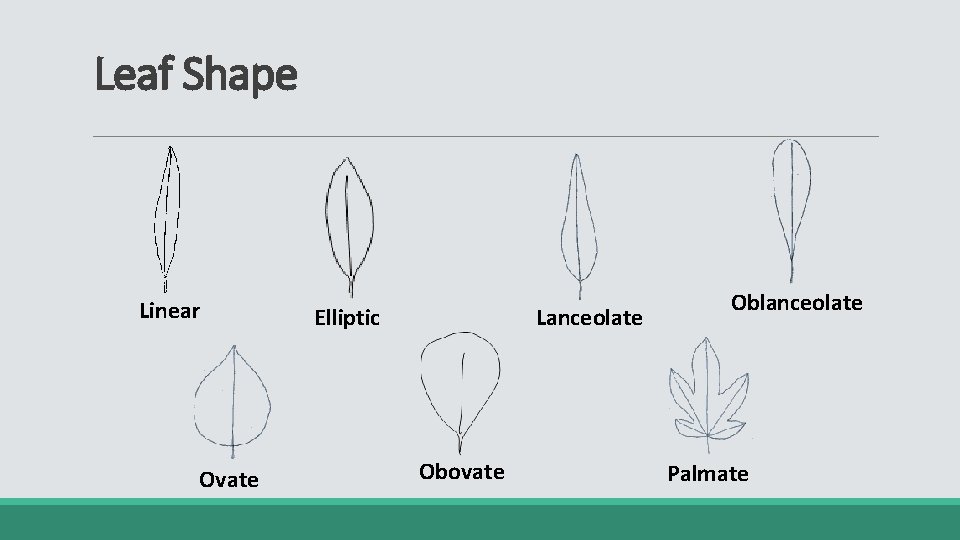
Leaf Shape Linear Ovate Elliptic Lanceolate Obovate Oblanceolate Palmate
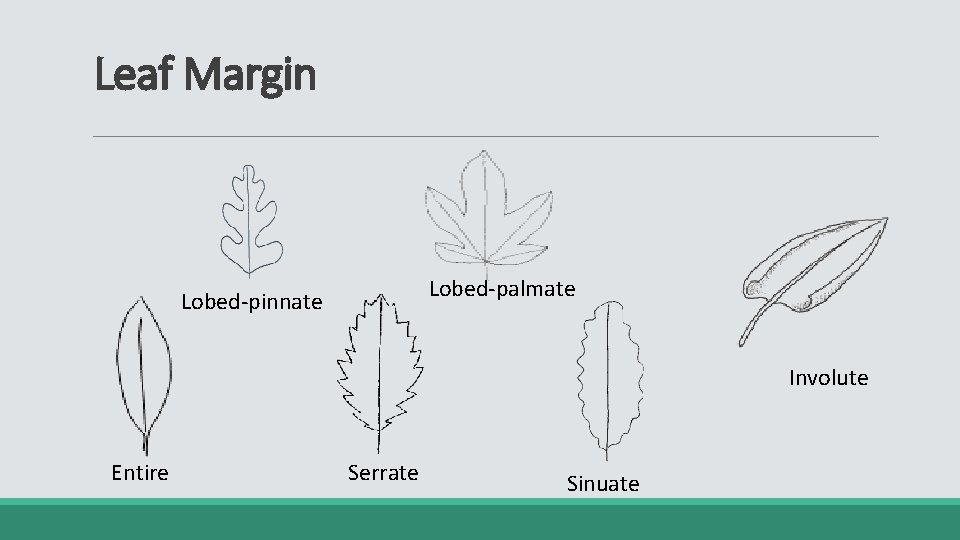
Leaf Margin Lobed-palmate Lobed-pinnate Involute Entire Serrate Sinuate
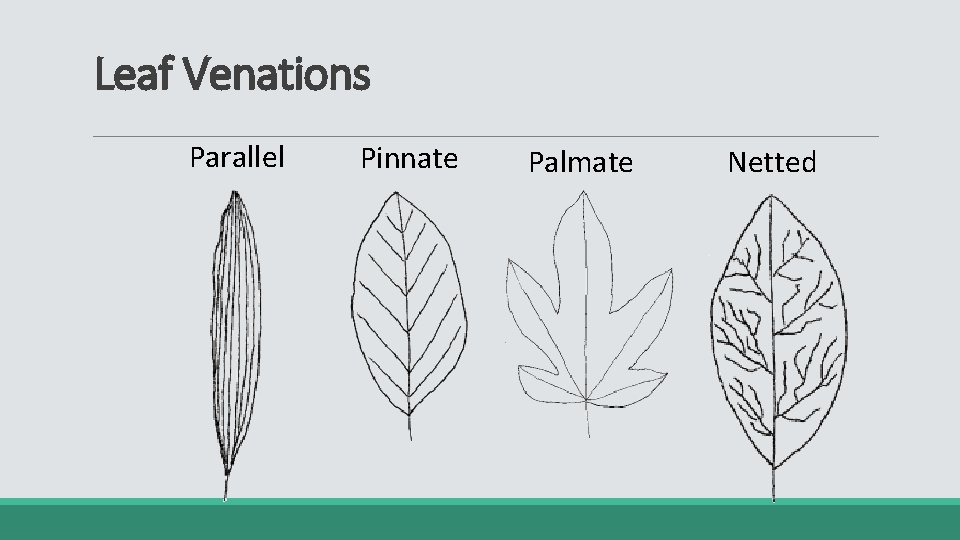
Leaf Venations Parallel Pinnate Palmate Netted
Stem The portion of the plant axis bearing nodes, leaves, and buds and usually found about ground.
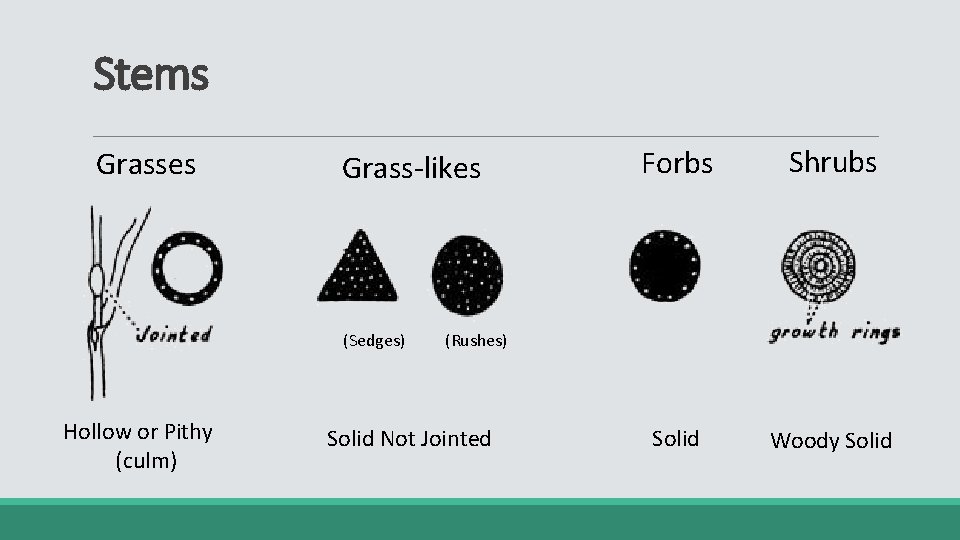
Stems Grasses Grass-likes (Sedges) Hollow or Pithy (culm) Forbs Shrubs Solid Woody Solid (Rushes) Solid Not Jointed
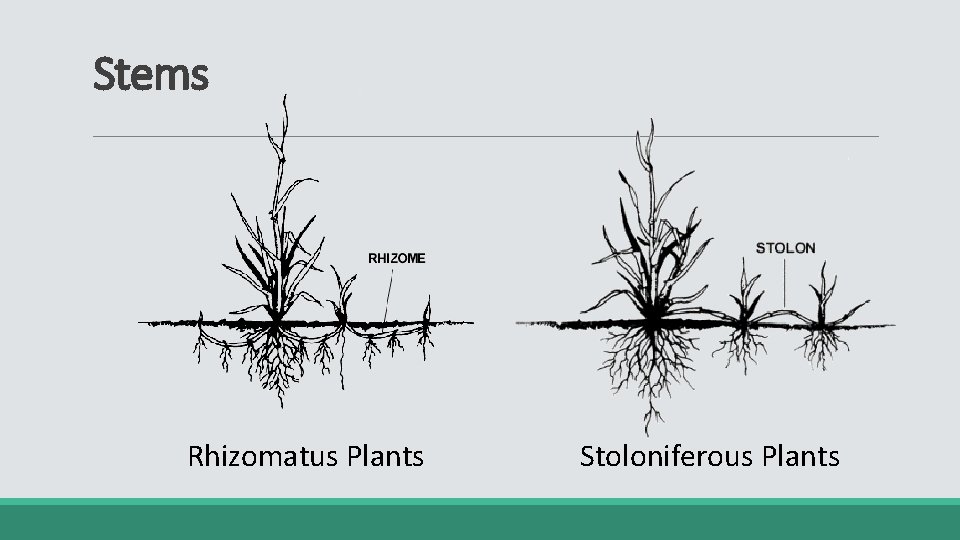
Stems Rhizomatus Plants Stoloniferous Plants
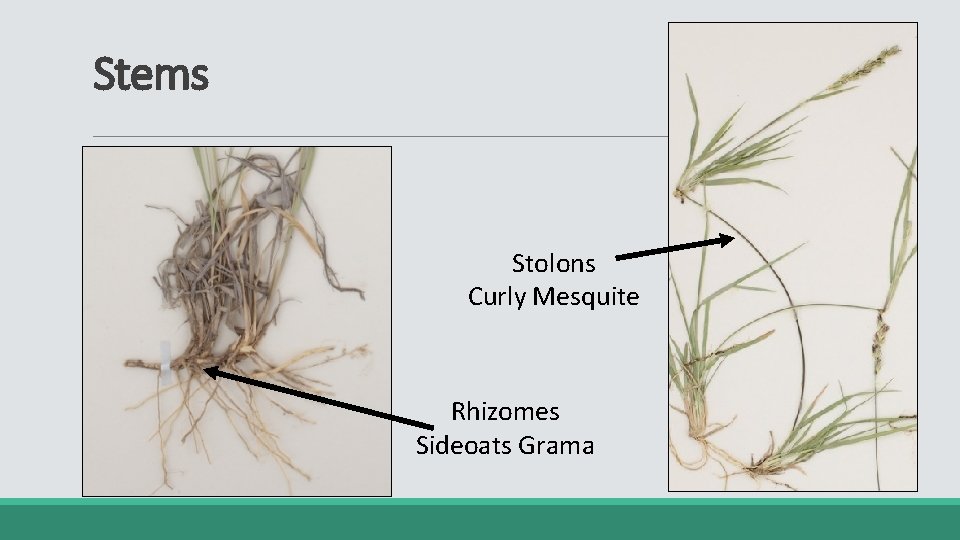
Stems Stolons Curly Mesquite Rhizomes Sideoats Grama
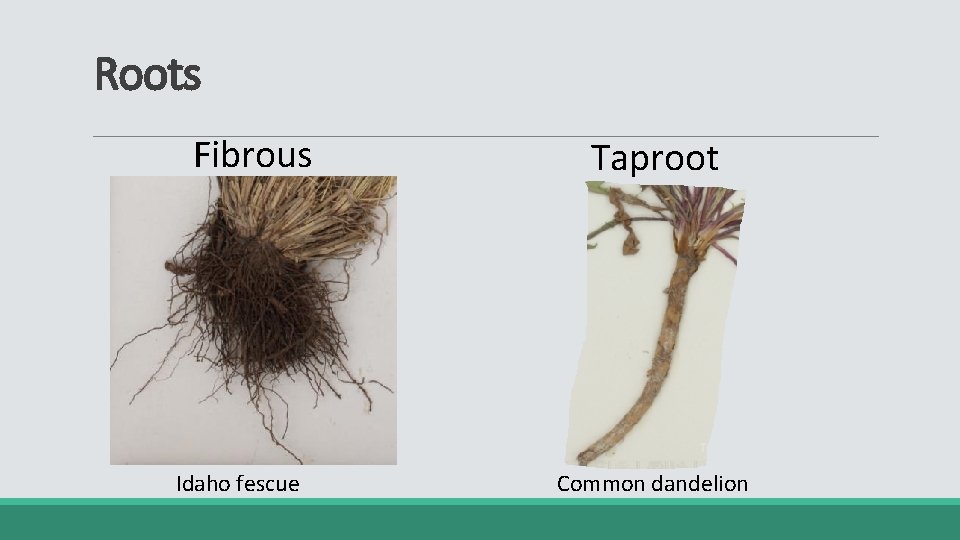
Roots The portion of the plant axis lacking nodes and leaves and usually found below ground.
Roots Fibrous Idaho fescue Taproot Common dandelion
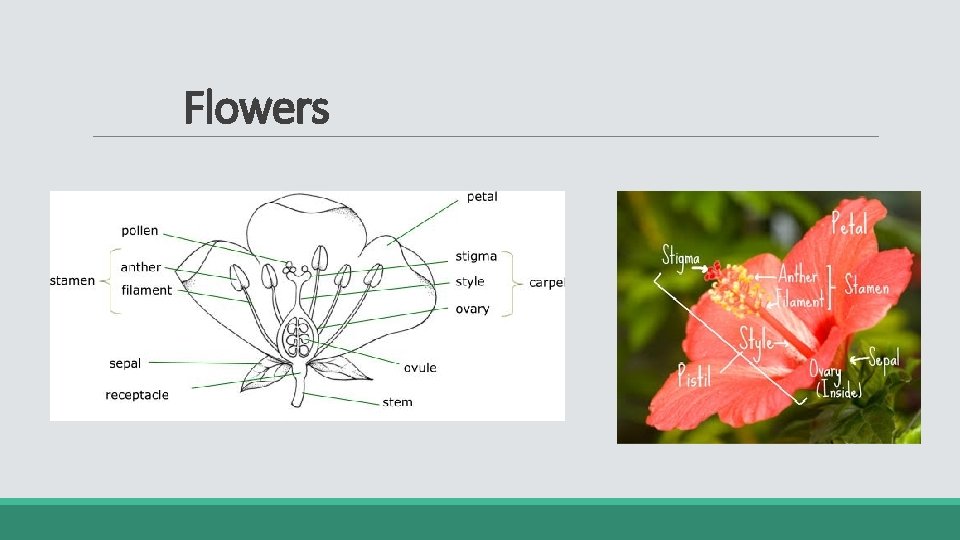
Flowers The reproductive portion of the plant, consisting of stamens, pistils, or both, and usually including a perianth of sepals or both sepals and petals.
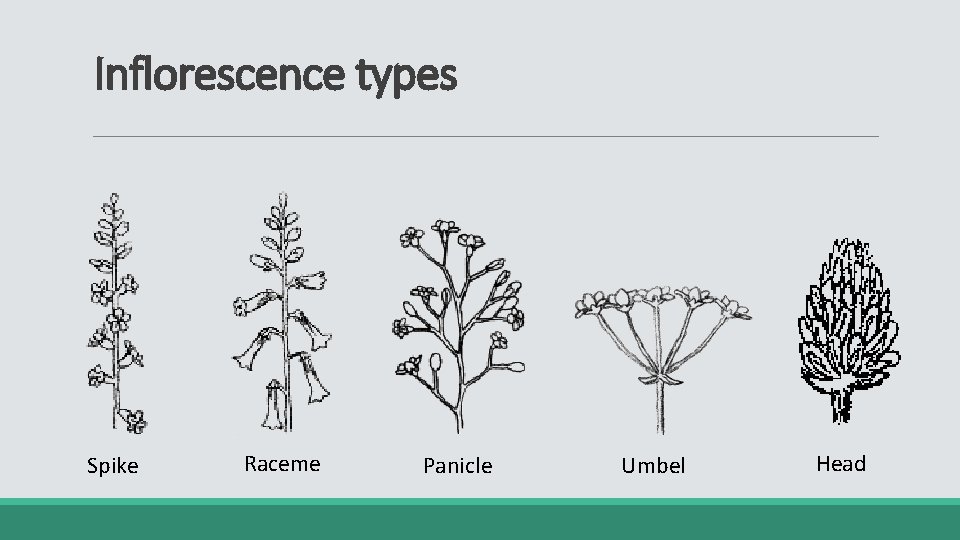
Inflorescence types Spike Raceme Panicle Umbel Head
Flowers
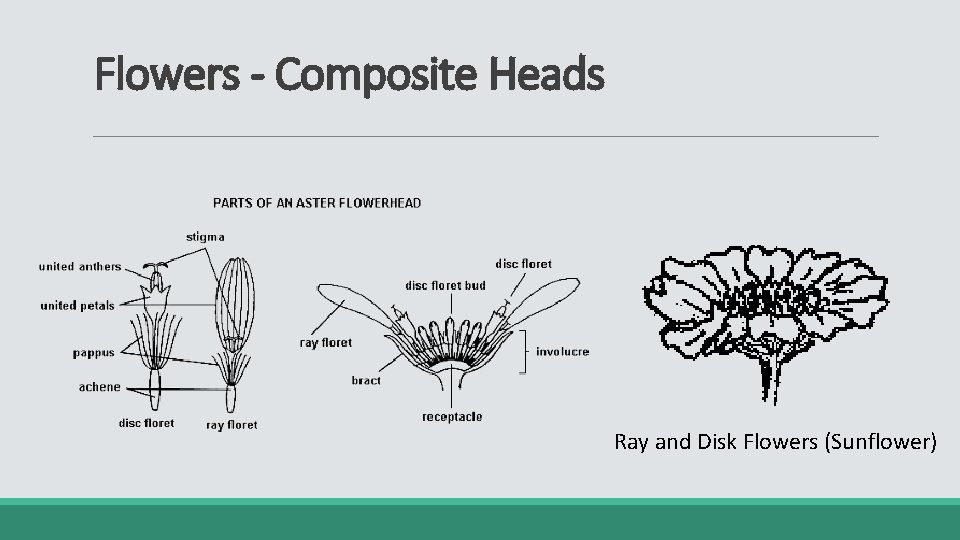
Flowers - Composite Heads Ray and Disk Flowers (Sunflower)
Josh Corbet K. Launchbaugh Rangeland Plants RANGELAND PRINCIPLES (REM 151) K. Launchbaugh