
Range Production and Bird Health F Dustan Clark
Range Production and Bird Health F. Dustan Clark, D. V. M. , Ph. D. Extension Poultry Health Veterinarian
Poultry Health Status Determination • Disease – any departure from the normal state of health • Normal • Many Diseases Produce Similar Signs • What To Look For
Observations • Facilities • Records • Birds
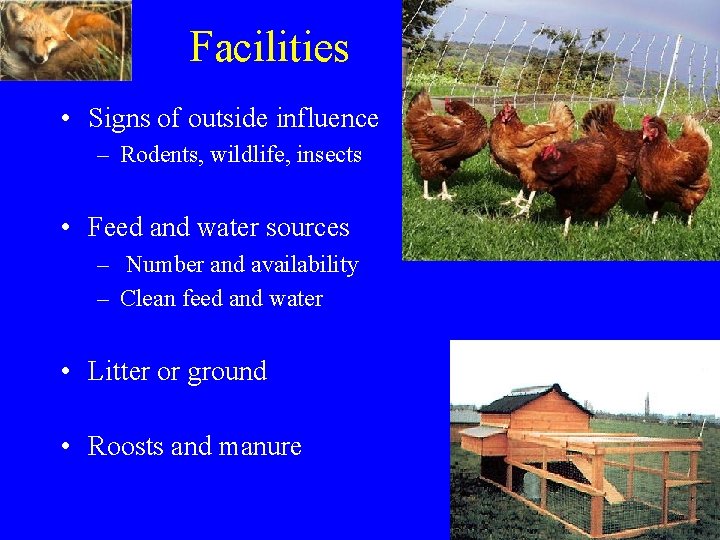
Facilities • Signs of outside influence – Rodents, wildlife, insects • Feed and water sources – Number and availability – Clean feed and water • Litter or ground • Roosts and manure
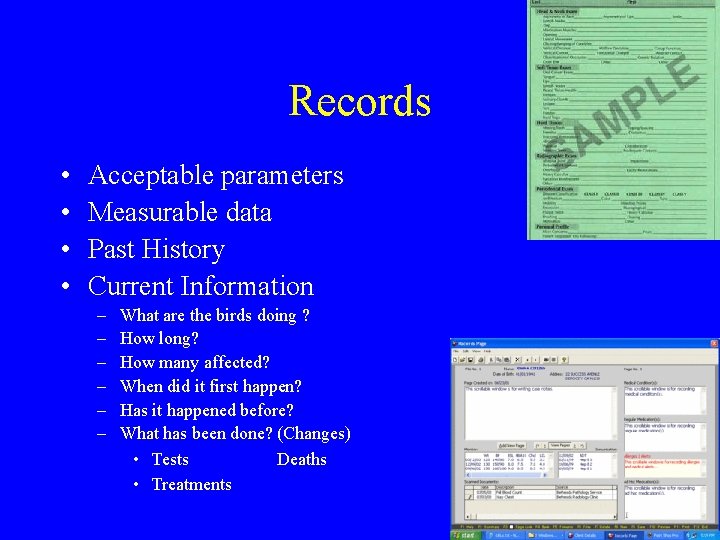
Records • • Acceptable parameters Measurable data Past History Current Information – – – What are the birds doing ? How long? How many affected? When did it first happen? Has it happened before? What has been done? (Changes) • Tests Deaths • Treatments
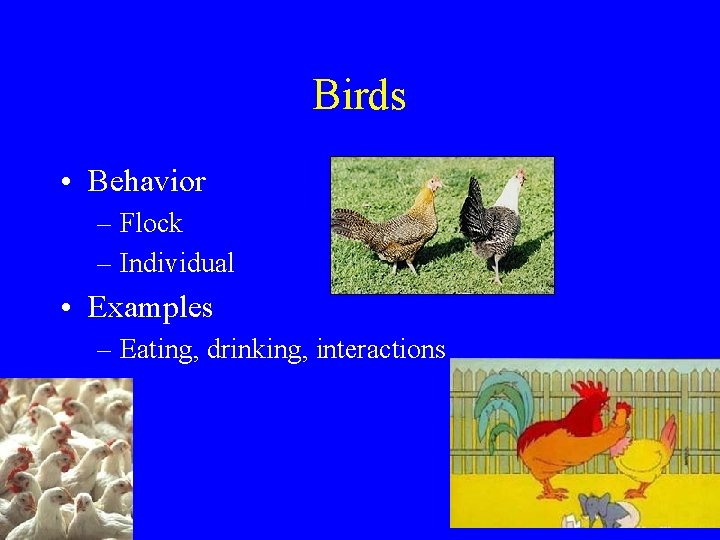
Birds • Behavior – Flock – Individual • Examples – Eating, drinking, interactions
Examination • Preliminary – done while observing birds • Complete – must catch bird – systematic examination of anatomic systems – checking for variation from normal
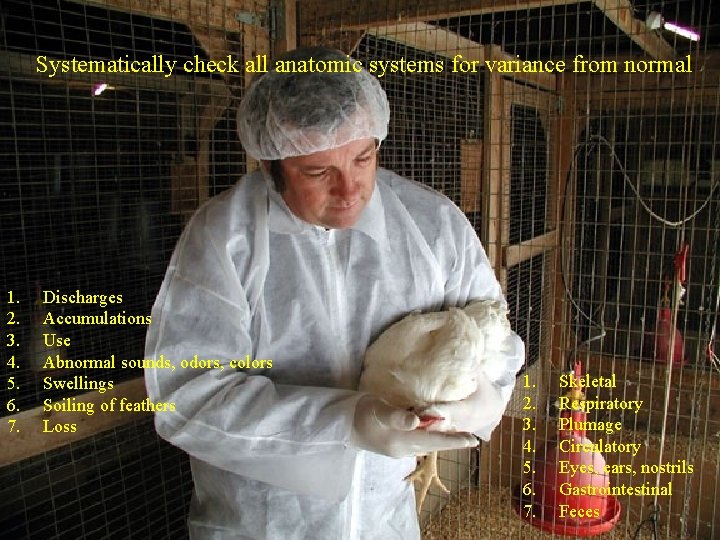
Systematically check all anatomic systems for variance from normal 1. 2. 3. 4. 5. 6. 7. Discharges Accumulations Use Abnormal sounds, odors, colors Swellings Soiling of feathers Loss 1. 2. 3. 4. 5. 6. 7. Skeletal Respiratory Plumage Circulatory Eyes, ears, nostrils Gastrointestinal Feces
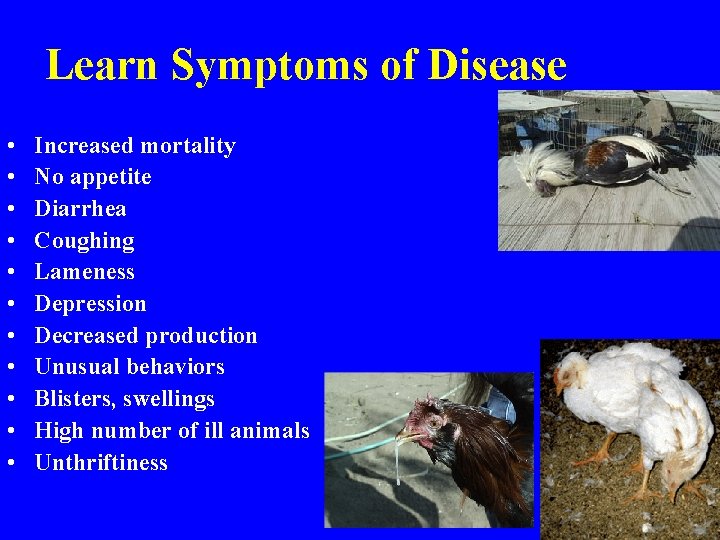
Learn Symptoms of Disease • • • Increased mortality No appetite Diarrhea Coughing Lameness Depression Decreased production Unusual behaviors Blisters, swellings High number of ill animals Unthriftiness
Poultry Diseases • Numerous Diseases in Poultry • Comparisons – Organic Chicken vs Commercial is limited • Some Diseases and/or Problems are more common • Limitations on Therapy
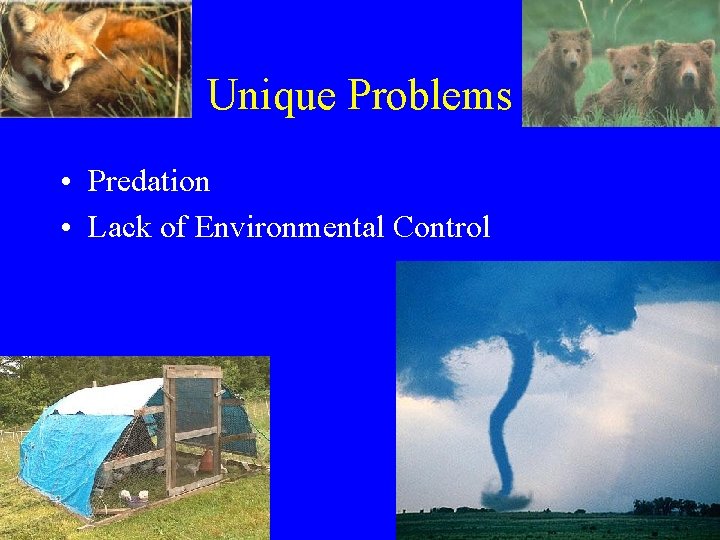
Unique Problems • Predation • Lack of Environmental Control
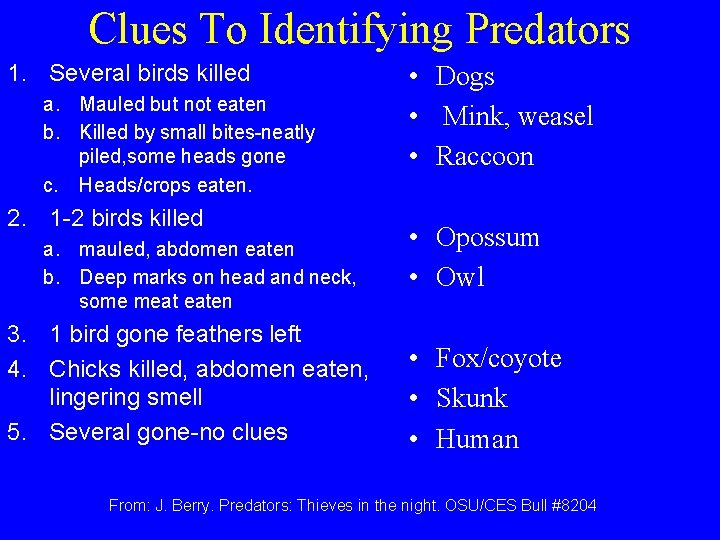
Clues To Identifying Predators 1. Several birds killed a. Mauled but not eaten b. Killed by small bites-neatly piled, some heads gone c. Heads/crops eaten. 2. 1 -2 birds killed a. mauled, abdomen eaten b. Deep marks on head and neck, some meat eaten 3. 1 bird gone feathers left 4. Chicks killed, abdomen eaten, lingering smell 5. Several gone-no clues • Dogs • Mink, weasel • Raccoon • Opossum • Owl • Fox/coyote • Skunk • Human From: J. Berry. Predators: Thieves in the night. OSU/CES Bull #8204
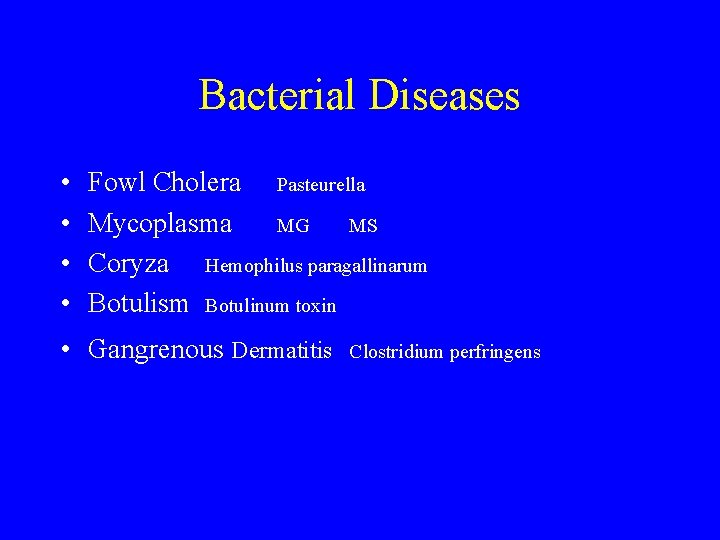
Bacterial Diseases • • Fowl Cholera Pasteurella Mycoplasma MG MS Coryza Hemophilus paragallinarum Botulism Botulinum toxin • Gangrenous Dermatitis Clostridium perfringens
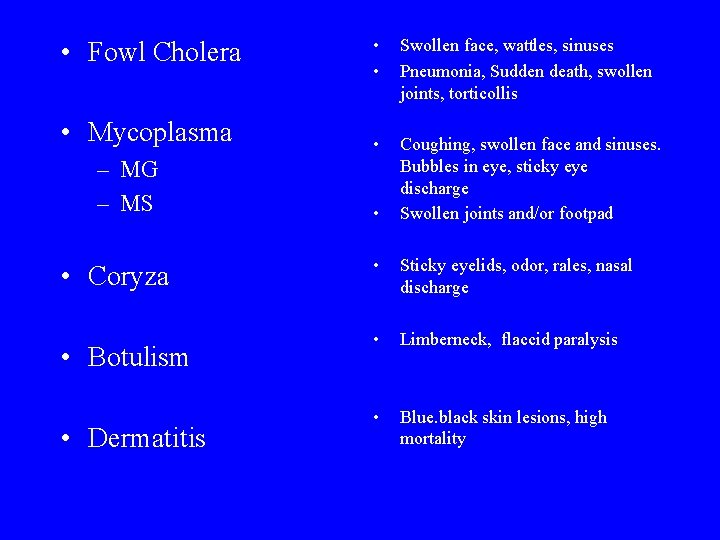
• Fowl Cholera • Mycoplasma – MG – MS • Coryza • Botulism • Dermatitis • • Swollen face, wattles, sinuses Pneumonia, Sudden death, swollen joints, torticollis • Coughing, swollen face and sinuses. Bubbles in eye, sticky eye discharge Swollen joints and/or footpad • • Sticky eyelids, odor, rales, nasal discharge • Limberneck, flaccid paralysis • Blue. black skin lesions, high mortality
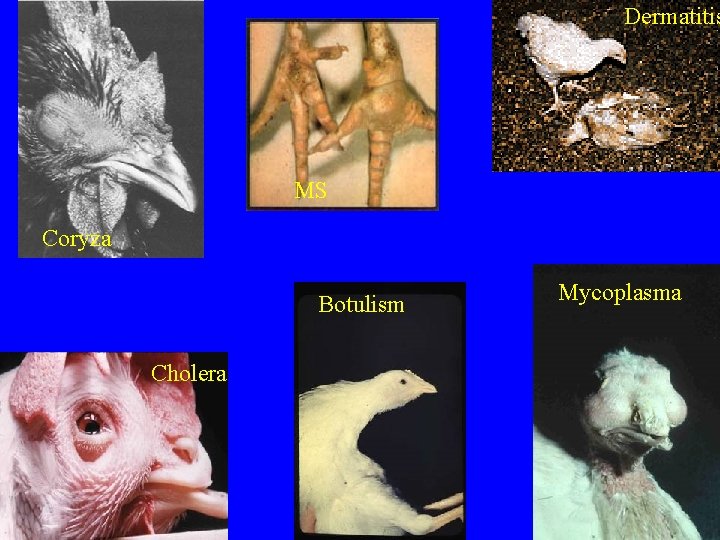
Dermatitis MS Coryza Botulism Cholera Mycoplasma
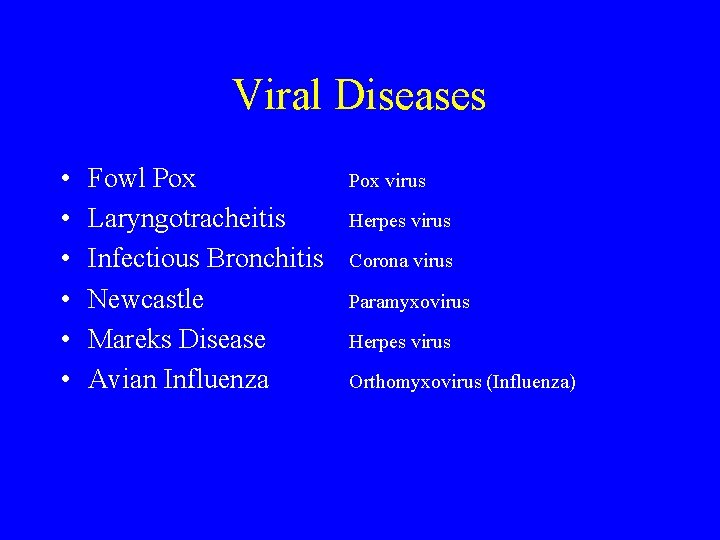
Viral Diseases • • • Fowl Pox Laryngotracheitis Infectious Bronchitis Newcastle Mareks Disease Avian Influenza Pox virus Herpes virus Corona virus Paramyxovirus Herpes virus Orthomyxovirus (Influenza)
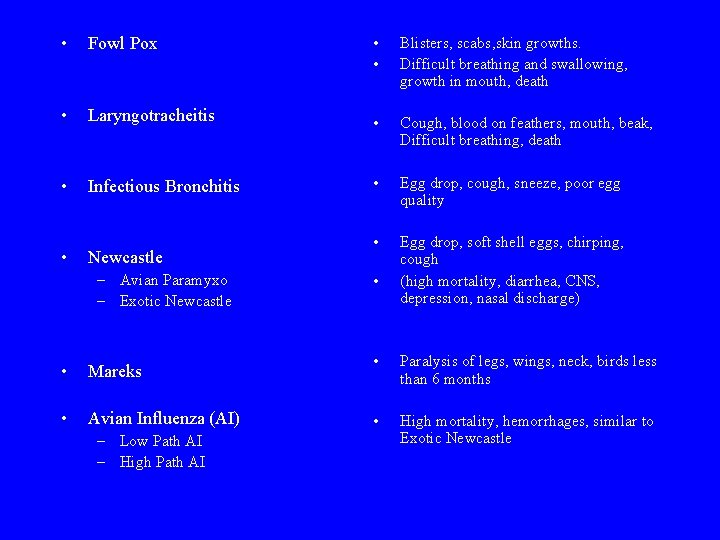
• Fowl Pox • • • Blisters, scabs, skin growths. Difficult breathing and swallowing, growth in mouth, death Laryngotracheitis • Cough, blood on feathers, mouth, beak, Difficult breathing, death Infectious Bronchitis • Egg drop, cough, sneeze, poor egg quality • Egg drop, soft shell eggs, chirping, cough (high mortality, diarrhea, CNS, depression, nasal discharge) Newcastle – Avian Paramyxo – Exotic Newcastle • Mareks • Avian Influenza (AI) – Low Path AI – High Path AI • • Paralysis of legs, wings, neck, birds less than 6 months • High mortality, hemorrhages, similar to Exotic Newcastle
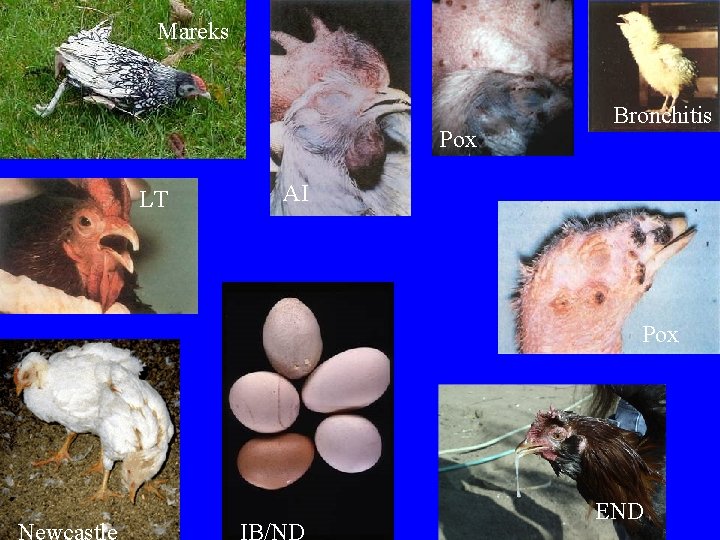
Mareks Pox Mareks LT Bronchitis AI Pox END
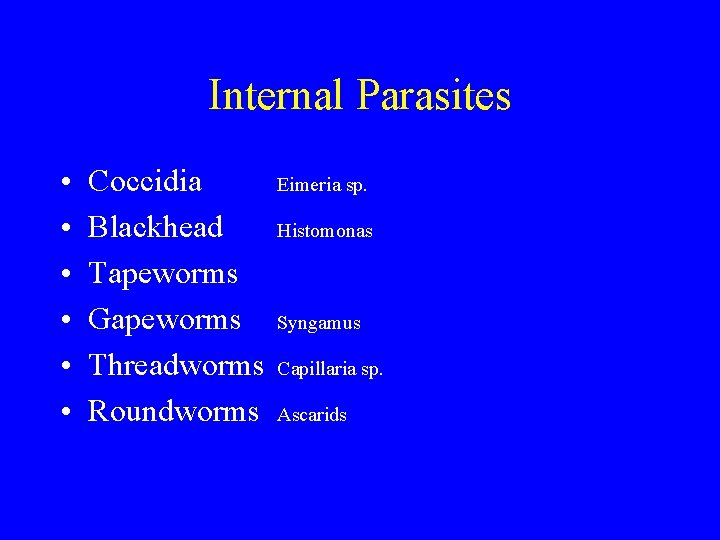
Internal Parasites • • • Coccidia Blackhead Tapeworms Gapeworms Threadworms Roundworms Eimeria sp. Histomonas Syngamus Capillaria sp. Ascarids
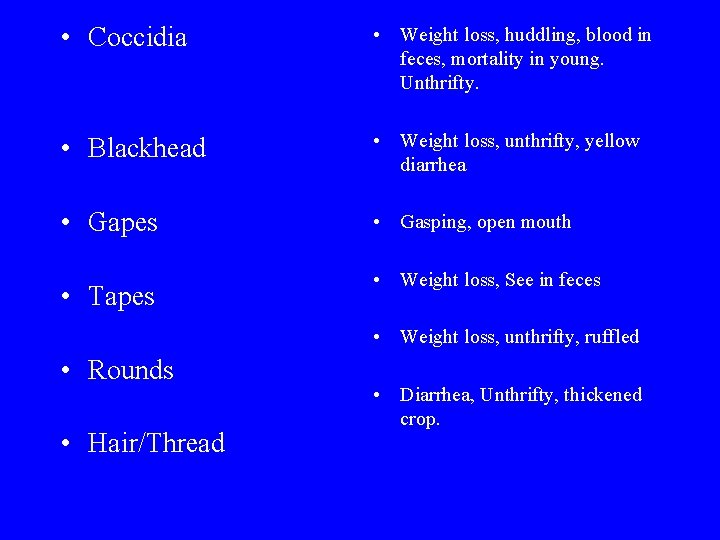
• Coccidia • Weight loss, huddling, blood in feces, mortality in young. Unthrifty. • Blackhead • Weight loss, unthrifty, yellow diarrhea • Gapes • Gasping, open mouth • Tapes • Weight loss, See in feces • Weight loss, unthrifty, ruffled • Rounds • Hair/Thread • Diarrhea, Unthrifty, thickened crop.
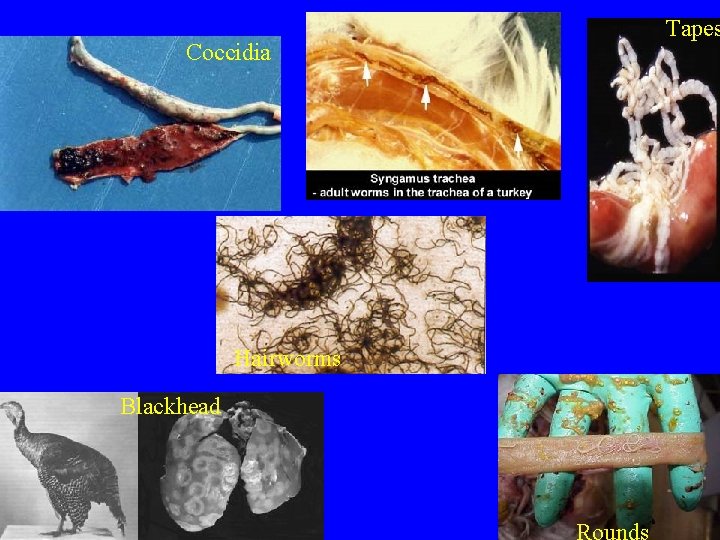
Coccidia Hairworms Blackhead Tapes
External Parasites • Lice • Mites – Skin – Leg
• Lice • Feather damage, skin damage, feather picking, irritation • Feather and skin damage, feathers look oily, anemia, feather loss. Northern stays on bird – Numerous species • Mites – Northern – Red – Scaly Leg • • Feather loss, picking, anemia, restless at night, skin damage. Red gets on bird at night • Thick dry white or yellow crusts on leg scales.
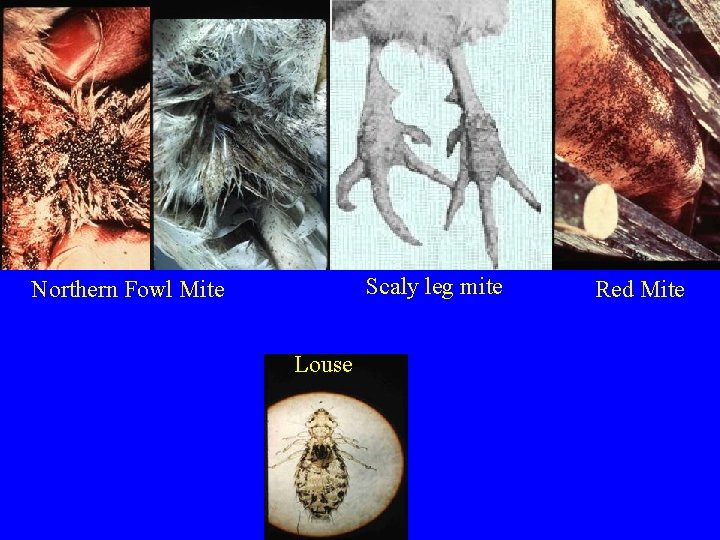
Scaly leg mite Northern Fowl Mite Louse Red Mite
Therapy • May be limited • Many antibiotics are unavailable • Most vaccines for meat poultry are given early in life – 18 days of incubation – Day 1
Biosecurity
Biosecurity Greek: Bios Security - “Life” - Protection
Effects of Disease • • Decreased reproduction Decreased productivity Increased mortality Decreased cash-flow Quarantines Market loss Flock loss
How Much Biosecurity is Needed? • • No one plan Use common sense Risk of each potential source of disease Spend more money on treatment (and production losses) than prevention would have cost
Sources of Pathogens 1. Introduction of diseased or carrier animals 2. Clothing or person of visitors 3. Introduction of contaminated materials (fomites)- feeds, forages 4. Inappropriate disposal of carcasses 5. Contaminated water supplies 6. Fence line contact 7. Vehicles 8. Wildlife, rodents, wild birds, insects, pets 9. Air-borne fomites 10. Vertical transmission
Biosecurity
Risk Accepted • Personal decision • Talk to veterinarian, county agent, banker, spouse
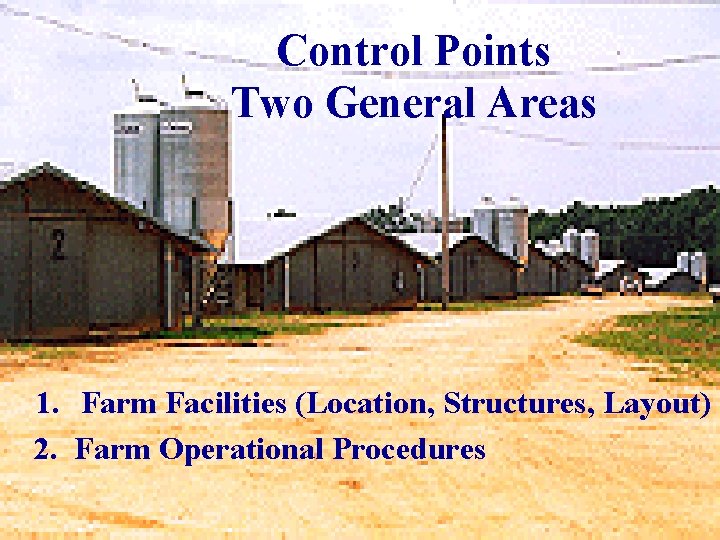
Control Points Two General Areas 1. Farm Facilities (Location, Structures, Layout) 2. Farm Operational Procedures
Farm Location • What roads are nearby ? • Distance to other facilities • Distance to other animal facilities
Farm Layout and Construction • • • Road type Type and condition of fences Buildings and pens Feed bins Animal/Bird and waste disposal
Farm Operational Procedures Greatest impact on Biosecurity Easy and Quick to change
Biosecurity Practices 1. 2. 3. 4. 5. 6. 7. 8. 9. 10. Control exposure to diseased or carrier animals Control visitor access Ensure that fomites (objects) are clean Dispose of carcasses appropriately Check feed and water contamination Control fence line contact Control exposure to vermin Address vertical transmission Air borne contamination Other practices you discover
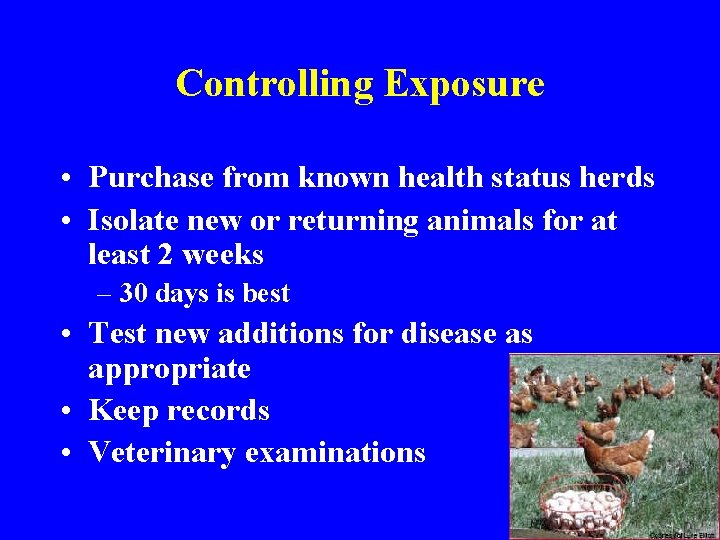
Controlling Exposure • Purchase from known health status herds • Isolate new or returning animals for at least 2 weeks – 30 days is best • Test new additions for disease as appropriate • Keep records • Veterinary examinations
Protect Poultry by Raising their Resistance • • Vaccination program Parasite control program Reduce stress Nutrition
Visitor or Traffic Control • Second greatest threat • May carry disease organisms • May be necessary • May bring equipment • Restrict Access to animals • Require identification • Keep facilities & gates locked • Have visitors sign a log • Change clothes, use coveralls, boot covers • Wash hands and disinfect • 48 hr min. quarantine (Internationals)
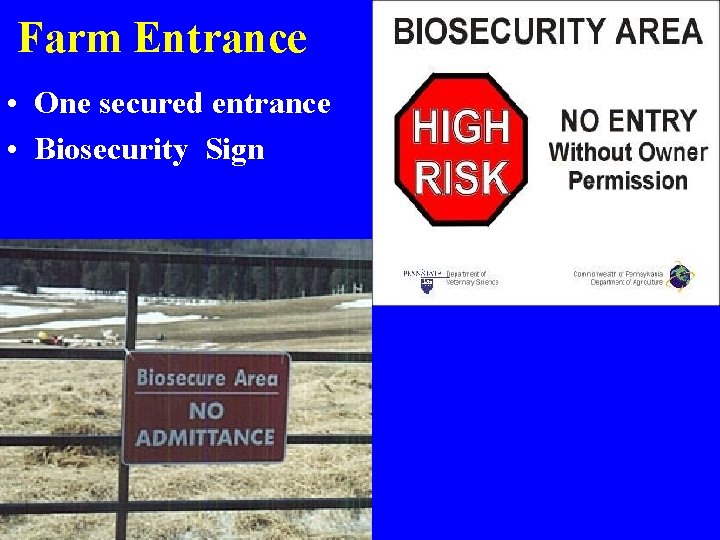
Farm Entrance • One secured entrance • Biosecurity Sign
Sanitation and Disinfection • Keep farm clean • Boot bath (scrub brush and disinfectant) – Boots for on farm only • Coveralls • Spray car/truck tires – Clean floor mats • Wash (CD) all incoming equipment – Best to not borrow equipment
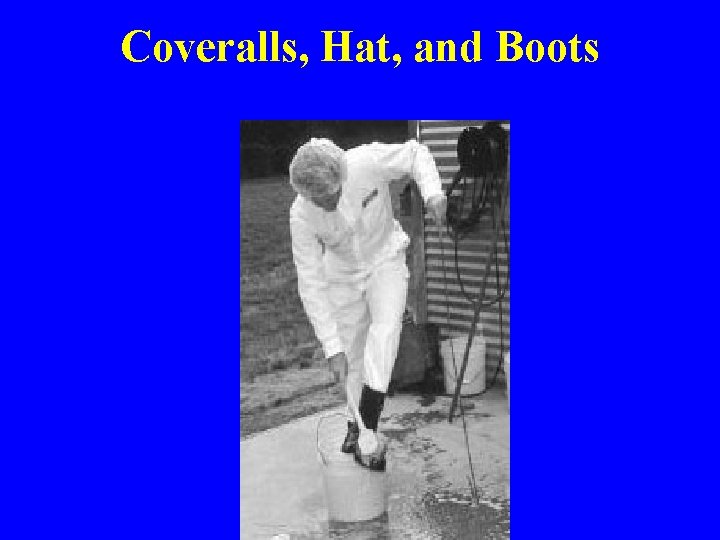
Coveralls, Hat, and Boots
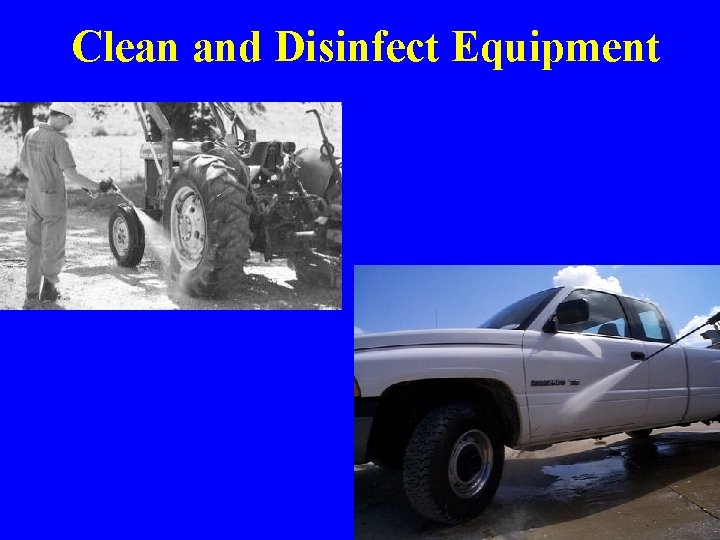
Clean and Disinfect Equipment
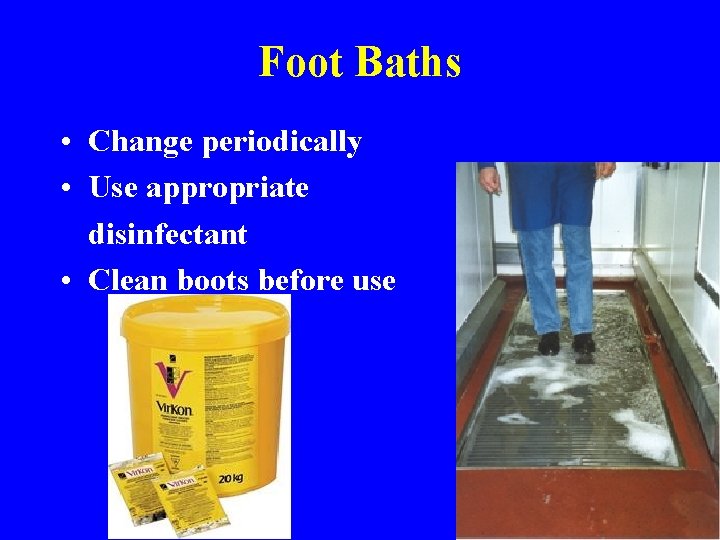
Foot Baths • Change periodically • Use appropriate disinfectant • Clean boots before use
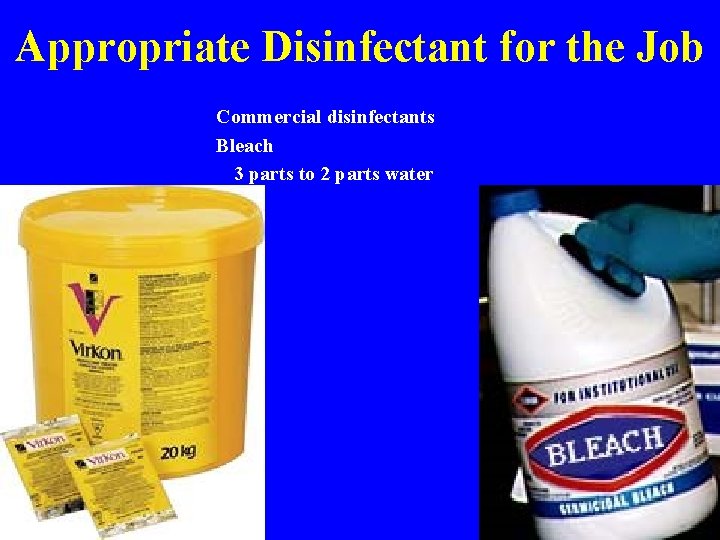
Appropriate Disinfectant for the Job Commercial disinfectants Bleach 3 parts to 2 parts water
Pest Management • • Sources of Disease Rodents, flies, wildlife, animals, etc. Minimize contact Control measures should be a part of general routine
Rodent Control
Clean feed and water • • Water available at all times Clean water Prevent rodent contamination of feed Remove contaminated feed
Animal Waste Storage and Disposal Avoid contamination of environment and animals
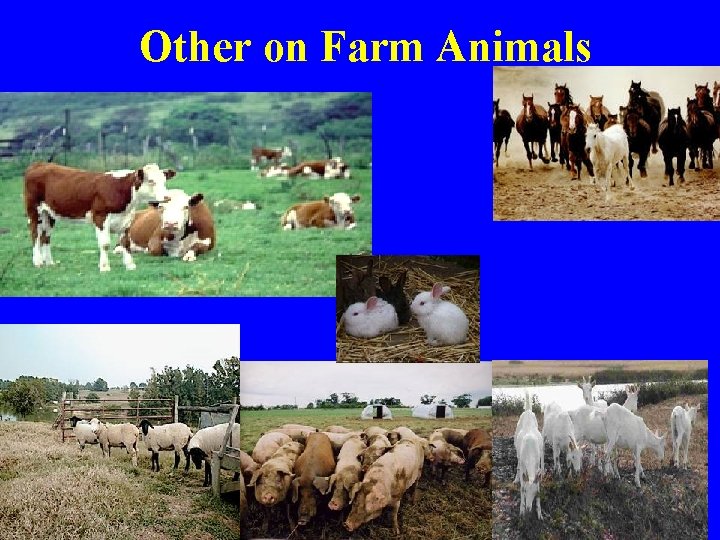
Other on Farm Animals
Disease in Other “On Farm” Animals May Result In • Quarantine • Excessive Mortality • Slow movement of unaffected animals to markets • Government regulations – Permits – Quarantines – Restrictions
Assistance • • • Isolate sick animals Have all dead animals necropsied Report unusual signs immediately Health certificates if out of state animals Veterinarian, County agent Participate in local, state, national, etc. associations • State Cooperative Extension Service
Biosecurity Practices 1. 2. 3. 4. 5. 6. 7. 8. 9. 10. Control exposure to diseased or carrier animals Control visitor access Ensure that fomites (objects) are clean Dispose of carcasses appropriately Check feed and water contamination Control fence line contact Control exposure to vermin Address vertical transmission Air borne contamination Other practices you discover
Bio. Security Essentials • Lock animal facilities • Separate clothing for on-farm use • Restrict visitors to minimum and insist on clothing change and possibly shower • All machines, vehicles and equipment disinfected upon entry to farm • Foot/shoe baths containing disinfectants at entrance • Proper disposal of dead carcasses • Post “Restricted” signs at entrance - and enforce!
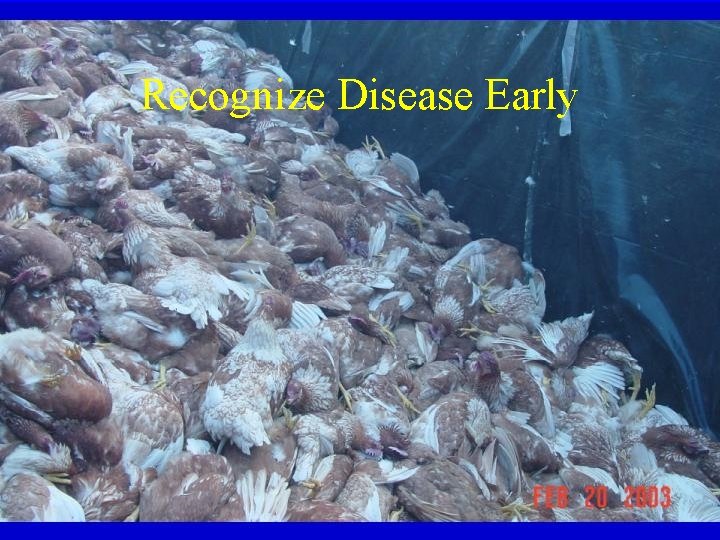
Recognize Disease Early
Other Points to Consider
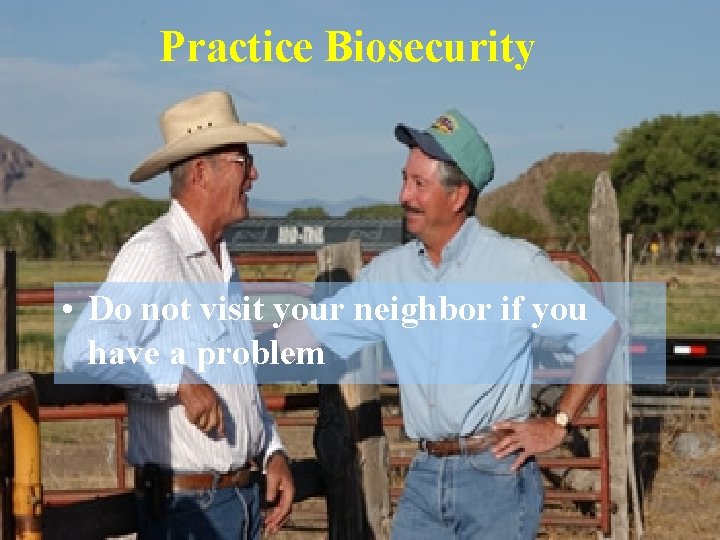
Practice Biosecurity • Do not visit your neighbor if you have a problem

A Biosecurity Program Needs Flexibility
Look for Warning Signs of Problems
Anticipate The Unexpected
Be Vigilant in Disease Prevention
- Slides: 62