
Randomized Algorithms CS 648 Lecture 4 Linearity of
- Slides: 27
Randomized Algorithms CS 648 Lecture 4 • Linearity of Expectation with applications (Most important tool for analyzing randomized algorithms) 1
RECAP FROM THE LAST LECTURE 2
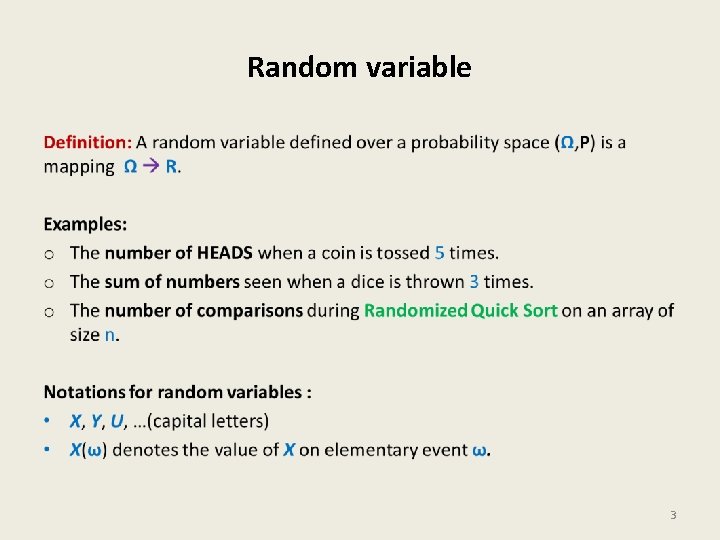
Random variable • 3
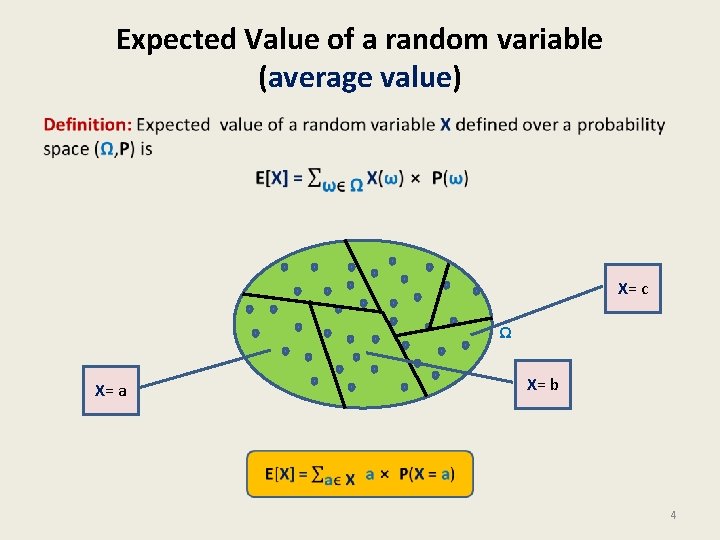
Expected Value of a random variable (average value) • X= c Ω X= a X= b 4
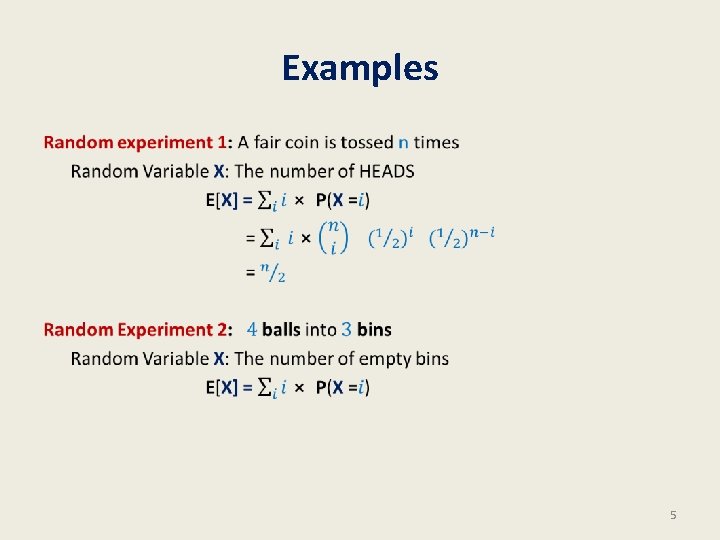
Examples • 5
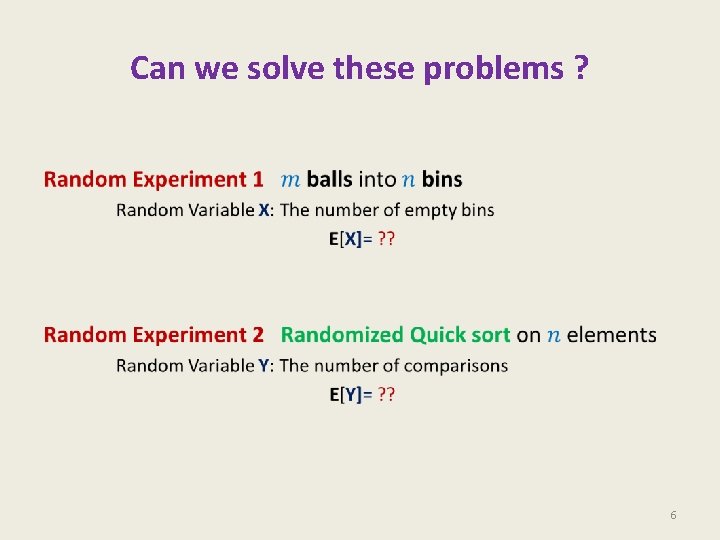
Can we solve these problems ? • 6
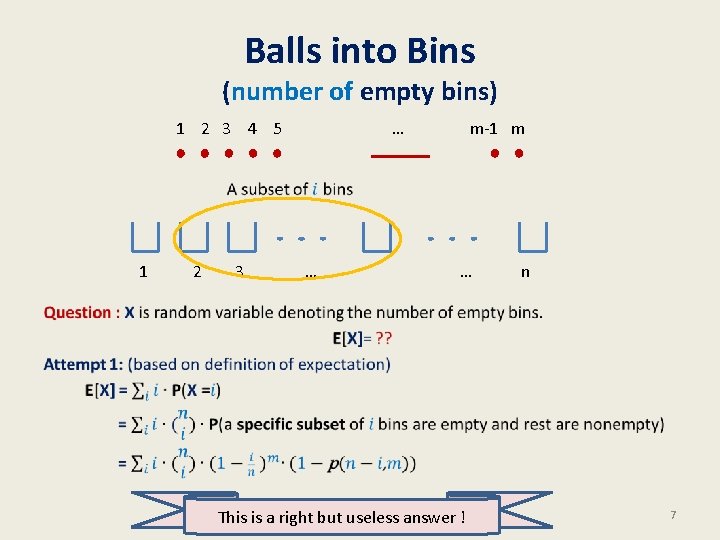
Balls into Bins (number of empty bins) 1 2 3 4 5 • 1 2 3 … … m-1 m … This is a right but useless answer ! n 7
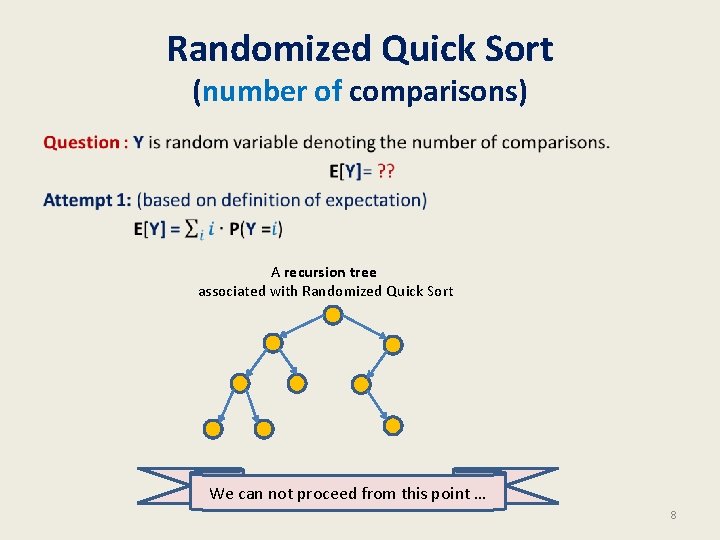
Randomized Quick Sort (number of comparisons) • A recursion tree associated with Randomized Quick Sort We can not proceed from this point … 8
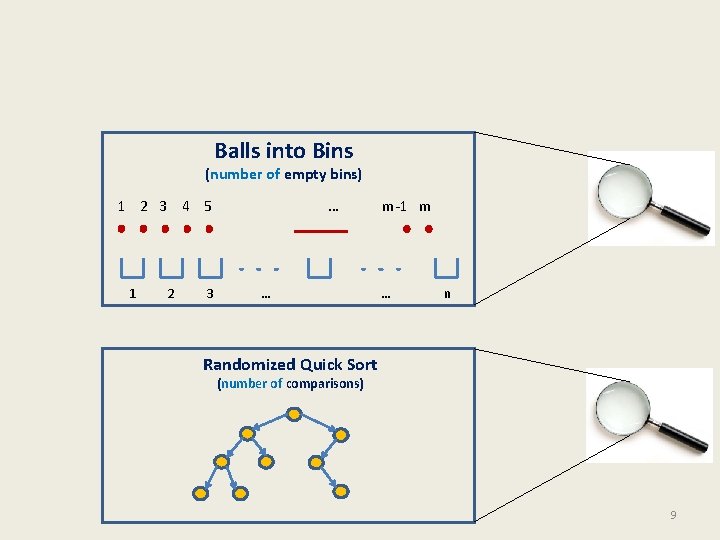
Balls into Bins (number of empty bins) 1 2 3 4 5 1 2 3 … … m-1 m … n Randomized Quick Sort (number of comparisons) 9
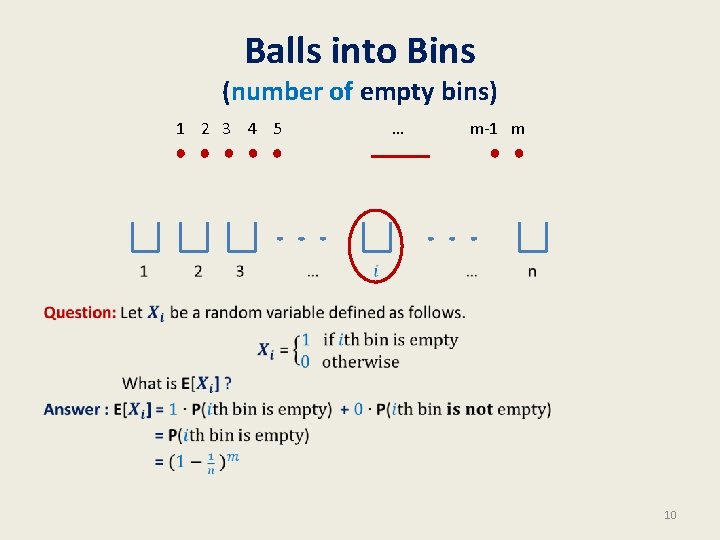
Balls into Bins (number of empty bins) • 1 2 3 4 5 … m-1 m 10
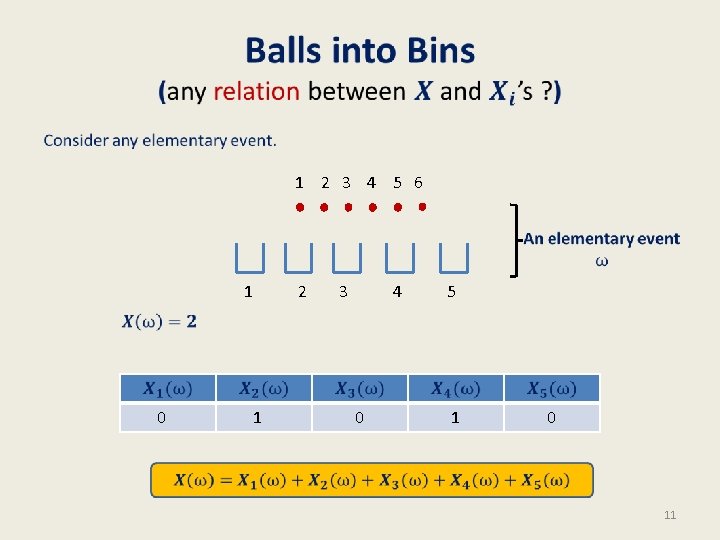
• 1 2 3 4 5 6 1 0 2 1 3 4 0 5 1 0 11
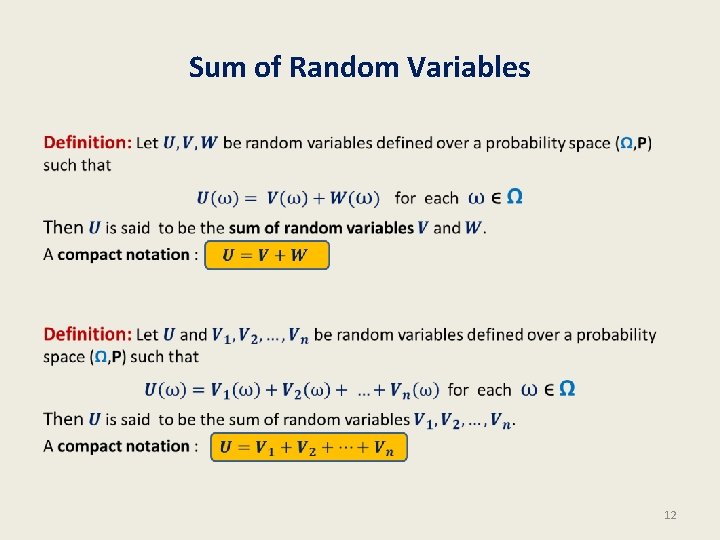
Sum of Random Variables • 12
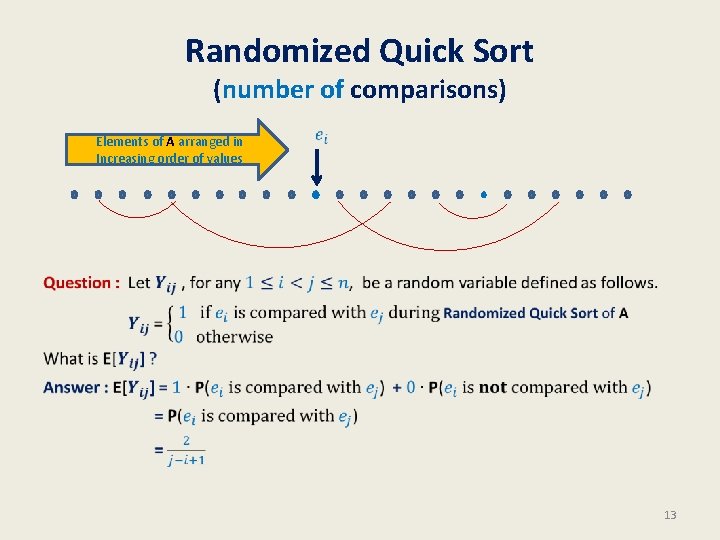
Randomized Quick Sort (number of comparisons) • Elements of A arranged in Increasing order of values 13
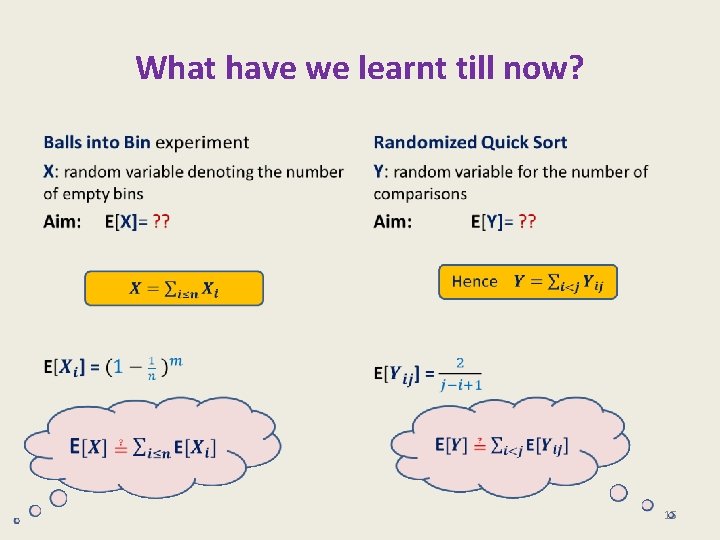
What have we learnt till now? • • 15
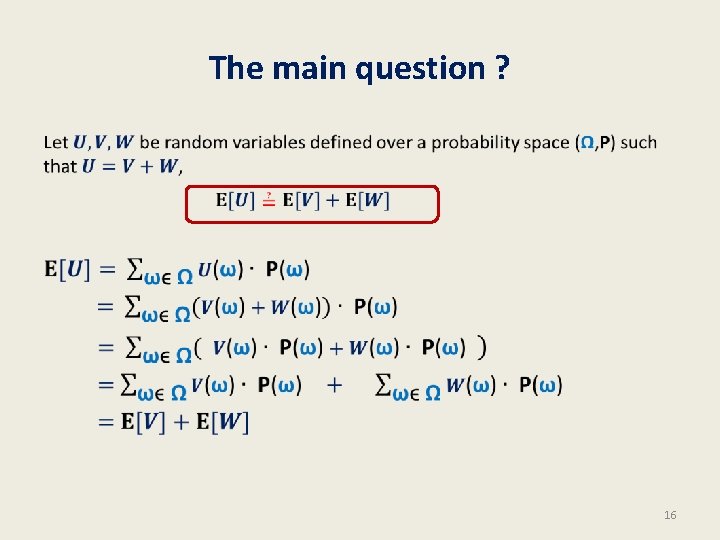
The main question ? • 16
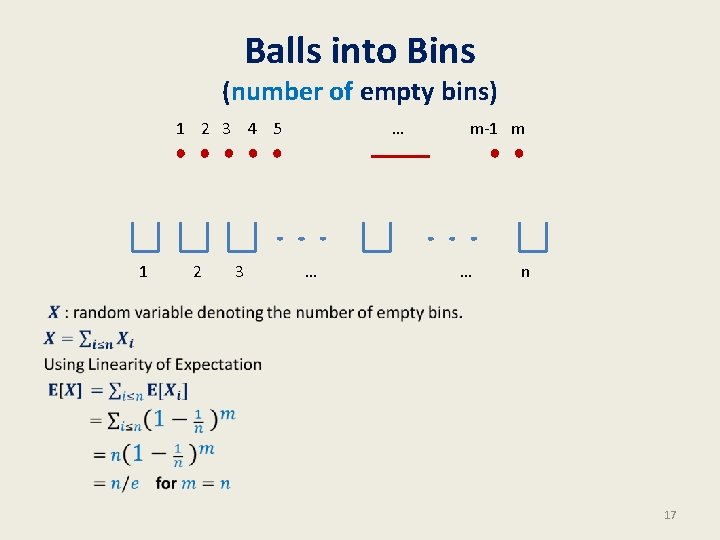
Balls into Bins (number of empty bins) 1 2 3 4 5 • 1 2 3 … … m-1 m … n 17
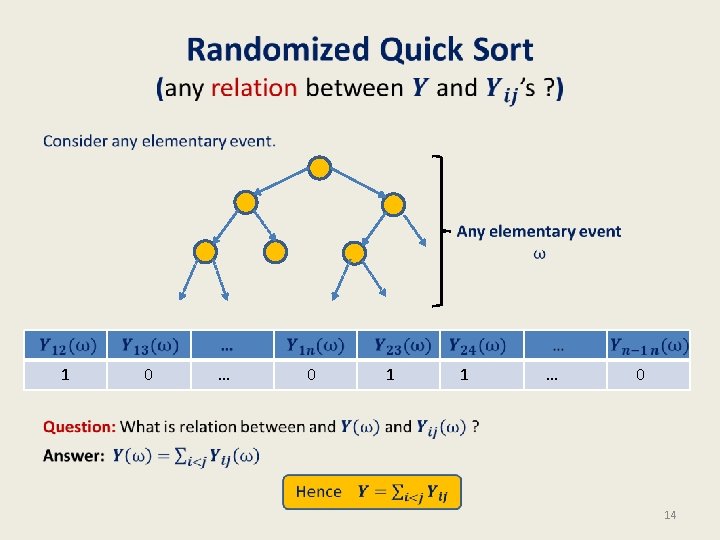
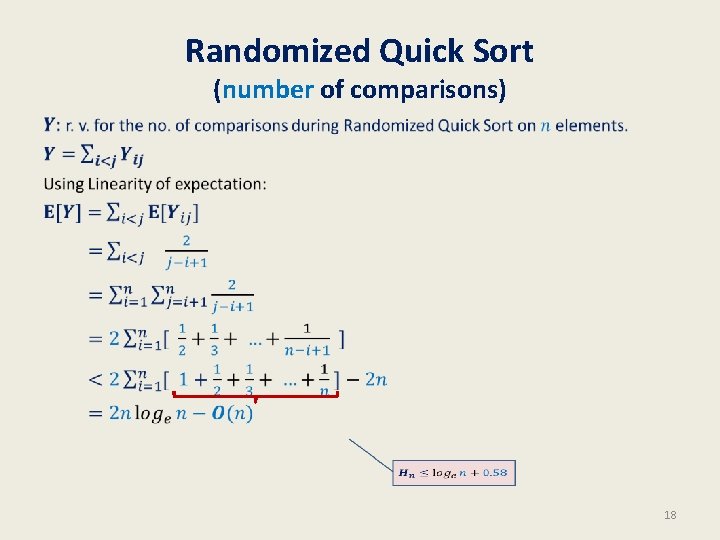
Randomized Quick Sort (number of comparisons) • 18
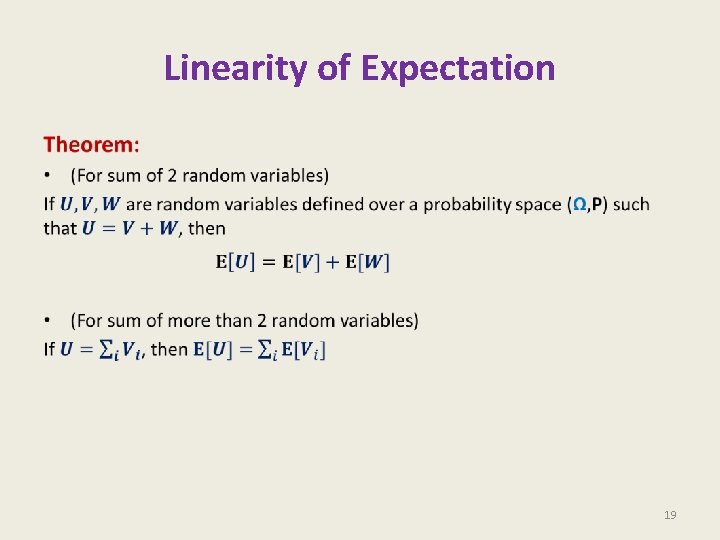
Linearity of Expectation • 19
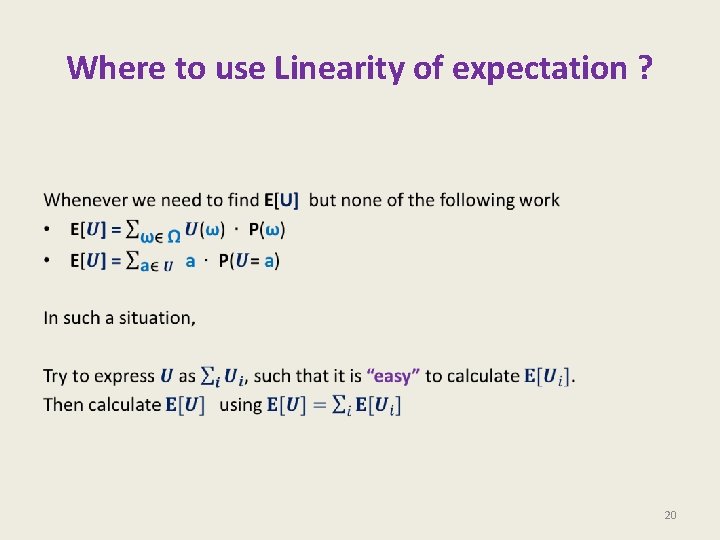
Where to use Linearity of expectation ? • 20
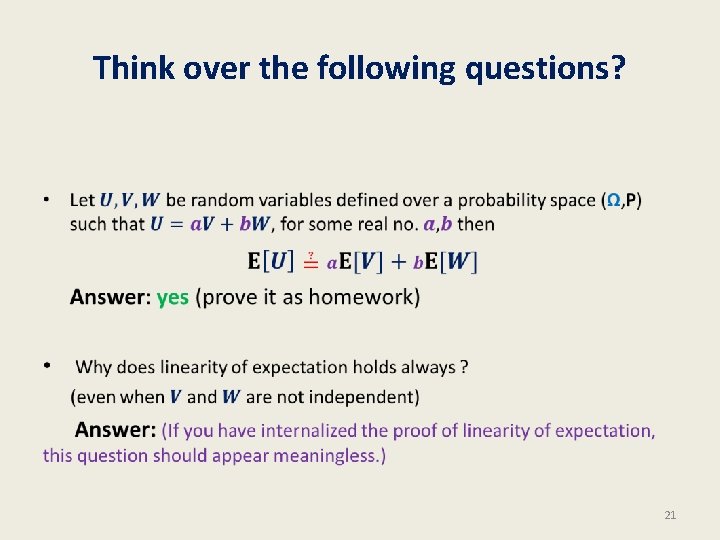
Think over the following questions? • 21
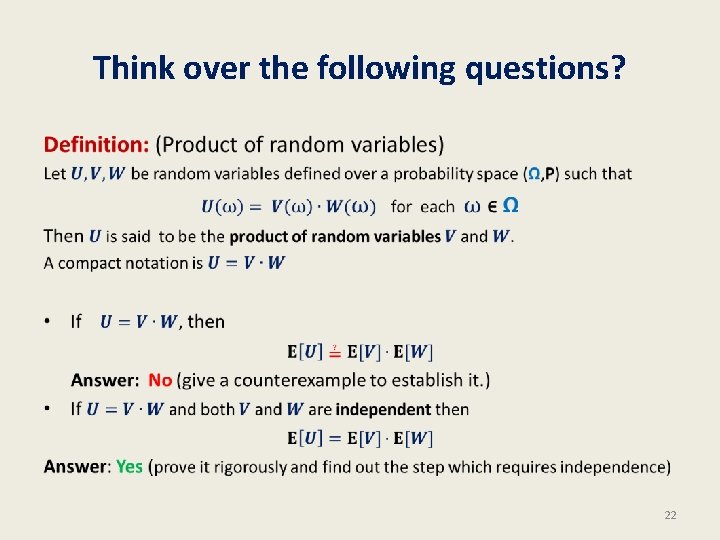
Think over the following questions? • 22
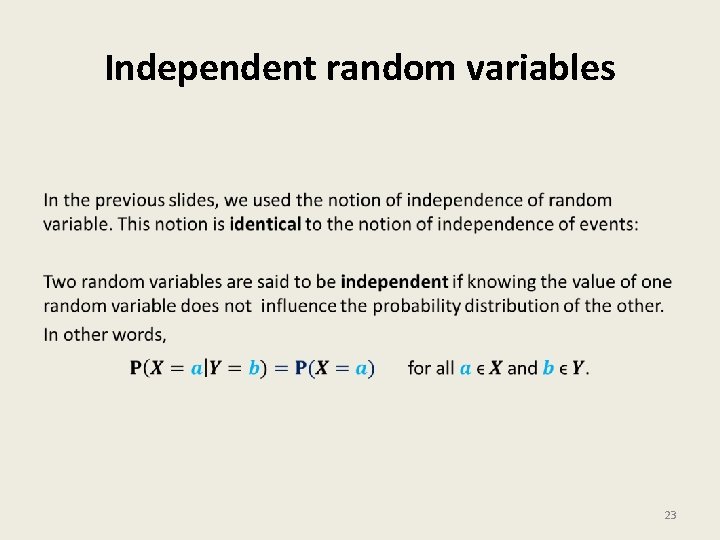
Independent random variables • 23
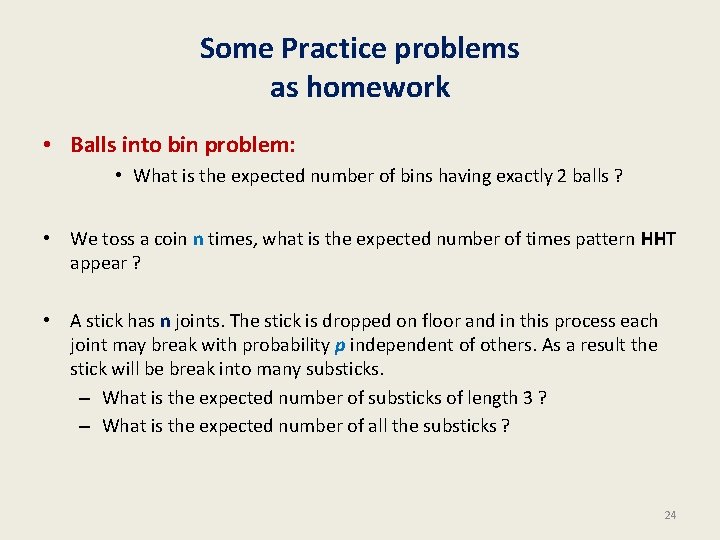
Some Practice problems as homework • Balls into bin problem: • What is the expected number of bins having exactly 2 balls ? • We toss a coin n times, what is the expected number of times pattern HHT appear ? • A stick has n joints. The stick is dropped on floor and in this process each joint may break with probability p independent of others. As a result the stick will be break into many substicks. – What is the expected number of substicks of length 3 ? – What is the expected number of all the substicks ? 24
PROBLEMS OF THE NEXT LECTURE 25
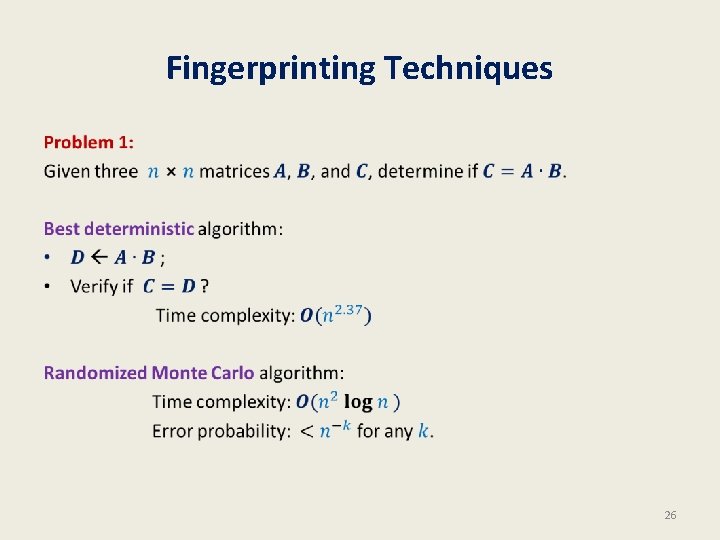
Fingerprinting Techniques • 26
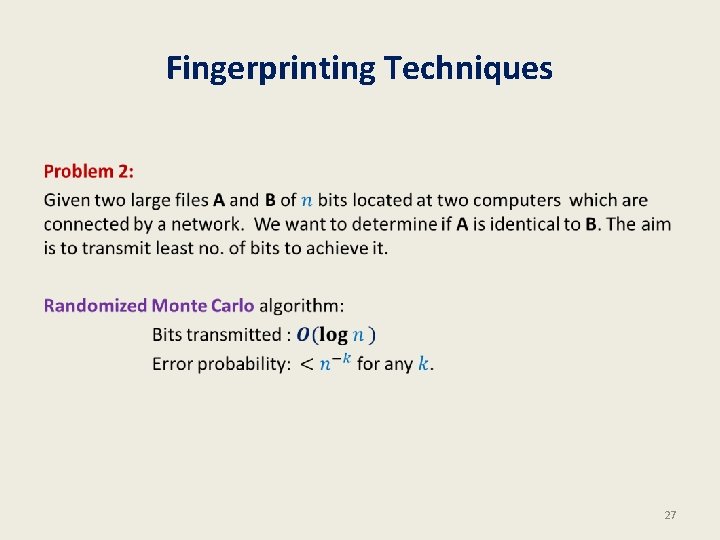
Fingerprinting Techniques • 27