
Randomized Algorithms Chapter 12 Jason Eric Johnson Presentation
- Slides: 35
Randomized Algorithms Chapter 12 Jason Eric Johnson Presentation #3 CS 6030 - Bioinformatics
In General • Make random decisions in operation • Non-deterministic sequence of operations • No input reliably gives worst-case results
Sorting • Classic Quicksort • Can be fast - O(n log n) • Can be slow - O(n ) • Based on how good a “splitter” is 2 chosen
Good Splitters • We want the set to be split into roughly even halves • Worst case when one half empty and the other has all elements • O(n log n) when both splits are larger than n/4
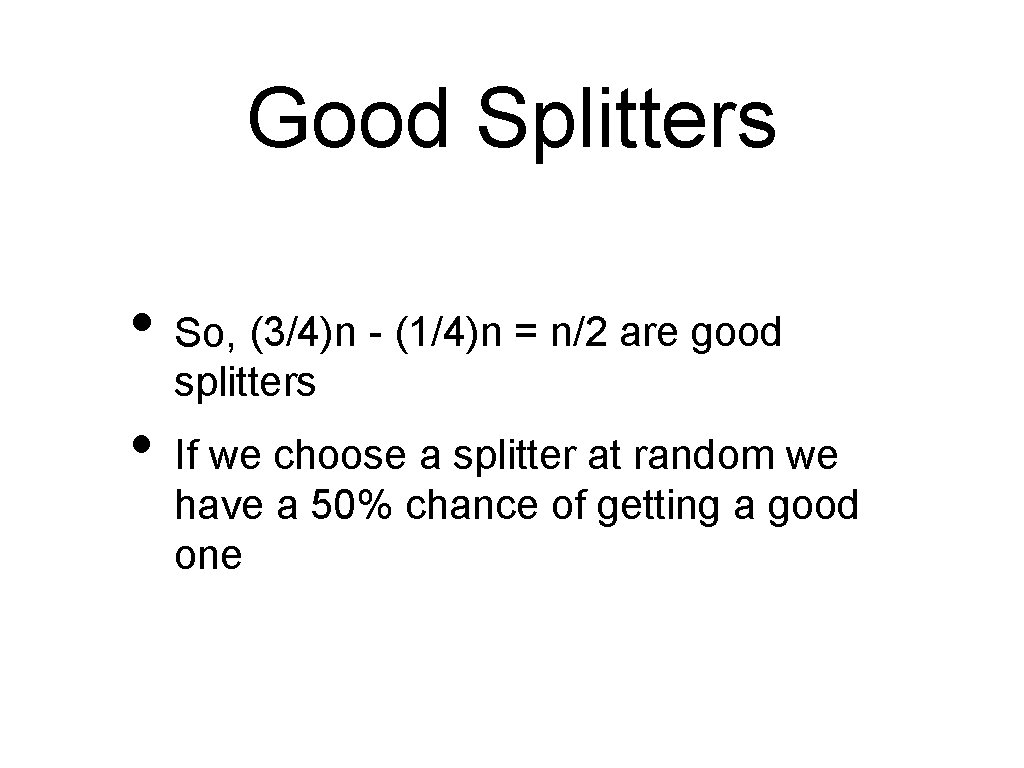
Good Splitters • So, (3/4)n - (1/4)n = n/2 are good splitters • If we choose a splitter at random we have a 50% chance of getting a good one
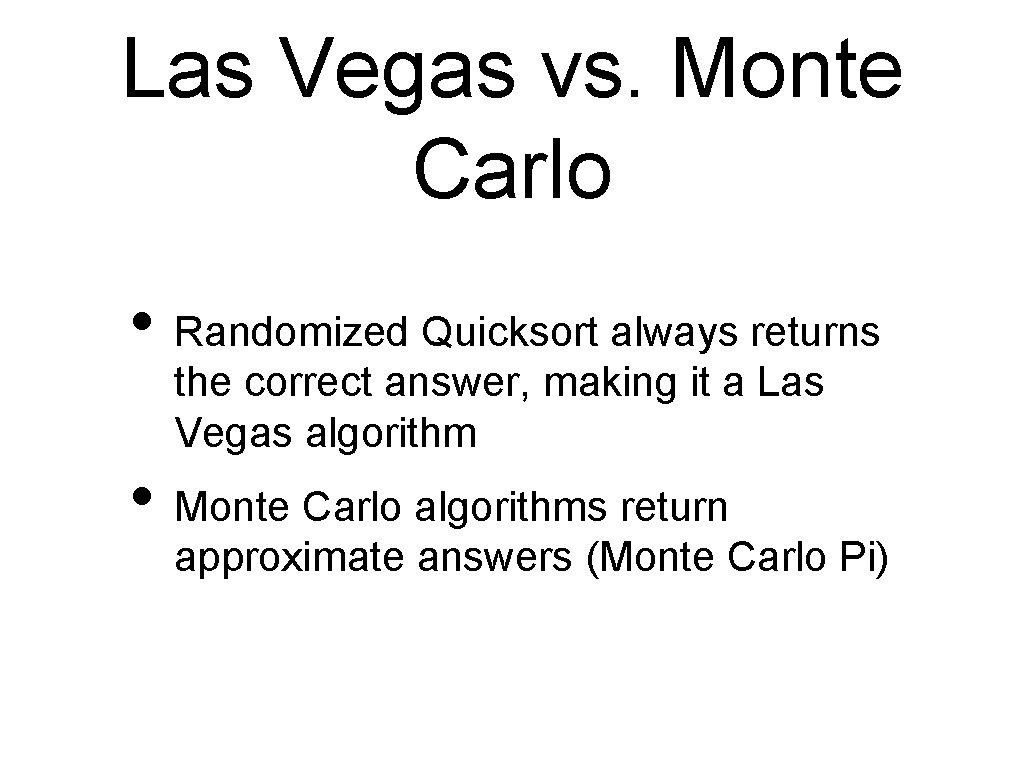
Las Vegas vs. Monte Carlo • Randomized Quicksort always returns the correct answer, making it a Las Vegas algorithm • Monte Carlo algorithms return approximate answers (Monte Carlo Pi)
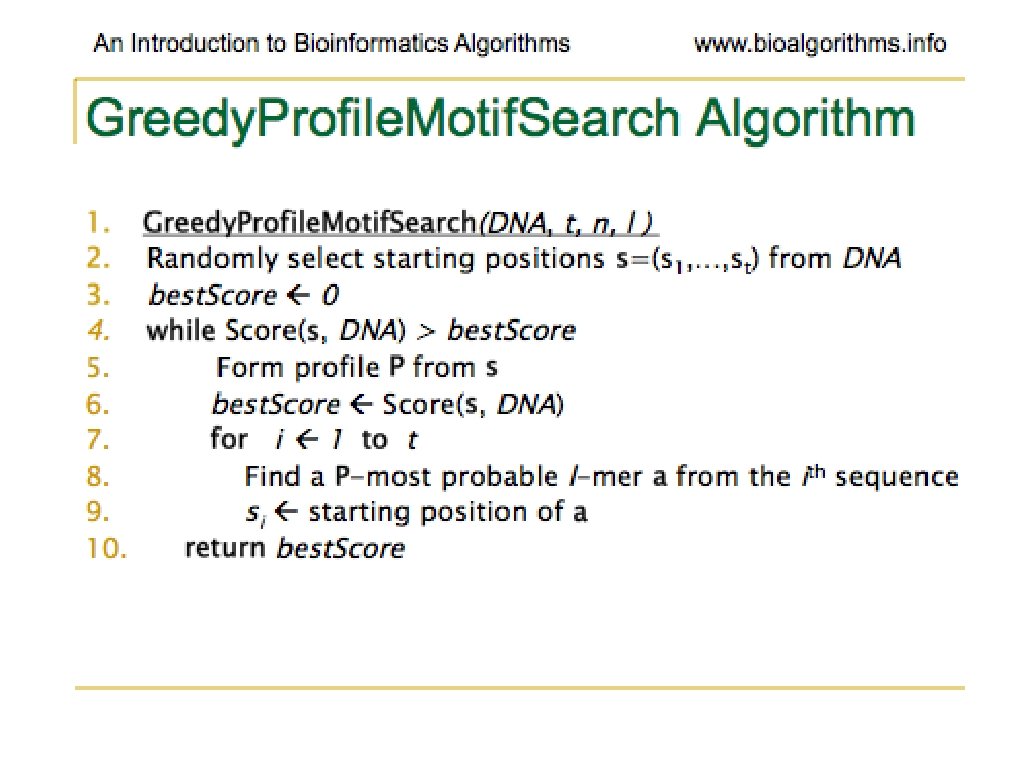
Problems With Greedy. Profile. Motif. Searc h • Very little chance of guess being optimal • Unlikely to lead to correct solution at all • Generally run many times • Basically, hoping to stumble on the right solution (optimal motif)
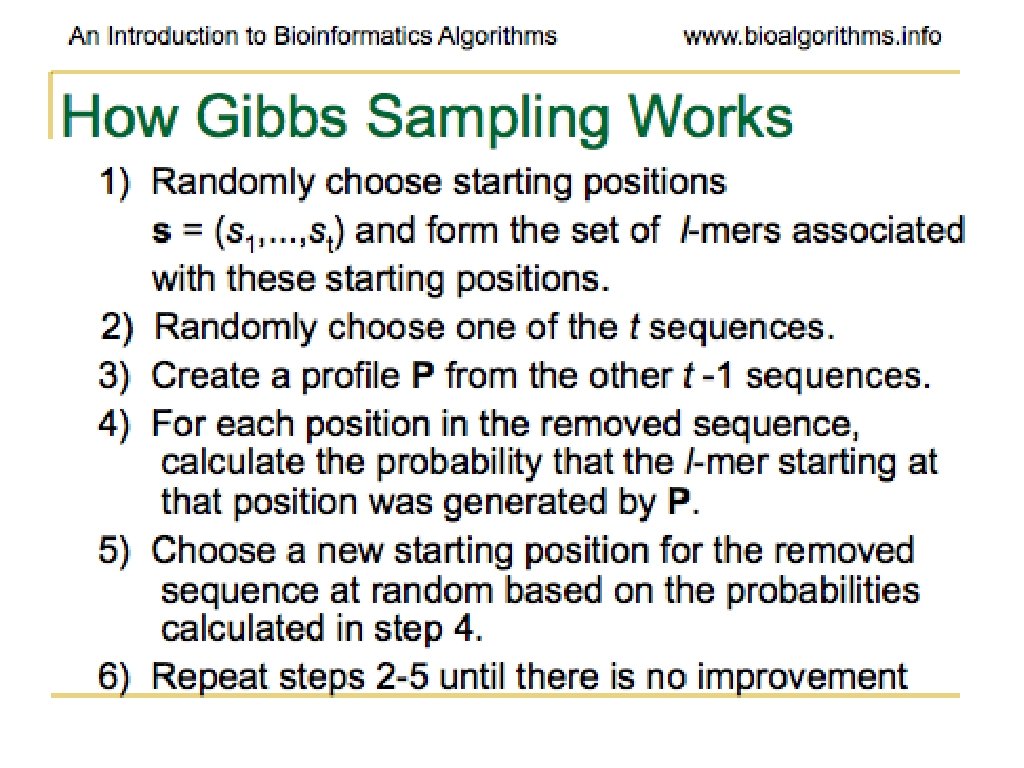
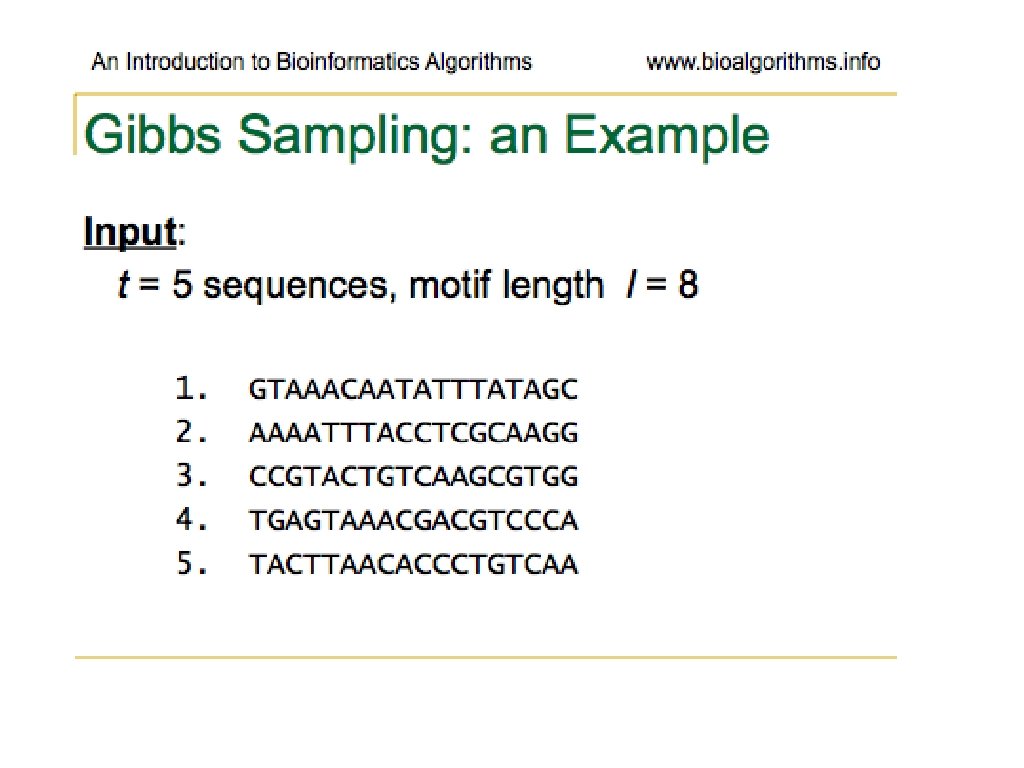
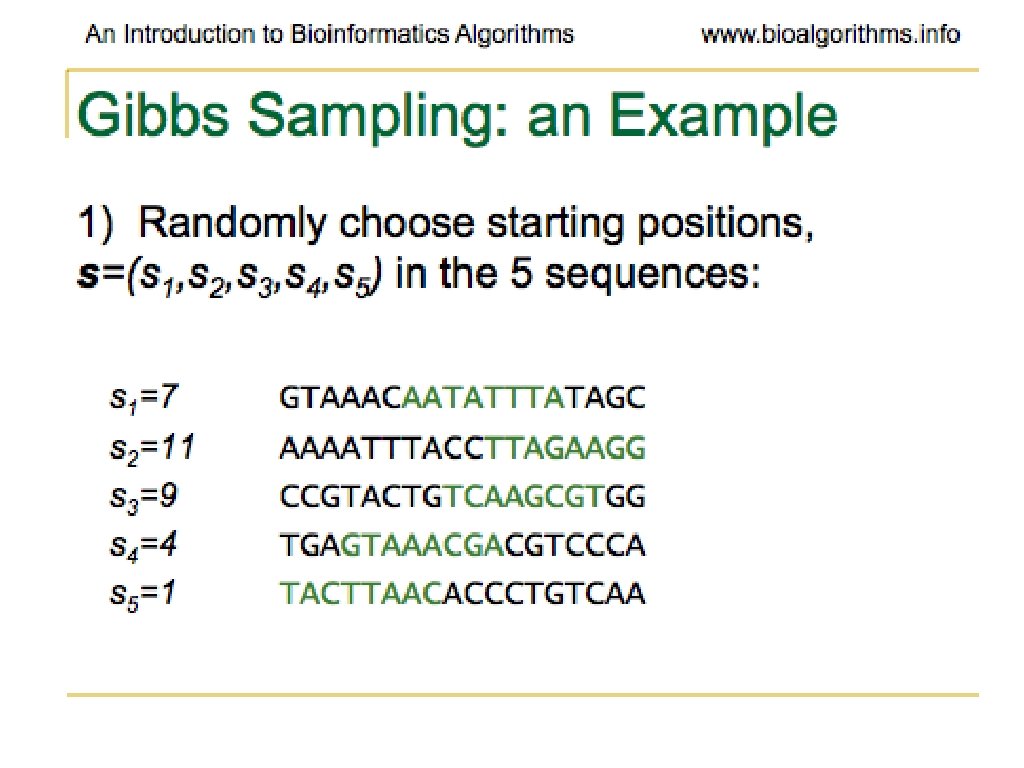
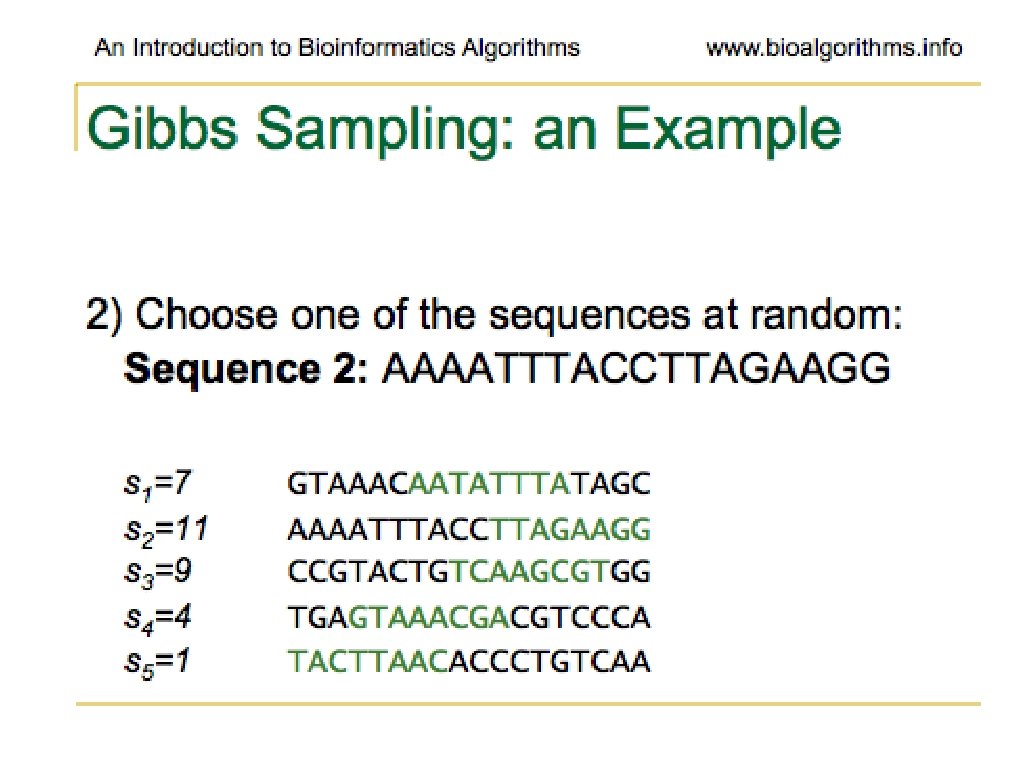
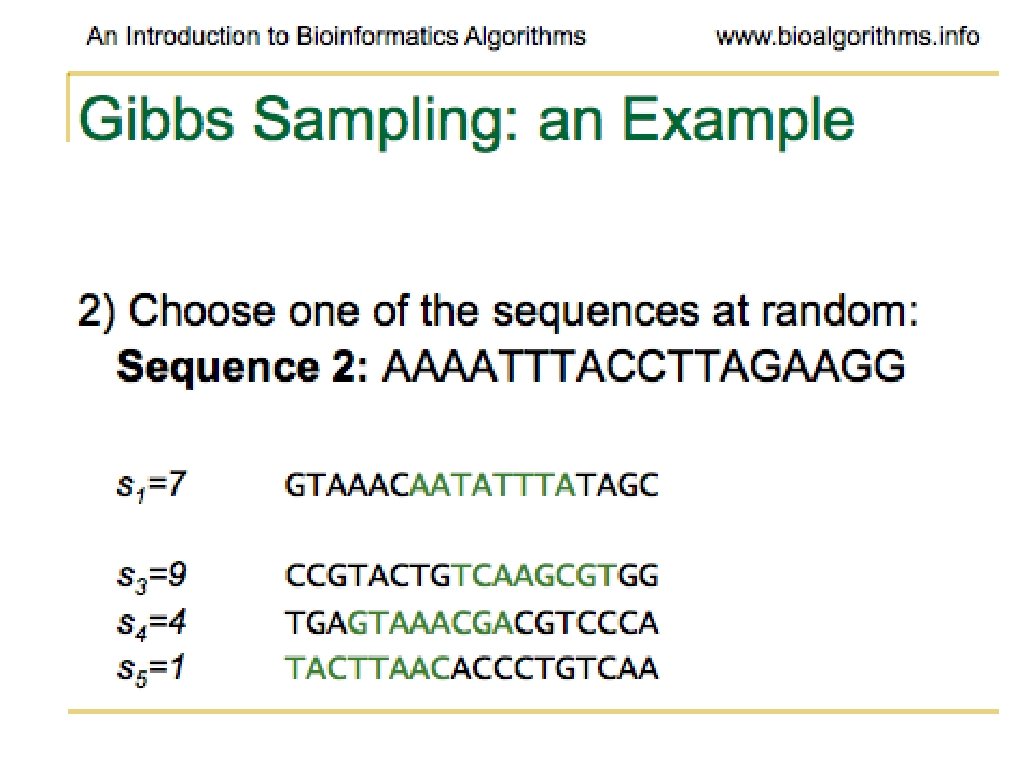
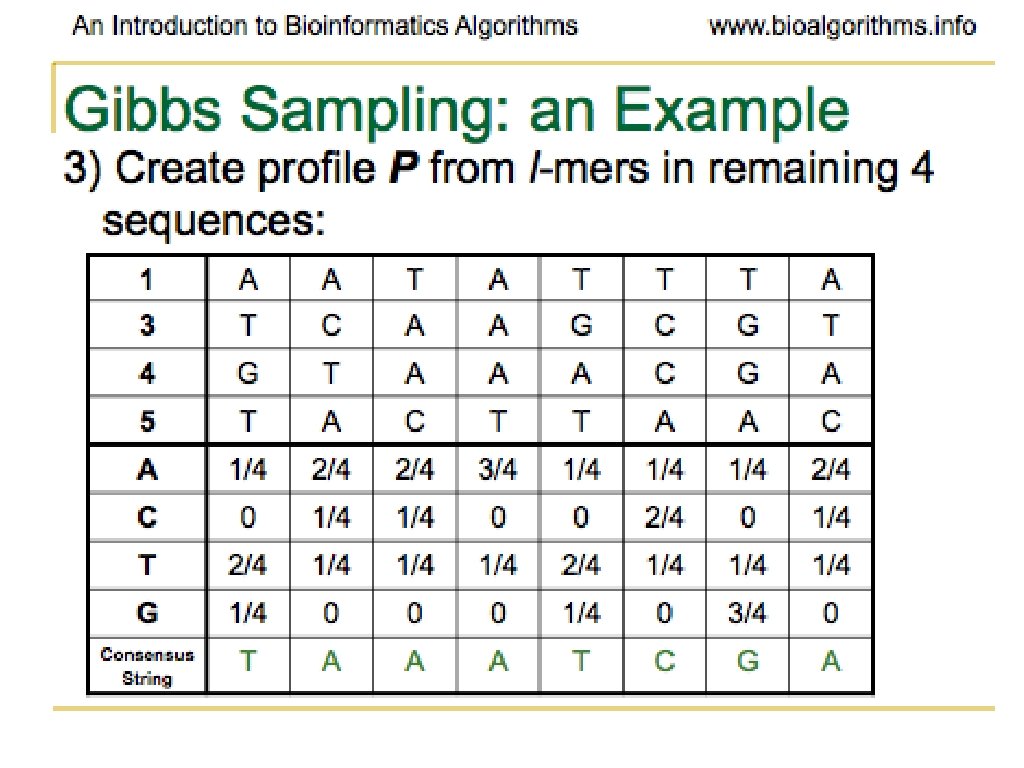
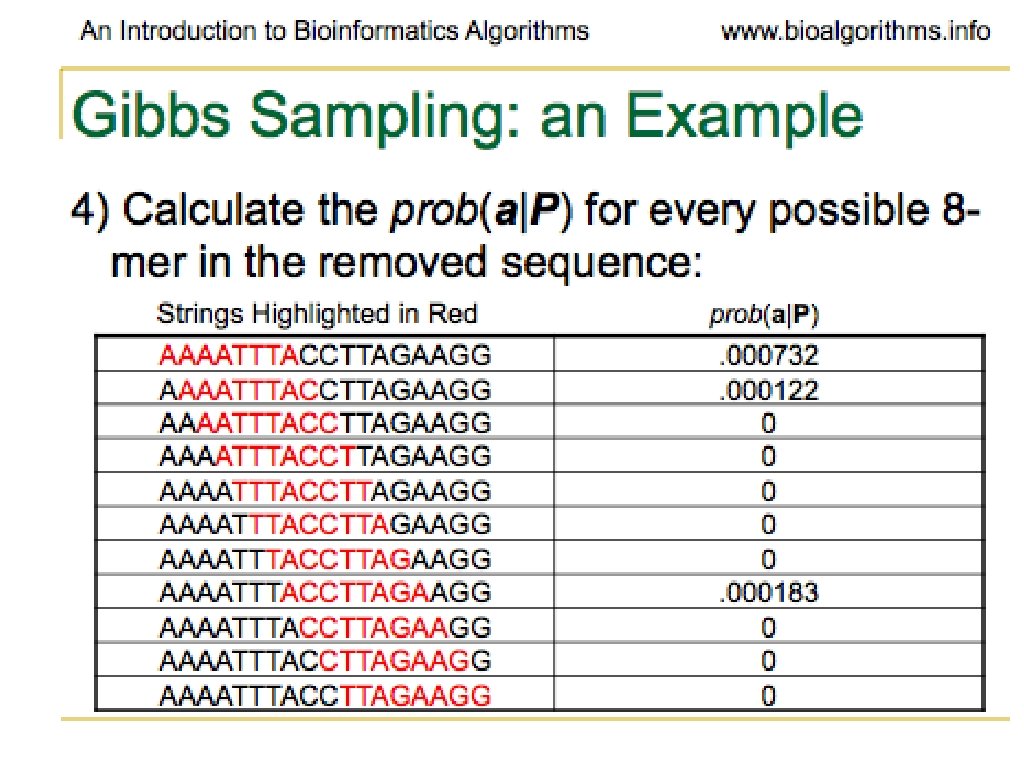
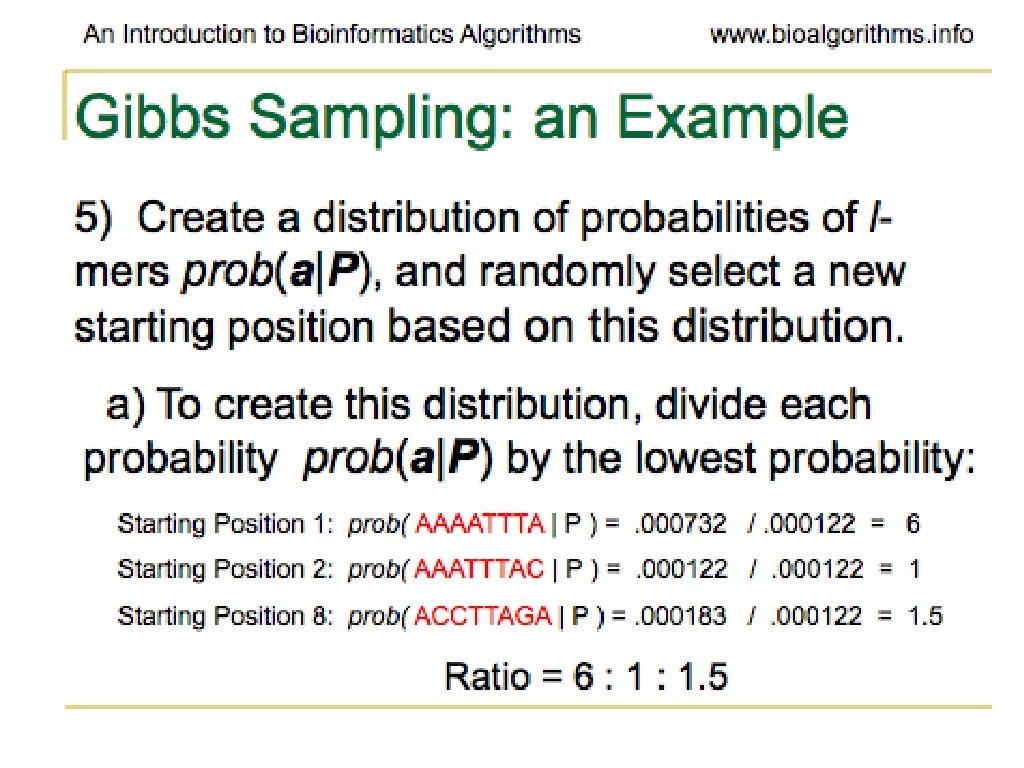
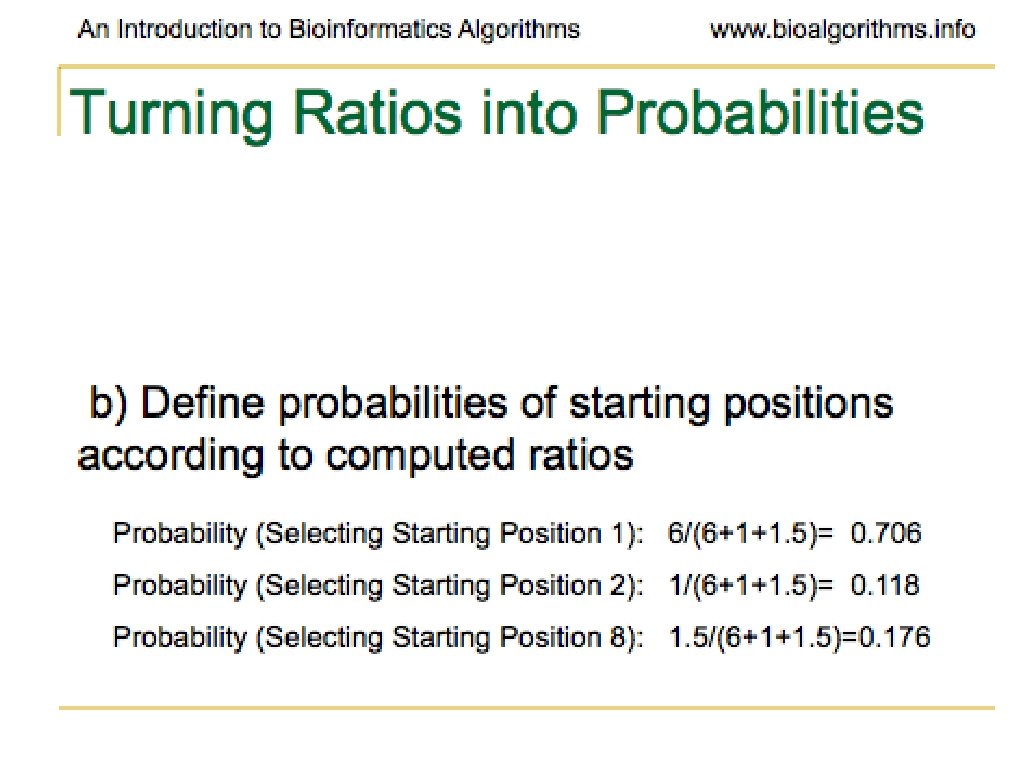
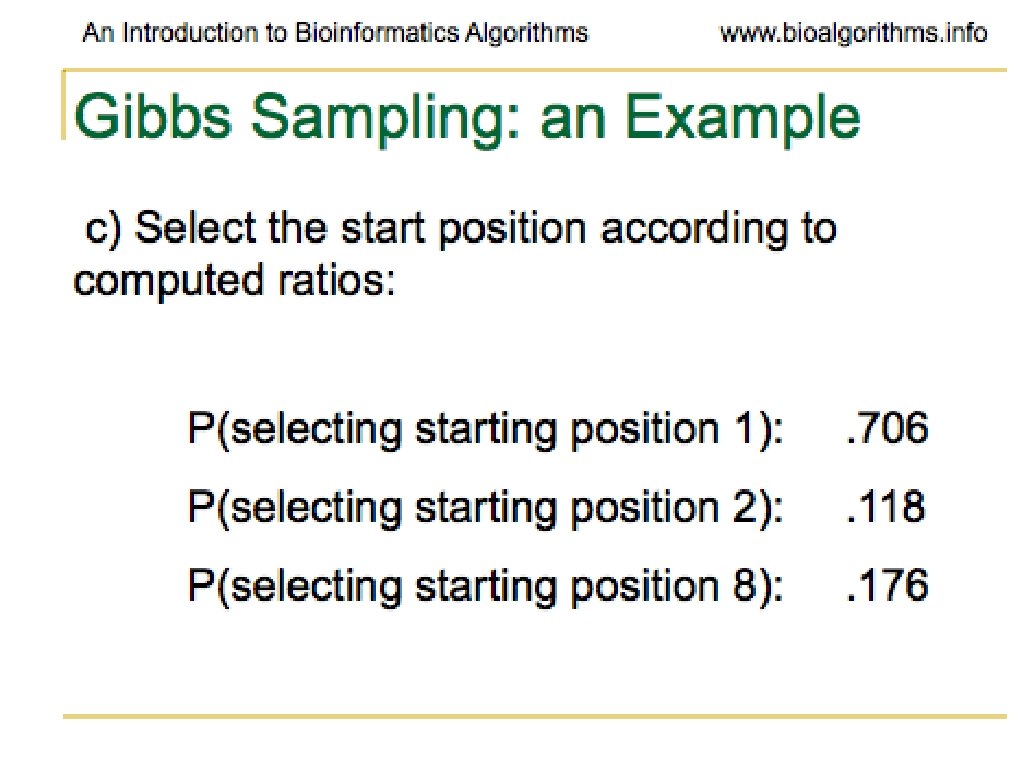
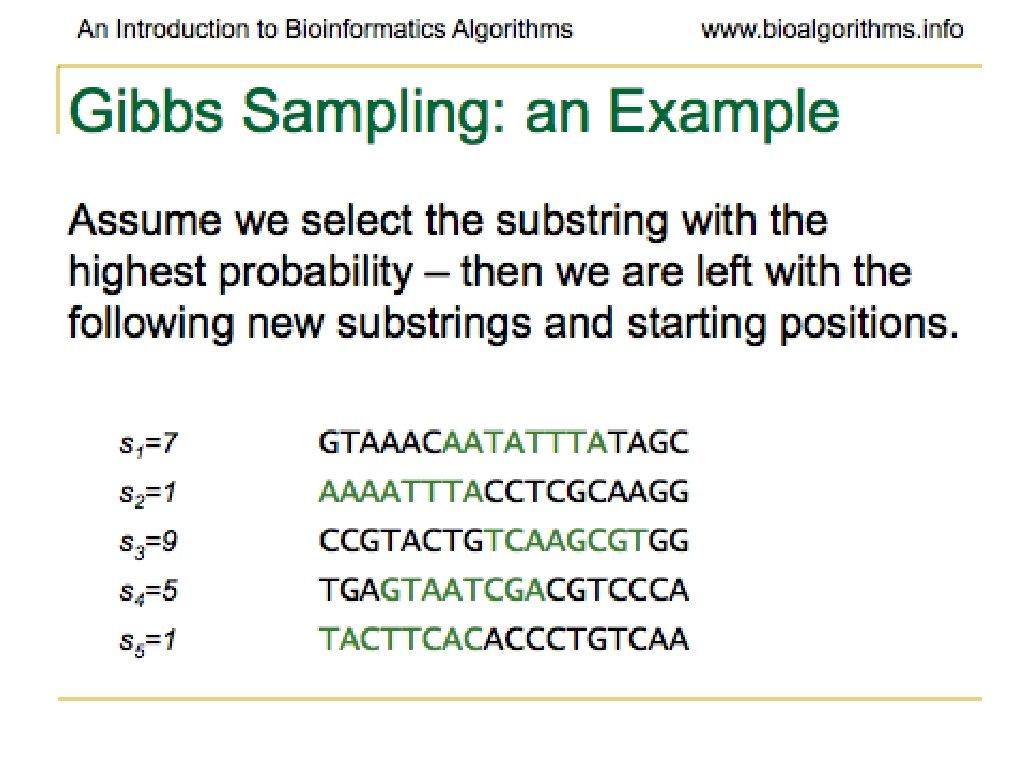
Gibbs Sampling • Discards one l-mer per iteration • Chooses the new l-mer at random • Moves more slowly than Greedy strategy • More likely to converge to correct solution
Problems with Gibbs Sampling • Needs to be modified if applied to samples with uneven nucleotide distribution • Way more of one than others can lead to identifying group of like nucleotides rather than the biologically significant sequence
Problems with Gibbs Sampling • Often converges to a locally optimal motif rather than a global optimum • Needs to be run many times with random seeds to get a good result
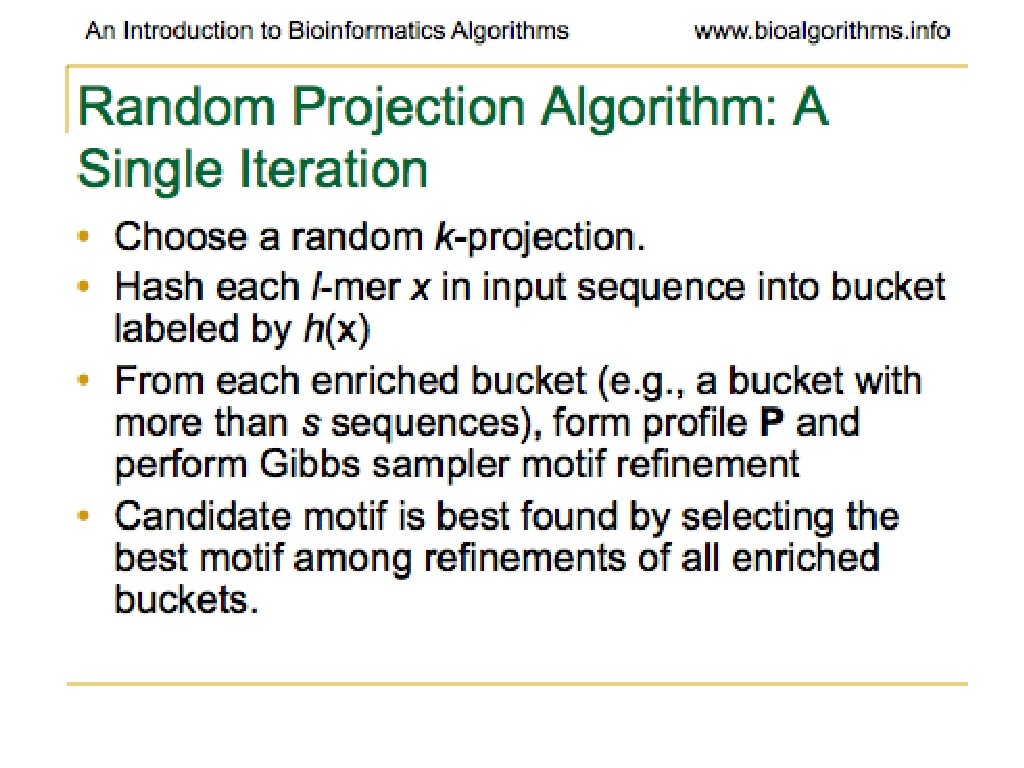
Random Projection • Motif with mutations will agree on a subset of positions • Randomly select subset of positions • Search for projection hoping that it is unaffected (at least in most cases) by mutation
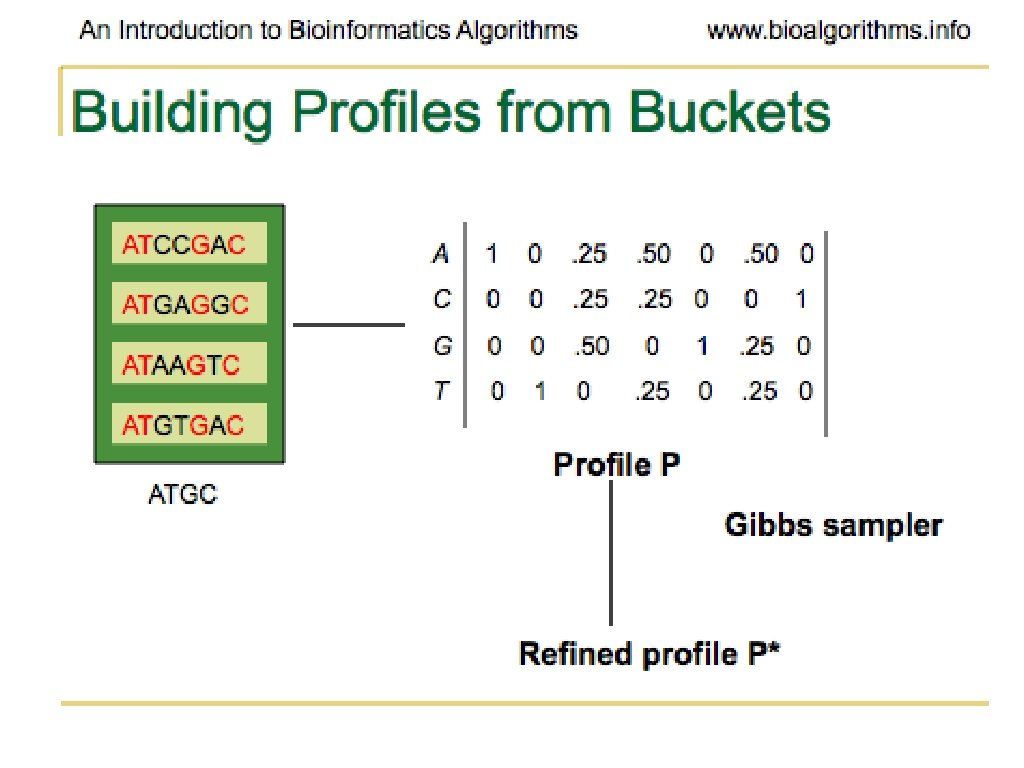
Random Projection • Select k positions in length l string • For each l-tuple in input sequences that has projection k at correct locations, hash into a bucket • Recover motif from the bucket containing many l-mers (Use Gibbs, etc. )
Random Projection • Get motif from sequences in the bucket • Use the information for a local refinement scheme, such as Gibbs Sampling
References • Generated from: • • An Introduction to Bioinformatics Algorithms, Neil C. Jones, Pavel A. Pevzner, A Bradford Book, The MIT Press, Cambridge, Mass. , London, England, 2004 Slides 7 -13, 16 -27, 33 -34 from http: //bix. ucsd. edu/bioalgorithms/slides. php#Ch 12