
Randomised controlled trials in primary care case study




- Slides: 23
Randomised controlled trials in primary care: case study Doctor Sue Wilson University of Birmingham United Kingdom
Full Reference Randomised controlled trials in primary care: case study. Wilson S, Delaney BC, Roalfe A, Roberts L, Redman V, Wearn A, Hobbs FDR. British Medical Journal. 2000; 321: 24
About the Author…. • Senior Research Fellow • Public Health / Cancer Epidemiology background • Interested in design and conduct of high quality research within Primary Care
Learning Objectives • To understand the importance of research in Primary Care • To develop an awareness of issues surrounding randomised controlled trials in a primary care
Performance Objectives • To demonstrate awareness of some of the difficulties associated with research in Primary care (e. g. patient / practice recruitment and randomisation)
How will we address this topic? This lecture will discuss some of the issues that must be considered when conducting and interpreting the results of trials in primary care using examples generated during a trial of the management of dyspepsia.
Background to the Lecture Why choose Dyspepsia? • Chronic disease • Largely managed in primary care • Requires high quality evidence from randomised
Background continued The Research Question Is open access endoscopy more effective and efficient than routine out patient referral for the management of dyspepsia?
Birmingham Open Access Endoscopy Study • Eligible subjects –Dyspeptic patients (age 18+) • Randomised by sealed envelope –Control: usual management NOT open access –Study: intervention depends on age
Why do trials in Primary Care? • Over 90% of patient contacts in NHS occur in Primary Care • Relevance of research undertaken in secondary or tertiary care is questionable
Recruitment Bias • Amount of Practitioners vs. time / cost of recruitment / maintenance of practitioners • Number of patients with relevant condition vs. total consultations • Participation of Practices /
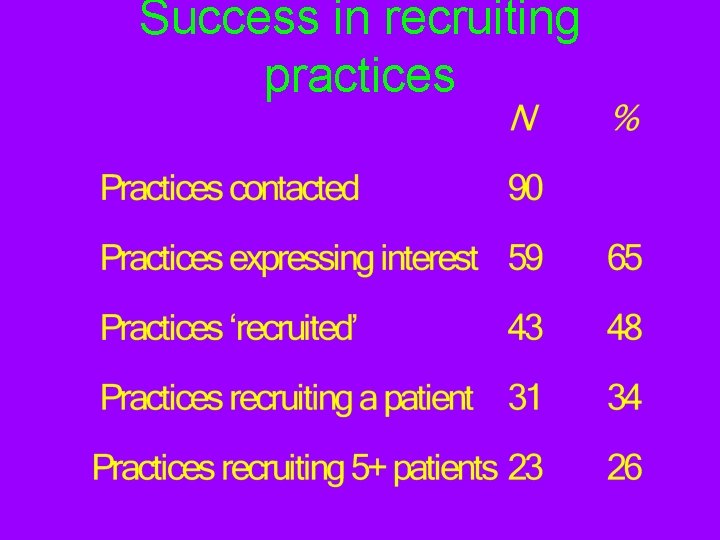
Success in recruiting practices
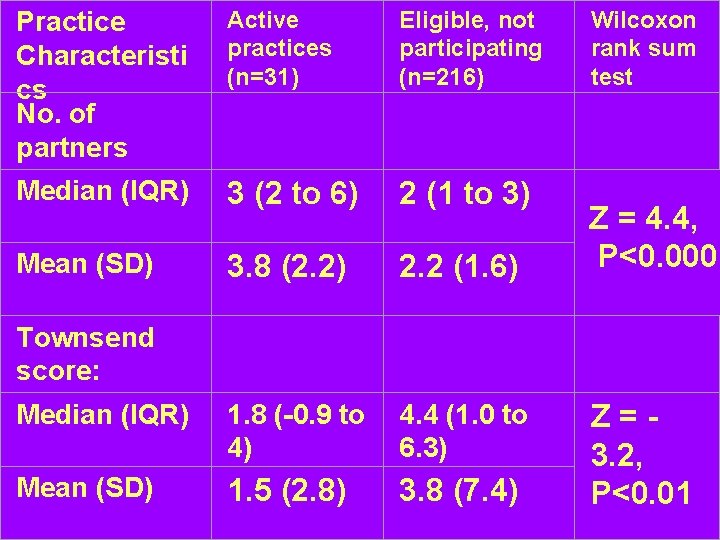
Practice Characteristi cs No. of partners Active practices (n=31) Eligible, not participating (n=216) Median (IQR) 3 (2 to 6) 2 (1 to 3) Mean (SD) 3. 8 (2. 2) 2. 2 (1. 6) Median (IQR) 1. 8 (-0. 9 to 4) 4. 4 (1. 0 to 6. 3) Mean (SD) 1. 5 (2. 8) 3. 8 (7. 4) Wilcoxon rank sum test Z = 4. 4, P<0. 0001 Townsend score: Z=3. 2, P<0. 01
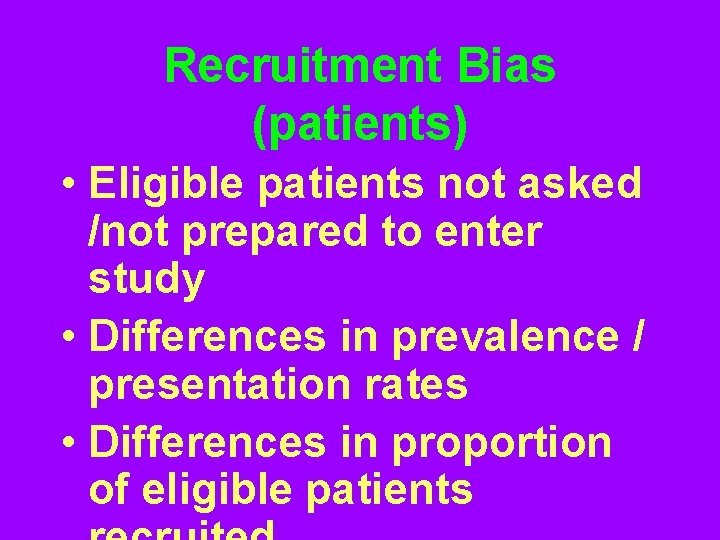
Recruitment Bias (patients) • Eligible patients not asked /not prepared to enter study • Differences in prevalence / presentation rates • Differences in proportion of eligible patients
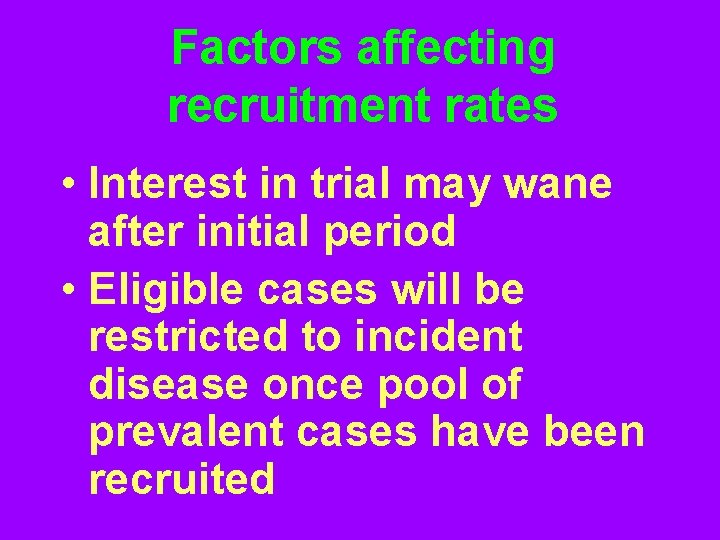
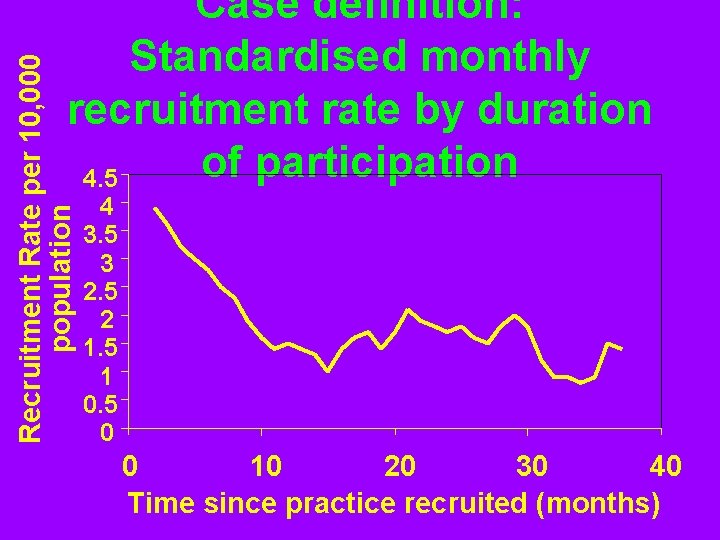
Factors affecting recruitment rates • Interest in trial may wane after initial period • Eligible cases will be restricted to incident disease once pool of prevalent cases have been recruited
Recruitment Rate per 10, 000 population Case definition: Standardised monthly recruitment rate by duration of participation 4. 5 4 3. 5 3 2. 5 2 1. 5 1 0. 5 0 0 10 20 30 40 Time since practice recruited (months)
Ethical Issues and recruitment • Patient may feel obligated to participate • Financial implications to GP • Conflict between randomisation options and preferred course of management • Patient acceptance of
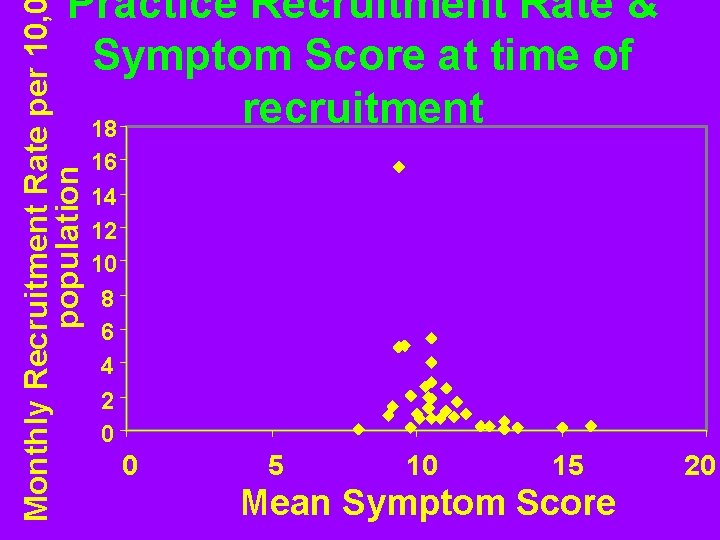
Selective recruitment of patients • Impact of Randomisation process on results • Complexities in randomisation / reduced patient recruitment • Recruitment levels and Practice workload
Selective recruitment of patients continued • Practice commitment • Use of research staff for recruitment
Monthly Recruitment Rate per 10, population Practice Recruitment Rate & Symptom Score at time of recruitment 18 16 14 12 10 8 6 4 2 0 0 5 10 15 Mean Symptom Score 20
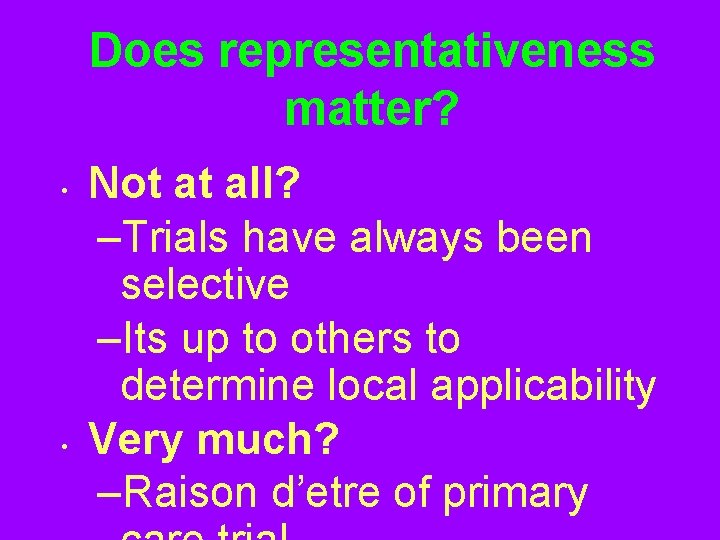
Does representativeness matter? • • Not at all? –Trials have always been selective –Its up to others to determine local applicability Very much? –Raison d’etre of primary
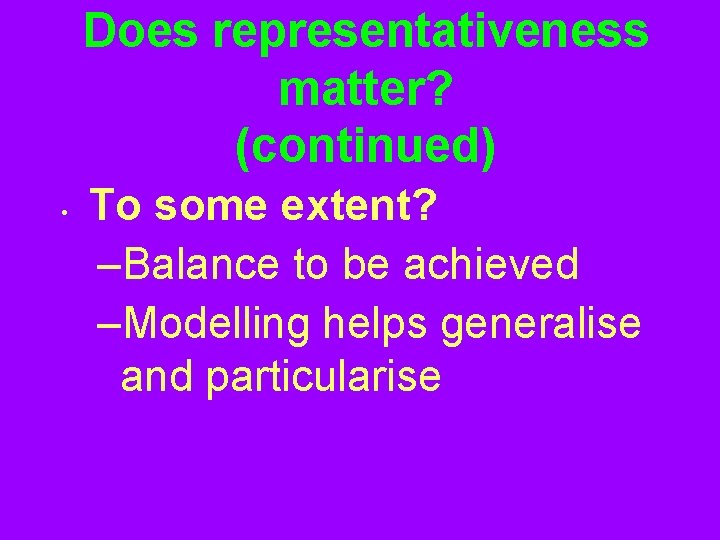
Does representativeness matter? (continued) • To some extent? –Balance to be achieved –Modelling helps generalise and particularise
References