
RAMS Overview An update on the research workflow
- Slides: 22
RAMS Overview: An update on the research workflow tool James Dalziel Professor of Learning Technology, and Director, Macquarie E-Learning Centre Of Excellence (MELCOE) Macquarie University james@melcoe. mq. edu. au www. melcoe. mq. edu. au Presentation for 2007 European LAMS Conference, July 5 th, 2007
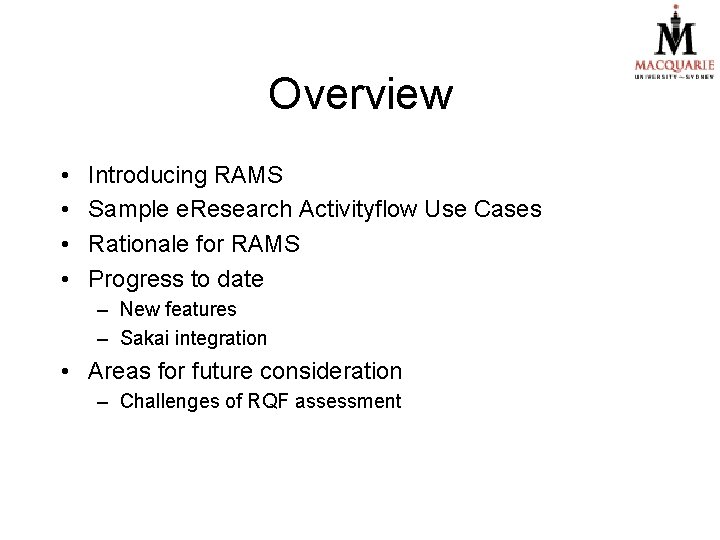
Overview • • Introducing RAMS Sample e. Research Activityflow Use Cases Rationale for RAMS Progress to date – New features – Sakai integration • Areas for future consideration – Challenges of RQF assessment
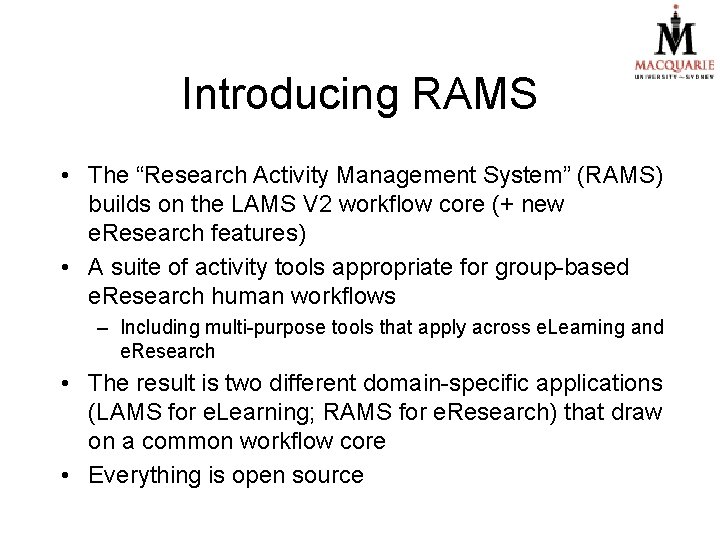
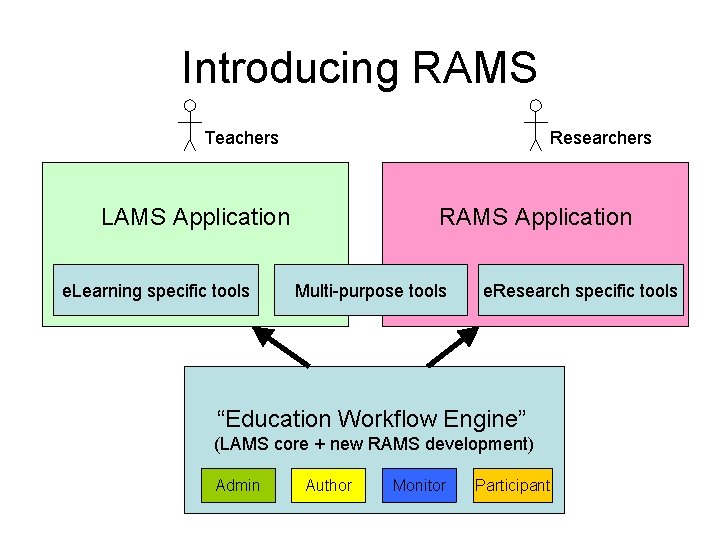
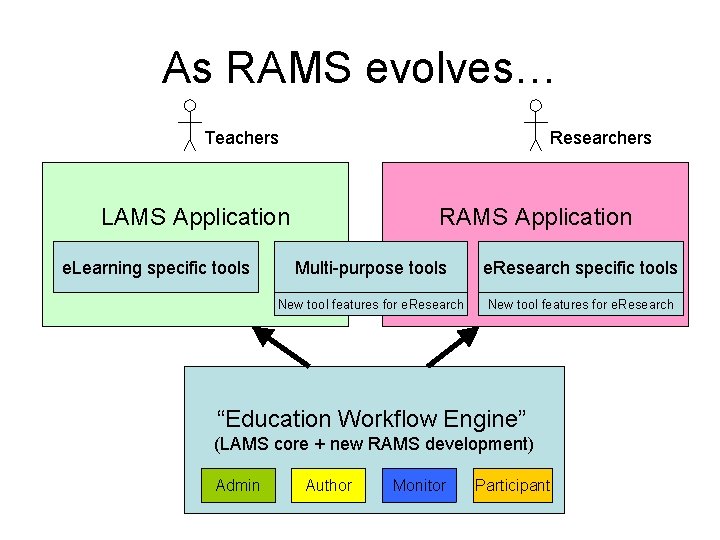
Introducing RAMS • The “Research Activity Management System” (RAMS) builds on the LAMS V 2 workflow core (+ new e. Research features) • A suite of activity tools appropriate for group-based e. Research human workflows – Including multi-purpose tools that apply across e. Learning and e. Research • The result is two different domain-specific applications (LAMS for e. Learning; RAMS for e. Research) that draw on a common workflow core • Everything is open source
Introducing RAMS Teachers Researchers LAMS Application e. Learning specific tools RAMS Application Multi-purpose tools e. Research specific tools “Education Workflow Engine” (LAMS core + new RAMS development) Admin Author Monitor Participant
As RAMS evolves… Teachers Researchers LAMS Application e. Learning specific tools RAMS Application Multi-purpose tools e. Research specific tools New tool features for e. Research “Education Workflow Engine” (LAMS core + new RAMS development) Admin Author Monitor Participant
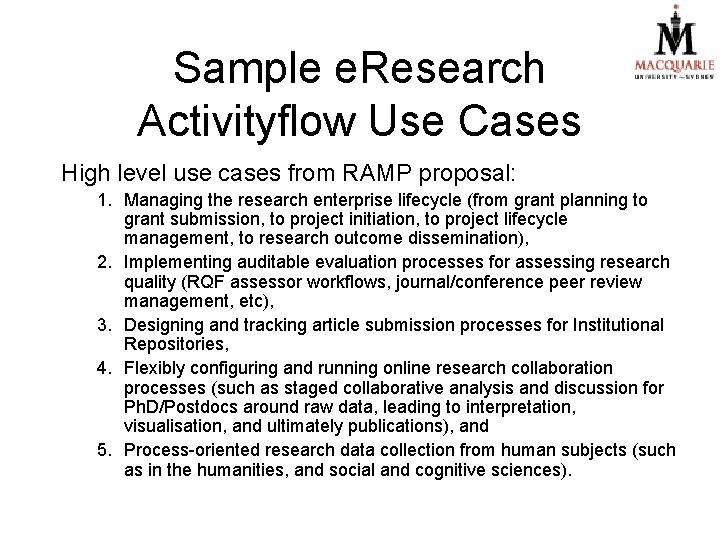
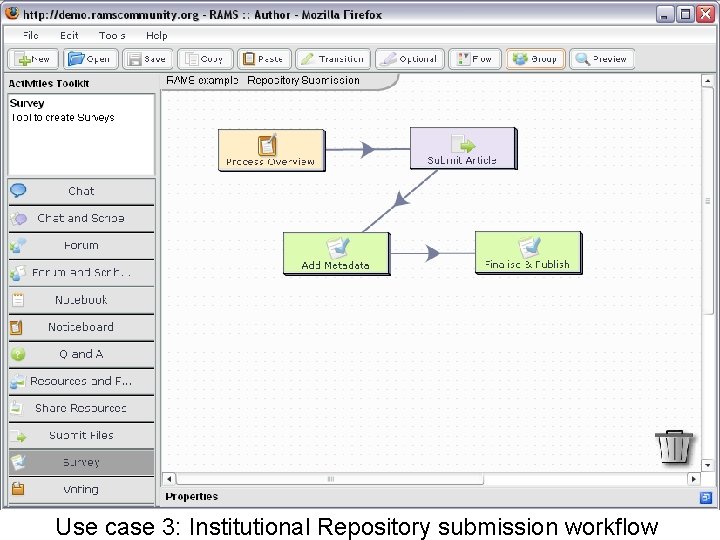
Sample e. Research Activityflow Use Cases High level use cases from RAMP proposal: 1. Managing the research enterprise lifecycle (from grant planning to grant submission, to project initiation, to project lifecycle management, to research outcome dissemination), 2. Implementing auditable evaluation processes for assessing research quality (RQF assessor workflows, journal/conference peer review management, etc), 3. Designing and tracking article submission processes for Institutional Repositories, 4. Flexibly configuring and running online research collaboration processes (such as staged collaborative analysis and discussion for Ph. D/Postdocs around raw data, leading to interpretation, visualisation, and ultimately publications), and 5. Process-oriented research data collection from human subjects (such as in the humanities, and social and cognitive sciences).
Use case 3: Institutional Repository submission workflow
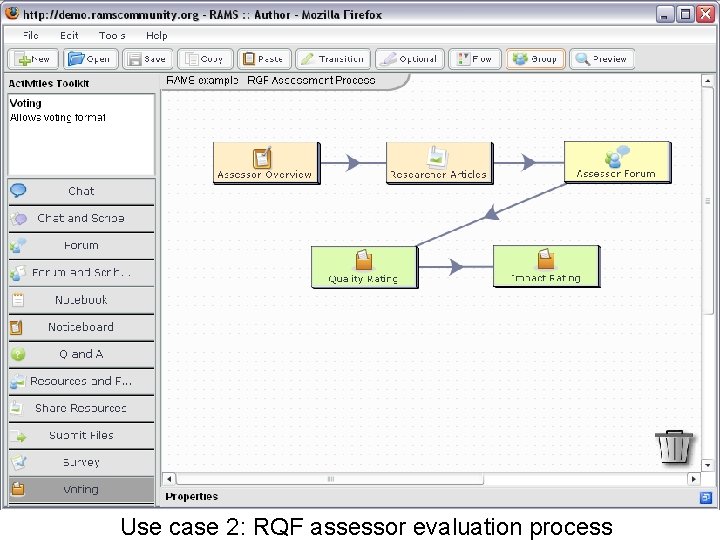
Use case 2: RQF assessor evaluation process
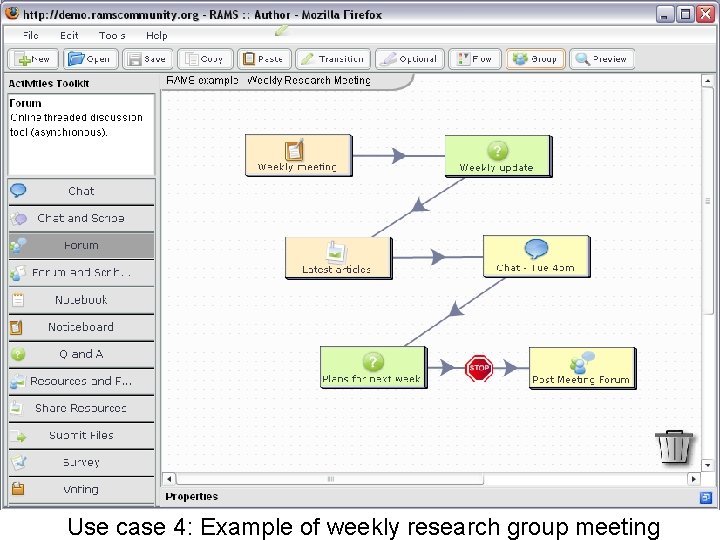
Use case 4: Example of weekly research group meeting
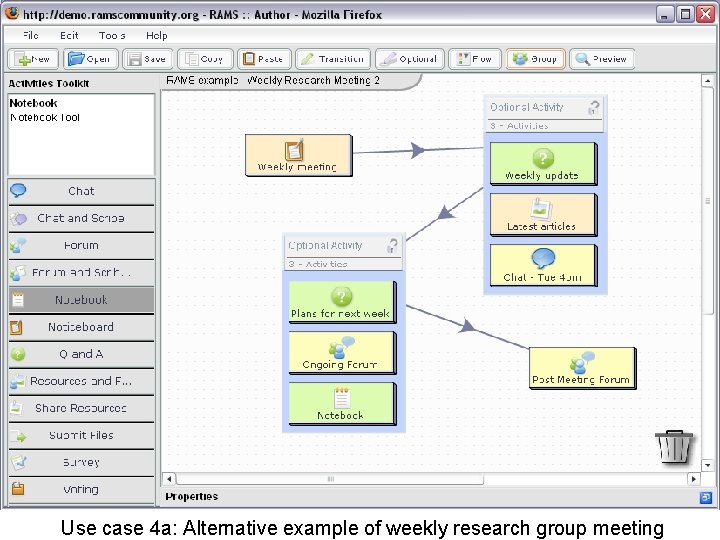
Use case 4 a: Alternative example of weekly research group meeting
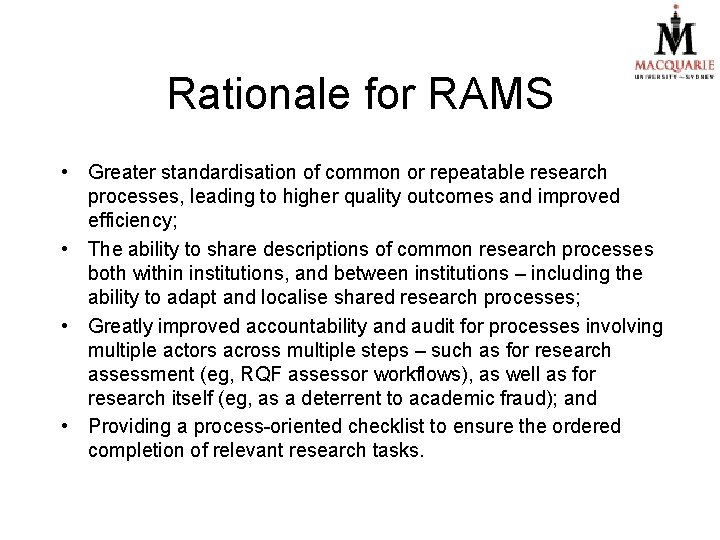
Rationale for RAMS • Greater standardisation of common or repeatable research processes, leading to higher quality outcomes and improved efficiency; • The ability to share descriptions of common research processes both within institutions, and between institutions – including the ability to adapt and localise shared research processes; • Greatly improved accountability and audit for processes involving multiple actors across multiple steps – such as for research assessment (eg, RQF assessor workflows), as well as for research itself (eg, as a deterrent to academic fraud); and • Providing a process-oriented checklist to ensure the ordered completion of relevant research tasks.
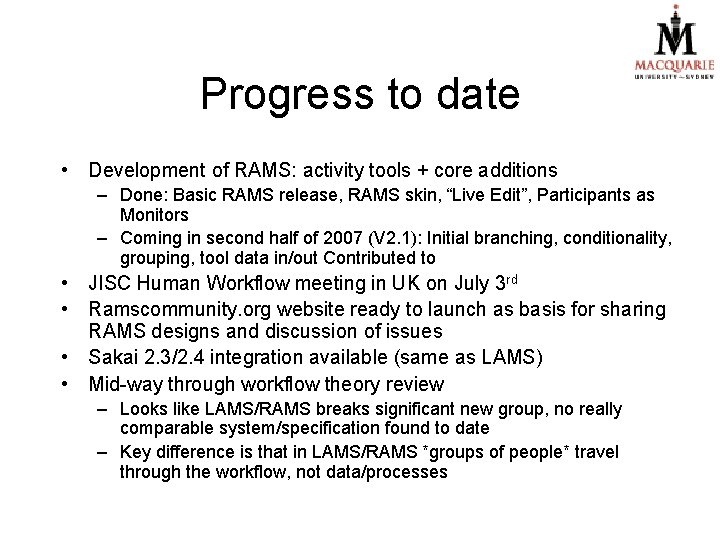
Progress to date • Development of RAMS: activity tools + core additions – Done: Basic RAMS release, RAMS skin, “Live Edit”, Participants as Monitors – Coming in second half of 2007 (V 2. 1): Initial branching, conditionality, grouping, tool data in/out Contributed to • JISC Human Workflow meeting in UK on July 3 rd • Ramscommunity. org website ready to launch as basis for sharing RAMS designs and discussion of issues • Sakai 2. 3/2. 4 integration available (same as LAMS) • Mid-way through workflow theory review – Looks like LAMS/RAMS breaks significant new group, no really comparable system/specification found to date – Key difference is that in LAMS/RAMS *groups of people* travel through the workflow, not data/processes
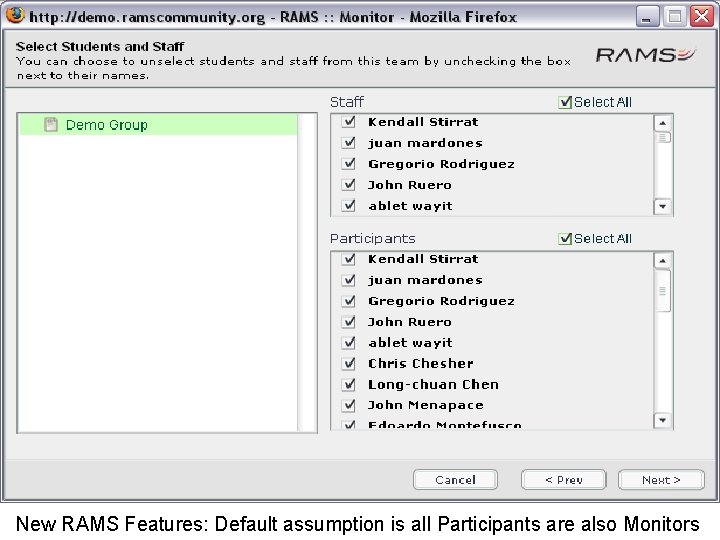
New RAMS Features: Default assumption is all Participants are also Monitors
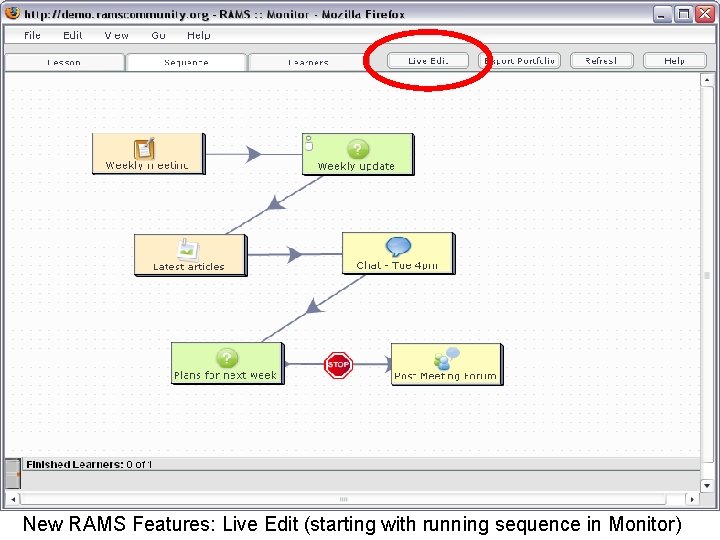
New RAMS Features: Live Edit (starting with running sequence in Monitor)
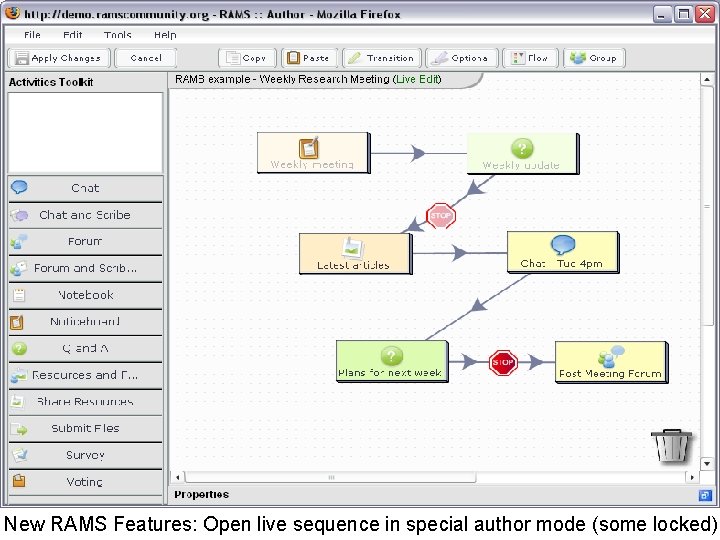
New RAMS Features: Open live sequence in special author mode (some locked)
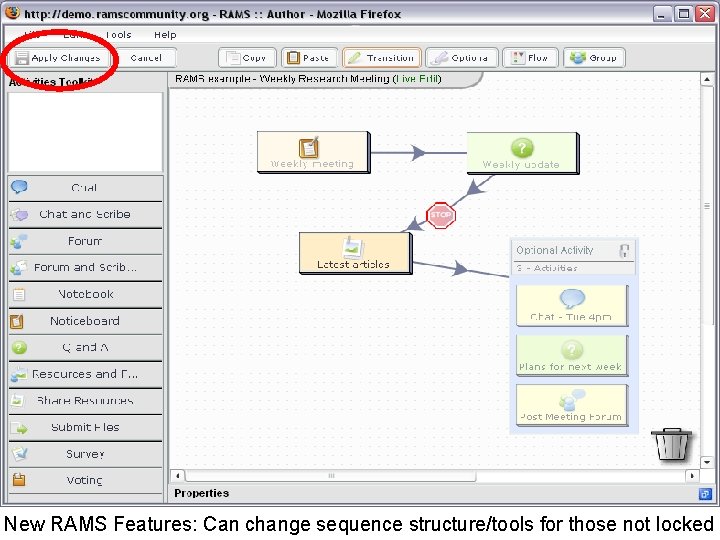
New RAMS Features: Can change sequence structure/tools for those not locked
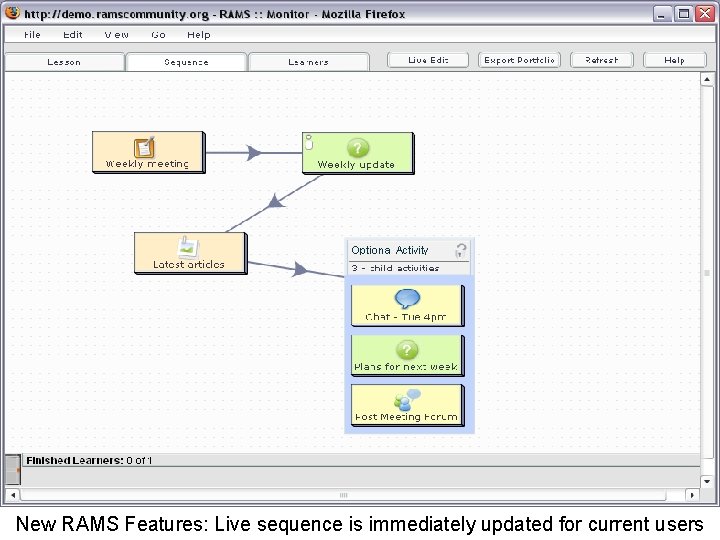
New RAMS Features: Live sequence is immediately updated for current users
Areas for future consideration • Areas considered (but not yet under development) – New “Welcome” page based on researcher workspace for all e. Research workflows – Include “current status” information for all workflows – Allow system-launched sequences (eg, repository submission workflow) – Investigating sequence aggregation, hierarchies and linking – Investigating (actionable) roles for RAMS tools, including multiple roles across multiple actors with differential impact on different tools – Investigating challenging “what constitutes task completion” issues (easy for single user, hard for groups)
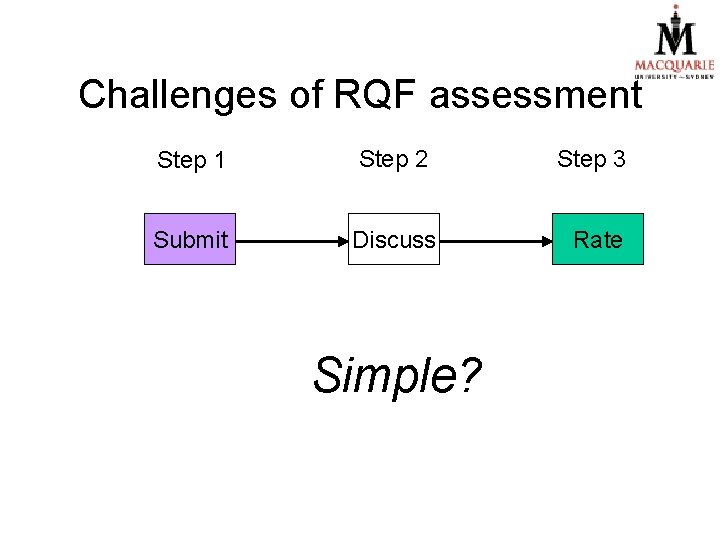
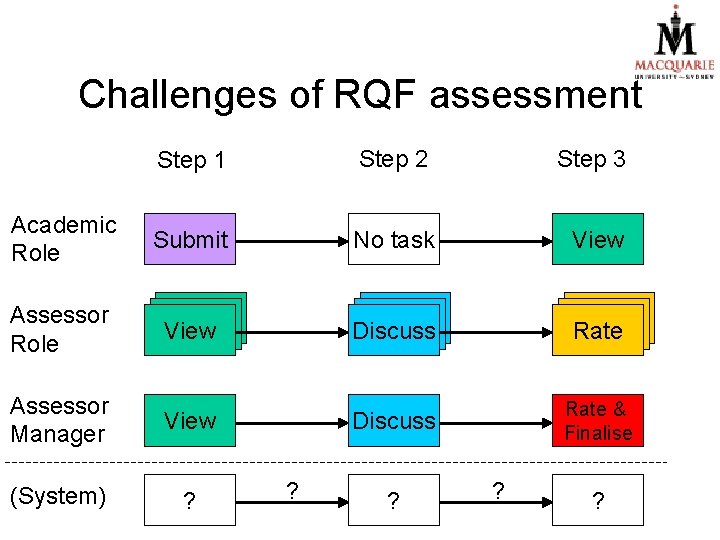
Challenges of RQF assessment • Consider the following version of the RAE/RQF assessment workflow: – Step 1: Academic submits articles for assessment; assessors (including assessor manager) can then view articles – Step 2: Assessors (including assessor manager) discuss quality of articles (eg, chat, forum or “offline”) – Step 3: Assessors (including assessor manager) provide overall rating of academic’s quality and impact; assessor manager then finalises an overall score for quality and impact based on prior discussion and review of ratings from all assessors; at a later stage, the scores can be made viewable by the academic
Challenges of RQF assessment Step 1 Step 2 Step 3 Submit Discuss Rate Simple?
Challenges of RQF assessment Step 1 Step 2 Step 3 Academic Role Submit No task View Assessor Role View View Discuss View Rate Discuss Rate & Finalise Assessor Manager View (System) ? ? ?
Challenges of RQF assessment • Some problems to solve – How to design tools to allow for actionable roles without the system becoming unworkably complex for non-technical users? – How does the system handle multiple actors within and across different roles? – What constitutes task completion in group workflows? • How does the system know to notify assessors that articles have been submitted? • How does the system know that the discussion is finished and the rating has begun? • How does the system know to notify the academic that their rating is now viewable?