
Raman Spectroscopy 1923 Inelastic light scattering is predicted
- Slides: 35
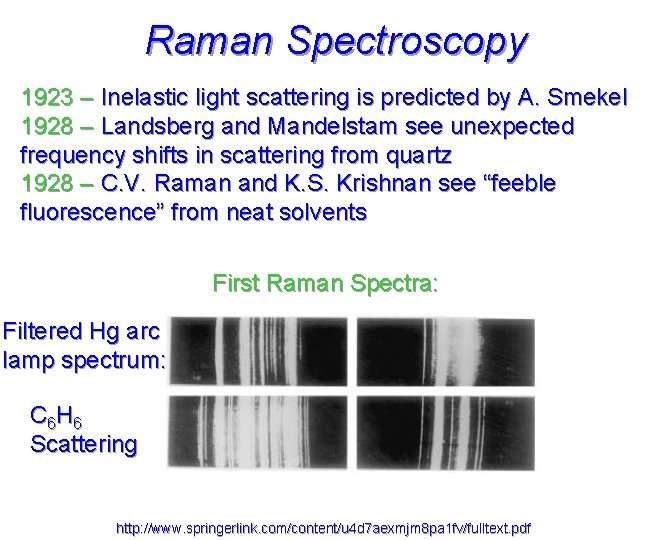
Raman Spectroscopy 1923 – Inelastic light scattering is predicted by A. Smekel 1928 – Landsberg and Mandelstam see unexpected frequency shifts in scattering from quartz 1928 – C. V. Raman and K. S. Krishnan see “feeble fluorescence” from neat solvents First Raman Spectra: Filtered Hg arc lamp spectrum: C 6 H 6 Scattering http: //www. springerlink. com/content/u 4 d 7 aexmjm 8 pa 1 fv/fulltext. pdf
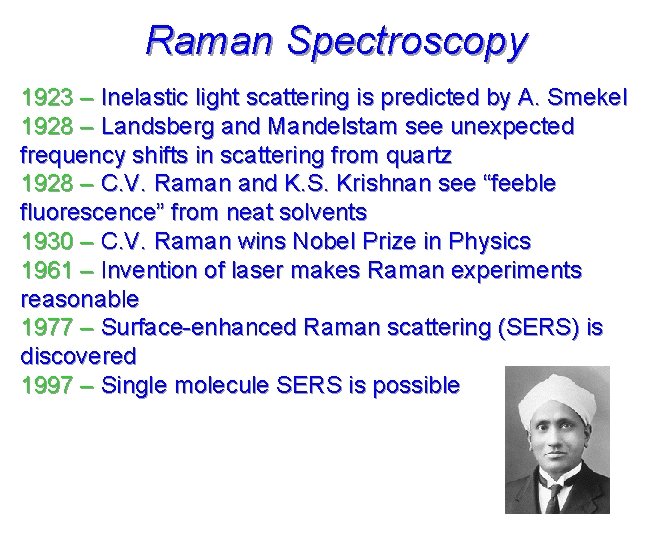
Raman Spectroscopy 1923 – Inelastic light scattering is predicted by A. Smekel 1928 – Landsberg and Mandelstam see unexpected frequency shifts in scattering from quartz 1928 – C. V. Raman and K. S. Krishnan see “feeble fluorescence” from neat solvents 1930 – C. V. Raman wins Nobel Prize in Physics 1961 – Invention of laser makes Raman experiments reasonable 1977 – Surface-enhanced Raman scattering (SERS) is discovered 1997 – Single molecule SERS is possible
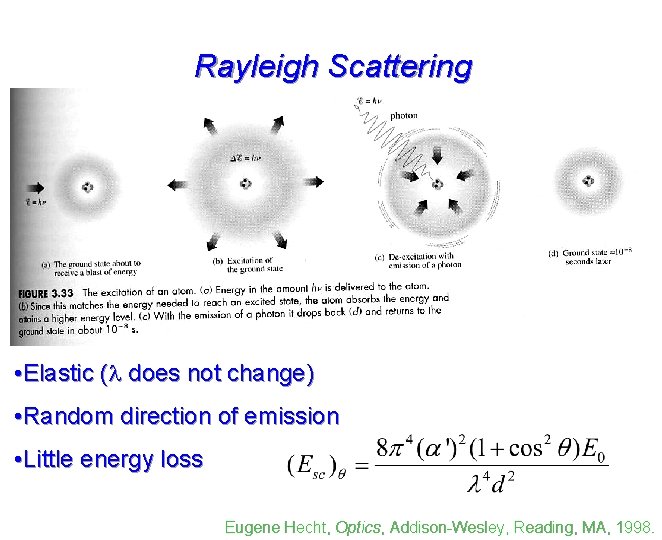
Rayleigh Scattering • Elastic ( does not change) • Random direction of emission • Little energy loss Eugene Hecht, Optics, Addison-Wesley, Reading, MA, 1998.
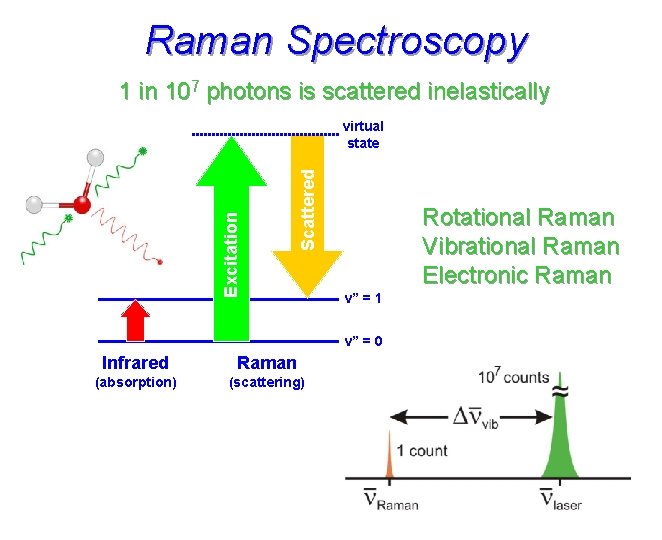
Raman Spectroscopy 1 in 107 photons is scattered inelastically Scattered Excitation virtual state Rotational Raman Vibrational Raman Electronic Raman v” = 1 v” = 0 Infrared Raman (absorption) (scattering)
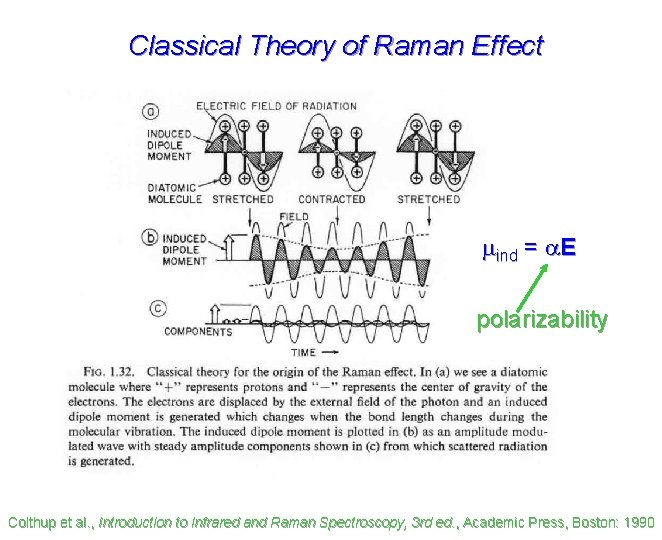
Classical Theory of Raman Effect mind = a. E polarizability Colthup et al. , Introduction to Infrared and Raman Spectroscopy, 3 rd ed. , Academic Press, Boston: 1990
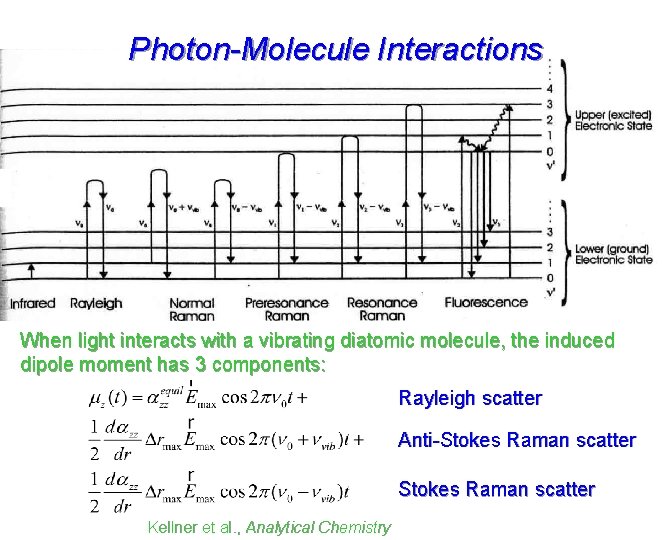
Photon-Molecule Interactions When light interacts with a vibrating diatomic molecule, the induced dipole moment has 3 components: Rayleigh scatter Anti-Stokes Raman scatter Kellner et al. , Analytical Chemistry
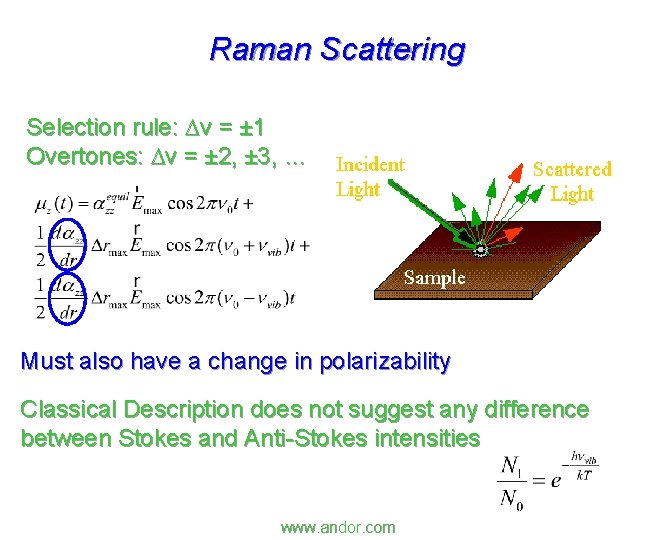
Raman Scattering Selection rule: Dv = ± 1 Overtones: Dv = ± 2, ± 3, … Must also have a change in polarizability Classical Description does not suggest any difference between Stokes and Anti-Stokes intensities www. andor. com
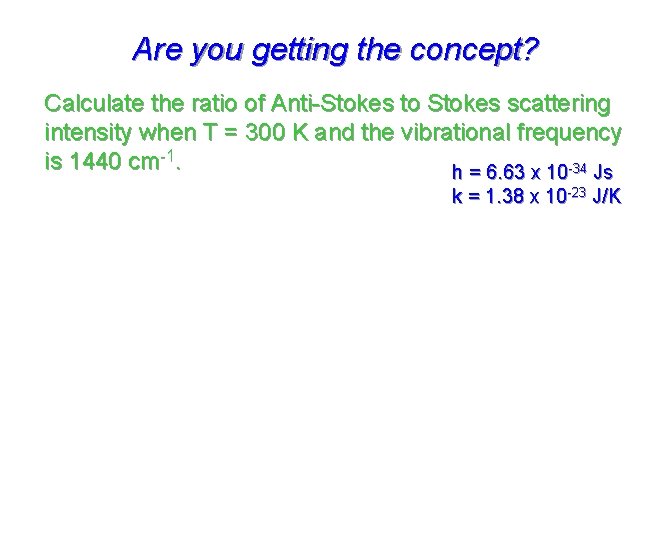
Are you getting the concept? Calculate the ratio of Anti-Stokes to Stokes scattering intensity when T = 300 K and the vibrational frequency is 1440 cm-1. h = 6. 63 x 10 -34 Js k = 1. 38 x 10 -23 J/K
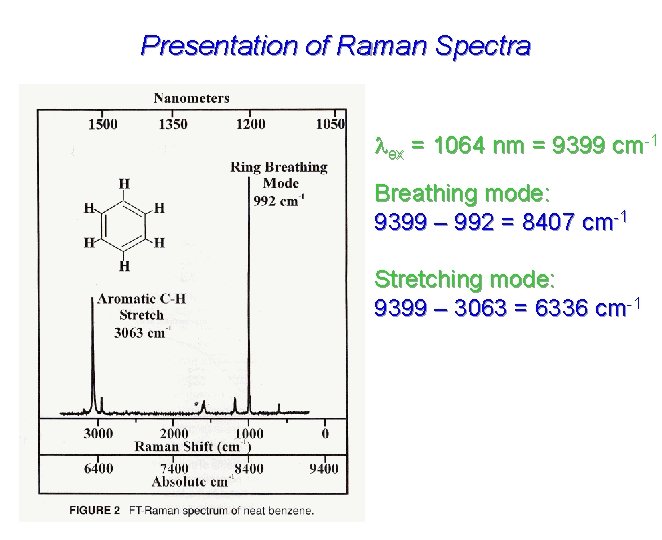
Presentation of Raman Spectra ex = 1064 nm = 9399 cm-1 Breathing mode: 9399 – 992 = 8407 cm-1 Stretching mode: 9399 – 3063 = 6336 cm-1
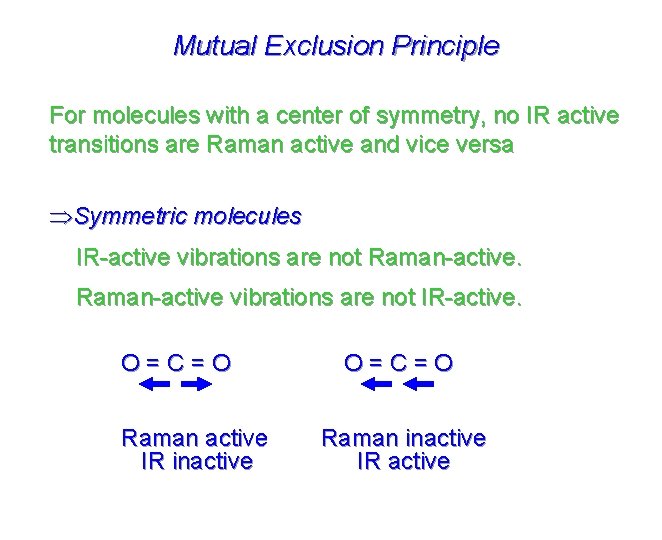
Mutual Exclusion Principle For molecules with a center of symmetry, no IR active transitions are Raman active and vice versa ÞSymmetric molecules IR-active vibrations are not Raman-active vibrations are not IR-active. O=C=O Raman active IR inactive O=C=O Raman inactive IR active
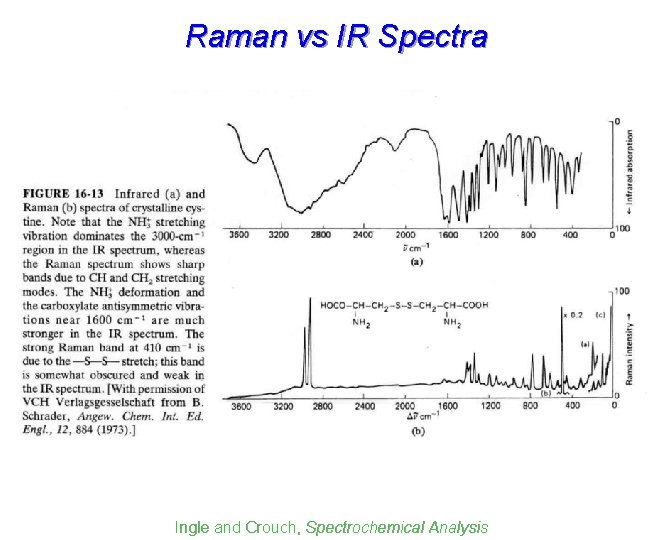
Raman vs IR Spectra Ingle and Crouch, Spectrochemical Analysis
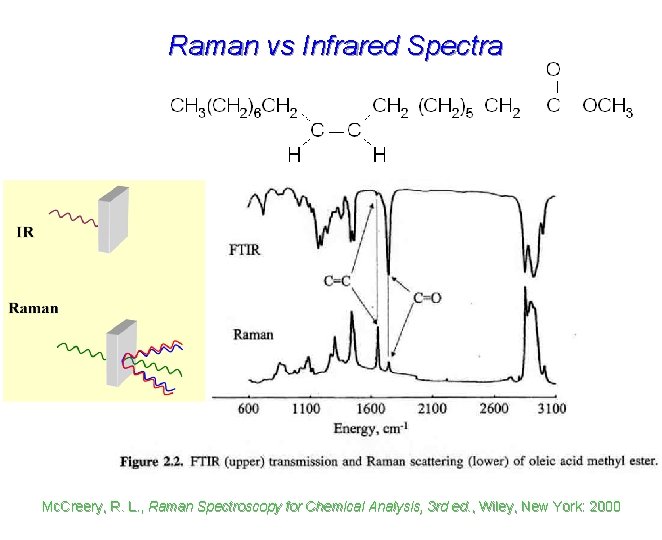
Raman vs Infrared Spectra Mc. Creery, R. L. , Raman Spectroscopy for Chemical Analysis, 3 rd ed. , Wiley, New York: 2000
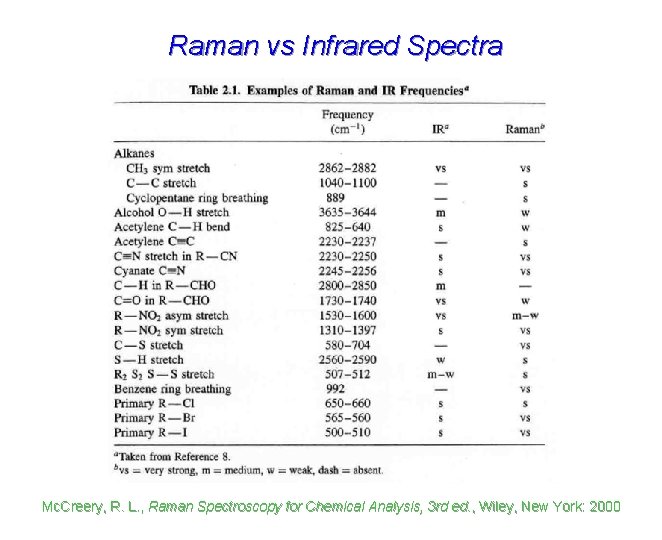
Raman vs Infrared Spectra Mc. Creery, R. L. , Raman Spectroscopy for Chemical Analysis, 3 rd ed. , Wiley, New York: 2000
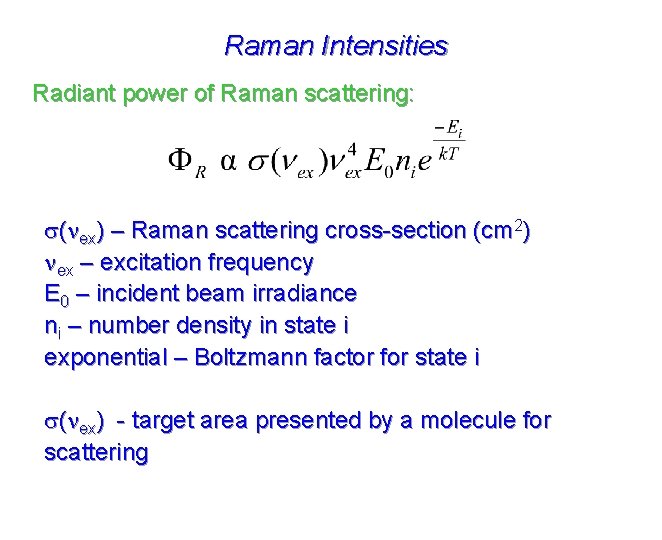
Raman Intensities Radiant power of Raman scattering: s(nex) – Raman scattering cross-section (cm 2) nex – excitation frequency E 0 – incident beam irradiance ni – number density in state i exponential – Boltzmann factor for state i s(nex) - target area presented by a molecule for scattering
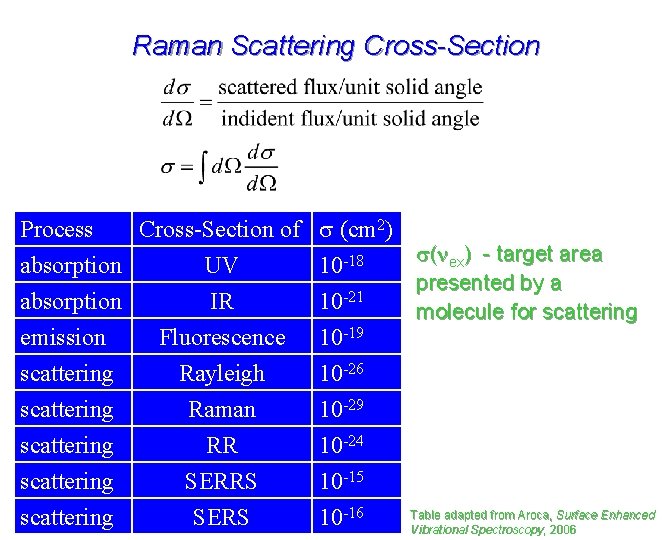
Raman Scattering Cross-Section Process Cross-Section of absorption UV absorption IR emission Fluorescence s (cm 2) s(nex) - target area 10 -18 presented by a -21 10 molecule for scattering 10 -19 scattering scattering 10 -26 10 -29 10 -24 10 -15 10 -16 Rayleigh Raman RR SERRS SERS Table adapted from Aroca, Surface Enhanced Vibrational Spectroscopy, 2006
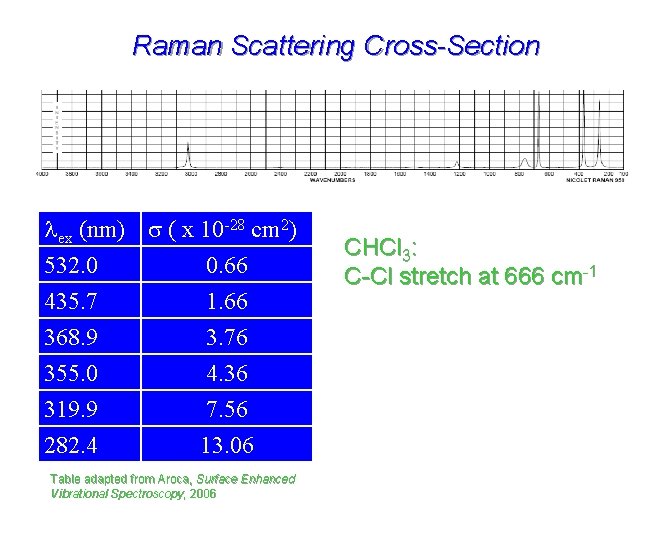
Raman Scattering Cross-Section ex (nm) s ( x 10 -28 cm 2) 532. 0 0. 66 435. 7 1. 66 368. 9 3. 76 355. 0 319. 9 282. 4 4. 36 7. 56 13. 06 Table adapted from Aroca, Surface Enhanced Vibrational Spectroscopy, 2006 CHCl 3: C-Cl stretch at 666 cm-1
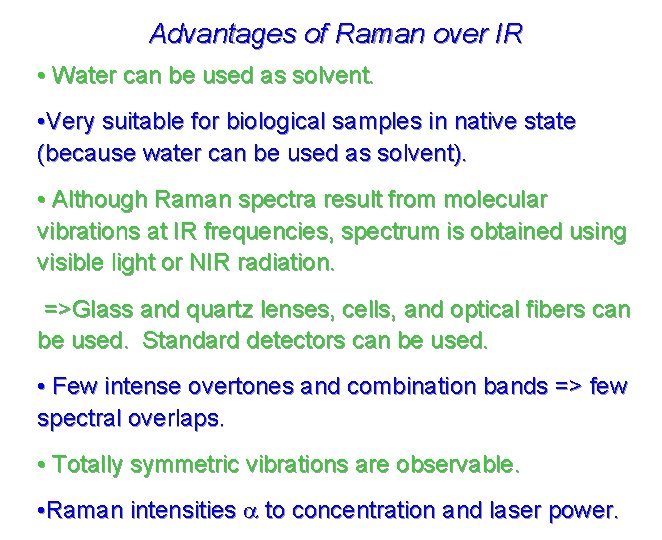
Advantages of Raman over IR • Water can be used as solvent. • Very suitable for biological samples in native state (because water can be used as solvent). • Although Raman spectra result from molecular vibrations at IR frequencies, spectrum is obtained using visible light or NIR radiation. =>Glass and quartz lenses, cells, and optical fibers can be used. Standard detectors can be used. • Few intense overtones and combination bands => few spectral overlaps. • Totally symmetric vibrations are observable. • Raman intensities a to concentration and laser power.
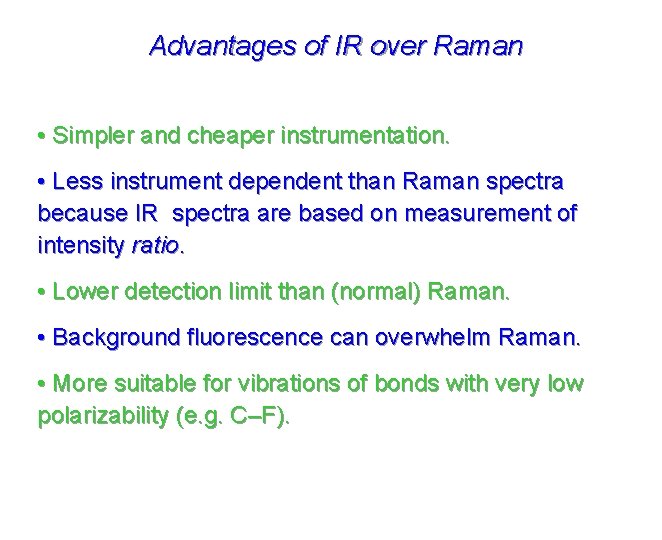
Advantages of IR over Raman • Simpler and cheaper instrumentation. • Less instrument dependent than Raman spectra because IR spectra are based on measurement of intensity ratio. • Lower detection limit than (normal) Raman. • Background fluorescence can overwhelm Raman. • More suitable for vibrations of bonds with very low polarizability (e. g. C–F).
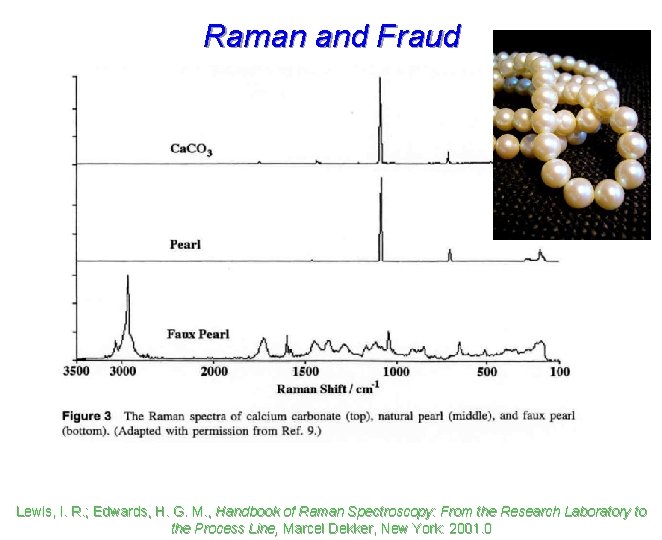
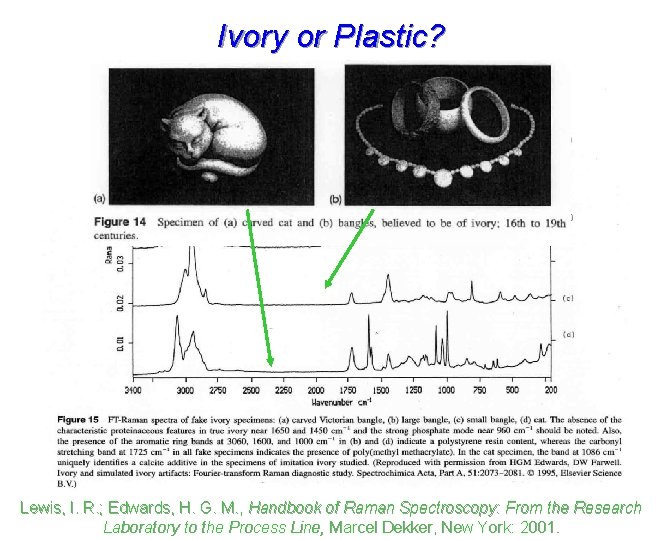
Raman and Fraud Lewis, I. R. ; Edwards, H. G. M. , Handbook of Raman Spectroscopy: From the Research Laboratory to the Process Line, Marcel Dekker, New York: 2001. 0
Ivory or Plastic? Lewis, I. R. ; Edwards, H. G. M. , Handbook of Raman Spectroscopy: From the Research Laboratory to the Process Line, Marcel Dekker, New York: 2001.
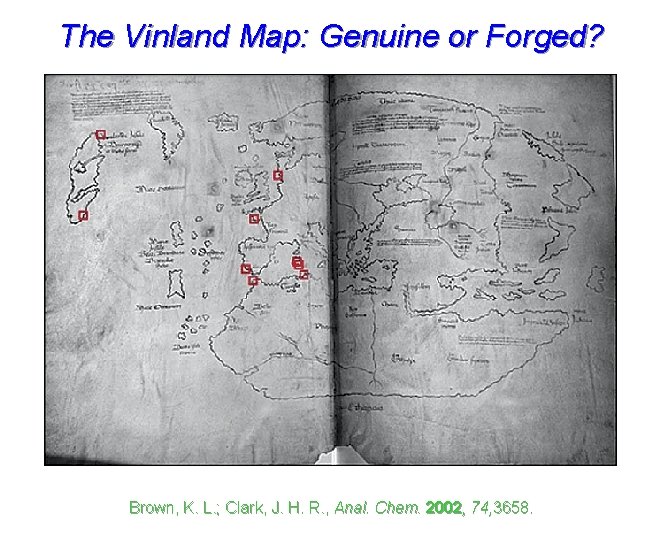
The Vinland Map: Genuine or Forged? Brown, K. L. ; Clark, J. H. R. , Anal. Chem. 2002, 74, 3658.
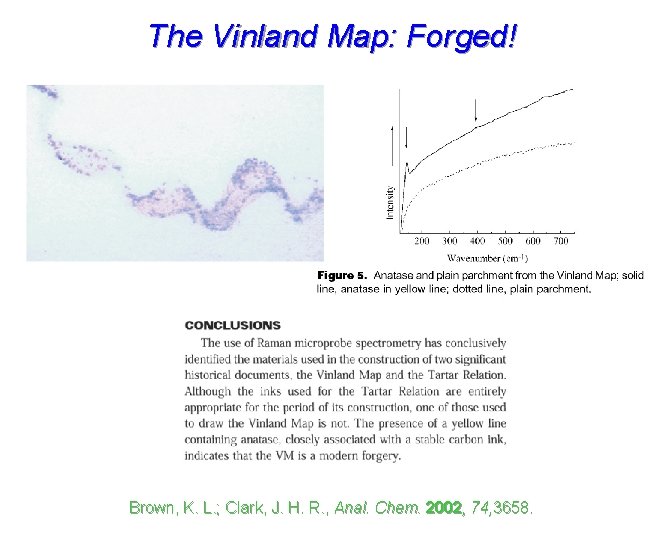
The Vinland Map: Forged! Brown, K. L. ; Clark, J. H. R. , Anal. Chem. 2002, 74, 3658.
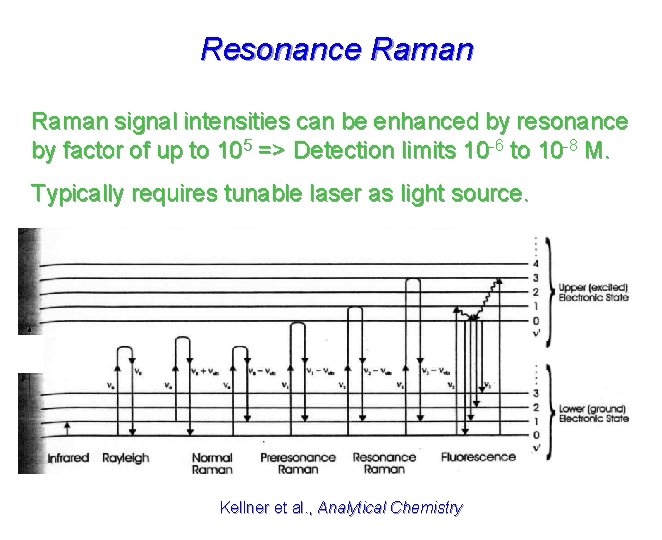
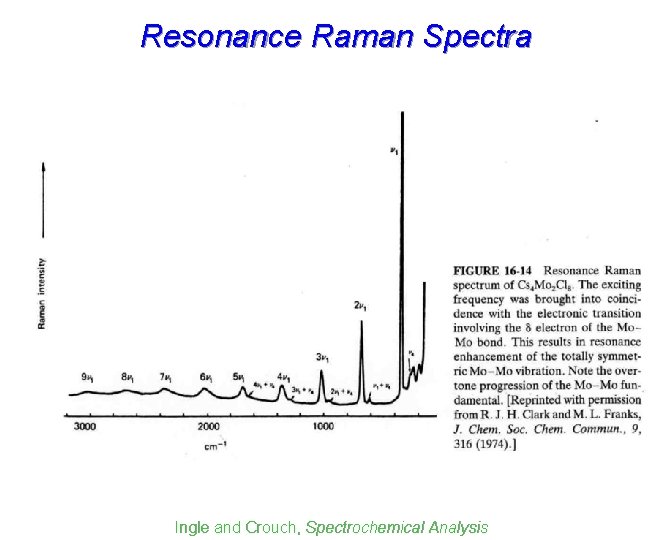
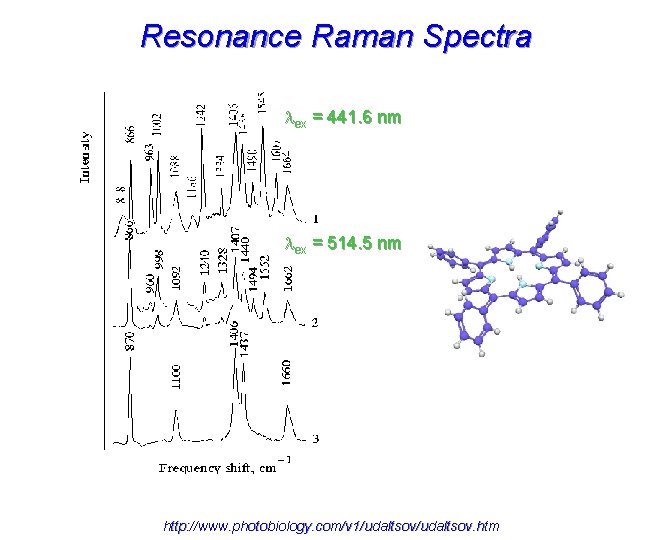
Resonance Raman signal intensities can be enhanced by resonance by factor of up to 105 => Detection limits 10 -6 to 10 -8 M. Typically requires tunable laser as light source. Kellner et al. , Analytical Chemistry
Resonance Raman Spectra Ingle and Crouch, Spectrochemical Analysis
Resonance Raman Spectra ex = 441. 6 nm ex = 514. 5 nm http: //www. photobiology. com/v 1/udaltsov. htm
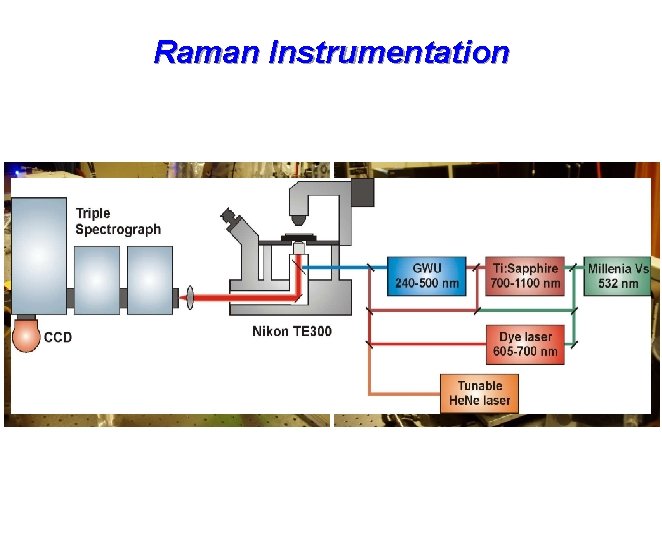
Raman Instrumentation Tunable Laser System Versatile Detection System
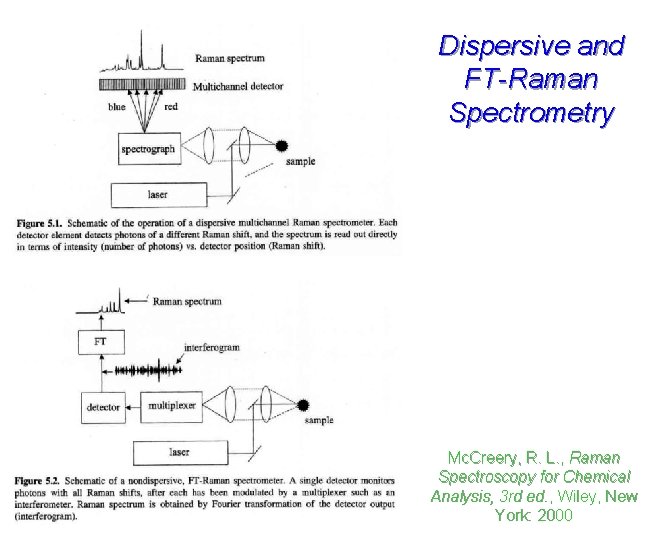
Dispersive and FT-Raman Spectrometry Mc. Creery, R. L. , Raman Spectroscopy for Chemical Analysis, 3 rd ed. , Wiley, New York: 2000
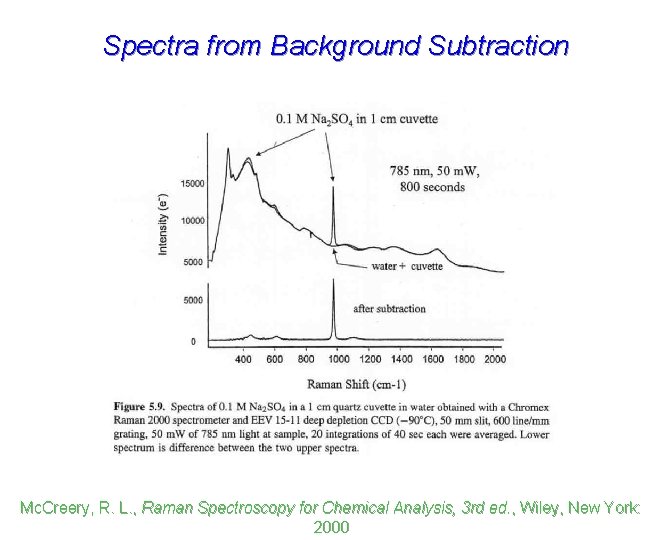
Spectra from Background Subtraction Mc. Creery, R. L. , Raman Spectroscopy for Chemical Analysis, 3 rd ed. , Wiley, New York: 2000
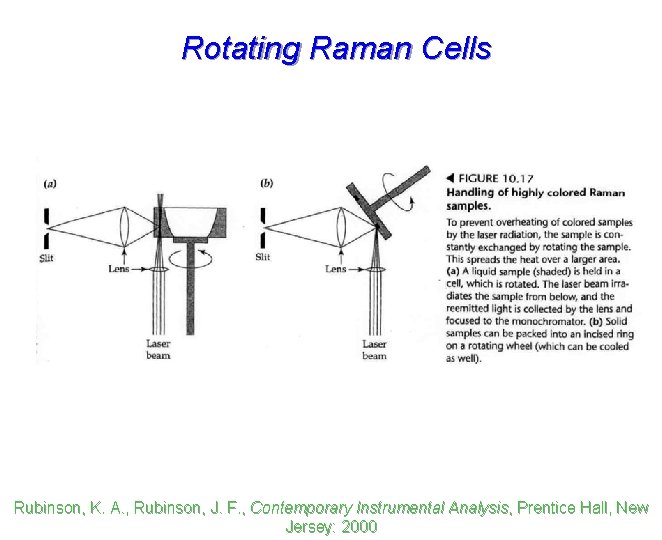
Rotating Raman Cells Rubinson, K. A. , Rubinson, J. F. , Contemporary Instrumental Analysis, Prentice Hall, New Jersey: 2000
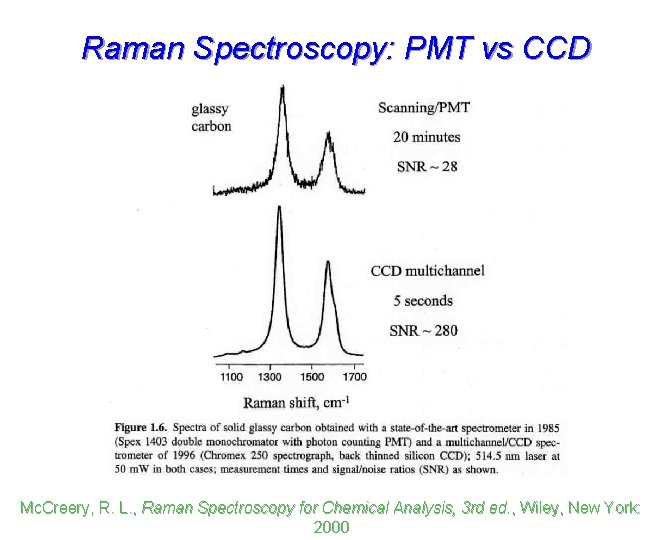
Raman Spectroscopy: PMT vs CCD Mc. Creery, R. L. , Raman Spectroscopy for Chemical Analysis, 3 rd ed. , Wiley, New York: 2000
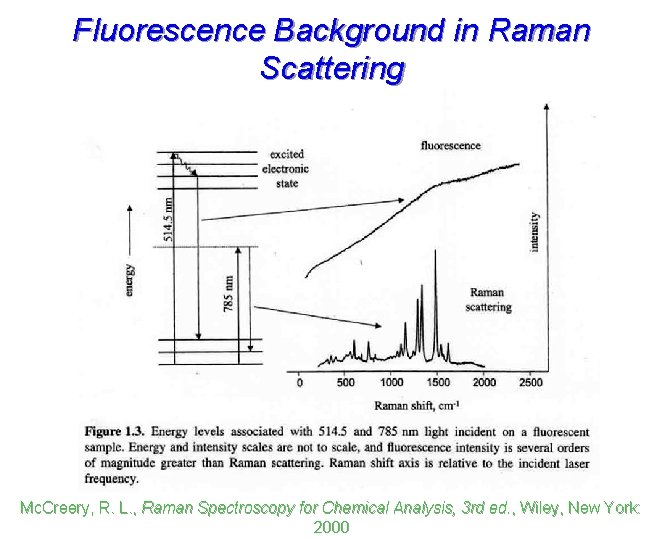
Fluorescence Background in Raman Scattering Mc. Creery, R. L. , Raman Spectroscopy for Chemical Analysis, 3 rd ed. , Wiley, New York: 2000
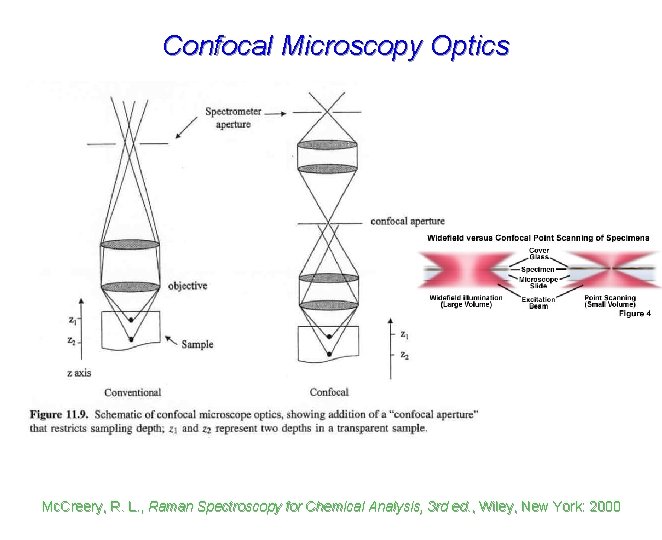
Confocal Microscopy Optics Mc. Creery, R. L. , Raman Spectroscopy for Chemical Analysis, 3 rd ed. , Wiley, New York: 2000
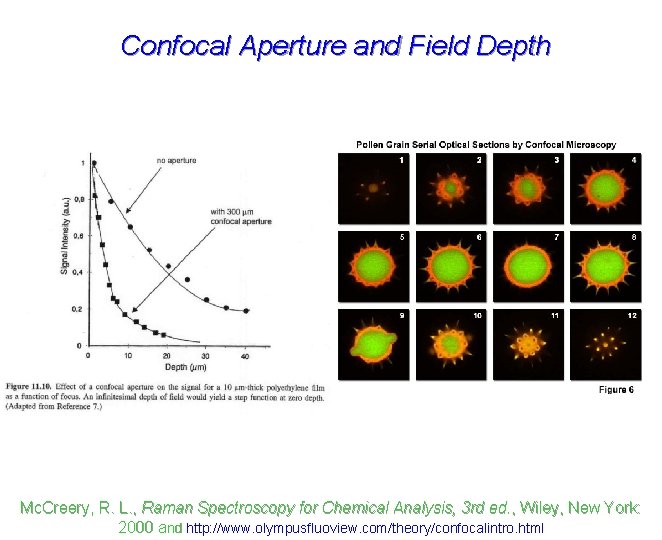
Confocal Aperture and Field Depth Mc. Creery, R. L. , Raman Spectroscopy for Chemical Analysis, 3 rd ed. , Wiley, New York: 2000 and http: //www. olympusfluoview. com/theory/confocalintro. html
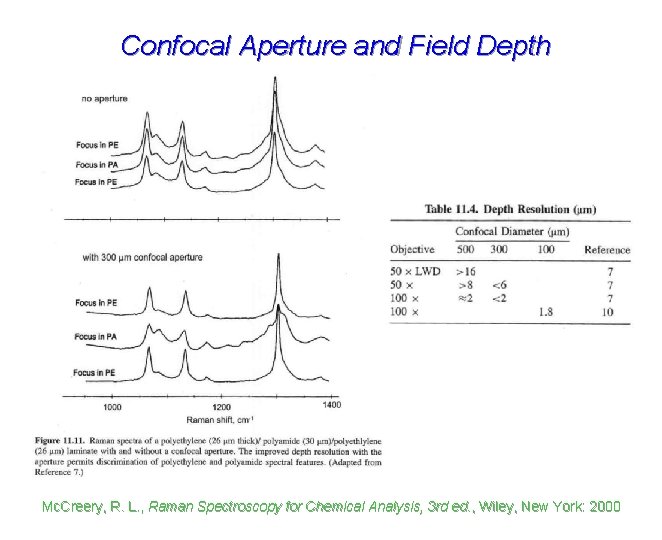
Confocal Aperture and Field Depth Mc. Creery, R. L. , Raman Spectroscopy for Chemical Analysis, 3 rd ed. , Wiley, New York: 2000