
Rain Drop A MultiRate MultiChannel Wireless LAN Tianbo
Rain. Drop: A Multi-Rate Multi-Channel Wireless LAN Tianbo Kuang Qian Wu Carey Williamson Department of Computer Science University of Calgary
Outline • Problem Statement and Motivation • Multi-Rate Multi-Channel (MRMC) protocol • Simulation Evaluation of MRMC • Summary and Conclusions
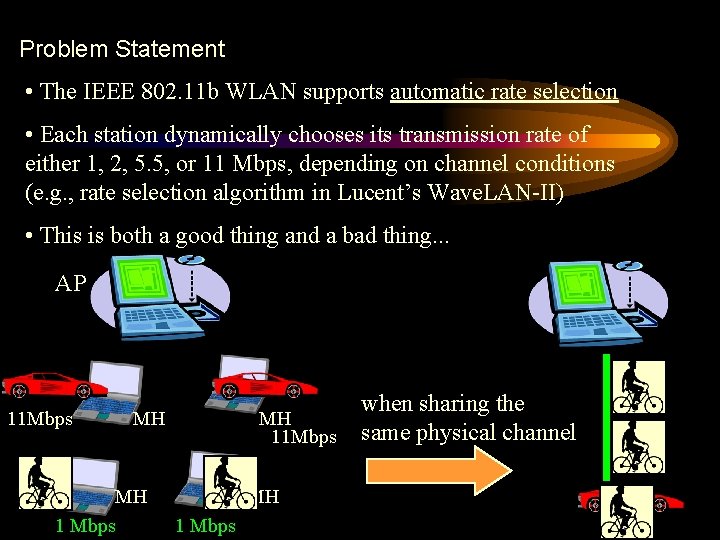
Problem Statement • The IEEE 802. 11 b WLAN supports automatic rate selection • Each station dynamically chooses its transmission rate of either 1, 2, 5. 5, or 11 Mbps, depending on channel conditions (e. g. , rate selection algorithm in Lucent’s Wave. LAN-II) • This is both a good thing and a bad thing. . . AP 11 Mbps MH MH 1 Mbps MH 11 Mbps MH 1 Mbps when sharing the same physical channel
![Performance Anomaly of IEEE 802. 11 b [Heusse et al. 2003] • An ns-2](http://slidetodoc.com/presentation_image_h2/c60c2786fa249183cc57cd1cbc93e6ea/image-4.jpg "Performance Anomaly of IEEE 802. 11 b [Heusse et al. 2003] • An ns-2")
Performance Anomaly of IEEE 802. 11 b [Heusse et al. 2003] • An ns-2 network simulation experiment showing the problem Node 0 Server Node 1 100 Mbps AP Range = 45 m start at time = 0 s Node 2 <8 m 35 m start at time = 150 s Node 3
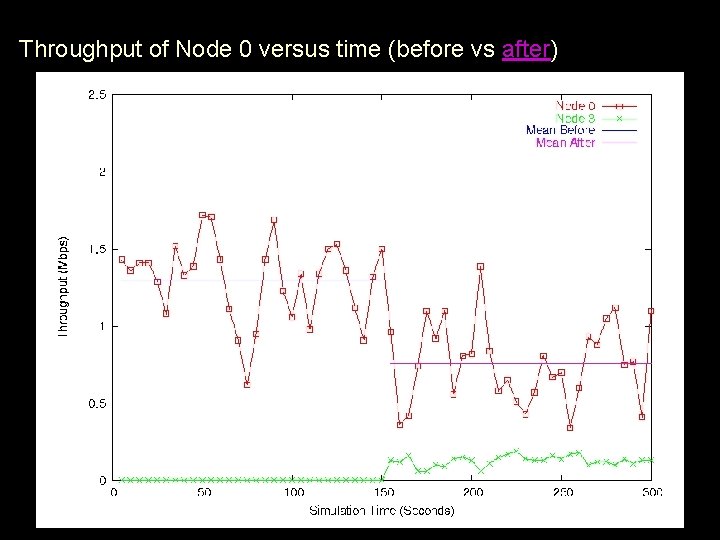
Throughput of Node 0 versus time (before vs after)
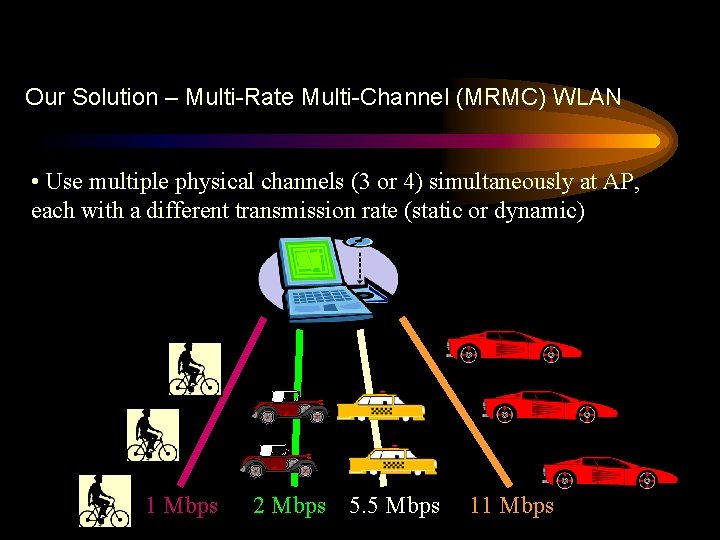
Our Solution – Multi-Rate Multi-Channel (MRMC) WLAN • Use multiple physical channels (3 or 4) simultaneously at AP, each with a different transmission rate (static or dynamic) 1 Mbps 2 Mbps 5. 5 Mbps 11 Mbps
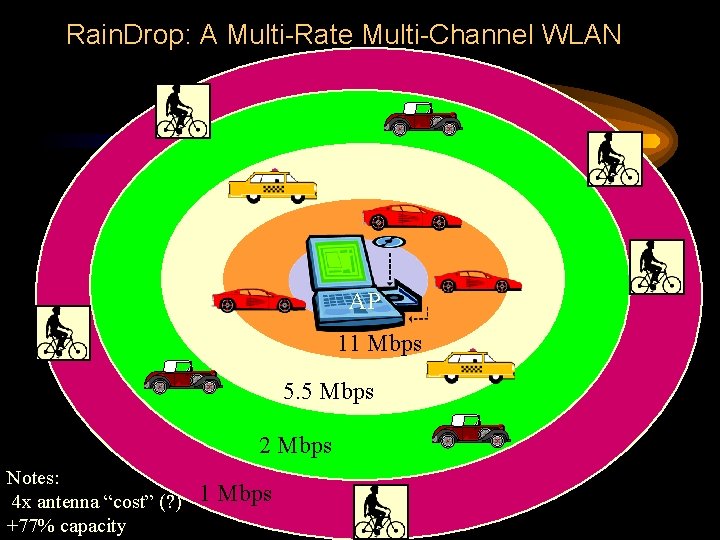
Rain. Drop: A Multi-Rate Multi-Channel WLAN AP 11 Mbps 5. 5 Mbps 2 Mbps Notes: 4 x antenna “cost” (? ) +77% capacity 1 Mbps
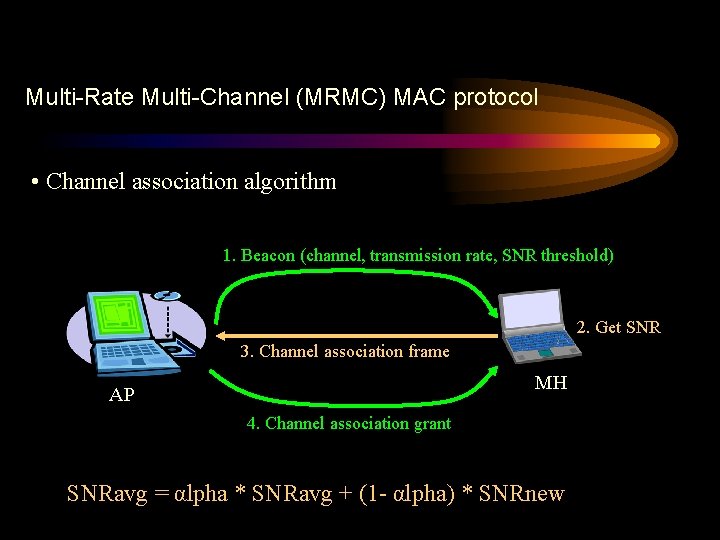
Multi-Rate Multi-Channel (MRMC) MAC protocol • Channel association algorithm 1. Beacon (channel, transmission rate, SNR threshold) 2. Get SNR 3. Channel association frame MH AP 4. Channel association grant SNRavg = αlpha * SNRavg + (1 - αlpha) * SNRnew
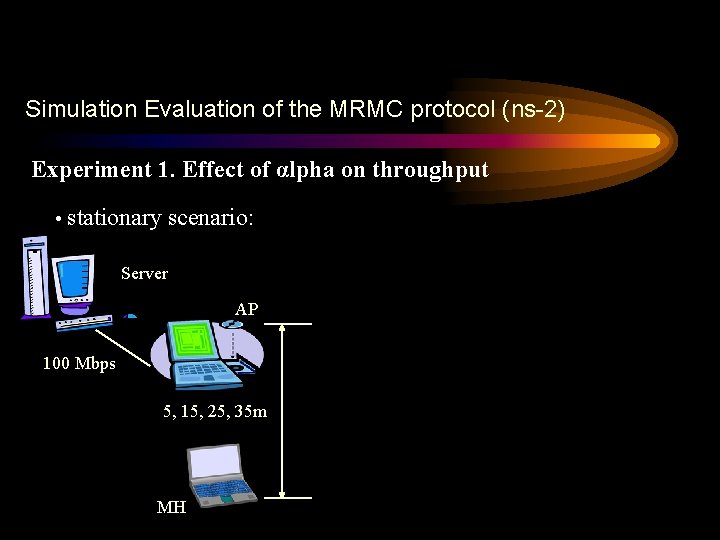
Simulation Evaluation of the MRMC protocol (ns-2) Experiment 1. Effect of αlpha on throughput • stationary scenario: Server AP 100 Mbps 5, 15, 25, 35 m MH
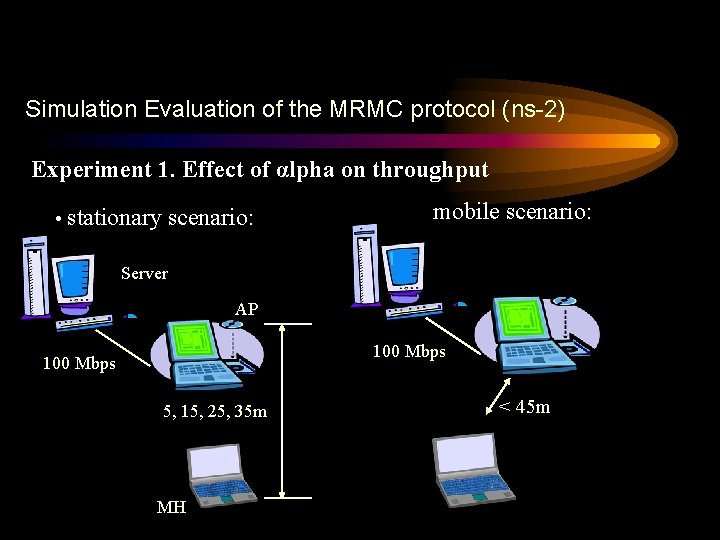
Simulation Evaluation of the MRMC protocol (ns-2) Experiment 1. Effect of αlpha on throughput • stationary scenario: mobile scenario: Server AP 100 Mbps 5, 15, 25, 35 m MH < 45 m
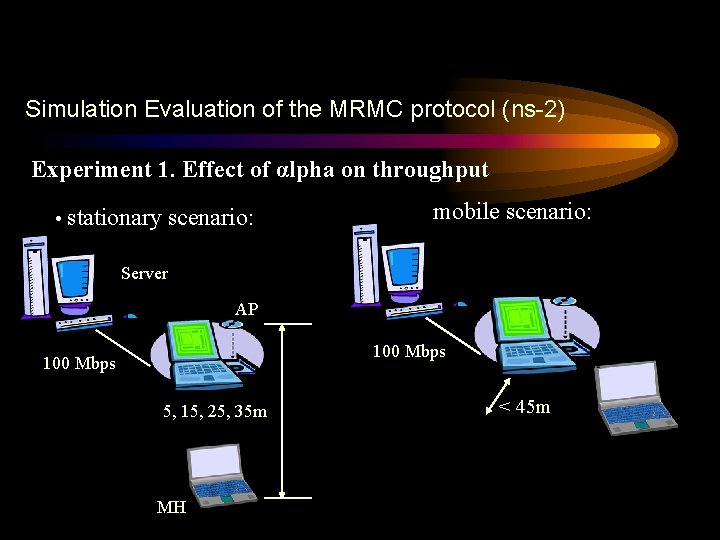
Simulation Evaluation of the MRMC protocol (ns-2) Experiment 1. Effect of αlpha on throughput • stationary scenario: mobile scenario: Server AP 100 Mbps 5, 15, 25, 35 m MH < 45 m
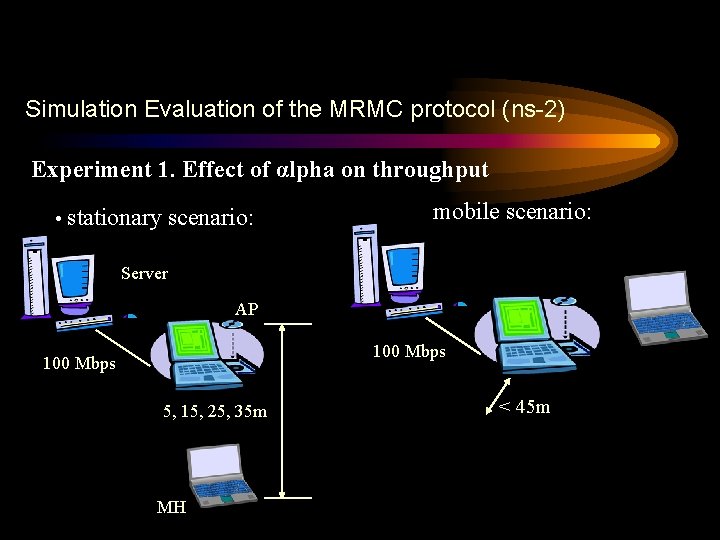
Simulation Evaluation of the MRMC protocol (ns-2) Experiment 1. Effect of αlpha on throughput • stationary scenario: mobile scenario: Server AP 100 Mbps 5, 15, 25, 35 m MH < 45 m
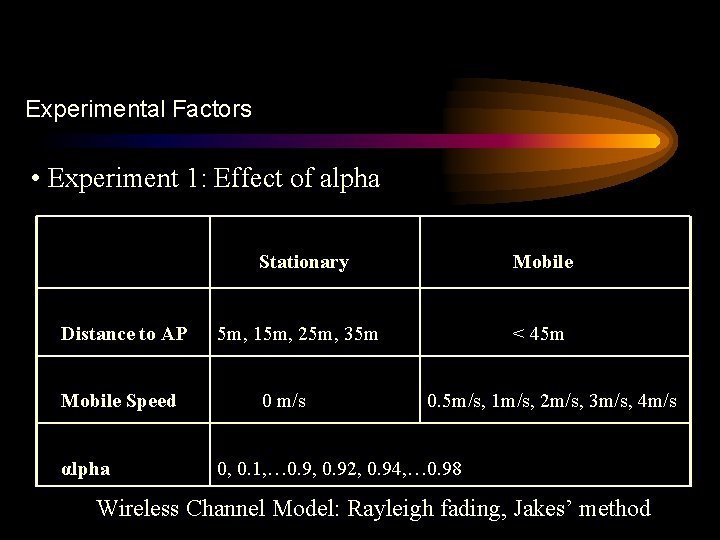
Experimental Factors • Experiment 1: Effect of alpha Distance to AP Mobile Speed αlpha Stationary Mobile 5 m, 15 m, 25 m, 35 m < 45 m 0 m/s 0. 5 m/s, 1 m/s, 2 m/s, 3 m/s, 4 m/s 0, 0. 1, … 0. 9, 0. 92, 0. 94, … 0. 98 Wireless Channel Model: Rayleigh fading, Jakes’ method
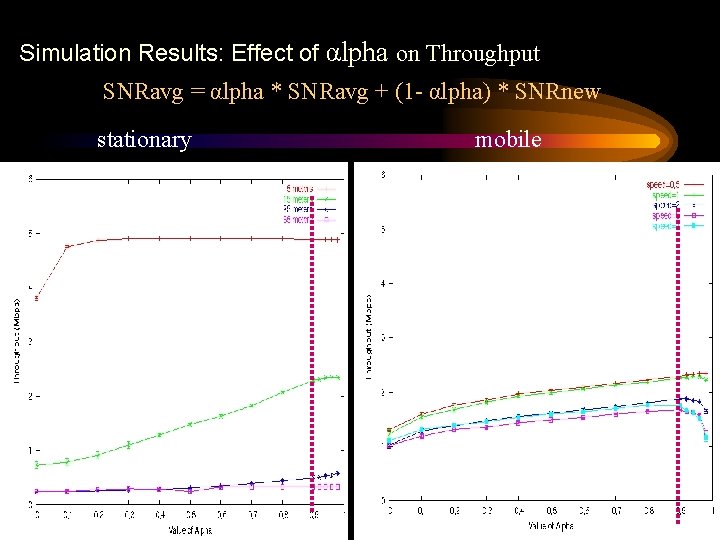
Simulation Results: Effect of αlpha on Throughput SNRavg = αlpha * SNRavg + (1 - αlpha) * SNRnew stationary mobile
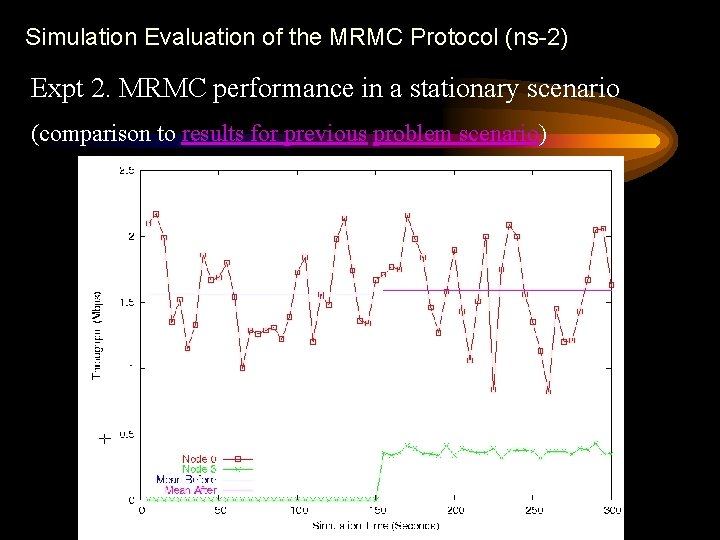
Simulation Evaluation of the MRMC Protocol (ns-2) Expt 2. MRMC performance in a stationary scenario (comparison to results for previous problem scenario)
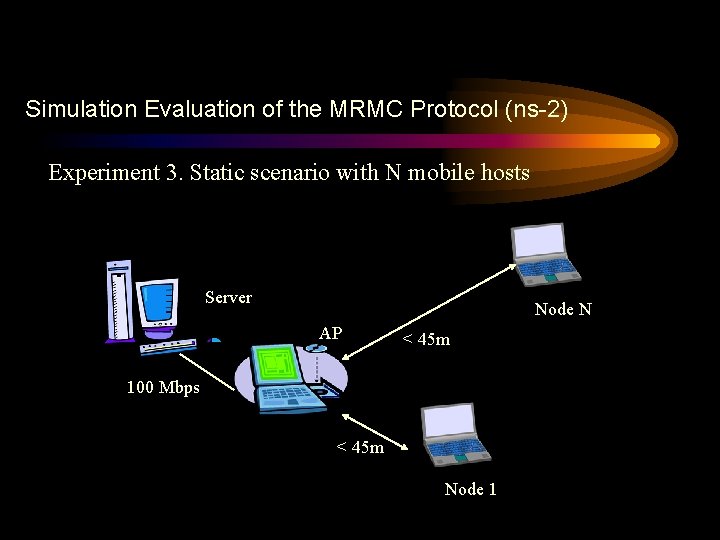
Simulation Evaluation of the MRMC Protocol (ns-2) Experiment 3. Static scenario with N mobile hosts Server Node N AP < 45 m 100 Mbps < 45 m Node 1
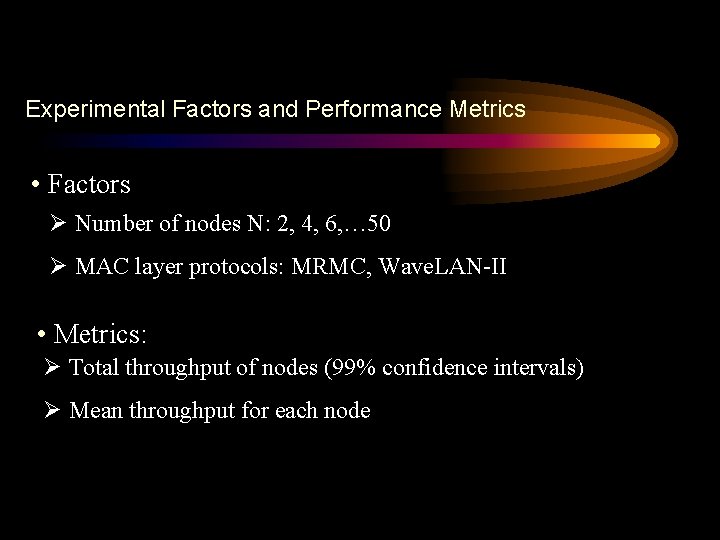
Experimental Factors and Performance Metrics • Factors Ø Number of nodes N: 2, 4, 6, … 50 Ø MAC layer protocols: MRMC, Wave. LAN-II • Metrics: Ø Total throughput of nodes (99% confidence intervals) Ø Mean throughput for each node
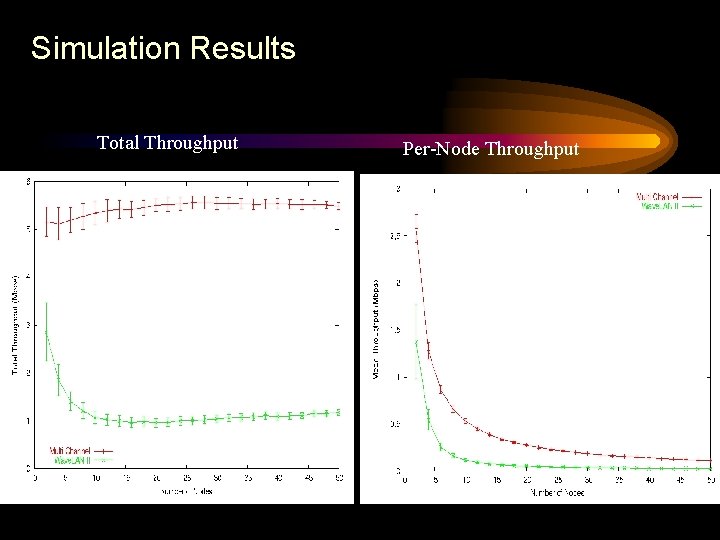
Simulation Results Total Throughput Per-Node Throughput
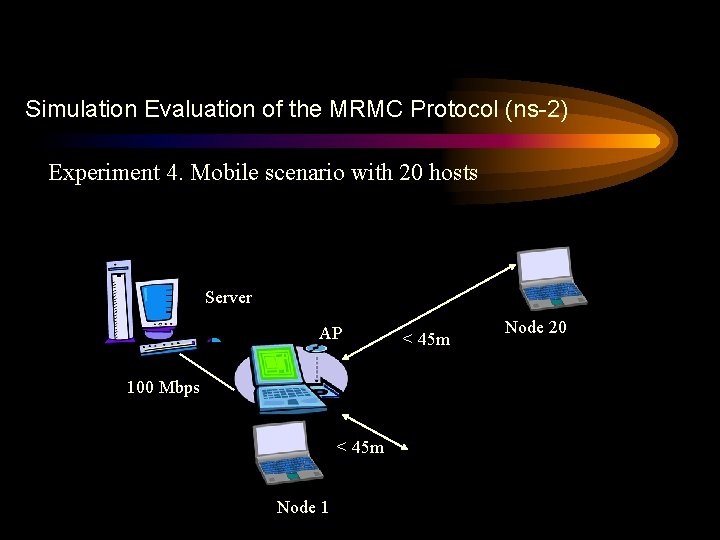
Simulation Evaluation of the MRMC Protocol (ns-2) Experiment 4. Mobile scenario with 20 hosts Server AP 100 Mbps < 45 m Node 1 < 45 m Node 20
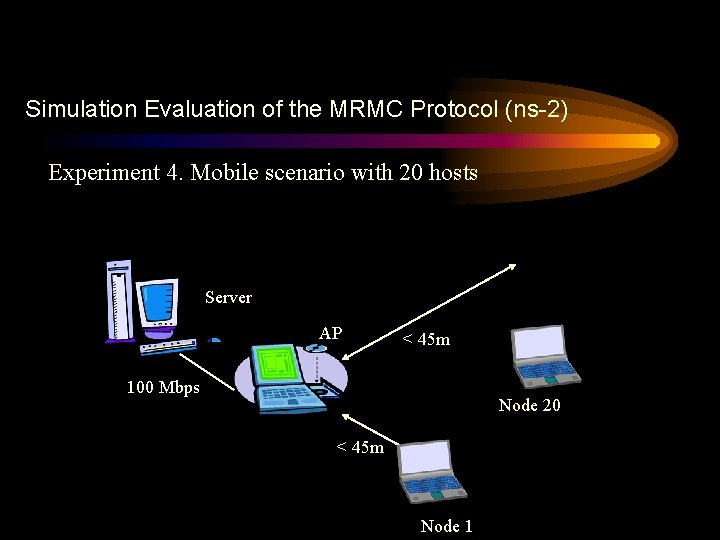
Simulation Evaluation of the MRMC Protocol (ns-2) Experiment 4. Mobile scenario with 20 hosts Server AP < 45 m 100 Mbps Node 20 < 45 m Node 1
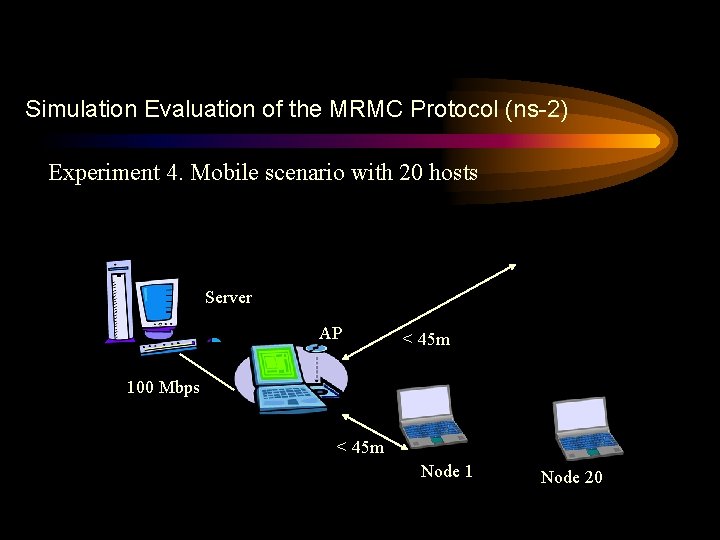
Simulation Evaluation of the MRMC Protocol (ns-2) Experiment 4. Mobile scenario with 20 hosts Server AP < 45 m 100 Mbps < 45 m Node 1 Node 20
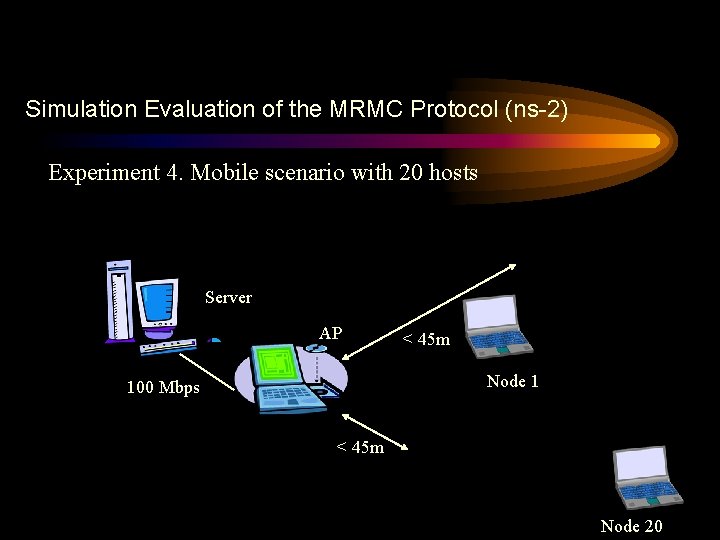
Simulation Evaluation of the MRMC Protocol (ns-2) Experiment 4. Mobile scenario with 20 hosts Server AP < 45 m Node 1 100 Mbps < 45 m Node 20
Experimental Factors and Performance Metrics • Factors Ø Mean moving speed: 0. 5 m/s, 1 m/s, 2 m/s, 3 m/s, 4 m/s Ø MAC layer protocols: MRMC, Wave. LAN-II • Metrics: Ø Total throughput of nodes (99% confidence intervals)
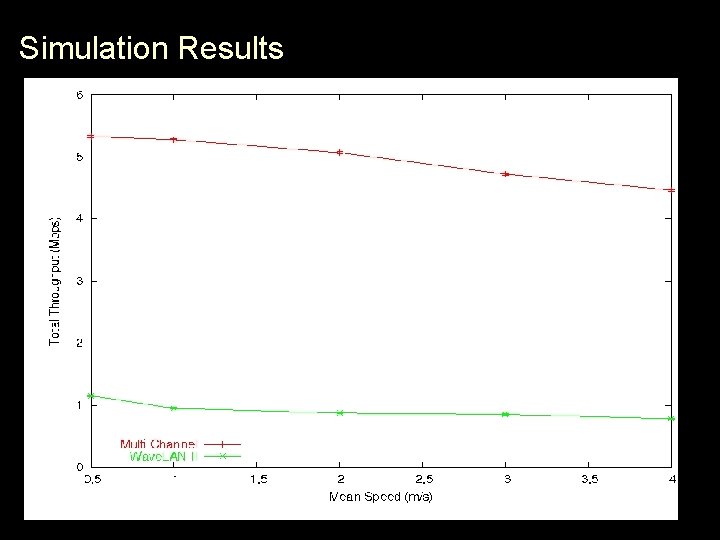
Simulation Results
Conclusions • The proposed MRMC protocol is promising • Performance is not very sensitive to value of alpha • With 4 channels and 4 rates, the MRMC protocol offers a 450% throughput advantage over the Wave. LAN-II IEEE 802. 11 b MAC protocol • Super-linear throughput improvement (450%) from 77% increase in channel capacity (4 x cost? ) • Primary benefit: isolating low-rate/high-rate users
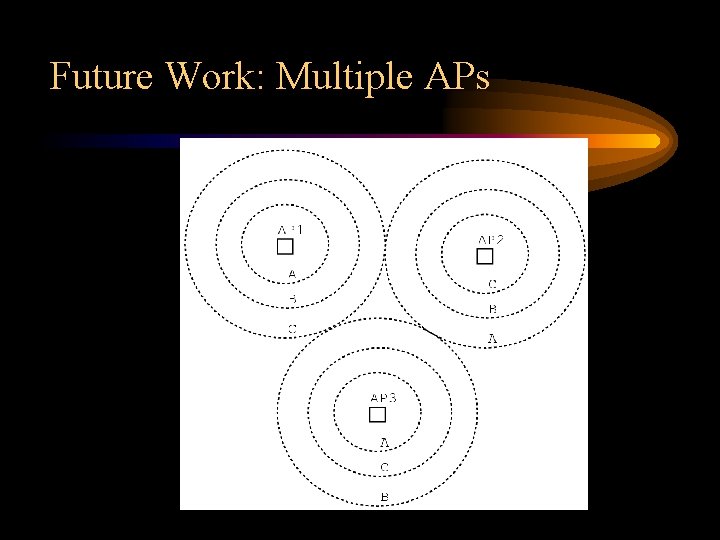
Future Work: Multiple APs

- Slides: 27