
Rail Schemes and the PPP Model November 2014
Rail Schemes and the PPP Model November 2014
Rail Schemes and the PPP Model Rail Schemes PPP model Successful Projects Lessons Learned Conclusions 2
Rail Schemes - Transport by rail • Encourages economic growth and development • Is more energy efficient than transport by road or air - Establishing need • Improving cross-border traffic • Easing bottlenecks • Increasing capacity - Support from • EU – Connecting Europe Facility • The World Bank 3
PPP Model - Definition “typically medium to long term, between the public and private sectors whereby some of the services that fall under the responsibilities of the public sector are provided by the private sector, with clear agreement on shared objectives for delivery of public infrastructure and/ or public services” World Bank - PPP in Infrastructure Resource Center 4
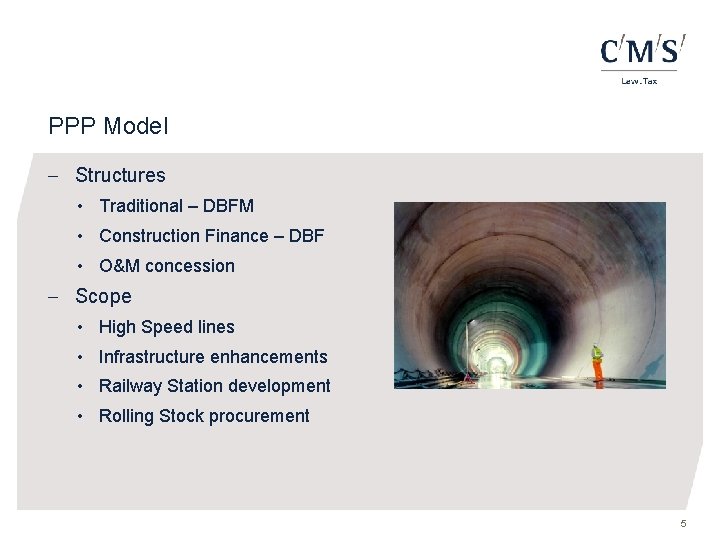
PPP Model - Structures • Traditional – DBFM • Construction Finance – DBF • O&M concession - Scope • High Speed lines • Infrastructure enhancements • Railway Station development • Rolling Stock procurement 5
PPP Model - Risks • Political risk • Construction risk • High capital cost • Demand risk (passenger revenues) • Availability of finance - Rewards • Whole Life costing • Spreading the cost 6
PPP Model - Issues • Availability of suitable schemes • Market appetite - Alternative funding • Real estate development • Car parks - Working Party on Transport Trends and Economics 27 th Session • PPPs are not always the best solution for financing transport infrastructure and very careful steps should be taken and considered before proceeding with such an investment tool 7
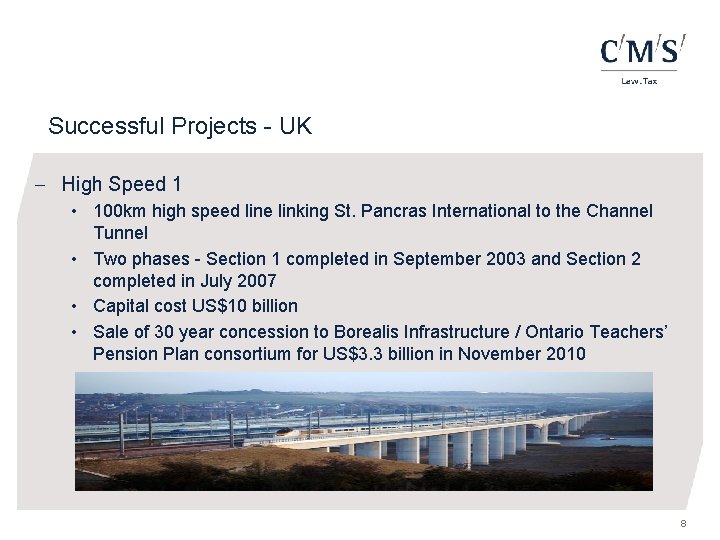
Successful Projects - UK - High Speed 1 • 100 km high speed line linking St. Pancras International to the Channel Tunnel • Two phases - Section 1 completed in September 2003 and Section 2 completed in July 2007 • Capital cost US$10 billion • Sale of 30 year concession to Borealis Infrastructure / Ontario Teachers’ Pension Plan consortium for US$3. 3 billion in November 2010 8
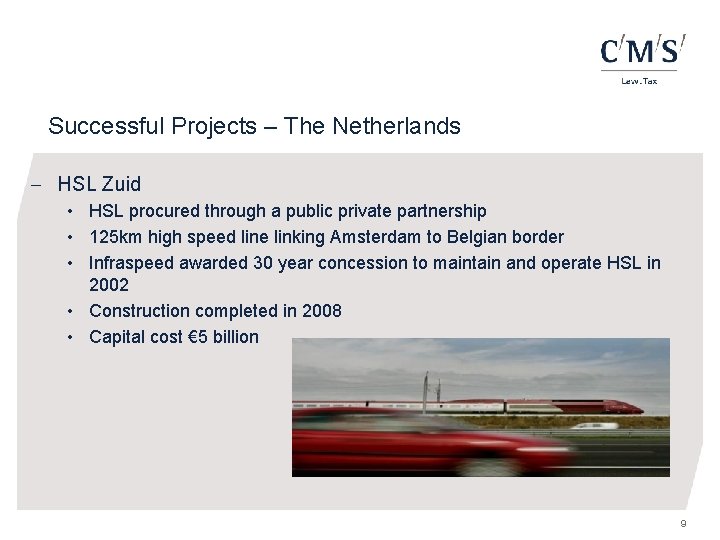
Successful Projects – The Netherlands - HSL Zuid • HSL procured through a public private partnership • 125 km high speed line linking Amsterdam to Belgian border • Infraspeed awarded 30 year concession to maintain and operate HSL in 2002 • Construction completed in 2008 • Capital cost € 5 billion 9
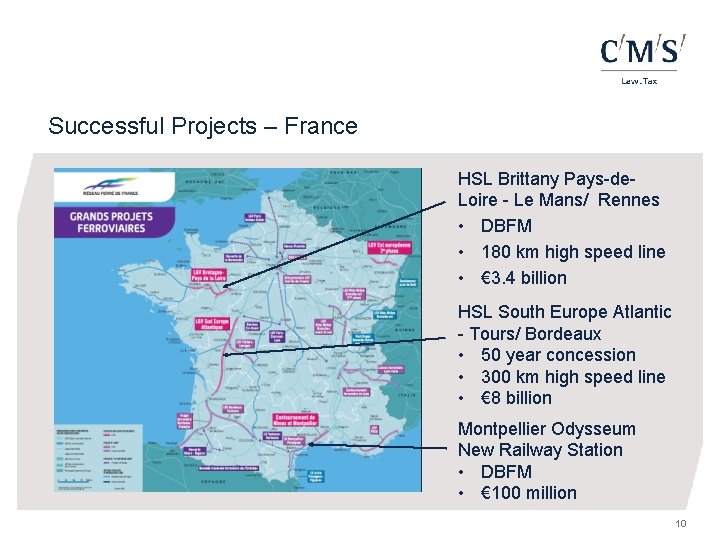
Successful Projects – France HSL Brittany Pays-de. Loire - Le Mans/ Rennes • DBFM • 180 km high speed line • € 3. 4 billion HSL South Europe Atlantic - Tours/ Bordeaux • 50 year concession • 300 km high speed line • € 8 billion Montpellier Odysseum New Railway Station • DBFM • € 100 million 10
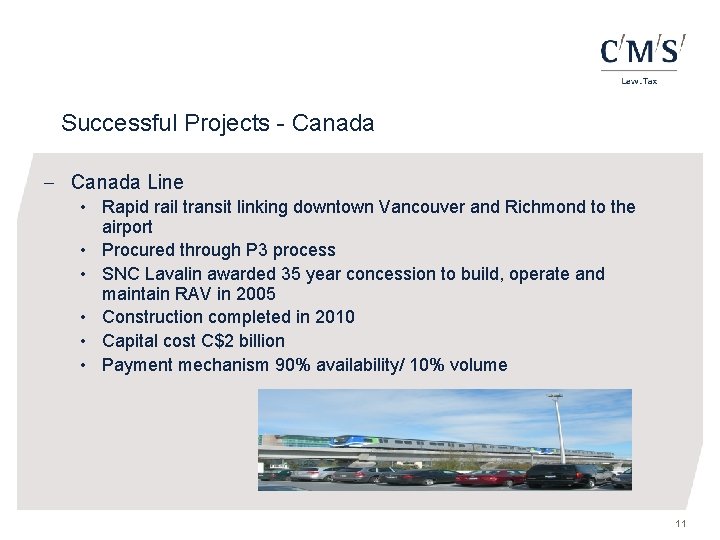
Successful Projects - Canada Line • Rapid rail transit linking downtown Vancouver and Richmond to the airport • Procured through P 3 process • SNC Lavalin awarded 35 year concession to build, operate and maintain RAV in 2005 • Construction completed in 2010 • Capital cost C$2 billion • Payment mechanism 90% availability/ 10% volume 11
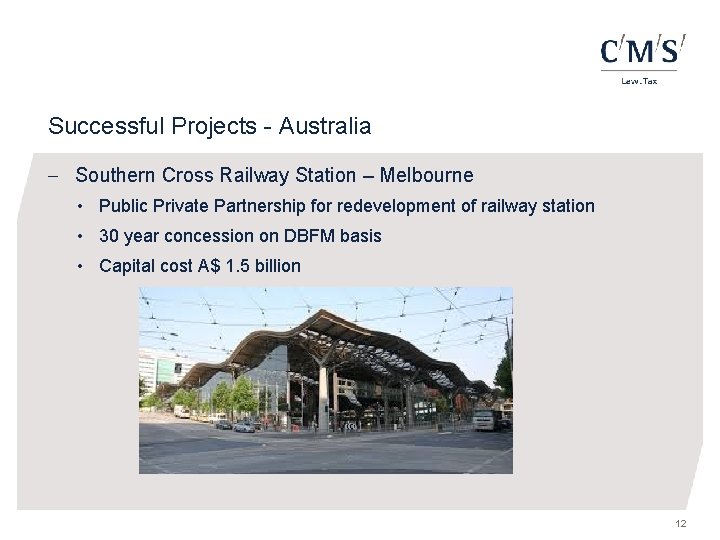
Successful Projects - Australia - Southern Cross Railway Station – Melbourne • Public Private Partnership for redevelopment of railway station • 30 year concession on DBFM basis • Capital cost A$ 1. 5 billion 12
Lessons Learned - The importance of appropriate risk allocation - Flexibility of contracts • Avoiding ‘hair triggers’ - Government support • Political ‘buy-in’ • Stakeholder management - Good governance • Tender process • Project management 13
Conclusions - What makes a successful project - SC 2 project • Proposal for UNECE Standard on best practice for the management of Public Private Partnership (PPP) programmes in the rail sector • The aim of the project will be to provide standards for: - A structural template for the development of rail schemes - A recommended common approach to risk allocation - Model forms of contract based on international best practice 14
Contact Jonathan Beckitt Infrastructure and Project Finance Group CMS Cameron Mc. Kenna LLP Mitre House 160 Aldersgate Street London EC 1 A 4 DD Tel: +44 20 7367 2113 jonathan. beckitt@cms-cmck. com 15
- Slides: 15