
Ragnar Arnason Fisheries Subsidies Worldwide Economic and environmental
Ragnar Arnason Fisheries Subsidies Worldwide: Economic and environmental impacts Presentation at the conference Economic Advice in Fisheries Management Malta February 4 -5 2016
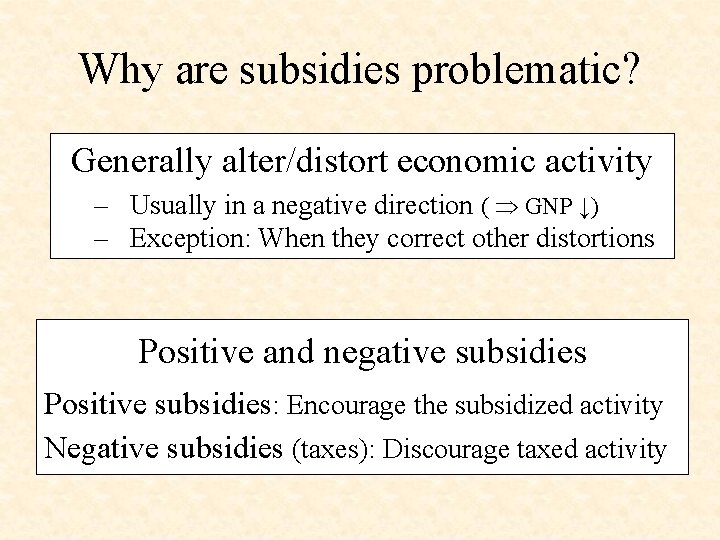
Why are subsidies problematic? Generally alter/distort economic activity – Usually in a negative direction ( GNP ↓) – Exception: When they correct other distortions Positive and negative subsidies Positive subsidies: Encourage the subsidized activity Negative subsidies (taxes): Discourage taxed activity
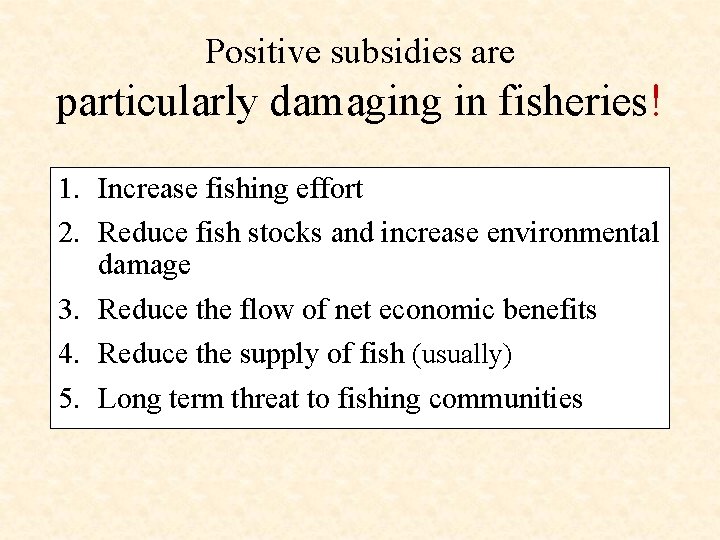
Positive subsidies are particularly damaging in fisheries! 1. Increase fishing effort 2. Reduce fish stocks and increase environmental damage 3. Reduce the flow of net economic benefits 4. Reduce the supply of fish (usually) 5. Long term threat to fishing communities
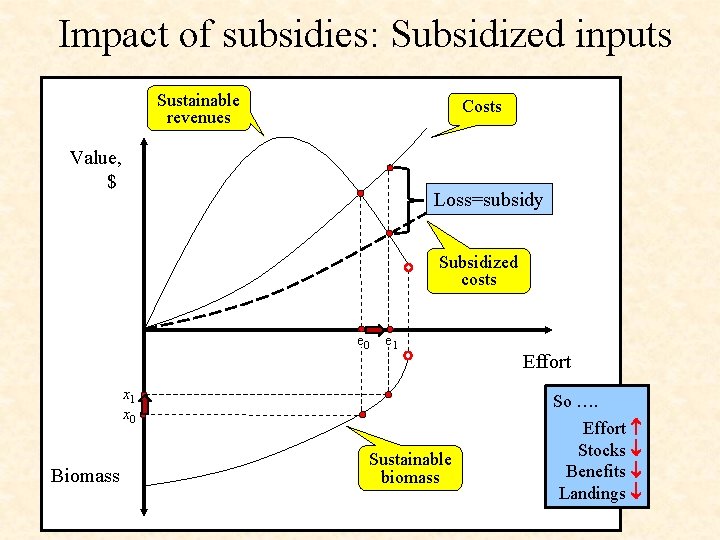
Impact of subsidies: Subsidized inputs Sustainable revenues Costs Value, $ Loss=subsidy Subsidized costs e 0 e 1 x 0 Biomass Effort So …. Sustainable biomass Effort Stocks Benefits Landings
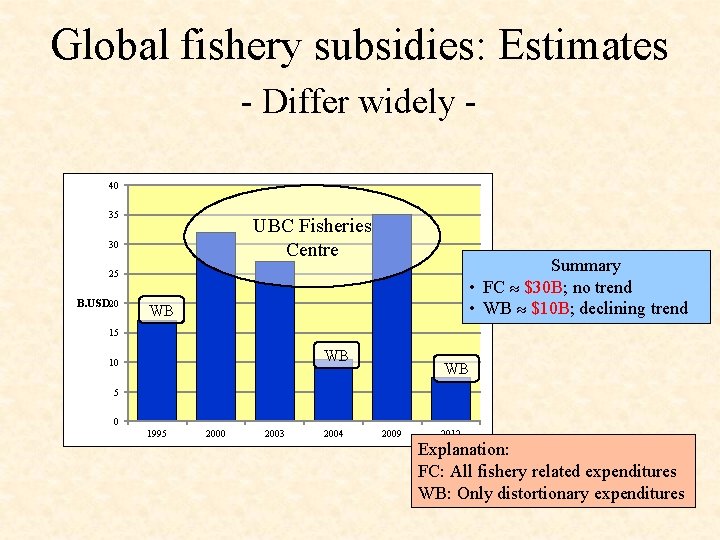
Global fishery subsidies: Estimates - Differ widely 40 35 UBC Fisheries Centre 30 Summary • FC $30 B; no trend • WB $10 B; declining trend 25 B. USD 20 WB 15 WB 10 WB 5 0 1995 2000 2003 2004 2009 2012 Explanation: FC: All fishery related expenditures WB: Only distortionary expenditures
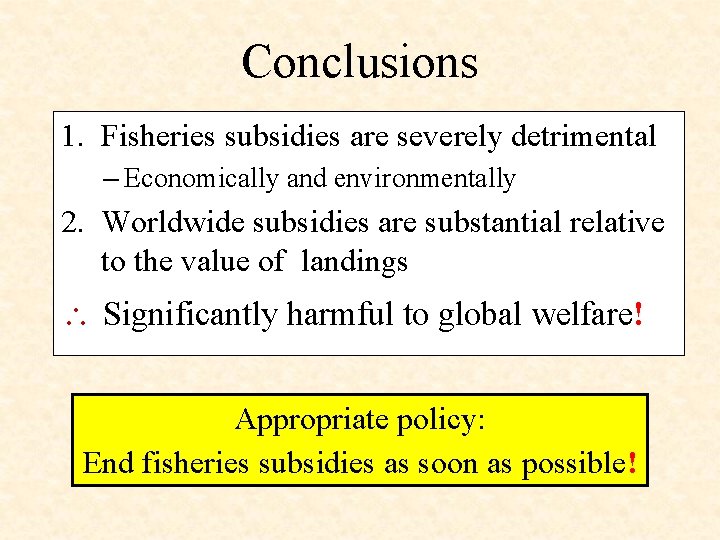
Conclusions 1. Fisheries subsidies are severely detrimental – Economically and environmentally 2. Worldwide subsidies are substantial relative to the value of landings Significantly harmful to global welfare! Appropriate policy: End fisheries subsidies as soon as possible!

END
- Slides: 7