
Rage to Reason for the General Education Classroom

- Slides: 92
Rage to Reason for the General Education Classroom: Reducing Disruptive and Noncompliant Behavior Amy Buie, MEd, BCBA, LBA Learning Momentum, LLC www. learningmomentum. com amy@learningmomentum. com
What is our goal? Not right or wrong Effective verses ineffective What does your data say?
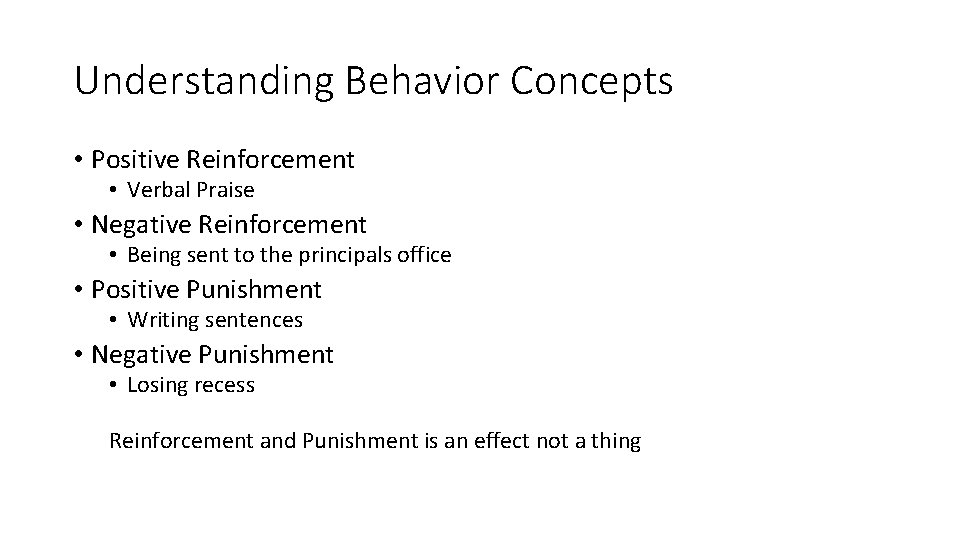
Understanding Behavior Concepts • Positive Reinforcement • Verbal Praise • Negative Reinforcement • Being sent to the principals office • Positive Punishment • Writing sentences • Negative Punishment • Losing recess Reinforcement and Punishment is an effect not a thing
Functional Behavior Assessment What is the reason or “function” of the behavior? Why is it occurring?
Social Positive Reinforcement Tangible Attention
Negative Reinforcement Escape from aversive stimuli Demands Academic Work Discomfort
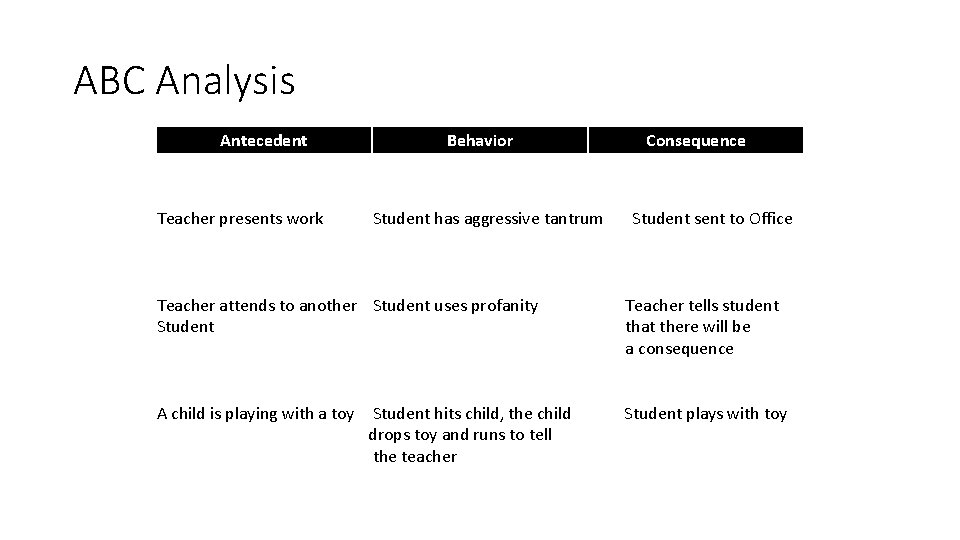
ABC Analysis Antecedent Teacher presents work Behavior Student has aggressive tantrum Consequence Student sent to Office Teacher attends to another Student uses profanity Student Teacher tells student that there will be a consequence A child is playing with a toy Student plays with toy Student hits child, the child drops toy and runs to tell the teacher
Rational for a Functional Assessment • Behavior is communicative • Behavior either achieves or avoids something • Many behaviors are the result of operant conditioning and are considered “Operant” or learned behavior.
What does Operant mean? The Child learns that arguing and tantrums are an effective means of getting teachers and adults into “giving in” to his or her wishes or to make demands disappear. This could be true for tantrums We see this with the “terrible two’s”
“Children do well if they can” Ross Greene
What are some of the Characteristics? Children have lagging skills in the area of flexibility/adaptability, frustration tolerance and problem solving
Definition of Compliance? Compliance is defined as the capacity to defer or delay one’s own goals in response to the imposed goals or standards of an authority figure. This can be considered one of many developmental expressions of the skills of flexibility, frustration tolerance, and problem solving.
Teachers and Adults then can understand that the child difficulties are not due to a deficit in motivation or adult ineptitude but rather a deficit in cognitive skills.
Think about it… We often feel very compelled to give kids consequences so they “learn” that problem behavior is not acceptable. Sometimes they already know this
Deficits in Executive Functions The Executive functions are a set of processes that all have to do with managing oneself and one’s resources in order to achieve a goal. It is the umbrella term for the neurologically-based skills involving mental control and self regulation
Executive Function • It’s a “producing difficulty” not a “learning difficulty” • It’s a function of the frontal lobe • It develops throughout a person’s lifetime • It wires and routes how we think and function • It impacts reading and writing • It’s not about learning a new skill but demonstrating the skill that executive function deficits are apparent
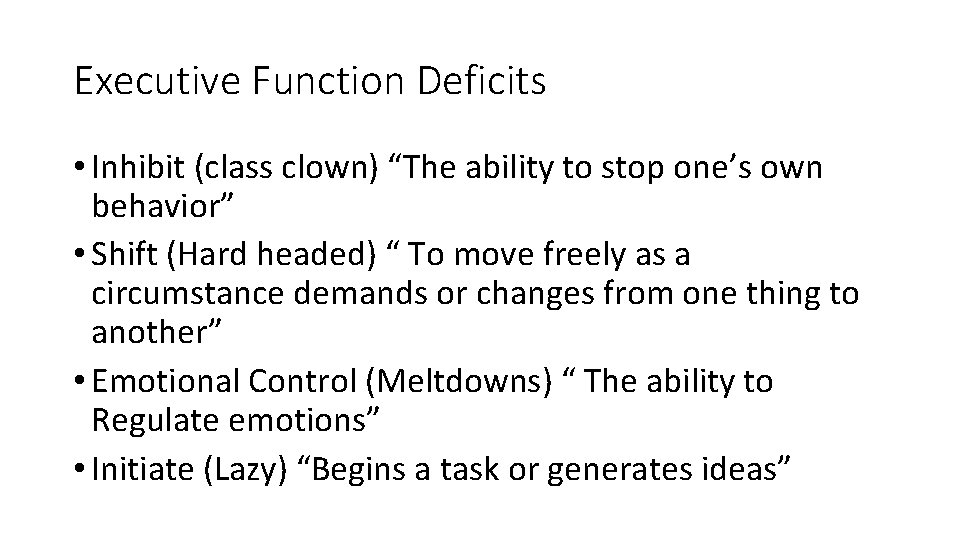
Executive Function Deficits • Inhibit (class clown) “The ability to stop one’s own behavior” • Shift (Hard headed) “ To move freely as a circumstance demands or changes from one thing to another” • Emotional Control (Meltdowns) “ The ability to Regulate emotions” • Initiate (Lazy) “Begins a task or generates ideas”
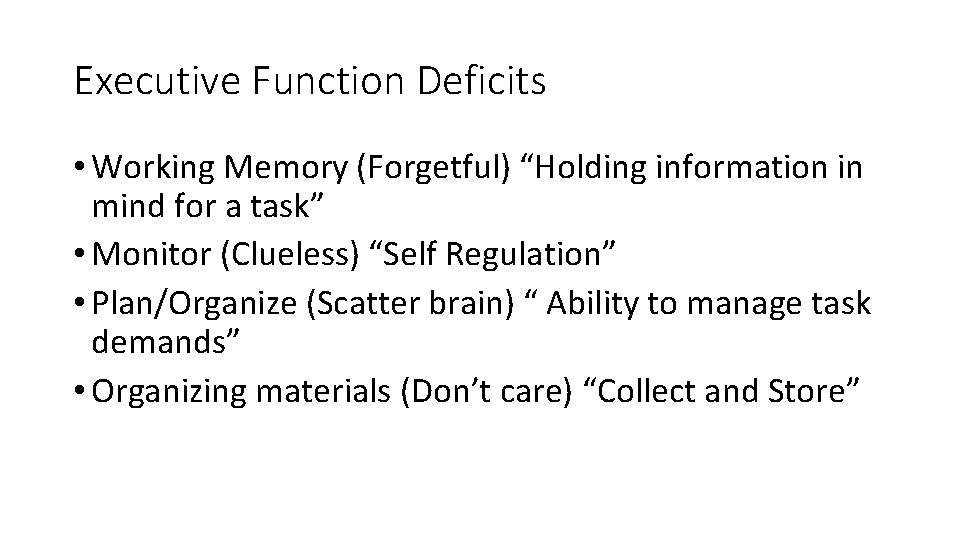
Executive Function Deficits • Working Memory (Forgetful) “Holding information in mind for a task” • Monitor (Clueless) “Self Regulation” • Plan/Organize (Scatter brain) “ Ability to manage task demands” • Organizing materials (Don’t care) “Collect and Store”
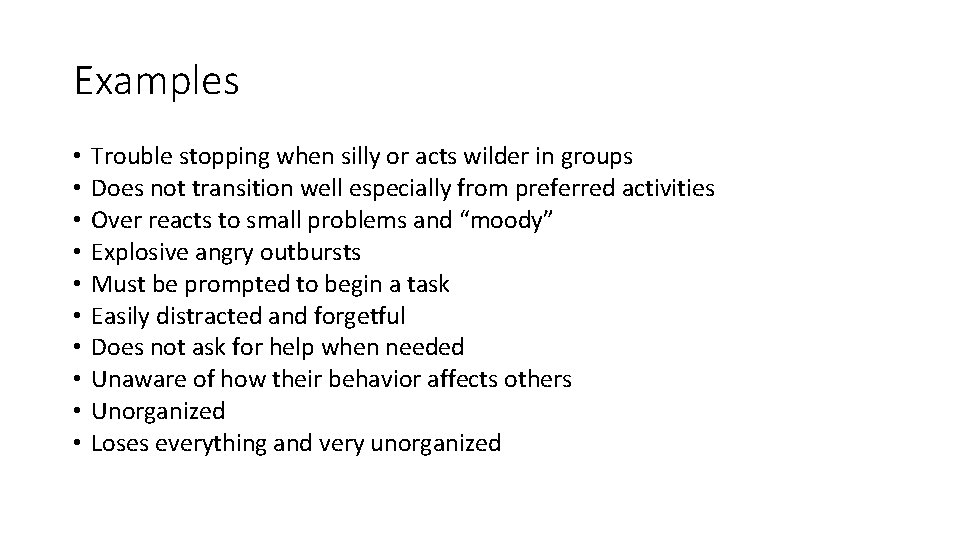
Examples • • • Trouble stopping when silly or acts wilder in groups Does not transition well especially from preferred activities Over reacts to small problems and “moody” Explosive angry outbursts Must be prompted to begin a task Easily distracted and forgetful Does not ask for help when needed Unaware of how their behavior affects others Unorganized Loses everything and very unorganized
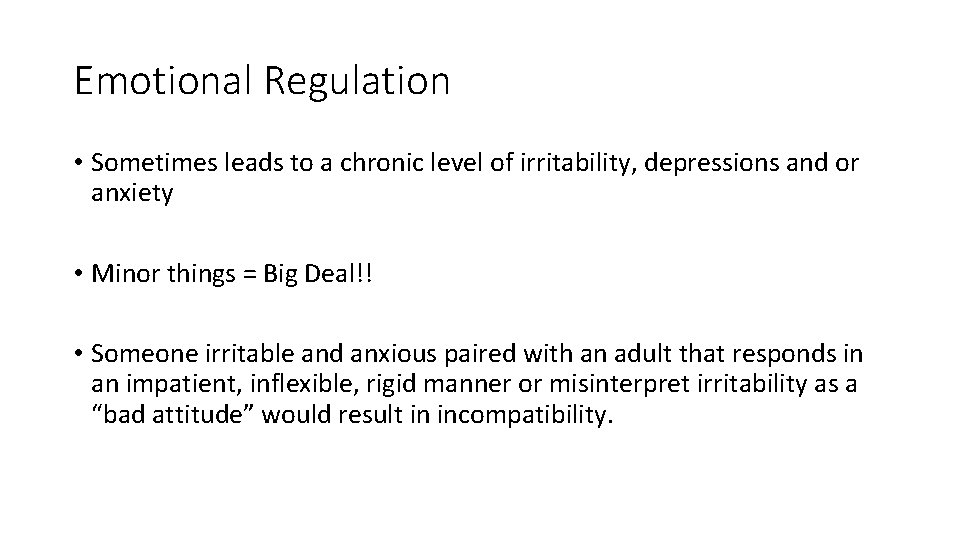
Emotional Regulation • Sometimes leads to a chronic level of irritability, depressions and or anxiety • Minor things = Big Deal!! • Someone irritable and anxious paired with an adult that responds in an impatient, inflexible, rigid manner or misinterpret irritability as a “bad attitude” would result in incompatibility.
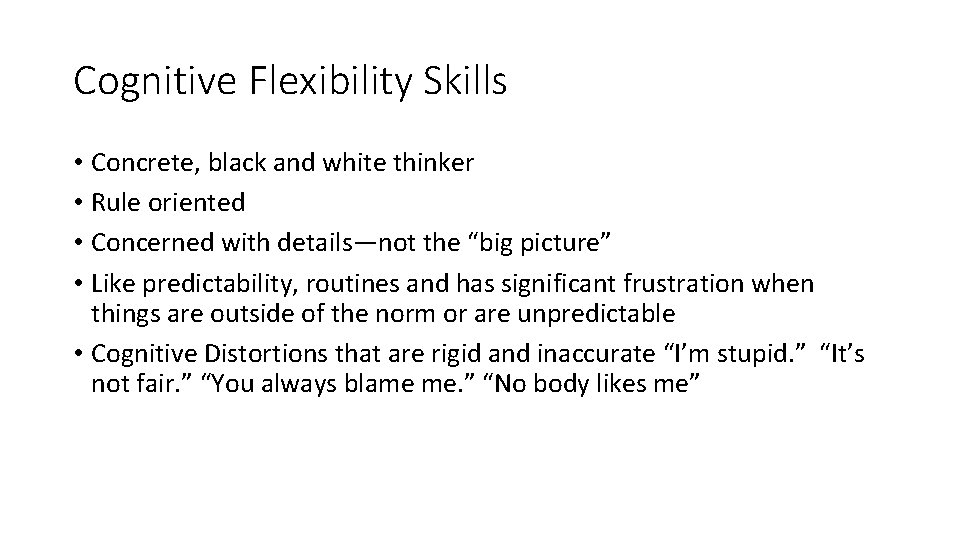
Cognitive Flexibility Skills • Concrete, black and white thinker • Rule oriented • Concerned with details—not the “big picture” • Like predictability, routines and has significant frustration when things are outside of the norm or are unpredictable • Cognitive Distortions that are rigid and inaccurate “I’m stupid. ” “It’s not fair. ” “You always blame me. ” “No body likes me”
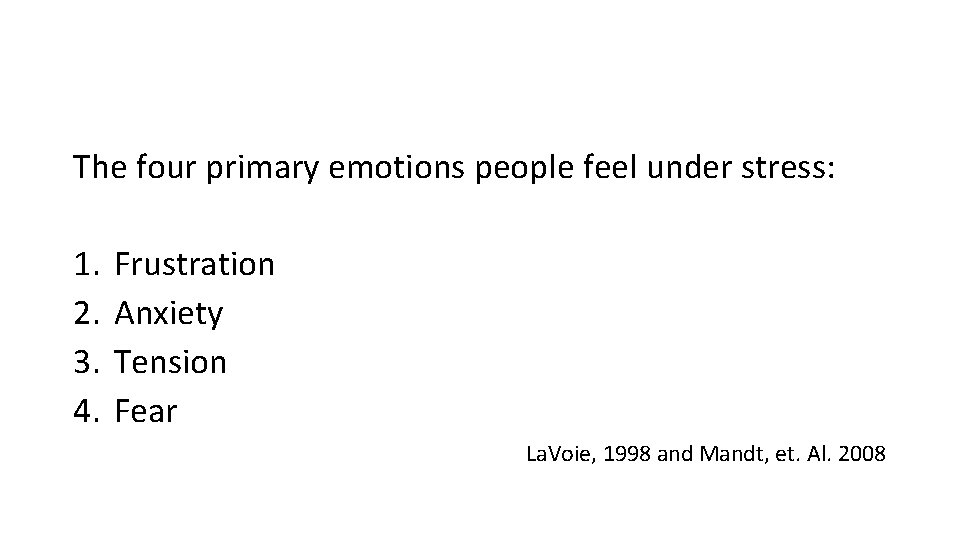
The four primary emotions people feel under stress: 1. 2. 3. 4. Frustration Anxiety Tension Fear La. Voie, 1998 and Mandt, et. Al. 2008
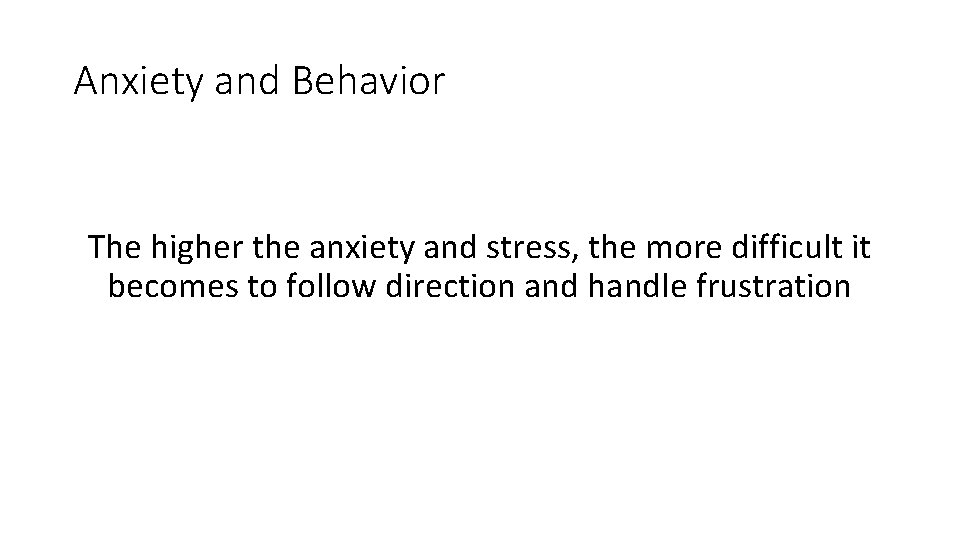
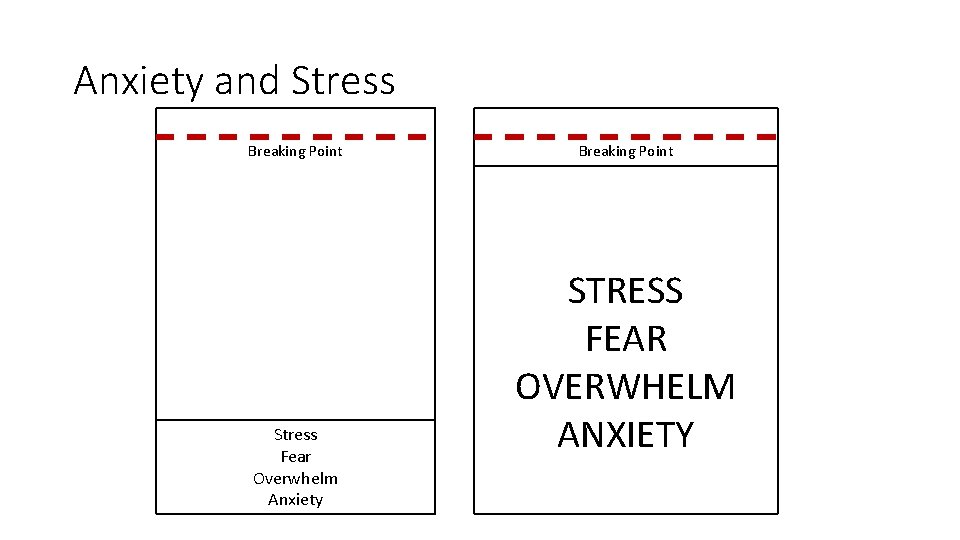
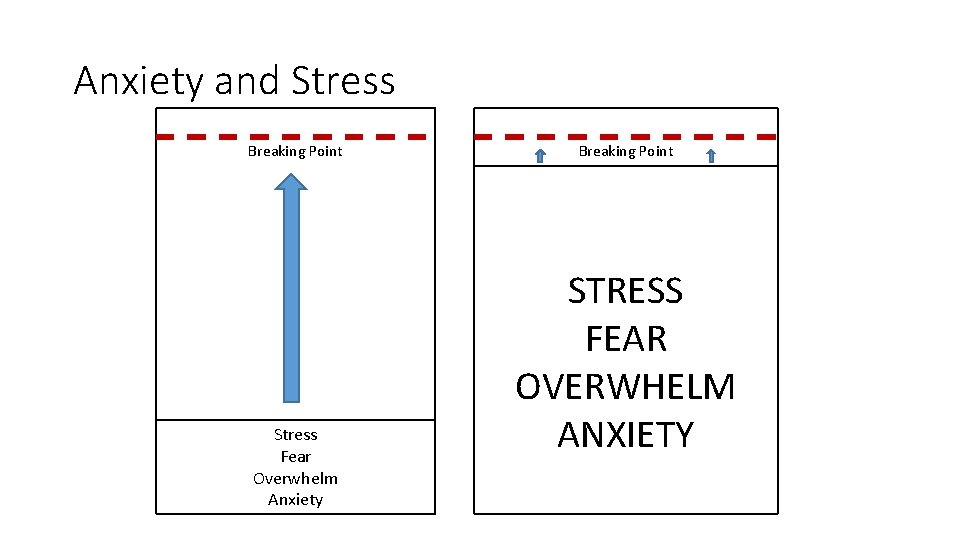
Anxiety and Behavior The higher the anxiety and stress, the more difficult it becomes to follow direction and handle frustration
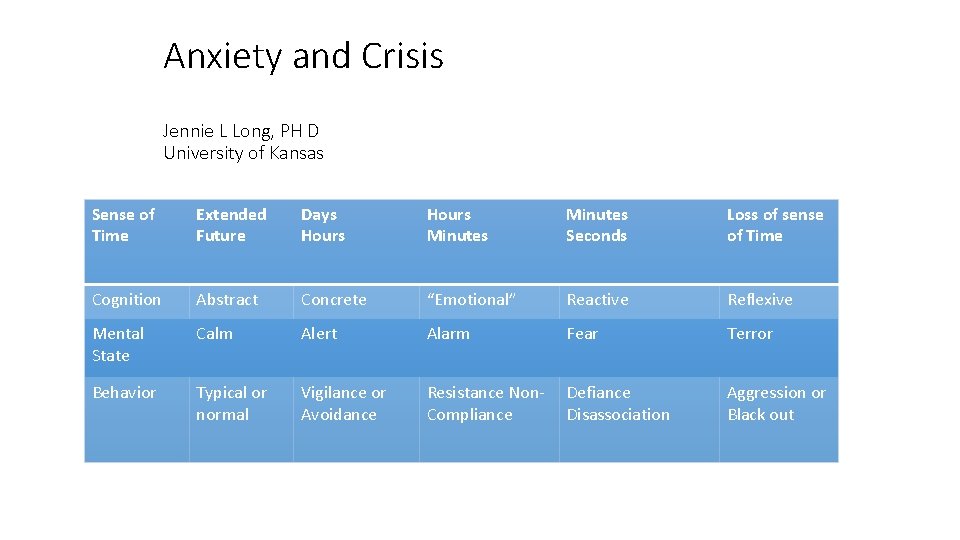
Anxiety and Crisis Jennie L Long, PH D University of Kansas Sense of Time Extended Future Days Hours Minutes Seconds Loss of sense of Time Cognition Abstract Concrete “Emotional” Reactive Reflexive Mental State Calm Alert Alarm Fear Terror Behavior Typical or normal Vigilance or Avoidance Resistance Non. Compliance Defiance Disassociation Aggression or Black out
Anxiety and Stress Breaking Point Stress Fear Overwhelm Anxiety Breaking Point STRESS FEAR OVERWHELM ANXIETY
Anxiety and Stress Breaking Point Stress Fear Overwhelm Anxiety Breaking Point STRESS FEAR OVERWHELM ANXIETY
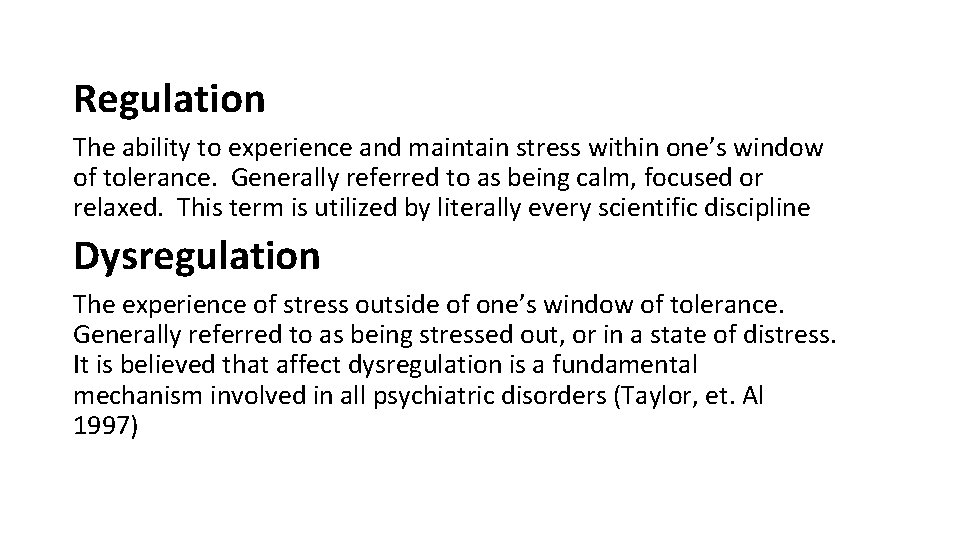
Regulation The ability to experience and maintain stress within one’s window of tolerance. Generally referred to as being calm, focused or relaxed. This term is utilized by literally every scientific discipline Dysregulation The experience of stress outside of one’s window of tolerance. Generally referred to as being stressed out, or in a state of distress. It is believed that affect dysregulation is a fundamental mechanism involved in all psychiatric disorders (Taylor, et. Al 1997)
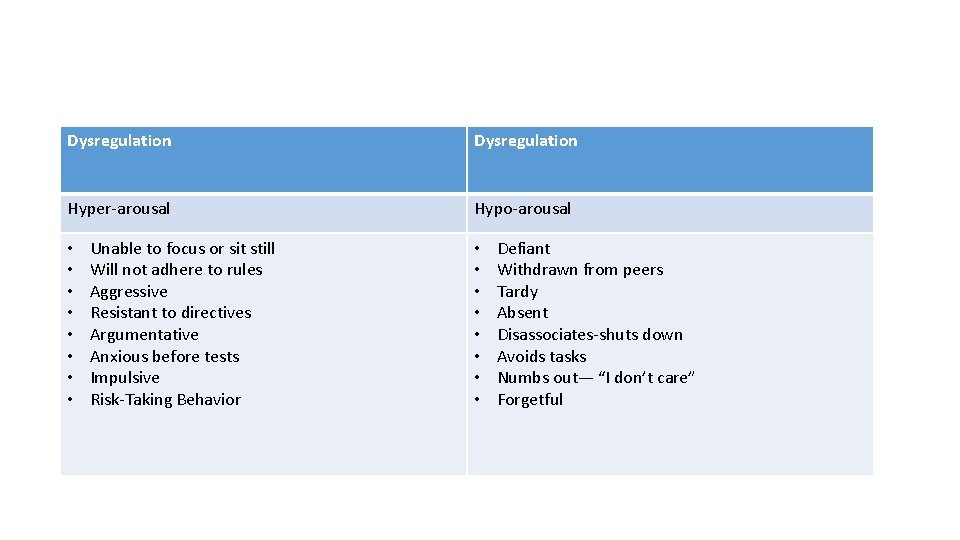
Dysregulation Hyper-arousal Hypo-arousal • • Unable to focus or sit still Will not adhere to rules Aggressive Resistant to directives Argumentative Anxious before tests Impulsive Risk-Taking Behavior • • Defiant Withdrawn from peers Tardy Absent Disassociates-shuts down Avoids tasks Numbs out— “I don’t care” Forgetful
The Relationship • Building a relationship with the child might be the single most important thing. • You need to be their segregate frontal lobe • If you don’t have the relationship, they won’t let you
Create a sense of belonging • Take time to talk and acknowledge each student. When the student walks into the classroom, convey the message, “Welcome. This class would not be the same without you here today!” • Recognize that student’s moods and help to regulate instead of ignoring or criticizing the moods • Listen to the student (you don’t have to agree) • Smile at the student and stay in a warm place in your heart, no matter their attitude or disposition • Take an interest in what’s important to each student • Ask the students for help with things and share their ideas with others.
Strategies for Disruptive and Non. Compliant Behavior
Key Behavioral Principles Geoff Colvin, 2010 Goals of the Correction Procedures 1. Interrupt the problem behavior, and engage student or students in the expected behavior 2. Ensure the student or students exhibit the expected behavior in future occurrences of similar situations 3. Avoid escalating the situation to more serious behavior
Key Behavioral Principles Geoff Colvin, 2010 The role of teacher attention in correction procedures 1. All students need teacher attention to some extent 2. Problem behavior is a sure way of obtaining teacher attention 3. When teachers respond directly to students displaying problem behavior, they are providing attention to students who may not otherwise be receiving teacher attention
Key Behavioral Principles Geoff Colvin, 2010 The role of teacher attention in correction procedures-Cont. 4. Even though students may comply with a direction, they may exhibit the same problem at a later time, indicating that the behavior has been reinforced by the teacher’s correction procedure 5. Other students who are cooperating may begin to display the problem behavior in order to receive teacher attention 6. Teacher attention, if properly directed, can be used to reinforce expected behavior and reduce problem behavior
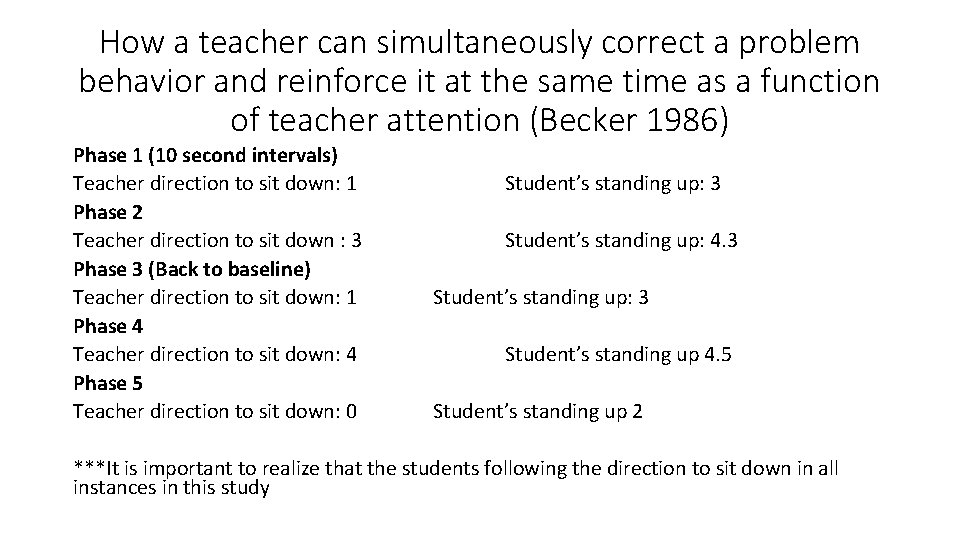
How a teacher can simultaneously correct a problem behavior and reinforce it at the same time as a function of teacher attention (Becker 1986) Phase 1 (10 second intervals) Teacher direction to sit down: 1 Phase 2 Teacher direction to sit down : 3 Phase 3 (Back to baseline) Teacher direction to sit down: 1 Phase 4 Teacher direction to sit down: 4 Phase 5 Teacher direction to sit down: 0 Student’s standing up: 3 Student’s standing up: 4. 3 Student’s standing up: 3 Student’s standing up 4. 5 Student’s standing up 2 ***It is important to realize that the students following the direction to sit down in all instances in this study
Key Behavioral Principles Geoff Colvin, 2010 The Nature of Behavioral Intensity, Escalation, and Defusion • Behavioral Intensity • Behavioral Escalation • Behavioral defusion “The process of defusion should inform teachers that the student is making progress and heading in the right direction”
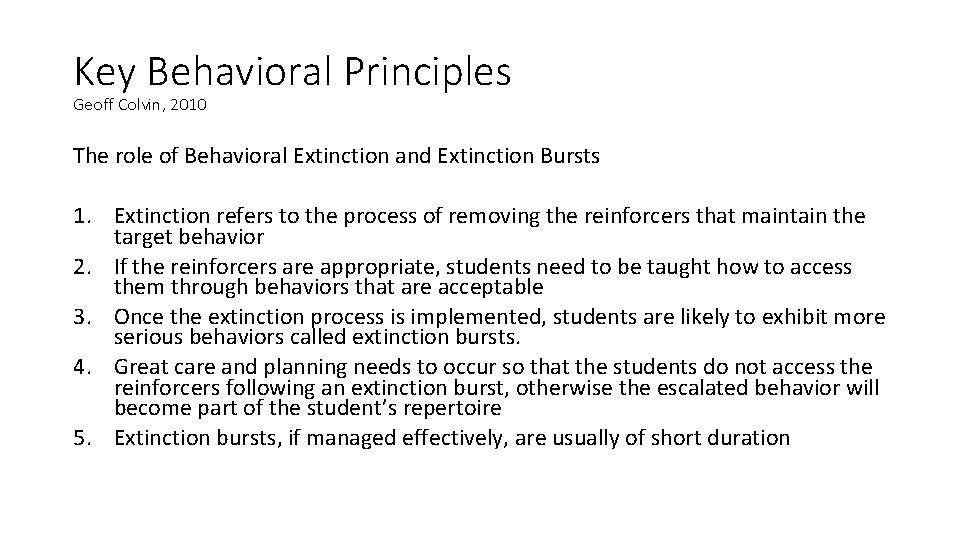
Key Behavioral Principles Geoff Colvin, 2010 The role of Behavioral Extinction and Extinction Bursts 1. Extinction refers to the process of removing the reinforcers that maintain the target behavior 2. If the reinforcers are appropriate, students need to be taught how to access them through behaviors that are acceptable 3. Once the extinction process is implemented, students are likely to exhibit more serious behaviors called extinction bursts. 4. Great care and planning needs to occur so that the students do not access the reinforcers following an extinction burst, otherwise the escalated behavior will become part of the student’s repertoire 5. Extinction bursts, if managed effectively, are usually of short duration
When Behavior is maintained by attention “Telling kids what NOT to do can make them DO the very thing you want them not to do!”
Accommodations and Modifications Does he understand? Is the work predicted for him? Does he need help getting started? Is he afraid to ask for help in from of everyone? Are his skills below average? Does he have significant executive function deficits?
Understanding Behavior that is repeated is being reinforced or it’s a skill deficit. There are NO other explanations. The power of attention is that you are it!! For many kids we do not need sticker charts, lego time, etc. You don’t have time for that anyway! Not while teaching a classroom of 20 or more kids.
Behaviors Maintained by Attention Many kids use behaviors to get teacher attention. They sometimes have skill deficits so it’s not going to happen by raising their hand with the answer so they find a way and it works—every time. So yes, even disrespectful and non compliant Joey wants you to like him, notice him, or attend to him.
Understanding Schedules of Reinforcement occurs on schedules Ratio=Number Interval=Time It can also be fixed (exactly the same) or variable (on average)
Let’s Practice The new behavior we are trying to teach is raising your hand for teacher attention. To teach a new behavior we start with a continuous schedule which is every single time. Continuous Schedules are the strongest schedule of reinforcement We would use a FR 1 This is a Fixed Ratio of One. So every one time he raises his hand, he is reinforced. (Remember, we are using attention as the reinforce, not a sticker) We would then move to a FR 2 or an FR 3. This means reinforcement occurs every second or third time. We could also move to a VR 3 which is a Variable Ratio of 3 which is ABOUT every 3 times.
More Practice Let’s look at the behavior “staying on task”. In the beginning, reinforcement needs to be frequent so we might start on a FI 1 or a Fixed Interval of 1 minute. This means one time, every minute you reinforce him for being on task (using teacher attention) We would soon move to a FI 5 or a Fixed Interval of 5 minutes. Now reinforcement must occur once every 5 minutes. It would probably make more sense to use a variable schedule such as a VI 5 or a Variable Interval of 5 minutes which would be “about” every 5 minutes.
Remember: “Telling kids what NOT to do can make them DO the very thing you want them not to do!” So that means it’s being reinforced. Let’s assume teacher attention is reinforcing it. What is the schedule? Probably disruptive behavior is on a FR 1 or a Fixed Ratio of One; that is, every time there is disruptive behavior, they get teacher attention (in the form of redirecting them or telling them to stop) That’s pretty strong reinforcement!
What if we switched it? What if the behaviors we want them to do was on a very dense schedule like a FR 1 or a VR 2 (minutes) and behaviors that we don’t want went on extinction and got no reinforcement? Behaviors to Increase: Getting started on work Doing the work Staying on task Asking for teacher attention appropriately Using manners and respectful words Asking for help when needed
Behaviors Maintained by Attention Increase reinforcement for the behavior that you want to see more of! Check Mark System: Each student gets a data sheet which is a blank card or piece of paper. It can be an index card, or a cut up piece of recycled paper. Students learn the routine to get it themselves and tape it to the right hand corner of their desk. Students will record with a checkmark on the card when you give them positive praise or “kind acknowledgement” for a behavior you want to see more of. A subtle “thumbs up” with the acknowledgement will indicate to the student that they can put a checkmark on their card.
Important Note: The checkmarks are NOT for the child; they are for you. You want to teach the new behaviors on a very dense schedule of reinforcement so you would start with a VI 5 (Variable Interval of 5 minutes)—maybe shorter for some That means during a 30 minute lesson, the student needs to have at least 6 checks; if not, YOU did not follow the plan.
What do they do with the checks? Most kids are going to want to know what they get for the checks because they are so used to getting something tangible. That will be up to you. Remember, they do not need to exchange the checks because the actual reinforcement is you! However, since most kids want to know, you can set something up like a 5 minute break or “extra” break time or even time to play a game or do something with a friend. This can be what you want to do that works for your classroom.
One or All? This is another individual decision you can make for your classroom. The student with problem behavior needs the card. You can do it for just this student. However, the other kids might say, “I want to get check marks” because they see it’s associated with you saying “good job” and positive attention. If that’s the case and you decide to do it as a whole class plan, make sure the reward for checks is a total count to the whole class so no one competes against each other.
Schedules of Reinforcement for Behavior Maintained by Attention • Research indicates 4 positive for every one negative • Our data indicates every 5 minutes on average for disruptive behavior occurring at high rates (Take you own data) Implementation Checkmarks Post it note Cell phone apps (Interval Training) Paper clips
Now, what do you do when disruptive behavior occurs? Problem Behavior Occurs 1. Assess the situation 2. Keep teaching; do not interrupt the flow of the classroom 3. Verbally and positively give “kind acknowledgement” to someone who is doing the right things. “Thank you Billy, for getting started!” 4. If the problem behavior is continuing, give that student feedback or redirect them with as LITTLE ATTENTION AS POSSIBLE. Point, tap on paper, quietly say, “Let’s get started”. Use gestures when possible and do not make eye contact, use body language that communicates any feelings, or shows frustration 5. Once the child follows the direction, give a brief or neutral “thanks” or “good”. Do not give a thumbs up or a checkmark. Do not give a checkmark when a behavior stops. Within the next 5 minutes, find something he is doing right and praise him for that with kind acknowledgement and thumbs up/checkmark.
Disruptive Behavior and Planned Ignoring • Any time you see kids engaging in problem behavior that you want to change, ignore • HOWEVER– Ignore does not mean that you ignore the child. • Many ignore the child and the behavior—you just want to ignore the behavior. What does that mean? • Don’t say stop, don’t, knock it off • Don’t communicate frustration with body language or eye contact • Do: redirect, remind and reinforce good behavior • Do: notice and praise others doing the right thing
Non-Compliance and Refusals • Behavior Maintained by Escape and Avoid • May have a history of reinforcement (although unintentional) • Goal: Teach compliance with authority figures and avoid an extinction burst
Functional Communication Training • Teaching Communication that replaces the behavior and meets the same function • Non-verbal child screams when she is in the kitchen • Student has disruptive behavior and is sent home • Student makes inappropriate bodily noises to make peers laugh
Functional Communication Training (FCT) for Escape Behaviors “Ask and Get” “Ask” and work goes away verses “tantrum/disruption” and work goes away. Students could say, “No thanks” (communication) and work goes away (function: escape)
Teaching Replacement Behaviors • Replacement Behavior teach a new behavior (positive one) to replace the problem behavior. • The new behavior has to meet the same function
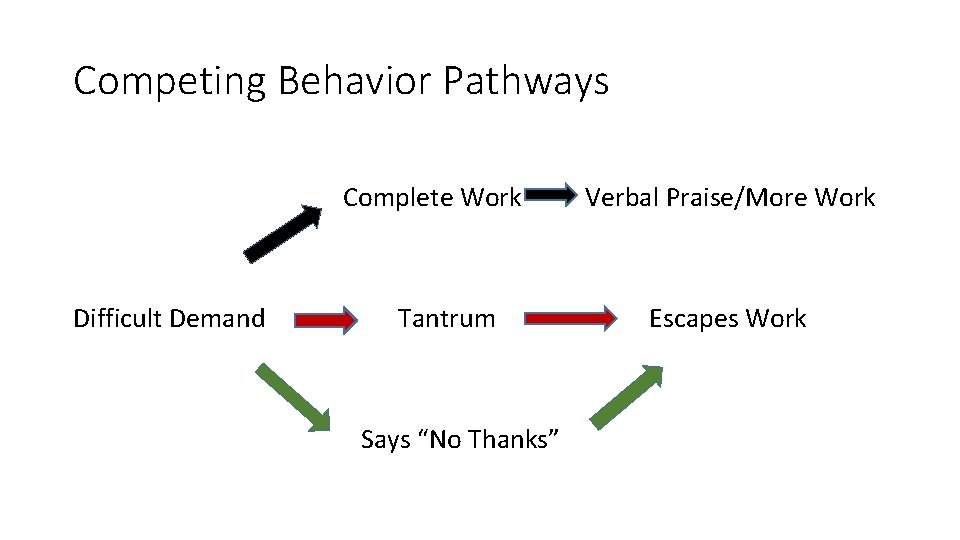
Competing Behavior Pathways Complete Work Difficult Demand Tantrum Says “No Thanks” Verbal Praise/More Work Escapes Work
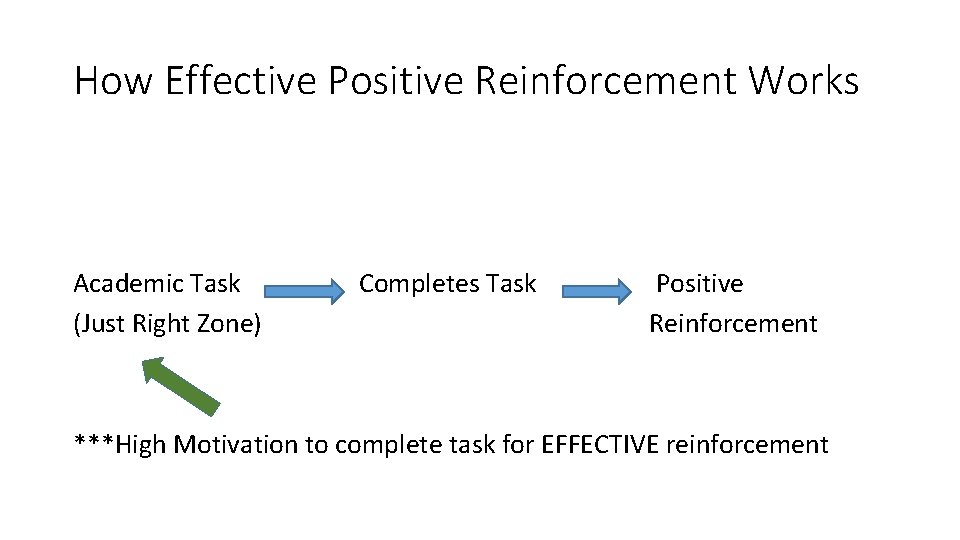
How Effective Positive Reinforcement Works Academic Task (Just Right Zone) Completes Task Positive Reinforcement ***High Motivation to complete task for EFFECTIVE reinforcement
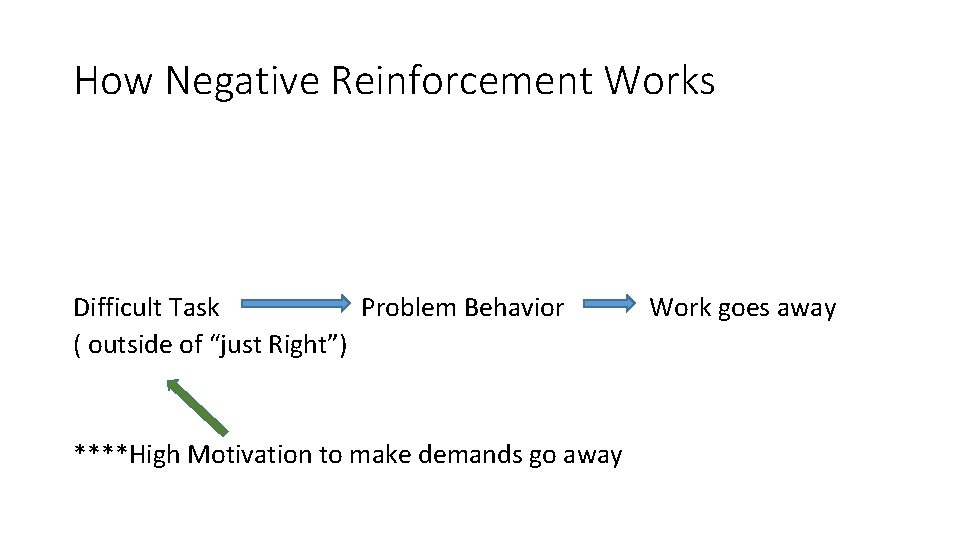
How Negative Reinforcement Works Difficult Task Problem Behavior ( outside of “just Right”) ****High Motivation to make demands go away Work goes away
Optimal Learning Chart
Giving Kids Consequences Increasing what you want to see more of while redirecting off-task Behavior • Dealing with Rule Infractions • Implementing a mild but effective consequence
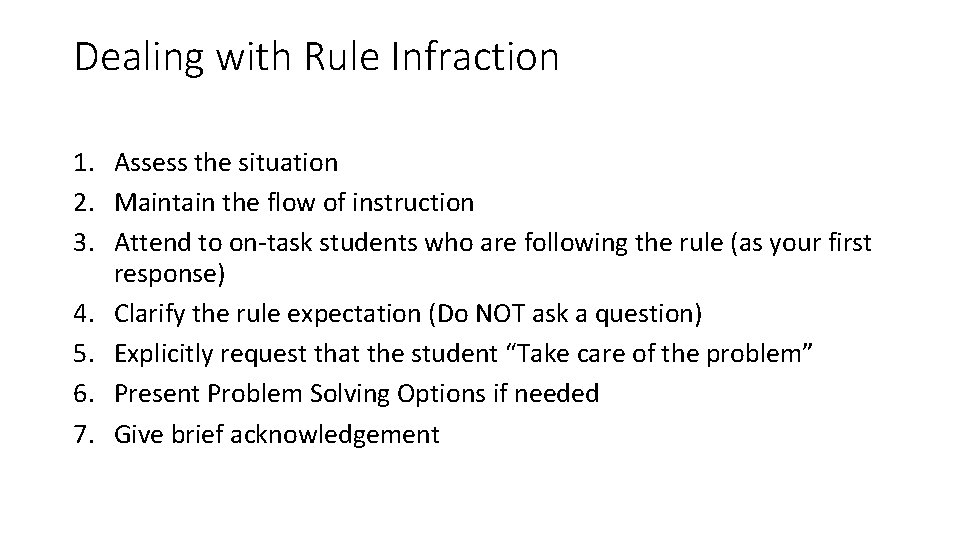
Dealing with Rule Infraction 1. Assess the situation 2. Maintain the flow of instruction 3. Attend to on-task students who are following the rule (as your first response) 4. Clarify the rule expectation (Do NOT ask a question) 5. Explicitly request that the student “Take care of the problem” 6. Present Problem Solving Options if needed 7. Give brief acknowledgement
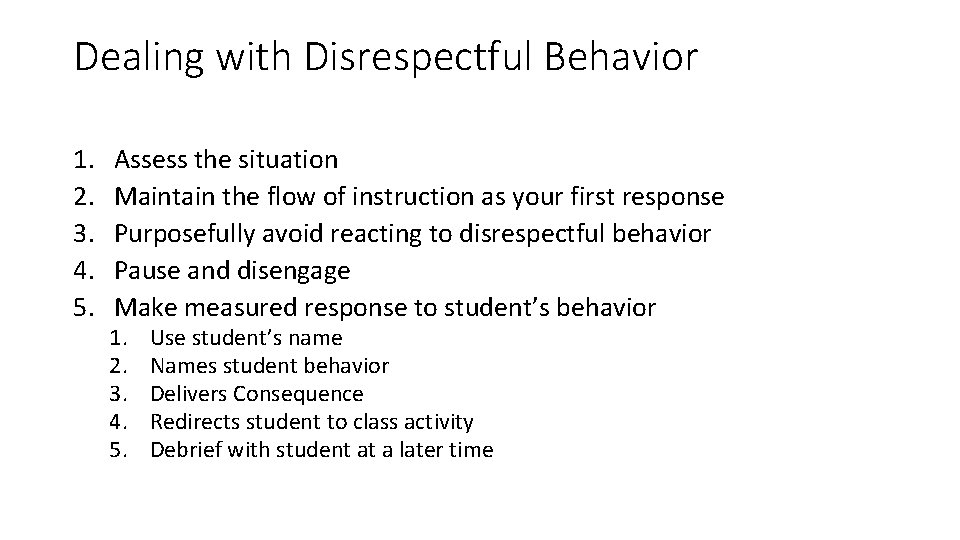
Dealing with Disrespectful Behavior 1. 2. 3. 4. 5. Assess the situation Maintain the flow of instruction as your first response Purposefully avoid reacting to disrespectful behavior Pause and disengage Make measured response to student’s behavior 1. 2. 3. 4. 5. Use student’s name Names student behavior Delivers Consequence Redirects student to class activity Debrief with student at a later time
Disrespectful Behavior • When to respond, redirect, and wait for expected behavior and when do you ignore • Going from point A to point B • Point B is preferred—redirect • Point B in neutral or non-preferred—ignore.
Consequence • We need to determine a mild but EFFECTIVE consequence • Community Service Must make sure that during the consequence, the student is in a time out from both types of positive reinforcement—attention and tangibles
Defusing Agitation can be: Fear Stress Overwhelm Anxiety I refer to it as being dysregulated
Increases in Behavior • Darting eyes • Busy hands • Moving in and out of groups • Off-task and on-task cycle • Easily irritated by others
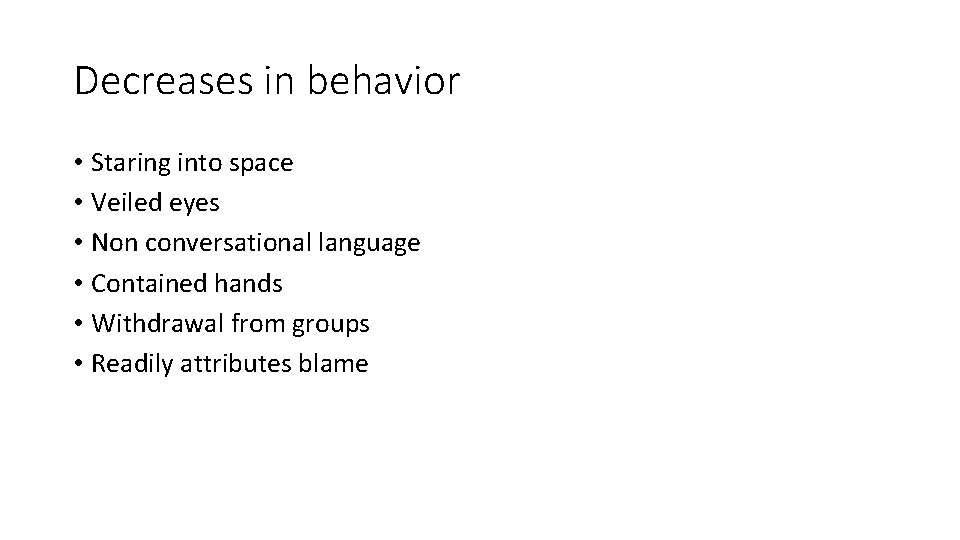
Decreases in behavior • Staring into space • Veiled eyes • Non conversational language • Contained hands • Withdrawal from groups • Readily attributes blame
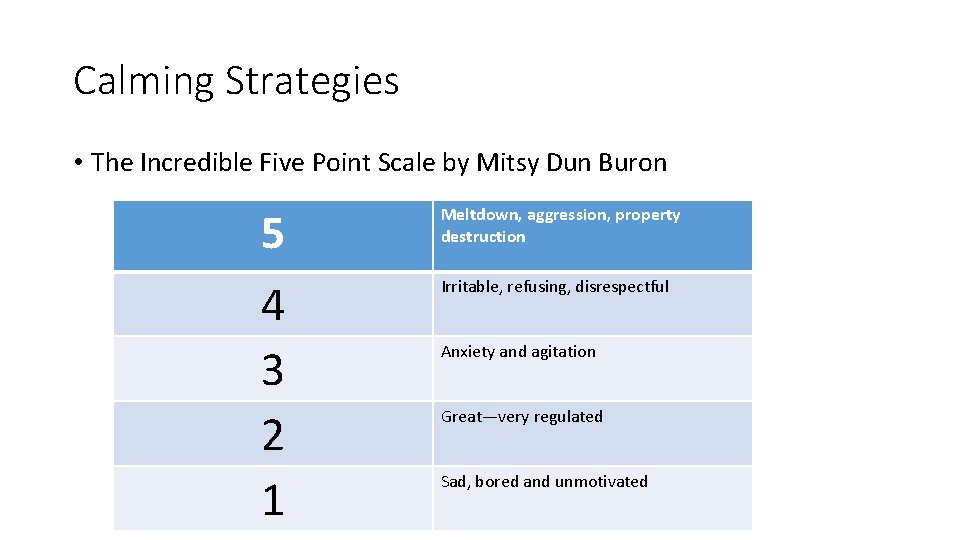
Calming Strategies • The Incredible Five Point Scale by Mitsy Dun Buron 5 4 3 2 1 Meltdown, aggression, property destruction Irritable, refusing, disrespectful Anxiety and agitation Great—very regulated Sad, bored and unmotivated
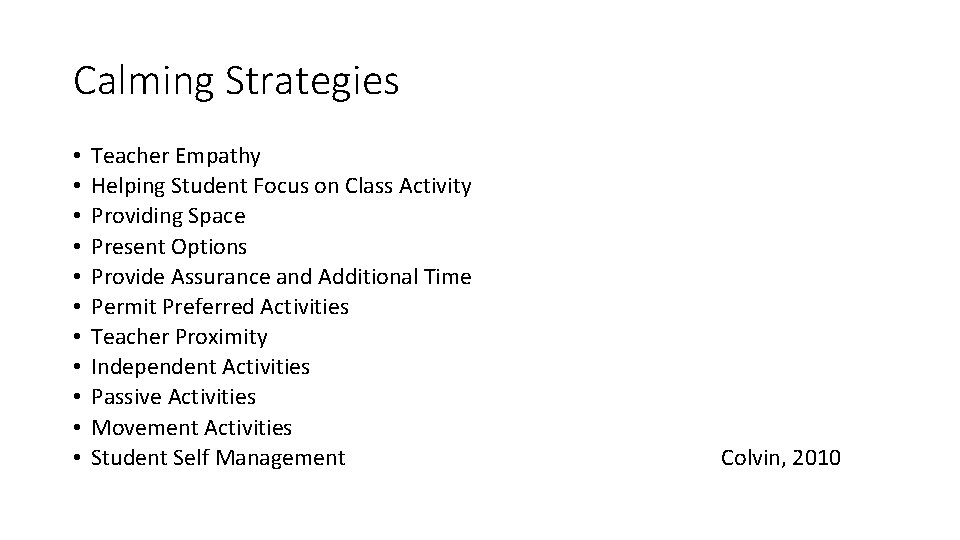
Calming Strategies • • • Teacher Empathy Helping Student Focus on Class Activity Providing Space Present Options Provide Assurance and Additional Time Permit Preferred Activities Teacher Proximity Independent Activities Passive Activities Movement Activities Student Self Management Colvin, 2010
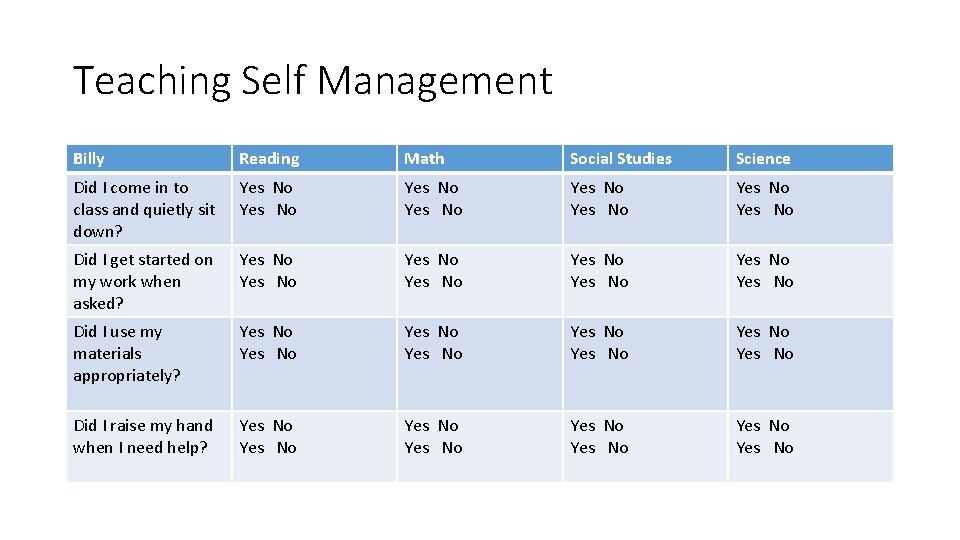
Teaching Self Management Billy Reading Math Social Studies Science Did I come in to class and quietly sit down? Yes No Yes No Did I get started on my work when asked? Yes No Yes No Did I use my materials appropriately? Yes No Yes No Did I raise my hand when I need help? Yes No Yes No
Calming Strategies • Time in • Stress Basket • Tension Release Activities • Movement • Relaxation/breathing The Zones of Regulation, Leah Kupyers
Fair verses Equal Not everything is equal but it’s fair in that everyone gets what they need.
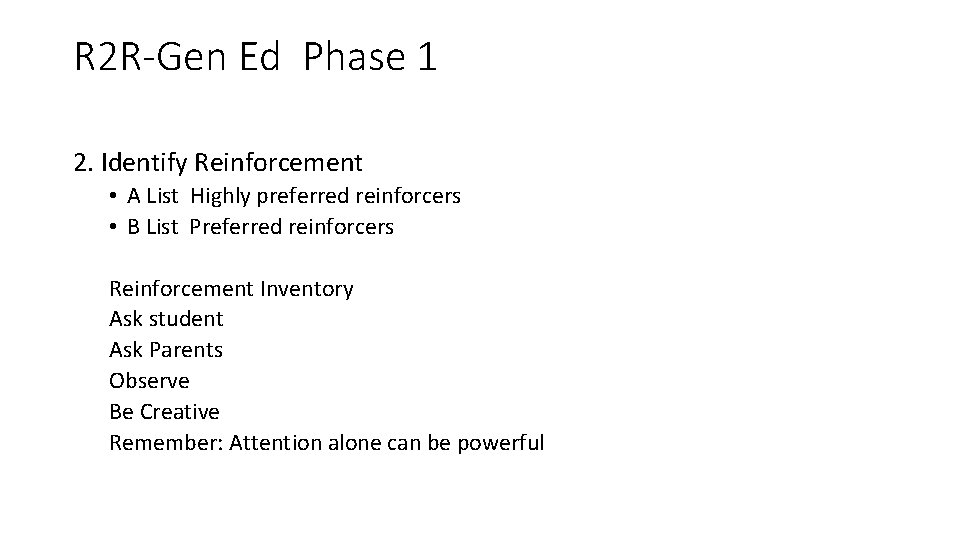
Rage to Reason for the General Education Classroom Phase 1 Three goals: 1. Set up opportunities to build the relationship 2. Identify Reinforcement: Create an A list and a B list 3. Demand Fading with Prediction, Modifications and Accommodations ***Introduce The Zones of Regulation
R 2 R-Gen Ed Phase 1 1. Set up opportunities to build the relationship • Opportunities to help • Time to share interests • Time to listen to a story
R 2 R-Gen Ed Phase 1 2. Identify Reinforcement • A List Highly preferred reinforcers • B List Preferred reinforcers Reinforcement Inventory Ask student Ask Parents Observe Be Creative Remember: Attention alone can be powerful
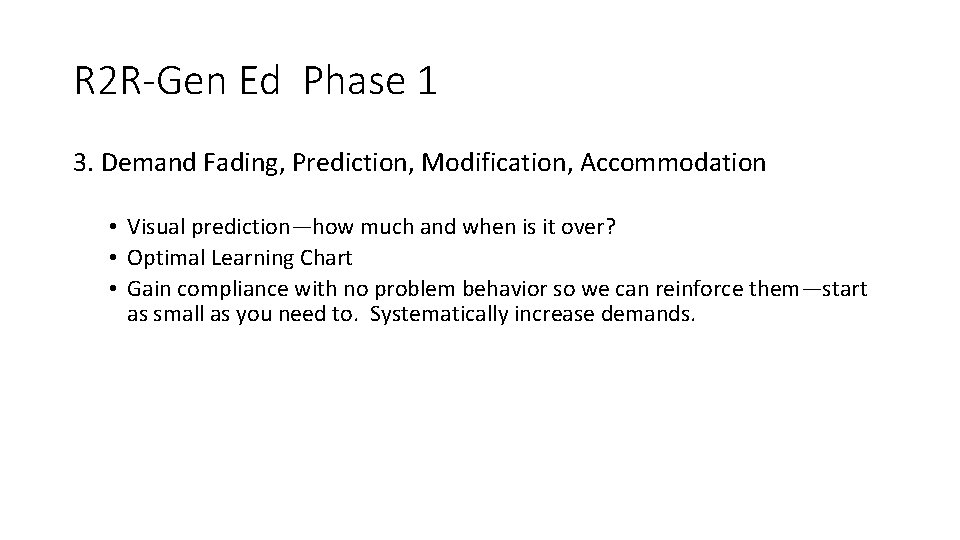
R 2 R-Gen Ed Phase 1 3. Demand Fading, Prediction, Modification, Accommodation • Visual prediction—how much and when is it over? • Optimal Learning Chart • Gain compliance with no problem behavior so we can reinforce them—start as small as you need to. Systematically increase demands.
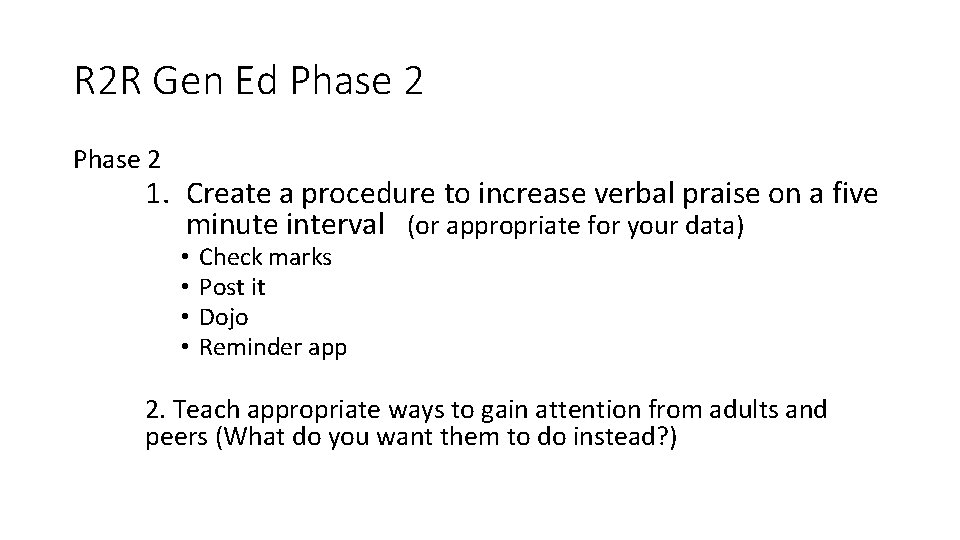
R 2 R Gen Ed Phase 2 1. Create a procedure to increase verbal praise on a five minute interval (or appropriate for your data) • • Check marks Post it Dojo Reminder app 2. Teach appropriate ways to gain attention from adults and peers (What do you want them to do instead? )
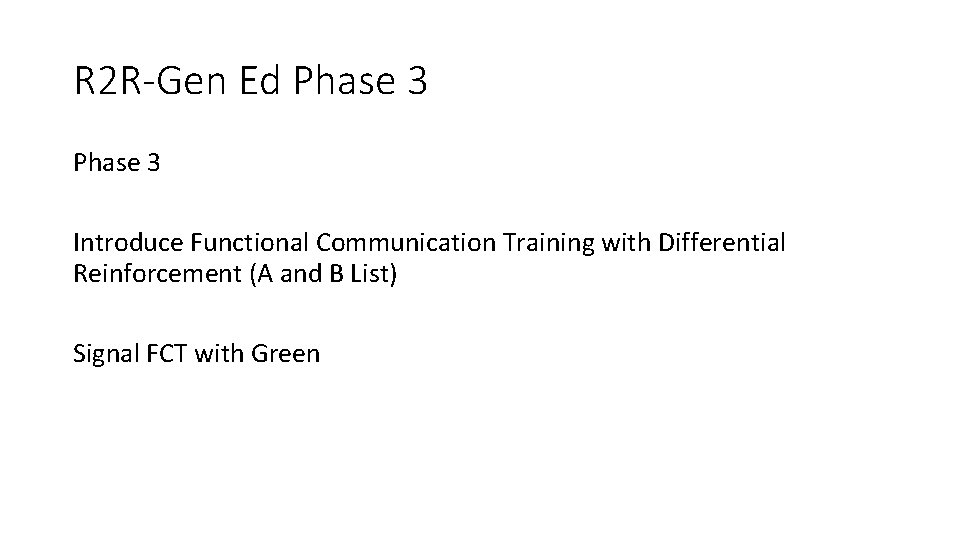
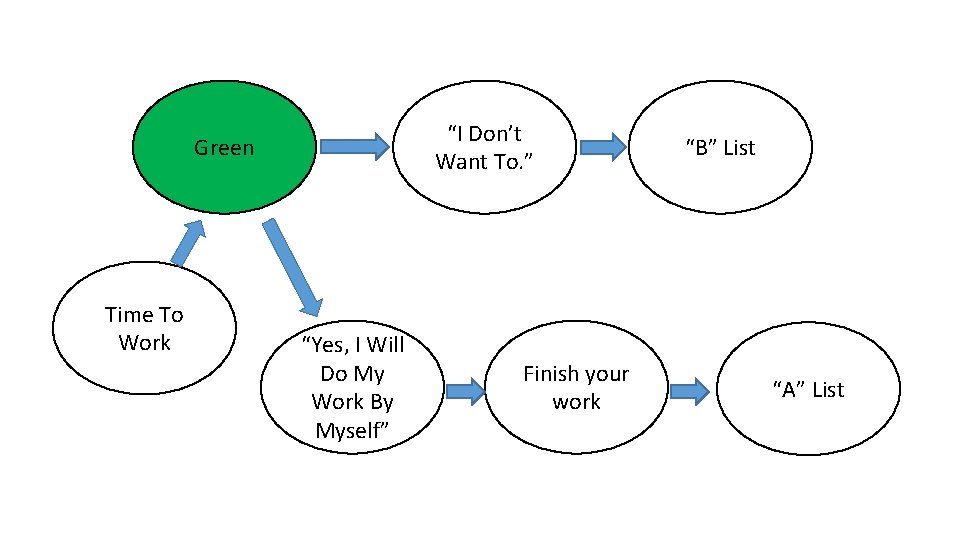
R 2 R-Gen Ed Phase 3 Introduce Functional Communication Training with Differential Reinforcement (A and B List) Signal FCT with Green
“I Don’t Want To. ” Green Time To Work “Yes, I Will Do My Work By Myself” Finish your work “B” List “A” List
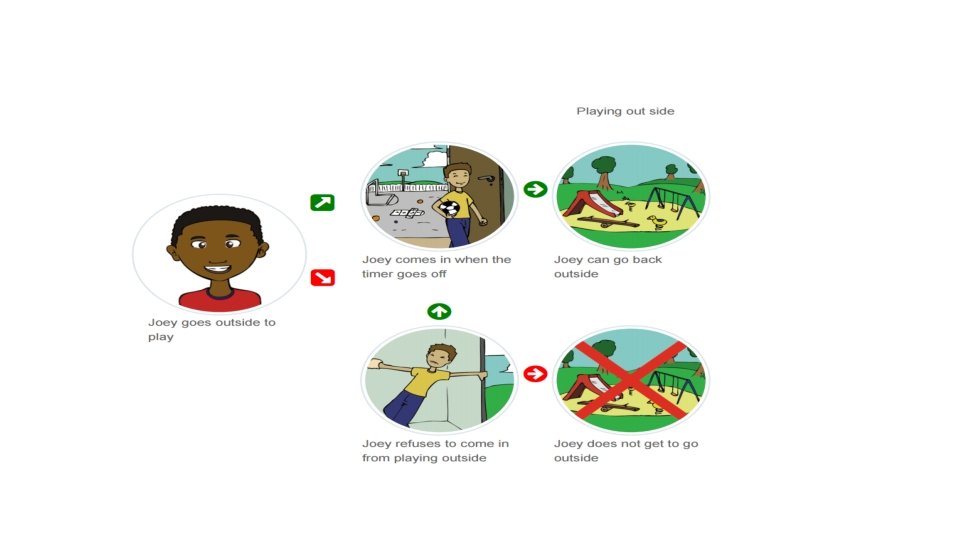
R 2 R Gen Ed Phase 3 • Start with a small modified task • Use an “As soon as” statement • Redirect with, “Let me know when you’re ready” • Compliance not related to work—Use a Behavior Map
If transitions are difficult, implement transition protocol • Student chooses an activity • Set a timer • Student transitions • Reinforced with the same or new activity if there was no problem behavior • If problem behavior occurs, activity is removed as a consequence.
Problem Behavior is Still Occurring? Must complete a Functional Behavior Assessment ***Also need consent***
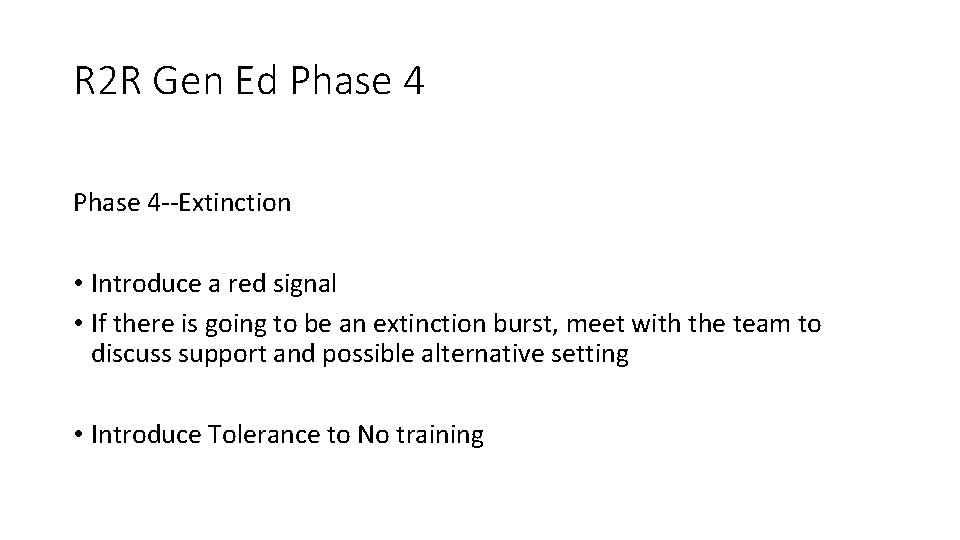
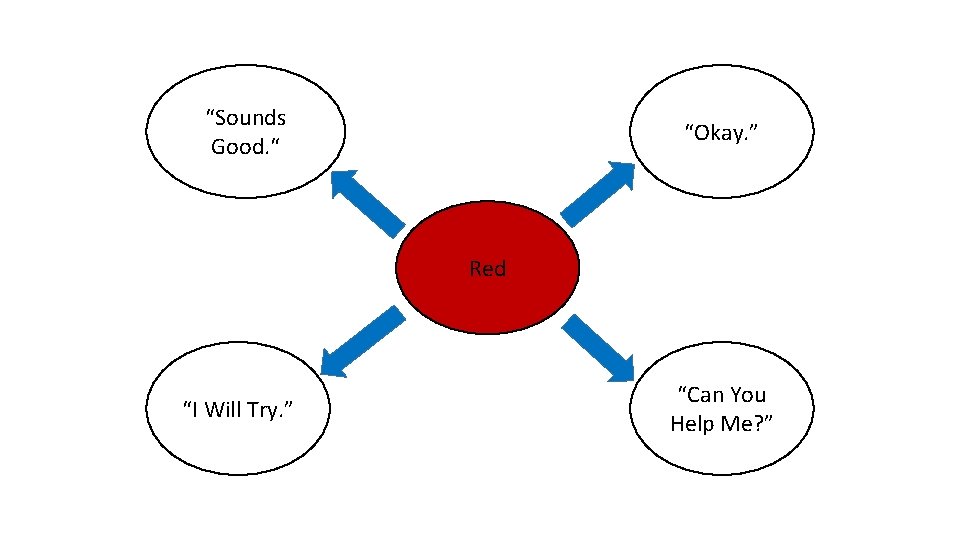
R 2 R Gen Ed Phase 4 --Extinction • Introduce a red signal • If there is going to be an extinction burst, meet with the team to discuss support and possible alternative setting • Introduce Tolerance to No training
“Sounds Good. “ “Okay. ” Red “I Will Try. ” “Can You Help Me? ”
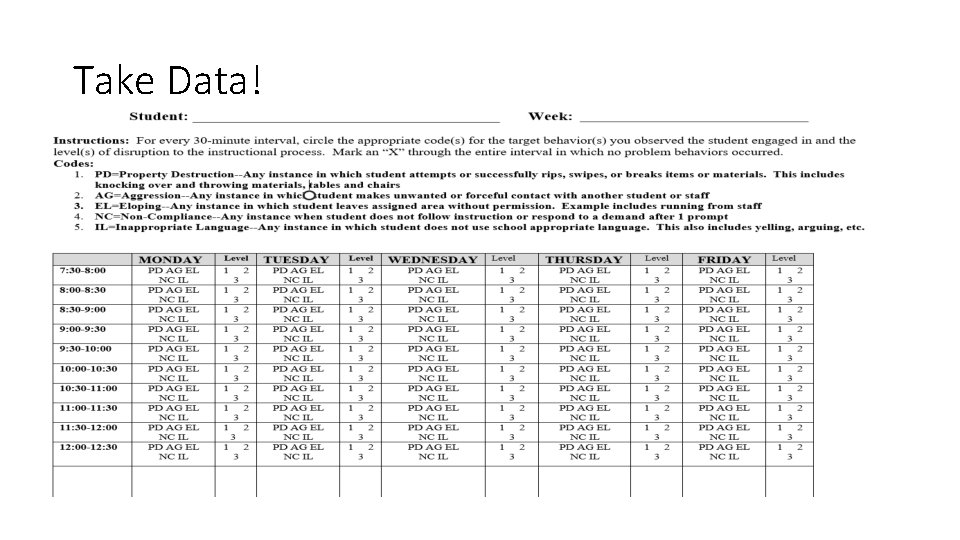
Take Data!
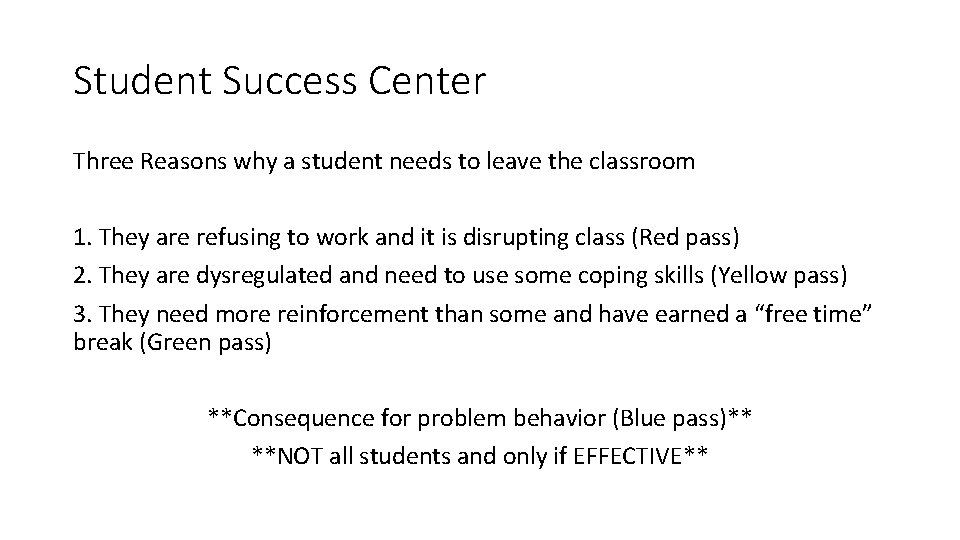
Student Success Center Three Reasons why a student needs to leave the classroom 1. They are refusing to work and it is disrupting class (Red pass) 2. They are dysregulated and need to use some coping skills (Yellow pass) 3. They need more reinforcement than some and have earned a “free time” break (Green pass) **Consequence for problem behavior (Blue pass)** **NOT all students and only if EFFECTIVE**
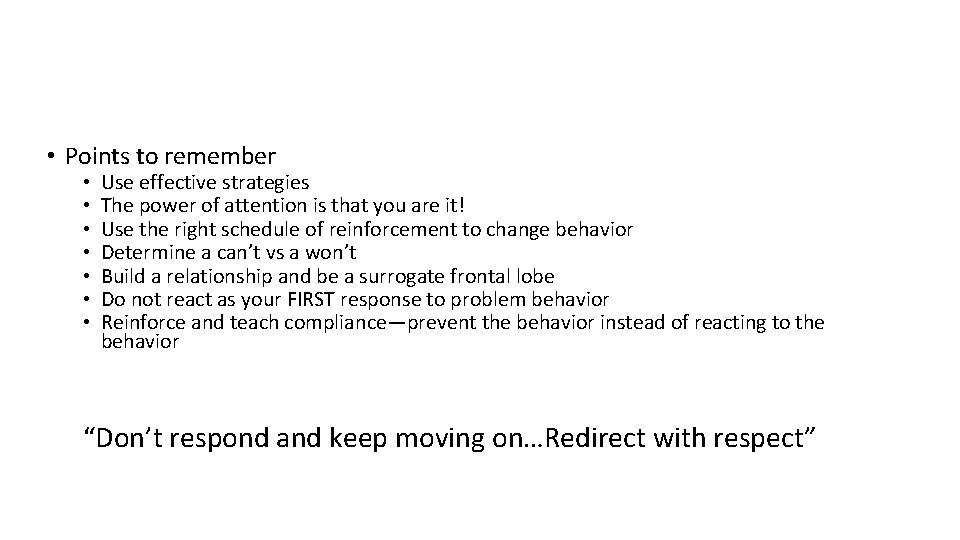
• Points to remember • • Use effective strategies The power of attention is that you are it! Use the right schedule of reinforcement to change behavior Determine a can’t vs a won’t Build a relationship and be a surrogate frontal lobe Do not react as your FIRST response to problem behavior Reinforce and teach compliance—prevent the behavior instead of reacting to the behavior “Don’t respond and keep moving on…Redirect with respect”
Neurodiversity is a Civil Right! We must accept all people who’s brains work differently!