
RADPEER Hani Abujudeh MD MBA FSIR Associate Professor

RADPEER™ Hani Abujudeh MD, MBA, FSIR Associate Professor of Radiology Massachusetts General Hospital Harvard Medical school
Disclosures Book Royalties
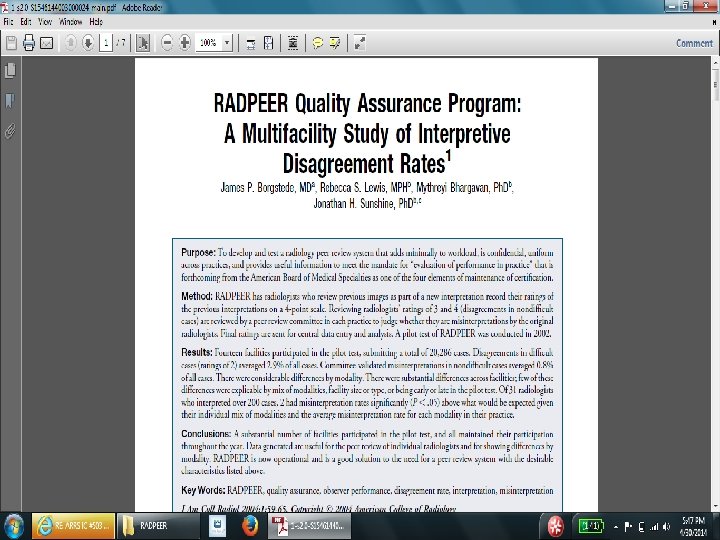
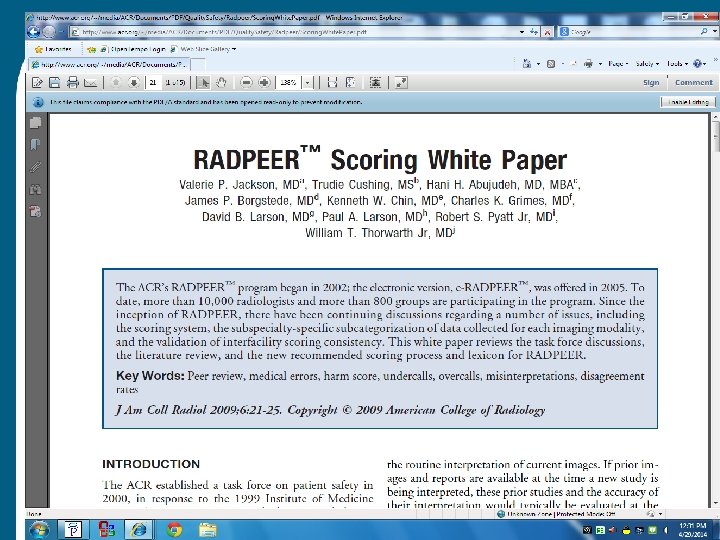
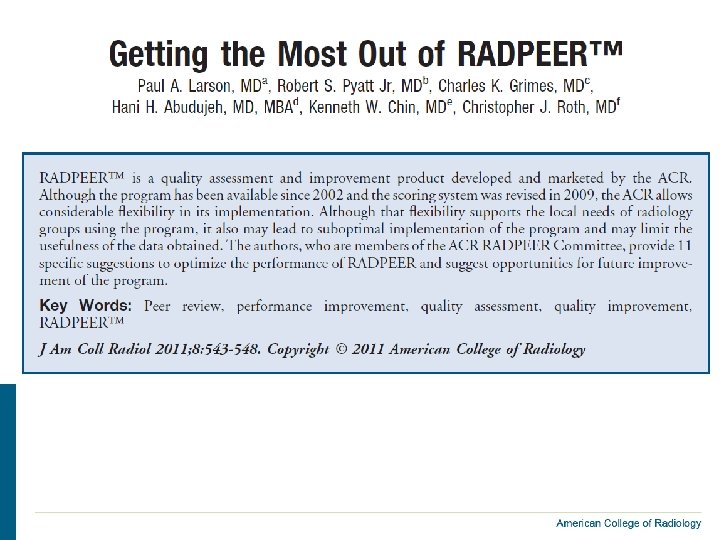
RADPEER™ is a simple tool developed to allow physicians to do peer review during the course of a day’s work. When a new study is interpreted with an prior study for comparison, a peer review of the accuracy of the interpretation of the previous examination occurs.
RADPEER™ § Piloted RADPEER™ in 2001 § Offered to members in 2002 § e RADPEER ™ developed in 2005 § Scoring changes implemented in 2009 4
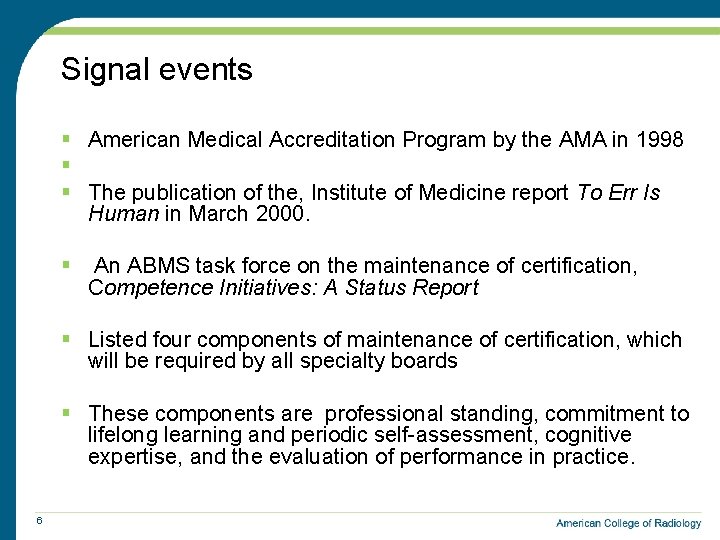
Signal events § American Medical Accreditation Program by the AMA in 1998 § § The publication of the, Institute of Medicine report To Err Is Human in March 2000. § An ABMS task force on the maintenance of certification, Competence Initiatives: A Status Report § Listed four components of maintenance of certification, which will be required by all specialty boards § These components are professional standing, commitment to lifelong learning and periodic self-assessment, cognitive expertise, and the evaluation of performance in practice. 6
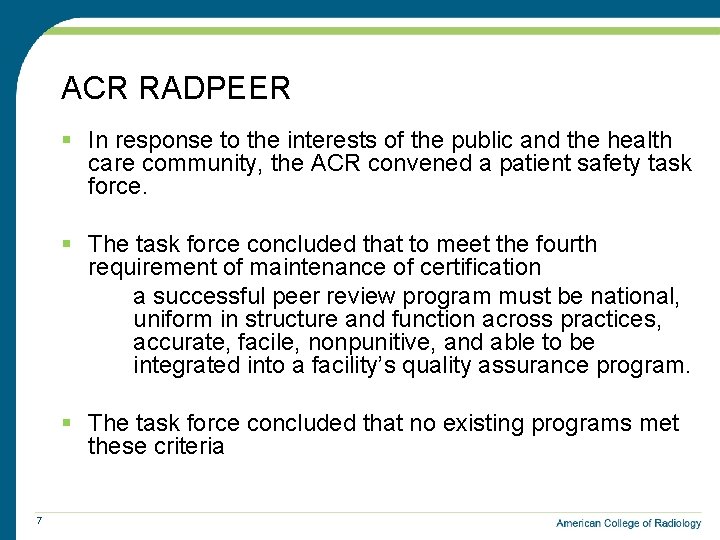
ACR RADPEER § In response to the interests of the public and the health care community, the ACR convened a patient safety task force. § The task force concluded that to meet the fourth requirement of maintenance of certification a successful peer review program must be national, uniform in structure and function across practices, accurate, facile, nonpunitive, and able to be integrated into a facility’s quality assurance program. § The task force concluded that no existing programs met these criteria 7
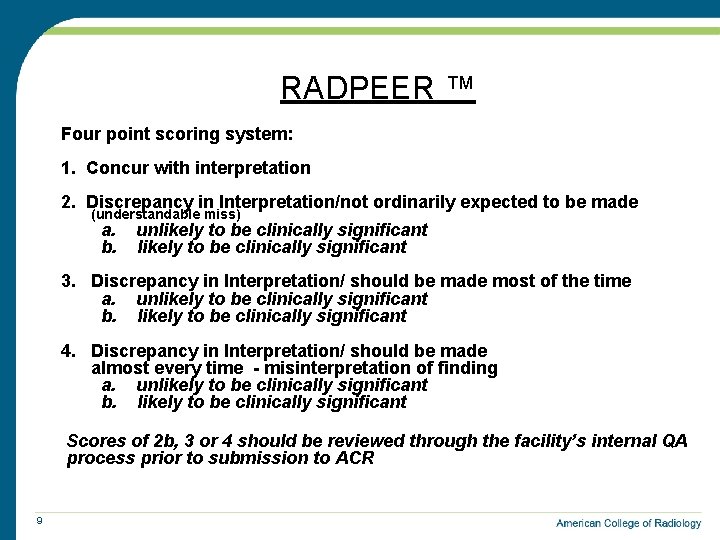
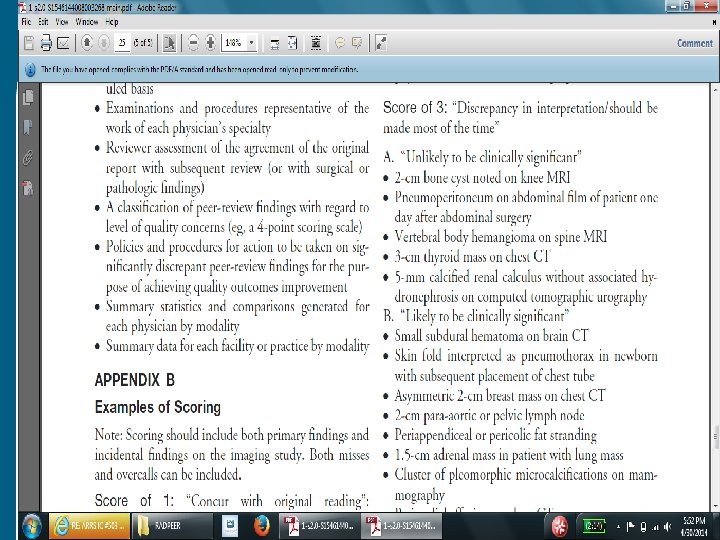
RADPEER ™ Four point scoring system: 1. Concur with interpretation 2. Discrepancy in Interpretation/not ordinarily expected to be made (understandable miss) a. b. unlikely to be clinically significant 3. Discrepancy in Interpretation/ should be made most of the time a. unlikely to be clinically significant b. likely to be clinically significant 4. Discrepancy in Interpretation/ should be made almost every time - misinterpretation of finding a. unlikely to be clinically significant b. likely to be clinically significant Scores of 2 b, 3 or 4 should be reviewed through the facility’s internal QA process prior to submission to ACR 9
10
12
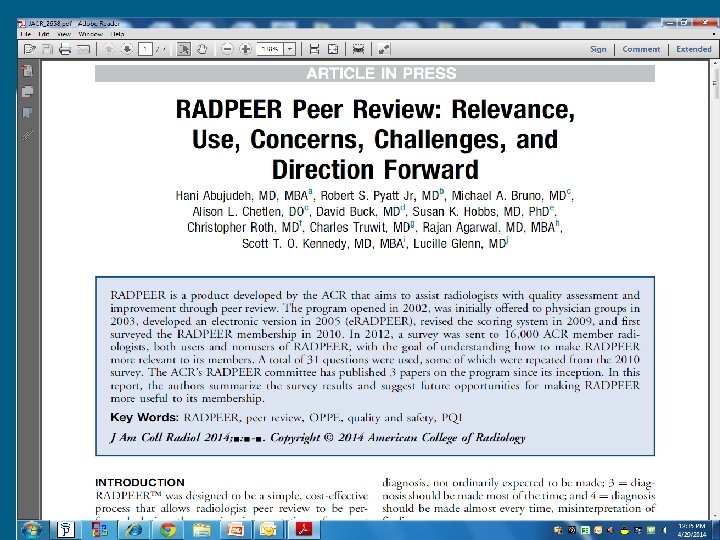
§ The median number of cases reviewed in RADPEER is 776 each year, which translates into 3 to 4 cases reviewed per working day. § The RADPEER system is not designed to be a sole OPPE measure, but it can be incorporated into such programs. The committee discourages the use of scores as a means of competency assessment and encourages the maintenance of the nonpunitive nature and anonymity in scoring. § 14 RADPEER could be expanded and used as a means to collect data on other aspects of quality and safety in radiology.
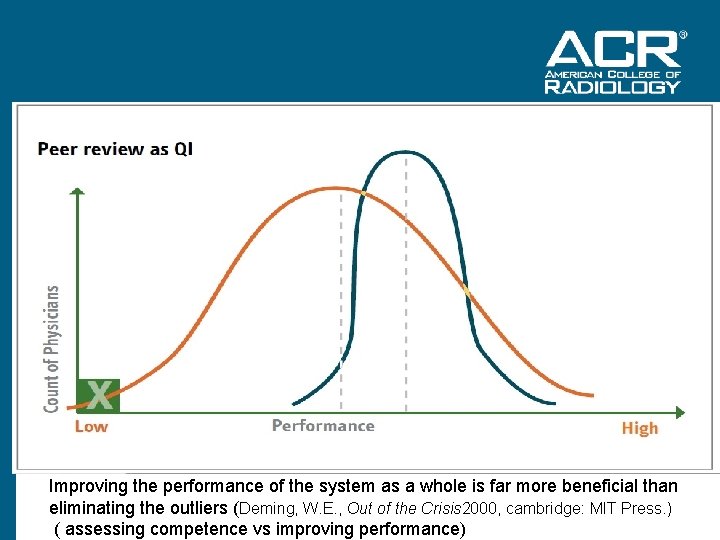
Improving the performance of the system as a whole is far more beneficial than eliminating the outliers (Deming, W. E. , Out of the Crisis 2000, cambridge: MIT Press. ) ( assessing competence vs improving performance)
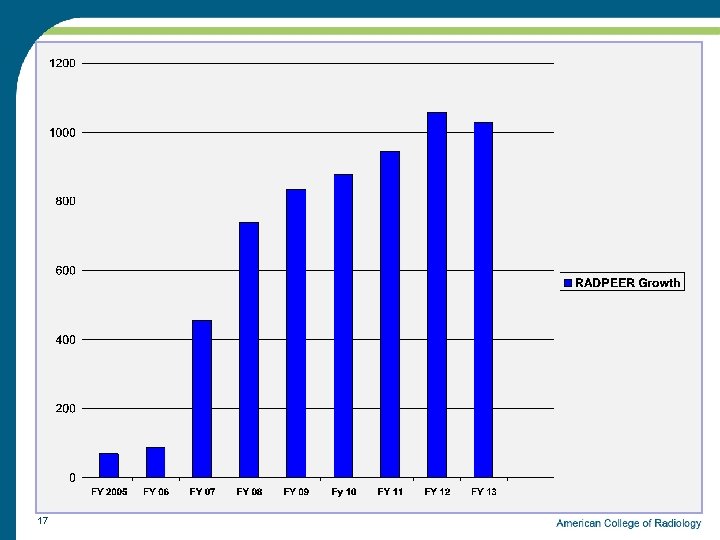
RADPEER™ § April 2014 § Over 1, 170 participating groups § Over 17, 500 physicians 16
17

RADPEER™ 18
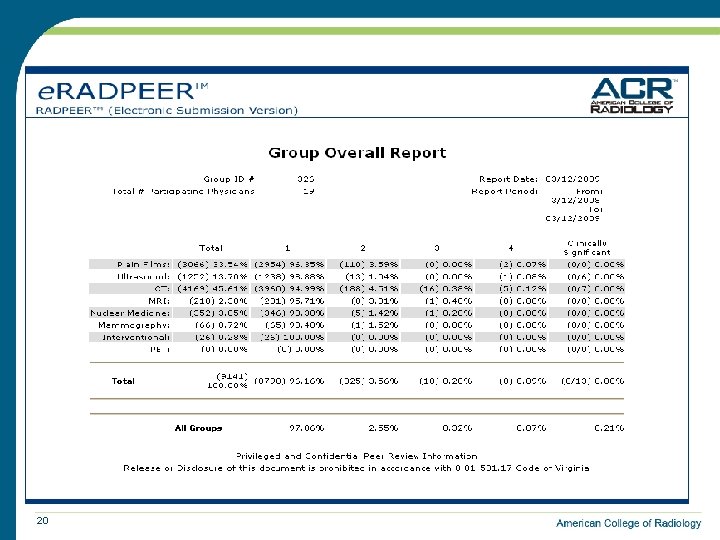
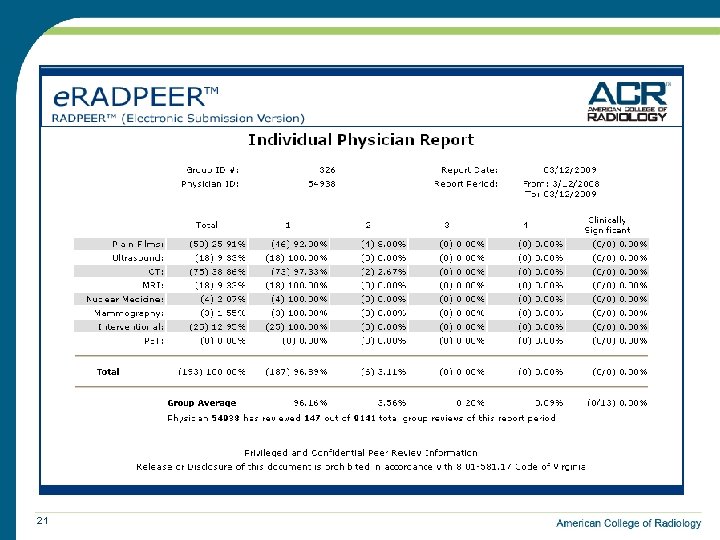
RADPEER™ § Data submitted to ACR via website § Reports for individuals and group available electronically § ABR MOC Reports 19
20
21
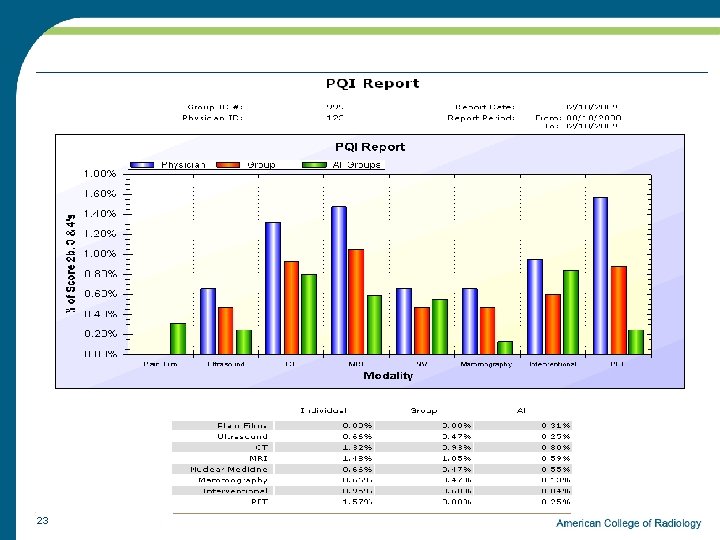
RADPEER™ as a PQI Project § Radiologists can select RADPEER™ to be used as one of their projects for Maintenance of Certification for the ABR (American Board of Radiology) § The MOC process includes: ü ü 22 Evidence of professional standing (license) Lifelong learning and self-assessment (SAMs, CME) Cognitive expertise (exam) Practice quality improvement (PQI project such as RADPEER™)
23
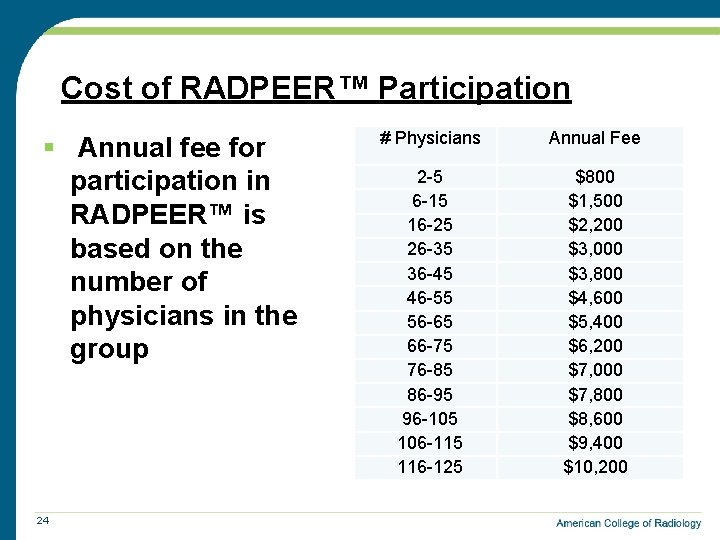
Cost of RADPEER™ Participation § Annual fee for participation in RADPEER™ is based on the number of physicians in the group 24 # Physicians Annual Fee 2 -5 6 -15 16 -25 26 -35 36 -45 46 -55 56 -65 66 -75 76 -85 86 -95 96 -105 106 -115 116 -125 $800 $1, 500 $2, 200 $3, 000 $3, 800 $4, 600 $5, 400 $6, 200 $7, 000 $7, 800 $8, 600 $9, 400 $10, 200
https: //radpeer. acr. org habujudeh@partners. org 25
- Slides: 25