
Radon Navajo Nation Environmental Protection Agency Air Toxics

- Slides: 12
Radon Navajo Nation Environmental Protection Agency Air & Toxics Department/Radon Program
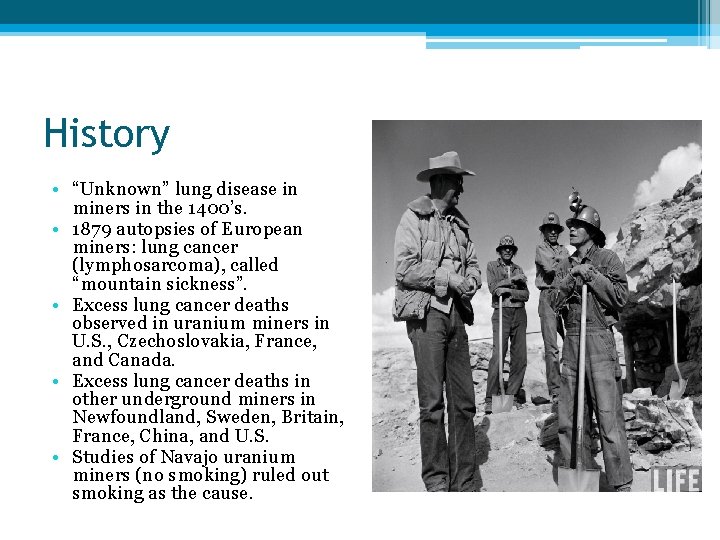
History • “Unknown” lung disease in miners in the 1400’s. • 1879 autopsies of European miners: lung cancer (lymphosarcoma), called “mountain sickness”. • Excess lung cancer deaths observed in uranium miners in U. S. , Czechoslovakia, France, and Canada. • Excess lung cancer deaths in other underground miners in Newfoundland, Sweden, Britain, France, China, and U. S. • Studies of Navajo uranium miners (no smoking) ruled out smoking as the cause. • i
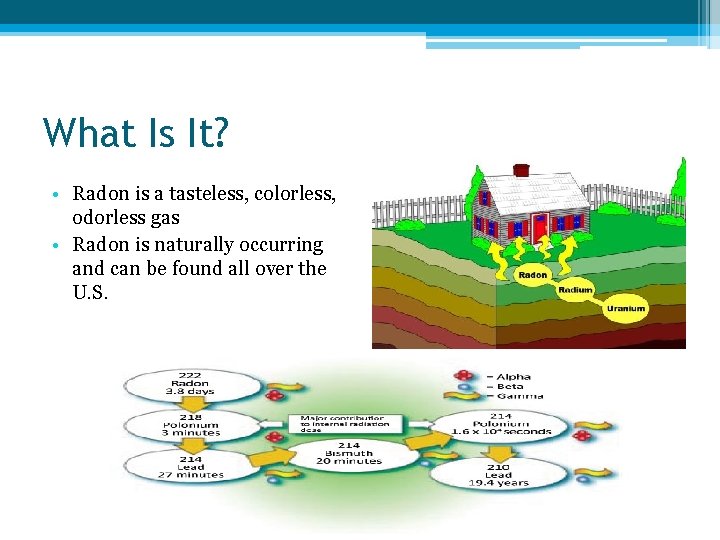
What Is It? • Radon is a tasteless, colorless, odorless gas • Radon is naturally occurring and can be found all over the U. S.
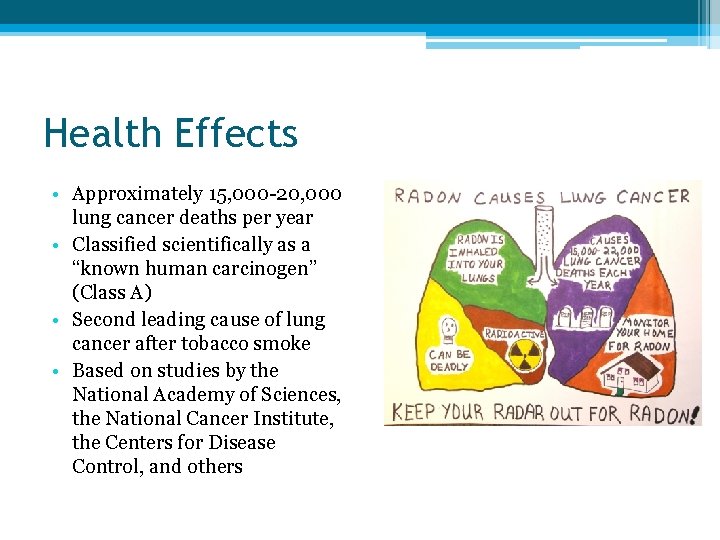
Health Effects • Approximately 15, 000 -20, 000 lung cancer deaths per year • Classified scientifically as a “known human carcinogen” (Class A) • Second leading cause of lung cancer after tobacco smoke • Based on studies by the National Academy of Sciences, the National Cancer Institute, the Centers for Disease Control, and others
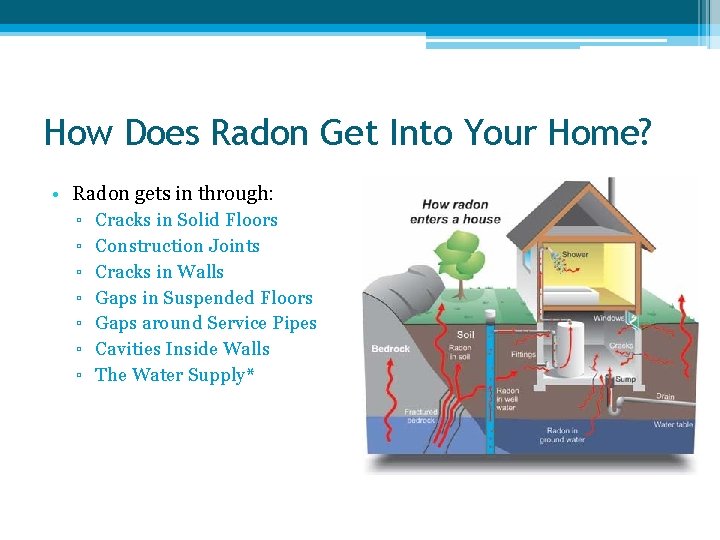
How Does Radon Get Into Your Home? • Radon gets in through: ▫ Cracks in Solid Floors ▫ Construction Joints ▫ Cracks in Walls ▫ Gaps in Suspended Floors ▫ Gaps around Service Pipes ▫ Cavities Inside Walls ▫ The Water Supply* • I
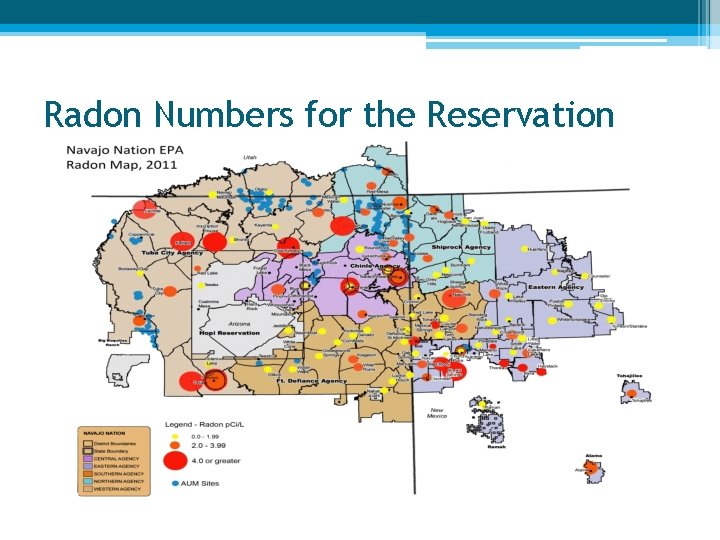
Radon Numbers for the Reservation
Radon Action Level The USEPA, Surgeon General, and Navajo Nation EPA Recommend Reducing Levels Below 4 p. Ci/L BUT, there is no ‘safe’ level –lower is better
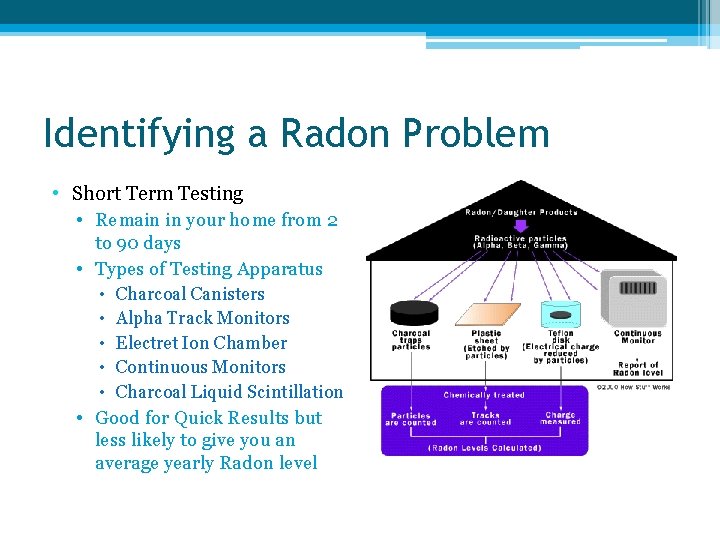
Identifying a Radon Problem • Short Term Testing • Remain in your home from 2 to 90 days • Types of Testing Apparatus • Charcoal Canisters • Alpha Track Monitors • Electret Ion Chamber • Continuous Monitors • Charcoal Liquid Scintillation • Good for Quick Results but less likely to give you an average yearly Radon level
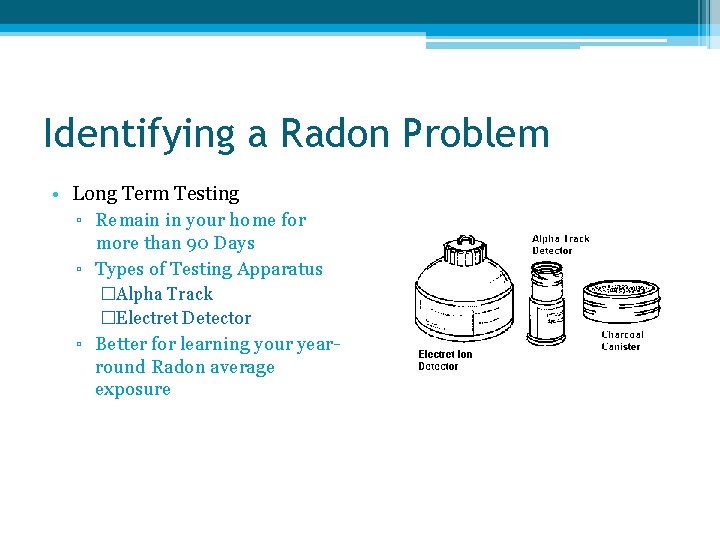
Identifying a Radon Problem • Long Term Testing ▫ Remain in your home for more than 90 Days ▫ Types of Testing Apparatus �Alpha Track �Electret Detector ▫ Better for learning your yearround Radon average exposure
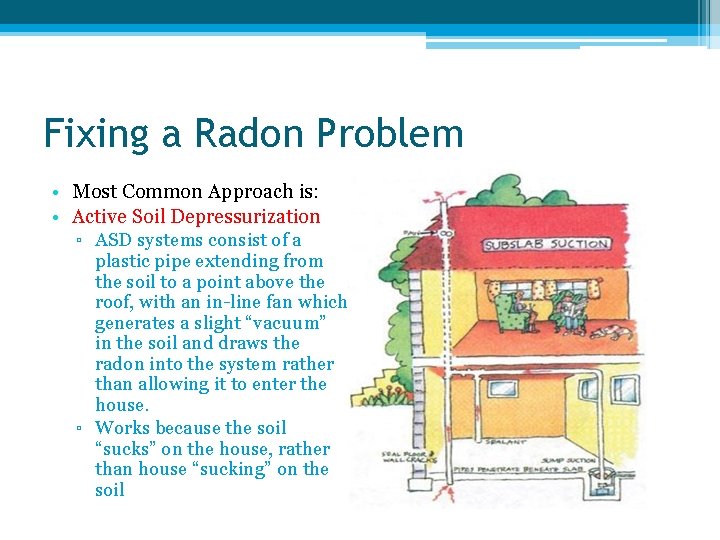
Fixing a Radon Problem • Most Common Approach is: • Active Soil Depressurization ▫ ASD systems consist of a plastic pipe extending from the soil to a point above the roof, with an in-line fan which generates a slight “vacuum” in the soil and draws the radon into the system rather than allowing it to enter the house. ▫ Works because the soil “sucks” on the house, rather than house “sucking” on the soil
EPA Recommendations • Test your home for Radon – It’s easy and inexpensive • Fix your home if your Radon level is 4 picocuries per liter (p. Ci/L) or higher • Radon levels less than 4 p. Ci/L still pose a risk, and in many cases it can be reduced
Contact Information • Who you gonna call? ? ? ▫ John Plummer ▫ Terron Chischilly ▫ Nolan Hoskie (928) 871 -7703/6790 (928) 871 -7863 n Ra d o