
Radiology Renal System Objectives Modality used for assessment
Radiology Renal System
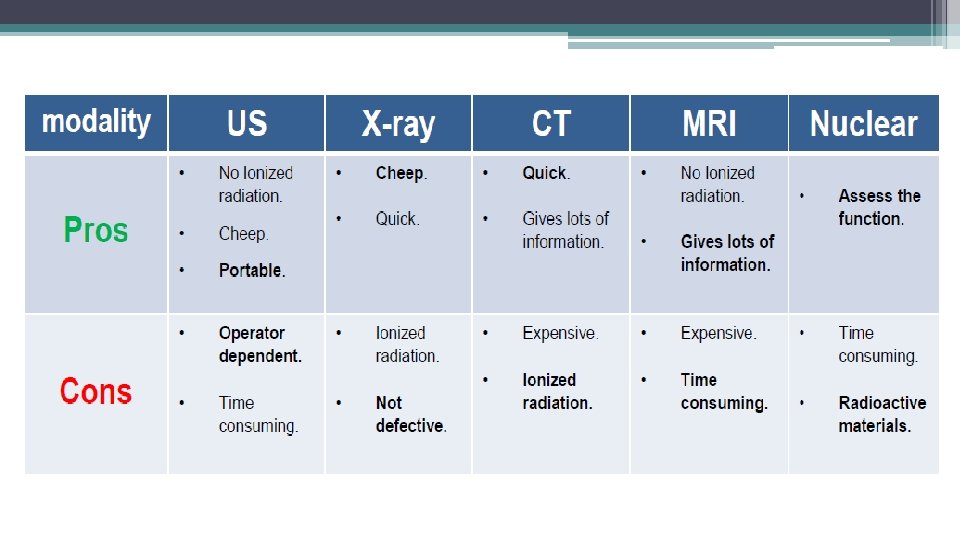
Objectives: • Modality used for assessment of the urinary system ▫ ▫ ▫ X-ray us Ct MRI Nuclear ▫ ▫ Kidney Ureter Bladder Urethra • Normal anatomy • Common pathologies
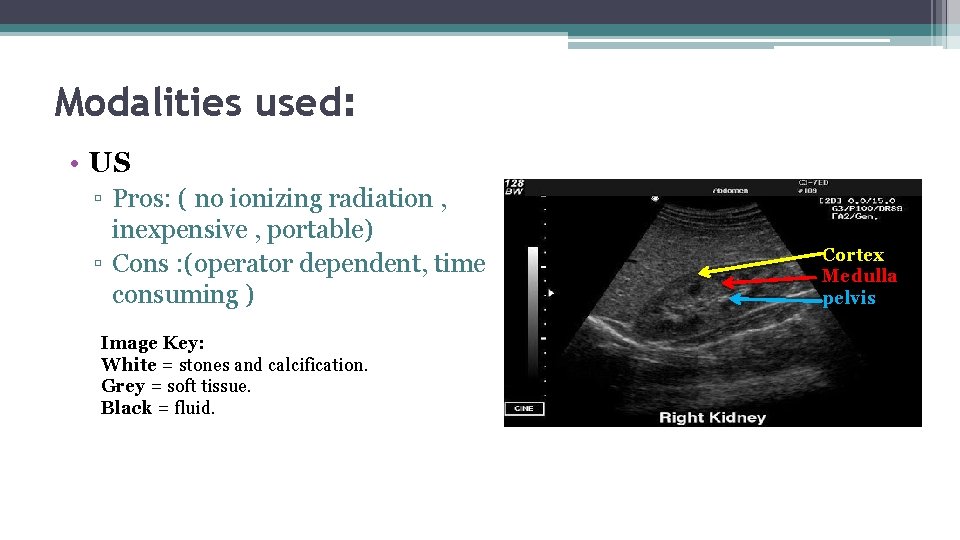
Modalities used: • US ▫ Pros: ( no ionizing radiation , inexpensive , portable) ▫ Cons : (operator dependent, time consuming ) Image Key: White = stones and calcification. Grey = soft tissue. Black = fluid. Cortex Medulla pelvis
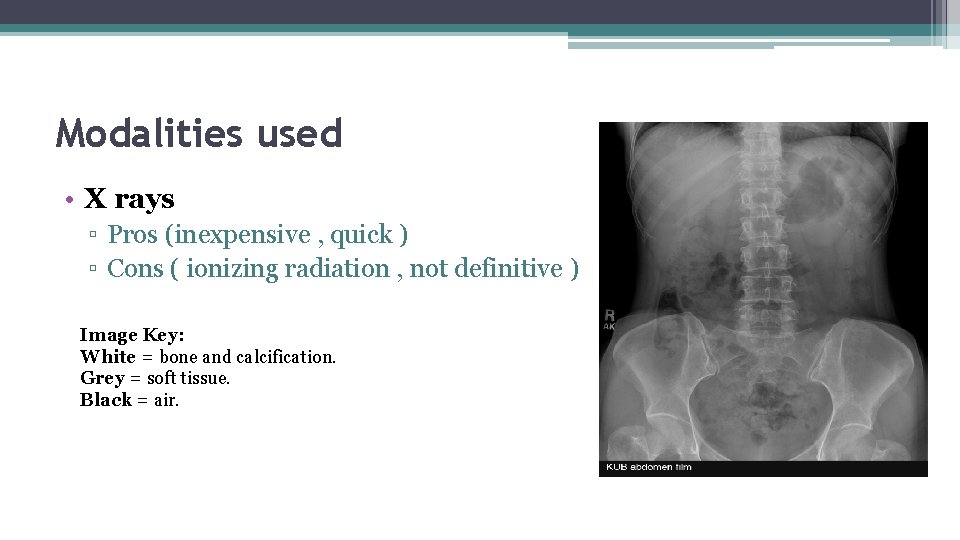
Modalities used • X rays ▫ Pros (inexpensive , quick ) ▫ Cons ( ionizing radiation , not definitive ) Image Key: White = bone and calcification. Grey = soft tissue. Black = air.

IVP
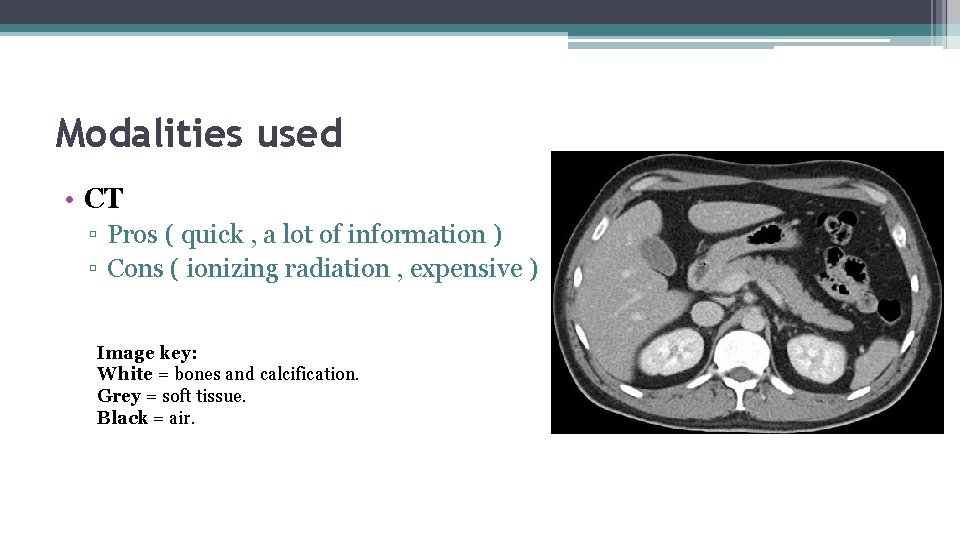
Modalities used • CT ▫ Pros ( quick , a lot of information ) ▫ Cons ( ionizing radiation , expensive ) Image key: White = bones and calcification. Grey = soft tissue. Black = air.
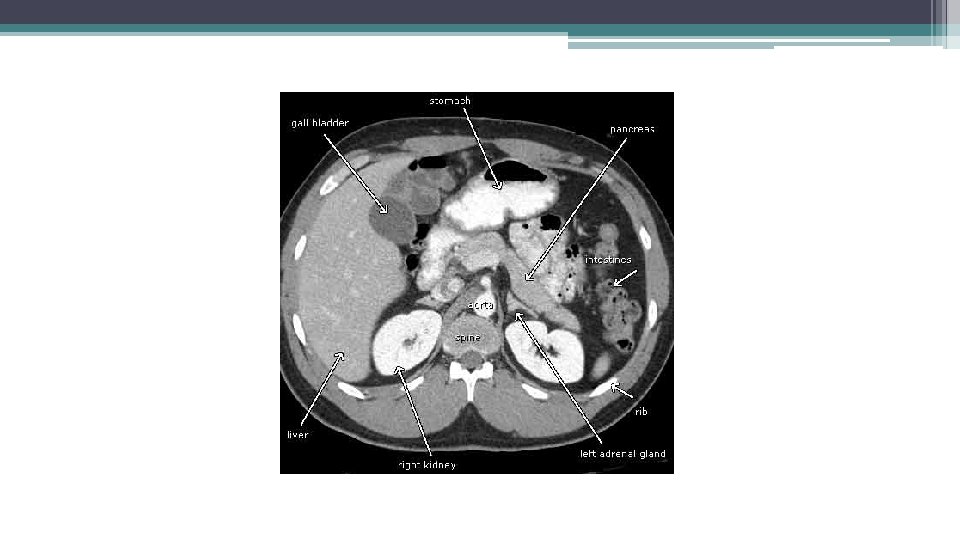
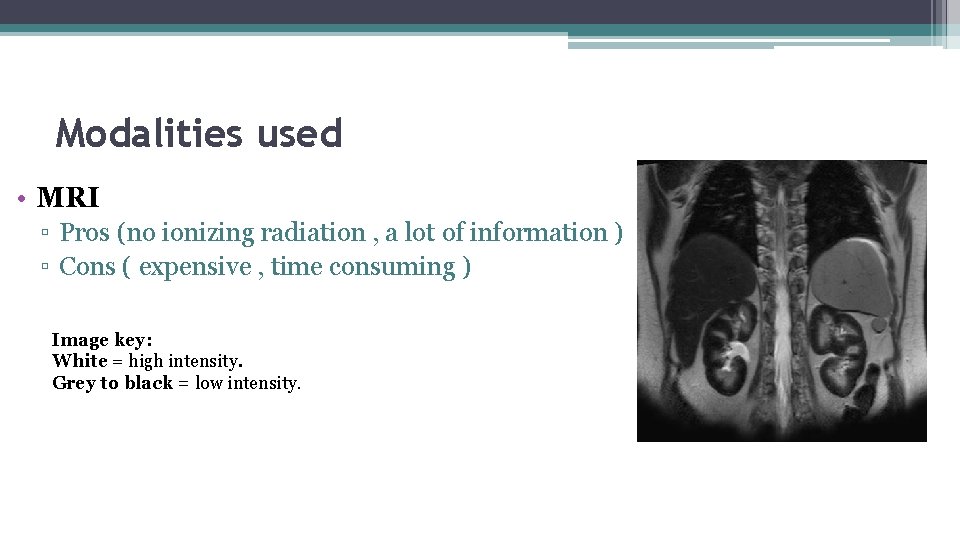
Modalities used • MRI ▫ Pros (no ionizing radiation , a lot of information ) ▫ Cons ( expensive , time consuming ) Image key: White = high intensity. Grey to black = low intensity.
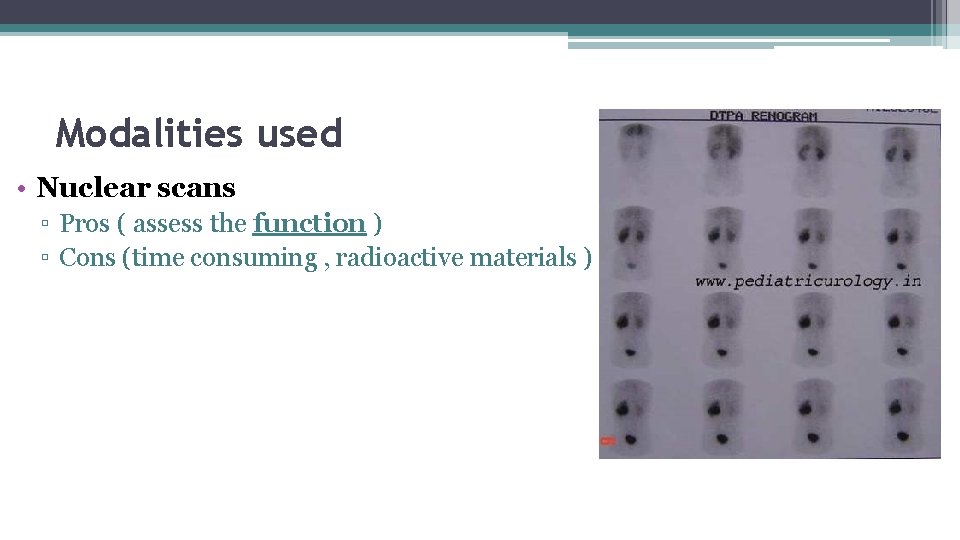
Modalities used • Nuclear scans ▫ Pros ( assess the function ) ▫ Cons (time consuming , radioactive materials )
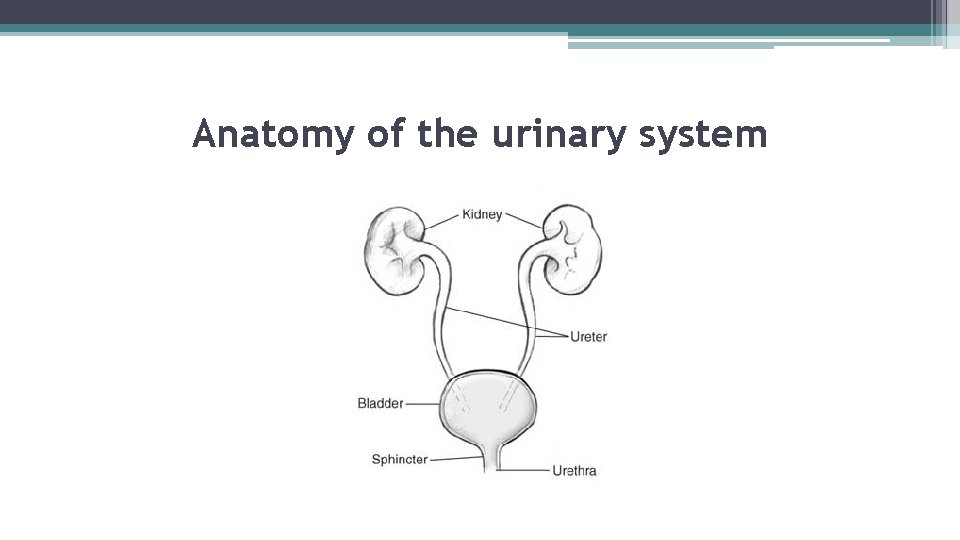
Anatomy of the urinary system
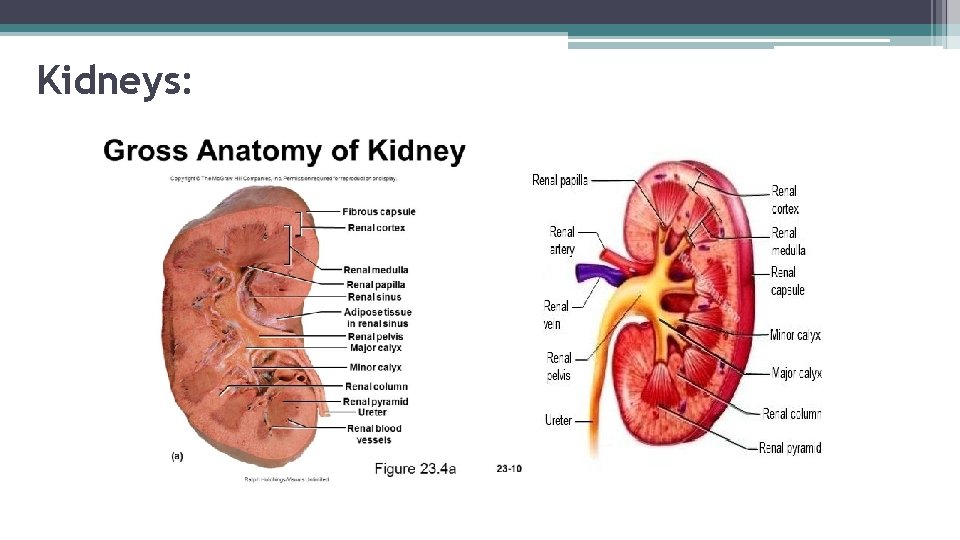
Kidneys:
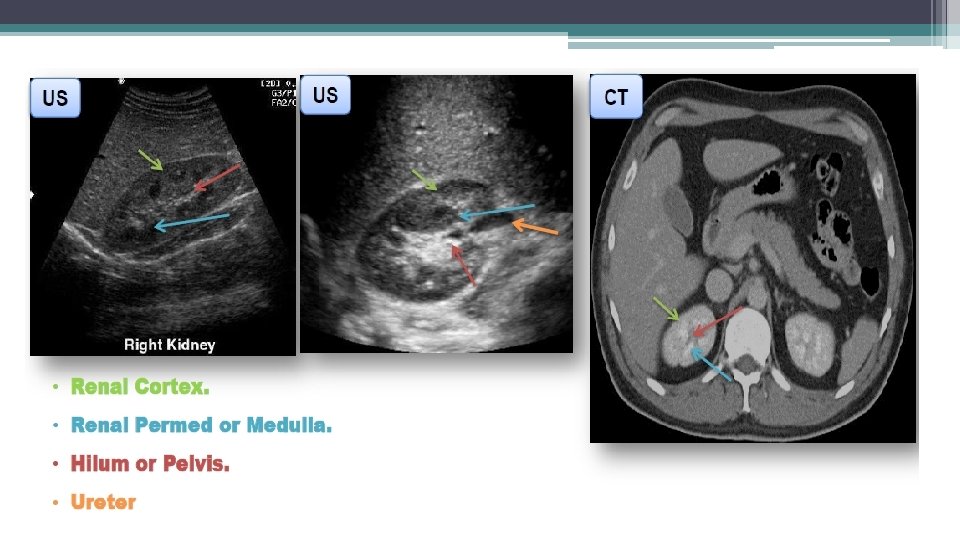
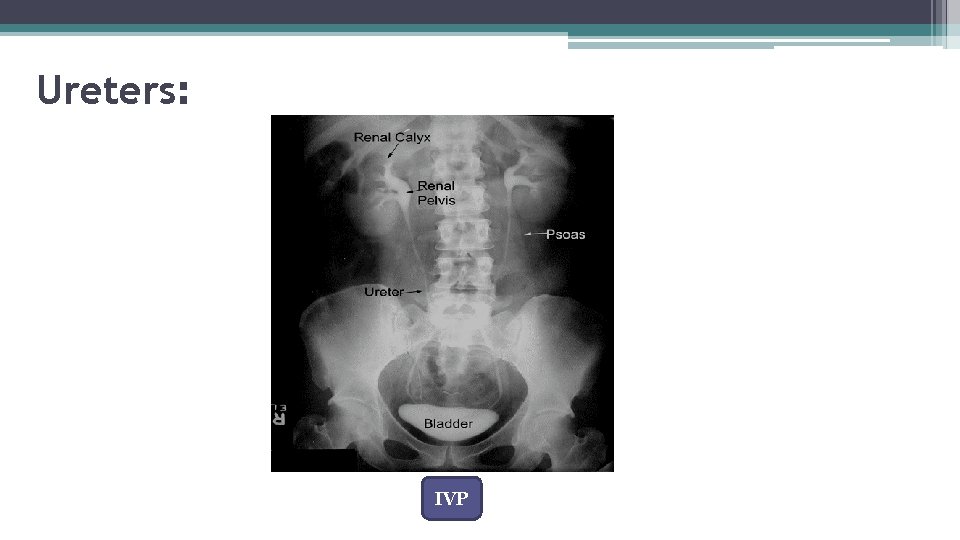
Ureters: IVP
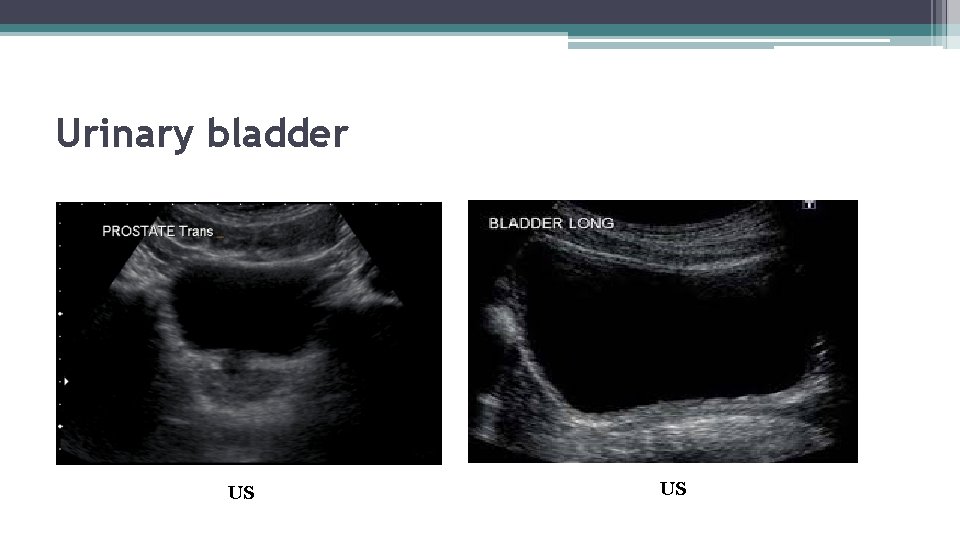
Urinary bladder US US
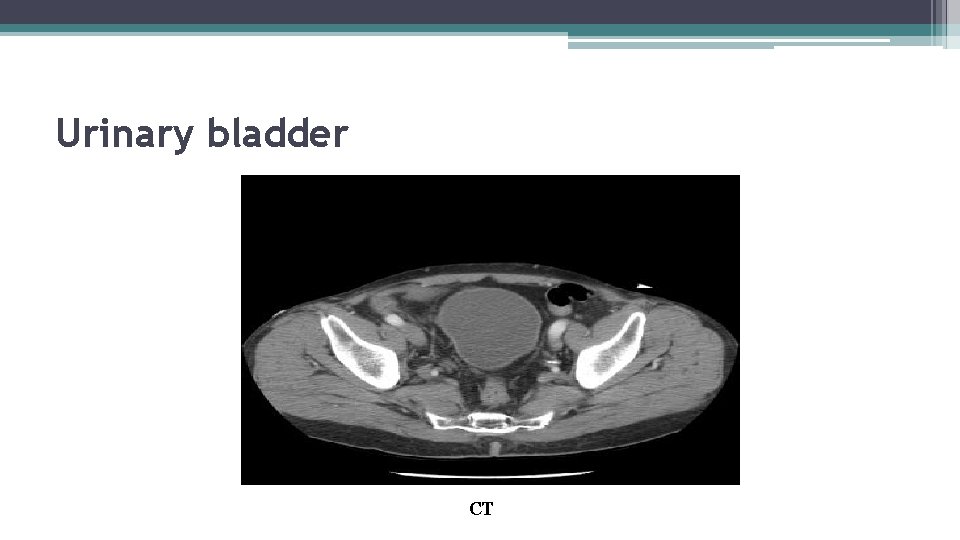
Urinary bladder CT
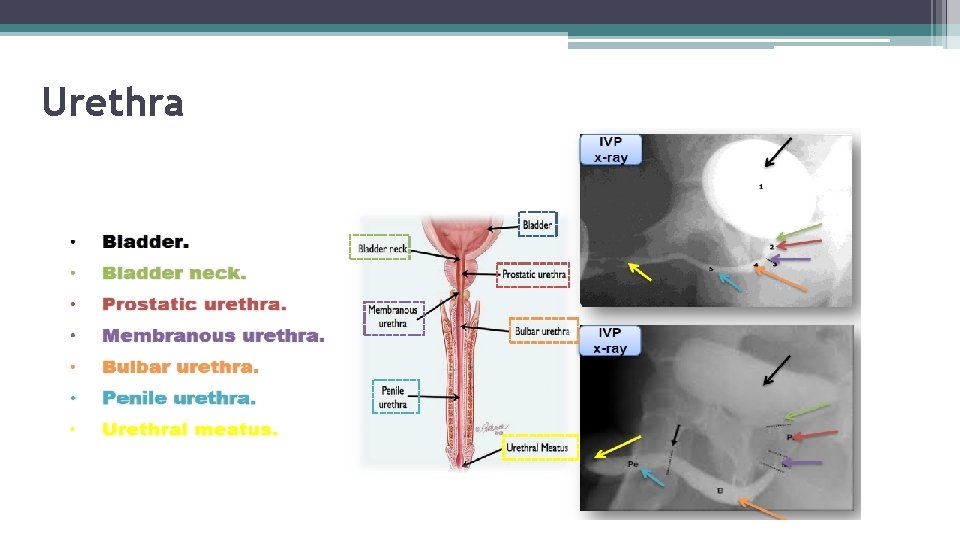
Urethra
Common Renal system Pathologies
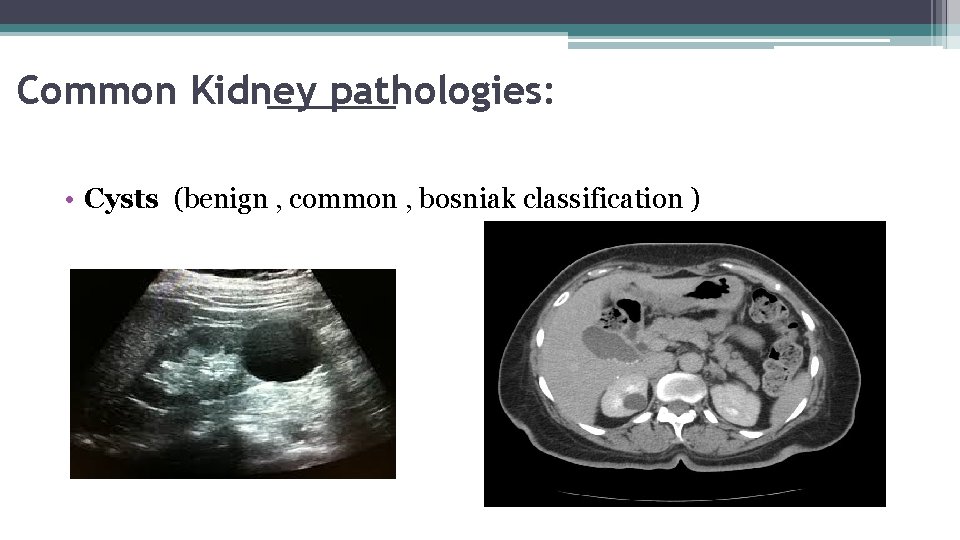
Common Kidney pathologies: • Cysts (benign , common , bosniak classification )
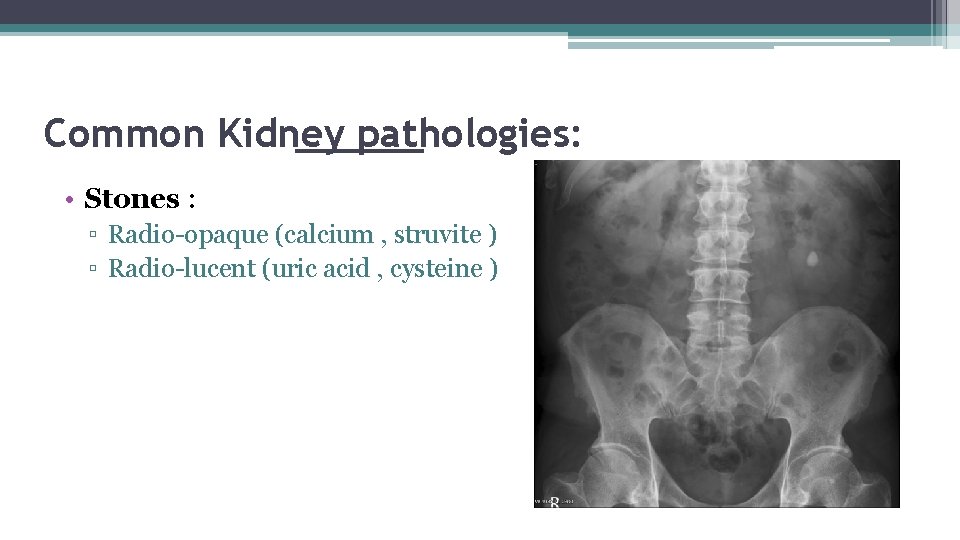
Common Kidney pathologies: • Stones : ▫ Radio-opaque (calcium , struvite ) ▫ Radio-lucent (uric acid , cysteine )
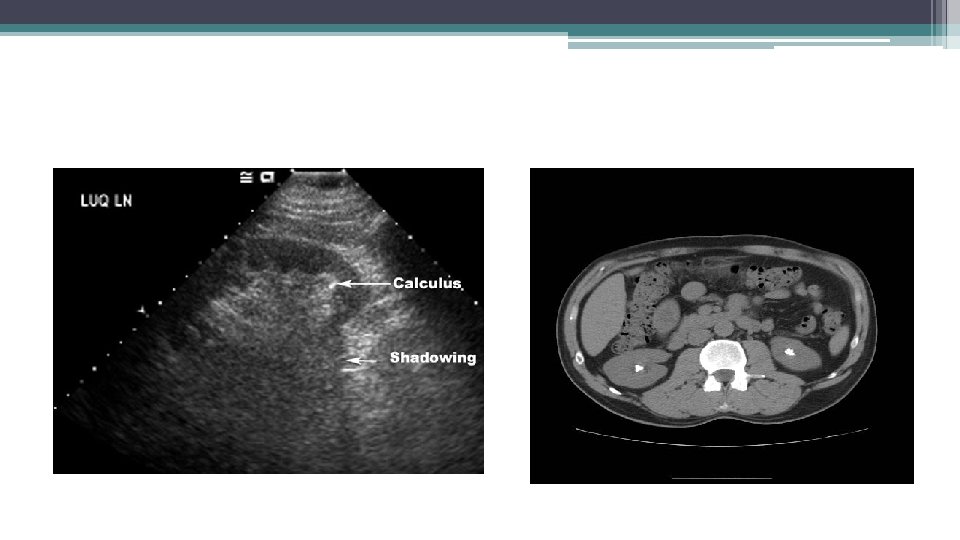
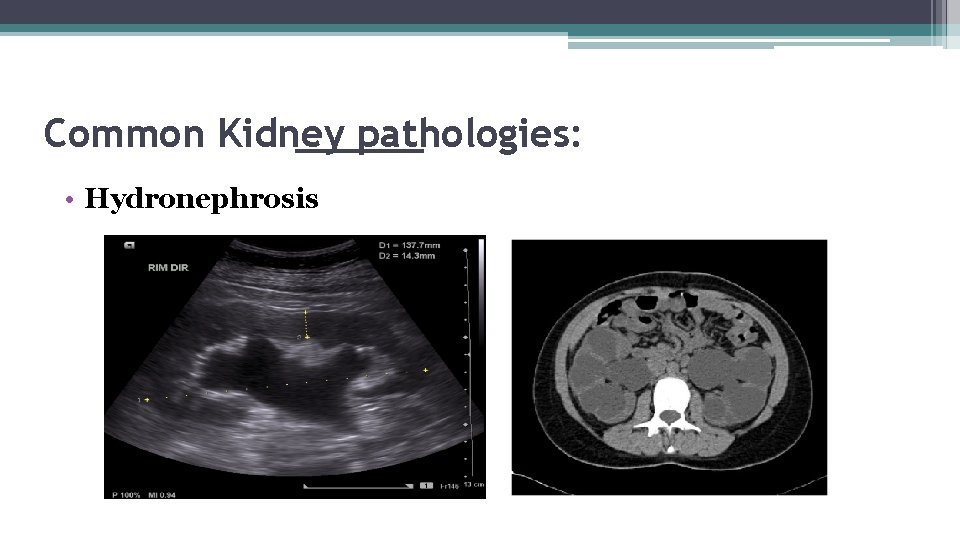
Common Kidney pathologies: • Hydronephrosis
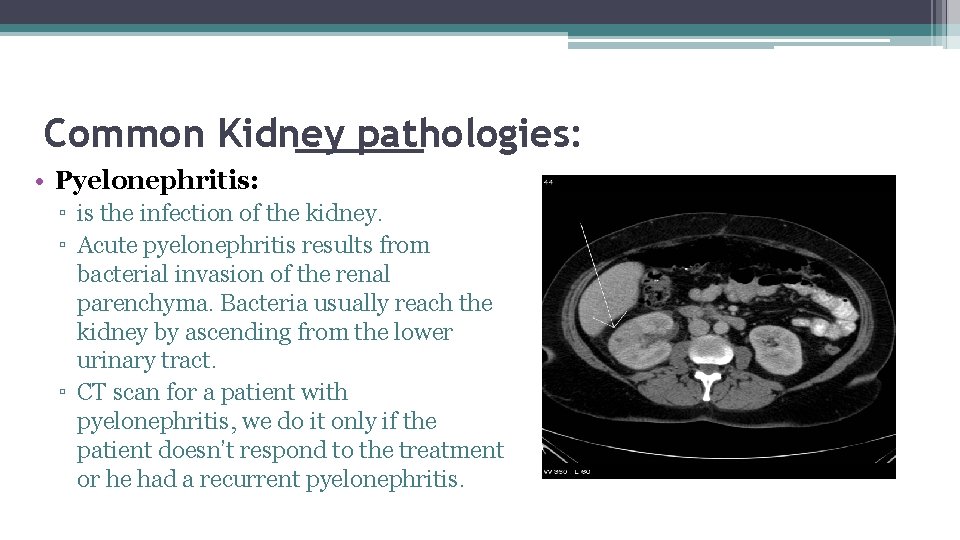
Common Kidney pathologies: • Pyelonephritis: ▫ is the infection of the kidney. ▫ Acute pyelonephritis results from bacterial invasion of the renal parenchyma. Bacteria usually reach the kidney by ascending from the lower urinary tract. ▫ CT scan for a patient with pyelonephritis, we do it only if the patient doesn’t respond to the treatment or he had a recurrent pyelonephritis.
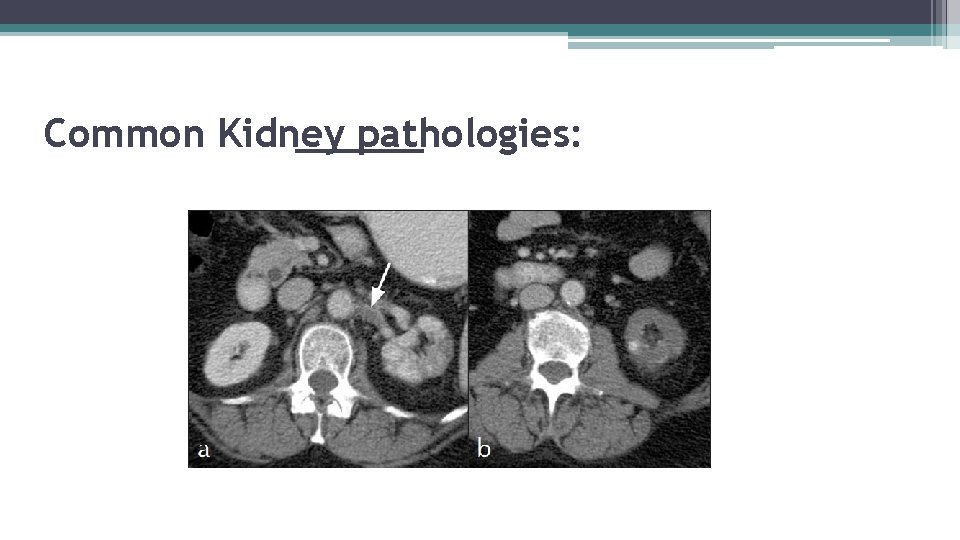
Common Kidney pathologies:
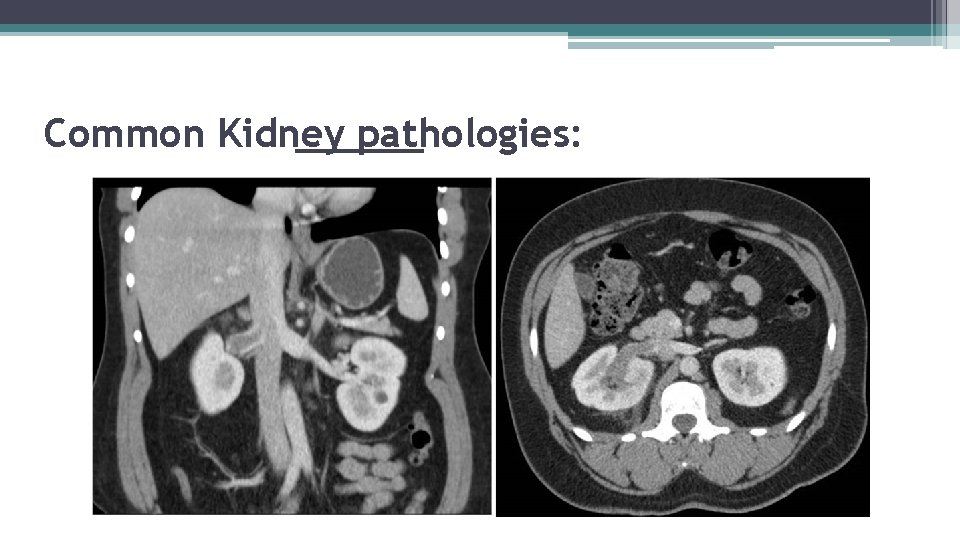
Common Kidney pathologies:
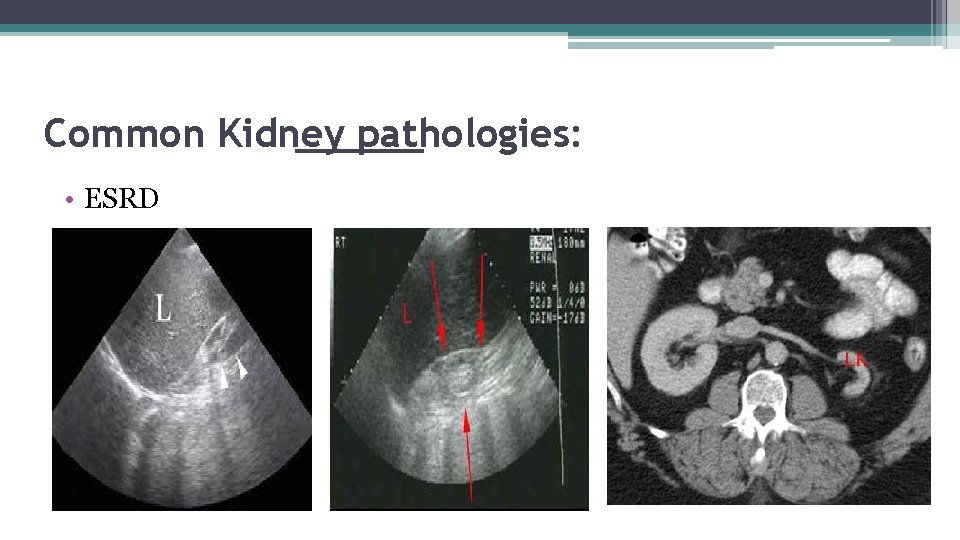
Common Kidney pathologies: • ESRD
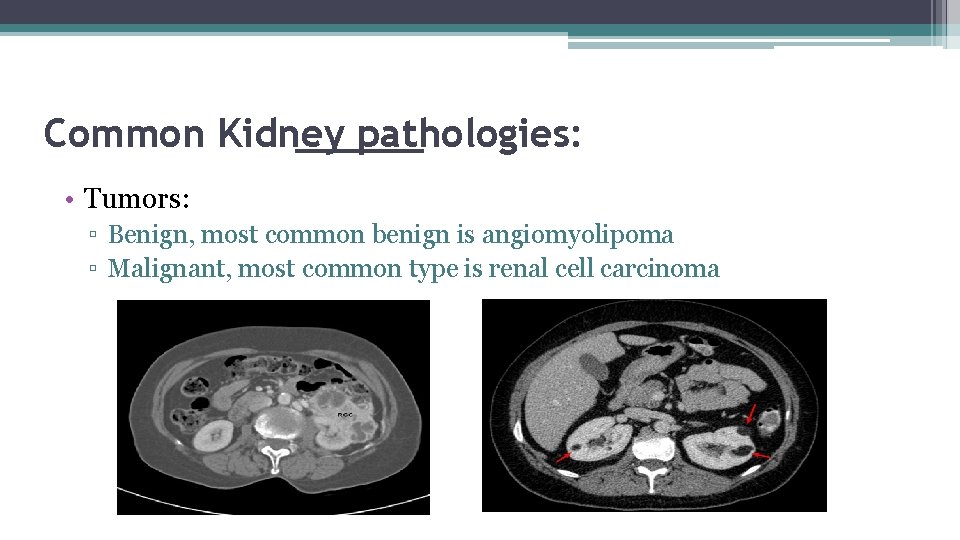
Common Kidney pathologies: • Tumors: ▫ Benign, most common benign is angiomyolipoma ▫ Malignant, most common type is renal cell carcinoma
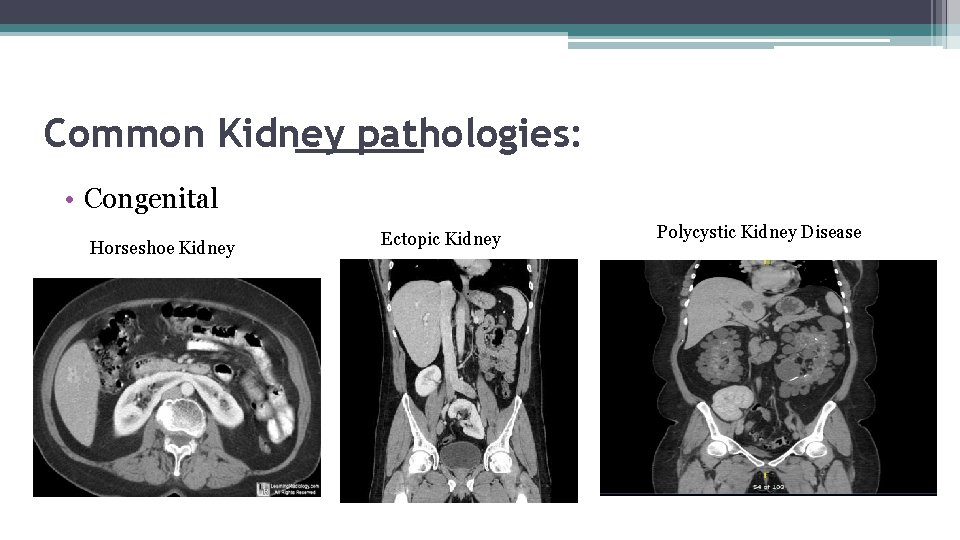
Common Kidney pathologies: • Congenital Horseshoe Kidney Ectopic Kidney Polycystic Kidney Disease
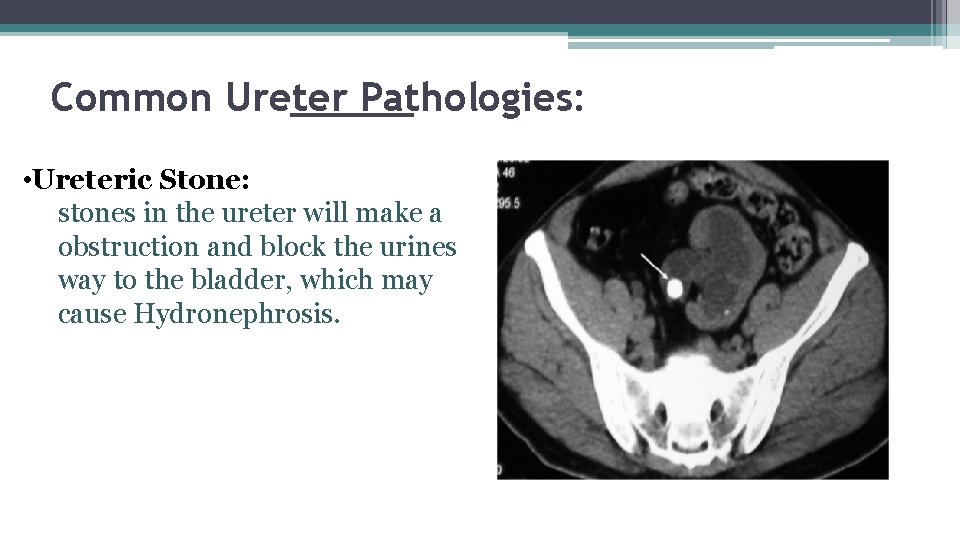
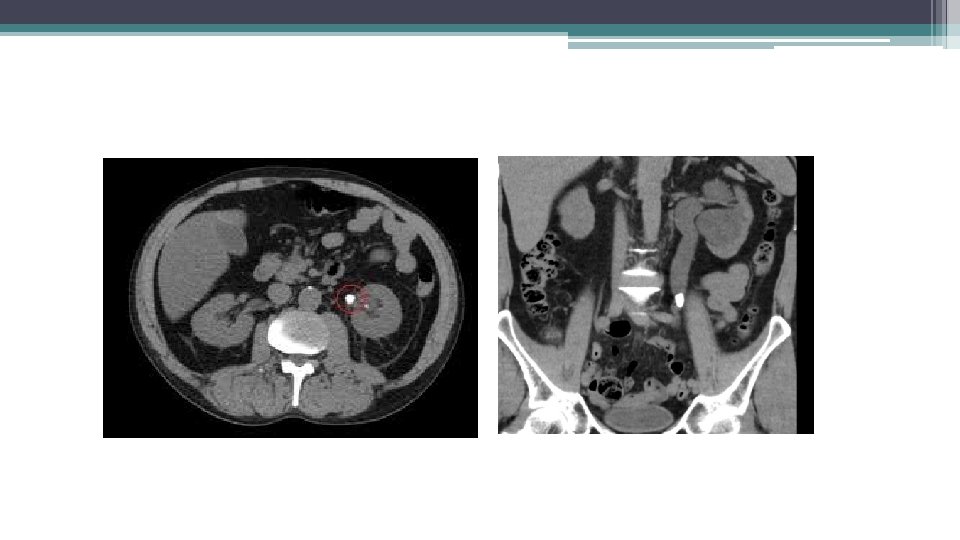
Common Ureter Pathologies: • Ureteric Stone: stones in the ureter will make a obstruction and block the urines way to the bladder, which may cause Hydronephrosis.
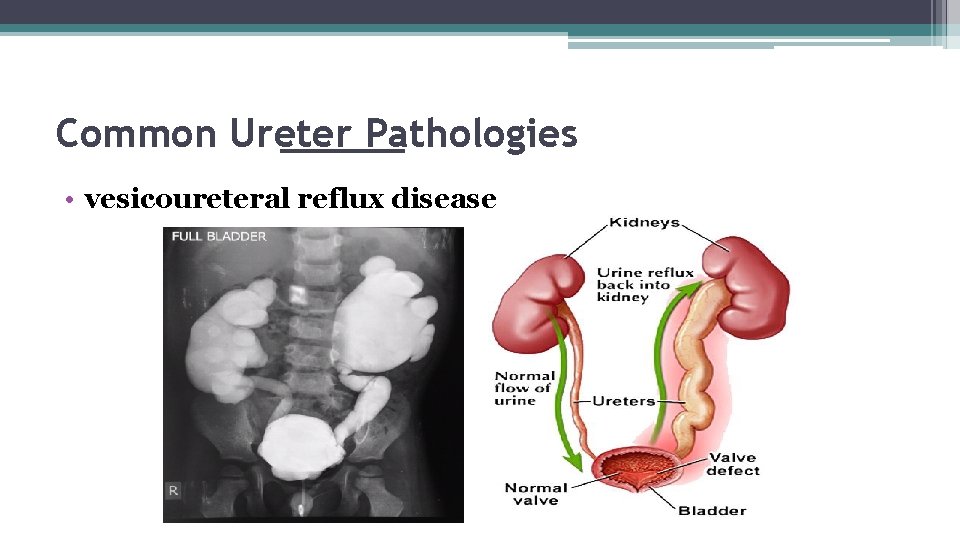
Common Ureter Pathologies • vesicoureteral reflux disease
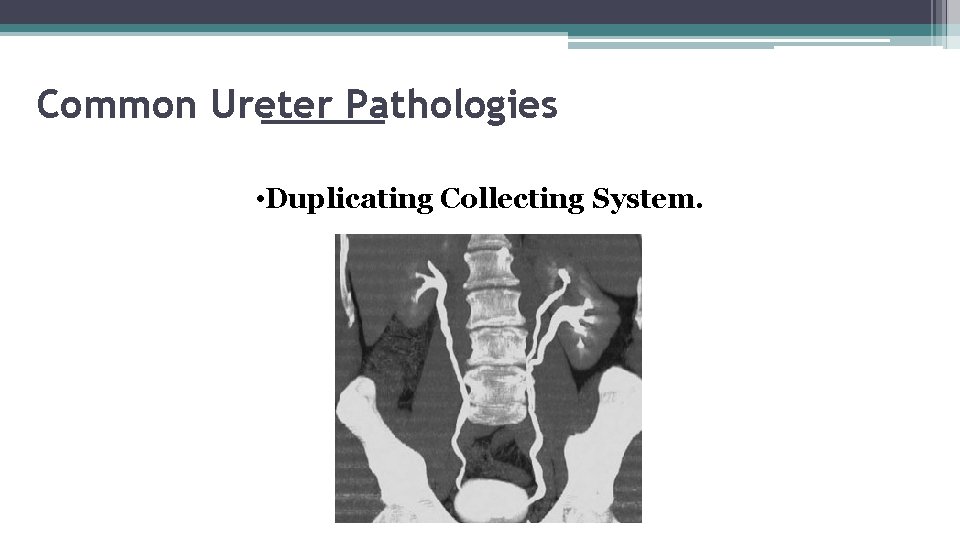
Common Ureter Pathologies • Duplicating Collecting System.

Common Urinary Bladder Pathologies
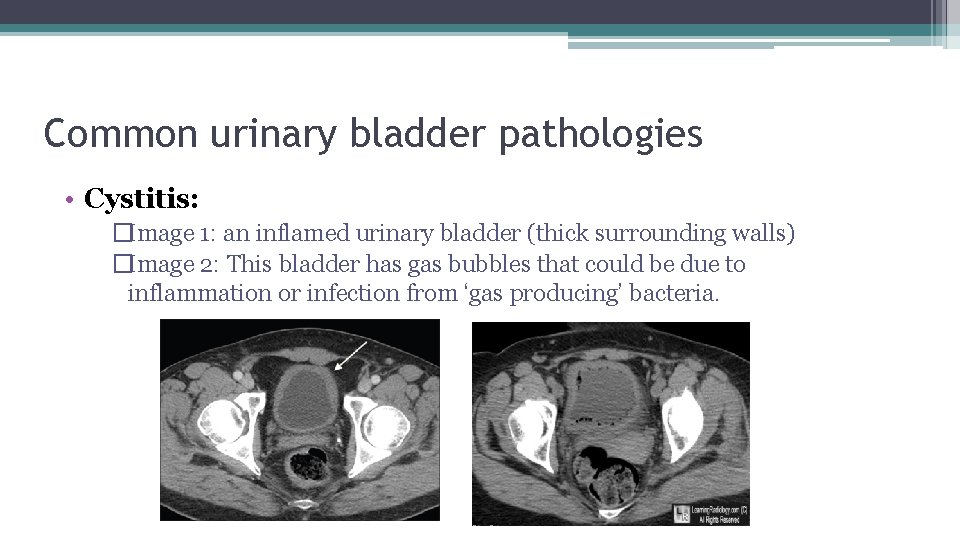
Common urinary bladder pathologies • Cystitis: �Image 1: an inflamed urinary bladder (thick surrounding walls) �Image 2: This bladder has gas bubbles that could be due to inflammation or infection from ‘gas producing’ bacteria.
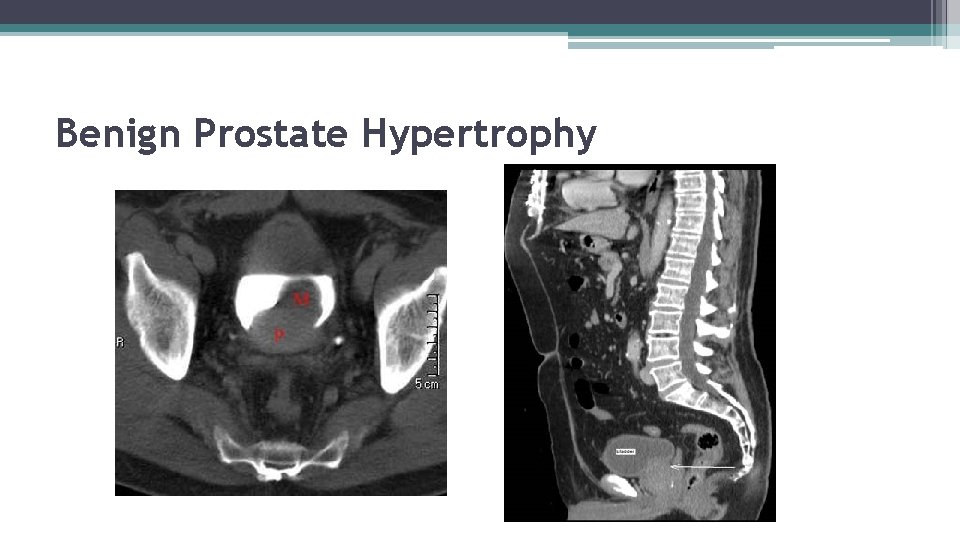
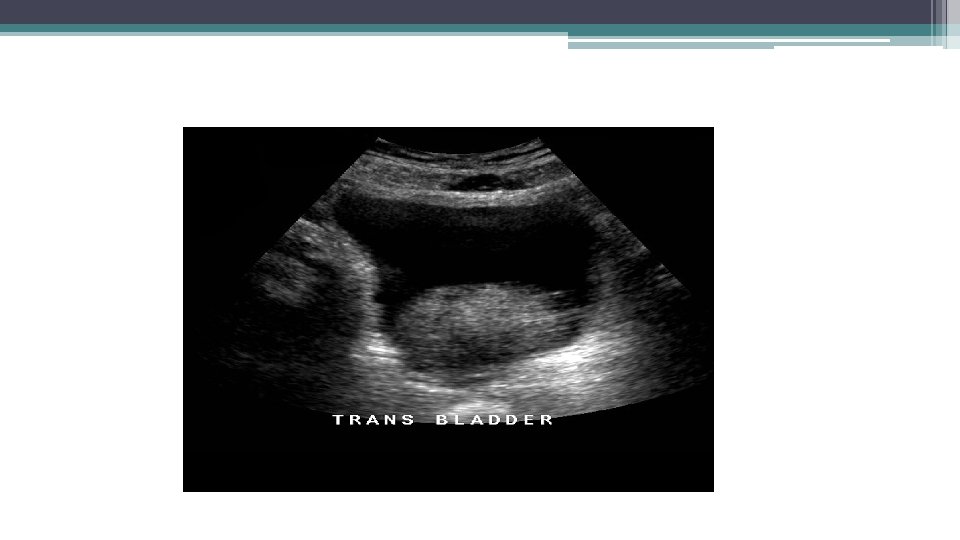
Benign Prostate Hypertrophy
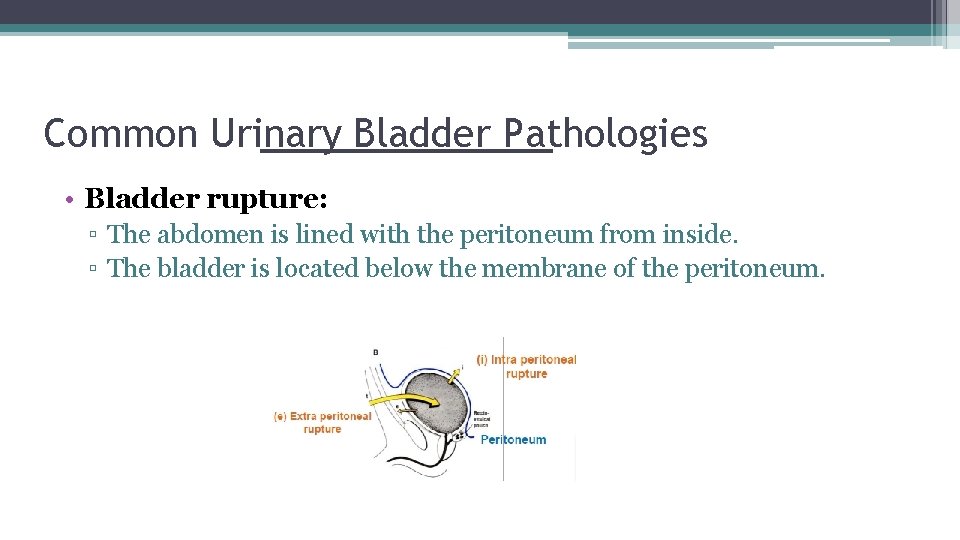
Common Urinary Bladder Pathologies • Bladder rupture: ▫ The abdomen is lined with the peritoneum from inside. ▫ The bladder is located below the membrane of the peritoneum.
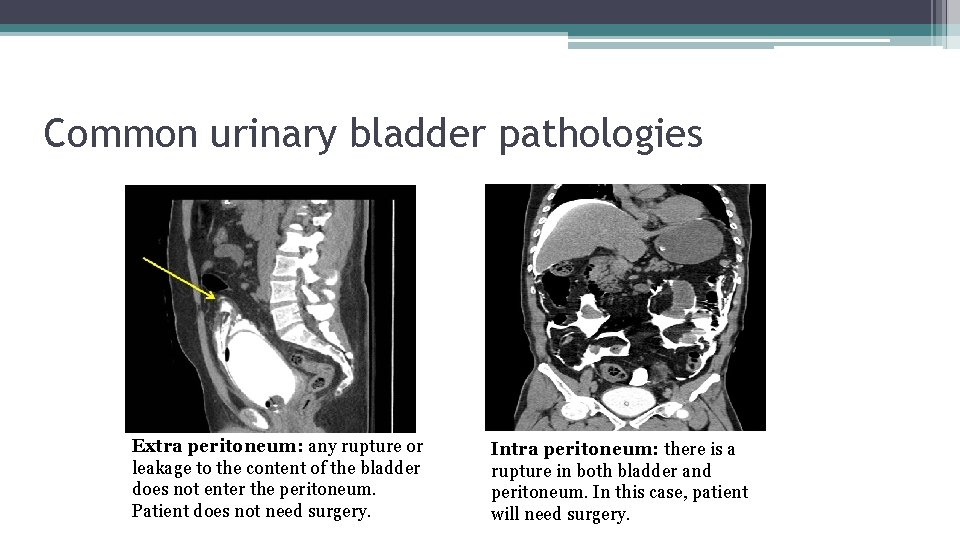
Common urinary bladder pathologies Extra peritoneum: any rupture or leakage to the content of the bladder does not enter the peritoneum. Patient does not need surgery. Intra peritoneum: there is a rupture in both bladder and peritoneum. In this case, patient will need surgery.
Thank you
- Slides: 39