
Radiology Pathology Primary Retroperitoneal Tumors Based on an
Radiology - Pathology Primary Retroperitoneal Tumors Based on an RSNA Presentation
Before You Begin This module is intended primarily for pre-clinical students learning or reviewing pathophysiology. Please note that this series will focus on how pathology presents in imaging studies. It assumes familiarity with fundamental anatomy. If you need to learn or review this core concept, please visit the “Anatomy” section of our website. If material is repeated from another module, it will be outlined as this text is so that you are aware
Please review the “GU rad path” module, which has a tutorial about CT and MRI, before attempting the retroperitoneal section
Objectives • Definition of primary retroperitoneal (RP) tumor • 3 main categories of primary retroperitoneal tumors • Series of unknowns with explanation of findings, differential and discussion
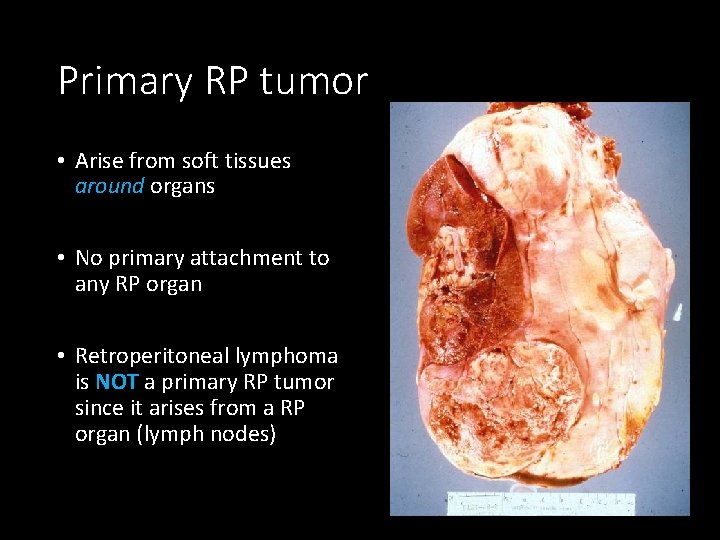
Primary RP tumor • Arise from soft tissues around organs • No primary attachment to any RP organ • Retroperitoneal lymphoma is NOT a primary RP tumor since it arises from a RP organ (lymph nodes)
General Principles • Diagnosis of exclusion • Demonstrate that the mass is separate from the RP organ on any/all images • Always first think of metastasis and lymphoma • Uncommon manifestations of common diseases are more common than rare diseases
Retroperitoneal Pearls (you’ll see these again…) 1. Always first think of metastatic disease and lymphoma 2. The RP tumor that invades bone is lymphoma 3. In an adult the RP tumor with fat is liposarcoma 4. Not all liposarcomas have visible fat 5. In the adult the RP tumor with extensive necrosis is leiomyosarcoma 6. Malignant fibrous histiocytoma has a predilection for the perinephric space 7. In a child a calcified RP mass is neuroblastoma (NB), ganglioneuroblastoma (GNB) or ganglioneuroma 8. Paraganglioma is a clinical diagnosis (elevated VMA) 9. In a child or young adult a RP tumor with fat is teratoma 10. Specific diagnosis often not possible. Description of exact location is useful for surgical planning
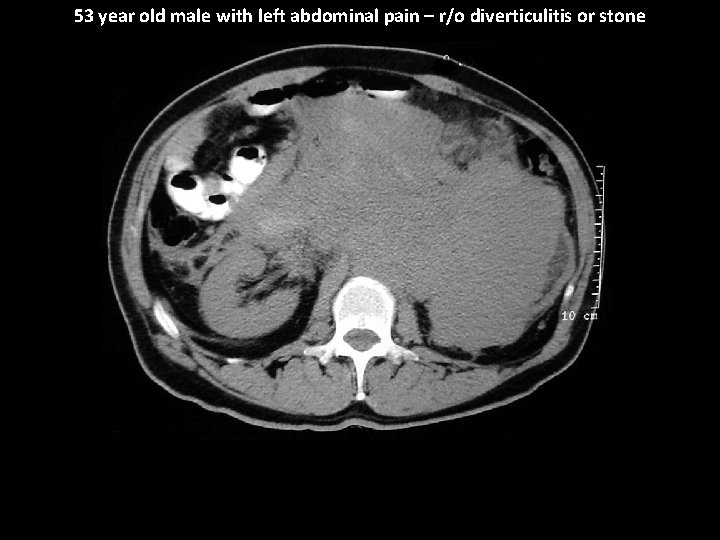
53 year old male with left abdominal pain – r/o diverticulitis or stone
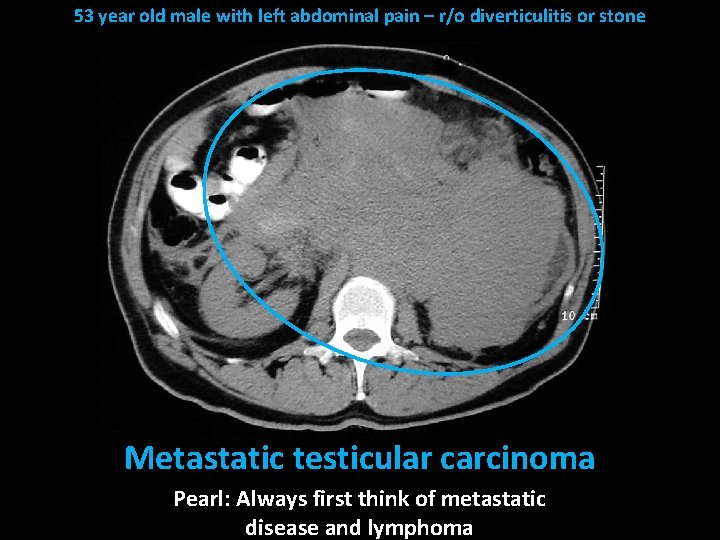
53 year old male with left abdominal pain – r/o diverticulitis or stone Metastatic testicular carcinoma Pearl: Always first think of metastatic disease and lymphoma
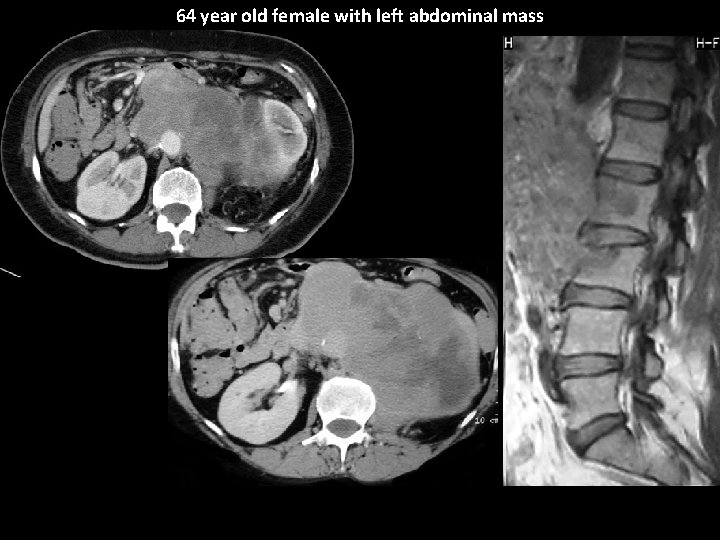
64 year old female with left abdominal mass
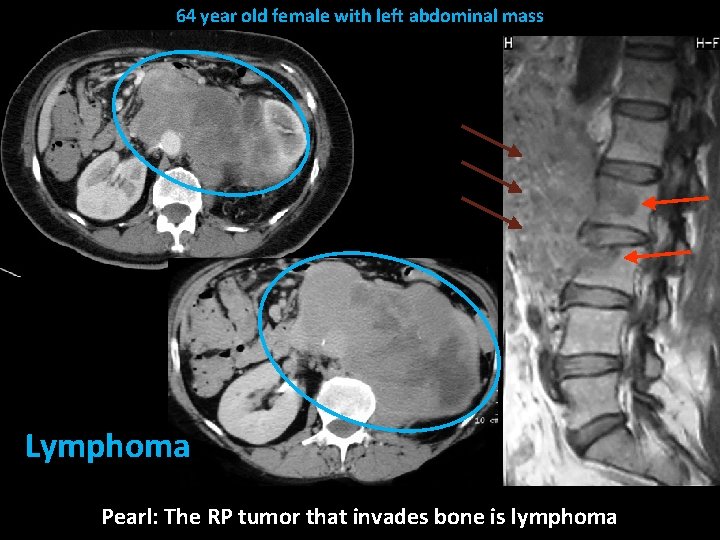
64 year old female with left abdominal mass Lymphoma Pearl: The RP tumor that invades bone is lymphoma
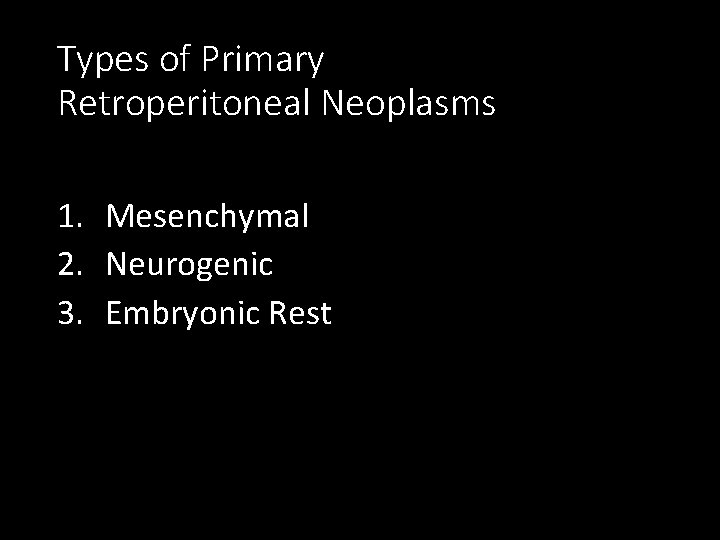
Types of Primary Retroperitoneal Neoplasms 1. Mesenchymal 2. Neurogenic 3. Embryonic Rest
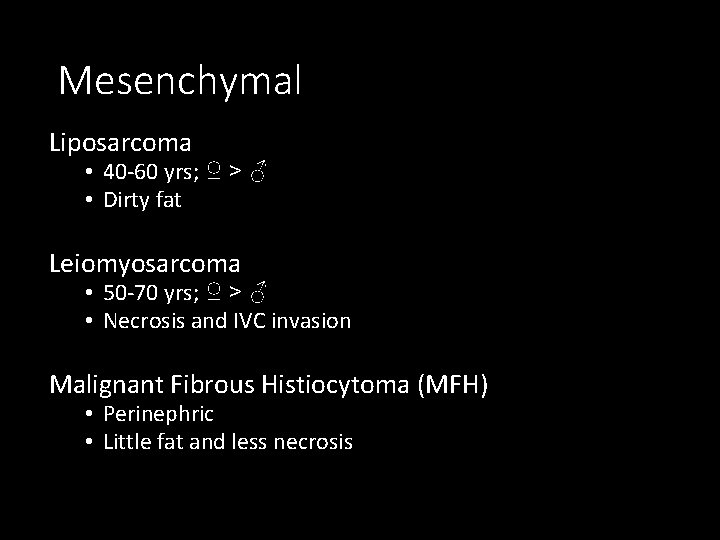
Mesenchymal Liposarcoma • 40 -60 yrs; ♀ > ♂ • Dirty fat Leiomyosarcoma • 50 -70 yrs; ♀ > ♂ • Necrosis and IVC invasion Malignant Fibrous Histiocytoma (MFH) • Perinephric • Little fat and less necrosis
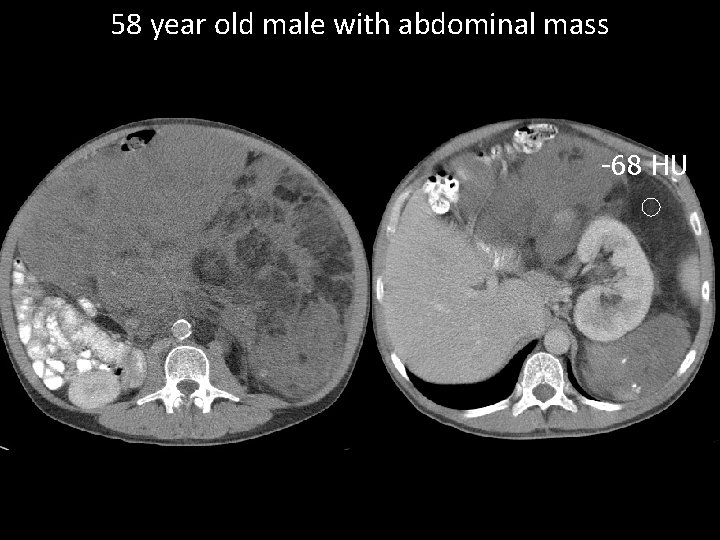
58 year old male with abdominal mass -68 HU
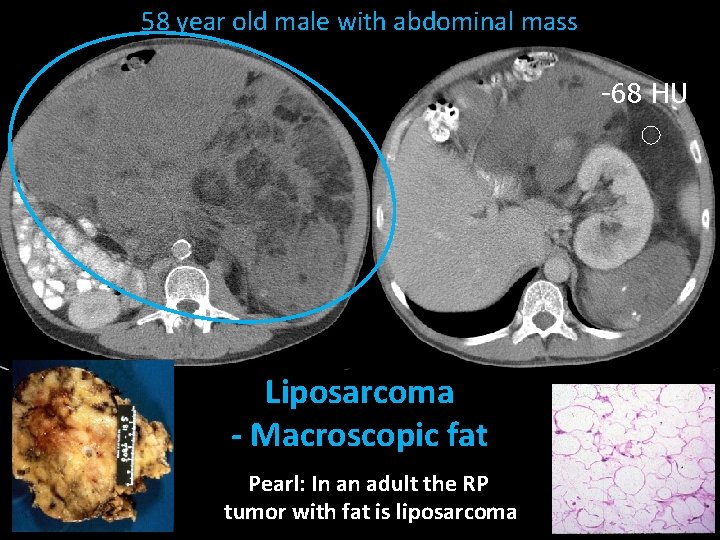
58 year old male with abdominal mass -68 HU Liposarcoma - Macroscopic fat Pearl: In an adult the RP tumor with fat is liposarcoma
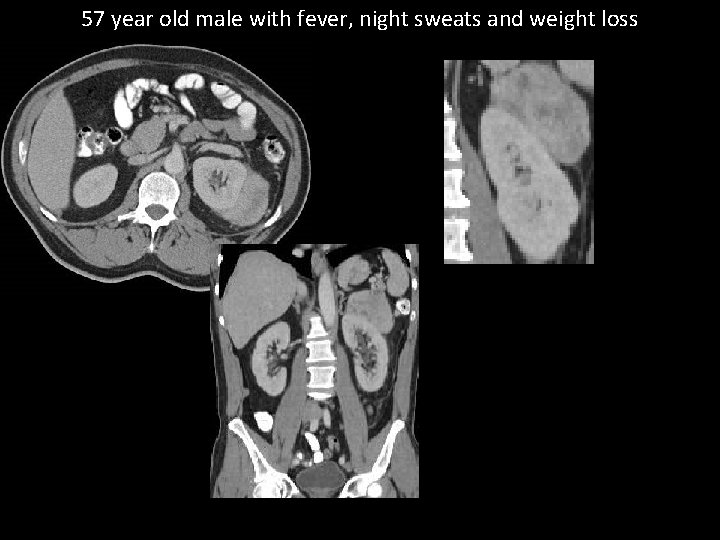
57 year old male with fever, night sweats and weight loss
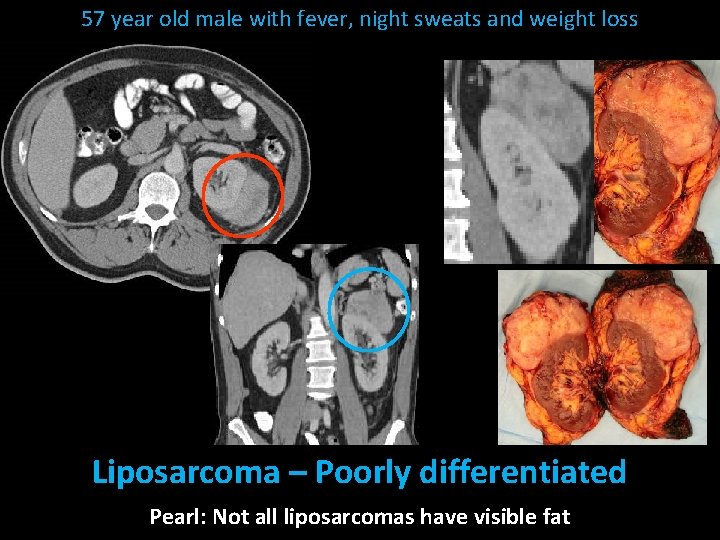
57 year old male with fever, night sweats and weight loss Liposarcoma – Poorly differentiated Pearl: Not all liposarcomas have visible fat
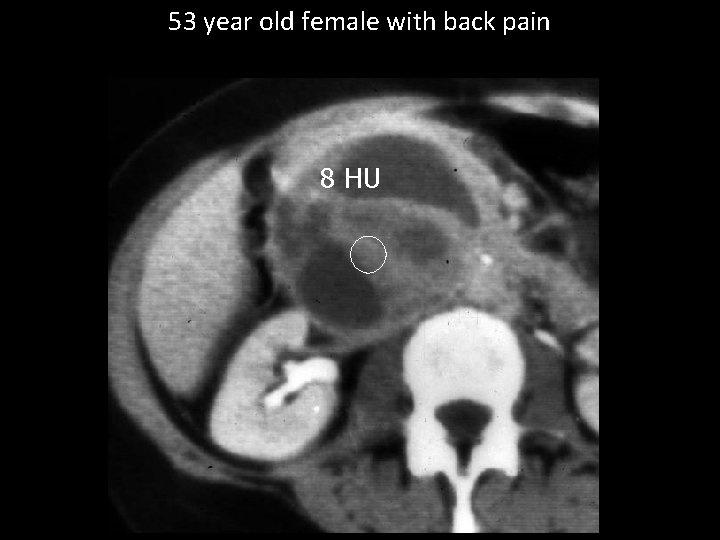
53 year old female with back pain 8 HU
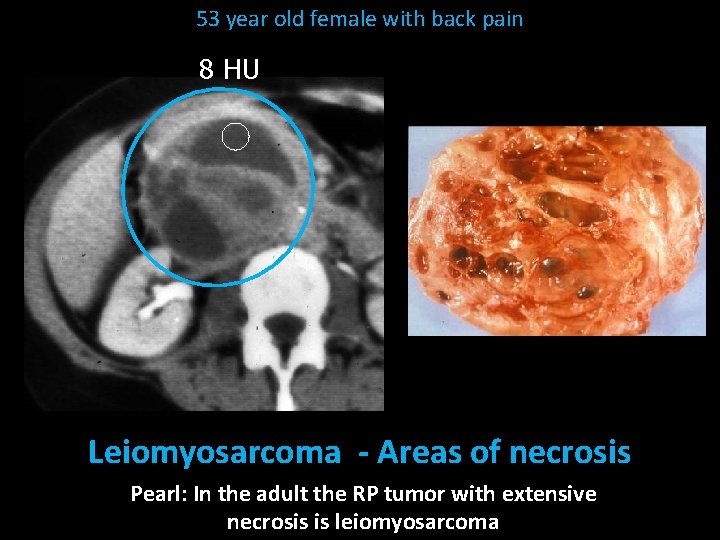
53 year old female with back pain 8 HU Leiomyosarcoma - Areas of necrosis Pearl: In the adult the RP tumor with extensive necrosis is leiomyosarcoma
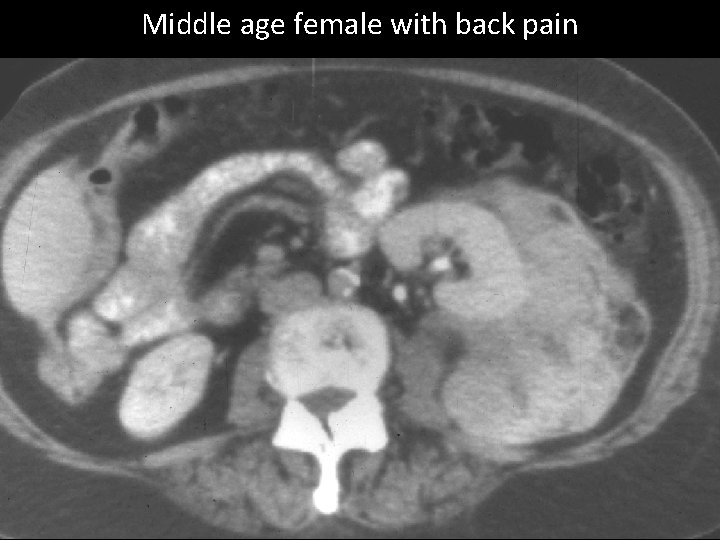
Middle age female with back pain
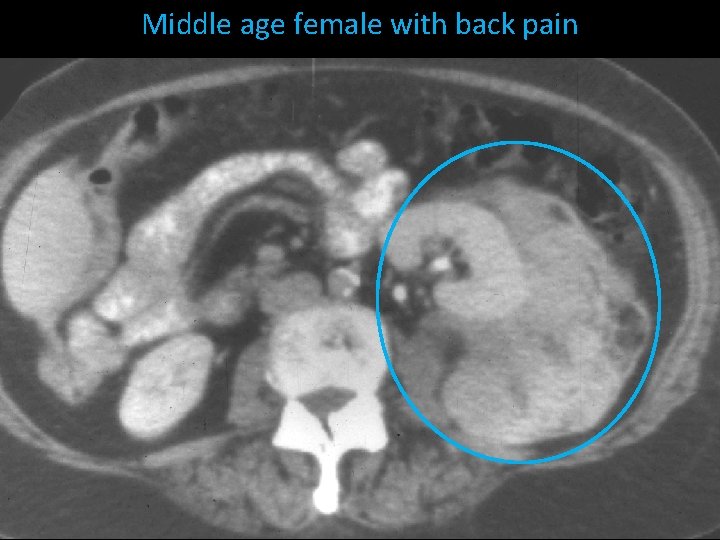
Middle age female with back pain
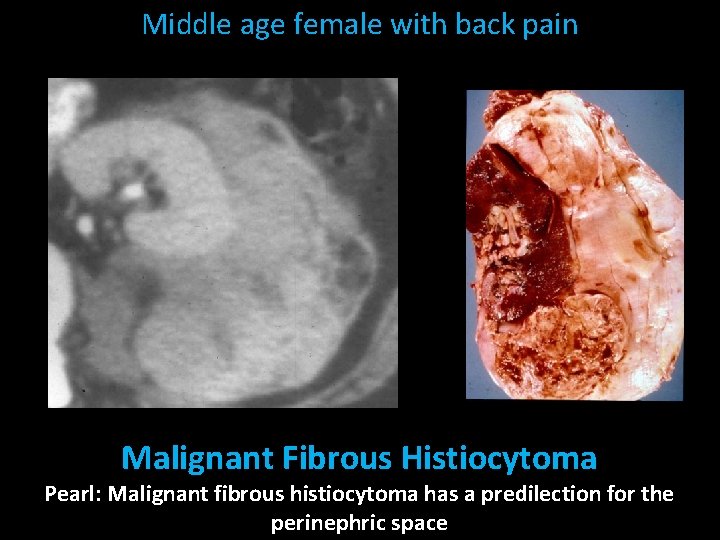
Middle age female with back pain Malignant Fibrous Histiocytoma Pearl: Malignant fibrous histiocytoma has a predilection for the perinephric space
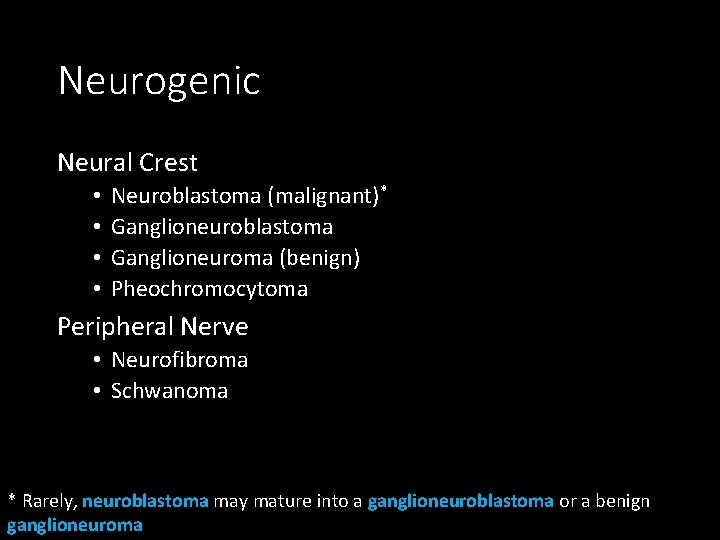
Neurogenic Neural Crest • • Neuroblastoma (malignant)* Ganglioneuroblastoma Ganglioneuroma (benign) Pheochromocytoma Peripheral Nerve • Neurofibroma • Schwanoma * Rarely, neuroblastoma may mature into a ganglioneuroblastoma or a benign ganglioneuroma
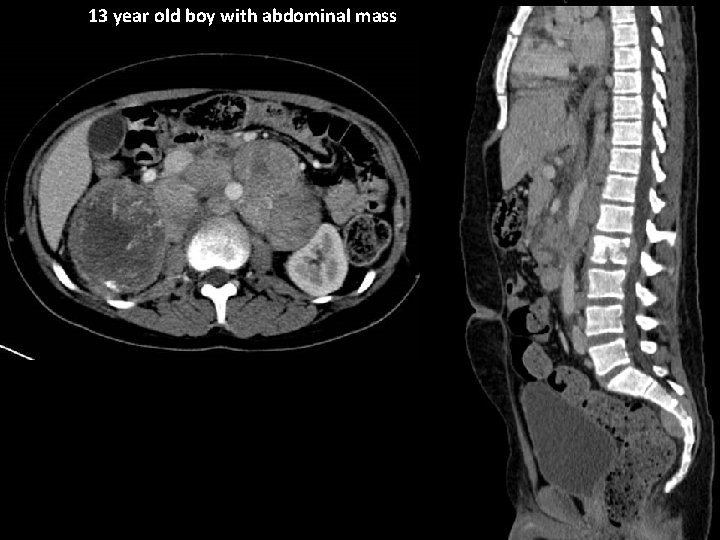
13 year old boy with abdominal mass
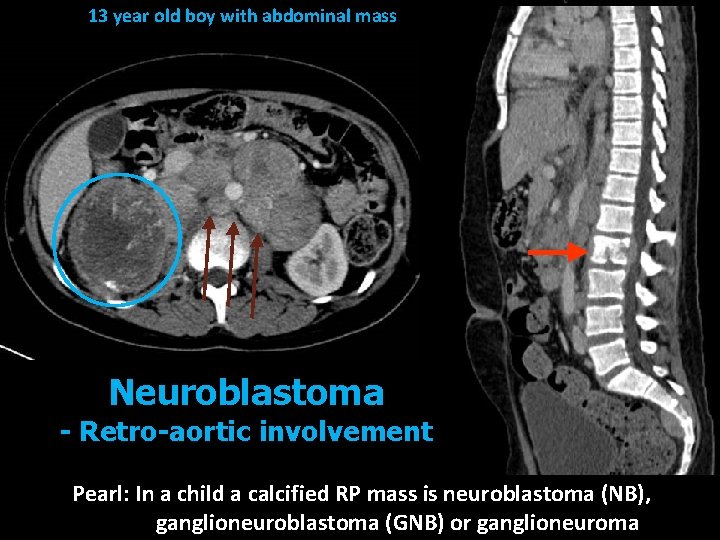
13 year old boy with abdominal mass Neuroblastoma - Retro-aortic involvement Pearl: In a child a calcified RP mass is neuroblastoma (NB), ganglioneuroblastoma (GNB) or ganglioneuroma
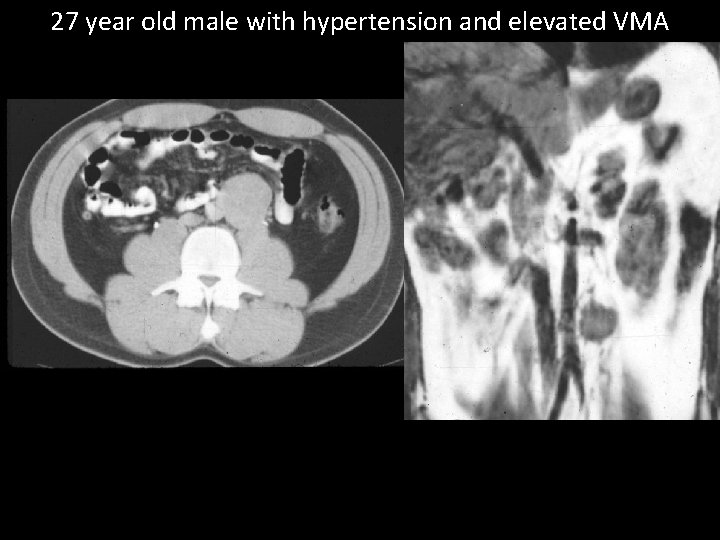
27 year old male with hypertension and elevated VMA
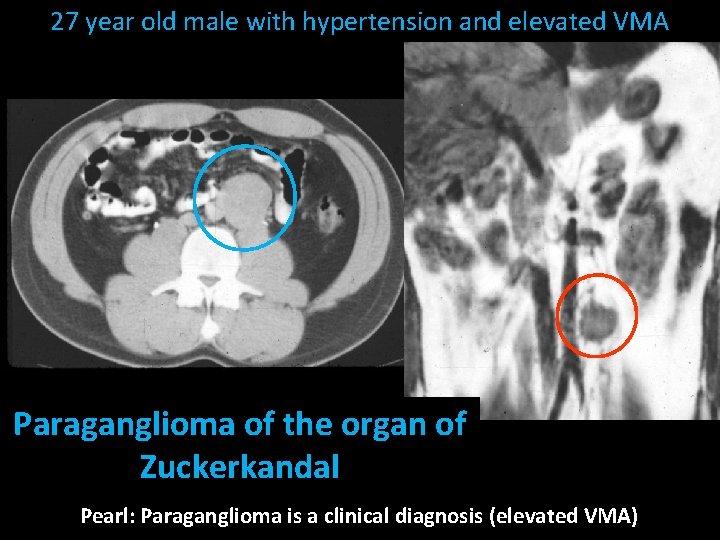
27 year old male with hypertension and elevated VMA Paraganglioma of the organ of Zuckerkandal Pearl: Paraganglioma is a clinical diagnosis (elevated VMA)
Embryonic Rest Teratoma • All germ cell layers • Mature and immature Other germ cell tumors Fetus in fetu • Extremely mature teratoma
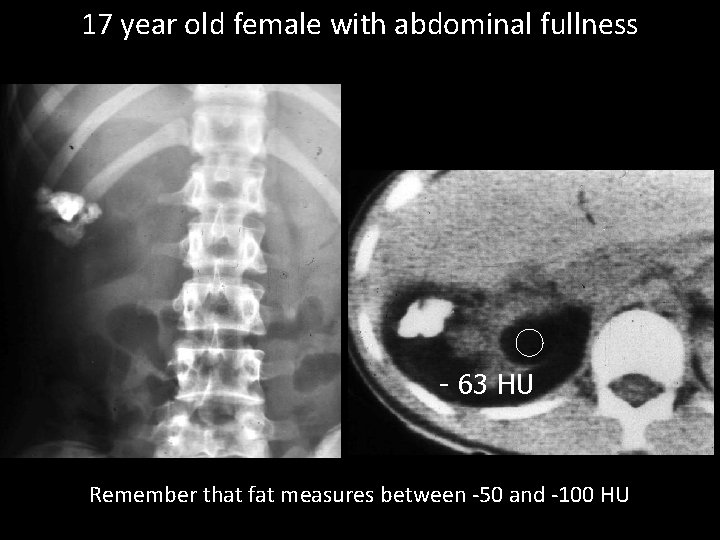
17 year old female with abdominal fullness - 63 HU Remember that fat measures between -50 and -100 HU
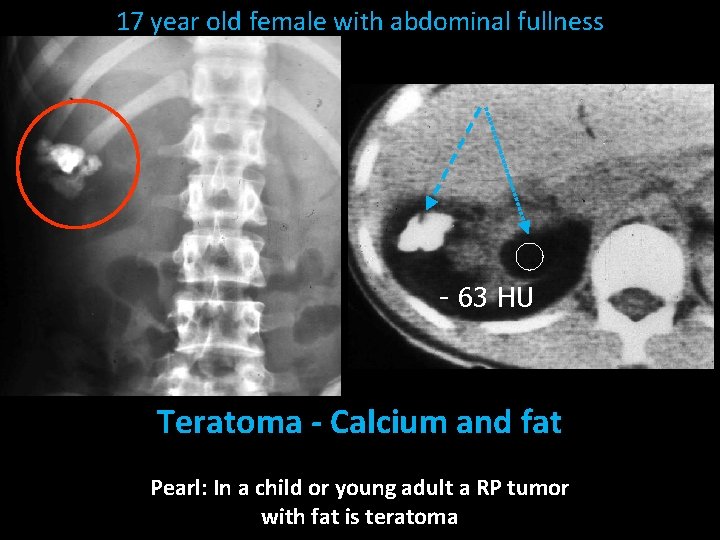
17 year old female with abdominal fullness - 63 HU Teratoma - Calcium and fat Pearl: In a child or young adult a RP tumor with fat is teratoma
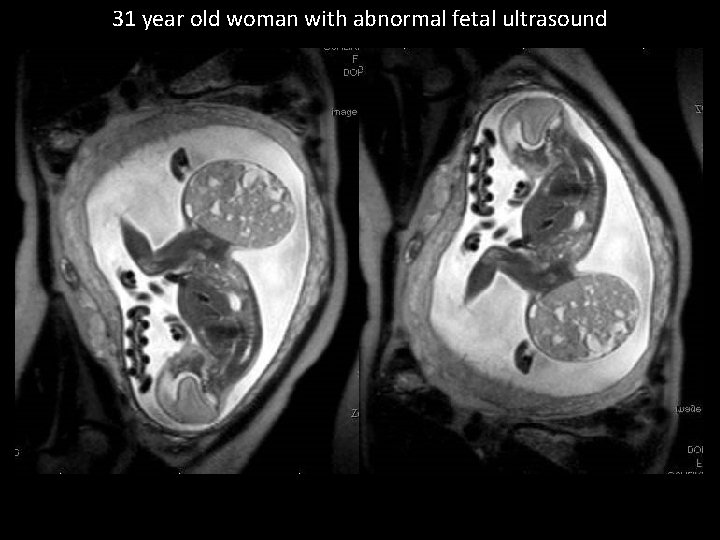
31 year old woman with abnormal fetal ultrasound
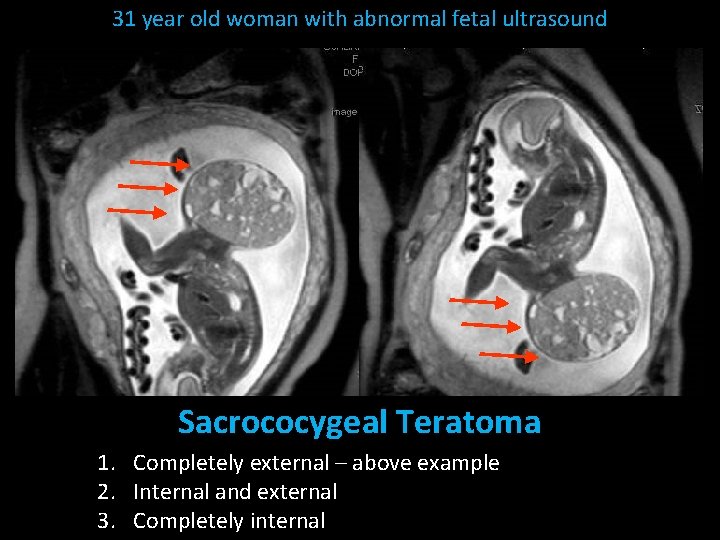
31 year old woman with abnormal fetal ultrasound Sacrococygeal Teratoma 1. Completely external – above example 2. Internal and external 3. Completely internal
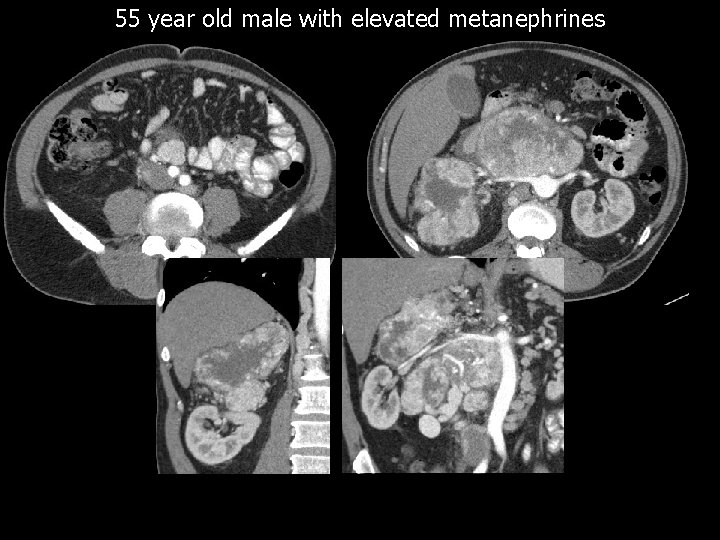
55 year old male with elevated metanephrines
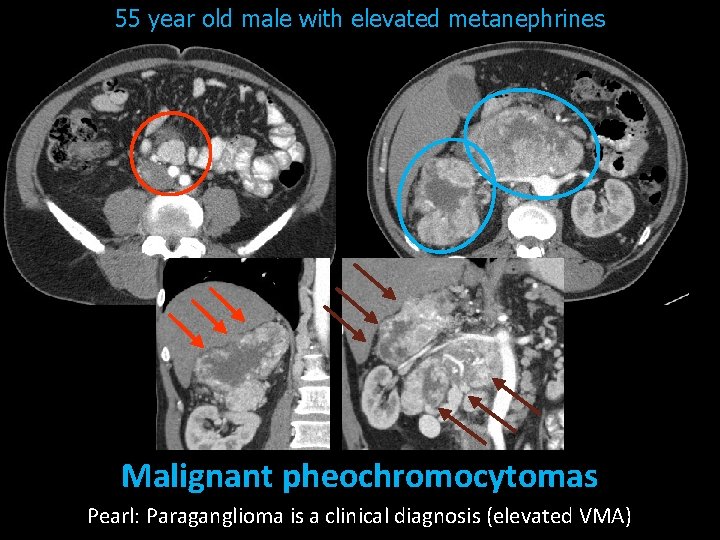
55 year old male with elevated metanephrines Malignant pheochromocytomas Pearl: Paraganglioma is a clinical diagnosis (elevated VMA)
Summary • Primary retroperitoneal tumor is diagnosis of exclusion • Always think of metastasis and lymphoma first • Mesenchymal; Neurogenic; Embryonic rest
- Slides: 35