
Radiology of Nasal Cavity and Paranasal Sinuses Radiology
- Slides: 23
Radiology of Nasal Cavity and Paranasal Sinuses
Radiology • XRAY • CT • MRI
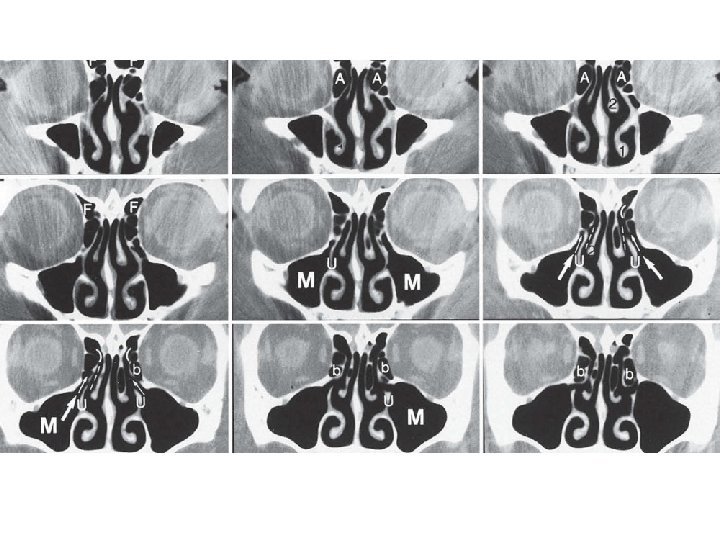
Normal Anatomy
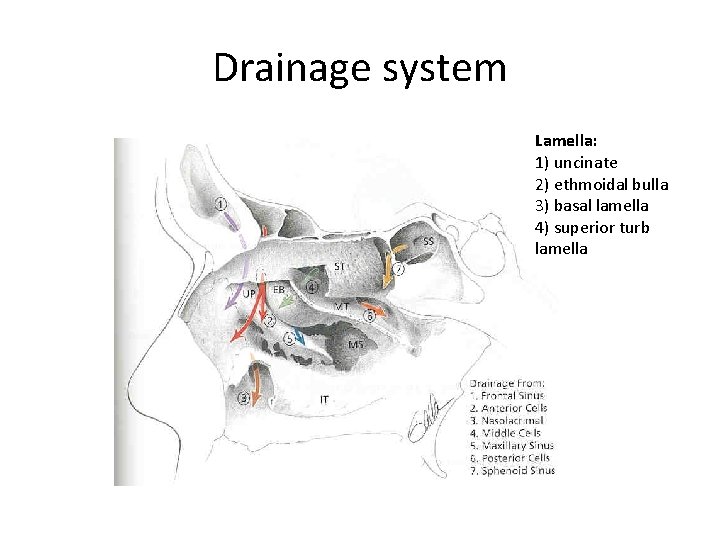
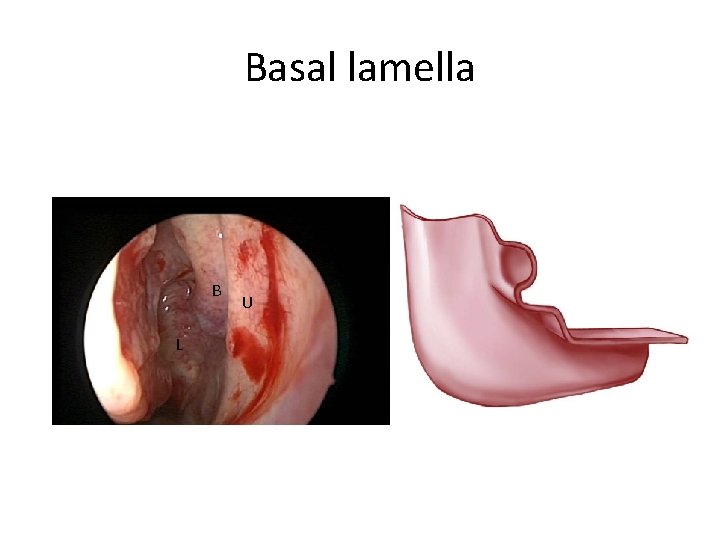
Drainage system Lamella: 1) uncinate 2) ethmoidal bulla 3) basal lamella 4) superior turb lamella
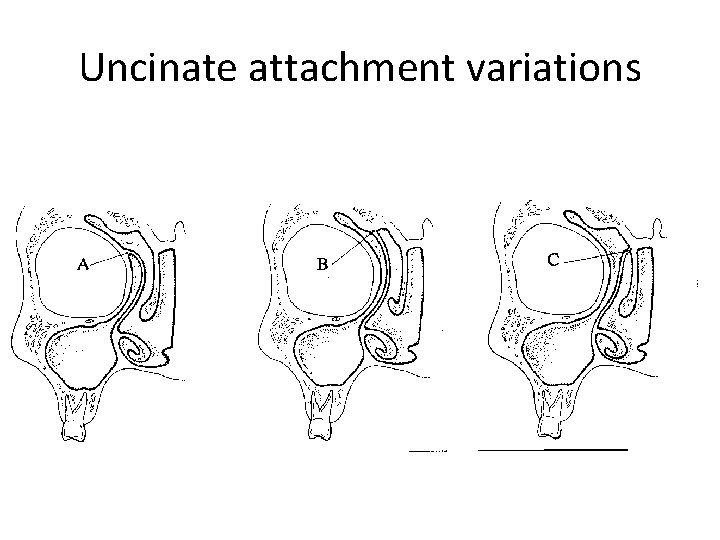
Uncinate attachment variations
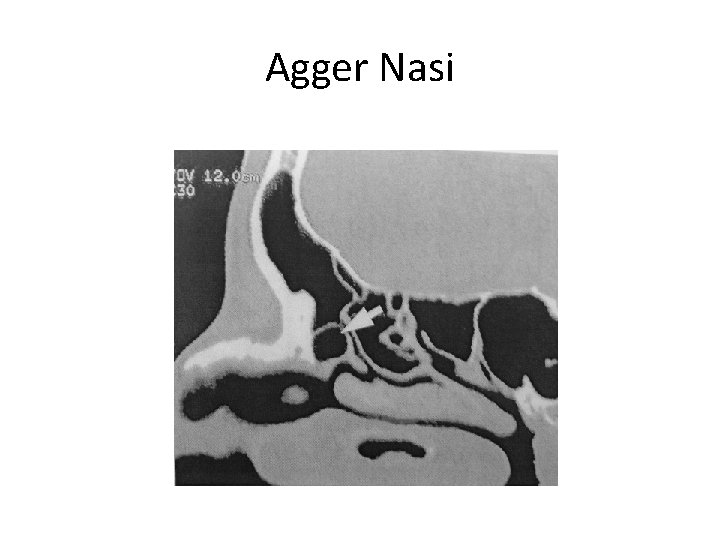
Agger Nasi
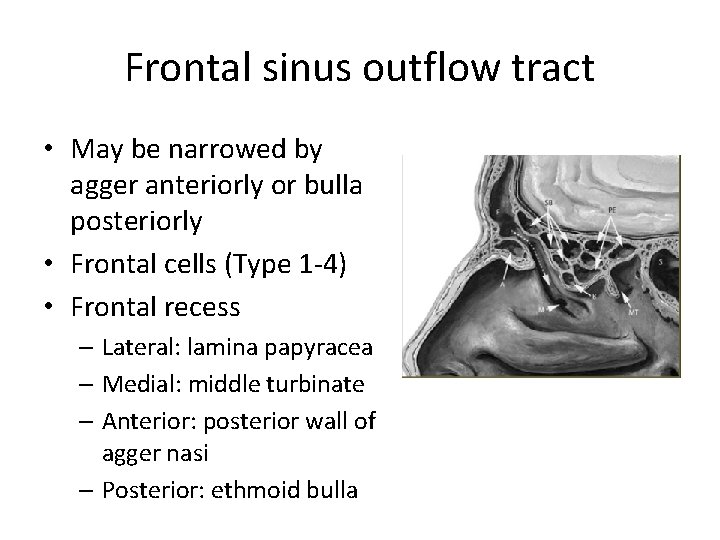
Frontal sinus outflow tract • May be narrowed by agger anteriorly or bulla posteriorly • Frontal cells (Type 1 -4) • Frontal recess – Lateral: lamina papyracea – Medial: middle turbinate – Anterior: posterior wall of agger nasi – Posterior: ethmoid bulla
Basal lamella B L U
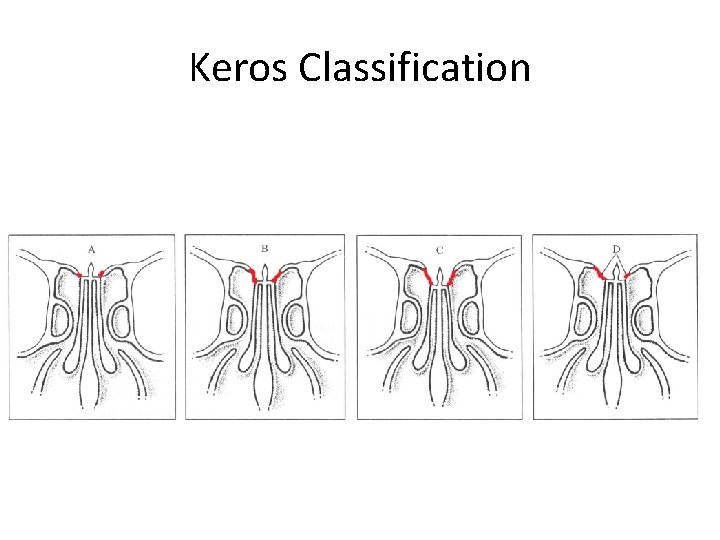
Keros Classification
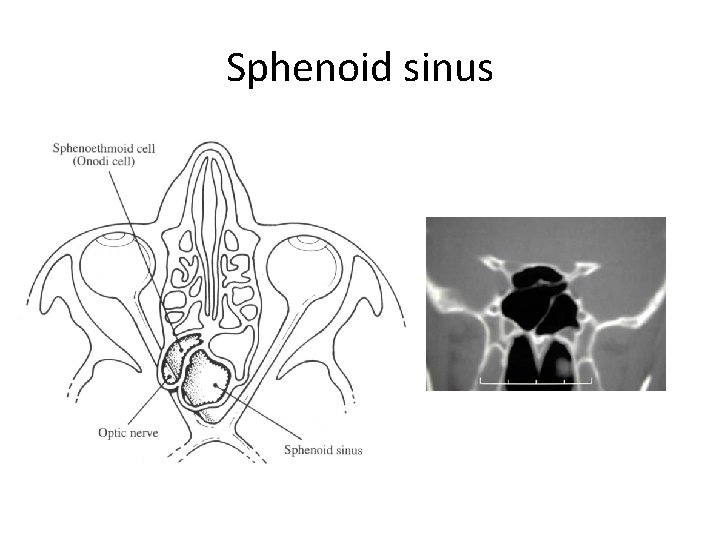
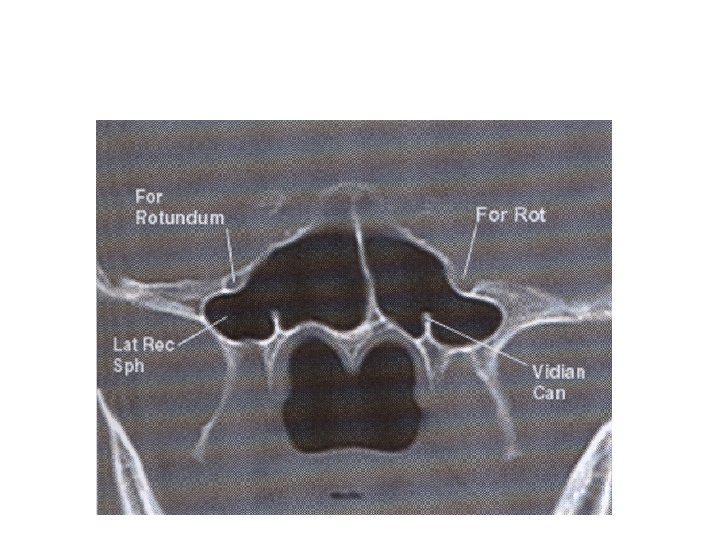
Sphenoid sinus
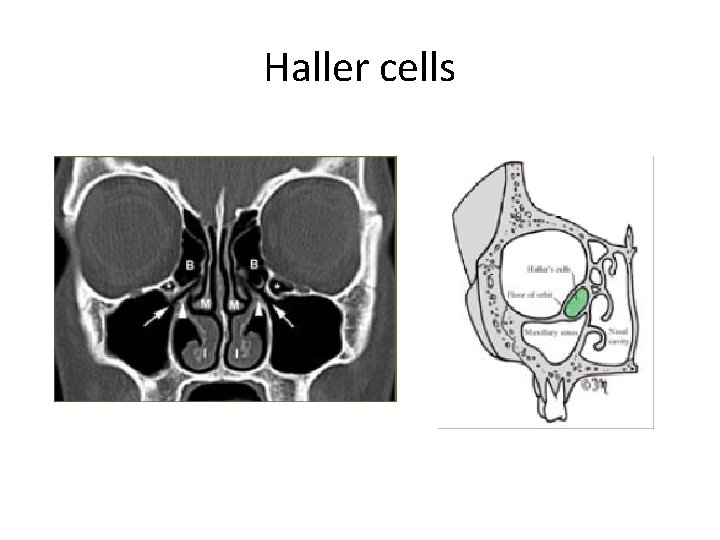
Haller cells
Other anatomic variations • Concha bullosa • Septal deviations • Paradoxic middle turbinate – convex curvature on the lateral, rather than medial side of the turbinate • Dehiscent lamina • Aerated crista galli • Optic nerve/carotid artery
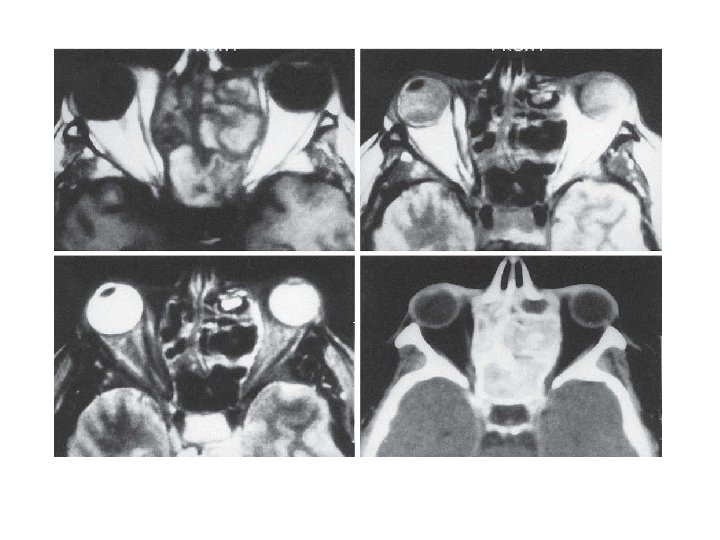
MRI Helpful for evaluation of regional and intracranial complications Detection and staging of neoplastic processes Improved display between intraorbital and extraorbital compartments Helpful for diagnosing fungal concretions which show low or no signal on T 2 • Helps for evaluation of mucoceles and cephaloceles • Appearance varies with changing concentrations of proteins and free water protons – T 2 more “watery”, higher signal – T 1 more protein, higher signal • However, once protein content reaches too high signal decreases • •
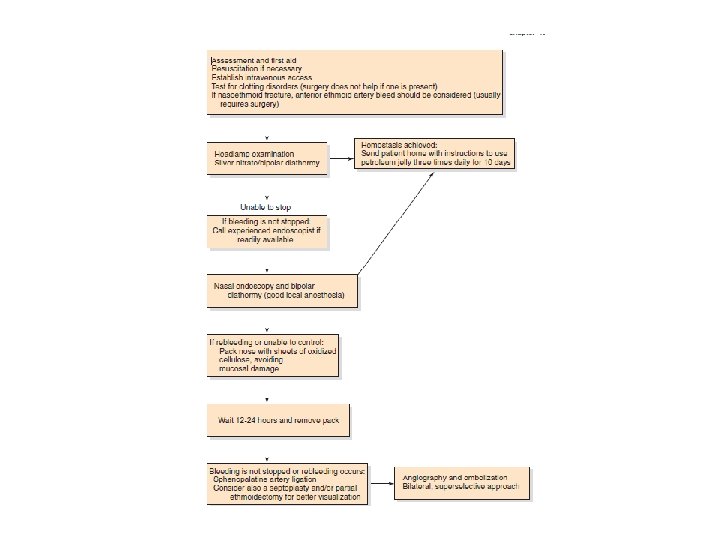
Epistaxis
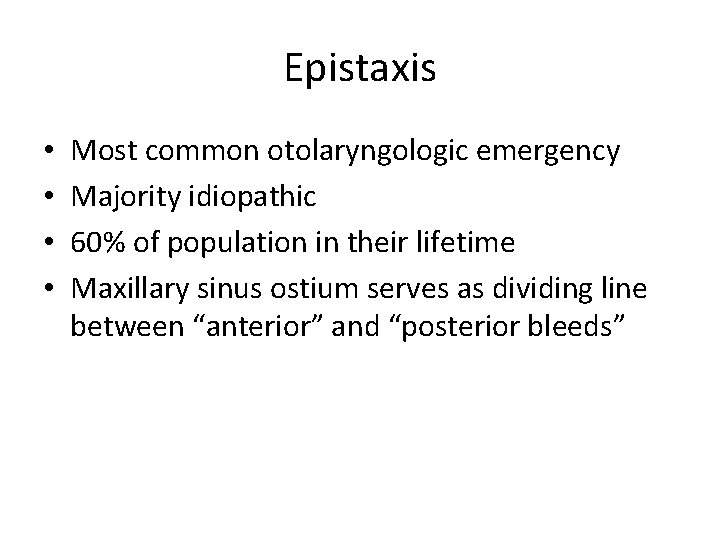
Epistaxis • • Most common otolaryngologic emergency Majority idiopathic 60% of population in their lifetime Maxillary sinus ostium serves as dividing line between “anterior” and “posterior bleeds”
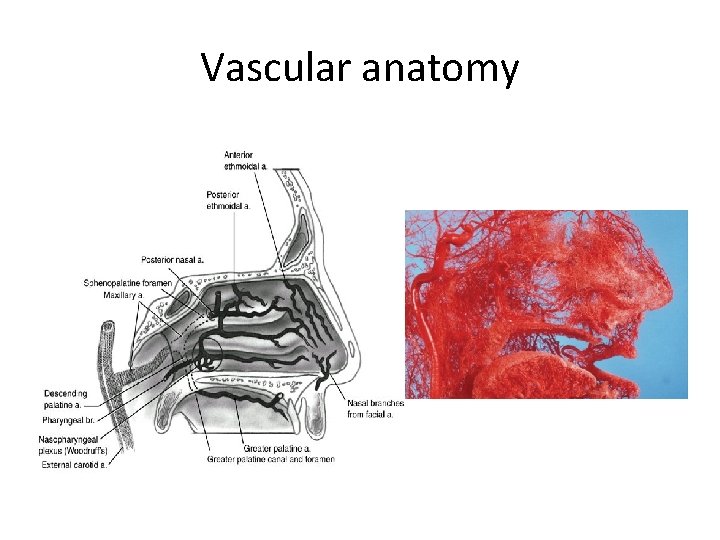
Vascular anatomy
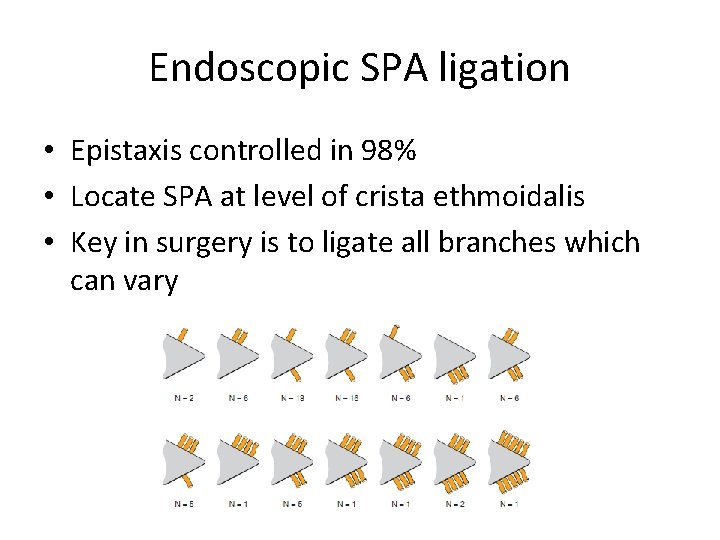
Endoscopic SPA ligation • Epistaxis controlled in 98% • Locate SPA at level of crista ethmoidalis • Key in surgery is to ligate all branches which can vary
Embolization • Risk of complications: CVA, hemiplegia, ophthalmoplegia, facial nerve palsy, seizures, soft tissue necrosis • Effective only for ECA supply very dangerous for ICA supply due to high risk of blindness • Success rate 71 -95% • Complication rate 27%
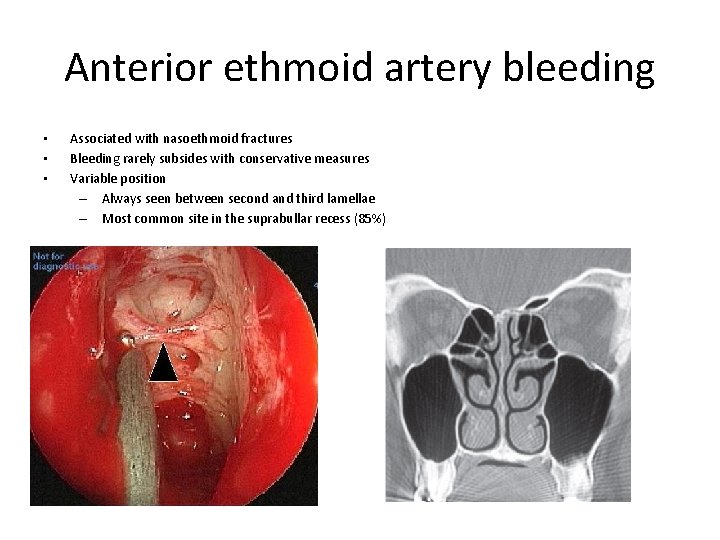
Anterior ethmoid artery bleeding • • • Associated with nasoethmoid fractures Bleeding rarely subsides with conservative measures Variable position – Always seen between second and third lamellae – Most common site in the suprabullar recess (85%)