
Radiology of Common Brain diseases Tumor Inflammation Infection

Radiology of Common Brain diseases Tumor, Inflammation, Infection By Dr. Tajuddin Malabarey, MD Radiology and medical imaging department RAD course 365 APRIL 2014 NO Q
Lecture out line NO Q • Some Common Brain diseases • Brain tumor • A brain tumor, (defined as an abnormal growth of cells) within the brain or the central spinal canal • Inflammation is a protective attempt by the organism to remove the injurious stimuli and to initiate the healing process. • Infection is the invasion of body tissues by diseasecausing microorganisms. • Inflammation is not synonymous with infection Without inflammation, wounds and infections would never heal
NO Q Brain tumor
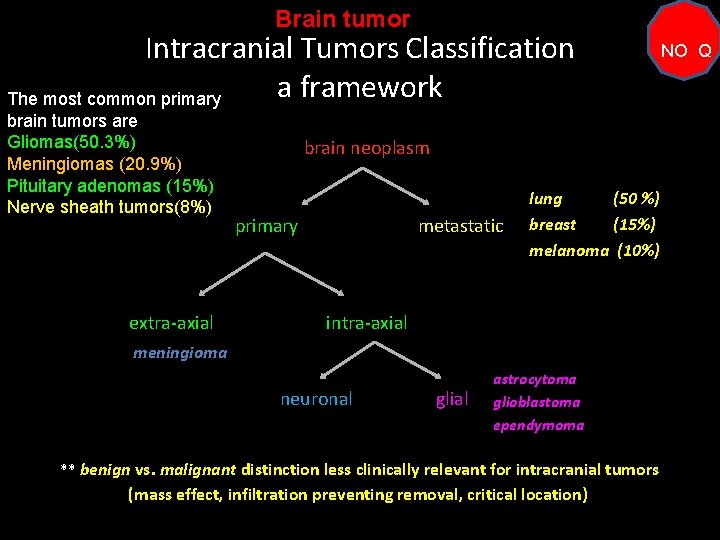
Brain tumor Intracranial Tumors Classification The most common primary brain tumors are Gliomas(50. 3%) Meningiomas (20. 9%) Pituitary adenomas (15%) Nerve sheath tumors(8%) extra-axial a framework brain neoplasm primary metastatic lung (50 %) breast (15%) melanoma (10%) intra-axial meningioma neuronal glial astrocytoma glioblastoma ependymoma ** benign vs. malignant distinction less clinically relevant for intracranial tumors (mass effect, infiltration preventing removal, critical location) NO Q
Primary Brain Tumors NO Q • are classified by the type of tissue in which they begin. • The most common brain tumors are gliomas, which begin in the glial (supportive) tissue. There are several types of gliomas: • Astrocytomas arise from small, star-shaped cells called astrocytes. • Brain stem gliomas • Ependymomas usually develop in the lining of the ventricles. • Oligodendrogliomas arise in the cells that produce myelin, the fatty covering that protects nerves • Glioblastoma multiforme (GBM) accounts for about 50% of all astrocytomas
Glioblastoma multiforme NO Q • Glioblastoma multiforme, • WHO classification name • "glioblastoma", is the most common and most aggressive malignant primary brain tumor in humans, involving glial cells and accounting for 52% of all functional tissue brain tumor cases and 20% of all intracranial tumors. . • http: //en. wikipedia. org/wiki/Glioblastoma_Multifor me
Primary Brain Tumors(PBT) • Primary Non-Glioma Brain Tumors • • NO Q Medulloblastomas always located in the cerebellum, These fastgrowing high-grade tumors represent about 15 - 20% of pediatric brain tumors and 20% of adult brain tumors. Meningiomas grow from the meninges Schwannomas are benign tumors that begin in Schwann cells, which produce the myelin that protects the acoustic nerve-the nerve of hearing. Acousticneuromas Craniopharyngiomas develop in the region of the pituitary gland near the hypothalamus. Pituitary Adenomas. Pituitary tumors comprise about 10% of PBT and are often benign, slow-growing masses in the pituitary gland.
Secondary Brain Tumors (Brain Metastases) NO Q A metastatic, or secondary, brain tumor is one that begins as cancer in another part of the body. Some of the cancer cells may be carried to the brain by the blood or lymphatic fluid, or may spread from adjacent tissue. The site where the cancerous cells originated is referred to as the primary cancer. Metastatic brain tumors are the most common brain tumors.
Secondary Brain Tumors (Brain Metastases) NO Q • Characteristics • The primary cancer is usually in the lung, breast, colon, kidney, or skin (melanoma), but can originate in any part of the body • Most are located in the cerebrum, but can also develop in the cerebellum or brain stem • More than half of people with metastatic tumors have multiple lesions (tumors)
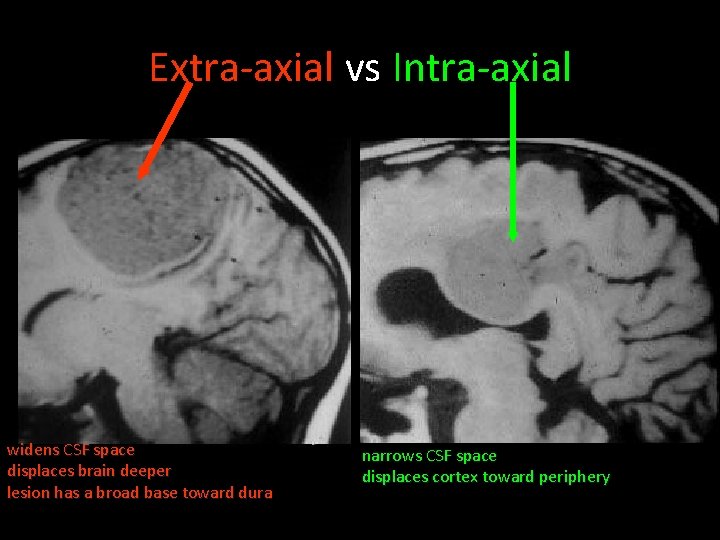
Extra-axial vs Intra-axial widens CSF space displaces brain deeper lesion has a broad base toward dura narrows CSF space displaces cortex toward periphery
NO Q Brain Tumors MRI is more sensitive than CT for detecting brain tumors. CT is superior for detecting calcifications within the lesion.
Glioblastoma multiforme • is the most common primary brain malignancy in adults and accounts for 20% of all primary brain tumors. • MRI is the imaging modality of choice for diagnosis (definitive diagnosis by pathology). • The classic presentation is a heterogeneous mass in the supratentorial white matter with hemorrhage, necrosis, and mass effect.
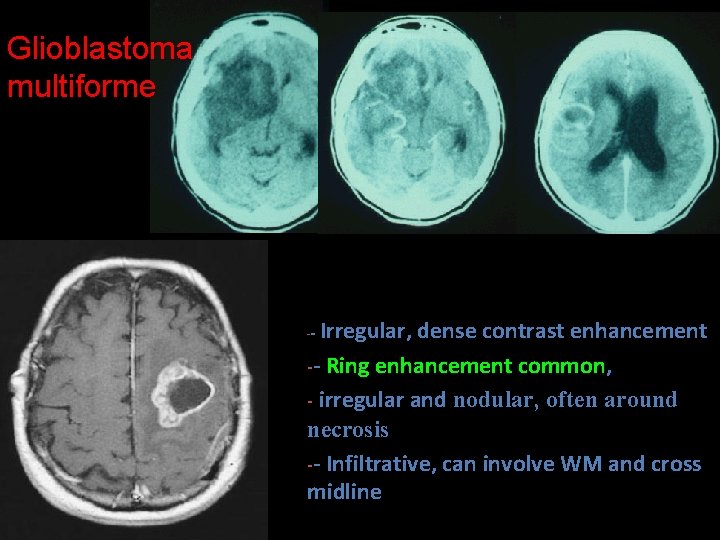
Glioblastoma multiforme Irregular, dense contrast enhancement -- Ring enhancement common, - irregular and nodular, often around necrosis -- Infiltrative, can involve WM and cross midline --
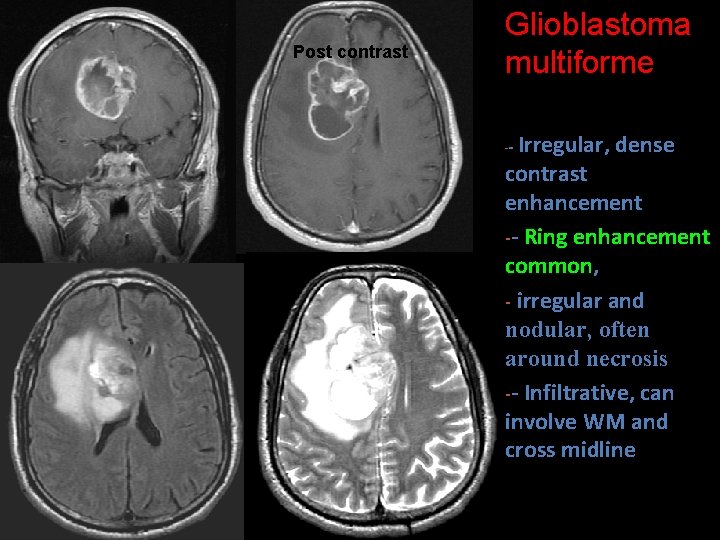
Post contrast Glioblastoma multiforme Irregular, dense contrast enhancement -- Ring enhancement common, - irregular and nodular, often around necrosis -- Infiltrative, can involve WM and cross midline -- Glioblastoma
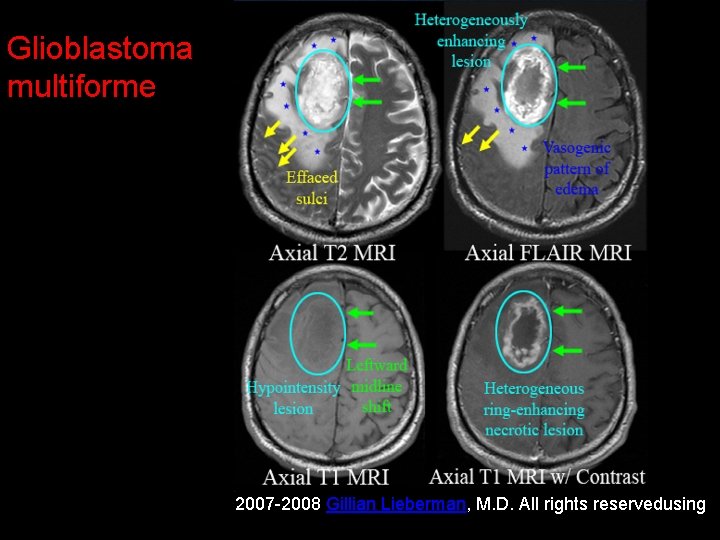
Glioblastoma multiforme 2007 -2008 Gillian Lieberman, M. D. All rights reservedusing
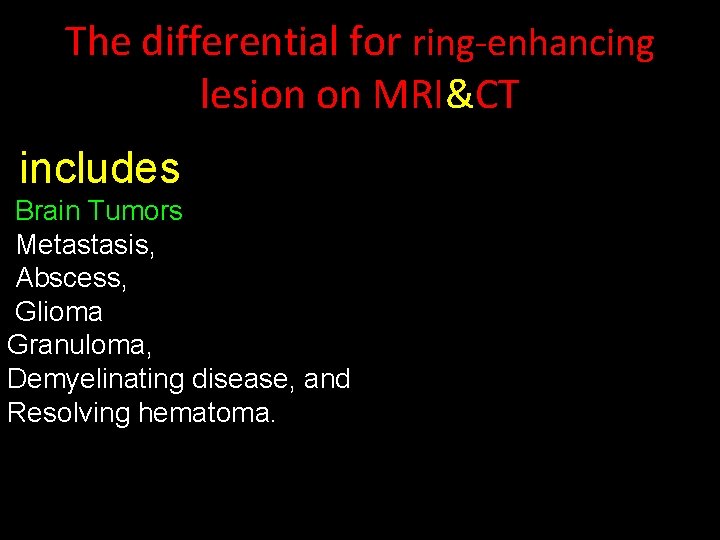
The differential for ring-enhancing lesion on MRI&CT includes Brain Tumors Metastasis, Abscess, Glioma Granuloma, Demyelinating disease, and Resolving hematoma.
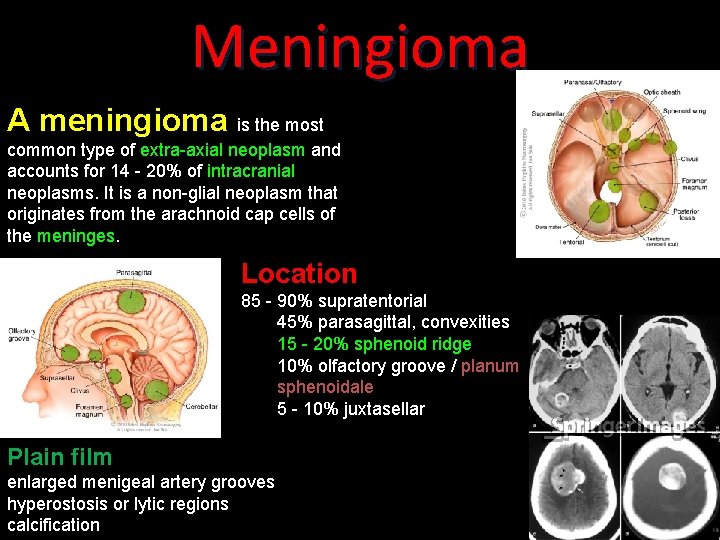
Meningioma A meningioma is the most common type of extra-axial neoplasm and accounts for 14 - 20% of intracranial neoplasms. It is a non-glial neoplasm that originates from the arachnoid cap cells of the meninges. Location 85 - 90% supratentorial 45% parasagittal, convexities 15 - 20% sphenoid ridge 10% olfactory groove / planum sphenoidale 5 - 10% juxtasellar Plain film enlarged menigeal artery grooves hyperostosis or lytic regions calcification
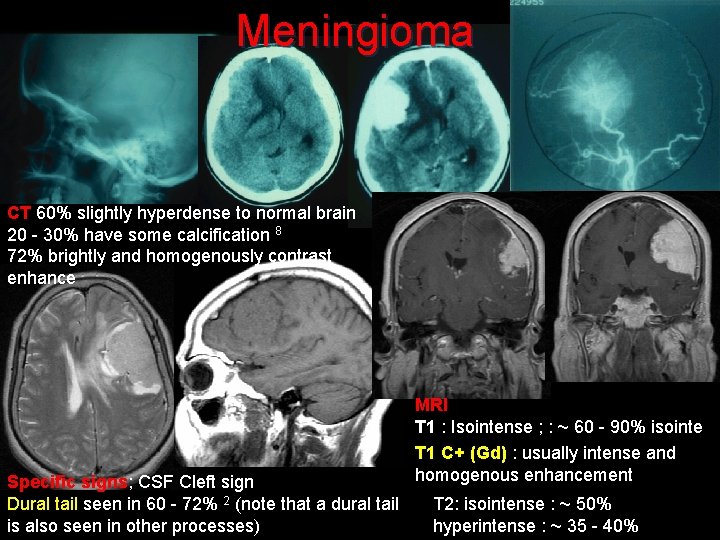
Meningioma CT 60% slightly hyperdense to normal brain 20 - 30% have some calcification 8 72% brightly and homogenously contrast enhance Specific signs; CSF Cleft sign Dural tail seen in 60 - 72% 2 (note that a dural tail is also seen in other processes) MRI T 1 : Isointense ; : ~ 60 - 90% isointe T 1 C+ (Gd) : usually intense and homogenous enhancement T 2: isointense : ~ 50% hyperintense : ~ 35 - 40%
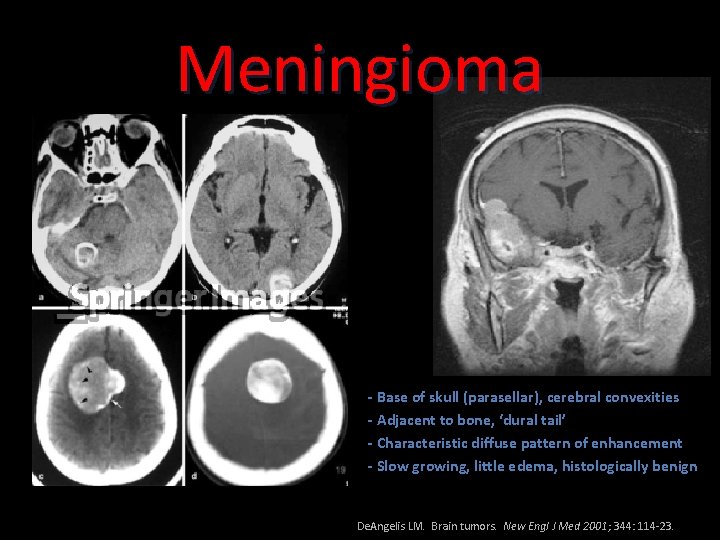
Meningioma - Base of skull (parasellar), cerebral convexities - Adjacent to bone, ‘dural tail’ - Characteristic diffuse pattern of enhancement - Slow growing, little edema, histologically benign De. Angelis LM. Brain tumors. New Engl J Med 2001; 344: 114 -23.
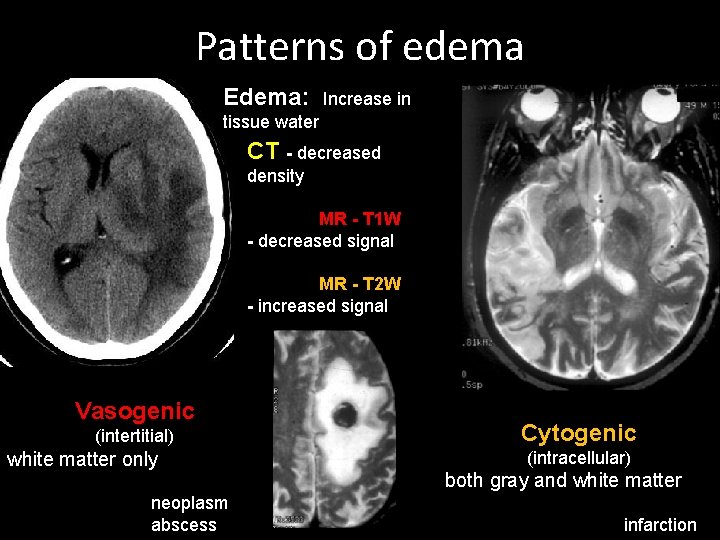
Patterns of edema Edema: Increase in tissue water CT - decreased density MR - T 1 W - decreased signal MR - T 2 W - increased signal Vasogenic (intertitial) white matter only neoplasm abscess Cytogenic (intracellular) both gray and white matter infarction
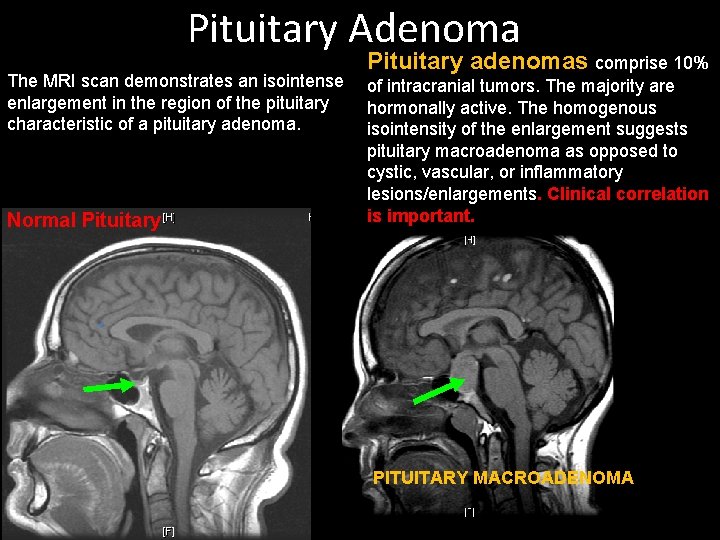
Pituitary Adenoma The MRI scan demonstrates an isointense enlargement in the region of the pituitary characteristic of a pituitary adenoma. Normal Pituitary adenomas comprise 10% of intracranial tumors. The majority are hormonally active. The homogenous isointensity of the enlargement suggests pituitary macroadenoma as opposed to cystic, vascular, or inflammatory lesions/enlargements. Clinical correlation is important. PITUITARY MACROADENOMA
Craniopharyngioma • Craniopharyngiomas are a type of relatively benign (WHO grade I) neoplasm which typically arises in the sellar / suprasellar region. They account for ~ 1 - 5 % primary brain tumours. • They derive from remnants of the craniopharyngeal duct(narrowing which separates Rathke's pouch from the primitive oral cavity), and can occur anywhere along the infundibulum (from floor of the third ventricle, to the pituitary gland).
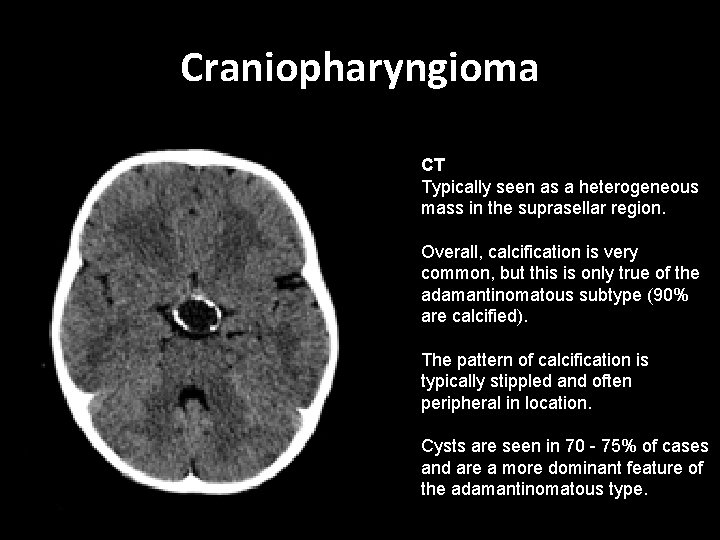
Craniopharyngioma CT Typically seen as a heterogeneous mass in the suprasellar region. Overall, calcification is very common, but this is only true of the adamantinomatous subtype (90% are calcified). The pattern of calcification is typically stippled and often peripheral in location. Cysts are seen in 70 - 75% of cases and are a more dominant feature of the adamantinomatous type.
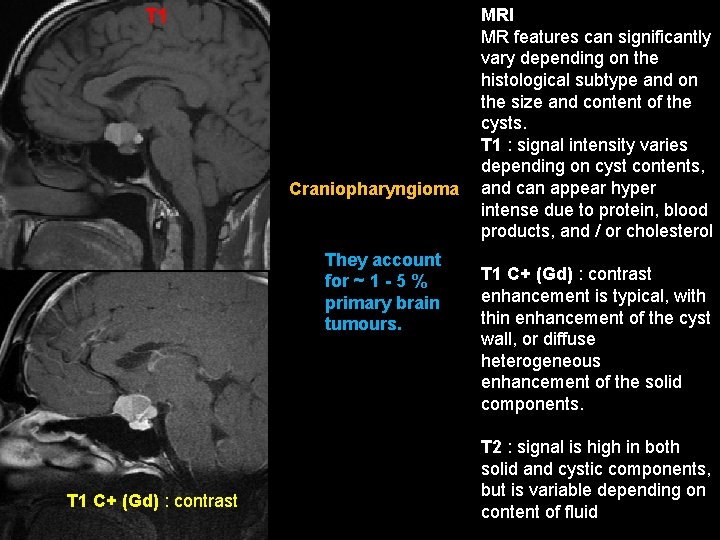
T 1 Craniopharyngioma They account for ~ 1 - 5 % primary brain tumours. MRI MR features can significantly vary depending on the histological subtype and on the size and content of the cysts. T 1 : signal intensity varies depending on cyst contents, and can appear hyper intense due to protein, blood products, and / or cholesterol T 1 C+ (Gd) : contrast enhancement is typical, with thin enhancement of the cyst wall, or diffuse heterogeneous enhancement of the solid components. T 2 : signal is high in both CRANIOPHARYNGIOMA solid and cystic components, but is variable depending on T 1 C+ (Gd) : contrast content of fluid
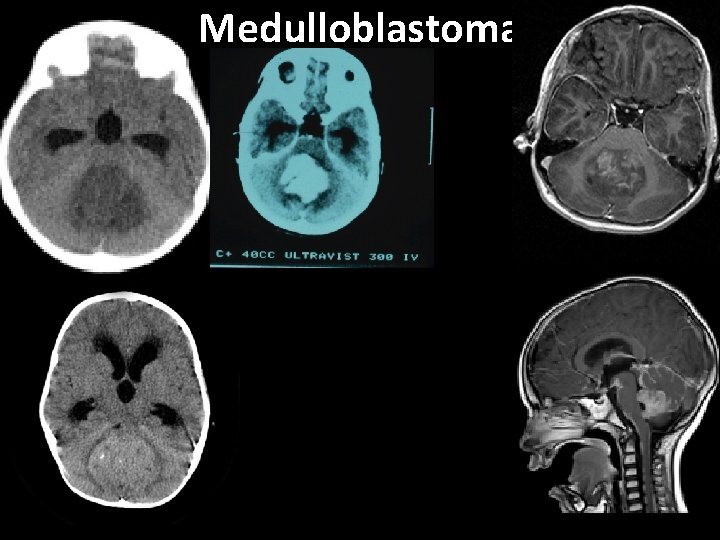
Medulloblastoma NO Q A medulloblastoma is the most common paediatric posterior fossa tumour and accounts for 30 - 40% of such entities. They are a type of CNS primitiv neuroectodermal tumour.
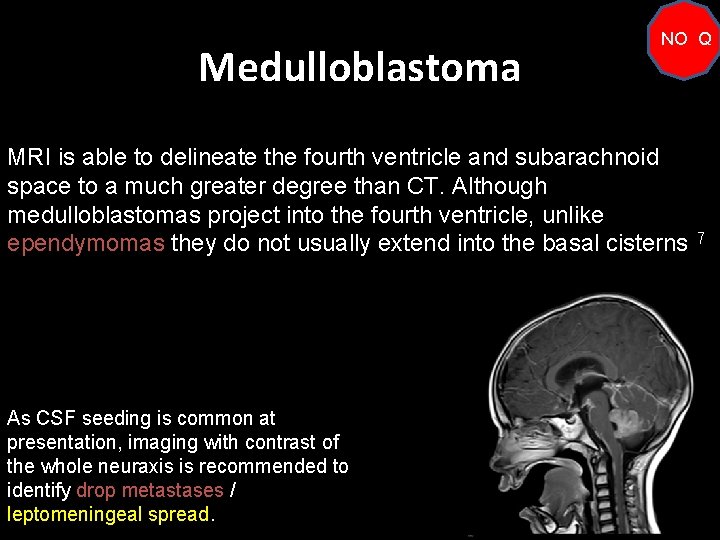
Medulloblastoma NO Q MRI is able to delineate the fourth ventricle and subarachnoid space to a much greater degree than CT. Although medulloblastomas project into the fourth ventricle, unlike ependymomas they do not usually extend into the basal cisterns 7 As CSF seeding is common at presentation, imaging with contrast of the whole neuraxis is recommended to identify drop metastases / leptomeningeal spread.
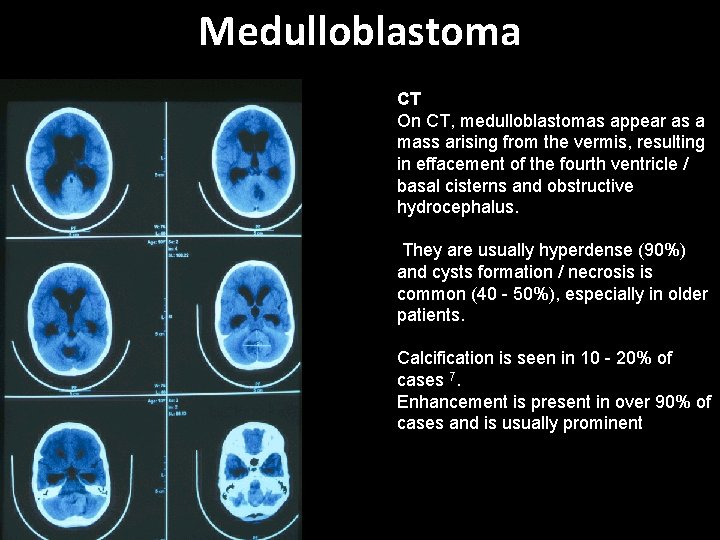
Medulloblastoma CT On CT, medulloblastomas appear as a mass arising from the vermis, resulting in effacement of the fourth ventricle / basal cisterns and obstructive hydrocephalus. They are usually hyperdense (90%) and cysts formation / necrosis is common (40 - 50%), especially in older patients. Calcification is seen in 10 - 20% of cases 7. Enhancement is present in over 90% of cases and is usually prominent
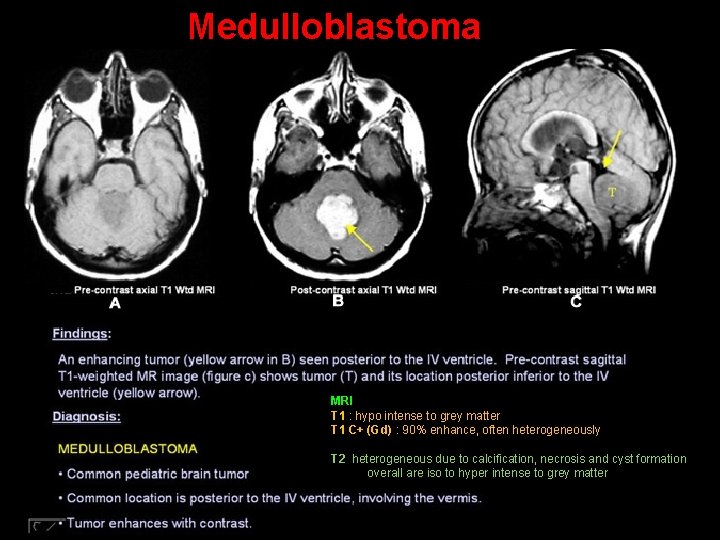
Medulloblastoma MRI T 1 : hypo intense to grey matter T 1 C+ (Gd) : 90% enhance, often heterogeneously T 2 heterogeneous due to calcification, necrosis and cyst formation overall are iso to hyper intense to grey matter
Medulloblastoma
INFLAMMATION IN THE BRAIN • NEURONAL DAMAGE IN CLASSIC NEUROINFLAMMATION • “SECONDARY”NEUROINFLAMMATION IN NEURODEGENERATIVE DISEASES • chronic autoimmune disorders of the brain, such as • multiple sclerosis (MS). • Alzheimer disease (AD), • Parkinson disease (PD), • and Huntington disease (HD),
Multiple sclerosis MRI Multiple sclerosis (MS) is a relatively common acquired chronic relapsing demyelinating diseas einvolving the central nervous system. It is by definition disseminated not only in space (i. e multiple lesions), but also in time (i. e lesions are of different age). T 1 NO Q MRI has revolutionised the diagnosis and surveillance of patients with MS. Not only can an MRI confirm the diagnosis (see Mc. Donald MRI criteria for multiple sclerosis )but follow-up scans can assess response to treatment and try and determine the disease pattern. lesions are typically iso to hypo intense (chronic) T 2 : lesions are typically hyper intense FLAIR : lesions are typically hyper intense when arranged perpendicular to lateral ventricles, extending radially outward (best seen on parasagittal images) they are termed Dawson fingers T 1 C+ (Gd) : active lesions show enhancement is often incomplete around the periphery (open ring sign)
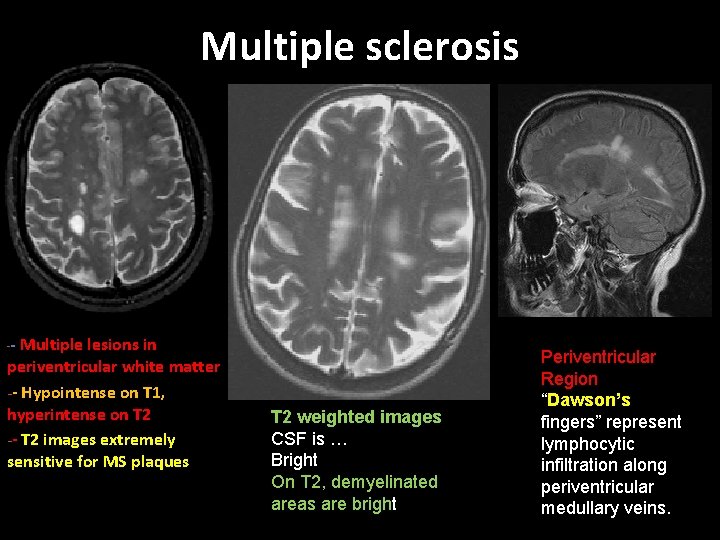
Multiple sclerosis -- Multiple lesions in periventricular white matter -- Hypointense on T 1, hyperintense on T 2 -- T 2 images extremely sensitive for MS plaques T 2 weighted images CSF is … Bright On T 2, demyelinated areas are bright Periventricular Region “Dawson’s fingers” represent lymphocytic infiltration along periventricular medullary veins.
Brain Infection • Brain, the spinal cord, and its surrounding structures could become infected by a large spectrum of microorganisms. • Bacteria and viruses are the most common offenders. Parasites, fungi, and others can infect the central nervous system (CNS), although more rarely. NO Q
Brain Infection NO Q • Depending on the location of the infection, different names are given to the diseases. – Meningitis is the inflammation of the meninges, – Encephalitis is an inflammation of the brain itself. – Myelitis actually means a spinal cord inflammation. – Abscess is an accumulation of infectious material and offending microorganisms within the CNS.
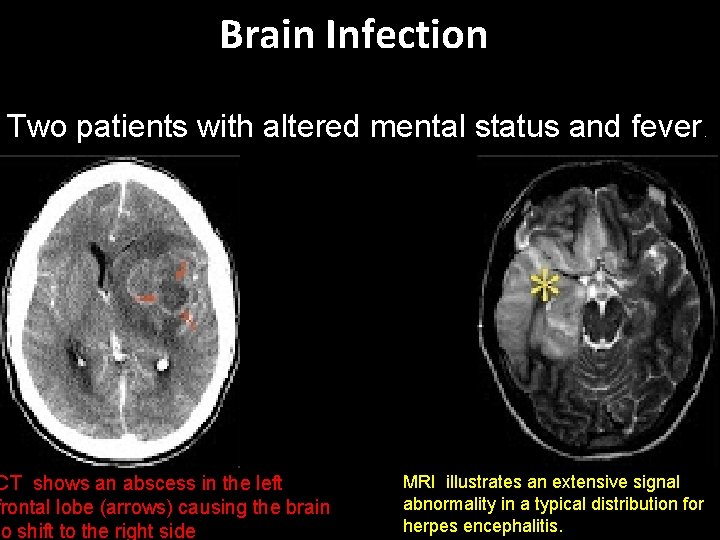
Brain Infection Two patients with altered mental status and fever. CT shows an abscess in the left frontal lobe (arrows) causing the brain to shift to the right side MRI illustrates an extensive signal abnormality in a typical distribution for herpes encephalitis.
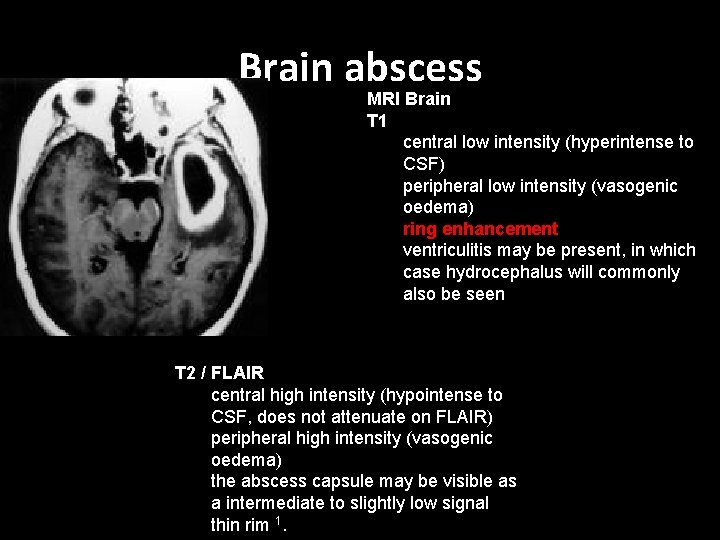
Brain abscess MRI Brain T 1 central low intensity (hyperintense to CSF) peripheral low intensity (vasogenic oedema) ring enhancement ventriculitis may be present, in which case hydrocephalus will commonly also be seen T 2 / FLAIR central high intensity (hypointense to CSF, does not attenuate on FLAIR) peripheral high intensity (vasogenic oedema) the abscess capsule may be visible as a intermediate to slightly low signal thin rim 1.
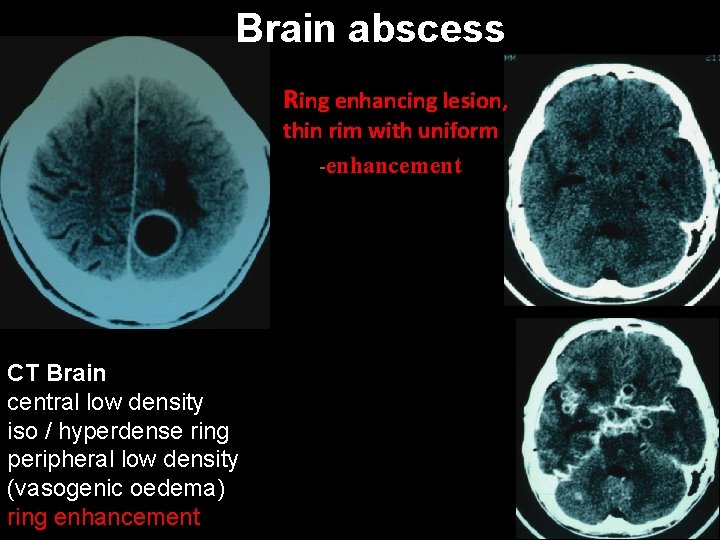
Brain abscess Ring enhancing lesion, thin rim with uniform -enhancement CT Brain central low density iso / hyperdense ring peripheral low density (vasogenic oedema) ring enhancement
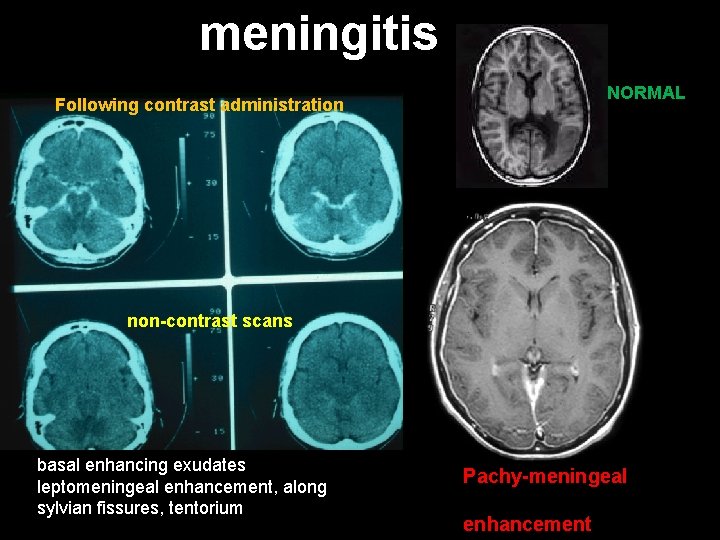
meningitis NORMAL Following contrast administration non-contrast scans basal enhancing exudates leptomeningeal enhancement, along sylvian fissures, tentorium Pachy-meningeal enhancement
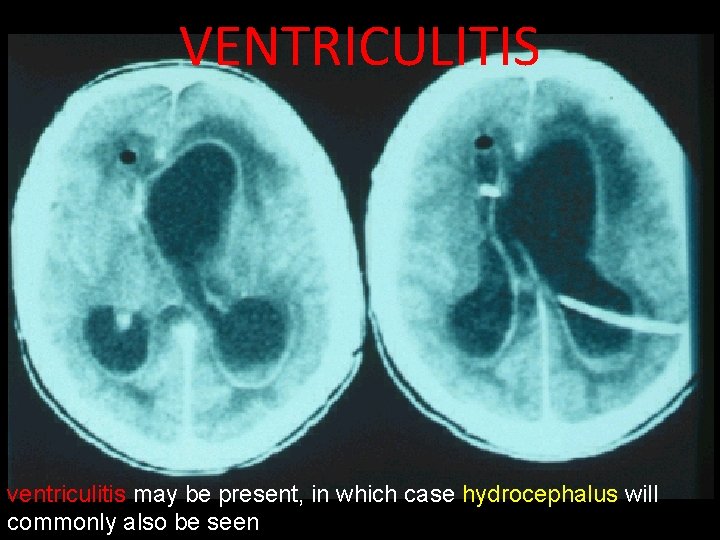
VENTRICULITIS ventriculitis may be present, in which case hydrocephalus will commonly also be seen
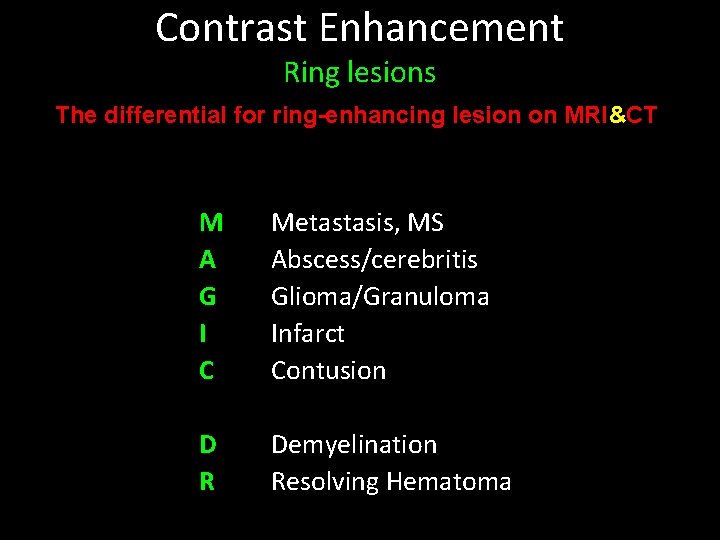
Contrast Enhancement Ring lesions The differential for ring-enhancing lesion on MRI&CT M A G I C Metastasis, MS Abscess/cerebritis Glioma/Granuloma Infarct Contusion D R Demyelination Resolving Hematoma
Secondary Brain Tumors (Brain Metastases) NO Q A metastatic, or secondary, brain tumor is one that begins as cancer in another part of the body. Some of the cancer cells may be carried to the brain by the blood or lymphatic fluid, or may spread from adjacent tissue. The site where the cancerous cells originated is referred to as the primary cancer. Metastatic brain tumors are the most common brain tumors.
Secondary Brain Tumors (Brain Metastases) NO Q • Characteristics • The primary cancer is usually in the lung, breast, colon, kidney, or skin (melanoma), but can originate in any part of the body • Most are located in the cerebrum, but can also develop in the cerebellum or brain stem • More than half of people with metastatic tumors have multiple lesions (tumors)
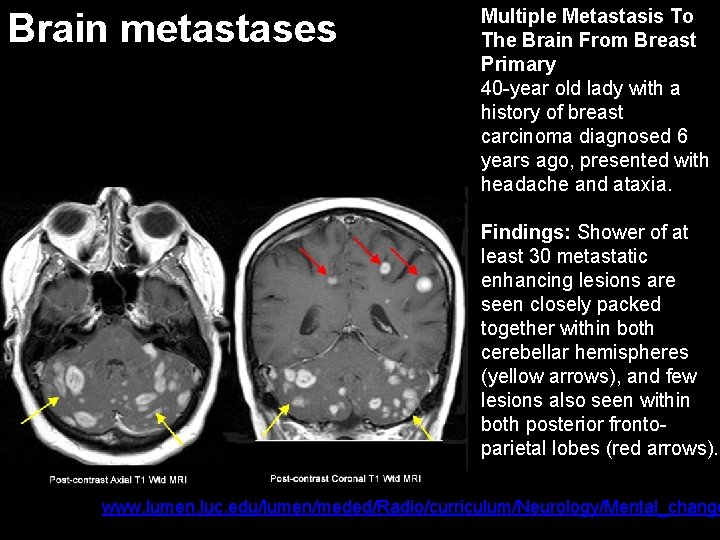
Brain metastases Multiple Metastasis To The Brain From Breast Primary 40 -year old lady with a history of breast carcinoma diagnosed 6 years ago, presented with headache and ataxia. Findings: Shower of at least 30 metastatic enhancing lesions are seen closely packed together within both cerebellar hemispheres (yellow arrows), and few lesions also seen within both posterior frontoparietal lobes (red arrows). www. lumen. luc. edu/lumen/meded/Radio/curriculum/Neurology/Mental_change
Intracranial Tumors Role of imaging in neurooncology • Diagnosis – Ddx: tumor vs. infection vs. vascular – Clinical complications: parenchyma compromise, mass effects • Treatment – Treatment planning – Localization for therapeutic modalities: RT, stereotaxic surgery – Evaluation • Post-treatment surveillance – Tumor recurrence

Thank you!!!

NO Q
- Slides: 47