
Radiology of Common Brain diseases Tumor Inflammation Infection
Radiology of Common Brain diseases Tumor, Inflammation, Infection Dr. HAMDY HASSAN FRCR Ass. Prof. and Consultant Radiologist 17 March 2015 (RAD 366, Radiology)
Lecture Objectives. . Students at the end of the lecture will be able to: • Identify the common brain tumors and their different pattern on CT and MRI. • Identify the common inflammatory diseases of the brain and their imaging features. • Identify the common CNS infections and their different imaging patterns and imaging of their complications.
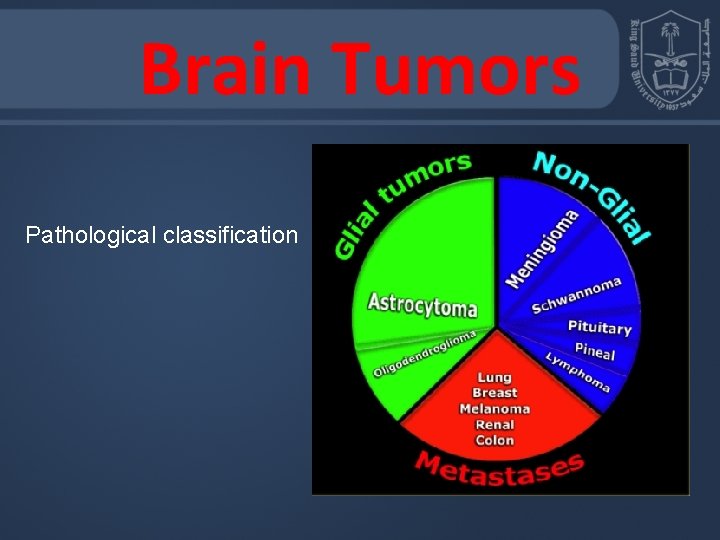
Brain Tumors Pathological classification
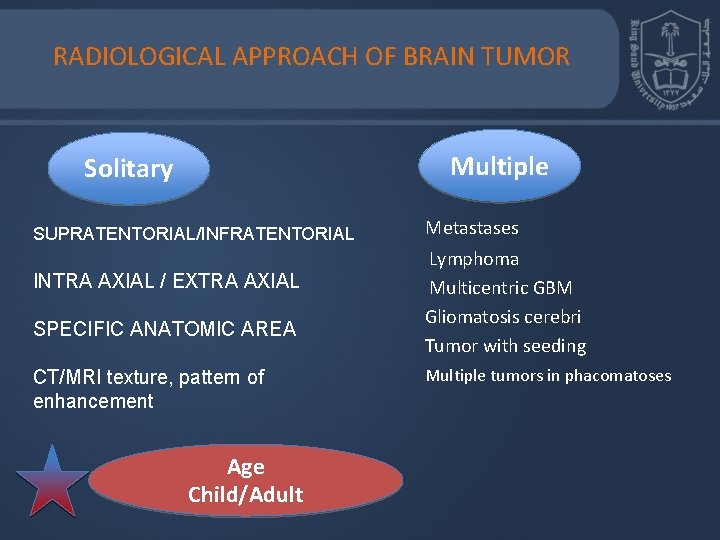
RADIOLOGICAL APPROACH OF BRAIN TUMOR Multiple Solitary SUPRATENTORIAL/INFRATENTORIAL INTRA AXIAL / EXTRA AXIAL SPECIFIC ANATOMIC AREA CT/MRI texture, pattern of enhancement Age Child/Adult Metastases Lymphoma Multicentric GBM Gliomatosis cerebri Tumor with seeding Multiple tumors in phacomatoses

Common Intra-Axila Tumors in Pediatric Supratentorial • Astrocytoma • Pleomorphic xanthoastro (PXA) • Ganglioma • PNET • DNET Infratentorial • • • Juvenile pilocytic astrocytoma Medulloblastoma Ependymoma Brainstem astrocytoma Atypical teratoid/rhabdoid tumor
Common Intra-Axila Infra tentorial Tumor in Pediatric Medulloblastoma • PNET • WHO IV • Midline >85% 4 th V • Age incidence < 10 y, second peak 20 -40 y • Cysts 40% • Ca++ 20 -25%
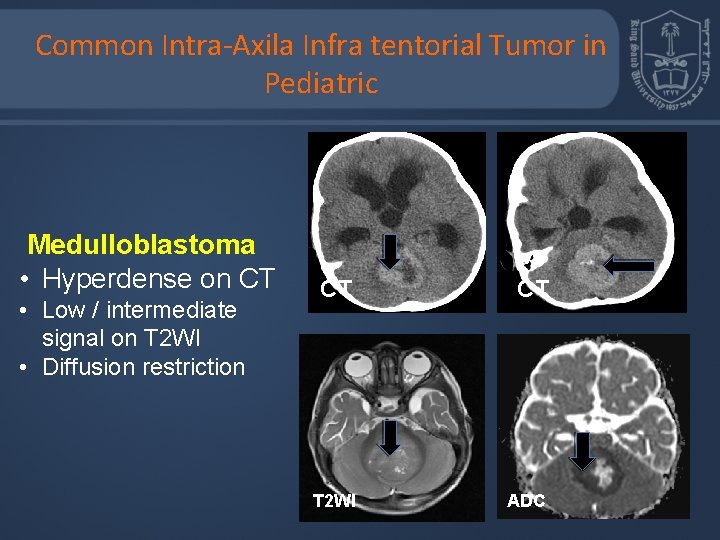
Common Intra-Axila Infra tentorial Tumor in Pediatric Medulloblastoma • Hyperdense on CT • Low / intermediate signal on T 2 WI • Diffusion restriction CT CT T 2 WI ADC
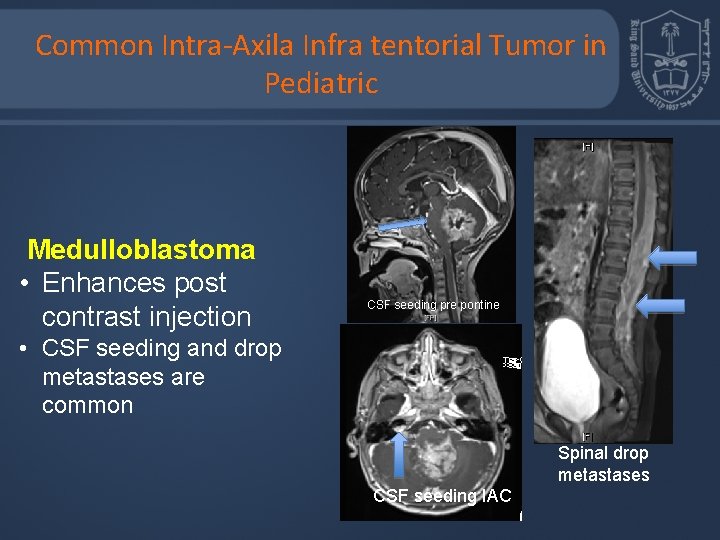
Common Intra-Axila Infra tentorial Tumor in Pediatric Medulloblastoma • Enhances post contrast injection CSF seeding pre pontine • CSF seeding and drop metastases are common Spinal drop metastases CSF seeding IAC
Common Intra-Axila Infra tentorial Tumor in Pediatric Pilocytic astrocytoma • Low grade I • Age incidence 5 -15 years • Cyst with enhancing nodule
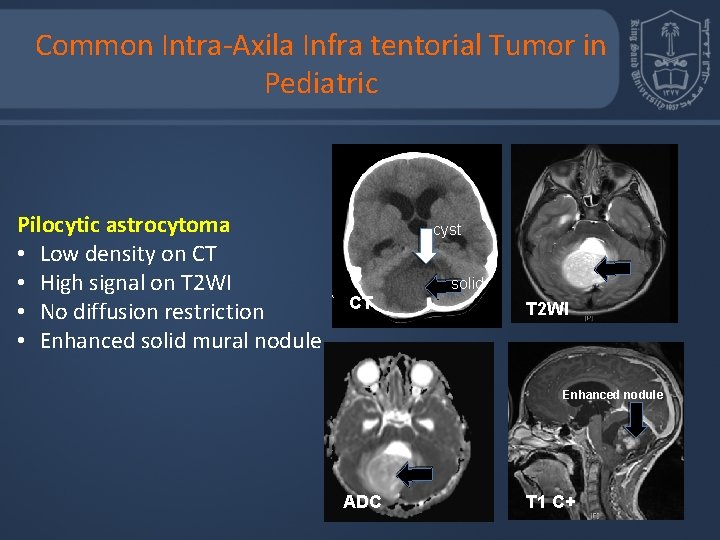
Common Intra-Axila Infra tentorial Tumor in Pediatric Pilocytic astrocytoma • Low density on CT • High signal on T 2 WI • No diffusion restriction • Enhanced solid mural nodule cyst solid CT T 2 WI Enhanced nodule ADC T 1 C+
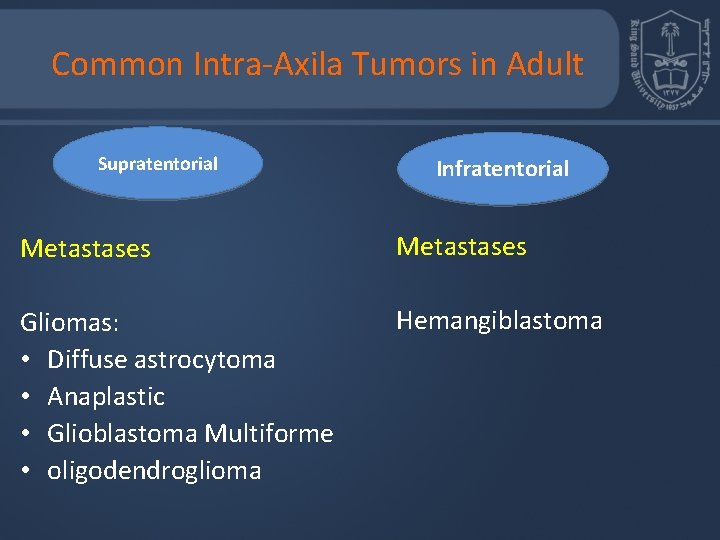
Common Intra-Axila Tumors in Adult Supratentorial Infratentorial Metastases Gliomas: • Diffuse astrocytoma • Anaplastic • Glioblastoma Multiforme • oligodendroglioma Hemangiblastoma
Common Intra-Axila Supra tentorial Tumor in Adult Glioblastoma Multiforme GBM • WHO grade IV • Most common 1 ry brain tumor and most malignant • 60 -75% of astrocytoma • Peak age 45 -75 years • Can occur at any age even neonates and infants • Cerebral hemisphere (subcortical, periventricular and across compact tract). Basal ganglia and thalamus.
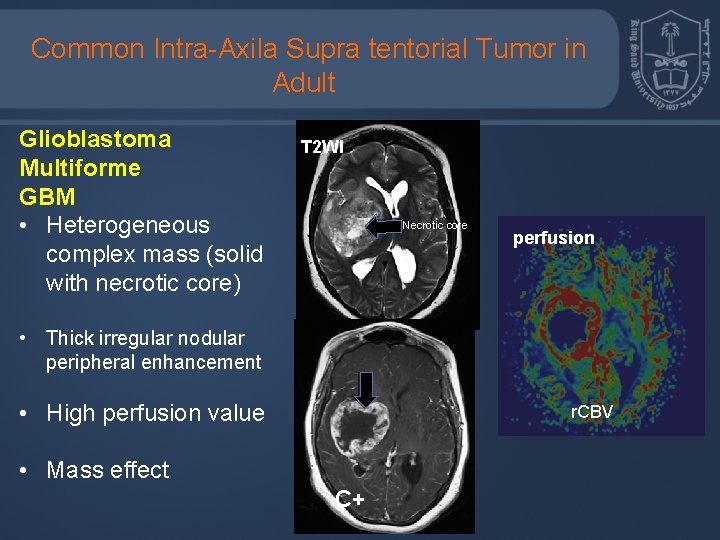
Common Intra-Axila Supra tentorial Tumor in Adult Glioblastoma Multiforme GBM • Heterogeneous complex mass (solid with necrotic core) T 2 WI Necrotic core perfusion • Thick irregular nodular peripheral enhancement • High perfusion value r. CBV • Mass effect C+
Extra Axial tumors • Meningioma……most common • Metastases (calvarial, dural and leptomeningeal) Dural (breast, lung, prostate, melanoma, neuroblastoma, lymphoma and leukemia) leptomeningeal ( CSF seeding from GBM, AA, medulloblastoma and ependymoma) • Schwannoma • Epidermoid • Dermoid • Arachnoid cyst

Extra Axial tumors Signs of Extra-Axial Location • CSF cleft • Broad dural base • Cortical gray matter between mass and white matter • Displaced subarachnoid vessels T 1 WI Gray matter between mass and white matter T 2 WI CSF cleft Broad dural base
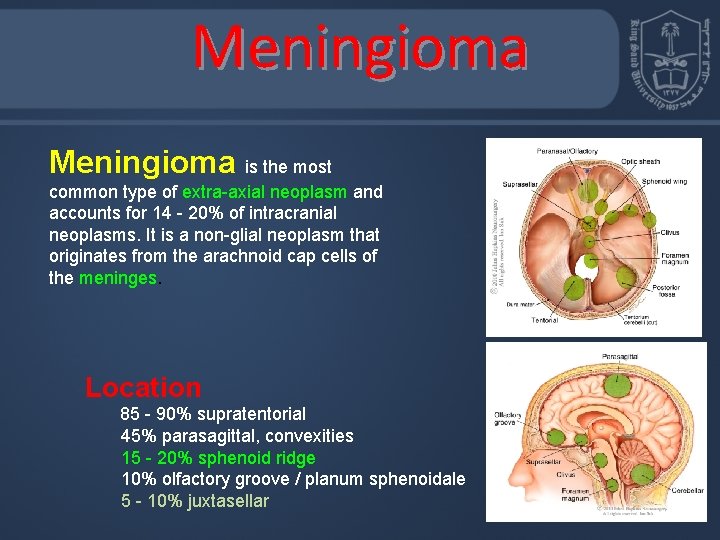
Meningioma is the most common type of extra-axial neoplasm and accounts for 14 - 20% of intracranial neoplasms. It is a non-glial neoplasm that originates from the arachnoid cap cells of the meninges. Location 85 - 90% supratentorial 45% parasagittal, convexities 15 - 20% sphenoid ridge 10% olfactory groove / planum sphenoidale 5 - 10% juxtasellar
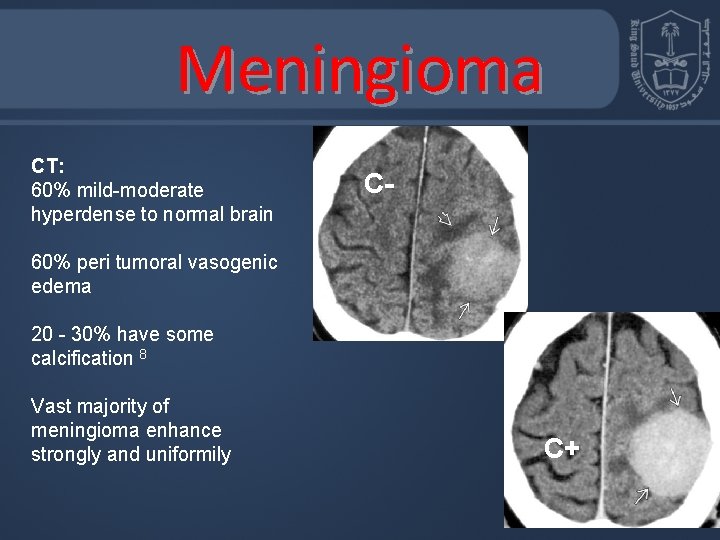
Meningioma CT: 60% mild-moderate hyperdense to normal brain C- 60% peri tumoral vasogenic edema 20 - 30% have some calcification 8 Vast majority of meningioma enhance strongly and uniformily C+
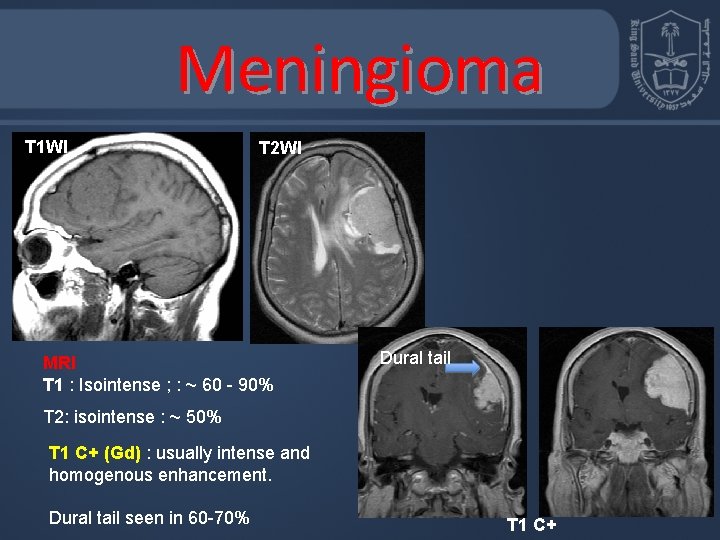
Meningioma T 1 WI T 2 WI MRI T 1 : Isointense ; : ~ 60 - 90% Dural tail T 2: isointense : ~ 50% T 1 C+ (Gd) : usually intense and homogenous enhancement. Dural tail seen in 60 -70% T 1 C+
Secondary Brain Tumors (Brain Metastases) • Metastatic brain tumors are the most common brain tumors. • The primary cancer is usually in the lung, breast, colon, kidney, or skin (melanoma), but can originate in any part of the body. • Most are located in the cerebrum, but can also develop in the cerebellum or brain stem. • More than half of people with metastatic tumors have multiple lesions (tumors)
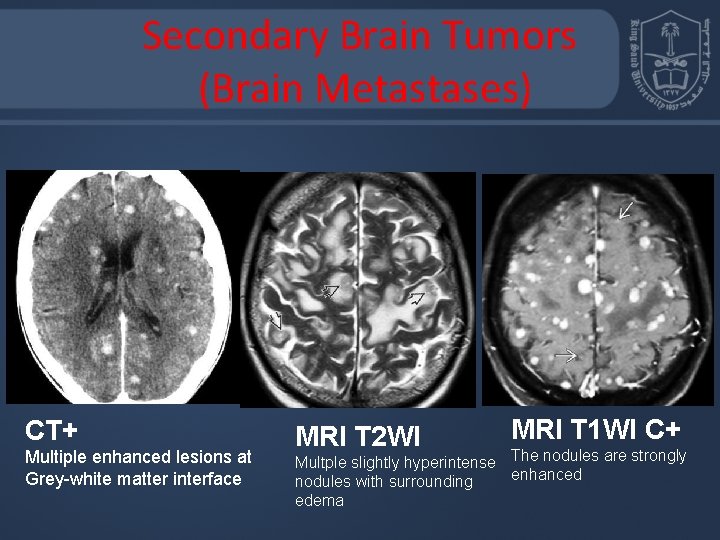
Secondary Brain Tumors (Brain Metastases) CT+ Multiple enhanced lesions at Grey-white matter interface MRI T 2 WI MRI T 1 WI C+ Multple slightly hyperintense The nodules are strongly enhanced nodules with surrounding edema
Sellar and Parasellar masses Adult • Adenoma • Meningioma • Aneurysm Children • Craniopharyngioma • Hypothalamic/optic chiasm pilocytic astrocytoma Other less common • Metastasis • Lymphoma • Hypothalamic hamartoma • Rathke cleft cyst • Arachnoid cyst • Epidermoid • Dermoid • Germinoma
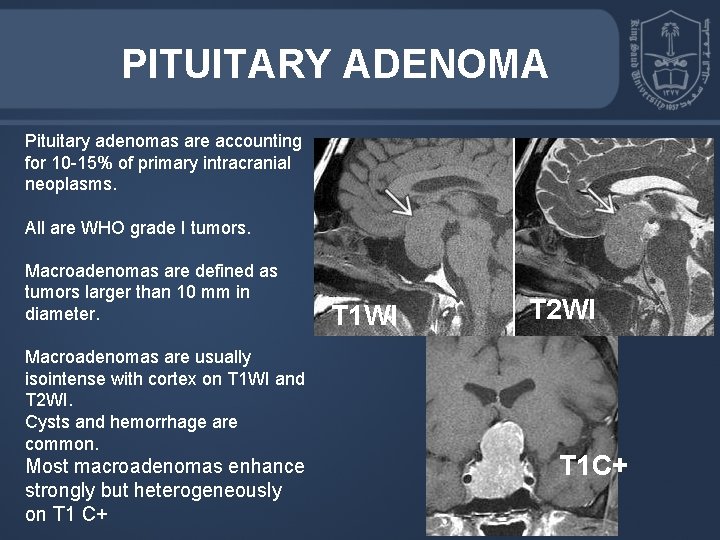
PITUITARY ADENOMA Pituitary adenomas are accounting for 10 -15% of primary intracranial neoplasms. All are WHO grade I tumors. Macroadenomas are defined as tumors larger than 10 mm in diameter. Macroadenomas are usually isointense with cortex on T 1 WI and T 2 WI. Cysts and hemorrhage are common. Most macroadenomas enhance strongly but heterogeneously on T 1 C+ T 1 WI T 2 WI T 1 C+
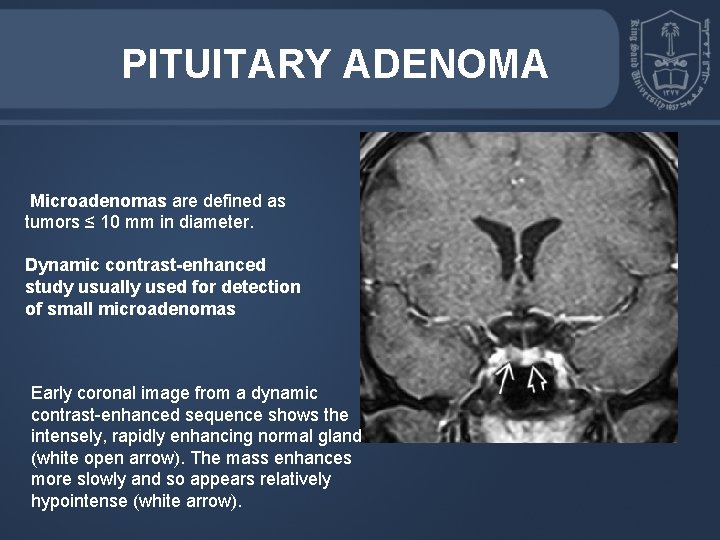
PITUITARY ADENOMA Microadenomas are defined as tumors ≤ 10 mm in diameter. Dynamic contrast-enhanced study usually used for detection of small microadenomas Early coronal image from a dynamic contrast-enhanced sequence shows the intensely, rapidly enhancing normal gland (white open arrow). The mass enhances more slowly and so appears relatively hypointense (white arrow).
CRANIOPHARYNGIOMA • Craniopharyngiomas are a type of relatively benign (WHO grade I) neoplasm which typically arises in the sellar / suprasellar region. They account for ~ 1 - 5 % primary brain tumours. • They derive from remnants of the craniopharyngeal duct(narrowing which separates Rathke's pouch from the primitive oral cavity), and can occur anywhere along the infundibulum (from floor of the third ventricle, to the pituitary gland).
CRANIOPHARYNGIOMA Craniopharyngiomas are primarily suprasellar tumors (75%). A small intrasellar component is present in 20 -25% of cases. Two types of craniopharyngiomas are recognized: Adamantinomatous 90% Papillary 10%.
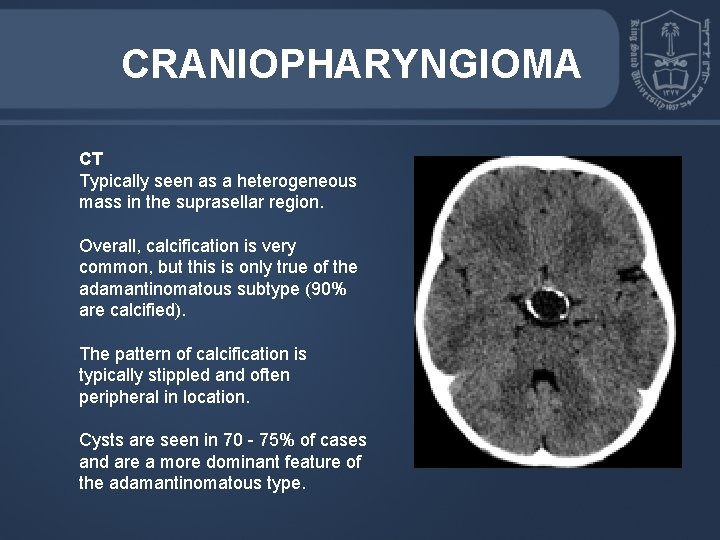
CRANIOPHARYNGIOMA CT Typically seen as a heterogeneous mass in the suprasellar region. Overall, calcification is very common, but this is only true of the adamantinomatous subtype (90% are calcified). The pattern of calcification is typically stippled and often peripheral in location. Cysts are seen in 70 - 75% of cases and are a more dominant feature of the adamantinomatous type.
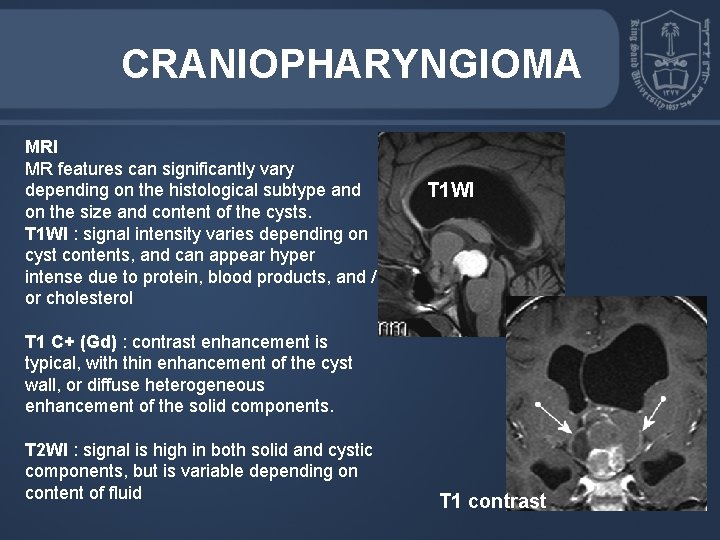
CRANIOPHARYNGIOMA MRI MR features can significantly vary depending on the histological subtype and on the size and content of the cysts. T 1 WI : signal intensity varies depending on cyst contents, and can appear hyper intense due to protein, blood products, and / or cholesterol T 1 WI T 1 C+ (Gd) : contrast enhancement is typical, with thin enhancement of the cyst wall, or diffuse heterogeneous enhancement of the solid components. T 2 WI : signal is high in both solid and cystic components, but is variable depending on content of fluid T 1 contrast
Demyelinating and Inflammatory Diseases Inflammation is not synonymous with infection. Inflammation is the response of tissues to a variety of pathogens (which may or may not be infectious microorganisms). The inflammatory "cascade" is complex and multifactorial. It involves the vascular system, immune system, and cellular responses such as microglial activation, the primary component of the brain's innate immune response.
Demyelinating and Inflammatory Diseases Inflammation can be acute or chronic, manageable or life-threatening. Imaging plays a central role in the identification and follow-up of neuroinflammatory disorders.
MULTIPLE SCLEROSIS (MS) Is a chronic, persistent inflammatorydemyelinating disease of the central nervous system, characterized pathologically by areas of inflammation, demyelination, axonal loss and gliosis scattered throughout the CNS. Etiology: unknown autoimmune-mediated demyelination. Age: 20 -40 years female preponderance in young
MULTIPLE SCLEROSIS According to the Mc. Donald criteria for MS, the diagnosis requires objective evidence of lesions disseminated in time and space. As a consequence there is an important role for MRI in the diagnosis of MS, since MRI can show multiple lesions (dissemination in space), some of which can be clinically occult and MRI can show new lesions on follow up scans (dissemination in time).
MULTIPLE SCLEROSIS T 1 WI lesions are typically iso to hypo intense (chronic) T 2 WI lesions are typically hyper intense FLAIR : lesions are typically hyper intense when arranged perpendicular to lateral ventricles, extending radially outward (best seen on parasagittal images) they are termed Dawson fingers T 1 C+ (Gd) : active lesions show enhancement is often incomplete around the periphery (open ring sign)
MULTIPLE SCLEROSIS Characteristic location: Corpus callosum, U fibers (juxtacortical) Periventricular (Dawson’s fingers) Temporal lobes Brainstem Cerebellum Spinal cord.
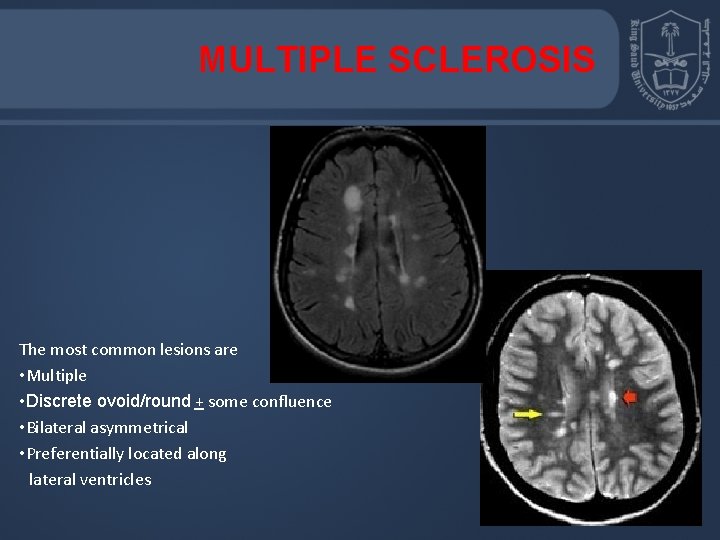
MULTIPLE SCLEROSIS The most common lesions are • Multiple • Discrete ovoid/round + some confluence • Bilateral asymmetrical • Preferentially located along lateral ventricles
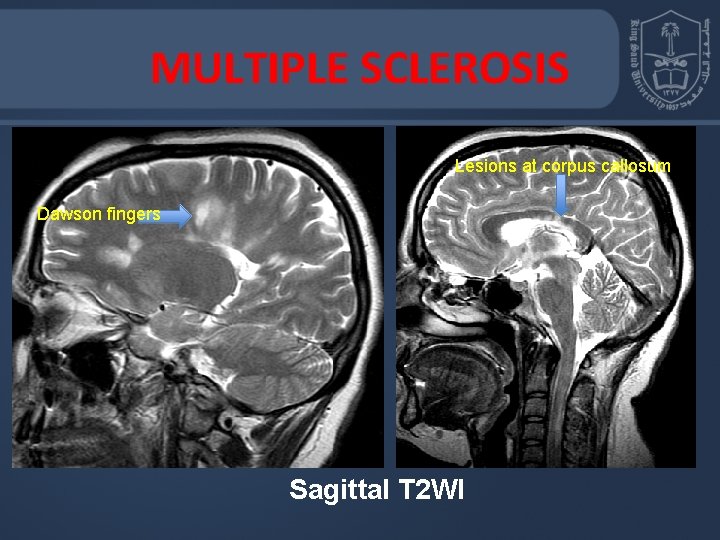
MULTIPLE SCLEROSIS Lesions at corpus callosum Dawson fingers Sagittal T 2 WI
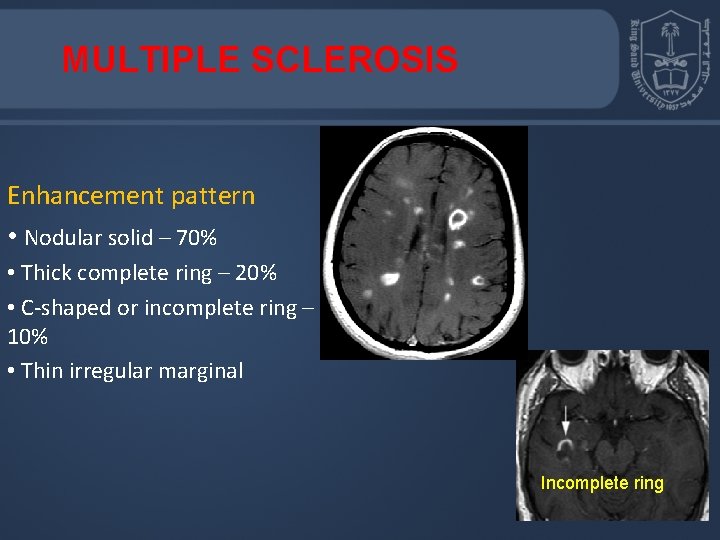
MULTIPLE SCLEROSIS Enhancement pattern • Nodular solid – 70% • Thick complete ring – 20% • C-shaped or incomplete ring – 10% • Thin irregular marginal Incomplete ring
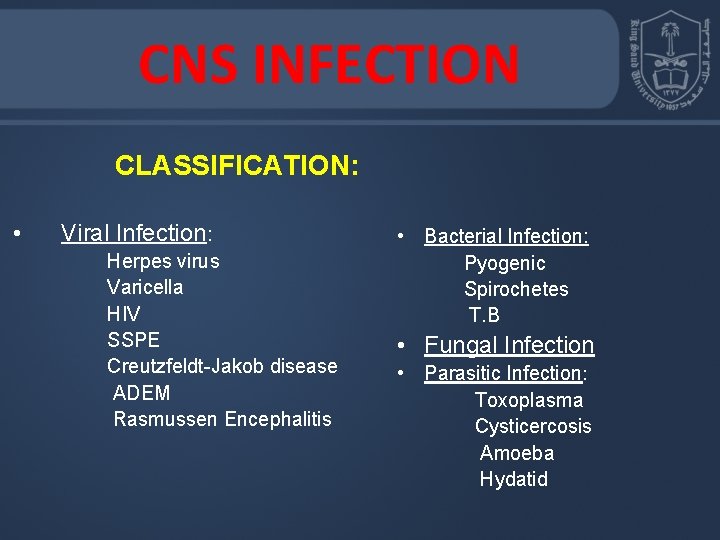
CNS INFECTION CLASSIFICATION: • Viral Infection: Herpes virus Varicella HIV SSPE Creutzfeldt-Jakob disease ADEM Rasmussen Encephalitis • Bacterial Infection: Pyogenic Spirochetes T. B • Fungal Infection • Parasitic Infection: Toxoplasma Cysticercosis Amoeba Hydatid
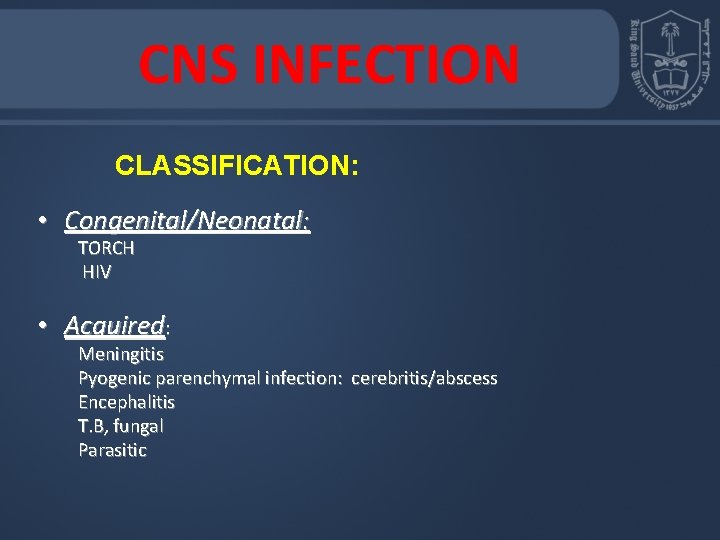
CNS INFECTION CLASSIFICATION: • Congenital/Neonatal: TORCH HIV • Acquired: Meningitis Pyogenic parenchymal infection: cerebritis/abscess Encephalitis T. B, fungal Parasitic
CNS INFECTION MENINGITIS • Most common form of CNS infection. • Types: Acute pyogenic (bacterial). Lymphocytic (viral). Chronic: T. B and coccidiodomycosis.
CNS INFECTION ACUTE PYOGENIC MENINGITIS Pathology: Purulent exudates in basal cisterns and subarachnoid spaces. Imaging: 1. Most common finding is normal scan. 2. Mild ventriculomegaly (early). 3. Effacement of basilar and convexity cisterns. 4. Enhancing meninges. 5. Increased signal of subarachnoid space on FLAIR. Role of imaging is to Monitor the complications
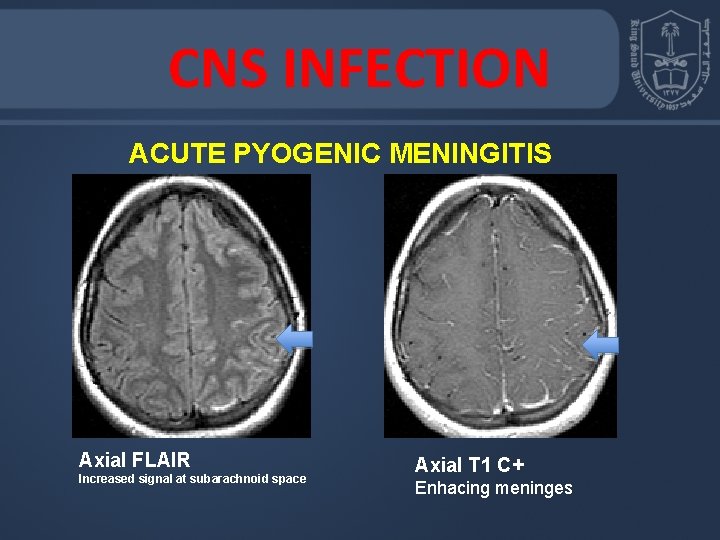
CNS INFECTION ACUTE PYOGENIC MENINGITIS Axial FLAIR Increased signal at subarachnoid space Axial T 1 C+ Enhacing meninges
CNS INFECTION ACUTE PYOGENIC MENINGITIS Complications: • • • Hydrocephalus and ventriculitis Subdural effusion Empyema Cerebritis and abscess Cerebrovascular complication
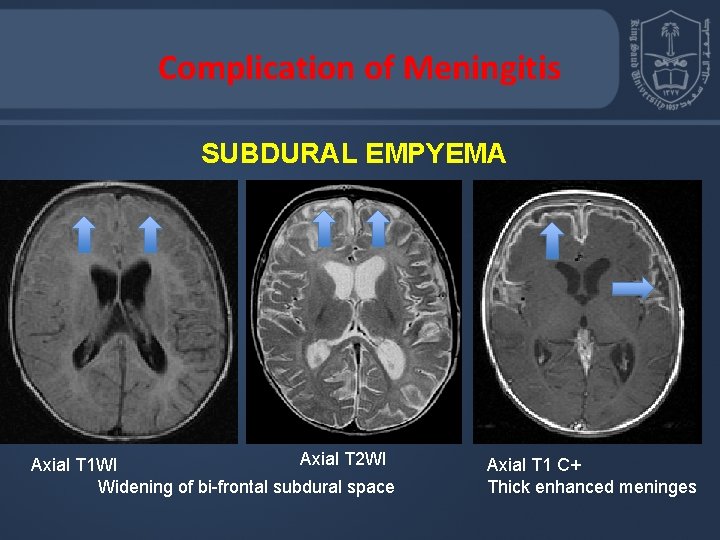
Complication of Meningitis SUBDURAL EMPYEMA Axial T 2 WI Axial T 1 WI Widening of bi-frontal subdural space Axial T 1 C+ Thick enhanced meninges
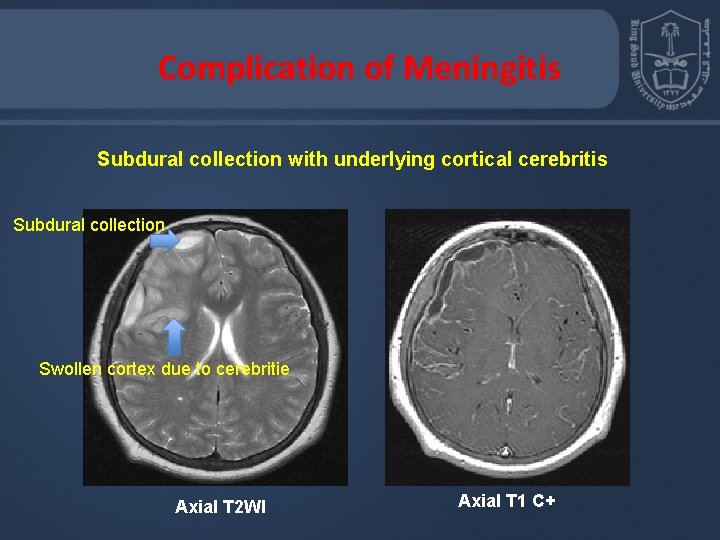
Complication of Meningitis Subdural collection with underlying cortical cerebritis Subdural collection Swollen cortex due to cerebritie Axial T 2 WI Axial T 1 C+
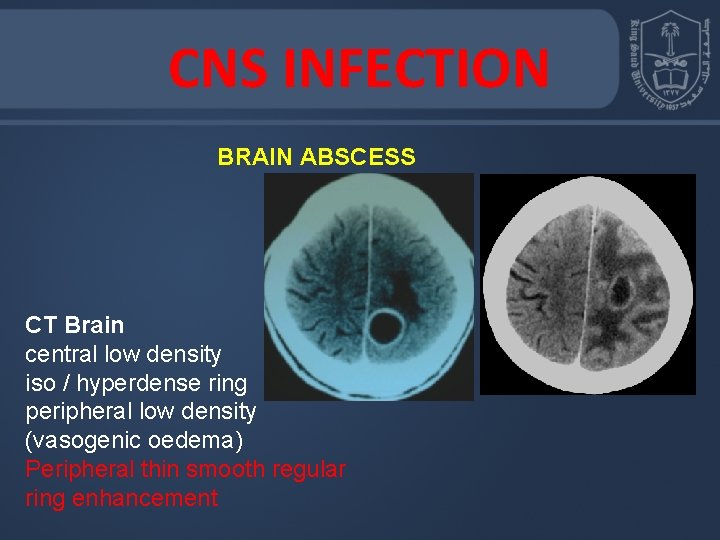
CNS INFECTION BRAIN ABSCESS CT Brain central low density iso / hyperdense ring peripheral low density (vasogenic oedema) Peripheral thin smooth regular ring enhancement
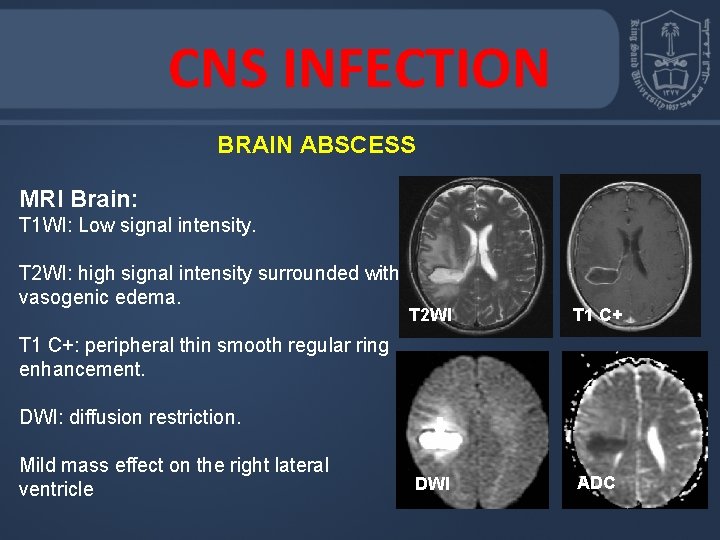
CNS INFECTION BRAIN ABSCESS MRI Brain: T 1 WI: Low signal intensity. T 2 WI: high signal intensity surrounded with vasogenic edema. T 2 WI T 1 C+ DWI ADC T 1 C+: peripheral thin smooth regular ring enhancement. DWI: diffusion restriction. Mild mass effect on the right lateral ventricle
ENCEPHALITIS Diffuse non-focal parenchymal inflammatory disease that can be caused by broad spectrum of agents, the most common are viral.
HERPES SIMPLEX ENCEPHALITIS • • • Most common viral encephalitis. HSV 2 in neonates, HSV 1 in children& adults. Transported along sensory fibers to olfactory nerve or gasserian ganglion. Location: predilection for limbic system temporal lobe…. insular cortex…. subfrontal area and singulate gyrus. unilatral then bilateral.
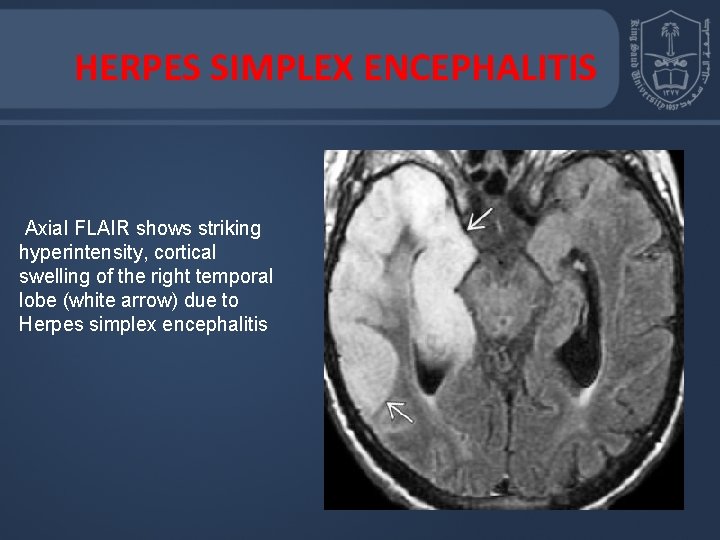
HERPES SIMPLEX ENCEPHALITIS Axial FLAIR shows striking hyperintensity, cortical swelling of the right temporal lobe (white arrow) due to Herpes simplex encephalitis
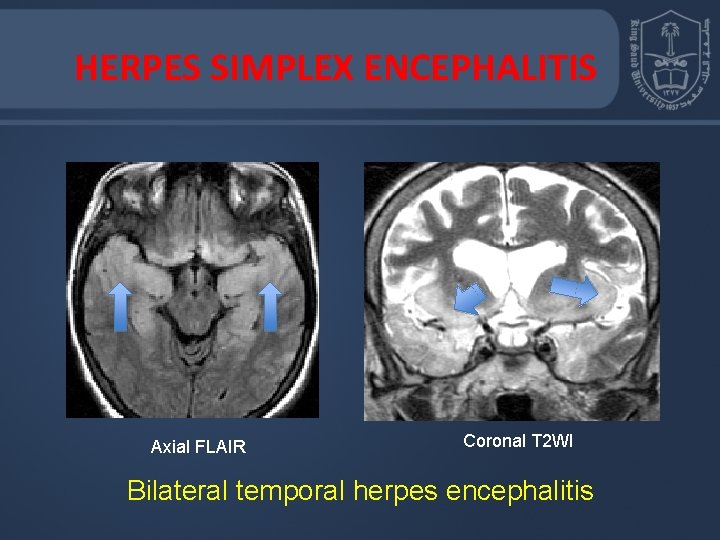
HERPES SIMPLEX ENCEPHALITIS Axial FLAIR Coronal T 2 WI Bilateral temporal herpes encephalitis
Thank You (Rad 366, Radiology) Dr. HAMDY HASSAN 17 March 2015
- Slides: 51