
RADIOLOGY DEPARTMENT NASOGASTRIC TUBE PROTOCOL All nasogastric tube
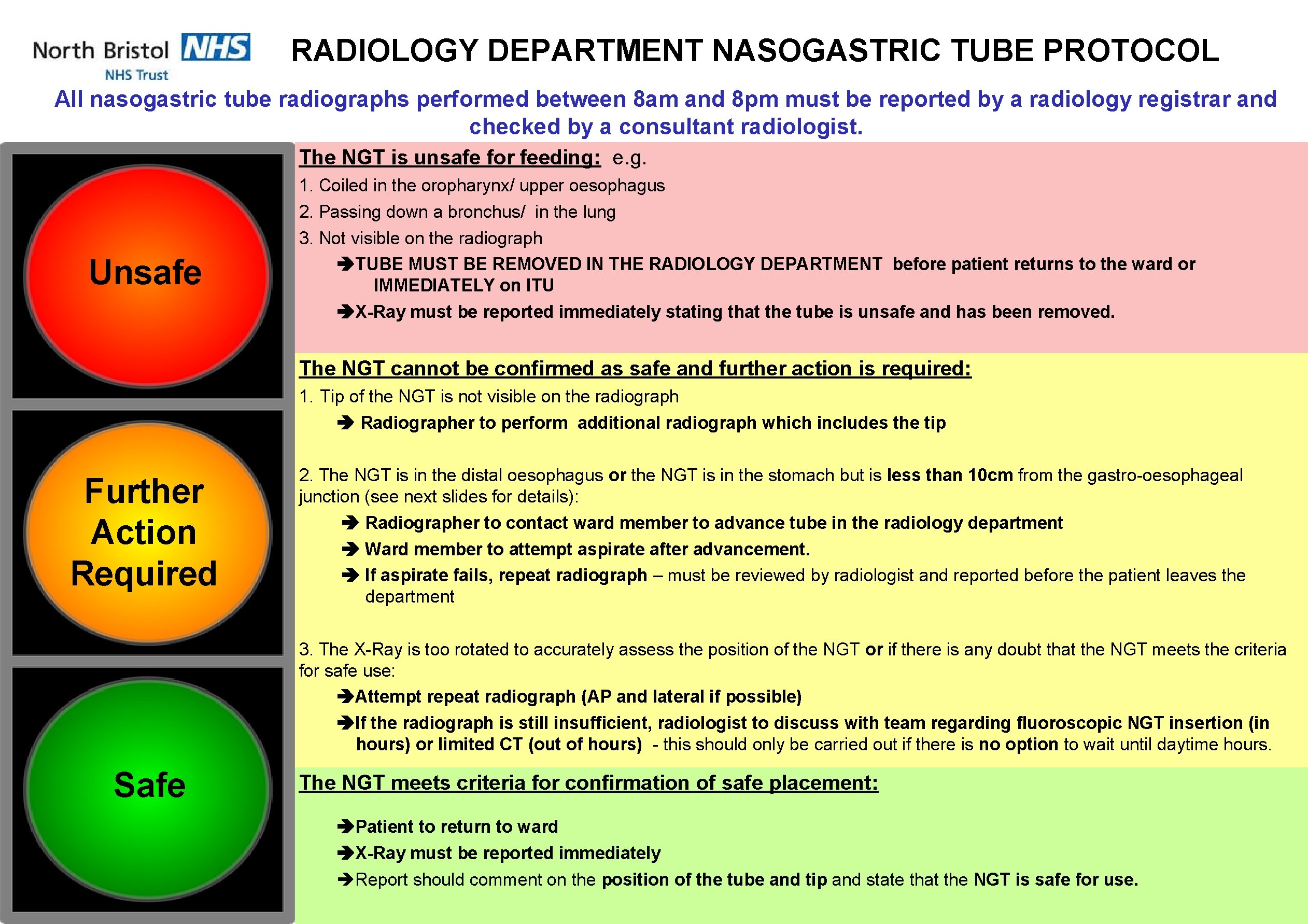
RADIOLOGY DEPARTMENT NASOGASTRIC TUBE PROTOCOL All nasogastric tube radiographs performed between 8 am and 8 pm must be reported by a radiology registrar and checked by a consultant radiologist. The NGT is unsafe for feeding: e. g. Unsafe FIGURE 1 1. Coiled in the oropharynx/ upper oesophagus 2. Passing down a bronchus/ in the lung 3. Not visible on the radiograph TUBE MUST BE REMOVED IN THE RADIOLOGY DEPARTMENT before patient returns to the ward or IMMEDIATELY on ITU X-Ray must be reported immediately stating that the tube is unsafe and has been removed. The NGT cannot be confirmed as safe and further action is required: 1. Tip of the NGT is not visible on the radiograph Radiographer to perform additional radiograph which includes the tip Further Action Required TABLE 1 2. The NGT is in the distal oesophagus or the NGT is in the stomach but is less than 10 cm from the gastro-oesophageal junction (see next slides for details): Radiographer to contact ward member to advance tube in the radiology department Ward member to attempt aspirate after advancement. If aspirate fails, repeat radiograph – must be reviewed by radiologist and reported before the patient leaves the department 3. The X-Ray is too rotated to accurately assess the position of the NGT or if there is any doubt that the NGT meets the criteria for safe use: Attempt repeat radiograph (AP and lateral if possible) If the radiograph is still insufficient, radiologist to discuss with team regarding fluoroscopic NGT insertion (in hours) or limited CT (out of hours) - this should only be carried out if there is no option to wait until daytime hours. Safe The NGT meets criteria for confirmation of safe placement: Patient to return to ward X-Ray must be reported immediately Report should comment on the position of the tube and tip and state that the NGT is safe for use.

X-Ray Interpretation Aids Is the tip of the nasogastric tube 10 cm or more below the gastro-oesophageal junction? (see slide 7)

X-Ray Interpretation Aids
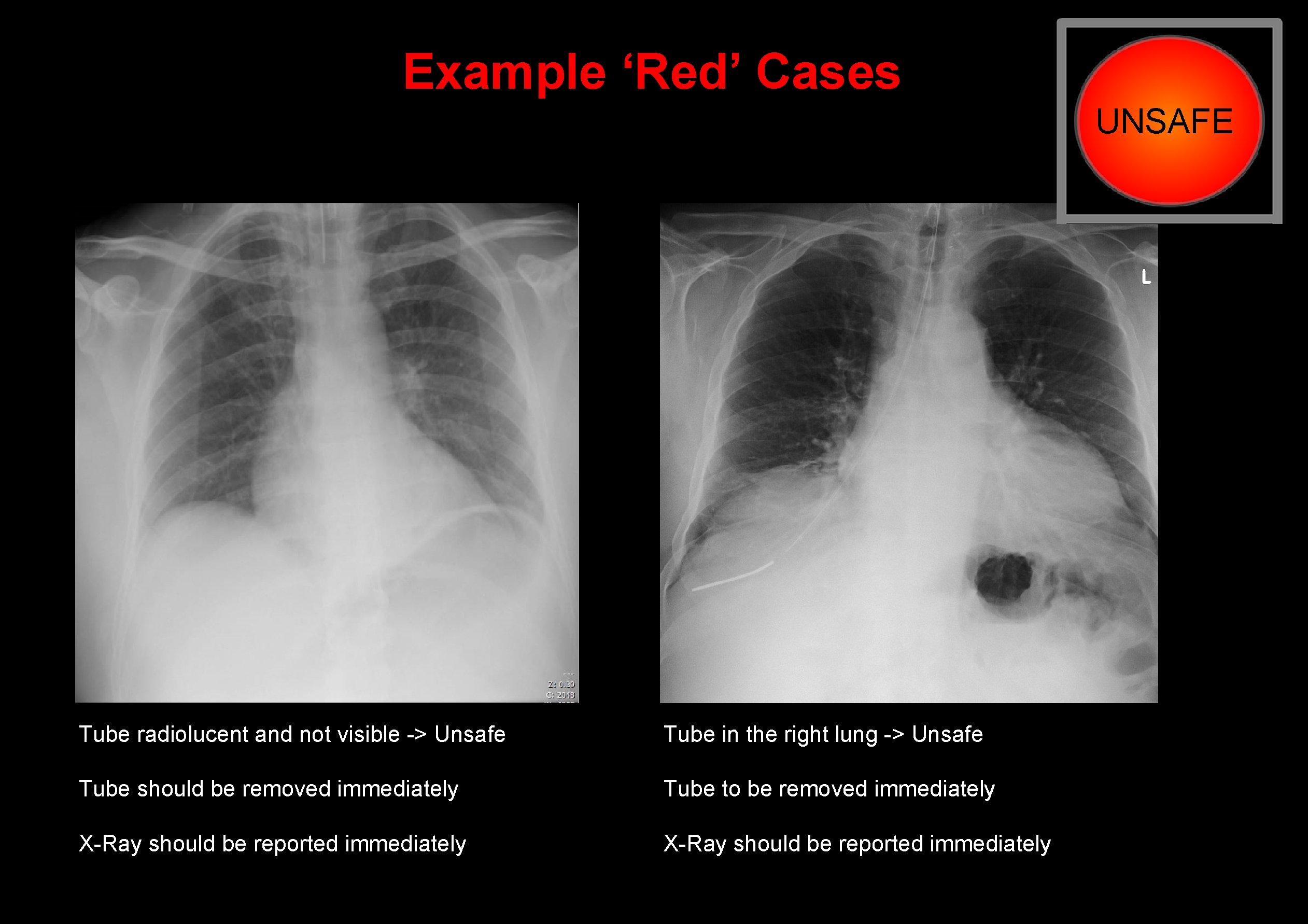
Example ‘Red’ Cases Tube radiolucent and not visible -> Unsafe Tube in the right lung -> Unsafe Tube should be removed immediately Tube to be removed immediately X-Ray should be reported immediately UNSAFE
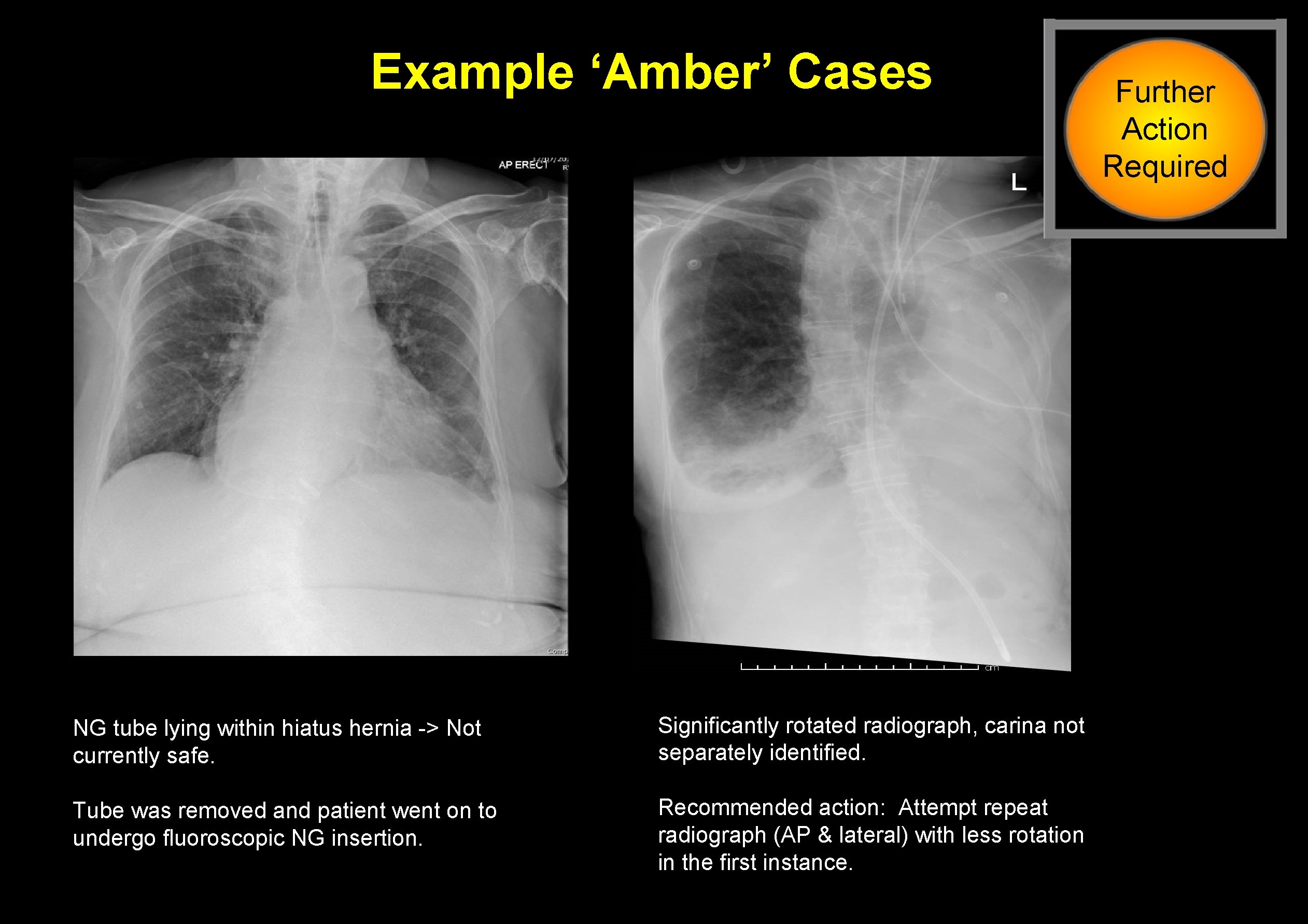
Example ‘Amber’ Cases NG tube lying within hiatus hernia -> Not currently safe. Significantly rotated radiograph, carina not separately identified. Tube was removed and patient went on to undergo fluoroscopic NG insertion. Recommended action: Attempt repeat radiograph (AP & lateral) with less rotation in the first instance. Further Action Required

Assessing distance from GOJ 1. The tip of the NG tube should lie at least 10 cm distal to the gastro-oesophageal junction. 2. If it lies proximal to this, then it must be advanced by a ward member within the department. 3. Repeat aspirate should be obtained. If fails -> repeat X-Ray. ≥ 10 cm References: Radiology Masterclass ‘Chest X-Ray Tubes and Lines’ Tutorial http: //www. radiologymasterclass. co. uk Pillai JB, Vegas A. Thoracic Complications of NG tube tip malposition. https: //academic. oup. com/icvts/articlelookup/doi/10. 1510/icvts. 2005. 109488

Assessing distance from GOJ ˂10 cm ≥ 10 cm If the patient has basal lung pathology obscuring the diaphragm, e. g. pleural effusions, a supine radiograph may improve visibility if the patient is able.
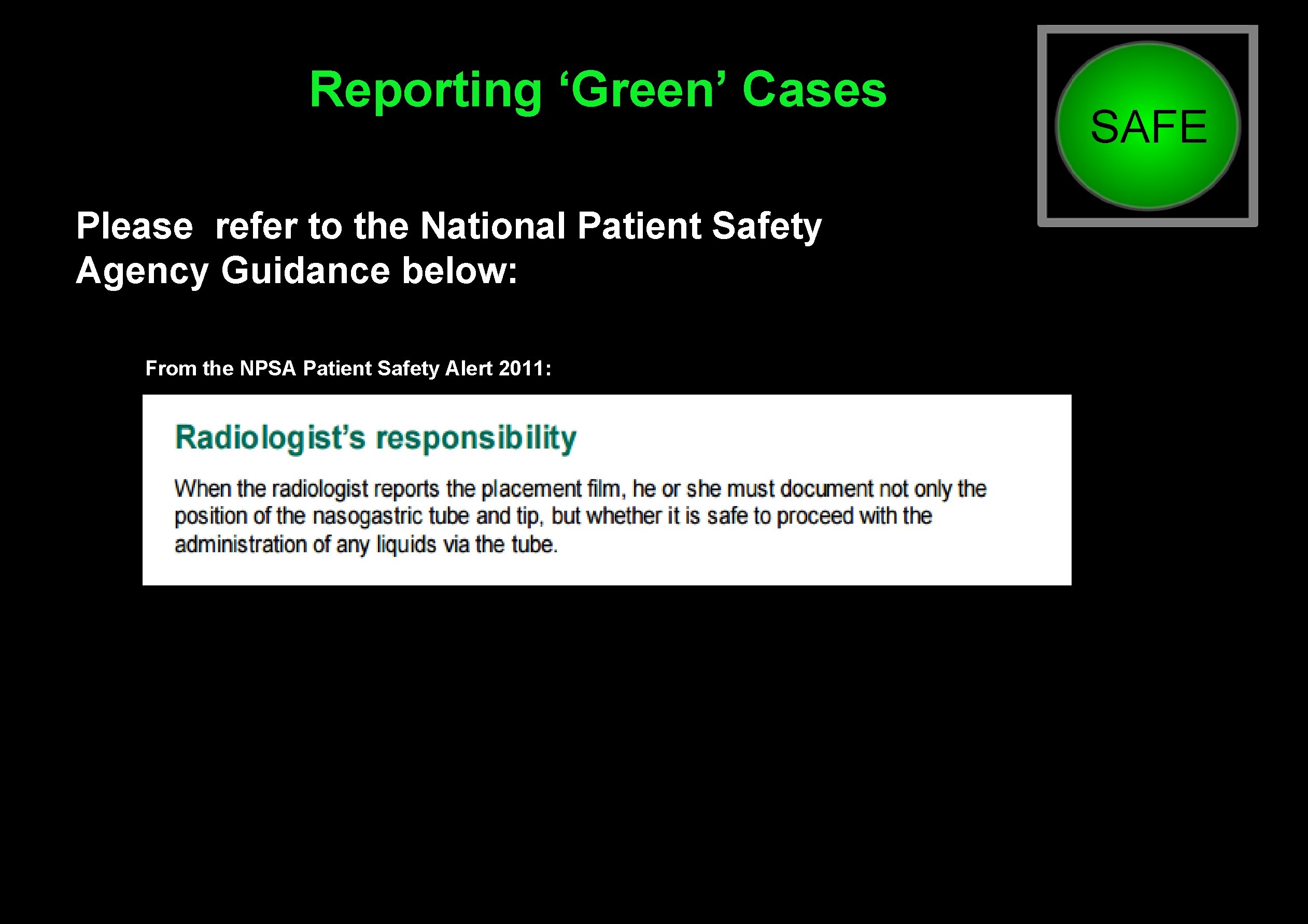
Reporting ‘Green’ Cases Please refer to the National Patient Safety Agency Guidance below: : From the NPSA Patient Safety Alert 2011: SAFE
We would like your feedback please! We are trialling this new protocol from August 2017 If you identify any problems with the protocol or would like to share ideas for improvement then please email one of the following: naomi. fenton@uhbristol. nhs. uk steve. morgan 2@nbt. nhs. uk michael. darby@nbt. nhs. uk We are also collecting examples of difficult cases and would greatly appreciate if you could flag these up to us.
Useful Resources Radiology Masterclass Tutorial – ‘Chest X Ray: Tubes’ www. radiologymasterclass. co. uk Patient Safety Alert NPSA/2011/PSA 002: Reducing the harm caused by misplaced nasogastric feeding tubes in adults, children and infants. March 2011 www. nrls. npsa. nhs. uk/Easy. Site. Web/getresource. axd? Asset. ID=129697 If you haven’t already, please make sure you complete the trust e-learning module today!
- Slides: 10