
Radiological Anatomy Of The Chest Objectives By the
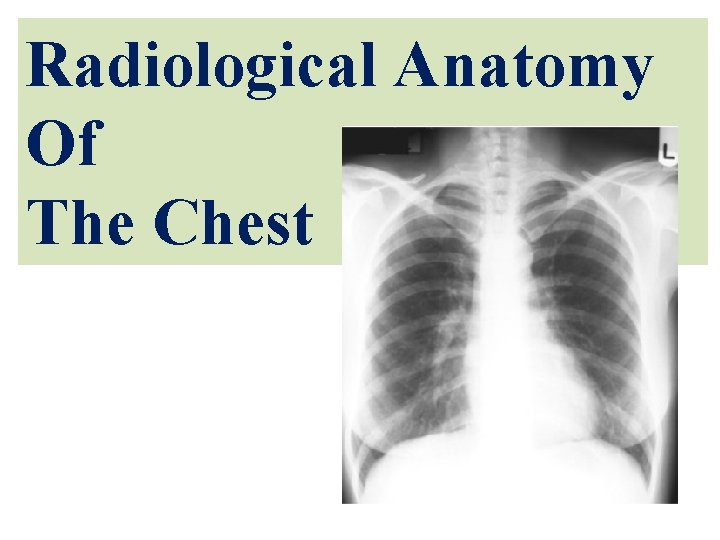
Radiological Anatomy Of The Chest
Objectives By the end of the lecture you should be able to: 1 - Identify the bones of the thoracic cage. 2 - Identify superficial soft tissues. 3 - Identify the trachea and lunge fields. 4 - Describe the mediastinum and the cardiac shadows. 5 - Describe brief knowledge about Bronchography. 6 - Describe brief knowledge about Coronary Angiography
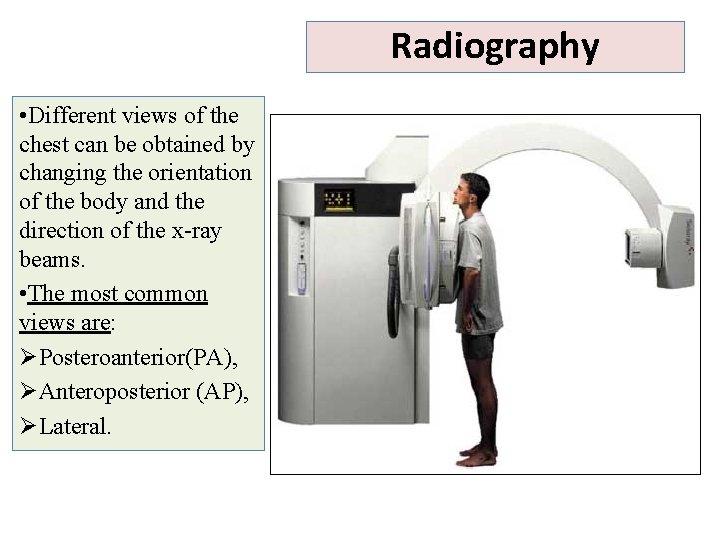
Radiography • Different views of the chest can be obtained by changing the orientation of the body and the direction of the x-ray beams. • The most common views are: ØPosteroanterior(PA), ØAnteroposterior (AP), ØLateral.
Radiography A chest x-ray may be used to diagnose and to plan the treatment and follow up for various conditions, including: ØFractures of the bones, including ribs, sternum, vertebrae, clavicle and scapula ØLung disorders such as pneumonia, emphysema, pleural effusion, tuberculosis and lung cancer. ØHeart disorders such as congestive heart failure (which causes heart enlargement). ØChest radiographs are also used to screen for job-related lung diseases in industries such as mining where workers are exposed to dust, (asbestosis, silicosis). ØChest x-ray is also requested as pre-employment demand.
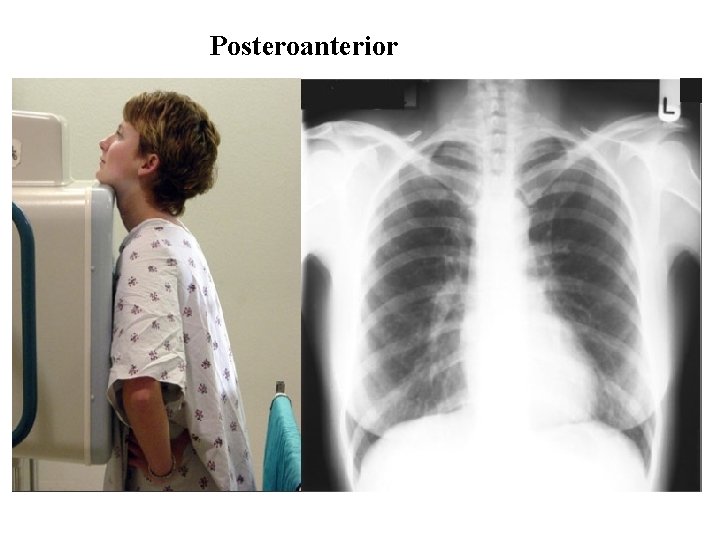
Posteroanterior
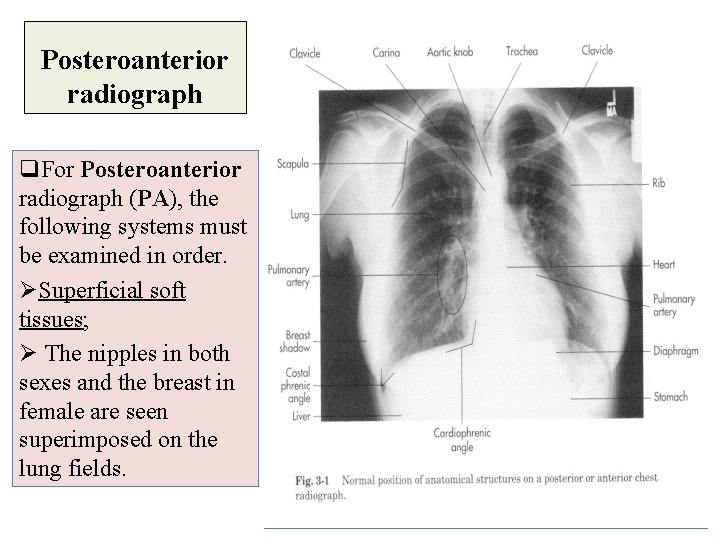
Posteroanterior radiograph q. For Posteroanterior radiograph (PA), the following systems must be examined in order. ØSuperficial soft tissues; Ø The nipples in both sexes and the breast in female are seen superimposed on the lung fields.
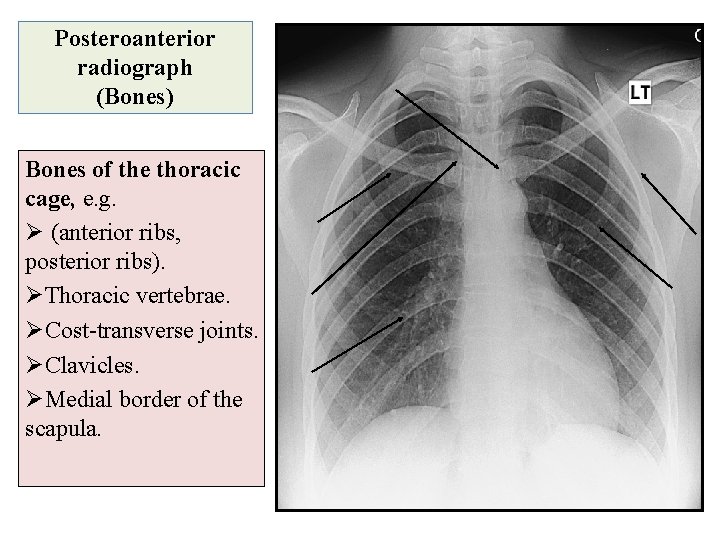
Posteroanterior radiograph (Bones) Bones of the thoracic cage, e. g. Ø (anterior ribs, posterior ribs). ØThoracic vertebrae. ØCost-transverse joints. ØClavicles. ØMedial border of the scapula.
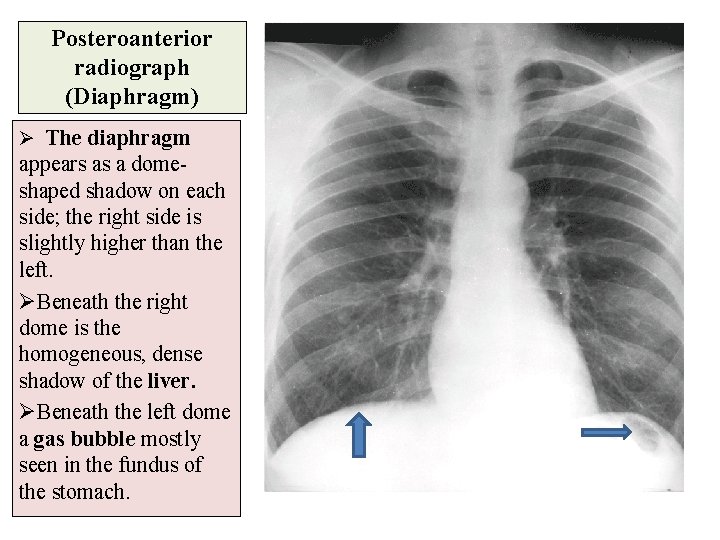
Posteroanterior radiograph (Diaphragm) Ø The diaphragm appears as a domeshaped shadow on each side; the right side is slightly higher than the left. ØBeneath the right dome is the homogeneous, dense shadow of the liver. ØBeneath the left dome a gas bubble mostly seen in the fundus of the stomach.
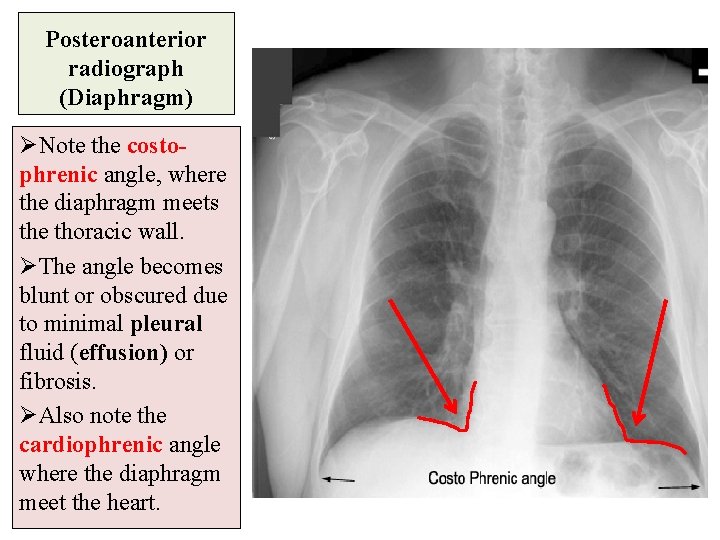
Posteroanterior radiograph (Diaphragm) ØNote the costo- phrenic angle, where the diaphragm meets the thoracic wall. ØThe angle becomes blunt or obscured due to minimal pleural fluid (effusion) or fibrosis. ØAlso note the cardiophrenic angle where the diaphragm meet the heart.
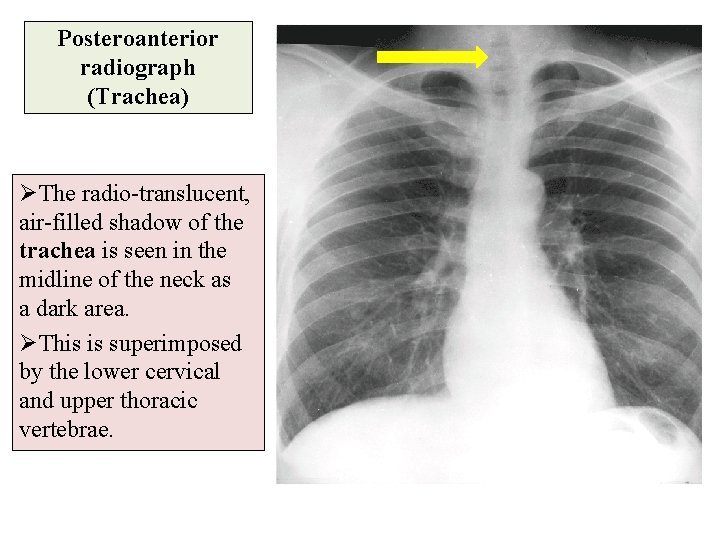
Posteroanterior radiograph (Trachea) ØThe radio-translucent, air-filled shadow of the trachea is seen in the midline of the neck as a dark area. ØThis is superimposed by the lower cervical and upper thoracic vertebrae.
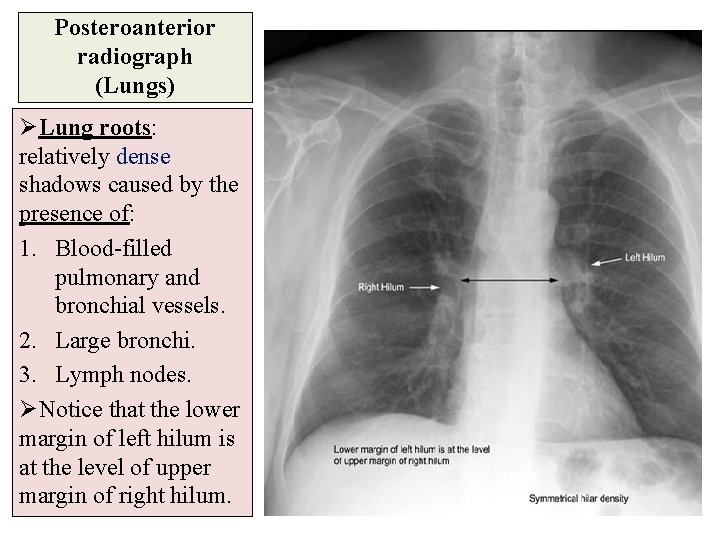
Posteroanterior radiograph (Lungs) ØLung roots: relatively dense shadows caused by the presence of: 1. Blood-filled pulmonary and bronchial vessels. 2. Large bronchi. 3. Lymph nodes. ØNotice that the lower margin of left hilum is at the level of upper margin of right hilum.
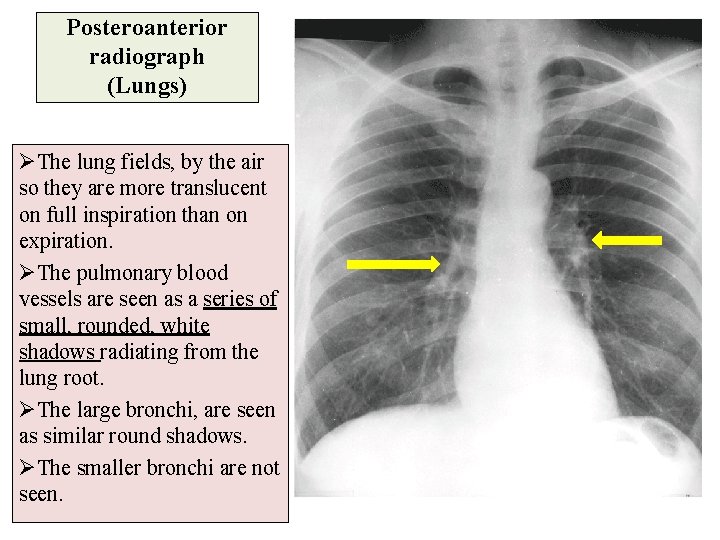
Posteroanterior radiograph (Lungs) ØThe lung fields, by the air so they are more translucent on full inspiration than on expiration. ØThe pulmonary blood vessels are seen as a series of small, rounded, white shadows radiating from the lung root. ØThe large bronchi, are seen as similar round shadows. ØThe smaller bronchi are not seen.
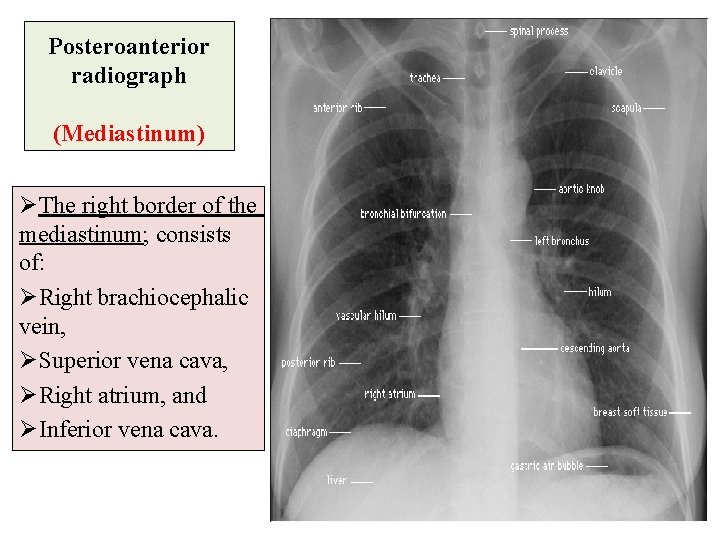
Posteroanterior radiograph (Mediastinum) ØThe right border of the mediastinum; consists of: ØRight brachiocephalic vein, ØSuperior vena cava, ØRight atrium, and ØInferior vena cava.
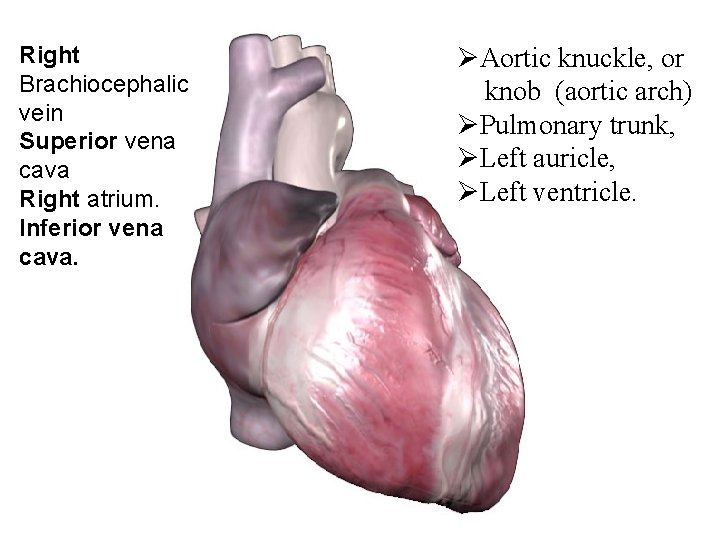
Right Brachiocephalic vein Superior vena cava Right atrium. Inferior vena cava. ØAortic knuckle, or knob (aortic arch) ØPulmonary trunk, ØLeft auricle, ØLeft ventricle.
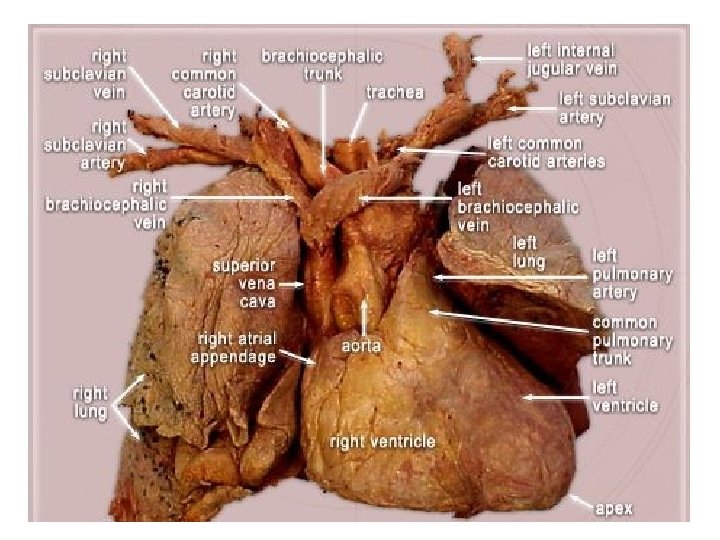
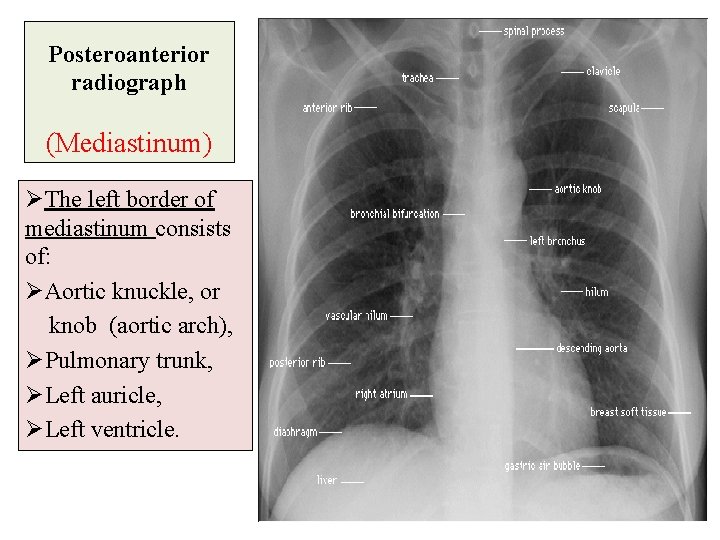
Posteroanterior radiograph (Mediastinum) ØThe left border of mediastinum consists of: ØAortic knuckle, or knob (aortic arch), ØPulmonary trunk, ØLeft auricle, ØLeft ventricle.
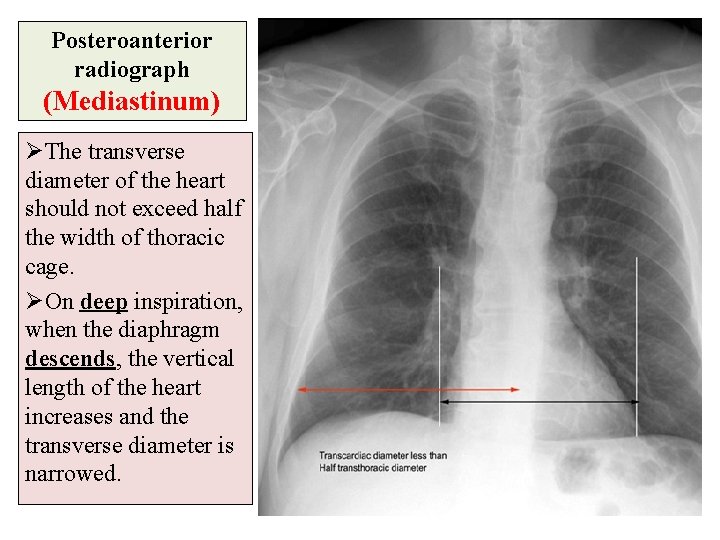
Posteroanterior radiograph (Mediastinum) ØThe transverse diameter of the heart should not exceed half the width of thoracic cage. ØOn deep inspiration, when the diaphragm descends, the vertical length of the heart increases and the transverse diameter is narrowed.
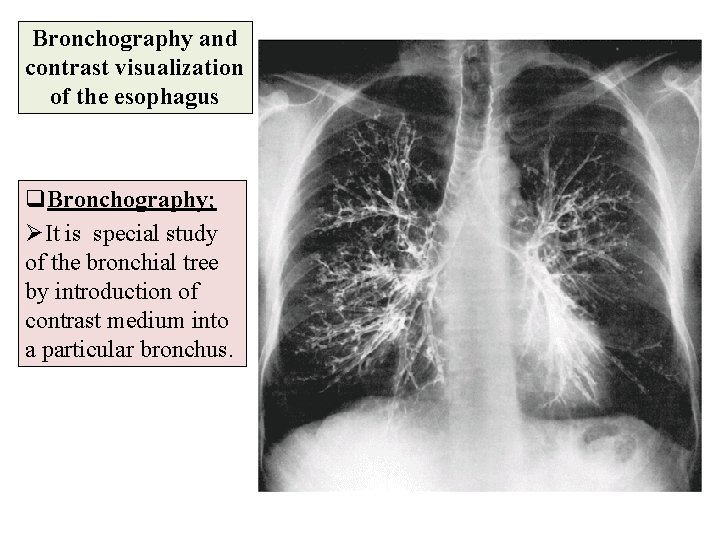
Bronchography and contrast visualization of the esophagus q. Bronchography; ØIt is special study of the bronchial tree by introduction of contrast medium into a particular bronchus.
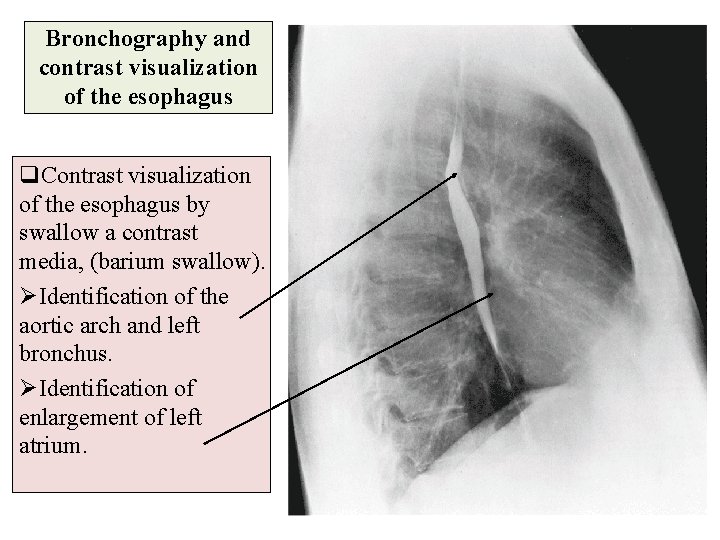
Bronchography and contrast visualization of the esophagus q. Contrast visualization of the esophagus by swallow a contrast media, (barium swallow). ØIdentification of the aortic arch and left bronchus. ØIdentification of enlargement of left atrium.
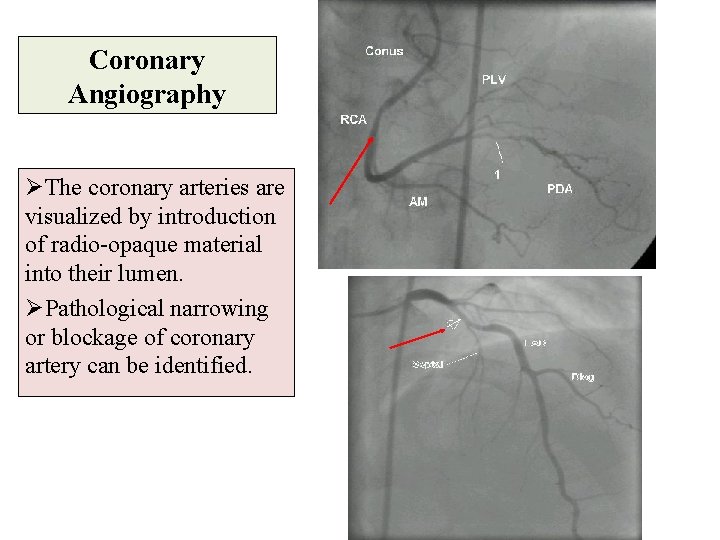
Coronary Angiography ØThe coronary arteries are visualized by introduction of radio-opaque material into their lumen. ØPathological narrowing or blockage of coronary artery can be identified.

THANK YOU AND GOODLUCK
- Slides: 21